معرفی
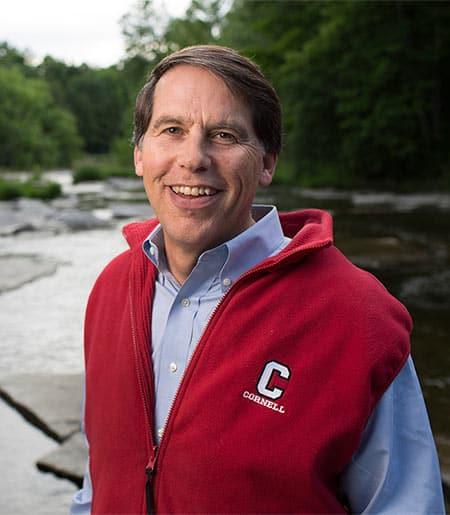
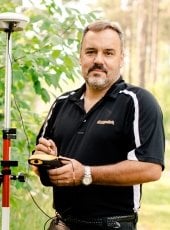
Jonathan Bossenbroek is Professor and Department Chair of Environmental Sciences at the University of Toledo's College of Natural Sciences and Mathematics. Holding a Ph.D. from Colorado State University (2004), M.S. from the University of Wisconsin, and B.S. from Calvin College, he leads significant research in invasion ecology and environmental management.
Dr. Bossenbroek directs the Applied Spatial Ecology Lab, which applies landscape ecology theories to investigate invasive species biology, conservation biology, and ecosystem management. His research methodology centers on predictive and geostatistical modeling linked with field and laboratory studies. Current projects focus on zebra mussels, emerald ash borer, yellow perch in Lake Erie, darters in the Ohio River basin, and phytoremediation of contaminated soils.
His research interests span invasion ecology, landscape and watershed ecology, modeling dispersal mechanisms, and predicting habitat suitability. Recent publications reveal an evolution from basic ecological modeling to sophisticated interdisciplinary approaches integrating ecological, economic, and social dimensions of environmental management. His work bridges theoretical ecology with practical management applications, particularly in the Great Lakes region, addressing critical issues like species reintroduction, surveillance network design, and bioeconomic risk analysis.
Analysis of his publication trends shows progression from early zebra mussel distribution modeling to advanced bioeconomic analyses and contemporary integration of network theory, environmental DNA technology, and spatial modeling. His research has significant policy implications, evidenced by citations in policy sources and news outlets.
Dr. Bossenbroek maintains active collaborations with researchers including Christine M. Mayer (8 publications), Song S. Qian, Todd Crail, and William D. Hintz. His work demonstrates strong connections between scientific research and environmental management practices, particularly evident in his recent publications addressing research-management alignment across spatial and temporal scales.
The Applied Spatial Ecology Lab serves as his primary research team, bringing together students and researchers to address pressing environmental challenges. Current projects indicate strong partnerships with Great Lakes management agencies and international collaborations, particularly in aquatic invasive species surveillance across the Laurentian Great Lakes.