معرفی
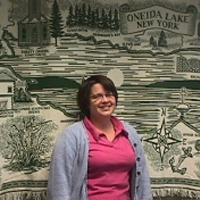
Todd D. Crail is a Lecturer in the Department of Environmental Sciences within the College of Natural Sciences and Mathematics at the University of Toledo. Holding a Ph.D. and M.S. from the University of Toledo (2012) and a B.A. from Bluffton University, he focuses on undergraduate learning and engagement through field-based research in Eastern North American ecosystems.
His research interests span community ecology and conservation of freshwater fishes (particularly benthic species), unionid mussels (one of North America's most imperiled fauna), and the biodiversity of the Oak Openings Region - a unique ecosystem combining prairie, north woods, and Appalachian influences. His work addresses critical conservation challenges including fire suppression effects, hydrologic modification, and invasive species management.
Dr. Crail's publication record demonstrates consistent scholarly activity from 2011-2021 with 10 significant articles focusing on Great Lakes ecosystems, particularly Lake Erie and the Maumee River watershed. His research shows a clear trajectory examining the impacts of invasive species (especially Dreissena mussels), thermal pollution effects on freshwater communities, and habitat restoration priorities in the Great Lakes region.
His scientific contributions fall primarily within these research areas:
- Biodiversity & Conservation
- Environmental Sciences & Ecology
- Marine & Freshwater Biology
- Science & Technology - Other Topics
Dr. Crail maintains active collaborations with researchers including Christine M. Mayer (3 publications), William D. Hintz (3 publications), Daryl L. Moorhead (2 publications), and Jonathan M. Bossenbroek (2 publications). His teaching portfolio includes foundational courses like EEES 1130 (Down to Earth Environmental Science), EEES 2010 (Introduction to Environmental Studies), and specialized field courses such as EEES 4980 (Advanced Field Ecology), demonstrating his commitment to hands-on environmental education.
His laboratory and field research appears centered on the Oak Openings Region and western Lake Erie ecosystems, with particular attention to freshwater mussel communities and their responses to anthropogenic changes. Current research directions suggest continued focus on habitat rehabilitation in the Maumee River Area of Concern and mapping invasive species impacts in sensitive ecosystems.