Christopher Pal is a Full Professor in the Department of Computer Engineering and Software Engineering at Polytechnique Montréal. With a Ph.D. from the University of Waterloo, he has held academic positions at the University of Rochester and the University of Toronto, and industry roles at Interval Research and Microsoft Research's Interactive Visual Media Group. Fields of Expertise: Artificial Intelligence, Computer Vision, Pattern Recognition, Machine Learning, and Natural Language Processing Affiliations: CIFAR Chair in Artificial Intelligence, Institute for Data Valorization (IVADO) Member His research focuses on deep learning applications in visual question answering , medical image segmentation , and generative models . Recent work involves multimodal data analysis for climate modeling and vision-language systems for code generation. Key projects include CarbonSense for climate flux modeling and GeoCoder for geometry problem-solving AI. His 15 most recent publications (2023-2025) span topics from diffusion models to multi-agent systems , with emphasis on video generation , 3D animation , and environmental applications . Scientific recognition includes: CIFAR Chair in Artificial Intelligence IVADO Institute Membership Top-2% cited researcher (2021) He has supervised 22 Ph.D. and Master's students, with recent graduates working on generative AI , reinforcement learning , and medical imaging . Current research grants include MITACS-funded projects in software engineering agents and drone imagery analysis for tropical forest conservation.
Öznur Özkasap is a Professor in the Department of Computer Engineering at Koc University's Graduate School of Sciences and Engineering. She serves as Head of Department and has research interests spanning distributed systems, computer networks, and energy-efficient networking protocols. Her work integrates artificial intelligence into distributed computing frameworks and explores security in peer-to-peer systems. Education: PhD (2000), MSc (1994), and BS (1992) from Ege University Research Areas: Distributed Systems, Cloud/Edge Computing, Network Security, and AI applications in distributed environments Her recent publications focus on blockchain-assisted distributed systems, federated learning optimization, and energy-efficient frameworks for software-defined networks. She explores multi-objective load balancing, decentralized energy trading, and secure P2P architectures. Key trends include cross-disciplinary applications of distributed computing in healthcare and energy systems. Professor Özkasap contributes to advancing edge computing, IoT-based sensor systems, and privacy-preserving mechanisms in decentralized environments. Her work addresses challenges in reliable network protocols, microgrid energy sharing, and security vulnerabilities in autonomous systems.
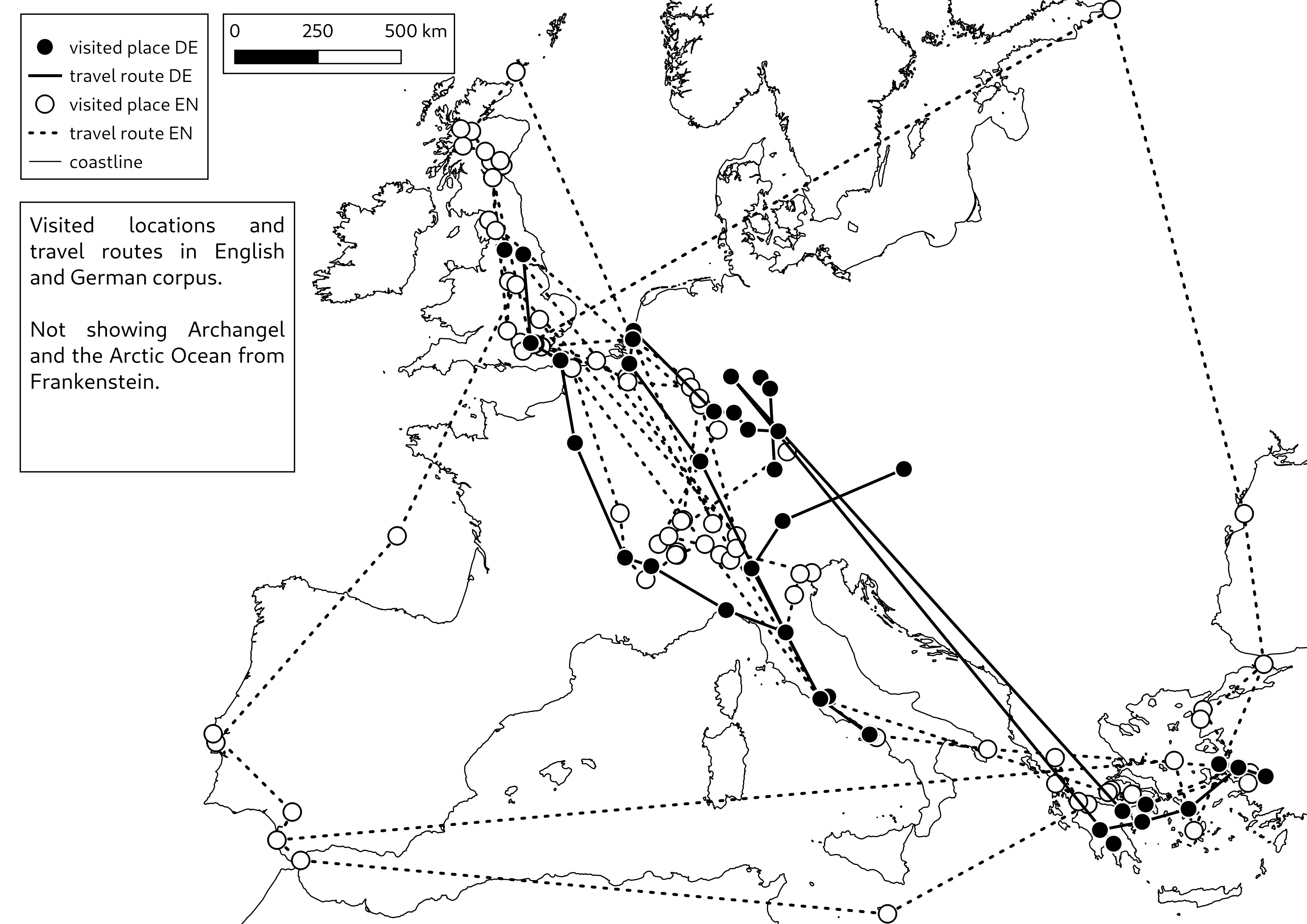
Asko Nivala is an Adjunct Professor and Collegium Researcher at the School of History, Culture and Arts Studies, University of Turku, where he serves as Senior Research Fellow in History and Archaeology at the Turku Institute for Advanced Studies (TIAS). He earned his PhD in Cultural History from the University of Turku in 2015 with a dissertation on Friedrich Schlegel's early Romantic philosophy of history. Nivala's research focuses on nineteenth-century Romanticism across Germany, the UK, and USA, with particular expertise in philosophy of history, spatial humanities, and digital methodologies. His scholarly work bridges traditional humanities with computational approaches, examining how spatial concepts operate in Romantic literature and thought. He has made significant contributions to understanding the spatial dimensions of Romantic narratives and conceptual frameworks. Currently (2022-2025), Nivala serves as Collegium Fellow at TIAS working on the project Artificial Intelligence Before Computers: The History of Romantic Computationalism (AICOM) and as Principal Investigator for the Atlas of Finnish Literature 1870-1940 project funded by the Alfred Kordelin Foundation. His methodological approach combines close reading with distant reading techniques, particularly in geospatial analysis of literary texts. Nivala has published extensively in his field, including the monograph The Romantic Idea of the Golden Age in Friedrich Schlegel's Philosophy of History (Routledge, 2017) and co-editing Travelling Notions of Culture in Early Nineteenth-Century Europe (Routledge, 2016). His recent publications demonstrate sophisticated integration of digital humanities methods with traditional literary scholarship, particularly in extracting geographical references from literature and analyzing conceptual change through computational linguistics. As an educator, Nivala supervises three doctoral students and delivers guest lectures. His scholarly network extends internationally, with collaborations across Europe and North America, reflecting the transnational nature of his research on Romanticism and digital humanities.
Lucas Martínez Bernabéu is an Associate Professor in the Department of Computer Science and Artificial Intelligence at the University of Alicante , where he also serves as a senior technician at the University Institute of International Economics . His work bridges artificial intelligence with geographic analysis. Academic Training Doctorate in Information Society Technologies (2012) Computer Engineering (2003) His research focuses on AI applications for solving optimization and classification problems in functional regionalisation , particularly local labor markets and spatial interaction patterns. Recent publications demonstrate methodological advancements and critical evaluations of data sources like mobile phone records for geographic analysis. Teaching includes courses on Intelligent Systems and Programming 1 , delivered across undergraduate programs in Robotics Engineering and Computer Engineering with Business Administration. Over the last 10 years, he has taught these subjects multiple times at the University of Alicante. Research projects involve collaborations with international institutions and organizations like the Office for National Statistics and UTE Cercle Territorio Paisaje y Arquitectura , funded by Spanish ministries and local entities. Notably, he contributed to studies on mobile phone data validation for commuting analysis and adaptive evolutionary algorithms for labor market delineation. His publications and conference participation (e.g., NECTAR Conference 2024, SCORUS Conference 2024) highlight cross-disciplinary work at the intersection of AI, geography, and policy. No formal doctoral students have been supervised in the past five years.
Ana Maria Neves de Almeida Baptista Figueiredo is a Coordinator Professor and academic leader at the Institute of Engineering of Polytechnic of Porto (ISEP/IPP). She currently serves as President of the ISEP Scientific Council (since 2018), Sub-Director of post-graduation programmes in Big Data & Decision Making and Industry 4.0, and holds numerous leadership roles in accreditation processes including A3ES, EUR-ACE, and ABET. She is a Senior Researcher at GECAD (Research Group on Intelligent Engineering and Computing for Advanced Innovation and Development) and member of LASI (Associated Laboratory of Intelligent Systems). Education: PhD in Industrial and Systems Engineering (2003) from University of Minho MSc in Electronic and Computer Engineering - Specialization in Industrial Informatics (1996) from University of Porto BSc in Industrial Informatics (1993) from Polytechnic Institute of Oporto - Institute of Engineering BSc in Electronic Engineering (1990) from Polytechnic Institute of Oporto - Institute of Engineering Professor Figueiredo specializes in Ambient Intelligence, Decision Support Systems, and Intelligent Systems with applications spanning multiple domains. Her research combines artificial intelligence, big data analytics, and user-centered design to develop innovative solutions. She has particular expertise in creating personalized systems that adapt to user needs and contexts, with strong emphasis on practical applications in real-world settings. Her publication record reveals consistent research activity across three main application domains: tourism technology (personalized recommendation systems, smart travel planning), Industry 4.0 (intelligent manufacturing, production scheduling), and healthcare (respiratory monitoring, medical diagnostics). The research demonstrates a clear trajectory from foundational work in scheduling algorithms to increasingly sophisticated intelligent systems incorporating machine learning, sensor networks, and emotional computing. Awards and Recognition: 2017 Award of merit for scientific publication in TELEMATICA AND INFORMATICS journal 2017 Prémio SPAIC – AstraZeneca for FRASIS respiratory monitoring project 2013 PIPED honorable mention for Android e-learning platform 2012 1st place in POLIEMPREENDE entrepreneurship competition with NearTour project 1995 Best student award in Industrial Informatics Engineering Professor Figueiredo has supervised 3 completed PhD theses with 1 ongoing, and more than thirty MSc dissertations. She has participated as Principal or Co-Principal Investigator in 6 projects and as Researcher in more than 20 projects, securing funding from FCT and other agencies. Her work has been supported by significant grants including TheRoute, GROUPLANNER, Smartravel, ATT, InVALUE, INVALUE_PT, NIS, PIANISM, Cyberfactory, SECOIIA, and produtech_R3. She leads research activities within GECAD and LASI, collaborating with international teams from Spain, Canada, USA, Czech Republic, Turkey, and Italy. Her work bridges academic research with practical applications through partnerships with business organizations, public entities, and professional associations across multiple sectors.
João André Pinto Soares is a Senior Researcher at the Knowledge Engineering and Decision Support Research Group (GECAD) at the Polytechnic Institute of Porto's School of Engineering. He earned his PhD in Electrical and Computer Engineering from UTAD in 2017 and has since secured significant funding through FCT projects, including CENERGETIC as Principal Investigator and BENEFICE as co-PI. Principal Investigator for CENERGETIC project on energy resource management Co-PI for BENEFICE project on smart building optimization Visiting Professor at Centrale Lille since 2019 Co-coordinator of SAtCOMM project for sustainable Atlantic energy communities Dr. Soares has established international collaborations with institutions including Sao Paulo State University (UNESP), Honda Research Institute Europe, and Centrale Lille. His research focuses on energy resource management in smart grids, with particular emphasis on local energy markets and electric vehicles. He has successfully managed a team of 10 researchers over the last 5 years and supervised numerous students at various academic levels. His publication record includes over 200 scientific articles, with 75 in international journals, garnering more than 5500 citations and an h-index of 40. His most recent work demonstrates strong trends in applying advanced optimization techniques, machine learning, and metaheuristics to energy resource management problems, particularly focusing on uncertainty modeling, electric vehicle integration, and local energy markets. Chair of IEEE ISATC Task Force on Computational Intelligence for the Energy Domain Secretary of the IEEE PES Intelligent Systems Subcommittee Launched 16 special issue editions as co-editor in JCR journals Reviewed over 400 scientific papers Dr. Soares has supervised 9 PhD students (7 ongoing), 23 MSc students, and 23 BSc students. His research has been supported by 28 national/international projects (10 as PI, 2 as Co-PI, and 17 as researcher), including Horizon/H2020 projects. He has also been instrumental in organizing over 30 scientific events and has delivered more than 30 invited talks at international conferences.
Prof. Dr. Tolga Ovatman is a faculty member at the Department of Computer Engineering, Istanbul Technical University , where he has been serving as Head of Department since 2024. His academic career spans roles from Research Assistant (2004-2012) to Associate Professor (2019-2023) and full Professor (2023-present). He previously held administrative roles such as Vice Dean (2018-2022) and Deputy Head of Department (2016-2018). PhD in Computer Engineering (2005-2011) MS in Computer Engineering (2003-2005) BSc from Hacettepe University (1999-2003) His research focuses on model checking , replicated state machines , cloud computing , and object-oriented software . Recent work addresses computation offloading in 6G networks , collaborative text editing data structures , and energy-efficient environmental monitoring systems . Key projects led include Design of a Multiplexed State Machine Storage System for Edge Computing (2022-2024) and Microservice Compatible Symphony Infrastructure Research (2020). He has supervised numerous theses on topics ranging from collaborative text editing to AI applications in watershed management . Publications span IEEE Transactions , Springer , and conferences like CSCE and CLOSER .
Khandakar Ahmed is an Associate Professor of Information Technology at Victoria University's College of Arts, Business, Law, Education & IT (CoABLEIT) and Discipline Leader for Emerging Trends in Science, IT & Engineering at the Institute for Sustainable Industries and Liveable Cities (ISILC). His career spans roles at Victoria University (2017–present), RMIT University (2015–2017), and Shahjalal University of Science and Technology (2007–2015). Education: PhD in Electrical and Computer Engineering (RMIT University, 2014), MSc in Networking and e-Business Centered Computing (University of Reading, 2009), BSc in Computer Science and Engineering (Shahjalal University of Science and Technology, 2007) His research expertise includes Artificial Intelligence, Cyber Security, Digital Health, Federated Learning, Quantum Computing, and the Internet of Things . He has published over 100 refereed papers with 4,200+ citations (h-index 32) and secured $3.4 million+ in funding since 2018 from partners like Australia's Economic Accelerator and Western Health. His recent work focuses on AI-driven mental health analysis , blockchain security frameworks , and edge computing optimizations . He serves as lead supervisor for 6 PhD and 1 Master of Research student and has mentored over 100 students through industry-linked projects. Dr Ahmed actively contributes to editorial roles for leading journals such as Scientific Reports , IEEE Transactions , and ACM Computing Surveys . His research aligns with UN Sustainable Development Goals 3 (Good Health), 9 (Industry Innovation), and 11 (Sustainable Cities).
Mariam Adedoyin-Olowe is a Lecturer and Programme Leader for the MSc Artificial Intelligence at Birmingham City University . Her research focuses on Data Mining, Data Science, and Artificial Intelligence, particularly in analyzing social media data for event detection and decision-making support. Doctorate in Computing Science from Robert Gordon University First degree from University of Portsmouth Research Interests center on applying data mining techniques to Twitter data for tracking real-world events, sentiment analysis, and customer segmentation. Her work bridges computational methods with practical applications in politics, sports, and healthcare domains. Key Publications include studies on: Transformer-based transfer learning for cross-lingual news events AI-driven mental fatigue detection systems Temporal clustering methods for social media event resolution Deep learning approaches for sound classification Rule dynamics frameworks for political event detection Academic Affiliations include membership in BCU's Data Mining Group and Data Analytics & Artificial Intelligence Research Group, as well as former involvement with RGU's Data Science and Information Retrieval groups. She regularly reviews for international conferences and journals.
Judy A. Perkins is a Professor of Civil & Environmental Engineering at Texas A&M University and holds the Texas A&M University Regents Professor title. Her research focuses on transportation engineering, intelligent transportation systems, and sustainable transportation solutions. Key research areas: Transportation Engineering, RFID Asset Management, CO2 Emissions Modeling Laboratory: Transportation Engineering & Vehicle Simulator Laboratory Awards: Dwight D. Eisenhower Fellowship, NSF Grant for Advancing Women Faculty Her work involves advanced technologies like programmable traffic signals, adaptive control software, and driving simulators to address transportation challenges. Recent projects include collaborations with the Texas Department of Transportation, Federal Highway Administration, and Idaho National Laboratory. Notable Publications: Trip generation models, CO2 emissions analysis, RFID asset management tools Facilities: McCain Programmable Signals, DriveSafety RS250 Simulator, RFID readers, traffic counters
Audrey Baneyx is a researcher at Sciences Po's médialab , specializing in digital methods, knowledge modeling, and pedagogical tool development. With a PhD in Artificial Intelligence from Paris 6 University, her work bridges computational approaches with social science research. Co-leader of the CNRS' Gender and Digital Spaces working group Principal contributor to tools like Hyphe, Khartis, and ANTA v2 Research Focus : Analyzing digital data heterogeneity through ontologies to map knowledge communities Exposing scientific production mechanisms in social sciences via platforms like Scholarscape Designing pedagogical frameworks for digital method training Publication Trends : Recent work emphasizes feminist perspectives in digital methods (2024), web archive utilization (ResPaDon 2022), climate adaptation controversy mapping (MEDEA 2015), and epistemic network analysis from 2016's multipositionality studies. Teaching & Community Building : Leads MetAt methodological workshops and develops practitioner communities around digital tools. Active in interdisciplinary research engineering since 2008.
Johannes Scholz is a Full Professor for Geoinformatics at the Department of Geoinformatics (Z_GIS) at Paris-Lodron-University Salzburg. He leads the GeoAI, GeoKG, and GeoSemantics research group and holds secondary roles in academic governance, including membership in the Curricularkommission Geographie at Salzburg and the Austrian Standards TC 084 committee. He has held visiting positions at the University of California, Santa Barbara, and prior affiliations include Associate Professor at Graz University of Technology and Senior Researcher at Research Studios Austria - Studio iSPACE. His research interests span geospatial artificial intelligence, knowledge graphs, semantics, and numerical optimization, with applications in energy transition, digital tourism, and cyber-physical systems. Projects include Agent-based simulation for energy systems GeoHumanities integration Indoor geography analysis Selected scientific awards include the ISPRS Outstanding Reviewer Award (2020) and the Forschungspreis der Steiermark (2011). He has secured significant funding for projects such as "Virtual Shepherd" (FFG 2024) and "ABM4EnergyTransition" (FFG 2022).
Dr. Anna Puig Puig is a Professor at the University of Barcelona, affiliated with the Faculty of Mathematics and Computer Science within the Department of Mathematics and Computer Science. Her research focuses on gamification in education, 3D point cloud processing, data visualization, and biomedical applications of computer science. Key research areas include: Gamification and serious games for education 3D point cloud segmentation and analysis Machine learning applications in geospatial and biomedical domains Interactive visualization systems Virtual reality for archaeological and educational purposes Notable projects include: INDOMAIN - Pedagogical Module in Intelligent Tutoring Systems HORIZON 2020 European Cancer Image Platform GRAPES - Machine Learning for Shape Processing CLiC Research Group in Language and Computing Digital Reconstruction of Neolithic Social Life
Maria Salamo Llorente is an Associate Professor and researcher in the Department of Mathematics and Computer Science at the University of Barcelona (UB) . She leads the Teaching Innovation Group 'Innovació Docent en Matemàtiques i Informàtica' and is a core member of the Language and Computation Center (CLiC-UB) . Her career spans from postdoctoral work at University College Dublin to extensive contributions in artificial intelligence.
Dr. Jun Liu serves as an Associate Professor in the Department of Civil, Construction and Environmental Engineering within the College of Engineering at the University of Alabama. He directs the NextGen Transportation Lab and holds editorial positions including Managing Editor for the Journal of Intelligent Transportation Systems. His affiliations include the Center for Sustainable Infrastructure and Center for Transportation Operations, Planning and Safety. Ph.D. in Civil Engineering, University of Tennessee (2015) M.S. in Statistics, University of Tennessee (2015) M.S. in Transportation Planning & Management, Huazhong University of Science & Technology (2011) B.S. in Transportation Engineering, Huazhong University of Science & Technology (2008) Dr. Liu's research spans transportation safety, connected/automated vehicles, and sustainable mobility systems. His work integrates machine learning with geospatial analysis to address responder safety, travel behavior, and urban planning challenges. Current projects focus on generative AI applications, EV infrastructure, and rural transportation equity. His methodology combines agent-based simulation, spatial modeling, and behavioral pathway analysis to develop practical transportation solutions. Publication trends reveal strong emphasis on machine learning applications in transportation safety (32% of recent works), with significant contributions to connected vehicle systems (24%) and sustainable mobility solutions (18%). His research demonstrates consistent integration of spatial analysis techniques across 78% of publications, with increasing focus on generative AI applications since 2023. Recent work shows growing international collaboration, particularly with Chinese institutions on robotaxi deployment. Inaugural Editorial Board Member, Transportation Research Record 2018 Small Grants Program Award, University of Alabama Distinguished Scientific Paper Award, ITS World Congress Best Reviewer, Journal of Traffic and Transportation Engineering Dr. Liu has secured over $21 million in research funding since 2018, including an NIH/CDC R01 award as lead PI. His 30 projects include 17 as Principal Investigator from NSF, NIH/CDC, US DOT, and state agencies. He mentors numerous graduate students, with recent publications featuring trainees as first authors. Current initiatives include a $2 million CDC/NIOSH project on first responder safety and $16.8 million smart transportation network development in West Alabama. His NextGen Transportation Lab focuses on integrating AI with transportation systems while exploring creative applications through dance and choreography.