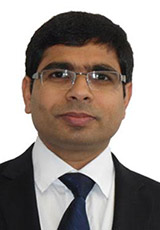
Rakesh Mishra is an Adjunct Professor in the Department of Geodesy and Geomatics Engineering at the University of New Brunswick and Chief Technology Officer at SceneSharp Technologies. His expertise includes multi-sensor data fusion, computer vision, and AI-based object detection using LiDAR, SAR, and satellite imagery. Dr. Mishra completed his PhD at UNB and has research experience with institutions including Indian Institute of Technology Kanpur and IIRS-ISRO. He has collaborated with Canadian government agencies including DND, NRC, and NRCan. His research focuses on LiDAR simulation, deep learning applications in remote sensing, and geospatial algorithm development. Recent publications demonstrate advancements in physics-aware deep learning for LiDAR and super-resolution techniques for satellite imagery.
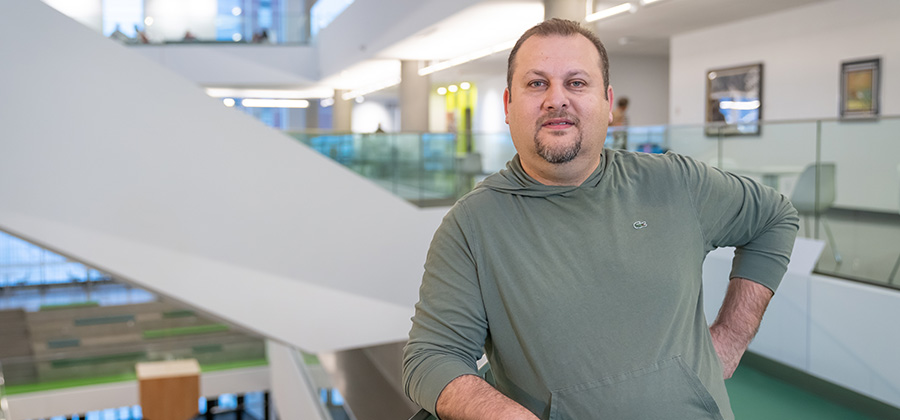
Christopher Cogan is an Adjunct Professor in the Department of Geography at Memorial University of Newfoundland. His research integrates terrestrial/marine ecology, spatial biodiversity analysis, and Geographic Information Science (GIS), with a focus on ecosystem-based management. He contributes to international efforts advancing STEM education and social science literacy through metacognitive development and equity assessments. His educational background includes an M.A. in Geography from UC Santa Barbara (1993) and a Ph.D. in Environmental Studies from UC Santa Cruz (2001), specializing in biogeography, biodiversity, and GIS applications. Research emphasizes quantitative analysis of privilege impacts in education, spatial ecology, and innovative pedagogical methods. Publications explore educational equity, self-assessment methodologies, and coastal biodiversity. Funded by organizations like ArcticNet and GEOIDE, his collaborative work spans 109 countries. Grants and collaborations include interdisciplinary projects with Natural Resources Canada, international agencies, and ArcticNet. Labs/teams focus on geospatial analysis and educational innovation.
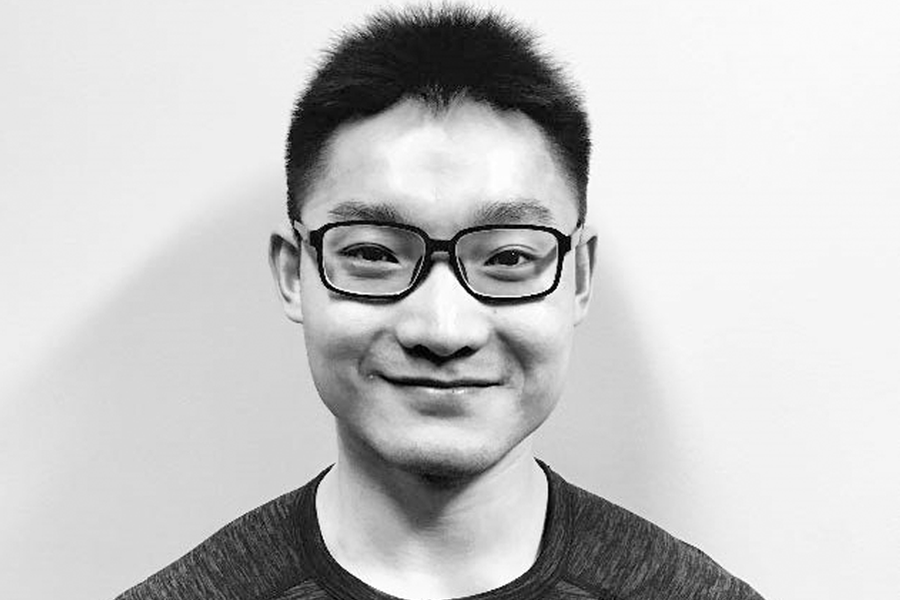
Yuhao Lu is an Assistant Professor in the Department of Landscape Architecture at the University of Manitoba, located at Room 201H, John A. Russell Building on the Fort Garry Campus. His research focuses on geospatial analytics, earth observation, cartographic design, and urban planning. He explores how maps and mapping processes influence settlement design, urban forestry, and environmental justice. Education: PhD in Urban Planning (University of British Columbia), BSc in Forestry (University of British Columbia and Nanjing Forestry University). Prior to this role, he worked at the Future Cities Laboratory (ETH Zürich) and elementslab (UBC), contributing to projects across neighborhood, regional, and global scales. Research Interests: Empirical and projective dimensions of cartography Participatory mapping methodologies Social/environmental justice through spatial representation Urban greenspace equity and dynamics Scenario-based urban modeling Critical cartography education He directs the Future Elements Studio (festudio.ca), a research lab advancing innovative spatial practices. His work bridges technical geospatial analysis with socially-engaged design processes, emphasizing map-making's role in shaping urban futures. Key contributions include developing the 'urban greenness score' metric and advancing methodologies for integrating energy-economy models with urban systems analysis. His interdisciplinary approach addresses both physical and socio-cultural dimensions of urban environments.
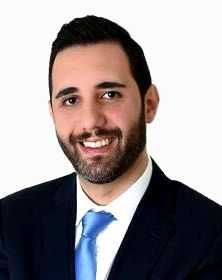
Dr. Mohamad El-Hajj is an Associate Professor in the Department of Computer Science at MacEwan University. He holds a PhD from the University of Alberta (2006) and a Master's from the Lebanese American University (1998). His research focuses on applying data mining techniques to real-world domains such as healthcare, engineering, education, and sports analytics. His expertise spans databases, data warehousing, AI, parallel programming, and e-learning systems. Educational Background PhD in Computer Science, University of Alberta (2006) M.Sc. in Computer Science, Lebanese American University (1998) Bachelor's in Computer Science, Beirut Arab University (Lebanon) Research Interests Dr. El-Hajj specializes in leveraging data mining for practical applications. His work bridges computational methods with societal challenges, including health informatics (e.g., predicting user behavior in health apps), sports analytics (e.g., NBA performance modeling), and urban data analysis (e.g., traffic patterns and crime prediction). He also explores parallel computing and database optimization for large-scale datasets. Recent Trends in Publications His recent work emphasizes interdisciplinary applications: 2023–2025 articles address smart grid energy profiling, sports strategy optimization, and pandemic policy analysis. Earlier contributions (2003–2017) focus on foundational data mining algorithms, including parallel pattern mining and constraint-based techniques. Professional Engagement He actively participates in conferences like IEEE ICDM and ACS/IEEE AICCSA. His teaching includes courses on database systems and data mining methodologies. Advising & Collaboration Open to supervising senior student research projects, though no current advisees are listed. No grants or lab affiliations explicitly mentioned.
Hussein Al Osman is an Associate Professor and Associate Director at the School of Electrical Engineering and Computer Science, University of Ottawa. He holds B.A.Sc., M.A.Sc., and Ph.D. degrees from the same institution. His research focuses on affective computing, multimodal affect estimation, human-computer interaction, serious gaming, and multimedia systems, with recent emphasis on remote physiological signal measurement in healthcare contexts. He has authored over 50 peer-reviewed articles, secured 2 patents, and contributed to technology transfers in industry. Education: Bachelor of Applied Science (B.A.Sc.) Master of Applied Science (M.A.Sc.) Doctor of Philosophy (Ph.D.) Research Interests: Dr. Al Osman’s work spans affective computing, leveraging machine learning for emotion recognition, remote physiological monitoring, and mental health applications. He pioneers systems for suicidal ideation detection via social media, driver distraction analysis, and relapse prediction in psychiatric disorders. His group develops serious games for education and therapy, integrating haptic feedback and virtual reality. Notable contributions include multimodal fusion techniques and biofeedback systems for stress management. Publications: His articles highlight innovations in EEG-based emotion classification, stock market prediction through sentiment analysis, and anomaly detection in healthcare. Recent work explores synthetic data augmentation using large language models and graph neural networks for biomedical signal processing. Labs & Teams: He leads the Multimedia Processing and Interaction Group, advancing interdisciplinary projects at the intersection of AI, human-computer interaction, and healthcare technology.
Derek Reilly is an Associate Professor in the Faculty of Computer Science at Dalhousie University, where he co-directs the Graphics and Experiential Media (GEM) Lab and chairs the HCI, Visualization, and Graphics research cluster. His work focuses on human-computer interaction, particularly in mobile, immersive, and ubiquitous interfaces, with strong emphasis on spatial thinking, embodied interaction, and mixed reality environments. His research interests include: Human-Computer Interaction (HCI) Ubiquitous and Mobile Computing Mixed and Virtual Reality Embodied and Whole Body Interaction Information and Immersive Visualization Computer-Supported Cooperative Work Interactive Exhibits and Cultural Heritage His recent publications reflect a consistent focus on spatial and experiential computing, with projects spanning AR storytelling, collaborative play, accessible VR, and urban wayfinding. These works demonstrate a trajectory toward inclusive, embodied, and context-aware interactive systems. His scientific contributions are supported through lab-based research and student mentorship, though specific awards are not listed in the provided texts. He advises students and leads research initiatives in the GEM Lab, where he fosters innovation in experiential media. His teaching includes courses in user interface design, AR/VR, object-oriented programming, and ubiquitous computing, reflecting his interdisciplinary approach. He is actively involved in research and education, with ongoing projects and fellowship opportunities available. His lab explores the intersection of technology, physicality, and environment, aiming to create meaningful and impactful interactive experiences.
Wendy Osborn is an Associate Professor in the Department of Mathematics and Computer Science at the University of Lethbridge . She holds a Ph.D. (2005) from the University of Calgary, an M.Sc. (1998) from the University of Windsor, and a B.C.S.(Hons) (1996) from the University of Windsor. Research Interests: Dr. Osborn specializes in Databases , with a focus on Spatial , Distributed , and Multimedia systems. Her work also explores Mobile Information Systems , Recommender Systems , and Digital Libraries , emphasizing efficient querying and classification in dynamic environments. Publications: Her research addresses challenges in spatial data streams, mobile device processing, and distributed query optimization, reflecting collaborations with database indexing techniques like the mqr-tree and area code tree. Key trends include iterative classification, approximate querying, and energy-efficient system design.
Michael Stepner is an Assistant Professor at the University of Toronto’s Department of Economics, affiliated with the Faculty of Arts & Science. He holds a Ph.D. from MIT (2019) and a B.A. from McGill University (2012). His research focuses on Public Economics and Health Economics, examining the intersection of health outcomes, economic policies, and labor market dynamics. Notable contributions include studies on pandemic unemployment insurance, trauma’s economic impacts, and healthcare data integration through initiatives like the Canadian Hospitalization and Taxation Database (C-HAT). Stepner’s work bridges empirical research with policy analysis, leveraging innovative statistical tools such as Stata modules (e.g., BINSCATTER and MAPTILE). His articles highlight trends in pandemic economic responses, cardiovascular health’s labor market effects, and income disparities in life expectancy. His research emphasizes data-driven approaches to address public health and socioeconomic challenges. He is currently based at Max Gluskin House (150 St. George Street, Office 277), reachable via michael.stepner@utoronto.ca. While no formal grants or advising roles are listed, his publications reflect active engagement in collaborative research networks.
Dr. Songnian Li is a Professor and Associate Chair of Graduate Studies in the Department of Civil Engineering at Toronto Metropolitan University. His expertise spans geocollaboration systems, big geospatial data analytics, and digital twins for smart cities. He holds a PhD from the University of New Brunswick and a BEng from Wuhan Technical University of Surveying and Mapping. Dr. Li's research focuses on human mobility patterns, spatio-temporal dynamics, and geosocial media analysis. He has pioneered techniques for extracting real-time traffic insights from social media data and developed frameworks for urban solar energy mapping. His work emphasizes leveraging geospatial technologies for societal decision-making. Education: PhD (2002, UNB), BEng (1983, Wuhan) Professional Memberships: ISPRS Fellow, Editor-in-Chief of Canadian Journal of Remote Sensing Key achievements include the 2023 Career Achievement Award and 2020 ISPRS Fellowship. He supervises PhD and MASc students in geomatics, data science, and environmental management programs. His GIS and GeoCollaboration Lab explores cutting-edge applications like 3D urban modeling and cultural heritage preservation through point cloud analysis. Dr. Li advocates for student-driven research, evidenced by a supervisee's ultra-prestigious award-winning paper.
Dr. Steven Weijs is an Associate Professor and Associate Head (Graduate Programs) in the Department of Civil Engineering at the University of British Columbia (UBC), part of the Faculty of Applied Science. He leads research in water resources management, hydrology, and information theory applications in environmental systems. His work explores optimizing information flows from observations to decision-making in complex water systems. Education: PhD (2011) and M.Sc. (2004) in Water Resources Management from TU Delft, Netherlands. Postdoctoral Research: AXA Research Fund fellowship (2011–2013) at EPFL, Switzerland, followed by roles in environmental fluid mechanics and cryospheric science groups. Research Interests: Mountain hydrology, catchment dynamics, flood forecasting, uncertainty quantification, and information theory-based monitoring strategies. He teaches CIVL 418 Engineering Hydrology and contributes to UBC’s Master of Engineering Leadership in Integrated Water Management. Publications focus on sensor networks, data-driven hydrology, flood analysis, and environmental decision-making. Notable work includes novel methods for streamflow prediction in ungauged basins and optimal monitoring network design. Awards: Leading Scholar (Green College, 2016–2018), AXA Research Fund Postdoctoral Fellowship. He collaborates on projects like WeSenseIt, a citizen observatory initiative, and develops low-cost sensing technologies for hydrological monitoring. His research bridges theoretical frameworks with practical applications in water resource management.
Dr. Tony Hernandez is a Professor in the Department of Retail Management at Toronto Metropolitan University's Ted Rogers School of Management, where he also serves as Director of the Centre for the Study of Commercial Activity (CSCA) and holds the Eaton Chair in Retailing. He obtained his M.Sc. in Geographical Information Systems from Leicester University and Ph.D. in Retail Geography from Manchester Metropolitan University. His research program focuses on: Geospatial analytics for retail location planning Big data applications in retail decision-making Spatial organization of ethnic retail ecosystems Canadian retail policy impacts Consumer behavior modeling through data visualization Recent publication trends (2018-2021) demonstrate strong emphasis on location intelligence innovations, with articles exploring cannabis retail policy responses, ethnic grocery clustering in Toronto, and organizational adoption of big data analytics. This work consistently bridges theoretical geography with practical retail strategy. Significant recognitions include: ICSC's Award for Outstanding Service to the Research Community (2012) Endowed Eaton Chair in Retailing Emeritus status with ICSC's North American Research Taskforce Through the CSCA, Dr. Hernandez leads industry-funded research partnerships with major North American and European retailers, focusing on location optimization, market analysis, and spatial decision support systems.