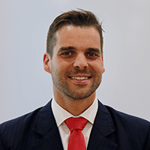
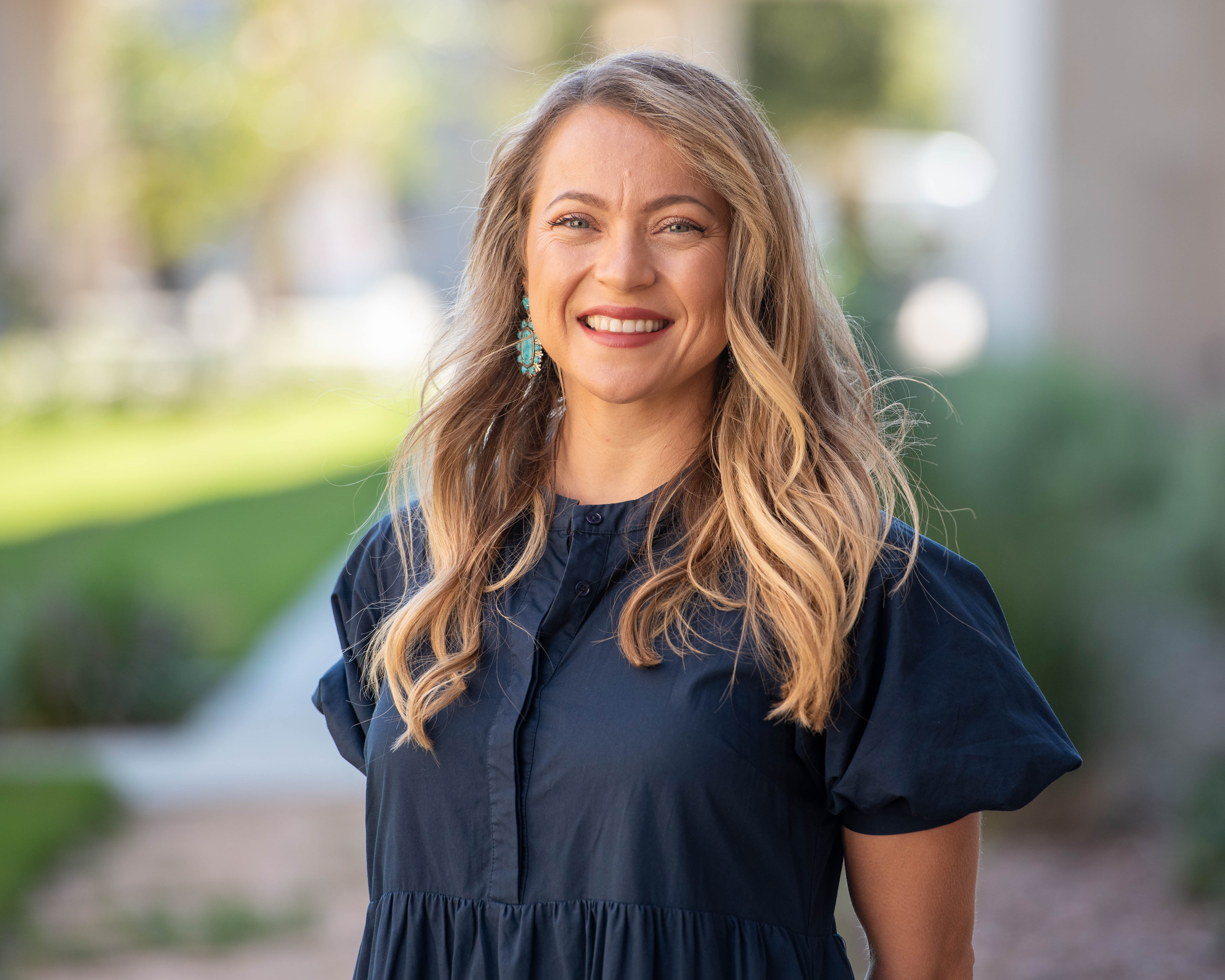
Ilona Brückner is a Lecturer at the Faculty of Agricultural Sciences and Landscape Architecture at Osnabrück University of Applied Sciences . She specializes in digital planning tools, particularly Building Information Modeling (BIM) and 3D Visualization , with a focus on integrating landscape architecture into BIM workflows. Her work addresses challenges in sustainable urban planning, environmental design, and digital infrastructure projects. University: Osnabrück University of Applied Sciences School: Agricultural Sciences and Landscape Architecture Role: Lecturer (Lehrkraft für besondere Aufgaben) Research Focus: BIM Applications, Digital Landscape Modeling, Sustainable Urban Development Dr. Brückner leads research projects on BIM integration in landscape planning, including collaborations with Freie und Hansestadt Hamburg, Vonovia SE, and BERDING BETON GmbH. Her recent work explores BIM workflows for climate resilience , drainage planning , and urban green space management . She contributes to standardization efforts in the buildingSMART Fachgruppe Landschaftsarchitektur and FLL Arbeitskreis BIM . Key scientific contributions include developing BIM object catalogs for landscape elements, creating digital workflows for construction permits , and modeling ecological processes within BIM frameworks. Her work bridges landscape architecture , infrastructure planning , and digital transformation in the built environment. Dr. Brückner supervises students in BIM applications for landscape architecture and teaches courses on CAD , Geoinformation , and digital representation techniques . Her students explore topics like parametric modeling , 3D scanning , and virtual reality in landscape design. She contributes to workshops and seminars on BIM adoption across Germany, collaborating with institutions like Architektenkammer Berlin and Science to Business Hochschule Osnabrück . Her outreach emphasizes interdisciplinary planning and digital skills development in the green sector.
Drew Starbird is a Professor at the Department of Information Systems and Analytics, Santa Clara University. He serves as Executive Director of the My Own Business Institute (MOBI). His work spans supply chain management, food safety, entrepreneurship, and educational technology. Research interests include: Food supply chain traceability and safety protocols Entrepreneurship education and curriculum design Supplier risk management and quality assurance Globalization effects on business pedagogy Key publication trends: Food safety governance (1997-2008) Entrepreneurship education (2013-2025) Contract theory applications (2001-2009)
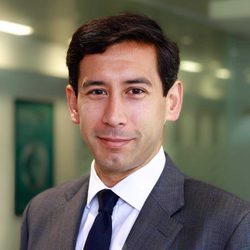
Dr. Ben Caldecott is the founding Director of the Oxford Sustainable Finance Group at the University of Oxford Smith School of Enterprise and the Environment. He holds the inaugural Lombard Odier Associate Professor of Sustainable Finance position, the first ever endowed professorship in sustainable finance, and serves as a Supernumerary Fellow at Oriel College, Oxford. Additionally, he is the founding Director and Principal Investigator of the UK Centre for Greening Finance & Investment (CGFI), established by UK Research and Innovation in 2021 as the national center to accelerate the adoption of climate and environmental data by financial institutions globally. He also serves as a Visiting Professor at the Wealth Management Institute in Singapore. Ben Caldecott earned his doctorate in economic geography from the University of Oxford, following undergraduate studies in economics with specialization in development and China at the School of Oriental and African Studies, University of London, and the University of Cambridge. He has held visiting positions at Stanford University, Peking University, and several other institutions worldwide. His research focuses on sustainable finance, climate risk management, stranded assets, carbon markets, and spatial finance. Caldecott pioneered work on stranded assets, demonstrating how environment-related risks could impact company valuations and represent systemic risks for the financial system. His research has significantly influenced impairment tests, credit models, and scenario analysis used by financial institutions worldwide. He has also pioneered spatial finance, integrating geospatial data and analytics into financial theory and practice, as well as developing the Oxford Principles for Net Zero Aligned Carbon Offsetting and the concept of the Carbon Removal Budget. Analysis of Caldecott's recent publications reveals a consistent focus on the intersection of finance and climate change, with particular emphasis on carbon markets, asset stranding, spatial finance, and transition finance. His work spans empirical analysis of climate policy impacts across multiple sectors including energy, agriculture, and heavy industry, development of frameworks for net zero aligned finance, and investigation of financial mechanisms for climate mitigation and adaptation. His publications increasingly incorporate geospatial data and asset-level analysis to understand environmental risks at granular levels. Best Pedagogical Innovation prize at the French Sustainable Investment Forum-Principles for Responsible Investment Awards (2018) Listed in 100 Most Influential People in Climate Policy by Apolitical UK Power List of environmental professionals by ENDS Report Star of 2019 by Global Proxy Watch Entry into Who's Who (2013 edition) US State Department's International Visitor Leadership Program (2011) Runner-up in Prospect magazine's Think Tank Publication of the Year award (2010) Ben Caldecott supervises six Oxford Ph.D./D.Phil. candidates and has raised tens of millions of dollars in competitive funding from foundations, research councils, governments, and industry for his work. His research partnerships include major financial institutions such as Aviva Investors, Banco Santander, Bank of America, Barclays, BNP Paribas Asset Management, Brunel Pensions Partnership, CCLA Investment Management, HSBC, Impax Asset Management, Insight Investment, Lloyd's of London, Lombard Odier, Norges Bank Investment Management, Standard Chartered, Temasek, UBS, Wells Fargo, and Willis Towers Watson. He established and leads B.A., M.Sc., and M.Phil. options and electives on finance and sustainability at Oxford and course directs the Sustainable Finance Executive Programme. Caldecott founded and directs the Oxford Sustainable Finance Group, a world-leading center focused on aligning finance with global environmental sustainability. He established and leads the Sustainable Finance Theme at The Alan Turing Institute and initiated the Spatial Finance Initiative, which aims to mainstream geospatial capabilities into financial decision-making globally. He co-founded and serves on the board of the Commonwealth Climate and Law Initiative (CCLI), and established the Public and Third Sector Academy for Sustainable Finance (P3SA) at Oxford. He is also a Co-Director for the Leverhulme Centre for Nature Recovery where he leads its work on finance.
Prof. Dr. Gonca Kızılkaya is a faculty member at Yeditepe University's Faculty of Education , Department of Computer and Instructional Technologies Education. With a career spanning over two decades, she has served as Professor (2023), Associate Professor (2018), and held leadership roles including Vice Dean (2022) and Department Chair (2010-2015). Her work focuses on technology integration in education, pedagogical agents, and digital literacy. PhD in Educational Technologies (Hacettepe University, 2009) Master's in Computer Education (Hacettepe University, 2005) Bachelor's in Computer Education (Hacettepe University, 2003) Research Interests: Educational Technology , instructional design, mobile learning, and technology-enhanced problem-solving. She leads TÜBİTAK-funded projects on AI-powered digital assistants and pedagogical reform, emphasizing non-linear learning systems for digital-native students. Scientific Contributions: Authored 10+ books including Mathematics Education Innovations (2021) and Educational Technology Readings (2015). Her 15 most recent articles examine pedagogical agents, gamification in geography learning, and reflective thinking in digital environments. 2023 - Milli Eğitim Bakanlığı Eğitim Araştırmaları Ödülü 2014 - Vice Dean, Yeditepe University 2010 - Department Chair, Yeditepe University Teaching Experience: Delivered 20+ courses on educational technologies, computer literacy, and instructional design at Yeditepe University since 2003. Supervised 20+ graduate theses analyzing technology's impact on learning outcomes.
Associate Professor Ozan ÖZDEMİR serves at Suleyman Demirel University's Faculty of Economics and Administrative Sciences within the Department of Banking and Finance. His academic career spans over 15 years with continuous research contributions in specialized financial domains. Dr. ÖZDEMİR's research focuses on International Accounting/Financial Reporting Standards, Cost Management, and Bank Accounting, with expanding interests in Islamic Banking and Sustainability Reporting. His work consistently addresses practical challenges in financial reporting standards implementation, particularly TFRS/IFRS frameworks, and analyzes sector-specific performance metrics across banking, insurance, and energy industries. His publication trends reveal strong methodological diversity including panel data analysis, bibliometrics, multi-criteria decision techniques (TOPSIS/EDAS), and entropy-based relational analysis. Recent works increasingly address contemporary issues like pandemic financial impacts, cybersecurity in banking, and digital transformation in financial reporting. Teaching portfolio includes specialized courses: Bank Accounting Digital Accounting and Reporting International Financial Reporting Applications Sustainability and Integrated Reporting Management Accounting in Financial Institutions Professional development includes extensive book chapter contributions across international publications on financial technologies, digital transformation, and banking research. His Google Scholar profile indicates an H-index of 10 with 278 total citations reflecting growing academic impact.
Murat Kendir, M.Sc., is a researcher at the Chair of Geoinformatics at the Technical University of Munich (TUM), with over 5 years of involvement in teaching and research activities since 2018. His work focuses on geospatial data modeling, semantic transformations, and 3D city visualization. Technical University of Munich, Chair of Geoinformatics (Arcisstraße 21, 80333 Munich) His research spans CityGML standards , point cloud processing , and web GIS technologies , with a particular emphasis on integrating semantic 3D models with traffic simulation data for urban analysis. Recent publications highlight his contributions to dynamic 4D visualization frameworks. He has co-authored peer-reviewed publications in geoinformatics and participated in projects like Smart Sustainable Districts and CityGML Utility Network ADE . Contact: murat.kendir@tum.de
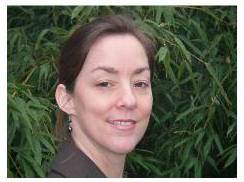
Heather Miller Coyle, Ph.D., serves as Associate Professor in the Forensic Science Department within the Henry C. Lee College of Criminal Justice and Forensic Sciences at the University of New Haven. Her academic appointments span forensic biology, DNA analysis, and botanical evidence applications in criminal investigations. She maintains an active research profile with publications spanning forensic botany, DNA mixture interpretation, and touch DNA analysis. Ph.D. in Plant Biology, University of New Hampshire (1994) M.S. in Plant Science, University of New Hampshire (1989) B.S. in In Vitro Cell Biology, SUNY Plattsburgh (1986) Dr. Miller Coyle's research centers on forensic applications of biological evidence, with particular expertise in DNA for human identification, touch DNA transfer dynamics, DNA mixture interpretation challenges, and botanical evidence analysis. Her work bridges plant biology with forensic science through forensic botany applications, including pollen analysis, seed identification, and plant DNA profiling for criminal casework. She has developed specialized methodologies for botanical evidence collection and interpretation in crime scene contexts. Her publication record shows consistent focus on improving forensic DNA analysis reliability, with recent work examining STR quality control measures, probabilistic genotyping software validation, and haplotype analysis for ancestry determination. The research demonstrates strong interdisciplinary connections between plant biology, molecular genetics, and criminalistics, with practical applications in courtroom testimony preparation and evidence interpretation standards. Dr. Miller Coyle has contributed significantly to forensic education through curriculum development that links laboratory practices to courtroom testimony requirements. Her work includes developing engaging lesson models for biological evidence collection training and classroom resources that prepare students for forensic science careers.
Calvin Coopmans is affiliated with Utah State University in the Department of Electrical and Computer Engineering , contributing to UAV technology and remote sensing. His work focuses on low-cost unmanned systems, flight control, and safety mechanisms. Key research themes include fractional order controllers for UAV stabilization, multi-sensor fusion for attitude estimation, and cost-effective remote sensing platforms . His publications emphasize open-source UAV development and heterogeneous system integration. Notable collaborations include work with YangQuan Chen and other researchers on AggieAir projects. While no explicit scientific awards are listed, his contributions to UAV flight control and radiation field mapping demonstrate technical expertise.
Luis Filipe serves as a Lecturer in Health Economics at Lancaster University, affiliated with the Health Research department and the Data Science Institute. His academic profile centers on rigorous economic evaluation of health interventions with emphases on aging populations, long-term care systems, and health equity. His research program investigates critical intersections of health policy and economics, particularly disability trajectories following acute health events, digital health intervention evaluation, and pandemic response trade-offs. Methodologically, he employs discrete choice experiments, cost-effectiveness analysis, and mixed-methods approaches to address real-world healthcare allocation challenges. Recent work demonstrates growing focus on neighborhood-level health equity metrics and caregiver support systems. Analysis of his 15 most recent publications (2012-2025) reveals consistent high-impact output in health economics journals, with accelerating focus on digital health (2022-2025) and pandemic-related policy analysis. His work increasingly integrates spatial epidemiology and social determinants frameworks while maintaining methodological rigor in economic evaluation. Dr. Filipe's recognition includes: Sespas Award for Best Presentation at the 38th Spanish Health Economics Association Conference Competitive Masters’ Scholarship Competitive Ph.D. Scholarship from FCT (Portuguese national funding agency) He currently supervises PhD candidate Abimbola Onigbanjo-Williams and leads two major research projects: Technologically enabled medication devices and medicine adherence (TEMDMA) (2024-2026) and a UK-focused study on takeaway food consumption drivers (2023-2024). His work receives support through competitive grants and institutional partnerships. As an active member of the Centre for Health Inequalities Research, CHICAS, and the Health Economics research group, he contributes to interdisciplinary collaborations addressing systemic healthcare challenges. His engagement with the Portuguese and European Health Economics Associations demonstrates commitment to shaping health policy discourse.
Professor Qiang Ni is an esteemed academic at Lancaster University , affiliated with the School of Computing and Communications , Data Science Institute , and Security Lancaster Center . Currently serving as Head of Communication Systems Research Group , School Director of International Partnership , and Theme Lead in Security and Defence at the Lancaster Intelligent, Robotic and Autonomous Systems (LIRA) Research Centre , he has previously held roles as School Director of Postgraduate Studies and Deputy Director of Research . Research focus areas include Wireless Networks/Communications , IoT , Cyber Security , AI , Digital Twins , and Quantum Communication Key projects involve INTACT (secure IoT-to-Cloud), CoGNETs (swarm intelligence), SustainAIRA6G (AI-driven resource allocation), and TRACE-V2X (multi-RAT traffic steering) Recent publications address 6G communication design , quantum neural networks , blockchain-based border control systems , and intelligent vehicular networks As an IEEE Senior Member and IEEE Communications Society Distinguished Lecturer , he chairs editorial boards for IEEE Transactions on Green Communications and JSAC Machine Learning Series . His supervision spans Wireless Communication , Big Data Analytics , and Quantum Machine Learning PhD research topics. Active in H2020 , Horizon Europe , and UKRI funded projects, he also contributes to IEEE standard committees.
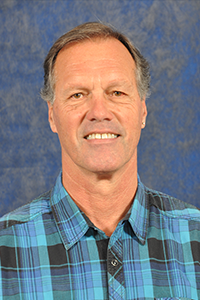
Romuald N. Lipcius serves as a Professor at William & Mary's School of Marine Science within the Virginia Institute of Marine Science (VIMS), specializing in marine conservation ecology and biomathematics. His research focuses on population dynamics of key species including blue crabs, eastern oysters, and spiny lobsters, with emphasis on metapopulation dynamics, habitat restoration, and ecosystem-based fisheries management. His research interests center on quantitative approaches to marine conservation, particularly: Mathematical modeling of population dynamics and source-sink metapopulations Evaluation of nursery habitats for commercially important species Predator-prey interactions and food web dynamics in estuarine ecosystems Restoration ecology of oyster reefs and seagrass habitats Ecosystem services valuation of coastal habitats His work integrates field studies with sophisticated mathematical models to inform sustainable fisheries management. Analysis of Dr. Lipcius' 15 most recent publications reveals strong focus on quantitative restoration ecology (60% of works), particularly oyster reef dynamics and habitat suitability modeling. A significant portion (35%) addresses blue crab population ecology including survey methodology improvements and habitat-nursery relationships. His research consistently demonstrates interdisciplinary approaches combining field ecology, mathematical modeling, and ecosystem service valuation. Dr. Lipcius actively mentors graduate students, currently advising Dave Schulte (Ph.D. candidate) on oyster restoration and Kristen Bachand (M.S. candidate) on seagrass nursery habitats for blue crabs. His laboratory, jointly operated with Dr. Rochelle Seitz, maintains active research programs in marine conservation ecology and community dynamics.
Carlos Jerónimo is a computer & telematics engineer (University of Aveiro) with a PhD in Business Administration from ISCTE – University Institute of Lisbon, currently faculty at Iscte Business School / ISCTE Executive Education . A founding partner of Winning Scientific Management, he combines academic teaching with strategic consultancy for banking, insurance, health, telco and public sectors, specialising in project, programme and benefits management aligned with PMI®, ITIL and balanced-scorecard frameworks. Education & Certifications PhD in Business Administration, ISCTE-IUL Computer and Telematics Engineering, University of Aveiro Certificate of Teaching Competency (CAP) – ISCTE PMP® – Project Management Professional, PMI® ITIL Foundation, EXIN MCP – Microsoft Certified Professional (Project) MCI Level 1 – Management Consulting Institute Research Interests Jerónimo’s research integrates project management methodologies with digital transformation , health-care management and business-model innovation . He employs bibliometric and systematic-review approaches to map knowledge domains such as virtual teams, patient-centric care, R&D financing and sustainable consulting models, producing actionable frameworks for practitioners. Publication Trends Across 2021-2024 he published extensively on project management in health and digital contexts , covering AI-supported project control, benefits realisation in public health programmes, and COVID-19 impacts on hospitality business models. His work is characterised by cross-disciplinary keywords: project governance, knowledge transfer, service design, simulation and bibliometric analysis. Professional Service & Grants He served as Vice-President of PMI Portugal (2015-2018) and regularly mentors start-ups and speaks at management conferences. While specific grant numbers are not disclosed, his projects frequently involve publicly co-financed R&D initiatives and health-sector innovation contracts . Labs & Teams Within Winning Scientific Management he leads the Technological Innovation & Quality Assurance unit, overseeing applied research teams that develop decision-support tools (e.g., BCTool, Pereira Market Scan) for health foundations and public administration.
Selina M. Stasi is an Assistant Professor at the School of Public Health, Texas A&M University , specializing in community-engaged research and physical activity promotion. Her work focuses on reducing health disparities through asset mapping, trauma-informed approaches, and cross-sector collaborations. DrPH (2018), MPH (2014), BA in Sociology & Asian American Studies (2012) Professional Certifications: STRIDE Training, Green Dot Facilitator, GIS Graduate Certificate Her research bridges public health and community development , emphasizing: Physical activity access in underserved populations Geospatial mapping of health assets Strength-based community mobilization Clinic-community-church partnerships Her publications (2014-2020) highlight trends in: Community-engaged interventions Policy impacts on physical activity access Medical education reforms for preventive care Technology-assisted wellness programs Scientific Recognition : Faculty Fellow, Center for Health and Nature American Journal of Health Promotion Article of the Year (2019) As advisor and committee member, she has guided: Practicum programs and academic advising (2018-2022) Curriculum reform (2023-2025) Health and wellness initiatives (2015-2022)
Professor Martin Behnisch holds the Professorship for Spatial Information and Modelling at Dresden University of Technology (TUD) since 2023 and leads the same research area at the Leibniz-Institute of Ecological and Regional Development since 2011. He has held academic roles including Lecturer at Technische Universität Dortmund (2007–2011) and Senior Lecturer at Tianjin University (2005–2007). Diploma: Architecture (KIT, 1995–1998) MSc in Geographical Information Science and Systems (summa cum laude, Paris Lodron University Salzburg, 2004–2007) PhD (summa cum laude, Karlsruhe Institute of Technology, 1998–2004) His research interests span Spatial Data Science , Urban Sprawl , Building Stock Dynamics , and GIScience for Sustainable Urban Development , with a focus on data-driven approaches to monitor land consumption, soil sealing, and urban metrics. He has led major projects funded by DFG , SNF , BMBF , and BMWI , including analyses of urban solar potential , non-residential building databases , and insect biodiversity in protected areas . Recent publications (2024–2025) address residential infill determinants , urban sprawl drivers , and hybrid energy modeling , emphasizing spatiotemporal analysis. Earlier works (2018–2023) explored cluster analysis for land use patterns, 3D urban modeling , and crowdsourcing façade data . Key Collaborations : Associate Professor Dr. Jochen A.G. Jaeger (Concordia University), Prof. Dr. Markus Neppl (KIT), Prof. Niklaus Kohler (ETH Zurich) Grants : DFG (land use change), SNF (building stock conservation), BMWi (solar potential), BBSR (non-residential data), UBA (settlement trends) Editorial Roles : Guest Editor for ISPRS International Journal of Geo-Information and Environment and Planning B
Temesgen Abera serves as a Visiting Professor in the Department of Geosciences and Geography at the University of Helsinki's Faculty of Science. His research focuses on integrating Earth observation technologies with environmental science to address pressing ecological challenges in East Africa and Ethiopia. With extensive involvement in international research projects funded by organizations like the European Commission, he specializes in applying geospatial analysis to climate-smart agriculture, forest conservation, and sustainable land management. His research interests span Remote sensing , Climate change , Geosciences , and Biogeophysics , with particular emphasis on land use change impacts, ecosystem services valuation, and Afro-alpine ecosystem dynamics. His work bridges technical geospatial methodologies with practical applications for climate adaptation in vulnerable agricultural communities, especially in East Africa. Recent publications demonstrate innovative applications of machine learning with satellite data for bamboo forest monitoring, honey bee forage mapping, and deforestation impact assessment. Analysis of his 21 research outputs (2018-2024) reveals a strong focus on Environmental Monitoring (78%), Climate Adaptation (65%), and Geospatial Technology (92%), with increasing emphasis on machine learning applications in Earth observation. His work consistently applies remote sensing to solve real-world ecological problems in African contexts, particularly Kenya and Ethiopia. Abera actively contributes to academic service through peer review for leading journals including Remote Sensing of Environment and International Journal of Remote Sensing , and has developed teaching materials for remote sensing courses. His project portfolio includes significant European Commission-funded initiatives like TAITASMART and ESSA, which focus on developing climate-smart landscape frameworks to improve food security in East Africa. He leads and participates in research teams focused on geo-information analysis capacity building, particularly through the GACBE project in Ethiopia. His collaborative network spans multiple institutions across Finland, Kenya, Ethiopia, and other European countries, with strong emphasis on practical applications of geospatial technologies for sustainable development.