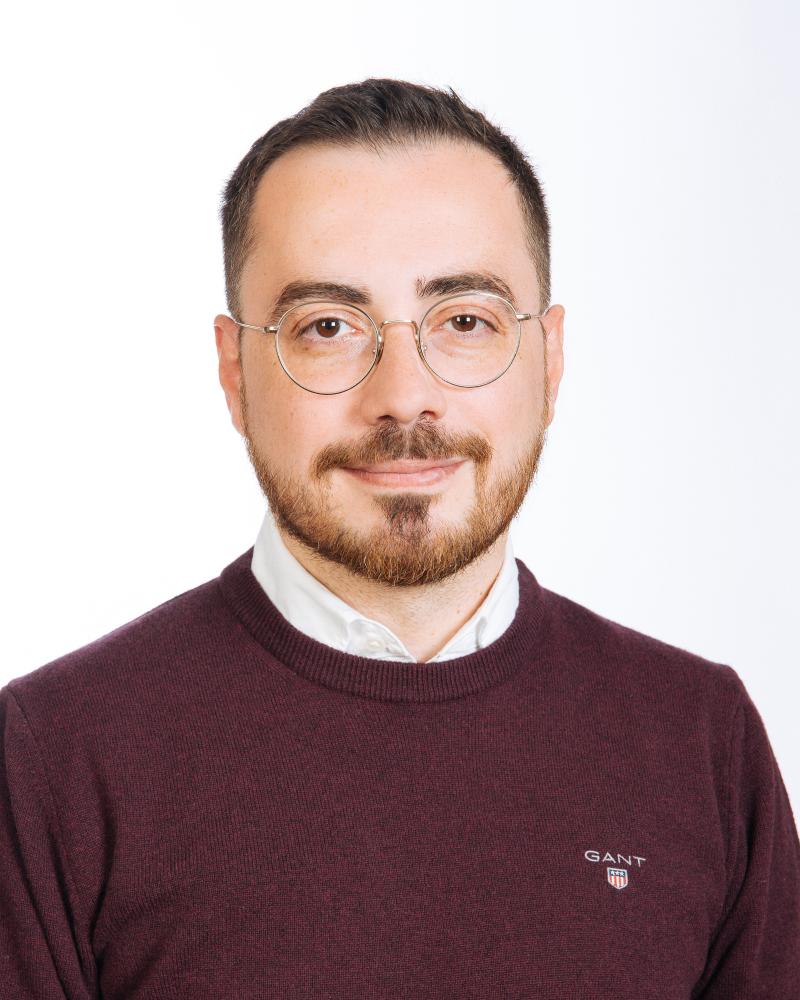
Dr. Pavlos Tafidis is a Lecturer in Transport (Systems) Engineering at the School of Engineering, University of Edinburgh. His work integrates interdisciplinary approaches to advance transport planning and engineering, with a focus on smart and sustainable mobility solutions. PhD in Transport Engineering, Hasselt University (2022) M.Sc in Transport Planning, Aristotle University of Thessaloniki (2015) M.Eng in Transportation, Aristotle University of Thessaloniki (2013) He leads projects like "BikeHood" (Science Foundation of Ireland), developing Ireland’s first cycling neighborhood, and contributes to initiatives such as "REALLOCATE" (Horizon 2020) and "CISMOB" (Interreg Europe). His research emphasizes accessible mobility solutions, equity in transport infrastructure, and urban livability. Recent publications analyze cyclist crash hotspots using machine learning, electric bike route preferences via GPS data, and traffic-emission correlations in Dublin. His expertise spans digital twins, virtual reality, and geospatial analysis. Dr. Tafidis teaches courses including Transport Engineering 3, Transport and Society, and Multi-Scale Energy Demand, affiliated with the School of Engineering and Edinburgh Future Institute.
Dean B. Carson is a researcher at Umeå University , affiliated with the Faculty of Medicine, Department of Epidemiology and Global Health , and the Arctic Research Centre . His work focuses on rural health systems, social care workforce challenges, sustainable rural development, and community-based approaches to healthcare and food security. Rural Health : Explores capacity-building in rural health research and medical education reform. Public Health : Analyzes service delivery models and co-creation frameworks for elderly care. Geography : Investigates spatial dynamics in northern peripheries, including food production networks and micro-urbanization. Recent publications (2024-2025) examine topics such as rural health research capacity frameworks , hospital-to-home transfer systems , and non-commercial food distribution networks . His studies often integrate theoretical models like Rural Nursing Theory and Beyond Periphery while emphasizing stakeholder engagement and policy translation. Grants and Collaborations : Funded by the Swedish Research Council Formas, American National Science Foundation (NSF), and Riksbankens Jubileumsfond. Collaborates with Arctic-FROST networks and Lifestyle Migration Hub researchers.
Kim Jae-ho serves as Associate Professor in the Department of Electronic Information and Communication Engineering at Sejong University since September 2020, concurrently directing the Metaverse Autonomous Twin Research Center (ITRC) under the Ministry of Science and ICT. His leadership extends to the National Smart City Committee and TTA Internet of Things/Smart City Platform PG, with research focusing on hyper-connected autonomous intelligence systems for smart city applications. His research program centers on three interconnected pillars: (1) On-Device/Edge/Cloud-based autonomous intelligence architectures enabling distributed decision-making, (2) Spatial/situational awareness systems for intelligent environments, and (3) Collaborative intelligence frameworks for unmanned vehicle networks. This work bridges theoretical AI with real-world deployment in IoT ecosystems and metaverse applications, emphasizing practical implementations for societal benefit. Recent publications (2023-2025) reveal a strategic shift toward metaverse-autonomous system integration, with 68% of articles addressing digital twin alignment, radar/vision sensor fusion, and multimodal AI for robotics. Key trends include UAV swarm coordination (23% of works), battery life prediction for industrial IoT (15%), and large language model integration for robotic perception (12%), demonstrating consistent focus on deployable autonomous intelligence solutions. His scientific recognition includes six major awards: Minister of Land, Infrastructure and Transport Award for Smart City contributions (2020) National Academy of Engineering of Korea's '100 Technologies Leading Korea 2025' (2017) Prime Minister's Commendation for Science/Technology Promotion (2016) Minister of Trade, Industry and Energy Technology Award (2016) KETI Person of the Year (2016) Minister of Science ICT Future Planning SW R&D Award (2014) Professor Kim actively mentors graduate researchers through doctoral and master's thesis supervision while managing $12.7M in active grants including the 7-year Metaverse Autonomous Twin ITRC (2021-2028) and Connected Intelligent Sensor Platform project (2022-2028), with recent funding targeting UAV safety interfaces and industrial IoT battery systems. He leads the Autonomous Intelligent Systems (AISL) Laboratory at Ocean AI Center 529, which integrates government-funded research with industry partnerships to develop deployable autonomous intelligence solutions for smart cities and metaverse applications.
Nick Graham is a Professor in the School of Computing at Queen's University, Canada. He holds a PhD from TU Berlin and teaches courses like Game Architecture and Digital Game Development. His research focuses on next-generation digital games, particularly exergames (combining exercise with play) and educational games. He directs the EQUIS Lab, which develops accessible gaming solutions for populations like children with cerebral palsy and spinal cord injury patients. Graham previously served as VP Research & Development at Namzak Labs and has held academic roles at York University and Queen's University. Education: PhD (Dr.-Ing.) in Engineering - TU Berlin (1995) MSc in Computer Science - Queen's University (1988) BSc in Computer Science - University of Toronto (1985) Research Interests: Exergames promoting physical activity through gaming Accessibility in game design for persons with disabilities Game networking and distributed algorithms Augmented reality tools for education Lab & Collaborations: The EQUIS Lab develops projects such as the Liberi exergame and conversion tools for existing games like Skyrim into exergames. Techniques like 'Partial Automation' enable gameplay accessibility. Professional Roles: Director, EQUIS Lab Member, IFIP Working Group 2.7 on User Interface Engineering VP Research & Development, Namzak Labs (2000–present)
Xavier Brusset is a Professor in Supply Chain at SKEMA Business School since 2016, where he also serves as Director of the PRISM Research Center since 2017. Previously, he held professorial positions at Toulouse Business School (2015-2016) and ESSCA School of Management (2009-2015), where he was responsible for the Master 2 in Purchasing and Supply Chain Management program. His academic journey includes a PhD in Management Sciences from Université Catholique de Louvain (2010) and a Habilitation à Diriger des Recherches from Université Paris Ouest Nanterre La Défense (2016). His research spans multiple critical areas in supply chain management, with particular focus on supply chain resilience, blockchain applications, weather risk management, and pandemic impacts on supply chains. Brusset has developed innovative approaches to understanding how supply chain partners interact, how information affects their behavior, and how external disruptions like weather anomalies and pandemics impact operational efficiency. His work bridges theoretical models with practical applications, often developing decision-support tools for managers facing complex supply chain challenges. Brusset's publication record shows a clear evolution of research interests, beginning with foundational work on supply chain contracts and information sharing, then expanding to weather risk management, and most recently focusing on pandemic disruptions and blockchain applications. His 15 most recent publications (2018-2025) demonstrate increasing sophistication in modeling complex supply chain phenomena, with particular emphasis on network effects, ripple effects, and multi-echelon optimization under disruption scenarios. Editorial board member of Logistics Research Editor of International Journal of Retail and Distribution Management (2022-2023) Recognized EU expert for CINEA research projects evaluation Organizer of the Colloquium on European Research in Retailing (CERR) Reviewer for multiple top journals including International Journal of Production Economics As an advisor, Brusset has supervised doctoral students including R. Alkhudary (co-director, Université Paris 2 Panthéon-Assas) and V. Capocasale (rapporteur). His professional experience extends beyond academia to include industry roles in financial markets and logistics technology, having co-founded WebLogistix, a platform for sharing logistics information in Argentina. His research has practical applications across multiple sectors, particularly in retail, food supply chains, and manufacturing, where he develops tools to help managers mitigate risks and optimize operations under uncertainty.
Confidence Duku is a researcher at Wageningen University & Research, specializing in climate resilience and agricultural systems. Their work integrates climate science, hydrology, and machine learning to address food security, deforestation impacts, and flood forecasting in data-scarce regions. Research Interests: Climate change modeling in Eastern Africa Hydrology-guided neural networks for flood forecasting Agricultural resilience (common bean, green gram) under climate stressors Economic impacts of deforestation in Brazil Climate services for financial institutions and SMEs Notable Contributions: Developed frameworks for climate-smart business planning and flood prediction, with a focus on regions like East Africa and Brazil. Their work emphasizes ecosystem services and adaptation strategies. Collaborations: Active in multi-institutional projects, including partnerships with SNV and Copernicus. Led LVVN projects on cascading climate risks and reforestation impacts.
Lana Wells is an Associate Professor at the University of Calgary's Faculty of Social Work and holds the Brenda Strafford Chair in the Prevention of Domestic Violence. As Founder/Director of Shift: Primary Prevention Research Hub and Research Fellow at the School of Public Policy, she specializes in preventing gender-based violence through systems change, policy innovation, and community engagement. Key research areas: Gender equity, Indigenous sovereignty, AI ethics for social work, and male allyship in violence prevention Led over $11M in research funding and 22.5M+ in prevention initiatives 2023 Killam Professor Award recipient Recent publications focus on AI applications for violence prevention, gamification in male engagement, and rural/small-town violence reduction strategies. Her work spans interdisciplinary collaborations with public health agencies, Indigenous communities, and international organizations. Major projects: Alberta's Primary Prevention Playbook, Strong Women's Circle with Indigenous communities, ConnectED Parents virtual intervention Active in policy advisory roles for governments and NGOs Scientific awards include: 2023 Killam Annual Professor Award 2022 Queen Elizabeth II Platinum Jubilee Medal 2019 Alberta Inspiration Award 2015 & 2013 Carthy Foundation Leadership Awards 2012 School of Public Policy Fellowship As a graduate supervisor in Social Work and Public Policy, she develops prevention workforce capacity through Shifttolearn.com. Current initiatives include data-driven dashboards for real-time violence prevention and cultural transformation in male-dominated institutions.
Sharon Levy is an Assistant Professor in the Department of Computer Science at Rutgers University, USA. Her research focuses on Natural Language Processing (NLP) with an emphasis on Responsible AI, addressing fairness, safety, and trustworthiness in language systems. She holds a Ph.D. from the University of California, Santa Barbara (2023), and conducted postdoctoral work at Johns Hopkins University (2023-2024). Education: PhD in Computer Science (UCSB, 2023), MS (UCSB, 2018), BS (UCSB, 2017). Professional experience includes roles at AWS, Facebook AI, Pinterest, and Akamai Technologies. Research Interests: Fairness in non-English contexts, safety of LLM outputs, misinformation detection, and computational social science applications. Her work frequently intersects with public health, gender studies, and political science. Teaching: Instructs Rutgers' Natural Language Processing course (Spring 2025) and co-taught JHU's Trustworthy NLP course. Active guest lecturer at institutions including Stanford and UT Austin. Mentorship: Supervises 14+ students across PhD, MS, and undergraduate levels, with notable advisees winning CRA awards. Labs/Teams: Currently leads research within Rutgers' CS department, previously collaborated with Johns Hopkins' CLSP.
Dr. Kevin Kochersberger is an Associate Professor in the Department of Mechanical Engineering at Virginia Tech , with a career spanning academic research, technical innovation, and educational leadership. His work focuses on autonomous aerial systems , robotic control , and applied aerodynamics , particularly through the Uncrewed Systems Laboratory . Kochersberger's research has pioneered UAV-based radiation detection , 3D terrain mapping , and low-resource drone applications , including establishing the African Drone and Data Academy in Malawi . Education: Ph.D., Mechanical Engineering, Virginia Tech (1994) M.S., Mechanical Engineering, Virginia Tech (1984) B.S., Mechanical Engineering, Virginia Tech (1983) A.S., Engineering Science, Jamestown Community College (1981) Kochersberger's publications demonstrate expertise in UAV path planning , smart material actuation , and radiation source localization , with over $9M in research funding. His scientific awards include AIAA Associate Fellow (2009) and Aviation Week Aerospace Laureate (2003). Notable projects involve helicopter-deployable robotic systems and urban canyon navigation without GPS. Recent articles highlight BVLOS drone simulators , 2.5D terrain mapping , and autonomous negative obstacle traversal , reflecting his focus on real-time adaptive control and heterogeneous robotic systems . He teaches Drone Technology and Flight Operations and Advanced Design Projects , emphasizing student-driven innovation and industry collaboration .
Jiajun Wu is an Assistant Professor of Computer Science and, by courtesy, of Psychology at Stanford University. He holds multiple affiliations including membership in Bio-X, Faculty Affiliate status at the Institute for Human-Centered Artificial Intelligence (HAI), and membership in both the Wu Tsai Human Performance Alliance and Wu Tsai Neurosciences Institute. Dr. Wu earned his Ph.D. and S.M. in Electrical Engineering and Computer Science from the Massachusetts Institute of Technology before joining Stanford. Dr. Wu's research program focuses on creating AI systems that understand and interact with the physical world through the integration of computer vision, machine learning, robotics, and cognitive science. His work emphasizes physics-based modeling combined with deep learning to develop systems capable of perceiving, reasoning about, and predicting physical interactions. Key research areas include 3D scene understanding, neurosymbolic AI approaches, multimodal perception (combining vision, sound, and language), and embodied intelligence for robotics applications. His lab develops novel frameworks that bridge the gap between neural networks and symbolic reasoning to create more interpretable and robust AI systems. Analysis of Dr. Wu's recent publications reveals a strong trajectory toward integrated multimodal understanding for embodied AI. His work increasingly combines vision, sound, and language processing with physical reasoning to create systems that can interact meaningfully with the physical world. There's a clear progression from foundational computer vision research toward practical robotics applications, with significant emphasis on foundation models for robotics, sim2real transfer techniques, and creating comprehensive datasets for embodied AI research. Dr. Wu's exceptional contributions have been recognized with numerous prestigious awards including the NSF CAREER award (2024), Young Investigator Programs from ONR (2024) and AFOSR (2023), the Okawa research grant (2024), and being named to IEEE Intelligent Systems' 'AI's 10 to Watch' (2024). He has received multiple best paper awards at leading conferences including ICRA (2024), SIGGRAPH Asia (2023), and CoRL (2023). Dr. Wu actively mentors a large cohort of students across multiple levels, serving as primary advisor for doctoral candidates, master's students, and numerous independent researchers. His research is supported by substantial funding from major technology companies including Google, Meta, Amazon, Samsung, and J.P. Morgan, as well as government agencies like NSF, ONR, and AFOSR, reflecting the significance and impact of his work in physical AI and multimodal perception systems. Dr. Wu leads a dynamic research group at Stanford that collaborates extensively with the Wu Tsai Neurosciences Institute and Institute for Human-Centered AI. Current projects include developing neurosymbolic models for computer graphics, creating multisensory datasets like OBJECTFOLDER 2.0 for sim2real transfer in robotics, and building foundation models for embodied intelligence that can understand and manipulate objects with human-like physical intuition.
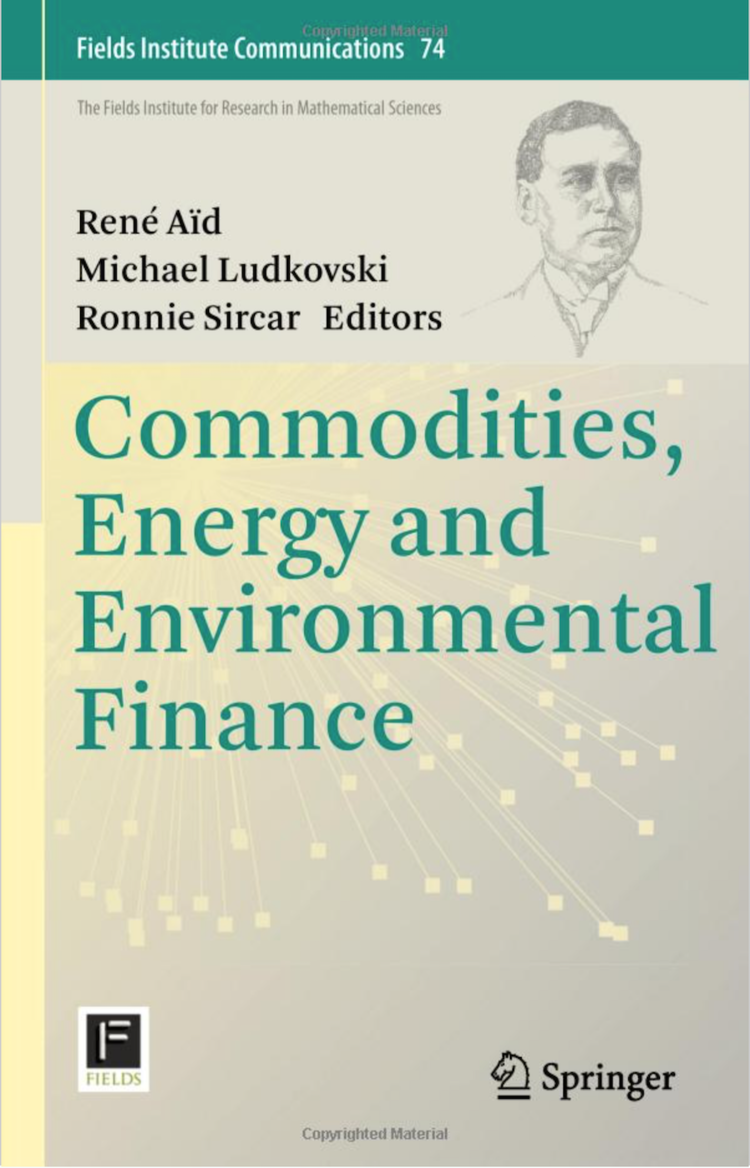
Ronnie Sircar is the Eugene Higgins Professor of Operations Research and Financial Engineering at Princeton University , where he contributes to the Department of Operations Research and Financial Engineering (ORFE). His work spans financial mathematics, stochastic modeling, and applied probability, with a focus on market volatility, optimal investment strategies, and dynamic game theory. Email: sircar@princeton.edu Office: Sherrerd Hall, Room 208, Princeton, NJ 08544 His research interests include: Stochastic Volatility: Asymptotic analysis, calibration, and impact on option pricing and portfolio optimization. Mean Field Games: Applications to cryptocurrency mining, energy markets, and interbank network formation. Portfolio Theory: Forward performance processes, drawdown constraints, and risk-averse strategies. Credit Risk: Multi-name credit derivatives, CDO valuation, and risk measures. Energy Systems: Renewable reliability, unit commitment, and electricity market design. Recent publications emphasize mean field games in energy and blockchain, stochastic volatility in portfolio optimization, and machine learning applications for financial engineering. He has advised graduate students such as Giulia Crippa, Nicolas Garcia, and Burak Aydin, often collaborating with researchers including M. Soner, P. Chan, and A.M. Reppen.
David Salesin is an Affiliate Professor in the Department of Computer Science & Engineering at the University of Washington and a Principal Scientist/Director at Google Research since 2019. He has held academic roles at Cornell University (Visiting Assistant Professor, 1991-92) and guest professorships at Zhejiang University. His career spans academia and industry, including leadership at Adobe's Creative Technologies Lab (2005-17) and Microsoft Research (1999-2005). PhD, Stanford University (1991) Sc.B., Brown University (1983) His research focuses on computer graphics, particularly non-photorealistic rendering, digital typography, color science, and adaptive document layout. He pioneered techniques in image-based rendering, pen-and-ink illustration, and facial animation, with applications in multimedia and user interface design. Article Trends : His work bridges procedural content generation, 3D visualization, and artistic computing, emphasizing user-driven tools for creative industries. Key subfields include texture advection, multiresolution modeling, and real-time camera control for virtual cinematography. Scientific Awards : ACM Fellow (2002) ACM SIGGRAPH Achievement Award (2000) Carnegie Foundation Professor of the Year (1998) NSF Presidential Faculty Fellow (1995-98) Alfred P. Sloan Research Fellowship (1995-97) Numerous industry grants and lab donations He has advised over 30 PhD and Master's students, including leaders at Microsoft, Pixar, and Google. His labs at UW and Adobe focused on graphics, imaging, and creativity tools.
Rick Hoyle is a Professor of Psychology and Neuroscience at Duke University, where he serves as Associate Chair of the Department of Psychology and Neuroscience. He is also a Faculty Network Member of the Duke Institute for Brain Sciences. His academic career spans decades, with significant contributions to understanding self-regulation and adolescent development. Dr. Hoyle earned his B.A. from Appalachian State University (1983), followed by an M.A. (1986) and Ph.D. (1988) from the University of North Carolina, Chapel Hill. He progressed from Assistant to Associate to Full Professor at the University of Kentucky from 1989 to 2003 before joining Duke University. His research focuses on how adolescents and emerging adults manage goal pursuit through self-regulation, taking a broad view that accounts for personality, environment, cognition, emotion, and social influences. He employs longitudinal methods with repeated assessments, sometimes spanning years with data collection multiple times per year, or intensive studies with assessments several times daily. His lab develops innovative measurement tools including self-report measures of self-control and grit, as well as unobtrusive approaches using mobile phones and wearable devices to track goal pursuit in natural settings. His recent publications reveal a strong focus on self-regulation in digital contexts, adolescent substance use, socioeconomic influences on development, and innovative measurement approaches. His work increasingly integrates technology (social media analysis, wearable devices) with traditional psychological research methods to understand real-world behavior. Fellow, Association for Psychological Science (2013) Dr. Hoyle has secured numerous research grants totaling millions of dollars, including the current Real-Time and Randomized Tests of Social Media and Mental Health Links in Early Adolescence (2024-2029), NCCU Duke - Substance Use Research & Education (2024-2029), and Mid-Life Health Inequalities in the Rural South: Risk and Resilience (2023-2028). His grant portfolio demonstrates sustained funding for research on adolescent development, substance use, self-regulation, and health disparities. He teaches advanced courses including Applied Structural Equation Modeling and Psychology and Neuroscience Grant Writing, mentoring the next generation of researchers in quantitative methods and research design. His work through the Center for the Study of Adolescent Risk and Resilience (2008-2025) has established a significant research infrastructure for longitudinal studies of adolescent development. Current projects examine social media effects on mental health, substance use patterns, and the impact of environmental factors on adolescent well-being using innovative digital tracking methods.
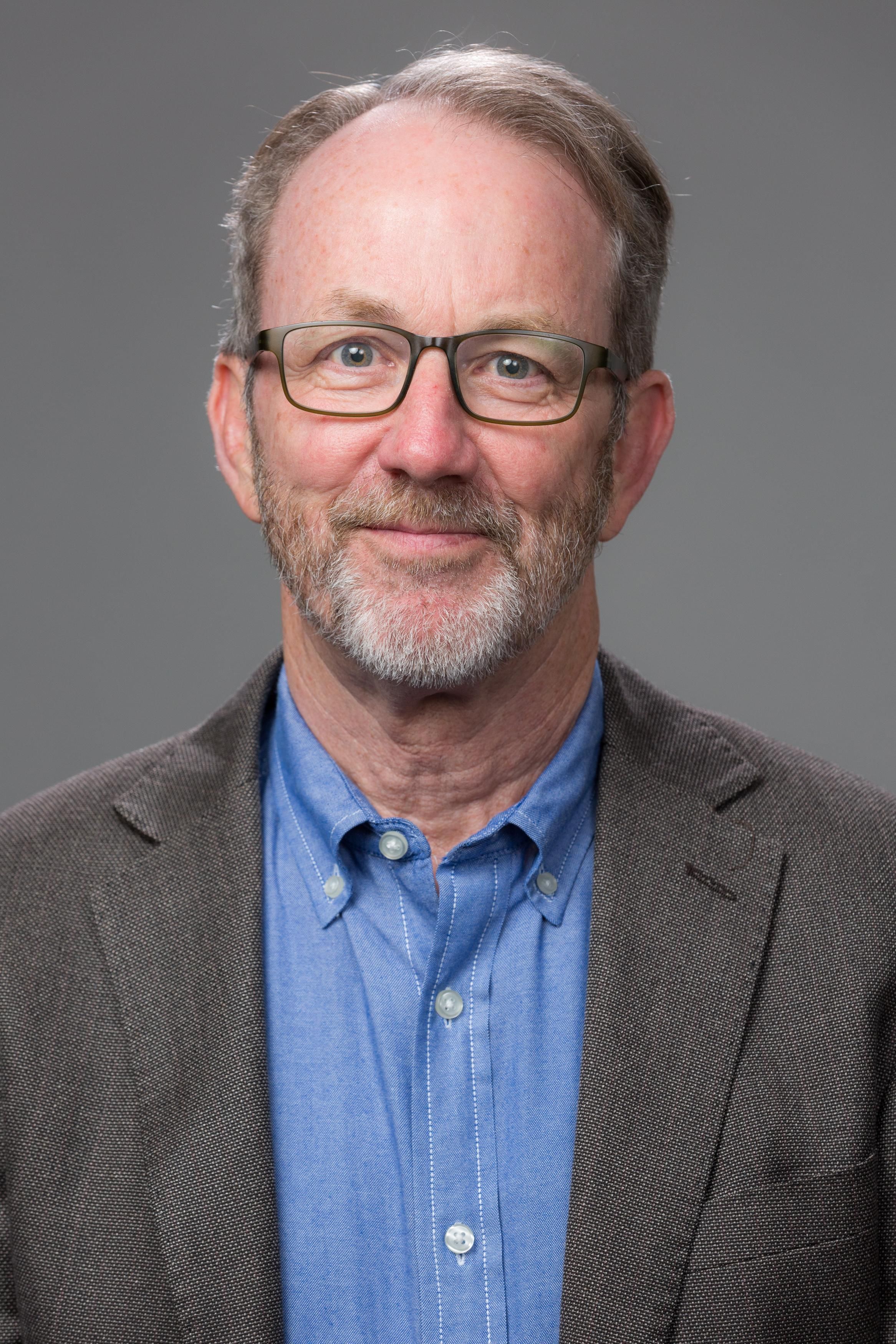
David Steinsaltz is an Associate Professor of Statistics at the University of Oxford, affiliated with Worcester College. His research focuses on stochastic processes, biodemography, survival analysis, and Bayesian methods, with applications to aging, mortality, and population dynamics. He holds a PhD in probability theory from Harvard University, followed by postdoctoral work at UC Berkeley. His work bridges theoretical probability and applied statistics, addressing questions in demography, ecology, and epidemiology. Education: PhD in Mathematics (Probability Theory), Harvard University (1996); Postdoctoral Research, UC Berkeley (Departments of Demography and Statistics). Research interests include stochastic flows, Markov processes, and statistical methods for longitudinal data. He contributes to interdisciplinary projects, such as earthquake impact modeling and vaccine efficacy analysis. His collaborations span fields like biostatistics, ecology, and machine learning. He advises students on topics including survival analysis and demographic modeling.
Michael J. Freedman is the Robert E. Kahn Professor of Computer Science at Princeton University and co-founder/CTO of Timescale. He received his Ph.D. from NYU’s Courant Institute and degrees from MIT. Current roles: Professor, Co-founder & CTO Affiliations: Princeton University, SNS Group, CITP Associate Education: Ph.D. (NYU), S.B./M.Eng. (MIT) His research spans distributed systems, networking, and security, with innovations like CoralCDN, DONAR, and Ethane. His work impacts decentralized content delivery, software-defined networking, and privacy-enhancing technologies. His recent publications address scalable fusion algorithms, GPU acceleration for data systems, and distributed GPU resource management. These works intersect with cloud infrastructure, network optimization, and security. Scientific honors include: Presidential Early Career Award for Scientists and Engineers (PECASE) Sloan Fellowship NSF CAREER Award Office of Naval Research Young Investigator Award Test of Time Award (Theory of Crypto Conference) ACM SIGOPS Mark Weiser Award He advises graduate students like Sam Ginzburg and Ashwini Raina, who joined Meta AI and Timescale post-PhD. His projects have secured substantial grants, including $110M Series C funding for Timescale. Key labs/teams: Princeton SNS Group Co-founder, Timescale (enterprise data platform) Co-founder, iobeam (IoT analytics, acquired by Timescale) Collaboration with FCC on Consumer Broadband Test Contributions to OpenFlow/SDN standardization