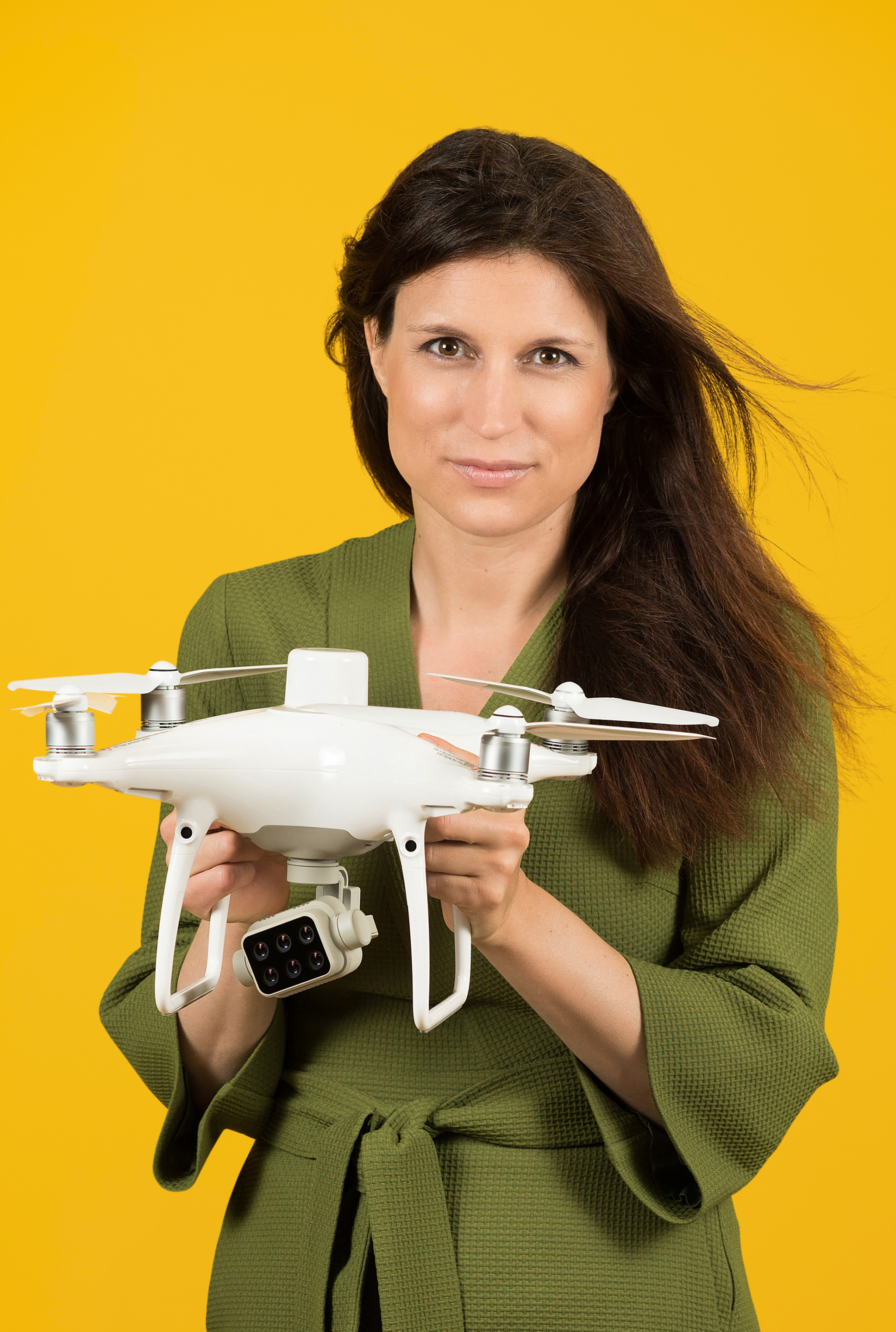
Frédéric Roulier is a Lecturer at the University of Picardie Jules Verne within the School of Human and Social Sciences , specializing in Geomatics . His research focuses on positional cartographic transformations, geometric morphometrics, spatial cognition in GIS, and GIS software development. He leads transdisciplinary projects integrating geographic and psychological methodologies. Research Themes : Shape comparison of maps/surfaces, two-dimensional regression, multiquadratic interpolation Projects : smallFOREST, EolREG, allFOREST Software : Morphoses Plugin (2012-2016), MapMorphy (2016-present), TPStoSHP converter His recent publications (2018-2025) demonstrate continuous innovation in geospatial modeling and cognitive cartography. Educational contributions include teaching thematic mapping, GIS concepts, and geomatic data applications in social sciences.
Julie Cosgrove serves as a Contract Lecturer in Drawing within the Department of Visual Arts at Lakehead University, a position she has held since 2012. Her role encompasses teaching drawing courses and contributing to the academic framework of the Visual Arts program through her specialized expertise in process-based artistic practices. Her academic qualifications include: Master of Fine Arts, University of Calgary Honours Bachelor of Fine Arts, Lakehead University DEC, Dawson College Her research investigates process painting and drawing as methodologies to explore concepts of place and space, with particular emphasis on wilderness environments, navigation systems, and cartographic traditions. She examines how artistic practices intersect with geographical representation, integrating field experiences from wilderness guiding into studio-based experimentation. This work bridges visual arts and spatial theory, focusing on how technologies shape human perception of landscape and movement while emphasizing embodied engagement with natural environments. Prior professional experience as an independent artist and wilderness guide directly informs her pedagogical approach, which prioritizes direct observation and experiential learning in natural settings. Her teaching encourages students to develop artistic responses to spatial relationships through hands-on engagement with landscape and navigational practices.
Dubois Alain is an Associate Professor at the HES-SO (University of Applied Sciences and Arts Western Switzerland), affiliated with the School of Landscape, Engineering and Architecture and the Department of Landscape Architecture . His primary competencies include Geographic Information Systems (GIS) and BIM (Building Information Modeling) systems. 2021 : Co-author of Étude pour la planification de la plantation d’arbres sur la commune de Plan-les-Ouates , focusing on urban greening and biodiversity. 2020 : Contributed to Recherche-Action sur les lisières et les paysages urbains (Interreg France-Suisse), exploring urban-rural interfaces and ecological corridors. 2020 : Co-authored Cartographie d’indicateurs de prestations écosystémiques finales , analyzing ecosystem services and biodiversity in Geneva. His research spans GIS applications , urban ecological planning , and 3D/4D modeling for territorial development. Projects include drone-based vegetation monitoring for carbon sequestration, solar cadastre updates, and integrated aquatic vegetation management. Dubois has collaborated extensively on interdisciplinary initiatives addressing urban expansion, ecological connectivity, and sustainable land-use policies.
Florent Joerin is a Full Professor and Director of the Institute of Territorial Engineering (INSIT) at HES-SO, School of Engineering and Management of the Canton of Vaud. He holds a Ph.D. in Rural Engineering and Environment from École Polytechnique Fédérale de Lausanne (Switzerland) and serves as an associate member of Laval University's Research Center for Planning and Development. Education: Ph.D. from EPFL His research focuses on participatory urban planning and territorial decision-making processes , particularly examining spatial information integration in social participation frameworks. Key projects include climate governance studies in Swiss cities and cross-border sustainable neighborhood planning initiatives. Scientific Contributions span climate policy integration (2022), 3D visualization tools (2023), and groundwater planning methodologies (2015). He led major grants like the Interreg IVA France-Suisse transnational eco-district center and the Interreg Jura Arc territorial decision support system. Collaborative Networks include partnerships with Laval University, Université de Franche-Comté's Théma Lab, and institutions like hepia inPACT. His work emphasizes institutional design for climate integration and equity in participatory processes.
Associate Professor Bianca Hester is a multidisciplinary artist, writer, and educator at the University of New South Wales , within the School of Art & Design . Her practice-led research interrogates the environmental aesthetics of the settler-colonial Anthropocene through relational feminist methodologies experimental fieldwork embodied site-writing collaborative projects that explore material conditions across Australian landscapes. Her recent research Lithic Bodies (funded by Australia Council for the Arts) investigates geological memory through sculptural interventions. Key collaborations include Open Spatial Workshop (2003-present) and the Space, Place and Country research cluster (2013-2016). Hester combines artistic practice theoretical inquiry public engagement educational leadership grant-funded research interdisciplinary publication to create expansive forms of public art.
Professor Michael Bravo is a faculty member in the Department of Geography at the University of Cambridge, affiliated with the Scott Polar Research Institute and Downing College as a Fellow in Geography. His work bridges the history and public policy of the Polar Regions, with a focus on the Arctic, examining issues such as resource extraction, climate change impacts, and the role of scientific cooperation in governance. He has held visiting professorships at the Arctic University of Norway and the Wissenschaftskolleg in Berlin. Education : BEng (Carleton), MPhil (Cambridge), PhD (Cambridge) in History and Philosophy of Science Bravo's research explores the intersection of science, technology, and Arctic geopolitics, emphasizing indigenous knowledge systems and environmental monitoring. His recent projects include the Pan-Inuit Trails Atlas , documenting Inuit cartographic traditions, and studies on maritime geographies of science. He investigates how field sciences inform public policy, particularly in climate change and resource management. His publications span Arctic geopolitics, environmental humanities, and the history of polar science, with key works including North Pole: Nature and Culture (2019), Arctic Geopolitics and Autonomy (2011), and Narrating the Arctic (2002). Recent articles address Arctic coastal communities, transpolar shipping, cryopolitics, and the sociology of volcanic risk management. Scientific Awards : British Academy Post-Doctoral Research Fellow (1993-1995), Wolfson College Junior Research Fellow (non-stipendiary, 1992-1995), Honorary Senior Research Scientist at Stefansson Institute, Iceland Bravo supervises postgraduate students on topics ranging from climate repair interventions to Antarctic book history. He contributes to policy through advisory roles in the International Conference on Arctic Research Planning (ICARP) and international collaborative projects like the Polar Field Stations and IPY History initiative. His work integrates historical epistemology with contemporary environmental challenges, advocating for regional citizenship and coordinated Arctic governance.
Francisco Herbert is a Teaching Professor in the Department of Mechanical Engineering at The University of Texas at San Antonio (UTSA) , where he serves as the Undergraduate Advisor of Record . He is affiliated with the Margie and Bill Klesse College of Engineering and Integrated Design and was recognized as a Klesse Endowed Fellow . His research focuses on wind energy systems , aerodynamic optimization , and computational intelligence applications in both renewable energy and supply chain design . Education : Ph.D. from Monterrey Tech, Monterrey, Mexico Herbert's research spans computational fluid dynamics (CFD) simulations for wind turbines, blade design innovations, and metaheuristic algorithms for solving complex engineering problems. His work addresses challenges in complex terrain wind flow analysis , hybrid turbine systems , and capacitated supply chain networks with quality constraints. His recent publications highlight trends in smart wind turbine design , terrain-specific energy modeling , and algorithmic optimization for industrial and energy systems. Topics include shape-morphing subsystems , load alleviation in flexible blades, and genotype representation in genetic algorithms applied to supply chain problems. Scientific Awards : Klesse Endowed Fellow Herbert advises undergraduate students and contributes to advancing renewable energy education at UTSA. His work bridges mechanical engineering with computational methods for real-world applications in energy and logistics.
Andrea Blasco is a Research Fellow at the Institute of Quantitative Social Science (IQSS) at Harvard University, affiliated with the Laboratory for Innovation Science at Harvard (LISH) . He holds a PhD in Economics from the University of Bologna and a Master M2 from Toulouse School of Economics. Education: PhD in Economics, University of Bologna Master M2, Toulouse School of Economics Research Interests: Andrea’s work bridges Industrial Organization, Economics of Innovation, and Behavioral Economics, focusing on the intersection of R&D, intellectual property rights, and media economics. Recent publications highlight his expertise in EU Mission engagement, energy policy, and migration narratives. Key Article Trends: His 15 most recent publications (2025–2010) span EU policy engagement, energy efficiency strategies, behavioral interventions for refugee solidarity, AI in education, and media economics. Themes include experimental design, open innovation, and policy evaluation across academic, governmental, and industrial contexts. Labs & Teams: Andrea contributes to LISH at Harvard, advancing research on innovation science through interdisciplinary collaborations.
Amanda Thomson is a Lecturer in Fine Art-Painting & Printmaking at The Glasgow School of Art, specializing in interdisciplinary approaches to landscape, place, and environmental studies. Her practice integrates art-making, nature writing, and archival intervention, with a focus on multi-modal methodologies. Education: PhD in Art Practice-Based Research from University of Aberdeen Key Themes: Landscapes as living texts, human-environment interactions, decolonizing natural collections Collaborations: Regularly works with Elizabeth Reeder on hybrid art-writing projects Thomson's recent artistic output includes The Royal Botanic Garden Edinburgh's silent archive project and the 2024 Boundary Layers installation. She explores landscape through Antlers of Water (Canongate, 2020) and Pedagogy of Place (Intellect, 2023), which examine environmental identity and cross-disciplinary learning. Her creative practice spans: Printmaking and drawing Experimental nature writing Fieldwork-based performance Botanical documentation Sound and video installation Archival recontextualization Thomson has participated in numerous environmental art dialogues including: 2023 Edinburgh International Book Festival's Future of Nature Writing 2022 Scottish Government Bute House literary reception 2021 BBC Radio 4 Art and Ideas broadcast
Durga Prasad Bavirisetti is an Associate Professor (Universitetslektor) at the University of Gävle, Sweden, specializing in computer vision and machine learning. His research spans geospatial information science, image fusion, and autonomous driving systems, with a strong focus on applying deep learning to real-world problems in energy, healthcare, and transportation. His educational background includes: PhD in Signal and Image Processing from VIT University, India (2016) Postdoctoral research at Shanghai Jiao Tong University Bavirisetti's research interests center on advancing computer vision through deep learning, particularly in multi-sensor image fusion (infrared-visible, MRI-CT), autonomous vehicle perception in challenging conditions (e.g., Nordic winters), and applications in renewable energy forecasting and medical diagnostics. His work bridges theoretical innovation with practical deployment, as evidenced by industry collaborations with Alibaba and SINTEF. Analysis of his recent publications reveals a strong trend toward multi-modal deep learning architectures, with increasing focus on autonomous systems and healthcare applications. His 2023-2025 output shows expansion into dysarthria detection, cyberbullying monitoring, and photovoltaic forecasting, demonstrating interdisciplinary reach while maintaining core expertise in image processing. No scientific awards were mentioned in the provided sources. While specific grant details are not provided, Bavirisetti's research demonstrates significant industry and international collaboration, including positions at Alibaba Group Innovation Center, SINTEF Industries, and visiting roles at UBC Okanagan and the University of Warsaw. His advising activities are not explicitly detailed, but his extensive publication record suggests active mentorship of students and junior researchers. He is part of collaborative research teams including the mobility department at SINTEF Industries (focusing on machine vision for autonomous driving) and works with researchers like Gabriel Kiss at NTNU on projects involving surgical environments and autonomous vehicle perception. His work often integrates expertise from computer science, electrical engineering, and medical fields.
Mattias Ohlsson is a Visiting Professor at the School of Information Technology , Halmstad University . His research focuses on machine learning and deep learning for analyzing diverse health data, particularly patient trajectory modeling with multimodal approaches. Primary affiliation: IT - Computer Department Collaboration areas: Healthcare sector and industry His work emphasizes explainable AI in clinical contexts, including survival analysis, cardiac event prediction, and cross-domain applications in satellite poverty mapping. Recent projects explore temporal healthcare data analysis using transformer architectures and self-supervised learning . Key article trends include: 2025: AI integration with medical expertise for emergency diagnostics 2024: Survival model evaluation, temporal data challenges, and graft failure prediction 2023: Multi-robot routing optimization and fatty liver disease etiology modeling 2022: Heart failure mortality algorithms and anomaly detection systems Current affiliations include the CAISR Health research group, with technical expertise spanning CNNs, transformers, and robust imputation methods.
Vincent Baptist is an Assistant Professor at the Department of Architecture, Faculty of Architecture and the Built Environment, Delft University of Technology. He specializes in health and liveability in historical urban environments using data-driven methods. Education: PhD in Urban History from Erasmus University Rotterdam Research Affiliations: Member of PortCityFutures research center (Leiden-Delft-Erasmus), BK Health research community Teaching: BSc/MSc Architecture programs in research design, city observation, and academic skills His research integrates digital humanities, geospatial analysis, and historical mapping to explore urban health, cultural transformations, and media representations. Recent publications examine Rotterdam's amusement districts, Instagram's role in architectural perception, and urban wellbeing paradigms. Key scientific recognition includes his CLARIAH Research Fellowship. Baptist actively collaborates across disciplines, focusing on mixed methods and design strategies for urban studies.
Britta Ricker serves as an Assistant Professor in the Environmental Sciences department at Utrecht University's Copernicus Institute of Sustainable Development. Her expertise spans Geographic Information Science, Remote Sensing, Cartography, and Open Science practices, with active leadership as the Netherlands representative to the International Cartographic Association where she chairs the Commission of Cartography and Sustainable Development. Her research focuses on democratizing geospatial technologies through interactive visualization techniques and low-cost tools, specifically targeting United Nations Sustainable Development Goals (SDG) indicator data mapping. She co-authored the open-access textbook Mapping for a Sustainable World and utilizes Earth Observation satellite data for environmental monitoring across scales from small island states to global systems. Current projects emphasize accessible SDG data representation and innovative cartographic methods for sustainability challenges. Dr. Ricker mentors students in applied geospatial projects including solar potential analysis in data-poor urban environments and citizen science biodiversity monitoring. She regularly lectures at international forums including United Nations agencies (UN-GGIM, ECLAC, UN Women), academic institutions like the University of Bayreuth, and industry conferences such as the Geospatial World Forum.
Sara Murray, MD, MAS, is Vice President and Chief Health AI Officer for UCSF Health, and Associate Chief Medical Information Officer for Inpatient Care. She serves as Associate Professor of Clinical Medicine and Associate Chief for Health System Partnerships in the Division of Clinical Informatics and Digital Transformation at the UCSF School of Medicine. Her leadership focuses on ethical AI deployment, health system innovation, and clinical informatics infrastructure. Education: 2011: Certificate in Biomedical Research, University of California, San Francisco 2011: M.D., University of California, San Francisco 2014: Residency in Internal Medicine, University of California, San Francisco 2017: M.A.S. in Clinical Research, University of California, San Francisco Research Focus: Dr. Murray specializes in AI-driven healthcare transformation, with emphasis on clinical decision support, predictive analytics, and health equity. Her work integrates machine learning with electronic health records to improve care quality, workflow efficiency, and ethical AI governance. Key domains include natural language processing applications, bias mitigation in algorithms, and data visualization for clinical insights. Publication Trends: Her recent articles demonstrate a strong focus on AI ethics in healthcare (35%), medical education innovation (25%), and health informatics infrastructure (40%). Emerging themes include large language model implementations, reproductive health data privacy, and frameworks for equitable AI deployment. Methodologically, she emphasizes real-world validation of predictive models and interoperability solutions. Leadership & Teams: Dr. Murray leads UCSF's health AI strategy, overseeing teams that develop governance protocols for algorithm validation, evaluate commercial AI tools, and build machine learning models for clinical operations. Her group prioritizes ethical frameworks that prevent algorithmic bias and promote health equity across the AI lifecycle.
Dr. Mitko Aleksandrov serves as a Casual Academic and Research Associate at the University of New South Wales (UNSW), working with Geospatial Research Innovations and Development (GRID) within the School of Built Environment under the Faculty of Arts, Design & Architecture. With specialized expertise in geospatial information systems and three-dimensional modeling, Dr. Aleksandrov contributes to cutting-edge research in indoor navigation, spatial analysis, and building information modeling applications for urban planning and safety. Dr. Aleksandrov holds a Master's degree in GIS (Geographic Information Systems), though specific details about his educational institutions and timeline are not provided in the available information. His academic background has positioned him at the forefront of geospatial research with practical applications in built environments. Specializing in three-dimensional modeling and navigation systems for indoor environments, Dr. Aleksandrov's research spans geospatial analysis, building information modeling, and spatial data structures. His work focuses on evacuation planning, crowd simulation, and hazard detection through voxel-based representations of 3D spaces, visibility analysis, and the integration of BIM with geospatial data. His research bridges computer science, civil engineering, and urban design to create innovative solutions for complex spatial problems in built environments, particularly addressing safety and navigation challenges in complex buildings. Dr. Aleksandrov's publication record demonstrates a clear progression from foundational research on voxelization algorithms toward practical applications in evacuation planning and pedestrian safety. His recent work shows increasing interdisciplinary collaboration, integrating computer vision techniques with geospatial analysis to address urban challenges. He has made significant contributions to indoor navigation systems, 3D modeling for evacuation scenarios, and the application of voxel-based representations in building information modeling, with publications appearing in high-impact journals across geospatial science, computer science, and civil engineering domains. While specific awards are not mentioned in the available information, Dr. Aleksandrov's research impact is evidenced by his consistent publication record in reputable journals including Transactions in GIS, Journal of Spatial Science, and ISPRS Annals. His work has contributed to advancing methodologies in 3D geoinformation and spatial analysis for practical urban applications. Dr. Aleksandrov actively collaborates with researchers across UNSW and internationally, particularly with Sisi Zlatanova, Jennifer Barton, and other members of the geospatial research community. His publications indicate involvement in significant research projects, potentially including the CRC-LCL project referenced in his 2020 work. While specific student supervision details aren't provided, his research program suggests engagement with graduate students in the geospatial and built environment fields. Working with Geospatial Research Innovations and Development (GRID) at UNSW, Dr. Aleksandrov is part of a dynamic research team focused on advancing geospatial technologies for urban applications. His involvement in organizing academic conferences such as the 3D Geoinfo Conference and GEOINFORMATION for DISASTER MANAGEMENT demonstrates his leadership within the research community. His work with voxel-based modeling in UNITY3D suggests engagement with visualization technologies that bridge academic research and practical applications in urban planning and emergency response.