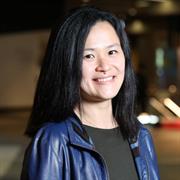
Associate Professor Jiwon Kim is a leading researcher in Transport Engineering at the University of Queensland's School of Civil Engineering. She serves as Director of Higher Degree by Research and was a DECRA Fellow from 2019-2022. Holding degrees from Korea University and Northwestern University, she specializes in AI/ML applications for transportation systems. PhD, Northwestern University BS & MS, Korea University Her research focuses on Artificial Intelligence and Machine Learning applications in transportation, including: Deep learning for traffic management Reinforcement learning in mixed traffic environments Multi-agent systems for urban mobility optimization Spatiotemporal trajectory analysis Recent publications demonstrate expertise in: Eco-driving strategies Traffic incident prediction Queue length estimation Crash risk modeling Scientific recognition includes: ARC DECRA Fellowship (2019-2022) She supervises doctoral students in: Transportation data analytics Autonomous vehicle systems Intelligent traffic management Current projects explore real-time traffic monitoring, synthetic mobility data generation, and connected vehicle technologies.
Dr. Bo Liu is an Associate Professor in the School of Computer Science at the University of Technology Sydney (UTS), where he serves as a core member and director of the AI Security and Privacy (AISP) Research Lab at the Australian Artificial Intelligence Institute (AAII). With expertise spanning cybersecurity, privacy protection, AI and machine learning, and wireless communications, Dr. Liu has established himself as a leading researcher in the field of AI security and privacy. Dr. Liu earned his PhD from the Department of Electronic Engineering at Shanghai Jiao Tong University in 2010. His academic journey at UTS has progressed from Senior Lecturer (November 2019-December 2022) to his current position as Associate Professor (January 2023-present). Dr. Liu's research focuses on the critical intersection of artificial intelligence and security, particularly addressing emerging threats in the age of advanced AI systems. His work spans multiple dimensions of security and privacy, including deepfake detection, privacy-preserving data synthesis, AI model security, and fair machine learning. He has pioneered approaches to detect AI-generated content, protect visual privacy through de-identification techniques, and address the complex relationship between algorithmic fairness and privacy preservation. His publication record demonstrates significant contributions across multiple cutting-edge research areas, with particular emphasis on detecting and mitigating threats from generative AI systems. His recent work reveals a strong focus on deepfake detection across multiple modalities (images, video, and audio), privacy-preserving techniques for sensitive data, and the security implications of emerging AI architectures like Retrieval-Augmented Generation systems. Dr. Liu has secured substantial research funding, including as Lead Chief Investigator on multiple ARC Discovery and Linkage Projects, totaling over $3.5 million AUD. His industry collaborations include partnerships with the NSW Department of Planning and the Reserve Bank of Australia, demonstrating the practical applicability of his research. As an academic leader, Dr. Liu serves as Associate Editor for IEEE Transactions on Broadcasting and actively contributes to the academic community through conference organization, peer review for top-tier venues, and assessment for ARC grant schemes. He also teaches courses including Penetration Testing, Ethical Hacking and Offensive Security, and supervises Masters and PhD students in cybersecurity and privacy research.
Dr. Johnson Xuesong Shen is an Associate Professor at the School of Civil and Environmental Engineering , University of New South Wales . His work integrates Digital Twins , Building Information Modeling (BIM) , and Construction Automation with a focus on robotics, AI, and LiDAR/UAS technologies. Research Interests: Digital Twins, BIM, Construction Robotics, Emissions Modeling, LiDAR/UAS, Structural Health Monitoring Education: Ph.D. in Construction Engineering and Management, The Hong Kong Polytechnic University His publications span 2025–2005, emphasizing construction automation , environmental impact reduction , and innovative tunneling solutions . Recent work includes IoT-Bayes fusion for real-time safety monitoring and life cycle analysis of construction waste. Scientific Awards: Vice Chancellor's Award for Teaching Excellence, UNSW, 2014 Best PhD Student Paper Award, CONVR, UK, 2013 Postdoctoral Fellowship, University of Alberta, 2011-2013 Best Paper Award, ASCE Construction Research Congress, 2010 Dr. Shen mentors 9 PhD candidates in areas like 3D object detection , fuel consumption modeling , and UAV-based LiDAR . His grants include $5.98M from the Australian Research Council (2022–2027) for resilient infrastructure systems and projects on modular construction and intelligent tunneling .
Dr. Zhenyu Zhang is a Lecturer in Surveying and Spatial Science at the School of Surveying and Built Environment , University of Southern Queensland (Springfield Campus). With over 20 years of tertiary teaching experience, he specializes in geomatic engineering, GIS programming, remote sensing, and machine learning applications for geospatial data analysis. His work focuses on LiDAR technologies (terrestrial and airborne) for environmental management, 3D modeling, and high-resolution DEM generation. Member of Surveying and Spatial Science Institute (SSSI), Australia Member of Modelling and Simulation Society of Australia and New Zealand Member of International Global Navigation Satellite Systems (IGNSS) His research integrates geomatics with environmental geoscience, emphasizing forest biomass estimation, carbon accounting, and BIM development using laser scanning. He teaches foundational and advanced courses in surveying, geodetics, GIS programming, and research projects at both undergraduate and postgraduate levels.
Professor Clinton Fookes is a faculty member at the Queensland University of Technology (QUT) within the School of Electrical Engineering & Robotics . His research focuses on leveraging computer vision and artificial intelligence to develop automated systems that understand, anticipate, and interact with human behaviors, with applications in medical diagnostics, autonomous vehicles, defense, and industrial efficiency . Research areas include AI adaptability, multimodal biosignal analysis, and human-machine interaction Collaborates with CSIRO Data61, Defence Science and Technology Group, Orica, Airbus, and Sentient Vision Systems Develops systems for human action detection, infrastructure monitoring, and stress response prediction His work addresses critical challenges in AI deployment, such as environmental adaptability and reducing diagnostic errors in medical and autonomous systems. Recent publications highlight trends in self-supervised learning, zero-shot knowledge transfer, multimodal integration , and 3D reconstruction for healthcare , while exploring ethical AI use in sectors like mining and defense . Professor Fookes emphasizes interdisciplinary collaboration, bridging engineering, medicine, and social sciences to advance AI systems capable of real-world impact. His research agenda includes improving AI memory capabilities and explainability for safer, more reliable automation.
Dr. Bikram Banerjee is a Lecturer in Remote Sensing and Geospatial Science at the University of Southern Queensland, affiliated with the School of Surveying and Built Environment. He holds a PhD from UNSW, MTech from IIRS NRSA, and BTech from West Bengal University of Technology. His research focuses on geospatial technologies, machine learning applications in environmental monitoring, and precision agriculture. He is associated with the Centre for Agricultural Engineering, Centre for Crop Health, and Centre for Sustainable Agricultural Systems. Key research interests include UAV-based remote sensing for mine spoil characterization, hyperspectral imaging for crop phenotyping, and integrating IoT/ML for agricultural solutions. His work bridges environmental science, geotechnical engineering, and agricultural technology. Recent publications explore coal spoil analysis, mine safety automation, and vegetation health monitoring using advanced sensor technologies. Dr. Banerjee has supervised doctoral research on mobile laser scanning for underground mines, UAV-LiDAR applications, and proximal sensing for crop phenotyping. His research outputs have garnered over 2,327 views and 1,160 downloads, reflecting significant impact in geospatial and agricultural domains. He actively contributes to interdisciplinary projects addressing environmental sustainability and resource management challenges.
Bithin Datta is a Senior Lecturer in the Discipline of Civil Engineering at James Cook University (Australia), part of the College of Science and Engineering and the Division of Tropical Environments and Societies. He is affiliated with TropWATER (Centre for Tropical Waters and Aquatic Ecosystem Research), the Economic Geology Research Unit (EGRU) at JCU, and the CRC-for Contamination Assessment and Remediation of the Environment (CRC-CARE) at the University of Newcastle. Previously, he held Professor and Senior Professor positions at IIT Kanpur, India (1995-2009), and served as Head of the Civil Engineering Department and Head of the Postgraduate Environmental Engineering and Management Program. He has held Visiting Professorships at Dalhousie University (Canada), Denmark Technical University (Copenhagen), and the Asian Institute of Technology (Bangkok). Education: B.Tech (Hons) in Civil Engineering from IIT Kharagpur (India), Master’s degree in Civil Engineering (first rank in specialization), and a PhD in Civil Engineering from Purdue University (USA), specializing in Hydraulics and Systems Engineering. He is a Fellow of Engineers Australia (FIEAust). Research interests include water resources systems management, groundwater and surface water modeling, reservoir operation optimization, saltwater intrusion control, AI-driven environmental predictions, and ecological flow assessment. His work integrates simulation-optimization frameworks, machine learning (e.g., ANFIS, SVM), and hydraulic engineering principles to address contamination, climate change, and infrastructure challenges in tropical and coastal regions. His publications (178+ entries) focus on computational tools for groundwater contamination source identification, sustainable aquifer management, and reservoir environmental impacts. Notable projects include a $629,000 CRC-CARE-funded initiative for contamination monitoring networks and AI-based drought prediction models in tropical Queensland. Advising: Coordinated the Master of Engineering (Water Resources Management) at JCU and supervised over 30+ Master’s and 19 Ph.D. students across IIT Kanpur, JCU, and the University of South Australia. His research has been ranked #1 globally by ScholarGPS in Groundwater Pollution, Surrogate Models (AI/ML), and Saltwater Intrusion management. Labs/Teams: Core member of TropWATER, EGRU, and CRC-CARE, leading interdisciplinary projects on tropical water systems and geochemical contamination modeling in mine sites.
Dr. Armin Agha Karimi is a Lecturer in the School of Surveying and Built Environment at the University of Southern Queensland. He holds a BSc in Civil Engineering from Tabriz University, an MSc from Middle East Technical University (METU), and a PhD from the University of Newcastle. His research focuses on spatial data integration, cadastral systems modernization, environmental monitoring using remote sensing, and sea level variability analysis. Key research interests include 3D cadastral boundaries in BIM environments, digital twin applications in built environments, and the impact of hydrological loading on land motion. He has contributed to studies on erosion hotspot mapping in Queensland and the implications of coal seam gas activities on land subsidence. His work on Baltic Sea sea level dynamics and Australian coastal projections has advanced understanding of climate-driven environmental changes. Dr. Karimi is affiliated with the Centre for Sustainable Agricultural Systems and actively publishes on geomatics, climate science, and legal aspects of digital surveying. His recent articles highlight innovations in VR-ready survey data transformation and the legal challenges of electronic cadastral plans.
Professor Budiman Minasny is a leading academic in soil-landscape modeling at the University of Sydney, affiliated with the School of Life and Environmental Sciences. He holds roles as Theme Leader of Soil, Carbon, and Water at the Sydney Institute of Agriculture and is a member of the Net Zero Institute, China Studies Centre, and Sydney Southeast Asia Centre. His expertise spans digital soil mapping, climate change mitigation, and soil security. Minasny has over 160 international publications and has pioneered methodologies in spectral soil analysis and peatland assessment. He earned his undergraduate degree from Universitas Sumatera Utara and advanced degrees in soil science from the University of Sydney. Research interests include soil carbon dynamics, peatland management, and the integration of AI/remote sensing in soil science. Awards include the Australian Research Council’s QEII and Future Fellowships, and recognition as a Web of Science Highly Cited Researcher (2019). Current projects focus on soil carbon auditing, real-time soil moisture monitoring, and global peatland mapping. Minasny leads multidisciplinary teams addressing climate resilience, with grants from institutions like the National Soil Carbon Innovation Challenge and Australia-India Strategic Research Fund. Awards: QEII Fellowship, Future Fellowship, Highly Cited Researcher 2019 Grants: Includes initiatives on soil carbon platforms, continental-scale soil assessments, and viral diversity studies. His work bridges environmental science and policy, advocating for soil security frameworks to balance agricultural productivity with ecological preservation.
Flora Salim is a Professor in the School of Computing Technologies at RMIT University. She serves as co-Deputy Director of the RMIT Centre for Information Discovery and Data Analytics (CIDDA) and an Associate Investigator of the ARC Centre of Excellence in Automated Decision Making and Society. Her research focuses on human behavior modeling, machine learning with time-series and spatio-temporal data, and edge AI applications in IoT and wearables. Flora has secured over $10M in research funding from ARC, industry partners, and government bodies. Notable awards include the 2021 PACM IMWUT Distinguished Paper Award, 2019 Humboldt-Bayer Fellowship, and RMIT's 2018 Research Impact Award. She leads the CRUISE research group and has held visiting professorships at the University of Kassel and University of Cambridge. Editorial roles: Associate Editor of PACM on IMWUT, Area Editor of Pervasive and Mobile Computing Steering Committee member of ACM UbiComp Her work bridges ubiquitous computing and machine learning, with applications in urban analytics, mobility, and health monitoring. Recent projects include self-supervised learning for multimodal data and forecasting with heterogeneous time-series. Supervision areas: Deep learning for sensor data, explainable AI, and wearable-based emotion sensing Teaching programs: Master of Artificial Intelligence and Master of Data Science
Jon Hronsky is an **Adjunct Professor** at the **School of Earth and Oceans**, The University of Western Australia. He is an active industry geoscientist, providing high-end consulting through his company **Western Mining Services** and co-teaching a globally successful course on Senior Exploration Management. He holds director roles in several ASX-listed companies and is a partner in **Ibaera Capital**, a mining-focused private equity fund. His research focuses on mineral systems thinking, exploration targeting, and integrating dynamic geological processes across scales. **Education**: PhD in Geology (Physico-chemical Controls on Ore-shoot Formation). **Research Interests**: Application of mineral systems theory to economic geology, process controls on ore deposition, and advanced mineral exploration technologies. His work emphasizes practical industry applications, with outputs feeding into consulting and vice versa. **Awards**: Awarded the **Order of Australia Medal (2019)** for services to the Australian mining industry, bridging academia and industry. **Grants & Projects**: Contributed to the **Integrated Visualisation of Large Volumes of GSWA Data: Groundwork for the Integrated Exploration Platform** (2013), focusing on geospatial data integration for mineral exploration.
Muhamad Risqi U. Saputra (Risqi) is Associate Professor in Data Science at Monash University, Indonesia. He is actively involved in research, teaching, and interdisciplinary projects focusing on machine learning, computer vision, cyber-physical systems, and smart cities. His work contributes to UN Sustainable Development Goals, particularly in education, sustainable cities, and climate action. Education: DPhil/PhD in Computer Science, University of Oxford MEng in Information Technology, Universitas Gadjah Mada BEng in Electrical Engineering and Information Technology, Universitas Gadjah Mada Risqi's research focuses on applying deep learning and computer vision to real-world challenges such as navigation, environmental monitoring, and disaster management. His work integrates satellite imagery, IoT, and AI to solve problems in urban resilience and sustainable development. He is particularly interested in interdisciplinary applications in health, assistive technology, and smart cities. His recent publications highlight a strong trend in using deep learning for environmental monitoring—especially flood and mining footprint detection via satellite data. The integration of cross-attention networks, semantic segmentation, and multispectral imagery demonstrates technical innovation with societal impact. His work also extends into policy and social implications of AI, as seen in studies on energy transition and big data discourse in politics. Scientific Awards: Indonesia ICT Awards (INAICTA) International ICT Innovative Services Contest (InnoServe), Taiwan Asia Pacific ICT Alliance Awards (APICTA), Brunei Darussalam Risqi is a Chief Investigator on multiple active research projects such as Open Nutrition , Citarum Action Research Program , and MUST: Enabling Multi-species Transitions . These projects involve interdisciplinary collaboration across environmental science, public policy, and data science. He also contributes to public discourse through media engagement, including commentary on the misuse of 'big data' in politics. He teaches core units in data science, algorithms, and research methods at Monash University. He is currently accepting PhD students and leads research that bridges technical innovation with societal benefit, particularly in Southeast Asia’s urban and environmental contexts.
Dr. Shixun Huang is a Lecturer in the School of Computing and Information Technology at the University of Wollongong, Australia. He holds a PhD from RMIT University and specializes in data mining, machine learning, and optimization algorithms for high-dimensional data problems. His research develops efficient algorithms for data discovery, similarity search, and network analysis. Current projects focus on optimized data acquisition strategies for machine learning, cost-effective labeling for graph neural networks, and cardinality estimation in high-dimensional databases. Methodologically, he combines combinatorial optimization with machine learning techniques. Dr. Huang supervises graduate research on diffusion models for medical imaging, graph prompt learning, and image captioning systems. His honors include multiple best paper awards at top database conferences and recognition for teaching excellence (College Top Course Award at RMIT). Recent publications address dataset distinctiveness maximization (WWW 2025), high-dimensional similarity search (VLDB 2025), and edge computing optimization (2024). Earlier foundational work established new approaches for influence maximization in social networks and temporal graph representation learning.
Dr. Honglei Xu is an Associate Professor of Industrial Optimization and Engineering at Curtin University, specializing in industrial system optimization for net-zero transition. He serves as Node Leader of ATN Industry Doctoral Training Centre and Mathematics Honours Coordinator. His research spans automation in mining, hybrid systems control, and optimization in construction and energy sectors. Recent publications demonstrate interdisciplinary approaches combining operations research, AI, and control theory for sustainable industrial solutions. Honors include IEEE Senior Membership and JSPS Fellowship. Current projects focus on public transport optimization, renewable energy forecasting, and intelligent control systems for mineral processing. Dr. Xu teaches courses in mathematical modeling and production planning while serving as associate editor for multiple international journals including Complexity and Energies.
Associate Professor Mehmet Kizil is the Mining Engineering Program Leader at the School of Mechanical and Mining Engineering, The University of Queensland. With a career spanning 25+ years, he holds a Bachelor of Mining Engineering (1986) from Dokuz Eylul University (Turkey) and PhD (1993) from the University of Nottingham (UK). His affiliations include being an affiliate of Future Autonomous Systems and Technologies and active participation in Mining Education Australia. School of Mechanical and Mining Engineering Australian Research Council (ACARP, CRCTiME, MRIWA, SIMTARS, industry partners) Research interests focus on mine planning/design, production optimization, computer/virtual reality applications, and mine ventilation systems. His 2025-2024 publications highlight innovations in FMIPCC systems, methane dispersion modeling, digital twins for mineral processing, and sustainable underground mining. Notable scientific achievements include being recognized as Higher Education Academy Senior Fellow (2018) and receiving national teaching awards. His work with industry partners (Newcrest, Rio Tinto, BHP, Xstrata, Anglo American, Origin Energy, Iluka Resources) has secured over $3M in research funding.