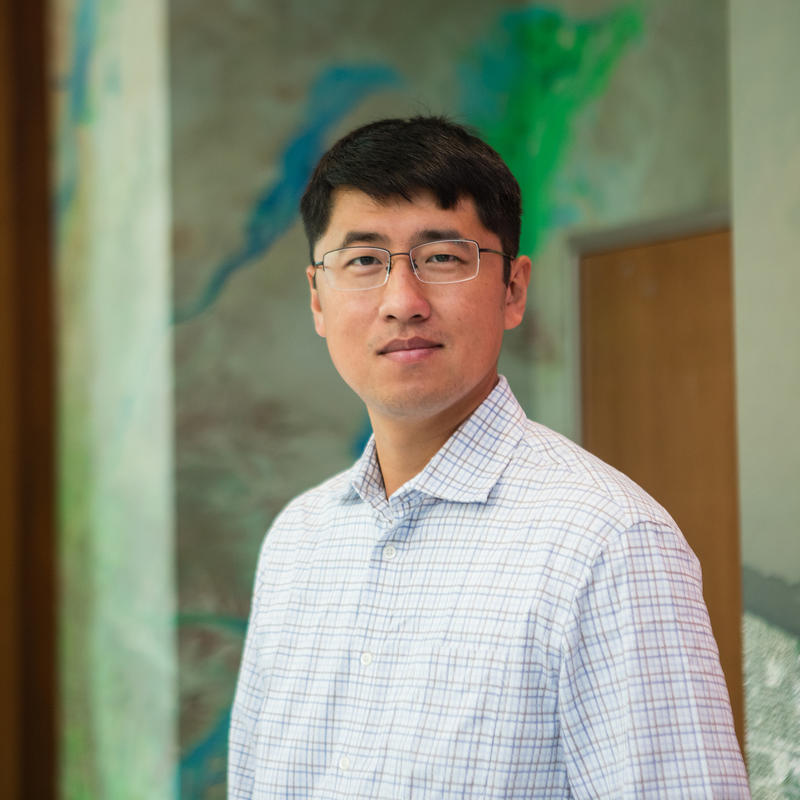
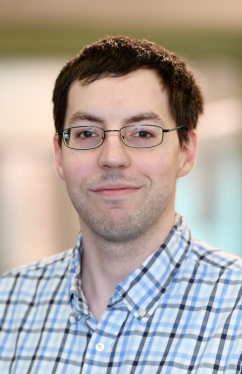
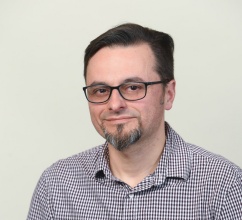
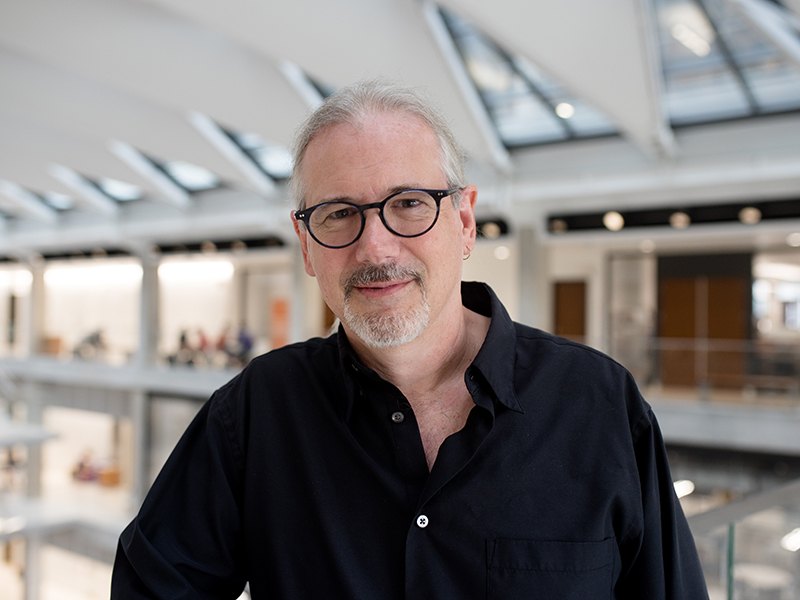
Longxiang Li is an Assistant Professor in the Gangarosa Department of Environmental Health at Emory University's Rollins School of Public Health. His research focuses on environmental pollutants' human health impacts, particularly unconventional oil and gas development (fracking) and radon exposure. Funded by NIH, he develops satellite-based machine learning models to assess exposure risks. Before joining Emory in 2024, he studied/worked at Harvard T.H. Chan School of Public Health. Education: Sc.D. from Harvard T.H. Chan School of Public Health; M.S. from Chinese Academy of Sciences; B.S. from China University of Geosciences (Beijing). Research interests include exposure assessment, spatial analysis/GIS, and machine learning applications in environmental health. Notable work includes high-resolution radon models and collaborations with the White House on radon-related lung cancer prevention strategies. Key articles focus on radon's effects on asthma, cancer, and pregnancy outcomes, using advanced modeling techniques. His work bridges environmental data science with public health policy. Affiliations: International Society of Environmental Epidemiology, International Society of Exposure Science, American Chemistry Society.
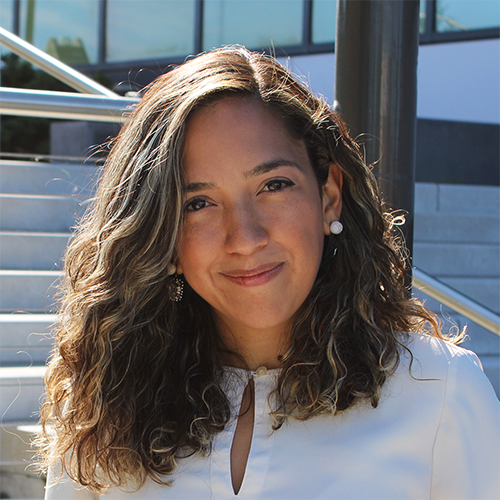
Ali Lashgari is a Marie Skłodowska-Curie Postdoctoral Research Fellow at Aalborg University's Department of the Built Environment (Faculty of Engineering and Science). He holds a PhD in Geotechnical Engineering from Semnan University (2019) and serves as a visiting researcher at Hong Kong University of Science and Technology. His research focuses on seismic hazards, offshore energy infrastructure resilience, and probabilistic geotechnical analysis. Education: PhD in Geotechnical Engineering, Semnan University (2019) MSc in Geotechnical Engineering, Semnan University (2013) BSc in Civil Engineering (not specified) Research Interests: Development of predictive models for geohazards (e.g., submarine landslides, liquefaction), offshore foundation resilience, and probabilistic analysis of seismic risks. His work integrates numerical modeling (e.g., DEM-FEM), machine learning, and big data analytics for hazard assessment frameworks. Awards: Marie Skłodowska-Curie Postdoctoral Fellowship (2023) Grants & Projects: PRO-SLIDE: EU-funded project (2023–ongoing) for offshore energy infrastructure resilience against seismic submarine landslides (PI) EU-COST Action CA23155: Pan-European network on ocean tribology (participant) Professional Activities: Founder of Intelligent Environmental Risks Analyzers (2016) Membership in AGU, DFI, GEER, IGS, and IRCEO Lab/Team Affiliation: Risk, Resilience, Safety, and Sustainability of Systems Research Group at Aalborg University.
Dr. Ioannis Kaparias is an Associate Professor at the University of Southampton and Honorary Lecturer at Imperial College London. His expertise spans transport engineering, Intelligent Transport Systems (ITS), and sustainable mobility solutions. He holds a MEng from Imperial College London (2004) and a PhD in reliable dynamic in-vehicle navigation (2008). His research focuses on traffic management, active travel, public transport optimization, and the integration of new technologies like CAVs and MaaS. He leads the Transportation Research Group (TRG) at Southampton and has contributed to projects funded by the EU, UK authorities, and industry partners like BMW. Key areas include network reliability, cyclist safety, and land use-transport interaction. He is Deputy Editor-in-Chief of the IET Intelligent Transport Systems journal and serves on TRB committees. Teaching includes Highway & Traffic Engineering modules at Southampton and他曾指导过多个研究生项目。他精通希腊语、英语、德语、法语和意大利语。
Dr. George Raber is a Professor in the Department of Geography at the University of Southern Mississippi. His expertise spans Geographic Information Systems (GIS), remote sensing, spatial modeling, and unmanned aerial vehicles (UAVs). He holds a PhD from the University of South Carolina (2003), an MS from the same institution (2001), and a BS from Brigham Young University (1999). His research focuses on applying geospatial techniques to environmental challenges, particularly in coastal regions, with technical strengths in web mapping, spatial programming, and UAV-based remote sensing. Key research areas include coastal hazard exposure analysis, coral reef restoration, and the integration of machine learning with remote sensing data. His work emphasizes practical applications such as marine habitat mapping, risk assessment for coastal communities, and low-cost monitoring technologies like small unmanned surface vehicles (sUSVs). Dr. Raber's publications reflect a trend toward interdisciplinary solutions, combining geospatial technologies with environmental conservation and urban studies. Notable contributions include studies on UAV-LiDAR accuracy in marsh ecosystems and the socioeconomic impacts of environmental policies. He teaches courses ranging from foundational GIS and cartography to advanced topics like spatial programming and environmental remote sensing. His office is located in Walker Science Building 226.
Ashly Cabas is an Assistant Professor in the Department of Civil, Construction and Environmental Engineering at North Carolina State University (NC State). She leads the GEOHAZARDS AND EARTHQUAKE ENGINEERING (GEOQUAKE) RESEARCH LAB , focusing on geotechnical aspects of earthquake engineering, including seismic hazard assessment, ground motion modeling, and liquefaction-induced ground deformations. Her work integrates geospatial analytics, numerical modeling, and probabilistic frameworks to enhance infrastructure resilience against seismic risks. Research interests include: Predictive modeling of liquefaction-induced lateral spreading Regional seismic velocity modeling for coastal plains Geostatistical analysis of ground motion data Impact of fluvial geomorphology on seismic hazards Advances in site response analysis methodologies Her research team examines large-scale ground motion databases (e.g., KiK-Net, DesignSafe) and collaborates on projects like the 2023 Gulf/Atlantic Coastal Plains Seismic Model . Key recent contributions involve improving input ground-motion selection protocols and developing databases for hazard mitigation. Grants & Awards: She leads a NSF CAREER Award (2022) focused on probabilistic seismic site response modeling under uncertainty. Her work emphasizes reproducible research practices, as highlighted in publications advocating for open data/code sharing. Labs/Teams: Directs the GEOQUAKE Lab, which bridges geotechnical engineering and computational methods to address societal risks from earthquakes. Collaborations include global case studies (e.g., 2011 Christchurch earthquake, 2018 Anchorage earthquake).
Dr. Narcisa Pricope is Professor of Geography and Geospatial Science in the Department of Geosciences at Mississippi State University (MSU) and concurrently serves as Associate Vice President for Research in MSU’s Office of Research and Economic Development. Previously, she spent a decade at the University of North Carolina Wilmington (UNCW) where she founded and directed multiple high-profile programs, including the NSF-funded Coastal UAS Observatory and the USGIF-accredited Geospatial Intelligence certificate. Education PhD in Geography (minor Environmental Engineering), University of Florida, 2011 MSc in Geosciences, Western Kentucky University, 2006 BA in Geography and English, Babeș-Bolyai University, Cluj-Napoca, Romania, 2004 Research Interests Dr. Pricope is a land-systems scientist who integrates geospatial modelling, remote sensing, and unoccupied aerial systems (UAS) to investigate complex socio-ecological interactions at the food-water-energy nexus. Her work emphasizes understanding environmental variability and human vulnerability to land degradation, drought, and climate change, with a strong commitment to community-engaged research across dryland regions in eastern and southern Africa, Peru, Nepal, and coastal/inland North America. Key methodological thrusts include: Advanced machine-learning and geostatistical analytics Multi-scale remote sensing (satellite, airborne, UAS) Topobathymetric LiDAR for coastal and inland water management GeoAI and geospatial intelligence capacity building Research Trends from Recent Publications Across more than 50 peer-reviewed articles, Dr. Pricope’s recent work demonstrates a pronounced focus on global drying trends, precision mapping of coastal and inland ecosystems, and the deployment of machine-learning techniques to tackle environmental challenges such as salinity intrusion, vegetation classification, and heavy-metal contamination. A strong policy-oriented thread is evident, with several 2024–2025 publications calling for urgent adaptive solutions to aridification and integrating climate policy with disaster planning. Scientific Awards 2022 UNCW Graduate Faculty Mentor Award 2022 Discere Aude Mentorship Award 2021 UNCW College of Arts and Sciences Research Award Grants & Strategic Initiatives Dr. Pricope has secured funding from NSF, NASA, NOAA Sea Grant, USAID, World Bank, Global Environment Facility, NCDOT and NGA, among others. At MSU she leads strategic initiatives in climate resilience, GeoAI programming, and university-wide research support. Laboratories & Teams She previously directed the NSF-funded UNCW Coastal UAS Observatory and oversaw the FAA Collegiate Training Initiative in UAS, positioning UNCW as a national hub for geospatial intelligence education and research. At MSU, she continues to foster interdisciplinary collaboration across geosciences, engineering, and social sciences.
Dr. Rebecca Smith is a Senior Lecturer in Psychology at the School of Human Sciences, University of Greenwich. Her academic career spans over 15 years, with a focus on social psychology. She specializes in teaching and research related to ostracism, rape myth acceptance, and homeless stigmatization, while also contributing to gender equality studies. Her work bridges theoretical and applied research in human behavior. PhD (Psychology), University of Dundee MA (Psychology), University of Dundee Research Interests: Dr. Smith’s work explores the psychological impacts of social exclusion, the cultural and cognitive underpinnings of rape myth acceptance, and societal biases toward marginalized populations like the homeless. She integrates these themes with broader social psychology frameworks. Article Trends: Her recent publications span social psychology (e.g., ostracism, homeless stigma) and interdisciplinary topics like IVF outcomes, galaxy dynamics, and West Nile virus surveillance. This reflects a diverse collaboration network across medical, astrophysical, and public health domains. Advising: Dr. Smith supervises PhD and EdD students in social psychology and gender equality, fostering research in human behavior and societal structures. She previously served as Deputy Head of Department (2015-16) and TMC Link Tutor (2009-13).
Ana Dyreson is an Assistant Professor in Mechanical and Aerospace Engineering at Michigan Technological University and Associate Research Director at the Center for Innovation in Sustainability & Resilience (CISR). She leads the Great Lakes Energy Group, focusing on climate change impacts on electric power systems , energy transitions in cold climates , and thermal power plant modeling . Her work bridges solar photovoltaic design , electricity grid operational modeling , and the energy-water nexus . Education : PhD in Mechanical Engineering, University of Wisconsin–Madison (2018) MS in Mechanical Engineering, Northern Arizona University (2014) BS in Engineering Mechanics, University of Wisconsin–Madison (2011) Research emphasizes climate-resilient energy systems , particularly solar energy in cold climates and grid-scale modeling . Her 2025-2022 publications investigate snow mitigation on PV panels , heat pump adoption , floating solar-hydropower hybrids , and climate stressor impacts on thermoelectric plants . She develops inclusive teaching methods and advises on renewable energy deployment through initiatives like the Tech Forward Initiative on Sustainability and Resilience . Her team collaborates on multisector dynamics and energy-water-climate research in the Great Lakes region.
Professor Nan Jiang is a Professor and Head of the Department of Computing and Informatics at Bournemouth University (BU), where he has been a faculty member since 2010. He leads research and teaching in Human-Computer Interaction (HCI), digital health, and usability engineering. He co-founded the Bournemouth University Human-Computer Interaction (BUCHI) research group in 2012, contributing significantly to the university’s research excellence in REF 2021. MSc in Advanced Methods, Queen Mary, University of London (2002) PhD in Web Usability, Queen Mary, University of London (2009) His research focuses on data-driven usability evaluation, with recent emphasis on digital health applications, explainable AI (XAI), and accessible technologies. He investigates how user interactions can be optimized for health services on mobile devices, particularly for chronic conditions like multiple sclerosis and mental health. His work bridges technical innovation with user-centered design principles. The 15 most recent publications reflect a strong trend in human-AI interaction, digital health interventions, and accessibility. Key themes include trust calibration in AI systems, co-design of health technologies, and the development of assistive tools using smartphone sensors. His research spans both technical AI modeling and deep user experience evaluation. Active reviewer for top HCI conferences and journals Reviewer for UKRI research councils and SBRI External Examiner at Kingston University and University of East London Member of W3C China Former public expert for W3C HTML Working Group Professor Jiang has secured significant research funding from the European Commission (H2020), ERDF, HEIF, and Innovate UK. He has supervised six PhD students to completion and continues to mentor graduate researchers. He has led major projects such as the FACETS digital toolkit for MS patients and Authentibility Pass for accessible authentication. He also contributes to public engagement through workshops and media appearances on digital addiction and CAPTCHA design. He co-founded and co-chaired the HCI Research Group at BU from 2015 to 2023 and has led initiatives in gamified learning, e-recruitment modeling, and intelligent interfaces. His team, often collaborating with Dr. Huseyin Dogan and Dr. Shamal Faily, focuses on real-world applications of HCI in healthcare, security, and social computing.
Benjamin Suger is a researcher in the Department of Computer Science at the University of Freiburg, affiliated with the Autonomous Intelligent Systems group within the Faculty of Engineering. His work centers on robotics and intelligent systems, particularly in autonomous navigation and environment modeling. Diploma in Mathematics, University of Freiburg (2003–2011) PhD Student, Autonomous Intelligent Systems Group, University of Freiburg (2011–2017) His research interests include traversability analysis, SLAM, 3D modeling, and mobile robotics. He applies machine learning and computer vision techniques to enable robust robot navigation in complex and dynamic environments. His work often integrates sensor data from 3D lidar and visual systems to improve perception and localization. The recent publications highlight a strong focus on long-term autonomy, outdoor navigation, and memory-efficient SLAM algorithms. Key themes include handling perceptual changes, terrain adaptability, and integration of open geospatial data like OpenStreetMap. His work bridges theoretical algorithm development with real-world robotic applications. Scientific recognition includes being a finalist for the Best Conference Paper Award. This reflects the impact and quality of his contributions to the robotics community. Best Conference Paper Award Finalist Benjamin Suger has contributed significantly to research projects such as LifeNav and has served as a teaching assistant for the Introduction to Mobile Robotics course. While no direct advising of students is listed, his collaborative work with prominent researchers like Wolfram Burgard indicates active participation in a larger academic and research team. He has not received external grant mentions in the provided text. He is part of the Autonomous Intelligent Systems lab at the University of Freiburg, a leading group in robotics research, where he contributes to advancing the state of the art in autonomous navigation and environmental understanding for mobile robots.
Stefan Baral is a Professor in the Department of Epidemiology at the Johns Hopkins Bloomberg School of Public Health, with affiliations in the Center for Global Health and the Center for Public Health and Human Rights. He is the co-director of the Program for Implementation and Equity Research (PIER) and leads multiple NIH-funded initiatives focused on HIV, stigma, and implementation science. Education: MD, Queen’s University (2005) MSc, McMaster University (2001) MPH, Johns Hopkins Bloomberg School of Public Health (2007) MBA, Johns Hopkins Carey Business School (2007) His research focuses on epidemiology and implementation science related to infectious diseases, particularly HIV and STIs among key populations such as men who have sex with men, female sex workers, and transgender individuals. He investigates stigma, mental health, and structural barriers to care in Sub-Saharan Africa and the U.S. His work emphasizes equity, human rights, and scalable public health interventions. His extensive publication record, with over 550 outputs, demonstrates consistent leadership in HIV epidemiology, stigma measurement, and implementation research. Recent articles highlight his focus on big data, PrEP access, gender-based violence in conflict settings, and community-engaged implementation science. Scientific Awards: Research Contributions to Health in Senegal, Ministry of Health, Senegal (2018) Global Health Advising Award, Johns Hopkins (2015, 2012) C.P. Shah Award for Resident Research (2009) Multiple scholarships and recognitions from 2000–2008 Baral is actively involved in advising and grant leadership, serving as Principal Investigator on multiple R01 grants from NIH, amFAR, and the Global Fund. He co-directs the Implementation Science concentration in the DrPH program and teaches advanced courses in implementation research methods. He leads collaborative teams across global institutions and community organizations, emphasizing equity and impact in public health science. He is affiliated with key research hubs including the Center for AIDS Research (CFAR) Implementation Science core and the Mid-Atlantic Consortium (MACC+) Implementation Science support hub.
Muhamad Risqi U. Saputra (Risqi) is Associate Professor in Data Science at Monash University, Indonesia. He is actively involved in research, teaching, and interdisciplinary projects focusing on machine learning, computer vision, cyber-physical systems, and smart cities. His work contributes to UN Sustainable Development Goals, particularly in education, sustainable cities, and climate action. Education: DPhil/PhD in Computer Science, University of Oxford MEng in Information Technology, Universitas Gadjah Mada BEng in Electrical Engineering and Information Technology, Universitas Gadjah Mada Risqi's research focuses on applying deep learning and computer vision to real-world challenges such as navigation, environmental monitoring, and disaster management. His work integrates satellite imagery, IoT, and AI to solve problems in urban resilience and sustainable development. He is particularly interested in interdisciplinary applications in health, assistive technology, and smart cities. His recent publications highlight a strong trend in using deep learning for environmental monitoring—especially flood and mining footprint detection via satellite data. The integration of cross-attention networks, semantic segmentation, and multispectral imagery demonstrates technical innovation with societal impact. His work also extends into policy and social implications of AI, as seen in studies on energy transition and big data discourse in politics. Scientific Awards: Indonesia ICT Awards (INAICTA) International ICT Innovative Services Contest (InnoServe), Taiwan Asia Pacific ICT Alliance Awards (APICTA), Brunei Darussalam Risqi is a Chief Investigator on multiple active research projects such as Open Nutrition , Citarum Action Research Program , and MUST: Enabling Multi-species Transitions . These projects involve interdisciplinary collaboration across environmental science, public policy, and data science. He also contributes to public discourse through media engagement, including commentary on the misuse of 'big data' in politics. He teaches core units in data science, algorithms, and research methods at Monash University. He is currently accepting PhD students and leads research that bridges technical innovation with societal benefit, particularly in Southeast Asia’s urban and environmental contexts.
Chris Whidden is an Assistant Professor in the Faculty of Computer Science at Dalhousie University, where he leads research in algorithms and bioinformatics. His work bridges theoretical computer science with practical applications in computational biology and ocean data analytics. Whidden's research interests include approximation and fixed-parameter algorithms, computational biology, evolutionary trees and networks, graph theory, hybridization and lateral gene transfer, NP-hardness, and ocean data analytics. He develops efficient algorithms and software to solve NP-hard problems, particularly in the context of phylogenetics and large-scale biological data. His work applies both theoretical algorithm design and practical software engineering to create novel solutions for understanding biodiversity, bacterial and viral evolution, and oceanographic systems. His recent publications reflect a strong trend toward interdisciplinary research, combining deep learning and machine learning with oceanographic data analysis, fish detection and classification, echosounder data processing, and environmental monitoring. Many of his algorithmic contributions focus on phylogenetic tree comparison, including SPR distances, maximum agreement forests, and supertree construction. He has developed several widely used software tools such as rspr, SPR Supertrees, uspr, and phylogenetic topographer. NSERC Killam Trusts Tula Foundation NSF Simons Foundation (via Life Sciences Research Foundation) DeepSense (industry-academic collaboration) He is actively involved in mentoring and has funding available for PhD and MCS students in computer science, particularly in algorithms, bioinformatics, and data analytics. He teaches courses such as Algorithm Engineering (CSCI 4118/6105), Software Development (CSCI 2134), and Design and Analysis of Algorithms (CSCI 3110). Whidden has collaborated extensively with industry through DeepSense, working on projects that apply data analytics and machine learning to the ocean sector, including predictive modeling for ocean buoys, automated fish detection, and tidal energy monitoring.
Christian Blouin is a Professor and Associate Dean, Academic in the Faculty of Computer Science at Dalhousie University. His interdisciplinary research bridges computer science and molecular biology, with a strong focus on bioinformatics and computational biophysics. Education: Ph.D. in Computer Science, Dalhousie University (2001) B.Sc. in Computer Science, Université Laval (1997) His research interests lie at the intersection of algorithms, phylogenetics, protein evolution, and molecular modeling. He develops computational methods to analyze protein structure evolution, multiple sequence alignments, and phylogenetic tree reconstruction. His work integrates high-performance computing and statistical mechanics to model biophysical properties of proteins, particularly in conformational dynamics and electrostatic interactions. The most recent publications reveal a consistent trend in developing algorithmic solutions for biological problems—especially in text mining for biological events, phylogenetic distance computation, and 3D mapping of evolutionary data. His work emphasizes automation, accuracy, and scalability in bioinformatics pipelines. Scientific Awards and Honors: TULA Fellow Dr. Blouin has secured significant research funding from NSERC, the TULA Foundation, and the CFI. His research group has contributed to tools like GenGIS for geospatial genomics and libcov for bioinformatics programming. He has advised students such as Haibin Liu and Vlado Keselj, who have co-authored key publications in text mining and phylogenetics. His lab integrates algorithm development with biological validation, aiming to bridge computational innovation with real-world biological insights.
Ben Hodges is a Professor in the Civil, Architectural and Environmental Engineering (CAEE) Department at the University of Texas at Austin, holding the Marion E. Forsman Centennial Professorship in Engineering. He specializes in environmental and water resources engineering, with a focus on computational fluid dynamics (CFD), urban stormwater drainage modeling, and river dynamics. His research bridges hydraulics, geospatial analysis, and environmental fluid mechanics, addressing challenges like flood modeling, water distribution systems, and supersaturated dissolved gas management. Education: Ph.D., Civil Engineering, Stanford University (1997) M.S., Mechanical Engineering, George Washington University (1991) B.S., Marine Engineering/Nautical Science, U.S. Merchant Marine Academy (1984) Research Interests: Development of computational models (e.g., SPRNT, Frehd, SUNTANS) Oil spill transport modeling, saltwater intrusion, and continental river networks High-performance parallel algorithms and hydraulic simulation tools His work emphasizes practical applications, such as designing stormwater systems and predicting environmental impacts like oil spill trajectories. He collaborates on projects with organizations like IBM Research Austin and the U.S. EPA, contributing to tools like the SWMM5+ and PTSNet simulators. Hodges advises a dynamic graduate research group (JETlab) and maintains active involvement in academic conferences and international collaborations.