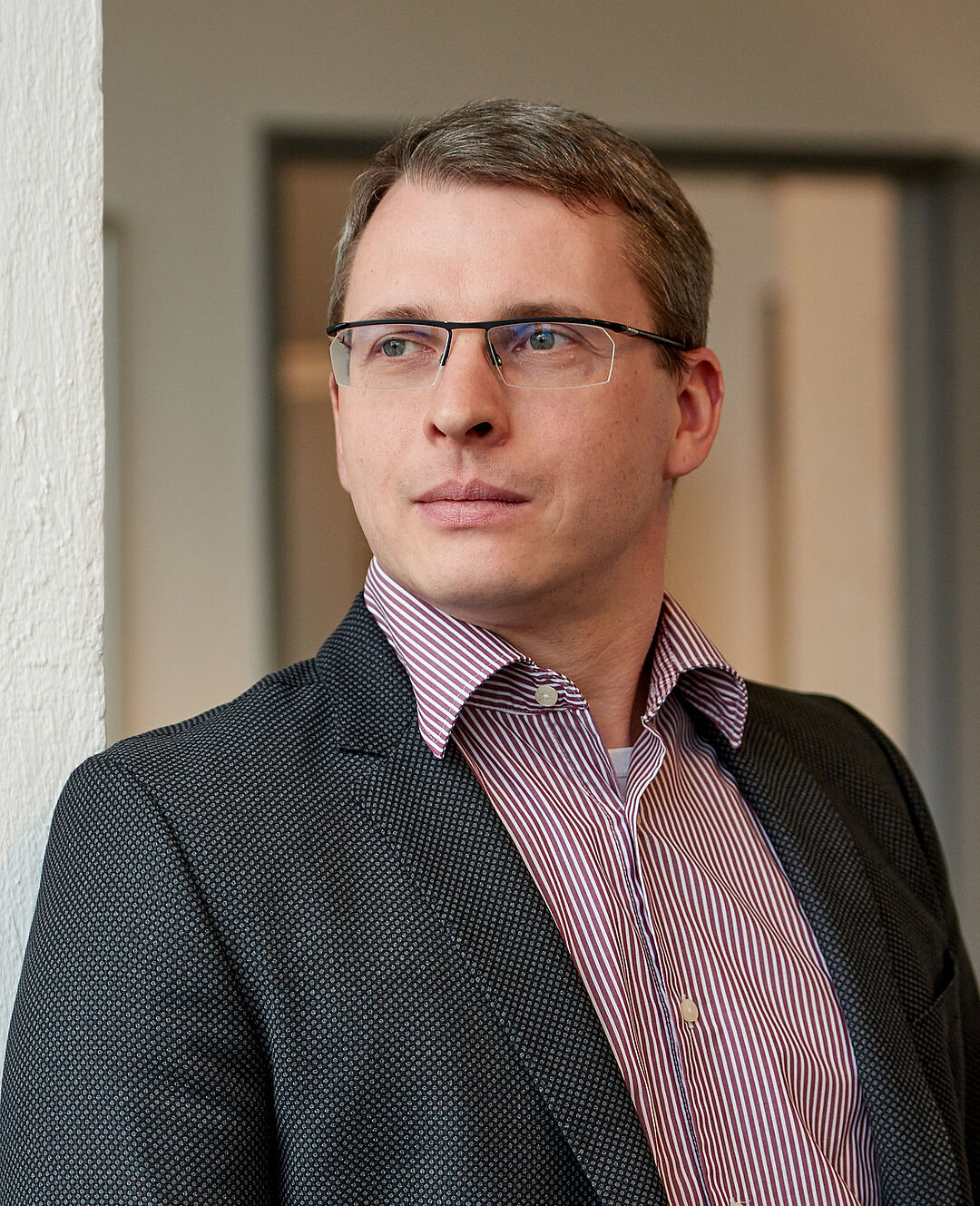
Martin Kada is Professor for Methods of Geoinformation Science at Technische Universität Berlin and Prodekan 'International' for Faculty VI. His research focuses on geoinformatics, 3D city modeling, and remote sensing applications. Research highlights include: Development of automated 3D building reconstruction methods Radar interferometry for deformation monitoring Machine learning for geospatial data analysis Spatial data quality assessment He has received multiple best paper awards for his work on 3D building reconstruction and geospatial data processing. Current projects involve using persistent scatterer interferometric SAR for monitoring infrastructure deformation and developing deep learning approaches for building footprint extraction.
Dr. Daniel H. Jarvis is a professor at the Schulich School of Education, Nipissing University, where he teaches in both undergraduate (BEd) and graduate (MEd/PhD) programs. His research focuses on mathematics education, technology integration, curriculum development, and STEAM education initiatives. He has led several collaborative research projects including a SSHRC-funded international study on Computer Algebra Systems (CAS) technology in undergraduate mathematics instruction. Dr. Jarvis's research interests span mathematics pedagogy, workplace technology applications, interdisciplinary curriculum integration, and innovative educational approaches. His work consistently explores the intersection of mathematical concepts with technology-enhanced learning environments. His publications demonstrate a strong focus on educational technology integration, mathematics pedagogy, and curriculum innovation. Recent work examines exergames in wellbeing education, communities of practice for language teachers, and technology-enhanced assessment methods in mathematics education. Dr. Jarvis has held significant administrative roles including Chair of Graduate Studies in Education (2011-2013) and Associate Dean (Interim) of the Bachelor of Education programs (2022-2024). He has collaborated on cross-disciplinary projects with colleagues in Geography, Computer Science, Nursing, and Physical Education.
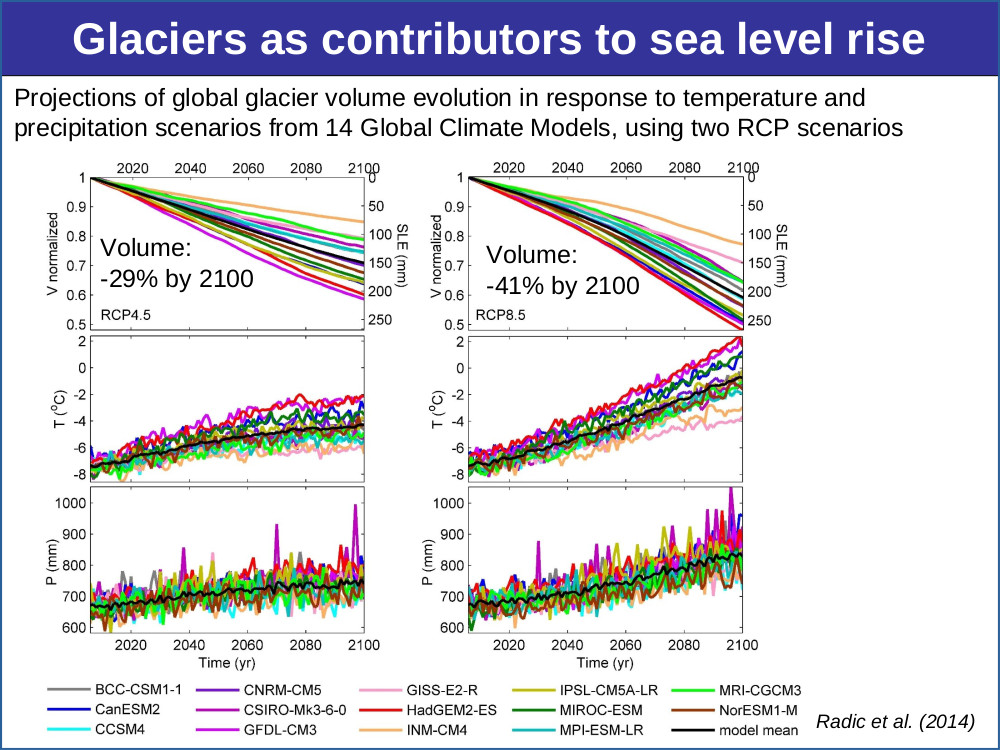
Valentina Radic is an Associate Professor in the Department of Earth, Ocean and Atmospheric Sciences at the University of British Columbia. Her research focuses on quantifying the response of mountain glaciers to climate change, including projections of sea-level rise and regional hydrology impacts. She holds a PhD from the University of Alaska Fairbanks and has led major initiatives like the updated global glacier contribution projections featured in the IPCC Fifth Assessment Report. Education: PhD, Geophysical Institute, University of Alaska Fairbanks (2007–2008) Licentiate, Stockholm University, Department of Physical Geography and Quaternary Geology (2004–2007) MSc & BSc, University of Zagreb, Department of Geophysics (1998–2004) Research Interests: Glacier dynamics, climate modeling, energy balance processes, turbulent fluxes at glacier surfaces, and applications of machine learning in geosciences. Her work bridges field observations, numerical models, and data analysis to address uncertainties in glacier melt projections. Grants & Collaborations: Leads projects on glacier mass balance modeling, turbulent heat flux parameterization, and hydrological impacts of deglaciation. Ongoing collaborations involve PhD students in dynamical downscaling and katabatic flow modeling. Labs & Teams: Directs research groups focusing on glacier evolution modeling, surface energy balance studies, and interdisciplinary approaches combining physics-based models with machine learning.
Prof. Giovanni Sansavini is an Associate Professor in the Department of Mechanical and Process Engineering at ETH Zürich. His research focuses on energy systems resilience, renewable energy integration, and sustainable infrastructure design. He leads projects related to grid optimization, energy policy, and risk engineering, with a particular emphasis on decarbonization strategies for Switzerland and Europe. His work bridges theoretical modeling and practical implementation, addressing challenges such as power transmission equity, distributed energy resource management, and hydrogen storage integration. Recent projects include developing data-driven frameworks for grid reliability assessment and analyzing the socio-technical impacts of energy transitions. Prof. Sansavini collaborates with industry and policymakers to ensure research informs actionable solutions. His publications highlight interdisciplinary approaches to energy system design, emphasizing the trilemma of affordability, sustainability, and security.
Professor Kylie Catchpole is a leading academic in renewable energy and solar technology at the Australian National University (ANU), affiliated with the School of Engineering within the ANU College of Systems & Society. Her research focuses on energy systems modeling, solar cell innovation, and resilient energy transitions. She holds a BSc (Hons) and PhD, and has been awarded the John Booker Medal for Engineering Science and an ARC Future Fellowship. Her work includes record-breaking perovskite solar cell efficiency and solar-to-hydrogen generation innovations recognized globally. She leads interdisciplinary initiatives like the 'Optimism and Agency in Times of Change' course, emphasizing student engagement. Current projects address energy storage, grid optimization, and renewable integration. Supervision of PhD students is ongoing, with a focus on top-tier candidates in physics, engineering, and related fields. Education : BSc (Hons), PhD (details unspecified) Awards : John Booker Medal (2014), ARC Future Fellowship, ICEF Top 10 Innovation (2020) Labs/Teams : RE100 Research Group, ANU Energy Systems Team Research outputs span over 160 publications, with recent emphases on perovskite solar cell stability, energy system modeling, and hydrogen generation. Projects include TRAC-funded silicon-perovskite tandem research and collaborations on battery storage and grid resilience.
Associate Professor Eleanor Bruce is an academic at the University of Sydney, affiliated with the Sydney Environment Institute and Sydney Institute of Agriculture. As Deputy Node Leader of the University of Sydney's SpaceNet program, her work integrates Earth observation data with socio-ecological research to address environmental change and sustainability challenges. Her research focuses on coastal management, climate adaptation, remote sensing, and geospatial technologies. Her expertise includes spatial analysis of marine ecosystems, disaster risk assessment, and climate-smart agricultural systems in the Pacific region. She leads interdisciplinary projects involving partnerships between academia, policy, and communities. Notable contributions include developing frameworks for youth engagement in climate adaptation and creating open-source geospatial tools for smallholder farmers. Eleanor has secured grants such as the 'Identifying High-Risk Communities for Climate-Sensitive Child Undernutrition in Maluku Province, Indonesia' (2024) and 'Detecting Flooding in Fiji's Croplands' (2022). Her work emphasizes practical applications of geospatial data to enhance resilience in vulnerable coastal communities. She has collaborated on projects like the 'More Than Maps' framework for youth research capacity building and pioneered UAV techniques for whale observation. Her research also addresses historical vegetation changes in protected areas like the Angkor World Heritage Site. Eleanor holds leadership roles in environmental policy and has contributed to initiatives like the Sydney Southeast Asia Centre. Her teaching and supervision span environmental GIS applications and climate change mitigation strategies.
Jesse Casana is a Professor of Archaeology at Dartmouth College, holding the W.J. Bryant 1925 Professorship. He leads the Spatial Archaeometry Lab (SPARCL), focusing on remote sensing technologies for archaeological exploration. His work integrates satellite imagery, drone-based sensors, and geophysical methods to study ancient land use, settlement patterns, and human-environment interactions across regions including the Middle East, Antarctica, and the United States. Education: Ph.D. (2000), M.A. (1997), and B.A. (1994) in Anthropology from the University of Chicago and University of Texas at Austin. Research Interests : Casana explores complex societies through geospatial technologies, emphasizing large-scale regional surveys. His projects analyze irrigation systems in Punjab, Bronze Age landscapes in Iraq, and Indigenous agricultural practices in North America. Key methodologies include CORONA satellite analysis, thermal imaging, and lidar for site prospection. Publications : Recent work highlights applications of WorldView-3 SWIR imagery, drone lidar in forested regions, and monitoring Syrian cultural heritage damage. His research bridges technological innovation with historical context, emphasizing ethical and methodological challenges in remote sensing. Labs/Teams : Directs SPARCL, which pioneers drone-based lidar and thermal sensing. Collaborates on projects like the Sirwan Regional Project in Iraqi Kurdistan and the Enfield Shaker Village study in New Hampshire.
Dr Belen Marti-Cardona is an Associate Professor in Earth Observation and Hydrology at the University of Surrey's School of Sustainability, Civil and Environmental Engineering. She holds a PhD, MSc, and MEng, with expertise in hydrological/hydraulic modelling and Earth observation technologies (e.g., SAR, thermal, optical imagery). Her research focuses on remote sensing applications for environmental engineering, including soil moisture analysis, river restoration, and urban growth monitoring. She also works as a data scientist integrating Earth observation into commercial products. Her research projects include the £88,112-funded 'Remote quantification of soil organic carbon,' examining topographic influences on soil carbon distribution. She has led studies on UK bridge vulnerability to instream wood accumulation and developed machine learning methods like HyperKon for hyperspectral image analysis. Key publications span 2019–2025, covering topics from Lake Poopó's ecological crisis to nature-based solutions for natural hazard mitigation. Her work emphasizes interdisciplinary approaches, combining numerical modelling, satellite remote sensing, and field data to address water resource sustainability and infrastructure resilience. Dr Marti-Cardona collaborates with global partners on projects like Zambia's Kitwe City river restoration and has advised on thermal impact modelling for reservoirs using satellite imagery. Her teaching and research align with the UN Sustainable Development Goals, particularly Goal 6 (Clean Water) and Goal 11 (Sustainable Cities).
Associate Professor Ben Sparrow is affiliated with the University of Adelaide's School of Biological Sciences within the Faculty of Sciences, Engineering and Technology. He leads the TERN Ecosystem Surveillance program, focusing on environmental monitoring methodologies and data standardization. His work emphasizes integrating remote sensing technologies with ecological data to improve biodiversity tracking and policy development. Ben has extensive experience in grant-funded research, including leadership roles in TERN's AusPlots and Eco-informatics initiatives, and has contributed to projects like the Global Drylands Assessment with the UN FAO. He collaborates with stakeholders to address socio-ecological challenges in environmental management and has advised Honours students on topics related to natural resource management and ecological data analysis. Research Interests : Ben's research centers on environmental surveillance, ecological monitoring standardization, remote sensing applications, citizen science integration, and understanding climate change impacts on Australian flora. He advocates for adaptable protocols that balance national data consistency with regional autonomy, ensuring ecological data supports both science and policy. His work includes developing open-access datasets (e.g., deadtrees.earth) and advancing tools like the ausplotsR package for vegetation analysis. Grants & Funding : Recent grants include $2.1M from NCRIS/TERN (2018), a $484,770 Citizen Science Grant for the Wild Orchid Watch project, and UN FAO funding ($20,000 USD) for global drylands research. He has also secured funding for LiDAR and photogrammetry initiatives, vegetation mapping projects, and cross-disciplinary research efforts. Professional Activities : Ben actively participates in committees such as the Enabling ecosystem surveillance working group (Ecosystem Science Council) and the Drylands Working Group (UN FAO). He co-chaired the 15th Australasian Remote Sensing and Photogrammetry Conference and contributes to global initiatives like the sPlot dataset project. His work bridges ecological science with practical policy applications, emphasizing reflexivity and communication in socio-ecological systems. Labs/Teams : Ben is part of the Terrestrial Ecosystem Research Network (TERN) team at the University of Adelaide's Waite campus, leading the Ecosystem Surveillance unit. He collaborates with the AusPlots Rangelands program and the Eco-informatics group to develop continental-scale ecological monitoring infrastructure.
Ozgur Ozdemir is an Associate Research Professor in the Department of Electrical and Computer Engineering at North Carolina State University's College of Engineering. He is affiliated with the university's primary faculty and works closely with platforms like AERPAW and AFAR Challenge. His research focuses on advanced wireless systems, including UAV networks, mmWave technology, spectrum analysis, and radar-communication integration. His work spans experimental testbed development, digital twin applications for AI research, and methodologies for improving coverage in rural and urban environments. Ozdemir has contributed to standards like 5G NR and non-standalone 5G systems, emphasizing practical implementation and environmental impact analysis. He leads efforts in signal processing for autonomous systems and has expertise in software-defined radio (SDR) technologies. Research interests include aerial threat detection, RF signal analysis, and robust localization techniques. He explores challenges in NLOS bias correction, antenna radiation patterns, and passive reflector-based coverage enhancement. His work often combines theoretical models with experimental validation using platforms like AERPAW. His articles highlight advancements in drone detection systems, channel modeling for mmWave, and the integration of radar and communication systems. Key trends show a focus on outdoor/indoor spectrum measurements, UAV navigation, and resilient network design. Ozdemir's contributions are characterized by empirical studies and cross-disciplinary approaches to wireless challenges.
Michele Walsh, Ph.D., is a Professor in the Department of Human Development & Family Science at the University of Arizona’s Norton School of Human Ecology. She serves as the Associate Director of Cooperative Extension Family, Consumer and Health Sciences and an Evaluation Specialist. Her work focuses on community-based research and evaluation, particularly addressing health disparities and wellness in rural and marginalized populations across Arizona and the Southwest. Walsh leads the Norton School’s Community Research Evaluation & Development (CRED) Team, which partners with tribal communities, governments, schools, and nonprofits to produce actionable data for program and policy decisions. She is affiliated with the Department of Psychology and the Institute for LGBT Studies. Her research emphasizes social and cultural determinants of health, rural health equity, and applied social measurement. Recent work includes evaluations of the Drug Treatment Alternative to Prison Program, a transgender youth intervention, and the First Things First Regional Needs and Assets Reports. She also explores kindness education in schools and caregiving challenges during the pandemic. Walsh’s publications span public health, education, and sociology, with a focus on translating research into practical solutions. She collaborates with diverse stakeholders to ensure community voices shape policy and practice.
Francesco Cherubini is a Professor and Director of the Industrial Ecology Programme at NTNU's Department of Energy and Process Engineering. He leads multidisciplinary research on climate change mitigation, environmental sustainability, and bio-based systems. His work integrates field studies, climate models, and life cycle assessment (LCA) to evaluate energy systems, land use, and technological innovations. Education & Roles: Professor at NTNU since [year not explicitly stated, inferred from roles] Lead Author for IPBES Nexus Assessment Report and IPCC Special Report on Climate Change and Land Director of the Industrial Ecology Programme Research Focus: Climate impacts of energy systems and land use (agriculture, forestry) Sustainable bioenergy and bio-based technologies (biofuels, biorefinery) Environmental impacts of hydrogen, aviation fuels, and industrial processes Climate-smart agriculture and land management strategies Life cycle assessment methodological advancements Key Projects (2020–2027): LCA4BIO: Harmonized LCA methods for bio-based systems ICARUS: Sustainable aviation biofuels development HYDROGENi: Norwegian hydrogen innovation center AGRISCASCADE: Circular fertilizers from agricultural waste SusLand: Sustainable land management for climate mitigation Scientific Recognition: Web of Science 'Highly Cited Researcher' (top 1% by citations) Teaching: Graduate course TEP 4300: 'Climate Change Mitigation'
Ronald Dorn is a Professor of Geography at Arizona State University (ASU) since 1988, previously at Texas Tech University. He co-coordinates the Arizona Geographic Alliance, promoting K-12 geographic education. His academic affiliations include the School of Geographical Sciences and Urban Planning and the Water Institute at ASU. Education: Ph.D. (1985), M.A. (1982), and B.A. (1980) in Geography from UCLA and UC Berkeley. Active in research, teaching, and professional service, Dorn has held roles in curriculum development, grant leadership, and academic governance. Research interests span geomorphology, rock art conservation, mineral weathering, and geographic education. His work bridges physical and human geography, with a focus on arid environments and cultural heritage preservation. Recent articles emphasize erosion dynamics, rock coatings, and pedagogical innovations in geography education. Over 70 scientific awards and fellowships highlight his contributions, including the Guggenheim Fellowship (1996) and Wiley Award (1993). He has mentored 20+ graduate students, many advancing to academic or applied roles. Teaching includes courses on physical geography, Arizona landscapes, and urban studies. His research labs and teams focus on field-based studies, integrating geospatial technologies and interdisciplinary approaches.
Kristin Mmari, DrPH, MA is a Professor and Chair of the Masters Program in Population, Family and Reproductive Health at Johns Hopkins University's Bloomberg School of Public Health. She holds primary departmental affiliation with the Department of Population, Family and Reproductive Health and is affiliated with the Center for Adolescent Health, Urban Health Institute, William H. Gates Sr. Institute for Population and Reproductive Health, and Center for Qualitative Studies in Health and Medicine. Education: DrPH, Tulane University, 2000 MA, Case Western Reserve University, 1995 BA, St. Olaf College, 1991 With expertise in medical anthropology and international health, Dr. Mmari specializes in cross-cultural research, qualitative methods, and program evaluation focused on vulnerable adolescent populations. Her research spans two primary areas: assessing contextual factors influencing adolescent health and evaluating adolescent health interventions, using innovative mixed methods approaches including Photovoice methodology and community mapping. Her work addresses critical issues including gender norms, opportunity youth, adolescent risk and protective factors, implementation research, and monitoring and evaluation. Dr. Mmari's recent publications reveal a strong focus on adolescent health during the pandemic, neighborhood environmental impacts on health disparities, gender norm acquisition in early adolescence, and cross-cultural coping strategies. Her research shows consistent emphasis on qualitative methodologies applied to global adolescent health challenges, with particular attention to vulnerable populations across diverse cultural contexts. Awards and Recognition: Johns Hopkins University, DSA Faculty Appreciation Mentor Award, 2017 Johns Hopkins University, Golden Apple Teaching Award, 2017 Johns Hopkins University Teach Excellence Award (2012, 2015, 2017, 2019) National Institute of Health, Health Disparities Loan Repayment Award (2009-2011) Faculty Grant Award, Department of Population, Family and Reproductive Health, 2005 Dr. Mmari has provided technical assistance to numerous organizations including UNAIDS, UNICEF, WHO, and Pathfinder International. She serves as the lead qualitative investigator on the Global Early Adolescent Study (GEAS), a 15-country study exploring how gender norms acquisition shapes early adolescent relationships and health behaviors, and was previously the lead qualitative investigator on the WAVE study examining adolescent health in disadvantaged urban environments.
Thomas J Benson serves as a Research Associate Professor in the Department of Natural Resources and Environmental Sciences at the University of Illinois, with a concurrent appointment as Principal Research Scientist at the Illinois Natural History Survey. His academic career focuses on wildlife ecology, particularly avian population dynamics, habitat requirements, and conservation biology across multiple spatial and temporal scales. Dr. Benson's research interests center on ornithology with emphasis on nesting ecology, predation risk, and responses to environmental change. His work examines how landscape composition, habitat fragmentation, and climate variables influence bird distribution, abundance, and reproductive success. He specializes in studying nightjars (including Eastern Whip-poor-wills and Chuck-will's-widows), cuckoos, and other species of conservation concern, employing both field studies and sophisticated modeling approaches to understand ecological patterns. Analysis of Dr. Benson's recent publications reveals consistent research themes examining predator-prey interactions, particularly how predation risk affects nesting behavior and fledgling survival. His work spans multiple ecosystems from coastal areas to agricultural landscapes, with significant contributions to understanding climate change impacts on bird populations. He frequently collaborates with researchers across institutions to address complex ecological questions using integrated methodological approaches. Dr. Benson has established long-term monitoring programs for several bird species and has been instrumental in developing conservation strategies for species facing population declines. His research bridges fundamental ecological understanding with practical conservation applications, providing valuable insights for natural resource management and policy development.