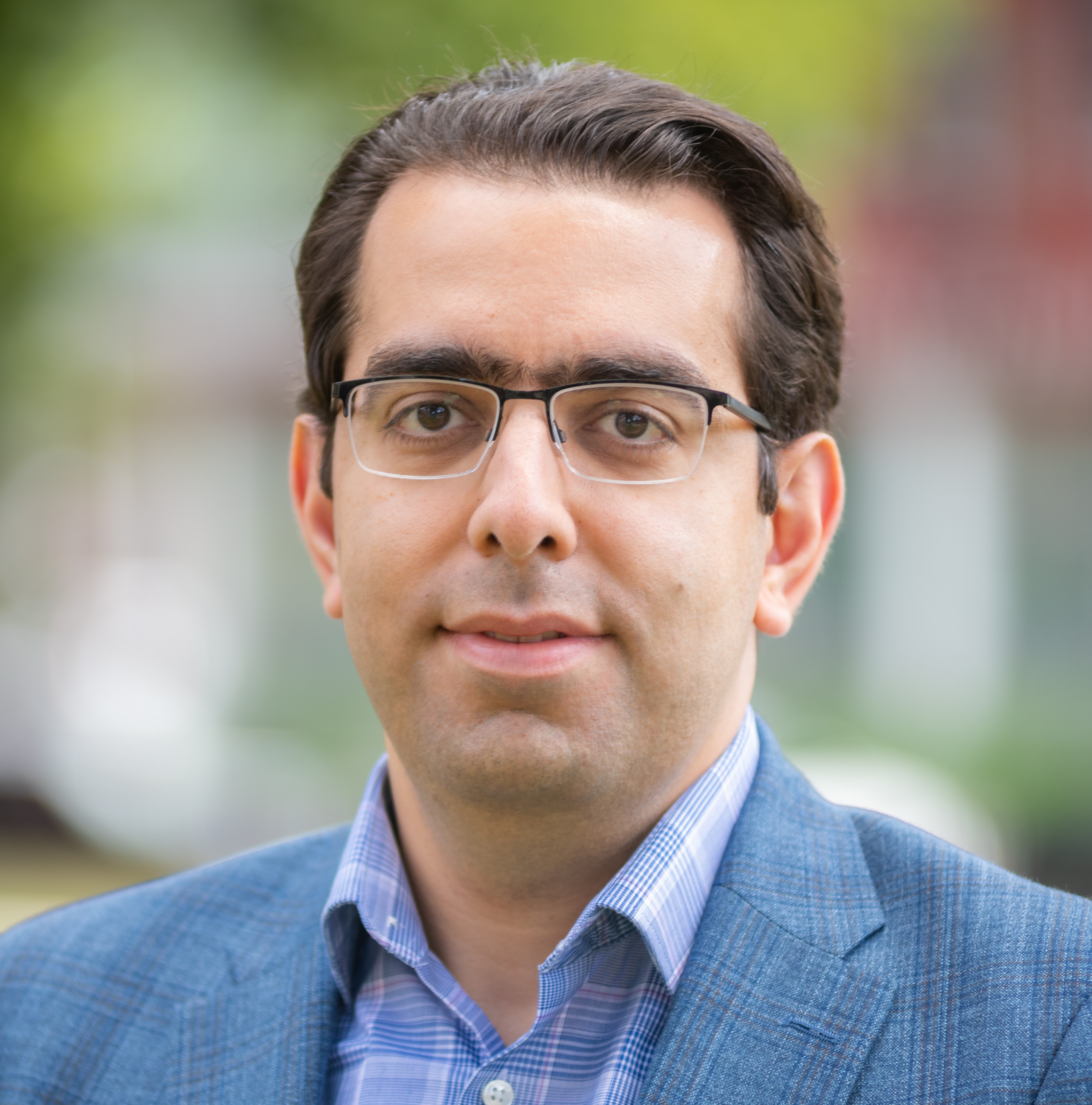
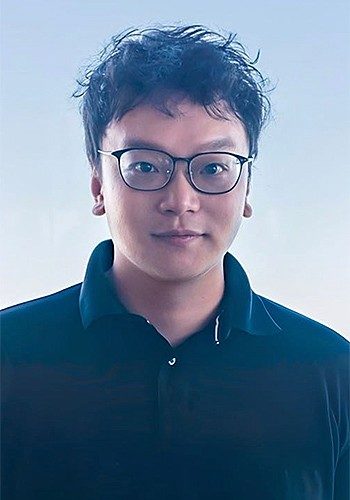
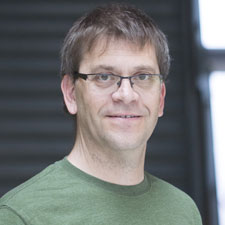
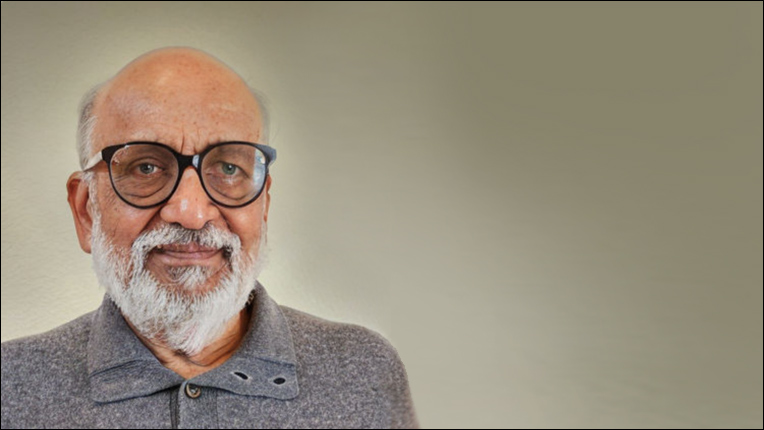
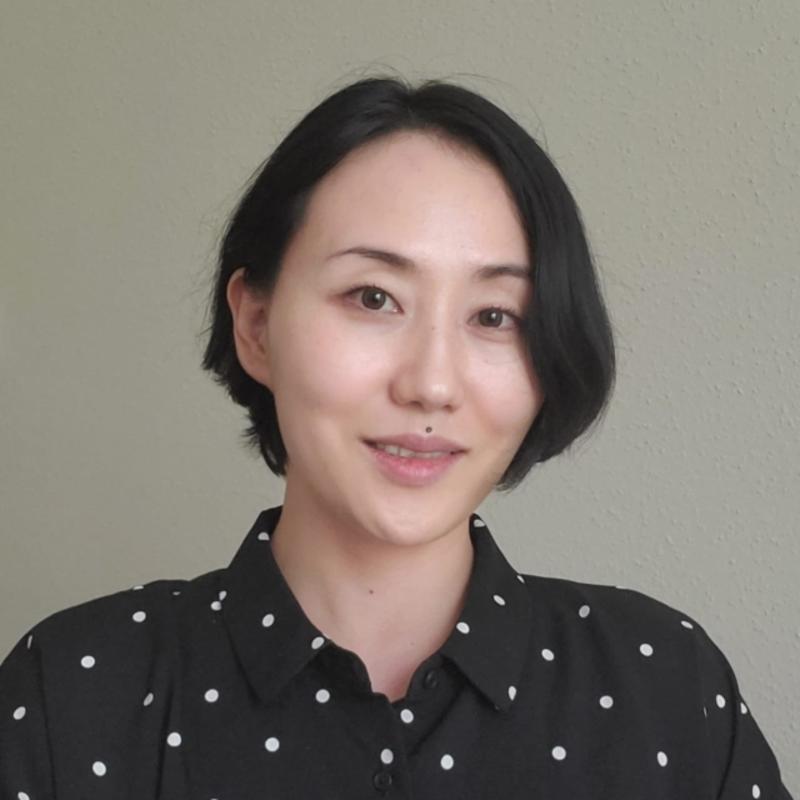
Dr. Hamed Alemohammad is Associate Professor in the Graduate School of Geography and Director of the Center for Geospatial Analytics at Clark University. His research develops AI and machine learning methods for analyzing earth observation data.
Dr. Sudhagar Nagarajan is an Associate Professor and Associate Chair in the Department of Civil, Environmental and Geomatics Engineering at Florida Atlantic University. He directs the Advanced Geomatics Engineering Lab, focusing on non-contact infrastructure monitoring using LiDAR, drones, and multisensor systems. His research includes shoreline erosion analysis, 3D building modeling, and underwater infrastructure assessment. Projects funded by NASA, DOT, and TRB address resilience in coastal communities. He received the ASPRS Roger Hoffer Award (2018) and ESRI Best Paper Award. Articles emphasize geospatial AI, coastal change detection, and sustainable infrastructure management.
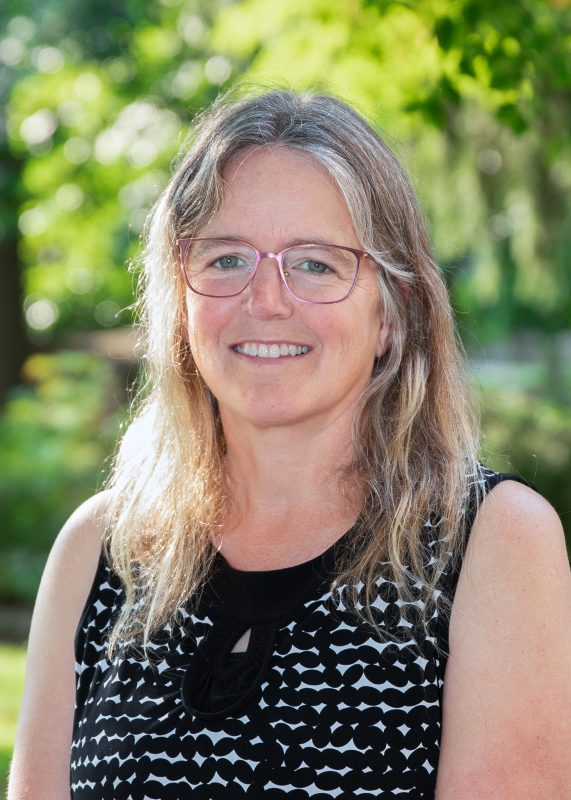
Valerie Thomas, Ph.D., is a Professor in the Department of Forest Resources and Environmental Conservation at Virginia Tech. She holds a B.S. from the University of Guelph (1996), M.S. and Ph.D. from Queen’s University, Canada (2001, 2006). Her research focuses on remote sensing technologies (lidar, hyperspectral sensors) to study forest structure, function, and global monitoring, emphasizing big data integration and environmental challenges. She teaches courses including FREC 1004 (Digital Planet), FREC 2124 (Forests, Society & Climate), and FREC 5154 (Hyperspectral Remote Sensing). She leads the Environmental Informatics undergraduate program and advises the Interdisciplinary Remote Sensing PhD Program. Her work includes advancing computational methods for large-scale remote sensing datasets and addressing ecosystem responses to climate change. She collaborates with the Center for Environmental Applications in Remote Sensing (CEARS) and contributes to projects on nitrogen retention, forest productivity, and lidar-based canopy analysis. Research Interests: Remote sensing of forest ecosystems Lidar and hyperspectral data integration Big data analytics for environmental science Forest carbon dynamics Landsat time-series analysis Teaching & Academic Leadership: Developed the Environmental Informatics major Advises interdisciplinary remote sensing programs Innovates geospatial education at Virginia Tech Labs & Teams: Active in the Center for Environmental Applications in Remote Sensing (CEARS), contributing to projects on forest monitoring and geospatial technologies.
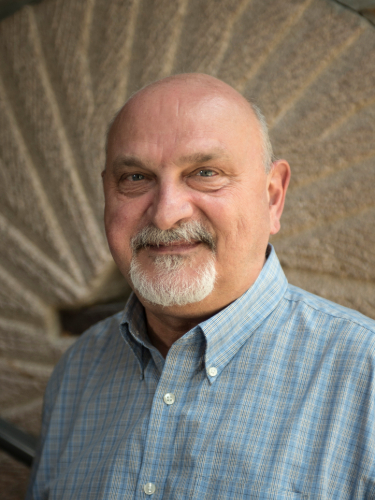
Marian Muste is an Adjunct Professor and Research Engineer in Civil and Environmental Engineering at the University of Iowa, affiliated with IIHR—Hydroscience & Engineering. He holds an MSc from Polytechnic Institute Cluj and a PhD from the University of Iowa. Research Focus: His work spans experimental hydraulics, sediment transport, flood monitoring, and cyberinfrastructure for watershed systems. He contributes to UNESCO and WMO flood-risk projects and develops innovative river-monitoring techniques using advanced sensors and modeling. Publication Trends: Recent articles emphasize river dynamics, hysteresis phenomena, AI-driven water management, and cyberinfrastructure (RIMORPHIS). His research integrates field data, satellite observations, and computational models to advance hydrological prediction and hazard mitigation. No awards listed. He mentors through research collaborations but has no listed PhD students. His work supports infrastructure resilience and environmental monitoring frameworks.
Fangzheng Lyu is an Assistant Professor in the Department of Geography at Virginia Polytechnic Institute and State University (Virginia Tech), affiliated with the College of Natural Resources and Environment. His research focuses on advancing GIScience, geospatial data science, and computational methods to address complex urban and environmental challenges using big data. He holds a Ph.D. from the University of Illinois Urbana-Champaign (2024), an M.S. from the same institution (2021), and a B.E. from the University of Hong Kong (2018). Dr. Lyu's expertise includes geospatial data science, cyberGIS, urban informatics, and geospatial AI. His work spans three core areas: (1) urban dynamics modeling using machine learning and cyberGIS, (2) scalable spatial algorithms for remote sensing and big data analysis, and (3) democratizing access to advanced geospatial cyberinfrastructure. He teaches courses such as Principles of GIS, Geospatial Data Science, and Spatial Data Science at Virginia Tech. His research has been published in leading journals like International Journal of Geographical Information Science , IEEE Journal of Selected Topics in Applied Earth Observations and Remote Sensing , and Sustainability . Notable contributions include frameworks for urban heat island prediction, spatiotemporal image fusion models (e.g., Multi-stream STGAN), and methods for analyzing spatial accessibility during public health crises. Dr. Lyu actively contributes to interdisciplinary initiatives, including the Center for Geospatial Information Technology at Virginia Tech. His work emphasizes reproducibility and collaboration, with a focus on bridging geospatial research and education through cyberGIS platforms like CyberGIS-Jupyter. He has received funding for proposals integrating geospatial technologies with urban sensing and epidemiological modeling.
Michael Gruninger is a Professor in the Department of Mechanical and Industrial Engineering at the University of Toronto, serving as Associate Chair of Undergraduate Studies. He holds a PhD and MSc in Computer Science from the University of Toronto and a BSc in Computer Science from the University of Alberta. His research focuses on semantic integration, process modeling, and mathematical logic applications in manufacturing and enterprise engineering. He contributed to the ISO 18629 standard for Process Specification Language. Research interests include ontologies, semantic web technologies, knowledge representation, and formal methods. He leads the Semantic Technologies Laboratory, advancing theories in mereotopology, spatiotemporal ontologies, and ontology engineering. Recent work emphasizes automated spatial reasoning in robotics and standards-based ontology development. Publications span ontology validation, mereological foundations, and applied semantic technologies. His work bridges theoretical computer science with practical enterprise systems and smart city applications. No awards are explicitly listed, though his contributions to ISO standards reflect industry impact. Advising and grants: No specific students/grants detailed here. His lab focuses on semantic technologies with applications in manufacturing and urban systems. Collaborations include NIST and the Industrial Ontologies Foundry.
Professor Nehmat Houssami is a Professor of Public Health and NBCF Chair in Breast Cancer Prevention at the University of Sydney. She leads a research portfolio focused on breast cancer prevention, screening technologies, and evidence-based practices. Her work emphasizes digital breast tomosynthesis (3D mammography), MRI in high-risk groups, and systematic reviews. Education: MBBS, MPH, MEd, PhD, FAFPHM, FASBP. Affiliations: Sydney School of Public Health, NHMRC Investigator (Leader) Fellow. Research Interests: Breast cancer screening innovation, imaging technologies for early detection, and addressing health equity in screening practices. Collaborates internationally with institutions in Italy, Norway, and the US. Key Articles: Focus on AI in screening, tomosynthesis efficacy, and psychosocial impacts of screening. Over 200 peer-reviewed publications in Journal of the National Cancer Institute , BMJ , and Cancer Epidemiology . Scientific Awards: NHMRC Investigator Fellowship. Students: Supervises research on lung cancer screening barriers, breast cancer epidemiology, and digital health. Labs/Teams: Active in the Sydney School of Public Health, leading global trials like STORM and MIPA. Collaborates with the Norwegian Breast Screening Program and Cancer Research UK.
Bill Tomlinson is a Professor of Informatics and Education at the University of California, Irvine (UCI), and a researcher at the California Institute for Telecommunications and Information Technology (Calit2). His work bridges artificial intelligence, ICT for sustainability, and environmental policy, focusing on leveraging technology to address global ecological challenges. He authored *Greening through IT* (MIT Press, 2010), which examines how information technology can enable sustainable practices, and has published over 100 academic works across computing, education, and sustainability. Education: A.B. in Biology (Harvard College), M.F.A. in Experimental Animation (CalArts), and S.M./Ph.D. in Media Arts & Sciences (MIT). Professional service includes roles on the EPA’s Board of Scientific Counselors (2014–2017) and as a Sloan Research Fellow (2008). His research spans sustainable food systems (e.g., the Plant Guild Composer tool), AI ethics, and legal frameworks for technology governance. Key research interests include computational sustainability, AI’s environmental impact, and interdisciplinary approaches to ecological challenges. Recent work explores AI certification systems, biodiversity law frameworks, and educational tools for fostering systems thinking. His projects often integrate technical innovation with policy design, such as simulations modeling corporate governance reforms or climate policy. Scientific awards include the NSF CAREER Award (2007) and recognition from major media outlets (e.g., *Wall Street Journal*, BBC). His grants and collaborations emphasize real-world impact, such as designing equitable energy systems or analyzing AI’s role in environmental decision-making. Bill co-founded initiatives like *SAGE Community Coordinator* and *Collapse Informatics*, which use participatory simulations to engage communities in sustainability challenges. He teaches courses on global disruption and technology’s societal role, emphasizing ethical and ecological responsibility.
Ramesh Jain is a distinguished Professor and Founding Director of the UCI Institute for Future Health at the University of California, Irvine. He holds leadership roles across multiple institutions, including founding directorships of the Artificial Intelligence Laboratory at the University of Michigan (1987), Visual Computing Lab at UC San Diego (1995), and editorships of IEEE MultiMedia and Machine Vision and Applications journal. His research focuses on AI, computer vision, and healthcare innovation, particularly in data-driven health navigation systems and experiential computing. Education: Ph.D. in Electronics & Electrical Communications Engineering from IIT Kharagpur (1975). Research Interests: Building computing frameworks for personalized healthcare AI applications in nutrition and disease prevention Experiential computing and multimedia systems Multimodal data fusion for health monitoring Scientific Awards: ACM Distinguished Service Award (2023), ACM SIGMM Technical Achievement Award (2010), and Fellowships from ACM, IEEE, AAAS, IAPR, AAAI, and SPIE. Professional Contributions: Founded SIGMultiMedia, pioneered multimedia computing concepts like Folk Computing and Experiential Computing, and advised over 15 companies in early stages. Current projects include the Open Source Personal Health Navigator at Peng Cheng Lab, Shenzhen. Lab/Team: Leads the UCI Institute for Future Health, focusing on integrating AI and health informatics for preventive care.
George Xydis is a Professor at the University of the Peloponnese, Department of Mechanical Engineering, and also holds a position at Aarhus University in Denmark. He previously served as an Associate Professor at Aarhus University from February 2017 until becoming a Full Professor in January 2023. His academic career spans multiple institutions across Europe and includes significant industry experience in the renewable energy sector. Dr. Xydis's research focuses on wind resource assessment, energy planning, techno-economics of renewable energy systems, and the energy-food nexus. His work bridges engineering, policy, and economics, with particular emphasis on practical applications of renewable energy technologies. He has developed more than 1700 MW of renewable energy projects, primarily wind, giving him extensive field experience that informs his academic work. His publication record shows a strong trend toward interdisciplinary research connecting renewable energy with environmental concerns, grid integration challenges, and novel applications like vertical farming and power-to-X technologies. Recent work demonstrates increasing focus on EU energy transition challenges, circular economy approaches, and the integration of multiple renewable technologies in complex systems. Dr. Xydis serves as Co-Editor in Chief of 'Cambridge Prisms: Energy Transitions' and as Associate Editor for several prominent energy journals. He leads multiple EU-funded research projects including TETHYS, JUSTGREEN, and JustWind4All, demonstrating his leadership in European energy research initiatives. He has supervised several PhD students working on topics including AI-based bird collision avoidance at wind farms, small-scale hydroponic systems, and portable hydrogen production systems. His research funding portfolio includes significant grants from Horizon Europe, Nordforsk, and other major European funding bodies.
Dr. Ryan Suk is an Assistant Professor at Emory University with a dual appointment: primary in the Center for Data Science at the Nell Hodgson Woodruff School of Nursing and secondary in the Department of Health Policy and Management at the Rollins School of Public Health. They also serve as a Faculty Consultant for Health Economics and Outcomes Research (HEOR) at the Winship Center for Cancer Health Equity Research and as a Fellow of the American Cancer Society HPV Roundtable Emerging Leaders Program. Dr. Suk holds a BBA from Korea University, an MS in Economics from the University of Utah, and a PhD in Health Economics from The University of Texas Health Science Center. Dr. Suk’s research focuses on HPV-associated cancer prevention and control, particularly for under-recognized populations such as 27-45-year-olds for HPV vaccination and individuals aged 66+ for cervical cancer prevention. Their work integrates economic evaluation, community engagement, and decision support tools to optimize resource allocation. Key themes include public discourse around HPV prevention, LGBTQ+ health equity, and spatial analysis of healthcare access. They are deeply committed to mentoring students across disciplines like nursing and clinical fields. Dr. Suk’s articles span HPV-related health disparities, palliative care utilization, and LGBTQ+ cancer policy. Their work has been published in high-impact journals like JAMA Health Forum and JAMA Pediatrics. Awards include the American Cancer Society Fellowship. They also contribute to initiatives like AI.Humanity at Emory, emphasizing ethical AI in healthcare.
Jeroen Grift is a Researcher in the Department of Earth Observation Science, specializing in geospatial methodologies for cadastral boundary delineation and agricultural monitoring. Earth Observation Remote Sensing Geographic Information Systems (GIS) Land Administration Spatial Data Analysis Geospatial Artificial Intelligence (AI) Grift's recent work focuses on creating benchmark datasets like CadastreVision and AI4SmallFarms . These resources leverage multi-resolution earth observation imagery and deep learning algorithms to address challenges in cadastral mapping and crop field delineation. His research emphasizes improving spatial resolution, accuracy, and automation in geospatial data analysis, with applications for land rights and smallholder farming systems in Southeast Asia.
Dr. Dhesi Baha Raja Selva Raja is an Associate Professor at Monash University’s Malaysia Jeffrey Cheah School of Medicine and Health Sciences. He holds roles as Vice Chair of HIMSS Asia Pacific and one of seven Global Advisors to Mitsubishi Global Health Architecture. His expertise spans Infectious diseases, Artificial Intelligence, and Digital Health Policies. Dr. Raja earned a Doctorate in Public Health Medicine (DrPH) from an unspecified institution (Award Date: 2 Jun 2016) and a Master’s in Public Health (MPH) from Universiti Malaysia Sarawak (2013). His research focuses on leveraging technology to address global health challenges, including AI-driven disease prediction (e.g., dengue outbreaks) and geospatial analysis of infectious disease clusters. Notable projects include the REACH: Regional Hub for Asia Climate Change and Health (2024–2028) and WHinc: Women’s Health INCubator (2024–2025) . He has received prestigious awards such as the King’s College Life Science Award (2016) and MIT’s Top 10 Innovators (2017). Grants & Projects : Lead investigator in climate change and health initiatives, emphasizing equitable healthcare access. Labs/Teams : Collaborations include global health architecture design and digital health policy advocacy through his advisory roles.
Dr. Natalie Harvey is a Senior Research Scientist at the Department of Meteorology, University of Reading. She specializes in atmospheric transport processes, volcanic ash dispersion modeling, and uncertainty quantification in natural hazard forecasts. Her work focuses on improving volcanic ash forecasting through advanced model techniques and satellite data integration. She is affiliated with projects like R4Ash, IMPALA, and RACER, addressing volcanic hazards and climate-related risks. Her research interests include boundary layer dynamics, remote sensing applications, and decision-making under uncertainty. She has contributed to over 30 peer-reviewed articles, analyzing volcanic eruptions such as Raikoke 2019 and Grímsvötn 2011. Her methods enhance forecast accuracy by integrating ensemble meteorology and source inversion techniques. Notably, she explores how AI models compare to traditional physics-based approaches in weather prediction, highlighted in a 2024 study on Storm Ciarán. Dr. Harvey holds a PhD from the University of Reading (Boundary-layer type classification and pollutant mixing) and has developed classification algorithms for atmospheric layers using Doppler lidar. She collaborates with institutions like the Met Office and has received international recognition for her work in volcanic ash transport and dispersion modeling.
Iwona Kaczmarek is a Professor in the Department of Systems Research at the Wrocław University of Science and Technology's Faculty of Spatial Management and Landscape Architecture. Her work focuses on advancing spatial data infrastructure (SDI), geoinformatics, and machine learning applications in urban and regional planning. She leads interdisciplinary research integrating GIS, natural language processing (NLP), and graph neural networks to address challenges in spatial planning, policy analysis, and socio-economic modeling. Research interests include: Spatial data integration and interoperability Machine learning for geospatial analysis Semantic web technologies for open data Urban sustainability and transit-oriented development Policy text mining and stakeholder analysis Recent work emphasizes: 1. Combining media sentiment analysis with economic indicators during crises (2025) 2. GeoAI-driven quality of life predictions using graph neural networks (2023) 3. Knowledge graph extraction from spatial development plans (2023) 4. Harmonizing local planning documents via NLP (2022) Collaborations include projects like the EYE initiative analyzing remote sensing for economic trends and SDI implementations in academic contexts. Over 75 documented outputs highlight her contributions to geospatial innovation and policy-relevant research.