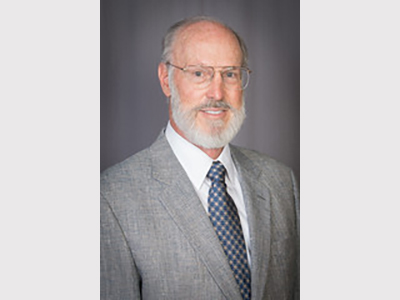
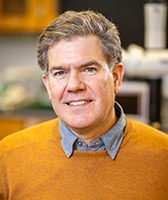
Sandra Chapman is Professor of Physics and Director of the Centre for Fusion, Space and Astrophysics at the University of Warwick. A plasma physicist specializing in nonlinear processes in astrophysical and laboratory plasmas, her paradigm-shifting work established magnetospheres as multi-scale dynamical systems. She received the 2024 EGU Hannes Alfvén Medal and 2022 RAS Chapman Medal for fundamental contributions to space plasma physics. Her research develops complex systems approaches to solar-terrestrial physics, employing high-performance computing to model energy release mechanisms in space environments. Recent work creates novel data analytics for space weather risk quantification and climate applications. Chapman has held prestigious fellowships including Radcliffe (Harvard), Fulbright-Lloyd's, and ISSI Johannes Geiss Fellowship. Public engagement includes Antarctic art exhibitions bridging science-art divides. She authored the textbook 'Core Electrodynamics' and has published over 200 papers. Research supervision has launched 30+ PhD careers in academia.
Iain D. Stewart is a researcher and lecturer in urban climatology and climate-sensitive urban design. He holds positions as a Sessional Lecturer at the University of British Columbia (Department of Geography) and a Visiting Scholar at Universidad Nacional de Colombia. He is also a Fellow of the Global Cities Institute at the University of Toronto. His academic roles include Associate Editor for the journal Urban Climate (Elsevier) and co-author of the seminal text The Urban Heat Island – A Guidebook . Education: PhD in Geography from the University of British Columbia (2011), MSc and BSc (Honors) from the University of Regina. Research focuses on urban climatology, urban heat islands, and sustainable urban design. Key interests include environmental planning, climate mitigation strategies, and the integration of historical data into urban climate studies. His work emphasizes global assessments of urban heat and adaptation strategies for vulnerable cities. Publications highlight interdisciplinary approaches to urban climate challenges, with recent work focusing on climatic mapping in Colombian cities and longitudinal analysis of urban heat island dynamics. Awards include the Timothy Oke Award (2021) and William P. Lowry Methodology Award (2009). Teaching includes urban climatology courses at UBC, Ruhr University Bochum, and the University of Toronto. He co-founded the Urban Climatology Course (UCC) in Colombia, offering tailored education in urban climate science and policy. Collaborations involve institutions like the Universidad Nacional de Colombia and global initiatives through the International Association for Urban Climate (IAUC).
John Junkins is a distinguished academic and researcher in aerospace engineering, holding the Royce E. Wisenbaker Chair and serving as Director of the Hagler Institute for Advanced Study at Texas A&M University's College of Engineering. He has been affiliated with the Department of Aerospace Engineering since at least 1993. Junkins' roles include being a Distinguished Professor (mapped to Professor rank), a Regents Professor, and an Honorary Fellow of the American Institute of Aeronautics and Astronautics (AIAA). His educational background includes a B.A.E. from Auburn University (1965), and M.S. and Ph.D. in Aerospace Engineering from UCLA (1967, 1969). His research focuses on spacecraft dynamics and control, guidance systems, analytical methods, and smart sensor technologies. Notable contributions include work on trajectory optimization, orbital mechanics, and nonlinear control systems. Key awards include the Kay Bailey Hutchinson Distinguished Service Award (2022), Robert H. Goddard Astronautics Award (2019), and TYCHO BRAHE Medal (2004). His publications span textbooks like 'Analytical Mechanics of Aerospace Systems' and pioneering research in astrodynamics. Junkins' work emphasizes interdisciplinary collaboration through the Hagler Institute, advancing computational methods for space mission design and autonomous systems.
Steven S. Brown is an Adjunct Professor of Chemistry at the University of Colorado Boulder and a Research Chemist at NOAA’s Chemical Sciences Laboratory (CSL). He leads NOAA’s Tropospheric Chemistry and Atmospheric Remote Sensing programs, focusing on atmospheric composition dynamics with applications in air quality and climate. His research emphasizes nitrogen oxides (NOx), nighttime chemical cycles, and the development of high-sensitivity optical instruments for trace gas and aerosol measurements. Dr. Brown holds a Ph.D. from the University of Wisconsin-Madison (1996) and a B.A. from Dartmouth College (1989). He has conducted field campaigns such as FIREX-AQ, AEROMMA, and CalFiDE, studying biomass burning emissions, urban air quality, and regional pollution. His work has been recognized with prestigious awards including the NOAA Bronze Medal and Fellowships from the American Association for the Advancement of Science and the American Geophysical Union. Key research themes include nocturnal radical chemistry (NO₃/N₂O₅), halogen cycling in the troposphere, and the impacts of biomass burning on ozone and aerosols. His laboratory develops instruments like cavity-enhanced spectroscopy systems for airborne and ground-based observations. Recent work (2023–2025) highlights studies on urban ozone formation from volatile chemical products, wildfire plume dynamics, and stratospheric heterogeneous chemistry. Collaborations with agencies like CIRES and NASA emphasize interdisciplinary approaches to understanding atmospheric processes.
Professor Dan Crisan is a Professor of Mathematics at Imperial College London and Director of the EPSRC Centre for Doctoral Training in the Mathematics of Planet Earth. He holds a PhD in Mathematics from the University of Edinburgh and an MSci in Mathematics from the University of Bucharest. His research focuses on Stochastic Analysis, Stochastic PDEs, Fluid Dynamics, Nonlinear Filtering, and Data Assimilation. He leads the Stochastic Transport in Upper Ocean Dynamics (STUOD) project, supported by an ERC Synergy Grant, exploring stochastic models in geophysical fluid dynamics. His academic roles include directing the MPE CDT and teaching advanced courses like Stochastic Calculus with Applications to Non-Linear Filtering. He collaborates extensively with researchers globally on topics including stochastic fluid dynamics, particle methods, and Bayesian inference. His work bridges theoretical advancements with applications in climate modeling and environmental systems. Education: PhD (University of Edinburgh, 1996), MSci (University of Bucharest, 1992). Professional roles include Director of MPE CDT (2013–present), Professor at Imperial College (2011–present), and prior academic appointments at the University of Cambridge and Imperial College. His research emphasizes stochastic processes in fluid dynamics, with projects funded by EPSRC and EU grants. Current PhD supervision opportunities are available in areas like stochastic fluid dynamics and data assimilation. Key achievements include foundational contributions to particle filtering, numerical methods for stochastic PDEs, and stochastic transport models. His work on the Camassa-Holm equation and rotating shallow water models demonstrates expertise in nonlinear wave dynamics and stochastic parametrization. He actively engages in international collaborations and serves on editorial boards for leading journals in stochastic analysis.
Carlo Beltrame is an Associate Professor at Ca' Foscari University of Venice, affiliated with the Department of Humanities. His roles include membership in the Management Committee of the University Scientific Instrumentation Service Center (CSA) and as Department Delegate for the Third Mission. Born in Venice in 1969, he holds degrees from the Universities of Padua and Trieste, with a PhD from the University of Haifa. His research focuses on maritime archaeology, Roman shipbuilding, and underwater heritage preservation. Notable awards include the 2020 Research Prize Consolidator and the 2021 Premio Sciacca for Underwater Archaeology. Education: Bachelor's at University of Padua Masters in Archaeology at University of Trieste PhD (equivalent) from University of Haifa Key Projects: Principal Investigator for the PRIN 2022 project on the Venetian Lagoon in Antiquity Coordinator of CHANGES PNRR Spoke 1 on Historical Landscapes Leadership in Interreg Italy-Croatia projects (ARCA ADRIATICA, UNDERWATER MUSE) His teaching includes courses on maritime archaeology and research methodologies. He is a member of editorial boards for seven journals and has organized 9 international conferences. His work integrates digital techniques, such as photogrammetry and 3D modeling, to document submerged sites and artifacts. Beltrame also chairs the Italian Association of Scientific Underwater Operators (AIOSS) and has directed excavations of Roman shipwrecks in Italy and Croatia. Labs/Teams: Research Institute for Digital and Cultural Heritage at Ca' Foscari.
Gregory S. Springer is a Professor in the Department of Earth and Environmental Geosciences at Ohio University's College of Arts and Sciences. He has served in multiple leadership roles, including Department Chair (2016–2020), Faculty Senator (2023–24), and Leadership Fellow in the Mid-American Conference Academic Leadership Development Program (2023–24). His research is centered on karst systems, paleoclimate, and geomorphic responses to environmental change. Education: Ph.D. in Earth Resources, Colorado State University, 2002 M.S. in Geology, West Virginia University, 1994 B.S. in Geology, West Virginia University, 1991 Dr. Springer’s research lies at the intersection of geomorphology, hydrology, and paleoenvironmental science. His primary focus is on cave systems in the Appalachian region, where he uses speleothems, sediments, and geomorphic features to reconstruct past climates, flood events, and human impacts such as Native American land use. His work combines field-based observations with geochemical and sedimentological analyses to understand long-term landscape evolution. He teaches courses including Introduction to Geology, Natural Disasters, and Stream Geomorphology, both in-person and online. The 15 most recent publications reflect a sustained focus on karst processes, paleoflood hydrology, and paleoclimate reconstruction. These works span disciplines such as hydrology, sedimentology, and climate science, with recurring themes including speleothem isotope records, cave scallop hydraulics, and human-induced environmental change. His research often involves interdisciplinary collaboration and student participation, particularly in Appalachian cave systems. Scientific Awards and Honors: Fellow, National Speleological Society Leadership Fellow, Mid-American Conference Academic Leadership Development Program (2023–24) Dr. Springer has advised over 15 Master’s students, many of whom have pursued careers in environmental consulting, government agencies (e.g., EPA, USGS), and energy sectors. His research has been supported through institutional and collaborative grants, though specific grant titles are not listed. He actively engages in scientific outreach through public talks, media coverage, and open-access dissemination of research. He is a member of the Geological Society of America, American Geophysical Union, and the West Virginia Association for Cave Studies. His research projects often involve field teams working in cave systems across West Virginia, with a focus on Buckeye Creek and Culverson Creek cave systems. These teams include students and collaborators conducting hydrological monitoring, sediment sampling, and geomorphic mapping.
Dr. David E. Lumley is the Cecil & Ida Green Endowed Chair in Geophysics and Professor of Earth Sciences & Physics at the University of Texas at Dallas (UTD), serving as Department Head since 2021. He holds a PhD from Stanford University (1995), MSc and BSc from the University of British Columbia (1989/1986). His research focuses on wavefield inversion methodologies for 4D time-lapse seismology, subsurface imaging, and applications to CO2 sequestration, induced seismicity, and planetary geodynamics. Lumley directs UTD's Seismic Imaging & Inversion Lab and previously led the Center for Energy Geoscience at University of Western Australia (2009-2017). Education: PhD in Geophysics, Stanford University (1995) MSc in Geophysics & Astronomy, UBC (1989) BSc (Hons) in Geophysics & Astronomy, UBC (1986) Research Interests: Pioneering 4D time-lapse seismology, seismic full-waveform inversion (FWI), ambient noise imaging, and applications to energy transition challenges. Current projects include monitoring Yellowstone's magmatic system, CO2 storage validation, and induced seismicity characterization. Combines HPC, AI, and geostatistical methods to solve inverse problems in exploration geophysics and environmental monitoring. Awards: SEG's J. Clarence Karcher Award (1996), 8 Best Paper Awards, Distinguished Lecturer for AAPG/SEG/SPE, and SEG Endowed Scholarships. Named SEG's first 'Pioneer of Geophysics' in 2005. Grants: Over $135M in competitive funding from NSF, DOE, DOD, and international agencies. Active in industry partnerships through ventures like 4th Wave Imaging (acquired by Fugro, 2007). Labs/Teams: Leads Seismic Imaging & Inversion Lab at UTD, collaborating with global networks in Australia, Europe, and industry consortia. Co-developer of seismic inversion software tools used in energy and environmental sectors.
V. Strak is a researcher in the Department of Earth Sciences at Vrije Universiteit Amsterdam, specializing in geodynamic modeling and subduction zone dynamics. His work focuses on numerical simulations of tectonic processes, particularly in understanding slab dynamics, mantle flow interactions, and their implications for surface geology such as topography and seismic activity. Key affiliations: Vrije Universiteit Amsterdam (corresponding author) Research interests include subduction zone evolution, continental collision processes, and the role of buoyancy-driven flows in shaping tectonic boundaries. His studies apply advanced numerical methods to investigate phenomena like flat slab subduction, slab rollback mechanisms, and mantle wedge dynamics. Recent work explores the interplay between subduction dynamics and intraplate volcanism (e.g., in Tibet) and the mechanisms driving India-Asia convergence. Findings contribute to understanding how mantle flow and plate interactions influence continental deformation and seismic hazards.
Abdullah Karaman is a Professor at the Department of Geophysical Engineering, Istanbul Technical University (ITU). His research focuses on geophysical modeling, subsidence due to longwall mining, hydrothermal systems, and seismic data analysis. He leads projects on geothermal applications using particle swarm optimization and collaborates internationally. Dr. Karaman has supervised 8 ongoing theses and has authored/co-authored over 17 publications since 1997. His work spans geophysical exploration, environmental geohazards, and subsurface imaging techniques. Education: Master of Science in Geophysics (1989) Research Interests: Hydrothermal system characterization using magnetotelluric methods Seismic inversion and diffraction imaging Geophysical monitoring of coal mine subsidence Optimization algorithms in geophysical data analysis Awards: None explicitly mentioned. Grants & Projects: Geothermal Applications of Particle Swarm Optimization Modeling Technique (2016–2021) Kordil Engineering Company: Geophysical consulting for international projects (2021) His lab focuses on integrating geophysical techniques with machine learning for high-resolution subsurface imaging.
Kenneth H. Stokoe is a Professor and the Jennie C. and Milton T. Graves Chair in Engineering at The University of Texas at Austin's Department of Civil Engineering. He holds a Ph.D. in Civil Engineering from the University of Michigan (1972), with prior academic roles including Cockrell Family Regents Chair and Brunswick-Abernathy Regents Professor. His expertise spans geotechnical earthquake engineering, soil dynamics, and non-destructive testing of geotechnical systems. He has pioneered advancements such as the crosshole seismic method for shear wave velocity measurement (ASTM D4428M standard), the RCTS laboratory testing system, and the SASW (Spectral-Analysis-of-Surface-Waves) method for field seismic evaluation. His research has been applied globally, including at Yucca Mountain (Nuclear Waste Repository), Hanford (Waste Treatment Plant), and numerous airport/runway projects. He also developed the Rolling Dynamic Deflectometer (RDD) for pavement stiffness profiling. Dr. Stokoe has led major NSF-funded projects, including the NEES (Network for Earthquake Engineering Simulation) program's large-scale mobile testing equipment. He is affiliated with 8+ professional societies and has authored over 150 publications. Awards include the Walter L. Huber Prize, National Academy of Engineering membership, and the Harold Mooney Award for seismic innovations. His academic career spans 45+ years with a focus on advancing geotechnical engineering through field and lab innovations, seismic site characterization, and infrastructure resilience. Current research emphasizes deep seismic profiling, real-time pavement assessment, and in-situ soil liquefaction testing.
Dr. Cliff Frohlich is a Senior Research Scientist Emeritus and Senior Research Scientist at the Institute for Geophysics, Jackson School of Geosciences, The University of Texas at Austin. He specializes in seismology with a focus on deep earthquakes, Texas and moonquakes, and statistical earthquake analysis. Education: Ph.D. and M.S. from Cornell University, B.A. from Grinnell College. Research Interests : Frohlich’s work spans induced seismicity, tectonic stress analysis, and the geophysical implications of energy resource activities. He investigates correlations between wastewater injection, fracking, and seismic events in Texas, Oklahoma, and other regions. His studies also address global patterns of deep earthquakes and moonquake mechanisms. Publications : Frohlich has authored/co-authored over 100 peer-reviewed articles and two books: Texas Earthquakes (UT Press) and Deep Earthquakes (Cambridge University Press). Recent work focuses on seismic vulnerability assessments, fault stress orientations, and the TexNet seismic network. Labs/Teams : Active within the UT Institute for Geophysics, collaborating on projects like the Scotia Arc GPS Project (SCARP) and educational outreach through films like Big League Earth Science .
Seyyed Abolfazl Hosseini is a Research Professor at the Bureau of Economic Geology within the Jackson School of Geosciences at The University of Texas at Austin. His expertise spans fluid flow in porous media, CO2 sequestration, reservoir modeling, and unconventional reservoir engineering. He holds a B.Sc. in Chemical Engineering from the University of Isfahan (2002), an M.Sc. in Chemical Engineering (Biotechnology) from Sharif University of Technology (2005), and a Ph.D. in Petroleum Engineering from the University of Tulsa (2008). Education: B.Sc., Chemical Engineering, University of Isfahan (2002) M.Sc., Chemical Engineering (Biotechnology), Sharif University of Technology (2005) Ph.D., Petroleum Engineering, University of Tulsa (2008) Professional History: Research Professor, Bureau of Economic Geology (2023–Present) Senior Research Scientist, Bureau of Economic Geology (2021–2023) Research Scientist, Bureau of Economic Geology (2016–2021) Research Associate, Bureau of Economic Geology (2010–2016) His research focuses on enhancing oil recovery, CO2 geological storage, upscaling techniques, and multiphase flow dynamics. Key areas include reservoir simulation, CO2 sequestration risk assessment, and machine learning applications in subsurface modeling. He has contributed to over 100 peer-reviewed publications and holds awards for his impactful work in carbon storage and reservoir engineering. Recent work emphasizes leveraging AI/ML for rapid CO2 plume prediction, optimizing site selection workflows for large-scale storage projects, and advancing understanding of hydrogen storage mechanisms in subsurface formations. Awards: 2024 Tinker Family BEG Publication Award Best Paper Award at 2013 COMSOL Conference Career-Development Publications Award (2011) Grants & Funding: Principal Investigator: Science-Informed Machine Learning for Real-time Decisions in Subsurface Applications (DOE) Co-PI: SECARB USA Regional CO2 Storage Project (2019–2024) He leads initiatives such as the SMART Initiative (Machine Learning for CCS) and serves on editorial boards and professional committees in petroleum engineering and geoscience.
Steven Jacobsen is a Professor of Earth and Planetary Sciences at Northwestern University’s Weinberg College of Arts & Sciences. He holds a Ph.D. in Geophysics, M.S. in Geology, and B.A. in Geology from the University of Colorado. His research focuses on high-pressure mineral physics, exploring the properties of materials under extreme conditions to understand Earth’s interior and develop novel energy and construction materials. Jacobsen leads studies on water cycling in the mantle, hydrous minerals, and planetary materials science, utilizing advanced facilities like the Advanced Photon Source and Sandia National Laboratories’ Z machine. He serves as Director of Graduate Recruitment, shaping the department’s graduate program. Research interests include mineral elasticity, phase transitions, and applications in geophysical and planetary contexts. Notable projects involve electrodeposition for marine construction and NASA collaborations for off-world regolith utilization. Jacobsen’s work bridges fundamental science and practical innovation, addressing low-carbon technologies and planetary exploration. His recent publications highlight advancements in ferropericlase inclusions, superdeep diamonds, and tunable materials. Collaborations with industry and space agencies underscore his interdisciplinary impact.
Noemi Vergopolan is an Assistant Professor in Earth, Environmental and Planetary Sciences at Rice University. Her research focuses on computational hydrology and the water-climate nexus, leveraging satellite remote sensing, machine learning, and high-performance computing to improve hydrological prediction and decision-making for water resource management. Education: B.S. in Environmental Engineering (Federal University of Paraná), M.A. and Ph.D. in Civil and Environmental Engineering (Princeton University). Research Interests: Computational hydrology, satellite remote sensing of soil moisture, Earth system modeling, and the water-energy-food nexus. Her work emphasizes scalable approaches for high-resolution hydrological prediction and bridging gaps between local and global monitoring systems. Awards: 2022 American Geophysical Union - Science for Solutions Award 2022 Paul F. Boulos Excellence in Computational Hydrology Award Her research includes developing frameworks like HydroBlocks and SMAP-HydroBlocks for field-scale hydrological modeling, advancing drought monitoring, and integrating machine learning with climate models. Current projects address flash drought dynamics, agroforestry systems, and hyper-resolution soil moisture applications in India and Malawi.