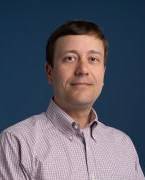
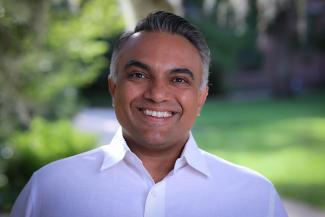
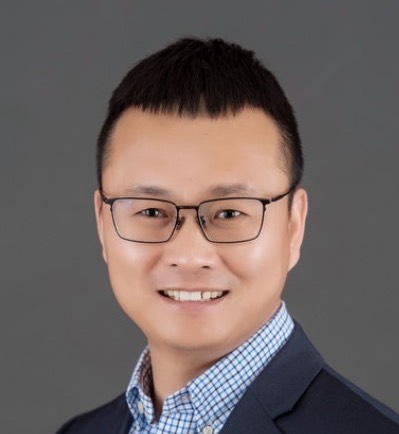
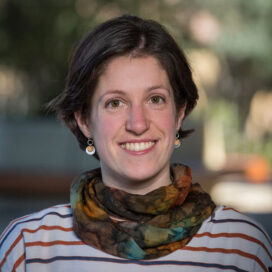
Professor Victoria C. Smith is a leading volcanologist at the School of Archaeology, University of Oxford. Her research focuses on tephrochronology, using volcanic ash layers to date and correlate sedimentary and archaeological records. She manages Oxford's electron microprobe facilities and cryptotephra laboratory, supporting global research on explosive volcanism. Research Interests : Volcanology, tephrostratigraphy, magmatic processes, and paleoenvironmental reconstruction. Geographic Focus : Italy, Mexico, Japan, Azores, Canary Islands, Ethiopian Rift, Antarctica. Her recent publications highlight collaborations in geochronology, magma evolution modeling, and tephra applications in synchronizing climate-human records. She supervises MSc and doctoral students in Archaeological Science, focusing on volcanic ash as chronological tools.
Jack Christopher Landy is an Associate Professor in the Department of Physics and Technology at UiT The Arctic University of Norway , specializing in Earth Observation and Arctic sea ice dynamics . His work integrates satellite altimetry , microwave backscatter , and data assimilation to study climate impacts on polar ice. Research Focus : Arctic sea ice thickness and freeboard estimation Snow depth modeling via CryoSat-2 and ICESat-2 Multi-decadal SAR analysis of ice types Climate change effects on ice roughness and transport Collaborations : Torgny Vinje Ice and Climate Laboratory INTERAAC (Norway-China air-snow-ice-ocean interactions) Multi-institutional Arctic climate projects
Ken D. Tape is a Professor of Ecology at the University of Alaska Fairbanks, affiliated with the Geophysical Institute. His research focuses on climate change impacts on Arctic ecosystems, emphasizing interconnections between snow, vegetation, permafrost, hydrology, wildlife, and human communities. Founded Arctic Beaver Observation Network (A-BON) (2020), coordinating circumarctic beaver research Developed repeat photography projects documenting landscape change in Alaska Principal Investigator (PI) and Co-PI for 10+ grants from NASA, NSF, USGS, DOE , and IASC His work synthesizes satellite remote sensing , field measurements, and historical data to analyze: Beaver colonization in tundra regions (2018–present) Shrub expansion and carbon dynamics (2008–2020) Hydrological changes in permafrost landscapes (2014–2022) Wildlife-vegetation interactions (2000–2017) Recent publications analyze beaver-engineered Arctic wetlands , shrub-root trait relationships , and permafrost destabilization , with methodological innovations in ground-penetrating radar and pressure transducer monitoring .
Snehamoy Chatterjee serves as Associate Professor and Witte Family Endowed Faculty Fellow in the Department of Geological and Mining Engineering and Sciences at Michigan Technological University. His expertise spans ore reserve estimation, mine planning optimization, and AI-driven safety systems, with significant contributions to remote sensing applications in mining and geological hazard assessment. Chatterjee earned his PhD in Mining Engineering from the Indian Institute of Technology Kharagpur, followed by postdoctoral research at the University of Alaska Fairbanks and the COSMO Stochastic Mine Planning Laboratory at McGill University. His academic journey includes prior faculty positions at India's National Institute of Technology. His research program integrates cutting-edge artificial intelligence with geospatial technologies to solve critical challenges in mining safety and resource management. Key focus areas include: Generative AI frameworks for real-time mining hazard prediction Hyperspectral and InSAR remote sensing for mineral exploration Deep learning applications in geophysical inversion Stochastic optimization of mine planning under uncertainty Machine learning-driven landslide and earthquake hazard mapping Chatterjee's 15 most recent publications (2023-2024) reveal a pronounced shift toward AI-geospatial fusion , with 60% of works applying deep learning to satellite imagery for hazard monitoring. His team's research spans three critical domains: mining safety systems (33%), geological hazard prediction (47%), and resource optimization (20%), demonstrating strong interdisciplinary collaboration across environmental science and engineering disciplines. Professional recognition includes: Editor's Best Reviewer Award 2014 from Mathematical Geosciences Journal APCOM Young Professional Award 2015 at the 37th APCOM conference Chatterjee actively mentors graduate students and leads multiple federally funded research initiatives focused on mine safety innovation and critical mineral exploration. His professional service includes editorial responsibilities for Mining, Metallurgy & Exploration and committee roles in major international conferences through IAMG, SME, and AGU. Current projects emphasize generative AI applications for predictive safety analytics and hyperspectral remote sensing for critical mineral discovery. His research extends through collaborations with the COSMO Laboratory network and industry partners across North America, India, and Australia, with recent fieldwork focusing on Alaskan platinum deposits and Indian coal reserves.
Norman Kerle is a Professor at the Faculty of Geo-Information Science and Earth Observation (ITC) of the University of Twente, holding the chair of Geoinformatics for Disaster Risk Management within the Earth Systems Analysis department. He earned Masters degrees in geography from the University of Hamburg and Ohio State University, and a PhD in volcano remote sensing from the University of Cambridge (2002). His research spans volcanology, landslide detection, and quantitative geomorphology, with a focus on object-oriented remote sensing methods for disaster risk management. He leads the ITC Object-Based Image Analysis research group and coordinates EU-funded projects like RECONASS and INACHUS , emphasizing UAV-based structural damage mapping. Recent work includes post-disaster recovery assessment using remote sensing and macro-economic modeling. His scientific contributions include over 221 research outputs (peer-reviewed articles, book chapters, conference papers) and datasets such as Evaluating Resilience-Centered Development Interventions with Remote Sensing (2020). He has received the 2011 Lloyd's Science of Risk Prize (Natural Hazards) and served as Associate Editor for journals like Remote Sensing and Natural Hazards and Earth Systems Sciences . Prof. Kerle’s professional affiliations include the European Geosciences Union (EGU), American Geophysical Union (AGU), International Society for Photogrammetry and Remote Sensing (ISPRS), and Remote Sensing and Photogrammetry Society (RSPS). He has examined PhD theses and reviewed proposals for Horizon 2020, STEREO, and UNESCO.
Dr. Lea Svendsen is an Associate Professor at the Geophysical Institute , University of Bergen, Norway. She specializes in climate dynamics, with particular focus on internal climate variability across multiple timescales (interannual to multidecadal), inter-basin interactions, and climate prediction systems. Her work connects tropical and extratropical climate phenomena, particularly examining Pacific-Atlantic-Arctic linkages and their implications for global climate patterns. Education: PhD in Climate Dynamics (2016, University of Bergen) Key Collaborations: University of Bergen, Norwegian Research Center (NORCE), Universidad Complutense de Madrid Research Interests : Dr. Svendsen's work investigates: Mechanisms of internal climate variability across timescales Teleconnection patterns between tropical and high-latitude regions Inter-basin interactions (Pacific-Atlantic-Arctic) Norwegian Climate Prediction Model (NorCPM) development and application Climate services for renewable energy applications Publication Trends : Her 15 most recent publications (2021-2025) demonstrate consistent focus on: Pacific and Atlantic contributions to Arctic warming Monsoon variability and ocean-atmosphere coupling Model uncertainty quantification in climate science Climate prediction systems and reanalysis development ENSO-Atlantic interactions under changing climate Climate services applications for societal sectors Scientific Engagements include: Academic and popular science lectures on Arctic warming and climate change Media interviews about El Niño impacts and climate trends Conference presentations at Ocean Sciences Meeting, Japan Geophysical Union, SPARC General Assembly Contributions to CMIP6 DCPP decadal prediction framework
Ana Bastos is a Professor of Land-Atmosphere Interactions at the Institute of Earth System Science and Remote Sensing, University of Leipzig, since May 2024. She has previously held positions as a Research Group Leader at the Max Planck Institute for Biogeochemistry (2020–2024), Research Assistant at Ludwig Maximilian University of Munich (2018–2020), and PostDoc at the Laboratoire des Sciences du Climat et de l'Environnement in France (2015–2018). Her academic journey began with a PhD in Geophysics and Geoinformation Sciences from the University of Lisbon (2015) and an MSc in Energy and Environmental Engineering (2011). Her research focuses on understanding interannual to long-term variability in the global carbon cycle, integrating atmospheric science, ecology, and biogeochemistry from both observational and modeling perspectives. She investigates the links between internal climate variability and ocean-atmosphere-land teleconnections, as well as the impacts of climate extremes on ecosystem functioning and disturbance regimes. Her work often employs Earth observation data and multi-scale modeling to reconcile carbon budgets and improve climate projections. Recent publications highlight her expertise in carbon cycle dynamics, climate extremes, and ecosystem resilience. Key topics include compensatory effects in climate models, deforestation impacts on drought vulnerability, and regional greenhouse gas budget assessments. Her projects, such as ForExD and NextGenCarbon, address forest vulnerability and Earth's carbon balance under climate change. Early Career Scientist Award, Biogeosciences Division, European Geosciences Union (2022) ERC Starting Grant (2022) Elected President of EGU's Biogeosciences Division (2024) Prof. Bastos teaches courses like "Climate and Water" (BSc), "Earth System Components" (MSc), and "Earth System Modeling" (MSc). She is actively involved in initiatives promoting diversity, inclusion, work-life balance, and mental health in academia.
Dr. Anthony J. Parolari is an Associate Professor in the Department of Civil, Construction and Environmental Engineering at Marquette University. He holds a Ph.D. in Civil and Environmental Engineering from MIT (2012) and has previously taught courses in engineering computing, urban hydrology, and ecohydrology. Education: Ph.D., 2012, Civil and Environmental Engineering, Massachusetts Institute of Technology M.S.E., 2005, Environmental Engineering, University of Michigan B.S.E., 2004, Civil Engineering, University of Michigan His research focuses on the interactions between hydrology and ecosystems, particularly in urban and engineered environments. Key areas include watershed hydrology, ecohydrology, stormwater management, nutrient cycling, and climate change impacts on urban water systems. He develops quantitative models to link hydrologic variability to ecosystem processes, aiming to improve urban water infrastructure design and real-time control technologies. Analysis of his recent publications reveals trends in machine learning for flood prediction, nutrient management in green infrastructure, and ecohydrological responses to climate variability. His work often integrates experimental data with theoretical models to address water quality and quantity challenges. Dr. Parolari leads grants from the National Science Foundation (NSF), Minnesota Department of Transportation (MnDOT), and Milwaukee Metropolitan Sewerage District (MMSD), focusing on sustainable stormwater solutions and real-time control systems. He collaborates with institutions like MIT, University of Michigan, and Duke University on research initiatives. His team at Marquette’s Water Quality Center investigates soil biogeochemistry in engineered ecosystems, leveraging field studies and simulations to optimize stormwater wetlands and green roofs.
Jayur Madhusudan Mehta is an Associate Professor in the Department of Anthropology at Florida State University, where he also serves as Undergraduate Program Director. His research specializes in human-environment interactions, coastal archaeology, and Indigenous heritage preservation, with field projects spanning the Gulf Coast and Mississippi Delta. Mehta holds a Ph.D. in Anthropology from Tulane University (2015), an M.A. from the University of Alabama (2007), and a B.A. from the University of North Carolina (2004). His interdisciplinary work integrates geoarchaeology, ethnohistory, and environmental reconstruction to study how past societies responded to ecological challenges. Current initiatives include mediating coastal hazards for Indigenous communities, restoring ancient fisheries through paleoenvironmental analysis, and documenting plantation archaeology at Evergreen Plantation in Louisiana. Mehta's publications predominantly explore climate adaptation, cultural landscape resilience, and monumentality in Mississippian societies. His methodological approaches combine remote sensing, sedimentology, and spatial analysis to reconstruct historical ecologies and settlement patterns. He actively recruits graduate students for coastal archaeology projects and leads field schools focused on African Diaspora archaeology. As principal investigator for multiple research consortia, Mehta collaborates with Indigenous communities and federal agencies to develop culturally informed conservation strategies.
Dr. Mine Dogan serves as Assistant Professor of Environmental Geophysics in the Department of Geological and Environmental Sciences at Western Michigan University, with her office located in 1121 Rood Hall (Kalamazoo, MI). She holds a Ph.D. from Michigan State University (2013) and previously held research positions at Clemson University's Department of Environmental Engineering and Earth Sciences. Education: Ph.D., Michigan State University, 2013 Her research integrates geophysics, hydrology, and environmental engineering to investigate subsurface processes using advanced methodologies including drone-based electromagnetic surveys, time-lapse monitoring, and 4D X-ray computed tomography. Key focus areas include tree root hydrology, contaminant transport in groundwater, permafrost characterization, and macropore flow dynamics in heterogeneous soils. Analysis of her recent publications (2018-2024) reveals strong emphasis on unmanned aerial systems for geophysical data acquisition, visualization of fluid transport mechanisms in porous media, and forensic/environmental applications of electromagnetic methods. Recurring themes include the role of biological structures in hydrological processes and innovative approaches to subsurface imaging. Scientific Awards: No awards documented in source material While her advising activities and grant funding remain unspecified in available information, her publication record demonstrates active collaboration across geophysics, hydrology, and environmental engineering disciplines. Laboratory facilities and research team structures are not detailed in the provided texts.
Dr. Anna Mittelholz is a Lecturer at the Department of Earth and Planetary Sciences (D-EAPS) at ETH Zurich. She is affiliated with the Institute of Geophysics, located at Sonneggstrasse 5, 8092 Zurich, Switzerland. Her work focuses on geophysical research within the broader fields of Earth and planetary sciences. Contact her via email at anna.mittelholz@eaps.ethz.ch or phone +41 44 632 37 63. While specific research interests are not explicitly detailed, her departmental affiliation suggests expertise in geophysics, seismology, and planetary dynamics. No recent publications or awards are listed in the provided texts. Dr. Mittelholz contributes to teaching and research within the Institute of Geophysics, though specific lab affiliations or grant activities are not mentioned. Her professional profile emphasizes institutional roles without additional details on collaborative teams or future projects.
Zhi Ye is an Assistant Professor in the Department of Geology and Geological Engineering at South Dakota School of Mines and Technology (SDM). He holds a Ph.D. in Petroleum & Geological Engineering from the University of Oklahoma, a D.Eng. from China University of Petroleum, and a B.S. from Yangtze University. Prior to joining SDM, he served as a Research Scientist at the University of Oklahoma and a Centennial Research Fellow at the University of Alaska Fairbanks. His research focuses on reservoir geomechanics, rock mechanics, and experimental rock deformation, with applications in geo-energy recovery and storage. Key areas include hydraulic fracturing, in-situ stress determination, induced seismicity, and THMC (thermo-hydro-mechanical-chemical) processes in subsurface energy systems. His work integrates geomechanics, geophysics, and engineering to improve understanding of coupled processes in energy reservoirs and environmental impacts. In 2019, he received the prestigious Rock Mechanics Research Award from the American Rock Mechanics Association (ARMA) for his contributions to geomechanical research. His teaching spans reservoir geomechanics, drilling engineering, production engineering, and subsurface energy storage. He actively collaborates with projects like Utah FORGE to advance geothermal energy and unconventional reservoir technologies. His research emphasizes practical applications, such as optimizing borehole thermal energy storage, assessing fracture stimulation efficiency, and mitigating induced seismicity risks. His interdisciplinary approach bridges laboratory experiments and field-scale reservoir modeling to address challenges in subsurface energy systems.
Camilla Cattania is an Assistant Professor of Geophysics in the Department of Earth, Atmospheric and Planetary Sciences (EAPS) at the Massachusetts Institute of Technology, where she holds the Cecil and Ida Green Career Development Professorship. She leads research in seismology, earthquake physics, and operational earthquake forecasting, with a focus on understanding earthquake interactions at regional and global scales using numerical, analytical, and statistical tools. Dr. Cattania received her bachelor's and master's degrees in experimental and theoretical physics from the University of Cambridge, followed by a PhD in geophysics from the GFZ German Research Center for Geosciences/University of Potsdam. Her professional journey included positions as a guest scientist at GFZ, guest investigator at Woods Hole Oceanographic Institution, and postdoctoral fellow at Stanford University before joining MIT's faculty. Her research interests center on earthquake physics and forecasting, with specific focus areas including seismicity on rough faults, fault mechanics and earthquake cycles, the physics of small earthquakes, static stress triggering in operational earthquake forecasting, seismic swarms and aseismic slip driven by dikes, and dynamic triggering on transform faults. She develops physics-based models that incorporate Coulomb stress changes with rate-and-state friction laws to improve earthquake forecasting capabilities. Dr. Cattania's publication record demonstrates an impressive progression in developing and refining physics-based earthquake forecasting models, with her most recent work exploring the integration of AI and machine learning techniques to enhance forecasting accuracy. Her research spans both theoretical development and practical applications for operational earthquake forecasting systems. Scientific Recognition: Recipient of the prestigious NSF CAREER Award in 2024 for her project 'Towards a comprehensive model of seismicity throughout the seismic cycle' Co-author of influential papers that have advanced the field of physics-based earthquake forecasting Dr. Cattania is actively involved in educational outreach through partnerships with 826 Boston, working with Boston area high schools to lead interactive labs and demonstrations about earthquake research. She emphasizes the importance of connecting students with scientists to humanize the research process and inspire future generations of geophysicists.
Dr. Yanhao Lin is a Visiting Research Fellow at the Department of Geology and Geochemistry, Faculty of Science, Vrije Universiteit Amsterdam. His research focuses on experimental geochemistry and mineral physics, particularly magma dynamics, oxygen fugacity effects, and hydrogen transport in Earth's interior. He collaborates with institutions globally, contributing to understanding planetary evolution and mantle processes. Research Interests: Magma ocean dynamics and early Earth differentiation Hydrogen partitioning in magmatic systems Oxygen fugacity control mechanisms Subduction zone water transport Lunar basalt formation processes Recent work highlights experimental studies on lunar mare basalts (2025), magma ocean melting (2024), and core-mantle boundary hydration (2022). His studies integrate high-pressure experiments with computational modeling to address fundamental geodynamic questions. No scientific awards explicitly listed. Supervised 1 PhD thesis but no student names provided. Collaborations include researchers from institutions like Carnegie Institution (Mao), University of Tokyo (Katsura), and ETH Zurich (Walter).
Ali Lashgari is a Marie Skłodowska-Curie Postdoctoral Research Fellow at Aalborg University's Department of the Built Environment (Faculty of Engineering and Science). He holds a PhD in Geotechnical Engineering from Semnan University (2019) and serves as a visiting researcher at Hong Kong University of Science and Technology. His research focuses on seismic hazards, offshore energy infrastructure resilience, and probabilistic geotechnical analysis. Education: PhD in Geotechnical Engineering, Semnan University (2019) MSc in Geotechnical Engineering, Semnan University (2013) BSc in Civil Engineering (not specified) Research Interests: Development of predictive models for geohazards (e.g., submarine landslides, liquefaction), offshore foundation resilience, and probabilistic analysis of seismic risks. His work integrates numerical modeling (e.g., DEM-FEM), machine learning, and big data analytics for hazard assessment frameworks. Awards: Marie Skłodowska-Curie Postdoctoral Fellowship (2023) Grants & Projects: PRO-SLIDE: EU-funded project (2023–ongoing) for offshore energy infrastructure resilience against seismic submarine landslides (PI) EU-COST Action CA23155: Pan-European network on ocean tribology (participant) Professional Activities: Founder of Intelligent Environmental Risks Analyzers (2016) Membership in AGU, DFI, GEER, IGS, and IRCEO Lab/Team Affiliation: Risk, Resilience, Safety, and Sustainability of Systems Research Group at Aalborg University.