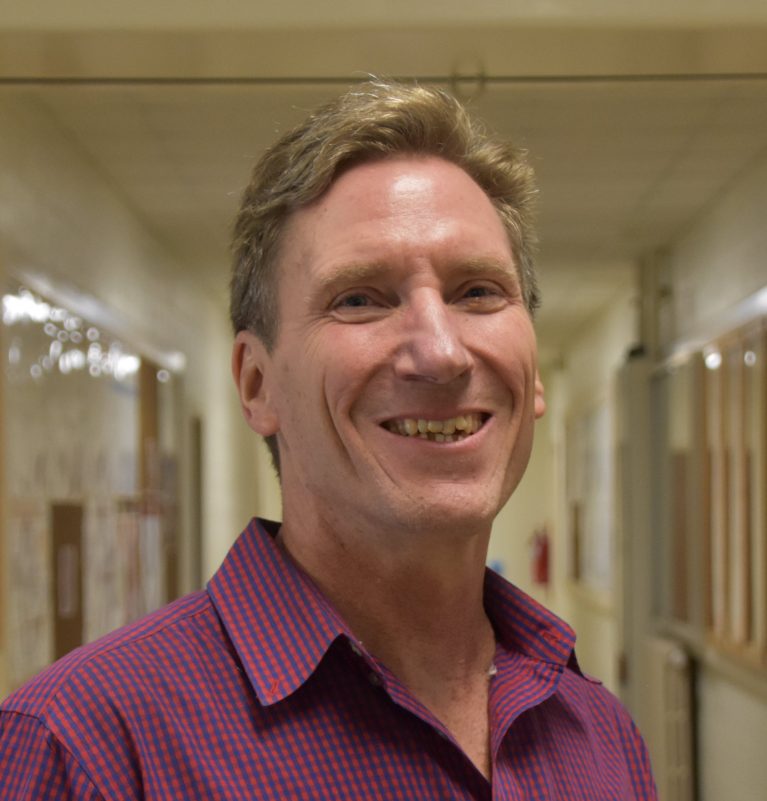
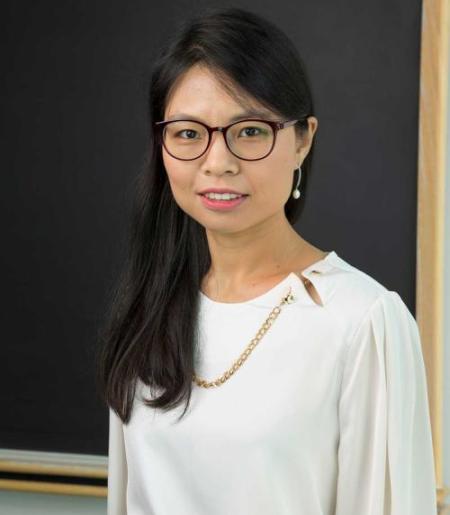
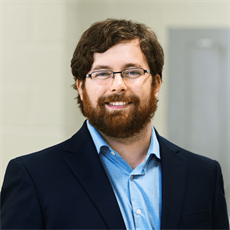
Daniel Kifer is a Professor in the Computer Science and Engineering department at Pennsylvania State University, with affiliations to the Huck Institutes of the Life Sciences. His work bridges computer science, privacy-preserving machine learning, and geoscience applications. With over 10,000 citations and a high h-index, he focuses on methods to unify theoretical and applied research. Research Interests: Differential Privacy, Privacy-Preserving Machine Learning, Physics-Informed Neural Networks, Landslide Prediction, and Formal Verification of Privacy Systems. Recent projects include grants from the National Science Foundation: SaTC: CORE: Small (2024): privacy-preserving user data embedding in machine learning pipelines. SaTC: CORE: Medium (2017-2023): formal methods for differential privacy and accuracy optimization. His research outputs span domains like geoscience, database systems, and policy analysis, emphasizing precision and scalability of privacy-preserving algorithms.
Carlos Torres-Verdín is a Professor and holds the Brian James Jennings Memorial Endowed Chair and Zarrow Centennial Professorship in Petroleum Engineering at The University of Texas at Austin's Hildebrand Department of Petroleum and Geosystems Engineering, within the Jackson School of Geosciences. He earned a B.S. in Geophysical Engineering from the National Polytechnic Institute of México (1983), an M.Sc. in Electrical Engineering from UT Austin (1985), and a Ph.D. in Engineering Geoscience from UC Berkeley (1991). His research focuses on petrophysical and geophysical characterization of subsurface regions using well logging, seismic, and multi-physics data. Key areas include borehole geophysics, rock physics, reservoir characterization, and hydraulic fracturing. He has received numerous accolades, including the 2020 Virgil Kauffman Gold Medal (SEG) and the 2017 Conrad Schlumberger Award (EAGE). His work integrates advanced numerical methods and machine learning to enhance reservoir evaluation and CO2 sequestration monitoring. Torres-Verdín teaches courses such as PGE 358 (Formation Evaluation) and directs the Formation Evaluation Joint Industry Research Consortium, fostering industry-academia collaboration. Awards & Honors 2020 Virgil Kauffman Gold Medal, SEG 2019 Anthony F. Lucas Gold Medal, SPE 2017 Conrad Schlumberger Award, EAGE 2017 Lockheed Martin Excellence in Engineering Teaching Award Research & Teaching His recent studies address challenges in unconventional reservoirs, fluid dynamics in nanoporous media, and real-time geosteering. He has published over 150 peer-reviewed articles, emphasizing innovation in inversion techniques, NMR applications, and reservoir simulation.
David Al-Attar is a Professor at the University of Cambridge's Department of Earth Sciences, actively involved in theoretical and computational geophysics research. He serves as a supervisor within the Cambridge NERC Doctoral Landscape Awards (Training Partnerships) program, particularly in the CREATES initiative focusing on climate and environmental science. Education: While specific educational details aren't provided in the text, his extensive publication record and professorial position at Cambridge indicate advanced training in geophysics and applied mathematics. Research Interests: Professor Al-Attar's work spans several interconnected areas within geophysics. His primary focus includes theoretical and computational problems in geophysics, with particular emphasis on continuum mechanics as applied to Earth systems. He develops new physical and mathematical theories for understanding Earth processes, including rigorous function space methods for inverse problems and uncertainty quantification. His sea level change research aims to constrain ice sheet evolution during the last glacial period to better understand modern contributions to sea level rise. Additionally, he investigates solid Earth dynamics including seismic free oscillations, body tides, and Earth rotation, contributing to our understanding of deep Earth structure and mantle dynamics. Research Themes: His publications demonstrate expertise in adjoint methods, glacial isostatic adjustment, mantle viscosity, planetary seismology, and computational methods for geophysical problems. Recent work emphasizes 3-D Earth modeling, sensitivity analysis, and the integration of satellite observations with theoretical models. Current Projects: Potential projects for students include inverse problems related to deglacial sea level change with focus on uncertainty quantification, modern sea level monitoring using satellite data, and solid Earth dynamics particularly regarding outer core viscosity in tidal and rotational dynamics. Contact: He can be reached at da380@cam.ac.uk for research inquiries and collaboration opportunities.
Peer Christian Kunstmann is an Adjunct Professor at the Institute of Analysis, Karlsruhe Institute of Technology (KIT). He teaches advanced mathematics courses for physics, electrical engineering, and mathematics students, including Analysis 4 (2025) and Höhere Mathematik II (2025). His research focuses on functional analysis, partial differential equations, and harmonic analysis. Key topics: Spectral theory, Navier-Stokes equations, and nonlinear Schrödinger equations Co-organized conferences: Parabolic Evolution Equations (2019), Evolution Equations (2010) Recent work explores maximal regularity for parabolic equations, modulation spaces in NLS analysis, and seismic imaging via Radon transforms. Publications span 2015-2023, with collaborations on topics like Banach algebras and inverse problems.
Prof. Dr. Johan Robertsson is a Full Professor of Applied Geophysics and Head of the Exploration and Environmental Geophysics (EEG) Group at ETH Zürich's Department of Earth and Planetary Sciences. He holds a MSc from Uppsala University (1991) and a PhD in Geophysics from Rice University (1994). Before joining ETH in 2012, he spent 15 years at Schlumberger in R&D roles, leading projects that revolutionized marine seismic data acquisition. His research focuses on wave propagation physics, seismic data inversion, and applications in exploration and environmental geophysics. He pioneered the use of Distributed Acoustic Sensing (DAS) for landslide monitoring and contributed to Mars seismology via the InSight mission. Education: MSc in Engineering Physics, Uppsala University (1991) PhD in Geophysics, Rice University (1994) Research Interests: Seismic wavefield modeling and inversion Planetary seismology (Mars, Moon) Acoustic metamaterials and wave control Environmental geohazard monitoring Marine seismic acquisition techniques His work on the Martian soil properties using InSight data and lunar exploration instrumentation (ALGEP) reflects his cross-disciplinary approach. He holds 90+ patents and has secured prestigious grants like the ERC Advanced Grant. Awards: EAGE Guido Bonarelli Award (2020) ERC Advanced Grant MATRIX (2017) EAGE Conrad Schlumberger Award (2018) Grants & Advising: Led the MATRIX ERC project advancing seismic imaging algorithms Advised over 20 PhD/MS students (names not listed) Secured Schlumberger's largest R&D project in marine seismic sampling His EEG Group operates cutting-edge labs for immersive wave experimentation and planetary geophysical instrumentation. Current initiatives include lunar subsurface exploration and acoustic invisibility experiments.
James A. Sethian is a Professor in the Department of Mathematics at the University of California, Berkeley , with additional affiliation at Lawrence Berkeley National Laboratory . His work focuses on developing and applying Level Set Methods and Fast Marching Methods to track evolving interfaces across diverse scientific domains. Education: Ph.D. in Applied Mathematics , University of California, Berkeley (1982) B.A. in Mathematics, Princeton University (1976) Research spans Applied Mathematics , Computational Physics , and Numerical Analysis , with applications in Semiconductor Manufacturing , Fluid Dynamics , Medical Imaging , Image Processing , Seismic Analysis , and Optimal Control . His publications demonstrate expertise in modeling interfaces that develop sharp corners, break apart, and merge, particularly through PDE-based numerical techniques. Key contributions include algorithms for noise removal , minimal surface computation , and multi-layer coating flows . As a mentor, he has advised numerous PhD students in computational methods and applied mathematics, including Robert I. Saye , Jon Arthur Wilkening , and David Layne Chopp . Projects under his leadership integrate ViscoElastic Flow , Tumor Modeling , and Robotics via curvature-driven evolution and interface tracking.
David M. Higdon is a Professor and Department Head of the Department of Statistics at Virginia Tech within the College of Science. He specializes in Bayesian statistical modeling of environmental and physical systems, focusing on integrating physical observations with computer simulations for prediction and inference. Previously, he spent 14 years at Los Alamos National Laboratory as a scientist and group leader in the Statistical Sciences Group. Education: Ph.D. in Statistics, University of Washington, 1994 M.A. in Mathematics, University of California San Diego, 1989 B.A. in Mathematics, University of California San Diego, 1987 Research Interests: Higdon’s work spans space-time modeling , inverse problems in hydrology and imaging , statistical modeling in ecology and environmental science , and multiscale models . He develops methods for parallel processing in posterior exploration , statistical computing , and Monte Carlo simulations . His research addresses critical challenges in uncertainty quantification (UQ), including climate modeling, nuclear density functional theory, and geophysical imaging. Publications Trends: His recent articles emphasize Bayesian methodologies applied to complex systems, such as climate forecasting, materials science, and cosmology. A recurring theme is the development of emulators and surrogate models to handle computationally intensive simulations. Awards: Fellow of the American Statistical Association Advising & Grants: While no specific advisees are listed, Higdon has contributed to interdisciplinary collaborations in UQ and statistical modeling. His work has been supported by grants from agencies such as the National Science Foundation and Department of Energy. Labs/Teams: He leads the Statistics Department’s efforts in UQ and computational statistics, fostering collaborations across engineering, environmental science, and physics.
Prof. David Ham is a Professor of Computational Mathematics at the Department of Mathematics, Faculty of Natural Sciences, Imperial College London. His research focuses on high-level abstractions for scientific computation, particularly in geophysical fluids and numerical software. He leads the Firedrake project and co-developed the dolfin-adjoint framework, which received the 2015 Wilkinson Prize for Numerical Software. Ham holds a BSc (Mathematics) and LLB from The Australian National University, and a PhD from TU Delft. His career includes roles as a NERC Independent Research Fellow and Grantham Research Fellow at Imperial College. He is affiliated with the Grantham Institute, Mathematics of Planet Earth, and Software Performance Optimisation groups. His research spans computational science, including finite element methods, adjoint-based inversion, and parallel computing. Recent work emphasizes differentiable programming integration with machine learning and geophysical modeling. Ham has contributed to numerous grants and projects, including EPSRC and NERC-funded initiatives. He leads development of software tools like Firedrake and Thetis, advancing computational methods for oceanography and geodynamics.
Abdulkadir C. Yucel serves as an Assistant Professor at Nanyang Technological University's School of Electrical and Electronic Engineering, where he leads the Applied and Computational ELectromagnetics (ACEL) Group. His research spans applied electromagnetics, radar imaging, and AI-driven electromagnetic analysis with applications in smart cities, neurotechnology, and quantum systems. Education: Ph.D. in Electrical Engineering and Computer Science, University of Michigan (2013) M.S. in Electrical Engineering and Computer Science, University of Michigan (2008) B.S. in Electronics Engineering, Gebze Institute of Technology (2005, Summa Cum Laude) Yucel's research focuses on developing advanced computational techniques for electromagnetic analysis, particularly through machine learning applications in radar detection, uncertainty quantification, and integral equation solvers. His team pioneers innovations in tree radar systems for root imaging, through-wall sensing, and bio-electromagnetic analysis for MRI/TMS applications. Recent work integrates deep learning with tensor decomposition to accelerate EM simulations. Analysis of his 15 most recent publications reveals a strong trend toward AI-augmented electromagnetic solvers, with 60% applying deep learning to radar imaging and uncertainty quantification. Key domains include tree defect detection (24%), bio-electromagnetic dosimetry (16%), and accelerated computational methods (28%), demonstrating cross-cutting applications from forest health monitoring to medical safety. Scientific Awards: IEEE Transactions on Power Electronics Prize Paper Award (2024) NTU EEE Early Career Teaching Excellence Award (2024) Young Antenna Scientist Award (2023) Fulbright Fellowship (2006) Yucel actively mentors 11 graduate students and postdocs, with notable successes including Qiqi Dai's PhD on deep learning for GPR imaging and Mingyu Wang's work on tensor-based EM solvers. His research is supported by Singapore's National Research Foundation and industry partnerships, with recent grants focusing on standoff tree radar systems and neural network-accelerated EM analysis. The ACEL Group maintains collaborations with MIT, KAUST, and National Supercomputing Center Singapore. The ACEL Group operates advanced radar testbeds including custom tree radar systems and MRI safety validation platforms, with recent deployments highlighted in NTU's social media and National Supercomputing Center newsletters. Current projects focus on real-time tree health monitoring and AI-driven electromagnetic compatibility analysis for next-generation wireless systems.
Keith D. Koper is a Professor in the Department of Geology & Geophysics at the University of Utah and serves as Director of the University of Utah Seismograph Stations (UUSS). He is also the editor-in-chief of The Seismic Record . His work integrates academic research with operational seismic monitoring and public safety initiatives across Utah and the Intermountain West. Education: PhD in Geophysics, Washington University, 1998 BA in Math, Geology, and ISP, Northwestern University, 1993 Dr. Koper's research focuses on array seismology, forensic seismology, deep Earth structure (especially the inner core), earthquake rupture imaging, ambient seismic noise, and seismic hazards in the Intermountain West, including mining-induced and urban earthquakes. His work combines observational seismology with advanced signal processing and machine learning techniques to improve detection, discrimination, and imaging capabilities. He has led or contributed to major projects involving the Wasatch Front, Yellowstone, and regional seismic networks. His recent research emphasizes machine learning for earthquake detection, high-resolution relocation of aftershock sequences (e.g., Magna 2020, Bluffdale 2019), microseism generation in lakes, and fine-scale imaging of the Earth's inner core using seismic reflections. His studies often involve interdisciplinary collaboration, particularly with mining engineering and geodesy. Dr. Koper's research has been consistently funded by federal and state agencies, including the National Science Foundation (NSF), U.S. Geological Survey (USGS), Department of Energy (DOE), Air Force Research Laboratory (AFRL), and the Utah Department of Public Safety. His publications reflect a strong trend toward integrating computational methods with traditional seismological analysis to tackle complex problems in both natural and induced seismicity. Scientific Service and Leadership: Editor-in-Chief, The Seismic Record Director, University of Utah Seismograph Stations Secretary, U.S. Air Force Seismic Review Panel Former Chair and Vice-Chair, Utah Seismic Safety Commission Dr. Koper mentors graduate students in seismology and geophysics, including recent advisees Sean Hutchings and Alysha Armstrong. His research group actively engages in both fundamental and applied seismological research, with strong ties to national labs such as Sandia. The group is involved in deploying portable seismic arrays, analyzing large datasets, and developing new algorithms for event detection and classification. The University of Utah Seismograph Stations, under his leadership, plays a critical role in monitoring seismicity in Utah and Yellowstone, producing real-time earthquake information, ShakeMaps, and public outreach materials. The station also contributes to national and international efforts in nuclear test monitoring and volcanic hazard assessment.
Matthias Schlottbom is an Associate Professor specializing in Mathematics of Computational Science, with a focus on numerical methods and their applications in physics, biology, and engineering. His research integrates advanced computational techniques with interdisciplinary problems, including radiative transfer, photonic crystals, and chemotaxis modeling. Research Interests: Schlottbom’s work spans numerical analysis, finite element methods, and machine learning. He develops high-order discretization schemes, iterative solvers for anisotropic transport, and mathematical frameworks for biological network formation. Publications: Recent articles highlight his contributions to accelerating radiative transfer simulations, extending component mode synthesis for Helmholtz equations, and analyzing diffusion limits in kinetic models. His work often bridges computational mathematics with practical applications in photonics and multiscale systems. Collaborations: He actively collaborates on datasets for optical simulations, radiative transfer algorithms, and photonic crystal modeling, contributing to open-access repositories like 4TU.Centre and Zenodo. Activities: Schlottbom has organized workshops such as the Kinetic Theory Workshop in the Netherlands and delivered keynotes on residual minimization and data-driven methods for transport equations. Scientific Awards: No specific awards or fellowships are mentioned in the provided materials. Advising & Grants: Details about students, advising roles, or grant funding are not included in the available data.
Yang Zhang is a Visiting Assistant Professor in the Department of Mathematics at the University of California, Irvine (UCI), working under Prof. Katya Krupchyk. His research focuses on inverse problems in imaging sciences, nonlinear hyperbolic equations, and medical imaging applications. He previously held a postdoctoral position at the University of Washington, Seattle, under Prof. Gunther Uhlmann. His work integrates microlocal analysis and partial differential equations to address challenges in wave propagation, nonlinear acoustics, and elasticity. Education & Career: PhD from Purdue University (advisor: Prof. Plamen Stefanov) Postdoc: University of Washington, Seattle (2020–2024) Research Interests: Dr. Zhang's work spans inverse problems for nonlinear hyperbolic equations, acoustic imaging, and integral transforms in medical contexts. He develops novel methodologies using multi-fold linearization, wave interactions, and advanced calculus techniques. His studies on Rayleigh and Stoneley waves in elasticity further demonstrate his expertise in microlocal analysis. Key Contributions: His research bridges theoretical mathematics and applied imaging, with notable publications on inverse scattering, damping effects in wave equations, and Compton camera imaging. He is an active member of the Inverse Problems International Association (IPIA). Grants & Collaborations: Collaborations with prominent figures like Prof. Gunther Uhlmann and Prof. Katya Krupchyk highlight his network in inverse problems. His work often involves both analytical and computational approaches, with applications in medical diagnostics and geophysics.
Yunan Yang is the Goenka Family Assistant Professor in Mathematics at Cornell University, within the Department of Mathematics, College of Arts and Sciences. He holds a Ph.D. from the University of Texas at Austin (2018), supervised by Prof. Björn Engquist. Previously, he was a Courant Instructor at NYU (2018–2021), Simons-Berkeley Research Fellow (2021), and Advanced Fellow at ETH Zürich (2022–2023). His research focuses on computational mathematics, including inverse problems, optimal transport, machine learning, and nonconvex optimization. Notable contributions include applications of optimal transport to seismic inversion and PDE-constrained optimization. He has advised numerous students, including undergraduates and Ph.D. candidates at Cornell and other institutions. Yang teaches courses such as MATH 6220 (Applied Functional Analysis) and has published extensively in journals like SIAM Journal on Scientific Computing and Communications on Pure and Applied Mathematics. His work bridges theoretical foundations with practical applications in geophysics and computational science.
Dr. David R. Themens is an Associate Professor in Space Environment within the Space Environment and Radio Engineering (SERENE) group in the School of Engineering at the University of Birmingham. He specializes in modeling and mitigating the impacts of space weather on radio communications and navigation systems, with a particular focus on the ionosphere's effects on these technologies. Dr. Themens earned his academic credentials from Canadian institutions: BSc (Hons) in Physics from the University of New Brunswick (2011) MSc in Atmospheric and Oceanic Science from McGill University (2013) PhD in Physics from the University of New Brunswick (2018) His research primarily focuses on four interconnected areas: ionospheric modeling, ionospheric physics, measurement techniques, and radio propagation. Dr. Themens is particularly interested in the interaction between the ionosphere and the atmosphere, specifically how lower atmospheric forcing drives variability within the ionosphere and the interactions between the ionosphere and thermosphere. He is the principal developer of the Empirical Canadian High Arctic Ionospheric Model (E-CHAIM) , a high-latitude alternative to the International Reference Ionosphere (IRI) used for HF/UHF signal propagation modeling. His work includes exploring synergistic properties of different earth observation instruments, measurement technique development, data assimilation, and empirical modeling. Analysis of Dr. Themens' recent publication record reveals a strong emphasis on space weather phenomena, ionospheric modeling, and radio propagation. His work spans from fundamental ionospheric physics to practical applications in navigation and communication systems. Key themes include the development and validation of ionospheric models, analysis of space weather events (including the May 2024 geomagnetic superstorm), and the impact of solar phenomena on Earth's upper atmosphere. His research increasingly incorporates advanced data assimilation techniques and leverages multiple observational platforms including radar systems, GNSS networks, and satellite measurements. Dr. Themens holds significant leadership positions in the international space science community: Co-Chair of IAG-GGOS Joint Study Group on Understanding Ionospheric and Plasmaspheric Processes (2023-present) Chair of URSI Data Assimilation Working Group (2023-present) Co-Chair of IAGA Geospace Data Assimilation Working Group (2023-2027) URSI Commission G Early Career Representative (2023-2029) Chair of Canadian Association of Physicists Division of Atmospheric and Space Physics (2022-present) Dr. Themens actively mentors graduate students and is 'always looking for new Ph.D. students interested in the ionosphere, data assimilation, and radio propagation.' His research has been supported through contracts with Defence Research and Development Canada (DRDC) and various international collaborations. He leads the Canadian High Arctic Ionospheric Models (CHAIMs) project, which builds upon his doctoral work developing the E-CHAIM model. At the University of Birmingham, he teaches courses in Space System Engineering and Design, Space Mission Analysis and Design, and Space Environment.
Sergey Fomel is a Professor of Geophysics at the University of Texas at Austin, holding the Wallace E. Pratt Professorship and serving as Director of the Texas Consortium for Computational Seismology (TCCS). He is affiliated with the Jackson School of Geosciences, Bureau of Economic Geology, and the Oden Institute for Computational Engineering and Sciences. His research focuses on seismic data analysis, computational seismology, and machine learning applications in geophysics. He leads the Madagascar software project for open-source geophysical data analysis. Dr. Fomel earned his Ph.D. in Geophysics from Stanford University in 2001. He has held leadership roles in the Society of Exploration Geophysicists (SEG), including Vice President, Publications (2017–2019) and Distinguished Lecturer (2020). His awards include honorary memberships in SEG and the Geophysical Society of Houston (GSH). Recent research emphasizes deep learning for seismic inversion, noise reduction, and fault segmentation. His work addresses challenges in geophysical data processing, including adaptive algorithms, wave propagation modeling, and CO2 monitoring. Fomel's contributions span both theoretical and applied domains, bridging computational methods with practical geoscience applications. Education: Ph.D. in Geophysics, Stanford University (2001) Affiliations: Jackson School of Geosciences, Bureau of Economic Geology, Oden Institute Labs/Teams: Texas Consortium for Computational Seismology (TCCS), Madagascar Project