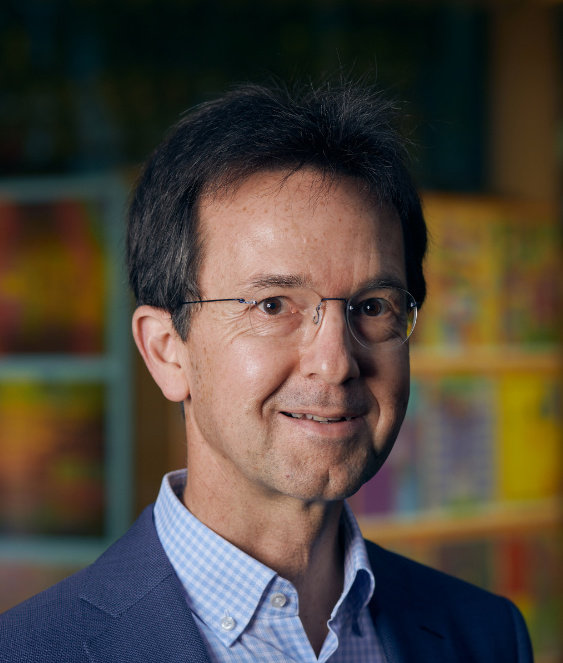
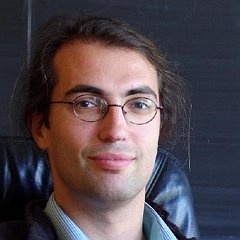
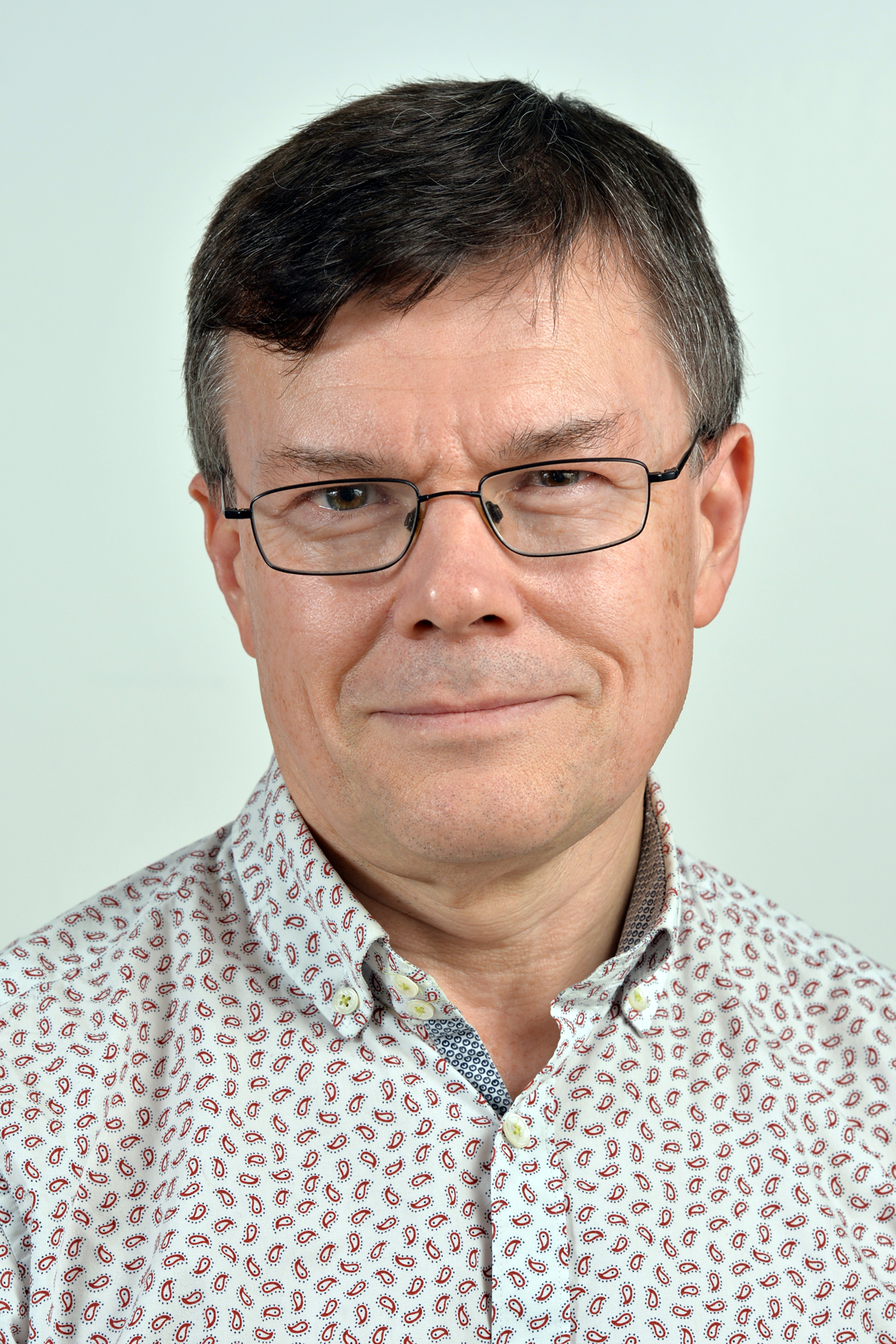
Prof. Jens Vygen is a full Professor of Discrete Mathematics at the University of Bonn's Research Institute for Discrete Mathematics. He specializes in combinatorial optimization, approximation algorithms, and their applications to chip design and vehicle routing. He has directed large-scale industrial collaborations and supervised over 20 PhD students, including Vera Traub. His work includes co-authoring influential textbooks like Combinatorial Optimization: Theory and Algorithms and Approximation Algorithms for Traveling Salesman Problems . Research highlights include advancements in TSP approximation algorithms, Steiner tree optimization, and network flow algorithms. He has organized major events like the IPCO conference and served on editorial boards of leading journals. Awards include teaching excellence and best paper recognitions at SODA and IPCO. Teaching focuses on advanced topics in discrete mathematics, approximation algorithms, and combinatorial optimization. Courses span undergraduate to graduate levels, emphasizing algorithm design, graph theory, and practical implementations. Labs/teams: Core contributor to Bonn's Hausdorff Center for Mathematics and Bonn's discrete optimization research group. Active in developing algorithms for VLSI routing (BonnRoute) and chip design tools (BonnPlace).
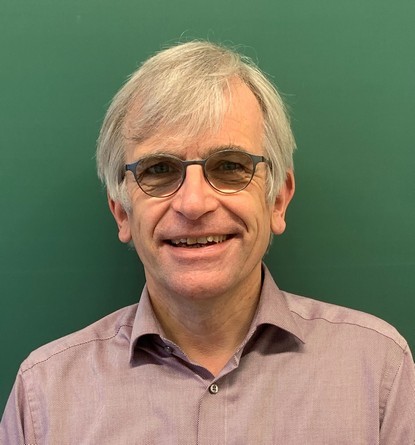
Prof. Karsten Große-Brauckmann is a Professor and currently serves as the Dean of Studies (Education) at Technische Universität Darmstadt. His research focuses on Geometry and Approximation, with specialized interests in Surface Theory, Minimal Surfaces, and Constant Mean Curvature Surfaces. He leads research initiatives in differential geometry and geometric analysis. His academic contributions are centered at the intersection of pure mathematics and applied geometric modeling. While specific grant details or lab affiliations are not detailed in the text, his role as Dean indicates active involvement in academic administration and curriculum development.
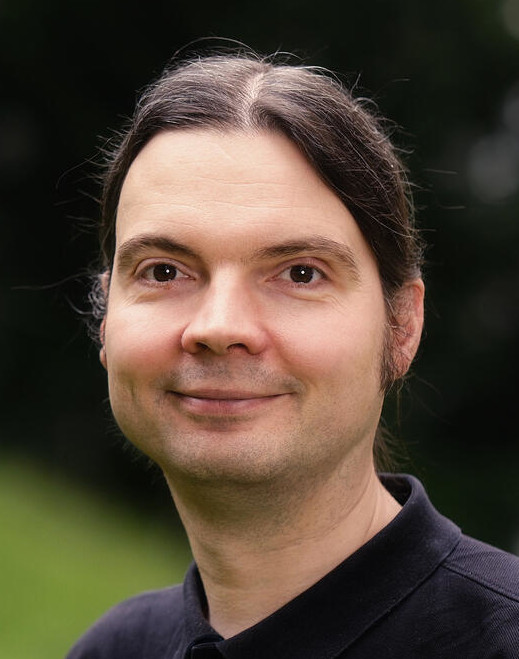
Benjamin Berkels is an apl. Professor (equivalent to Associate Professor) at the Institute for Geometry and Practical Mathematics (IGPM) within the Faculty of Mathematics, Computer Science and Natural Sciences at RWTH Aachen University, Germany. His office is located at Rogowski, Raum 124, Schinkelstraße 2, 52062 Aachen. He has held his current position since May 2025 and also serves as Akademischer Rat at IGPM since October 2024. Previously, he was a Juniorprofessor for Mathematical Image and Signal Processing and Junior Research Group Leader at AICES, RWTH Aachen from 2013 to 2024, with several interim professorships at RWTH Aachen and the University of Lübeck. Dr. Berkels received his educational foundation with a Dipl.-Math. from the University of Duisburg-Essen in 2005, followed by a Dr. rer. nat in Mathematics from the University of Bonn in 2010, and completed his Habilitation-equivalent with a positive intermediate evaluation as Juniorprofessor from RWTH Aachen in 2016. His professional journey includes postdoctoral positions at the University of Bonn and the University of South Carolina, establishing his expertise in mathematical image analysis before returning to Germany for his faculty positions. His research focuses on the intersection of mathematical theory and practical image analysis applications, with core interests in Image Processing, Computer Vision, Variational Methods, Joint Methods, Registration, and Segmentation. Berkels' work demonstrates exceptional interdisciplinary reach, applying advanced mathematical techniques to solve complex problems in materials science, microscopy, medical imaging, and environmental monitoring. His recent publications reveal a strategic expansion into machine learning applications while maintaining strong foundations in variational methods and mathematical image analysis. Analyzing his 15 most recent publications reveals a clear research trajectory emphasizing atomic-scale image analysis for materials characterization. Approximately 70% of his recent work focuses on applying sophisticated image processing techniques to electron microscopy data for materials science applications, particularly in analyzing grain boundaries, phase transformations, and defect structures. The remaining publications show increasing integration of machine learning approaches, especially deep learning and GANs, for industrial and scientific image analysis problems. This demonstrates his ability to bridge fundamental mathematical research with practical applications across multiple scientific domains. Dr. Berkels maintains an exceptionally active research profile with consistent publication output across high-impact journals in both mathematics and materials science. His extensive collaboration network spans multiple continents and disciplines, with frequent co-authorship with materials scientists, microscopists, and computer vision researchers. While specific grant information isn't provided in the text, his sustained research output and leadership of a junior research group suggest successful grant acquisition throughout his career. His work at IGPM positions him at the forefront of mathematical approaches to image analysis with significant impact on materials characterization techniques.
Michael Joswig is an Einstein Professor of Discrete Mathematics/Geometry at Technische Universität Berlin and a Max Planck Fellow at the Max Planck Institute for Mathematics in the Sciences, Leipzig. His research focuses on polyhedral, tropical, and algorithmic geometry, optimization, combinatorial topology, and mathematical software development (e.g., polymake and OSCAR). He holds a PhD from the University of Tübingen (1994) and a Habilitation from TU Berlin (2000). His career includes professorial roles at TU Darmstadt and TU Berlin, alongside visiting positions at institutions like the Mathematical Sciences Research Institute in Berkeley. Joswig has authored over 120 publications, supervised numerous PhD students, and led major grants such as the SFB/TRR 195 'Symbolic Tools in Mathematics.' Research interests span geometric algorithms, tropical geometry applications, and software for computational mathematics. Notable awards include the SIAM SIGEST Award (2021) and the MATH Distinguished Fellowship (2023). He co-develops the OSCAR computer algebra system and actively contributes to academic leadership roles, editorial boards, and conference organization. Current projects include tropical mechanism design, approximate convex hulls, and polyhedral geometry in algebraic software systems. His work bridges theoretical mathematics with practical computational tools, impacting fields from optimization to biology.
Prof. Marc van Kreveld is a Professor and Head of the Department of Computer Science at Utrecht University since February 2023. His research focuses on computational geometry, geometric algorithmics, and their applications in GIScience, cartography, and puzzle design. He leads the Geometric Computing group and has made significant contributions to algorithms for trajectory data, geometric similarity, and spatial data analysis. Education: PhD in Computer Science from Utrecht University (1992). Research Interests: Computational geometry, GIScience, graph drawing, LIDAR point cloud reconstruction, and geometric puzzle analysis. His work bridges theoretical foundations and real-world applications, such as route data analysis and environmental modeling. Publications: Over 290 peer-reviewed papers, including foundational work on Fréchet distance algorithms, geometric spanners, and trajectory grouping. Recent contributions include advancements in collision detection for modular robots and mobility data science. Awards & Editorial Roles: Editor-in-Chief of Computing in Geometry and Topology , and editorial board member of Journal of Computational Geometry . Active in program committees for conferences like GIScience and SoCG. Teaching: Specializes in computational geometry and its applications, with a focus on algorithm design and geometric computing. Labs & Teams: Leads the Geometric Computing group at Utrecht University, collaborating on projects like braided river network modeling and automated puzzle generation.
Dimitris Koukoulopoulos is a Professor of Mathematics at the Department of Mathematics and Statistics, Université de Montréal, where he holds the Chaire Courtois II in fundamental research. He is a member of the Centre de recherches mathématiques and the Montreal Number Theory Group. His research focuses on analytic number theory, with an emphasis on multiplicative and probabilistic aspects, the anatomy of integers and permutations, sieve methods, diophantine approximation, and additive combinatorics. His research explores core questions in number theory, including the distribution of prime numbers, probabilistic properties of integers, and the application of sieve methods to Diophantine problems. Recent work highlights include studies on multiplicative functions, random polynomials, and the Erdős–Hooley Delta function, demonstrating a blend of analytical and combinatorial techniques. Professor Koukoulopoulos actively mentors M.Sc. and Ph.D. students, emphasizing alignment with his research interests. His work contributes to the Montreal Number Theory Group’s collaborative research environment, fostering interdisciplinary advancements in number theory.
Ari Stern is a Professor of Mathematics and Director of Undergraduate Studies at Washington University in St. Louis. His research integrates geometry, numerical analysis, and computational mathematics to develop structure-preserving algorithms for differential equations. Education: Ph.D. Applied and Computational Mathematics, Caltech M.A. Mathematics, Columbia University B.A. Mathematics, Columbia University He has received NSF funding for projects on hybrid finite element methods. Courses taught include Numerical Methods for Differential Equations, Measure Theory, and Geometric Mechanics.
Mathew Penrose is a Professor in the Department of Mathematical Sciences at the University of Bath. He is affiliated with the Probability Laboratory at Bath, the Centre for Networks and Collective Behaviour, and the EPSRC Centre for Doctoral Training in Statistical Applied Mathematics (SAMBa). His research focuses on stochastic geometry, pure and applied probability, and spatial networks, with applications to percolation, random graphs, and limit theorems. Key research interests include discrete and continuous percolation, interacting particle systems, random packing, stochastic networks, and stochastic analysis on Poisson spaces. He has authored the influential monograph Random Geometric Graphs (2003). Recent work explores connectivity thresholds in random geometric graphs, coverage models, and asymptotic behaviors in stochastic systems. His projects include EPSRC-funded research on stochastic geometry coverage and connectivity, and he has led collaborations on parameter estimation in adsorption models and spatial networks. Penrose has advised on multiple doctoral training programs and contributed to the SAMBa initiative. His research outputs span over 60 peer-reviewed articles, with a focus on advancing theoretical probability through geometric and combinatorial approaches.
Zhilin Li is a Professor in the Department of Mathematics at North Carolina State University. He is affiliated with the College of Sciences and specializes in numerical analysis, scientific computing, and partial differential equations. His research focuses on developing numerical methods for interface problems, irregular domains, and complex fluid dynamics systems. Education: PhD in Applied Mathematics from the University of Washington (1994). Research interests include: numerical methods for PDEs with free boundaries, finite difference/element methods, computational fluid dynamics (CFD), and biological flow simulations. He has contributed to advancing high-order compact schemes, immersed interface methods, and adaptive finite element techniques. Recent work emphasizes solving anisotropic diffusion problems, moving contact line dynamics, and multiphase flow challenges in engineering and biomedical contexts. His methods address accuracy and stability in complex geometries and discontinuous coefficients. Key contributions include the Immersed Interface Method (IIM) for interface problems and novel finite difference schemes for irregular domains. His research spans applications from petroleum engineering (wellbore stability) to neuroscience (neuroregeneration). Grants and collaborations are implied through his publications, though specific funding details are not listed here. He is actively involved in interdisciplinary projects combining mathematics with engineering and life sciences.
Tien Khai Nguyen is an Associate Professor in the Department of Mathematics at North Carolina State University (NC State), holding the title of NCSU Faculty Scholar since 2023. He obtained his PhD in Mathematics from the University of Padova, Italy, followed by postdoctoral research at SISSA-ISAS (Trieste) and a position as S. Chowla Assistant Professor at Pennsylvania State University. His research focuses on Nonlinear Partial Differential Equations , Optimal Control , Differential Games , and Mean Field Games , with contributions to nonsmooth analysis and geometric measure theory. Current funding includes NSF grant DMS 2154201 supporting work on control and optimization. Key awards include the John Franke Faculty Award for Teaching (2021) and Editor’s Choice Article in Mathematical Control and Related Fields (2024). He serves as editor for the Journal of Dynamical and Control Systems and organizes the Differential Equations/Nonlinear Analysis Seminar at NC State. His work bridges theoretical analysis (e.g., transversality theorems, viscosity solutions) with applications in optimal control and multi-agent systems. Active research themes include generic properties of solutions to Hamilton-Jacobi equations and singular phenomena in hyperbolic conservation laws.
Dr Jonathan Chapman is a Research Fellow at the Department of Mathematics, University of Warwick. His research focuses on additive combinatorics, Ramsey theory, and number theory, with particular emphasis on partition regularity, Diophantine equations, and combinatorial structures in number systems. His work bridges algebraic, analytic, and probabilistic methods to address problems in arithmetic Ramsey theory and additive patterns. Recent publications explore topics such as monochromatic solutions to multiplicative equations, additive Ramsey configurations over primes and non-integer sequences, and generalizations of classical Ramsey criteria like Rado and Roth theorems. His studies often involve intricate interplays between linear algebraic structures, syndetic sets, and hypergraph Ramsey phenomena. No scientific awards or grants are explicitly listed in available records. He currently holds no documented advisees, though his research likely involves collaboration with graduate students and postdocs in the Mathematics Institute. His affiliations include the Mathematics Institute at the University of Warwick, with office B2.28 and contact details available via institutional channels.
Nicholas Jackson is an Assistant Professor at the University of Warwick, with joint affiliations in the Mathematics and Economics departments. His research focuses on geometric and algebraic topology, knot theory, homological algebra, and categorical structures. He completed his PhD at Warwick in 2004, specializing in category theory, homological algebra, and knot theory. He teaches modules such as EC119 Mathematical Analysis, EC133 Linear Algebra, EC961 Introductory Mathematics and Statistics, and MA267 Groups and Rings. Jackson is a member of the London Mathematical Society and holds fellowships with the Warwick International Higher Education Academy, the Warwick Institute for Engagement, and the Higher Education Academy. His research explores topics including twisted Alexander polynomials, hyperbolic knot volumes, and unknotting strategies. Notable publications include studies on rack and quandle homology, and collaborative work on experimental topology methods.
Patrick Massot is a Professor in the Department of Mathematics at the Faculty of Sciences of Orsay, University of Paris-Saclay, France. His work bridges pure mathematics and formal verification, with a focus on symplectic and contact geometry, and the formalization of advanced mathematical theories using the Lean proof assistant. His research interests include symplectic geometry , contact geometry , formalized mathematics , and differential topology . He has contributed significantly to the formalization of perfectoid spaces, the h-principle, and sphere eversion. His recent work emphasizes the educational use of proof assistants in teaching undergraduate mathematics. The most recent publications reflect a strong trend toward formal verification in mathematics, combining geometric intuition with rigorous computational proof. These works span topics such as convex integration, holonomic approximation, and the use of Lean for pedagogy. The underlying themes include flexibility in geometry, foundational rigor, and interdisciplinary collaboration between mathematics and computer science. Program Committee Member, CPP 2025 Author, Formalising the h-principle and sphere eversion (CPP 2023) Patrick Massot has advised no publicly listed students, and no specific grants are mentioned. However, his collaborative work with prominent mathematicians (e.g., Buzzard, Commelin, Giroux, Etnyre) suggests active research funding and participation in major projects such as the Liquid Tensor Experiment. He leads a formalized mathematics working group and was involved in a 2015–2016 working group on sheaf theory applied to Lagrangian submanifolds. These groups serve as hubs for collaborative research in formalization and geometric topology.
Pavlo Krokhmal is a Professor in the Department of Systems and Industrial Engineering at the College of Engineering, University of Arizona. He serves as the Director of Industrial Engineering and is a member of the Graduate Faculty. He has previously held academic positions at the University of Iowa and the University of Florida. Education: PhD in Operations Research, University of Florida, Gainesville, Florida, United States PhD in Mechanics of Solids and Applied Mathematics, Kyiv National Taras Shevchenko University, Kyiv, Ukraine MS in Applied Mathematics and Mechanics, Kyiv National Taras Shevchenko University, Kyiv, Ukraine His research focuses on stochastic optimization, risk analysis, and decision-making under uncertainty, with applications in financial engineering, network resilience, and renewable energy systems. He also contributes to multidisciplinary optimization and cooperative control. His work bridges applied mathematics, engineering, and operations research. The most recent publications reflect a strong trend in risk-averse optimization under uncertainty, especially in network structures, energy systems, and combinatorial problems. His work integrates advanced mathematical modeling, stochastic programming, and computational algorithms. Topics frequently include risk measures like CVaR, p-cone programming, and PDE-constrained optimization with stochastic inputs. Scientific Awards and Honors: Diploma in the Competition of Young Scientists and Students for the Best Research Project, National Academy of Sciences of Ukraine, Spring 1997 Soros Student Award, International Soros Science and Education Program, Fall 1994 Scholarship for scientific and academic achievements, National Academy of Sciences of Ukraine, Spring 1994 Air Force Summer Faculty Fellowship Award (multiple years: 2011, 2012, 2014, 2018, 2019) NRC Senior Research Associateship Award, National Research Council, Spring 2015 Donald E. Bently Faculty Fellowship of Engineering, University of Iowa, Fall 2013 Recognition for Excellence in Teaching, College of Engineering, University of Iowa (2010, 2013) Dr. Krokhmal has been actively involved in advising graduate students and leading research projects funded by agencies such as the Air Force Office of Scientific Research. His collaborations span across institutions and disciplines, including work with researchers at the University of Florida, University of Iowa, and military research labs. He has served on editorial boards and contributed to academic leadership through journal editorials and peer review. His research is conducted within interdisciplinary teams focusing on optimization, risk modeling, and complex systems. These teams often involve mathematical modeling, algorithm development, and simulation for real-world applications in defense, energy, and infrastructure resilience.
Mark Jerrum is a Professor of Mathematics at Queen Mary University of London, part of the School of Mathematical Sciences. His research focuses on combinatorics, computational complexity, and stochastic processes, particularly in the design and analysis of randomized algorithms. He explores the mixing times of Markov chains and computational complexity of counting problems, including partition functions and generating functions, often motivated by statistical physics, constraint satisfaction, and graph polynomials. Notable grants include an EPSRC-funded project on Sampling in Hereditary Classes (EP/S016694/1, 2019–2023). He has contributed to teaching, serving as module organiser for MTH4213 (Numbers, Sets and Functions) in 2023–24. His work bridges theoretical computer science and discrete mathematics, with applications in algorithmic design and probabilistic analysis. Research highlights include advancements in perfect sampling algorithms, approximation algorithms for counting problems, and foundational work on the interplay between statistical physics models and computational complexity. He is affiliated with the Centre for Combinatorics, Algebra and Number Theory, reflecting his interdisciplinary approach to combinatorial and algorithmic challenges.