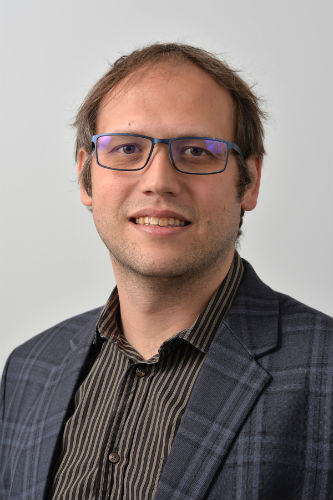
Andrea Vedaldi is a Professor of Computer Vision and Machine Learning at the University of Oxford's Department of Engineering Science, affiliated with the Visual Geometry Group (VGG). He specializes in unsupervised methods for understanding images and videos, focusing on 3D geometry and semantics. His research bridges foundational AI and practical applications, with contributions to generative models, neural fields, and self-supervised learning. Education: PhD in Computer Science (2008), University of California, Los Angeles MSc in Computer Science (2005), UCLA BSc in Information Engineering (2003), University of Padua Research Interests: Unsupervised learning, 3D perception, generative AI, neural rendering, and scalable vision systems. His work emphasizes ethical, responsible AI aligned with ERC-funded projects like UNION (ERC Consolidator Grant). Key Contributions: Co-developer of VLFeat and MatConvNet libraries Leader in 3D reconstruction and diffusion models (e.g., CatFree3D) Recipient of the PAMI Thomas S. Huang Prize and multiple best paper awards Grants & Service: Principal Investigator on £2.3M ERC Consolidator Grant (UNION) Co-organizer of major conferences (ECCV 2020 Program Chair, CVPR 2023 Area Chair) Reviewer for top journals/conferences (PAMI, CVPR, NeurIPS) Labs & Teams: VGG Group at Oxford, collaborating on projects like Meta 3D Gen and Common Objects in 3D (CO3D).
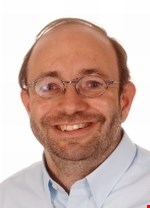
Andrew Zisserman is a Royal Society Research Professor at the University of Oxford's Department of Engineering Science, affiliated with the Visual Geometry Group (VGG). His research focuses on computer vision, artificial intelligence, and neural networks, with significant contributions to multimodal learning, video understanding, and 3D scene analysis. He leads projects exploring visual-language models, audio-visual synchronization, and clinical imaging applications. Key research areas include: Video analysis and temporal modeling Multimodal systems for sign language translation and action recognition 3D shape estimation and physical property inference Foundation models and cross-modal retrieval Recent work highlights: Developed Flamingo and Tapir models for video-language tasks Advancements in spinal MRI analysis and clinical imaging Leadership in EGO4D and VoxCeleb challenges Honors include Fellowship of the Royal Society (FRS) and the ISSLS Prize in Clinical Science 2023 for spinal analysis innovations. His lab collaborates globally, emphasizing real-world applications in healthcare and autonomous systems.
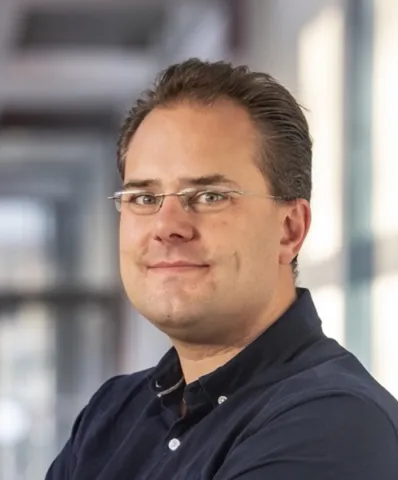
Professor Carlo Harvey is a creative technologist at the School of Digital Arts (SODA), Manchester Metropolitan University. His interdisciplinary research merges games , machine learning , virtual production , and cultural heritage reinterpretation . He leads industry collaborations with entities like Jaguar Land Rover and Epic Games, focusing on AI-driven interactive audio, real-time visualization, and accessibility solutions. Award-winning projects : TIGA, Innovate UK, and Epic Games MegaGrant for Accession Industry partnerships : Automotive sector, cultural institutions His research spans human-computer interaction , multisensory virtual environments , and acoustic-visual cross-modal perception . Recent publications address robotic simulations, motion alignment, and haptic feedback systems. Scientific recognition : TIGA Award, Innovate UK Funding, Epic Games MegaGrant Advocacy : Digital inclusion, creative collaboration, social impact of technology
Theo Damoulas is a Professor of Machine Learning at the University of Warwick with a joint appointment in the Department of Computer Science and Statistics. He is a Turing AI Fellow (2021-2026) through UK Research and Innovation, an ELLIS member, and a Visiting Professor at New York University's Center for Urban Science and Progress (CUSP). He founded and leads the Warwick Machine Learning Group and has directed major projects at The Alan Turing Institute including Project Odysseus and the London Air Quality project. Education includes: PhD in Probabilistic Multiple Kernel Learning (University of Glasgow, 2009) MSc in Informatics (Distinction, University of Edinburgh, 2004) MEng in Mechanical Engineering (1st Class, University of Manchester, 2003) His research focuses on probabilistic machine learning and Bayesian statistics, emphasizing the integration of structural priors, spatiotemporal dependencies, physical laws, and causal relationships. Key applications include Digital Twins, urban science, and computational sustainability. His work advances robust and scalable inference methodologies for complex real-world systems. Publications demonstrate strong emphasis on Bayesian methods, spatiotemporal modeling, and uncertainty quantification, with applications spanning battery modeling, urban mobility, federated learning, and causal inference. Recent work shows increased focus on physics-informed models, federated learning frameworks, and causal abstraction techniques. Major scientific awards: Turing AI Acceleration Fellowship (2021-2026) Best Paper Awards (Wilkes 2024, AISTATS 2022, IEEE ICMLA 2010) ACM SIGMOD Most Reproducible Paper (2017) Dissertation Award (Classification Society 2012) Teaching Excellence nominations (Warwick 2015-2017) He actively advises PhD students and secured significant grants including the £multi-million Turing AI Fellowship. Current doctoral researchers investigate federated learning, causal inference, and spatiotemporal modeling. He leads the Warwick Machine Learning Group, a cross-departmental team developing foundational ML methods for scientific and societal challenges.
Professor Gabriel Brostow is a faculty member in the Department of Computer Science at University College London (UCL), where he leads research in Computer Vision and Human-Computer Interaction. He also serves as Chief Research Scientist and Senior Director of the R&D Team at Niantic, the company behind Pokémon GO. His work bridges academic research and industry applications, focusing on developing AI systems that enhance human capabilities through what he terms 'Human in the Loop AI'—now commonly referred to as Human-Centered AI. Brostow completed his BS in Electrical Engineering at UT Austin, followed by a PhD with Irfan Essa at Georgia Tech. He then pursued postdoctoral research with Roberto Cipolla's Computer Vision & Robotics Group at Cambridge University as a Marshall Sherfield Fellow, and with Marc Pollefeys in ETH Zurich's CVG Group. His research explores how AI, particularly Computer Vision, can serve as 'super-tools' for professionals across various domains including filmmaking, architecture, robotics, and scientific research. Specific interests include assistive technology for everyday life, authoring systems that maximize user effort, 3D reconstruction, depth estimation, and vision-language models. His work often involves creating systems that are validated through real-world human interaction to ensure practical utility. Analysis of his recent publications reveals a strong focus on practical applications of Computer Vision that directly interact with humans. His research spans 3D scene understanding, depth estimation, sketch-based interfaces, and multimodal AI systems. There's a clear emphasis on creating benchmarks and tools that facilitate human-AI collaboration, with applications in assistive technology, urban planning, filmmaking, and biodiversity monitoring. His work frequently appears at top conferences including CVPR, NeurIPS, ECCV, and CHI. Marshall Sherfield Fellowship Brostow actively mentors PhD students, with current advisees including Ross Murphy, Skanda Koppula, Gizem Unlu, Omiros Pantazis, and Jamie Watson. His alumni include numerous PhD graduates and MSc students who have gone on to successful careers in academia and industry. He emphasizes selecting students based on passion and potential rather than just academic credentials, valuing traits like helpfulness, drive, and hunger to learn. His research is supported through collaborations with major institutions and companies including DeepMind, MIT, and the University of Edinburgh. He leads a research group at UCL that collaborates closely with Niantic's R&D team, creating a unique bridge between academic research and industry application. His team's work frequently involves developing novel Computer Vision techniques that are validated through real-world human interaction, ensuring practical utility alongside technical innovation. The group explores blue-sky research problems with applications ranging from assistive technology to professional tools for filmmakers, architects, and scientists studying diverse environments.
Heather Battey is a Professor in the Department of Mathematics at Imperial College London's Faculty of Natural Sciences. Her work bridges foundational statistical theory with practical scientific applications, focusing on parametrization effects, sparsity, and high-dimensional inference. Education PhD, University of Cambridge (2008-2011) Research Interests Battey's research examines how model structure and parametrization influence inferential procedures, particularly in high-dimensional settings. She investigates the equivalence between sparsity and reparametrization, and challenges traditional Fisherian statistical abstractions through modern practices. Her publications reveal a pattern of innovation in high-dimensional regression, covariance matrix analysis, and statistical methodology for complex data. Collaborations span disciplines including machine learning, economics, and biomedical research. Scientific Awards Fellow of the Institute of Mathematical Statistics (2023) EPSRC Early Career Research Fellowship (2020-2026) EPSRC Postdoctoral Research Fellowship (2017-2020) Advising and Grants Battey supervises PhD students Charlotte Edgar, Jakub Rybak, and Rebecca Lewis, with informal guidance to Henrique Hoeltgebaum. Over 15 pre-doctoral researchers have been mentored in topics ranging from support vector machines to spatial point processes. Current funding includes an EPSRC grant for theoretical foundations of inference with nuisance parameters and prior support for covariance matrix inference.
Brett Kolesnik is a Research Fellow in the Department of Statistics at the University of Warwick. His research focuses on probability theory, random structures, bootstrap percolation, and interactions with combinatorics. He has held postdoctoral fellowships at UC Berkeley, San Diego, and the University of Oxford, and was a Senior Demy at Magdalen College. His work includes organizing workshops on bootstrap percolation and collaborating with leading researchers in probability and combinatorics. Education: PhD in Mathematics from the University of British Columbia (advised by Omer Angel). Notable awards include the NSERC Postdoctoral Fellowship and the Florence Nightingale Bicentennial Fellowship in Statistics. Research interests span bootstrap percolation models, random graph dynamics, and stochastic processes. Recent work includes studies on Brownian map geometry, tournament score sequences, and Coxeter group structures. Selected articles explore topics such as critical beta-splitting processes, Catalan percolation, and random walks on algebraic structures. His publications appear in top journals like Electronic Journal of Probability and Annals of Applied Probability . Awards include the Florence Nightingale Fellowship and NSERC Postdoctoral Fellowship. Professional involvement includes organizing the 2024 BIRS workshop on Bootstrap Percolation and contributing to interdisciplinary collaborations in probability and combinatorics.
Dr. Primoz Skraba is a Professor in Applied and Computational Topology at the School of Mathematical Sciences, Queen Mary University of London. As Deputy Head of the Centre for Probability, Statistics and Data Science, he bridges theoretical topology with practical applications in data analysis, machine learning, and optimization. Education : PhD in Electrical Engineering from Stanford University (2009) Prior Roles : Positions at INRIA, France; Jozef Stefan Institute, Slovenia; University of Primorska; University of Nova Gorica His research focuses on applying topological methods to analyze complex data. Key areas include: Stability of persistence diagrams for quantitative control in finite sampling Variants of persistence (zig-zag, robustness, multiparameter) Algorithmic Complexity in computational topology Stochastic Topology for random geometric models (Poisson, Boolean) Recent publications emphasize persistent homology in random geometric complexes, universality theorems, and integrating topological methods into machine learning. He received grants from the Leverhulme Trust, EPSRC, and Alan Turing Institute for projects on topological universality and AI foundations. His advisee Gabryel Mason-Williams explores wireless sensor network applications of homology.
Laurence Hunt is an Associate Professor of Experimental Psychology at the University of Oxford and a Tutorial Fellow in Psychology at St John's College. He leads the Laboratory of Decision Dynamics, focusing on neural mechanisms underlying decision-making. His work integrates mathematical models with electrophysiological techniques in humans and animal models to study behavioral and neural data. Key roles include the Wellcome/Royal Society Sir Henry Dale Fellowship and prior postdoctoral positions at UCL and Oxford's Department of Psychiatry. Education: D.Phil in Neuroscience from the University of Oxford (2007-2011), pre-clinical Medicine at Cambridge University. Research emphasizes cognitive computational neuroscience, particularly how neural systems process value, uncertainty, and learning. Collaborators include notable figures like Matthew Rushworth and Christopher Summerfield. Scientific Awards: Wellcome/Royal Society Sir Henry Dale Fellow Advising & Grants: His research is supported by fellowships, though specific grants or advisees are not detailed. The Hunt Lab actively explores topics such as reward processing, decision dynamics, and neural geometry using advanced analytical methods. Labs/Teams: Director of the Laboratory of Decision Dynamics, part of the Department of Experimental Psychology. Engaged in interdisciplinary collaborations across Oxford and international institutions.
Raphael Hauser is an Associate Professor in Numerical Mathematics at the University of Oxford's Mathematical Institute, Director of Graduate Studies - Teaching, and Tanaka Fellow in Applied Mathematics at Pembroke College. His affiliations include membership in the Data Science, Numerical Analysis, and Mathematical and Computational Finance research groups, as well as a fellowship at the Alan Turing Institute. Education: PhD in Operations Research, Cornell University, Ithaca, USA Dipl. Math. ETH, Swiss Federal Institute of Technology (ETH Zurich), Switzerland Research interests span data science, numerical optimisation, medical imaging, distributed computing, and applied probability/statistics. His work integrates mathematical rigor with practical applications, particularly in optimization algorithms, machine learning theory, and medical imaging technology. Publications focus on optimization theory, stochastic processes, medical imaging systems, and computational finance, with recurring themes in non-convex optimization guarantees, PCA variants, and X-ray tomography innovations. Awards: Oxford University Teaching Award (2007) SIAM Optimization Prize (2005) SIAM Student Paper Prize (2000) Advising includes 15+ DPhil students and 40+ MSc students, with projects in optimization, finance, imaging, and machine learning. Current postdocs and students are affiliated with the Alan Turing Institute and industrial partners like Siemens and Macquarie Group. He leads teams in the Mathematical Institute's research groups and collaborates with the Alan Turing Institute on large-scale data science initiatives.
Dr. Matthias Winter is a Senior Lecturer in the Department of Mathematics at Brunel University's College of Engineering, Design and Physical Sciences. He has been affiliated with Brunel since 2005, following academic positions at the University of Stuttgart (1996-2005) and postdoctoral fellowships at the Institute for Advanced Study in Princeton (1993-94) and Heriot-Watt University in Edinburgh (1994-96). His educational background includes a PhD from Stuttgart University in 1993 and a Habilitation from the same institution in 2003. Dr. Winter's research focuses on mathematical biology, particularly pattern formation in biological systems through reaction-diffusion equations. His work examines spike solutions, pattern formation mechanisms, and the mathematical analysis of biological phenomena. He has made significant contributions to understanding stable spike clusters in various contexts including the Gierer-Meinhardt system. His research spans Mathematical Biology, Pattern Formation, Reaction-Diffusion Systems, Nonlinear Partial Differential Equations, and several related mathematical disciplines. His recent publications (2023-2025) demonstrate continued activity across diverse applications including cancer modeling, ecological systems, climate modeling, and fundamental mathematical analysis of reaction-diffusion phenomena, showing his ability to apply sophisticated mathematical techniques to real-world biological problems. Editorial Board, ISRN Mathematical Analysis, since 2010 Academic Appeals Committee, since 2013 Level One Coordinator for Mathematics, since 2013 Course Director MSc Programme Computational Mathematics with Modelling Mathematics, 2008-2010 Dr. Winter teaches various mathematics courses including Mathematics and Statistics for Economists, Vector Calculus, and Group Projects in Mathematics, with a teaching portfolio spanning from foundational courses to specialized topics related to his research interests.
Kenneth J. Falconer is the Regius Professor of Mathematics at the University of St Andrews, where he is a member of the School of Mathematics and Statistics and the Analysis Research Group. He has held prestigious positions at the University of Bristol and Corpus Christi College, Cambridge, and has been a visiting professor at institutions including Oregon State University and the Australian National University. Regius Professor of Mathematics, University of St Andrews (2017–present) Professor of Mathematics, University of St Andrews (1993–2017) Reader, University of Bristol Lecturer, University of Bristol Research Fellow, Corpus Christi College, Cambridge His research centers on fractal and multifractal geometry, geometric measure theory, and related fields. He has made seminal contributions to the understanding of fractal projections, dimensional analysis of self-affine sets, and fractal processes. His work includes the concept of the digital sundial and the introduction of the affinity dimension and Falconer’s distance problem. His research spans dimensional analysis, random fractals, PDEs on fractal domains, and combinatorial geometry. The most recent publications show a sustained focus on intermediate dimensions, projections of fractal sets and measures, and the dimensional properties of stochastic processes. His work frequently involves collaboration with leading mathematicians and appears in top journals such as Transactions of the American Mathematical Society , Ergodic Theory and Dynamical Systems , and Journal of Fractal Geometry . Fellow of the Royal Society of Edinburgh (1998) Shephard Prize, London Mathematical Society (2020) CBE, King’s New Year’s Honours (2024) Kenneth Falconer has supervised numerous students and collaborated with many researchers including Jonathan Fraser, Pertti Mattila, and Xiong Jin. He has served on editorial boards for Fractals , Journal of Fractal Geometry , and Mathematical Proceedings of the Cambridge Philosophical Society . He has been active in professional service, including as Chair of the British Mathematical Colloquium 2018 and Publications Secretary of the London Mathematical Society (2006–2009). He organized major programs at the Isaac Newton Institute and Mittag-Leffler Institute. He is also known for his involvement in the Long Distance Walkers Association, where he served as Chairman and Editor of Strider , and for his mathematical poetry featured in publications like the London Mathematical Society Newsletter .
Professor Thomas Blumensath is a Professor of Signal and Image Processing at the University of Southampton and a Fellow at the Alan Turing Institute. He is the Academic Lead in Image Processing and Reconstruction at the University's μ-VIS X-ray Imaging Centre and Director of Research at the Institute of Sound and Vibration Research (ISVR). His research focuses on advanced algorithms for solving inverse problems in tomographic imaging, combining machine learning, optimization, and statistical methods. Key areas include X-ray tomography strategies, GPU-accelerated reconstruction, and multimodal imaging applications. Education: B.Sc. (Hons) Music Technology and Audio System Design, University of Derby (2002) PhD in Electronic Engineering (Bayesian Signal Processing), University of London (2006) Research Interests: Professor Blumensath's work spans theoretical and applied signal/image processing, with emphasis on tomographic imaging techniques. His current projects address efficient reconstruction methods, spectral X-ray CT, and applications in manufacturing and plant science. He collaborates with advanced imaging facilities like Diamond Light Source and ISIS neutron imaging beamline. Key Contributions: His research bridges computational methods (e.g., compressed sensing) with practical imaging challenges, including limited-angle tomography and stereo imaging strategies. He leads the National Research Facility for Lab X-ray CT and has developed the TIGRE reconstruction toolbox. Grants & Projects: Active funding includes EPSRC projects on tomographic sensitivity monitoring and CT-based manufacturing inspections. Completed projects cover constrained reconstruction, AM process verification, and industrial CT metrology. Awards: Alan Turing Institute Fellowship Teaching & Leadership: He teaches modules on machine learning, biomedical image processing, and robotics. Leads the BEng Control Engineering program at the Joint Education Institute with Harbin Engineering University. Labs/Teams: Active in the Signal Processing, Audio and Hearing research group (SPAH) and the Institute for Life Sciences. Oversees the μ-VIS X-ray Imaging Centre's research initiatives.
Cong Ling is a Professor of Information Theory and Cryptography at Imperial College London's Department of Electrical and Electronic Engineering, within the Faculty of Engineering. His research focuses on lattice theory and its applications in coding, cryptography, quantum information, and number theory. Key affiliations include the Academic Centre of Excellence in Cyber Security Research and the Engineering Secure Software Systems group. Education details are not explicitly provided in the text, but his professional experience indicates advanced qualifications in electrical engineering and mathematics. Research interests span lattice-based cryptography, post-quantum security, algebraic coding theory, and quantum-resistant algorithms. His work bridges information theory and number theory, with contributions to MIMO systems, secure communication protocols, and cryptographic protocol design. Recent publications emphasize lattice reduction techniques, quantum algorithms for the shortest vector problem, and advancements in polar codes. Notable trends include exploration of non-commutative algebras for cryptography, Gaussian sampling optimizations, and hybrid quantum-classical approaches to hard integer problems. Over 50+ articles published since 2018 reflect his leadership in lattice-based research and quantum-safe technologies. Awards: None explicitly listed in the text. Grants/Advising: No specific grants or student advisees mentioned; focus remains on collaborative research outputs. Labs/Teams: Associated with Imperial's Cyber Security Research groups and quantum engineering initiatives.
Péter Juhász is a Stipendiary Lecturer at Brasenose College and a Postdoctoral Research Associate in the Department of Physics at the University of Oxford. He holds an MA from the University of Cambridge and a DPhil from the University of Oxford. His research centers on quantum physics, specifically quantum computing and ultracold atomic systems. Juhász investigates Bose-Einstein condensates of dipolar gases, focusing on stability, loss mechanisms, and novel trapping geometries. He employs deep learning for atom cloud analysis and develops experimental protocols for large condensate production. His work combines theoretical modeling with advanced experimental techniques in ultracold physics. He previously served as Viscogliosi Fellow and Policy Adviser at the Permanent Observer Mission of the Holy See to the United Nations. He is President of the Cambridge–Oxford Alumni Club of Hungary and volunteers with the Order of Malta's soup kitchen initiatives.