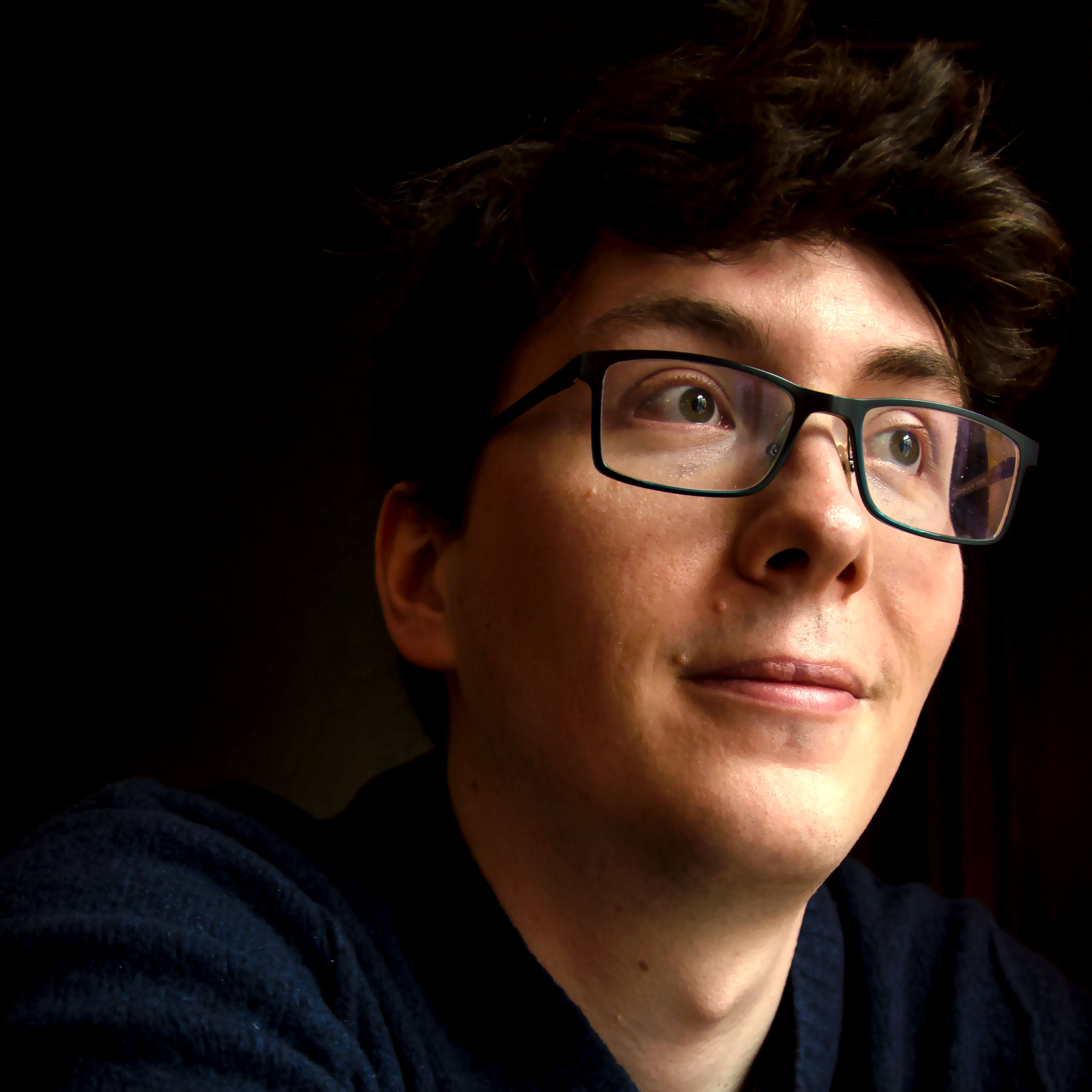
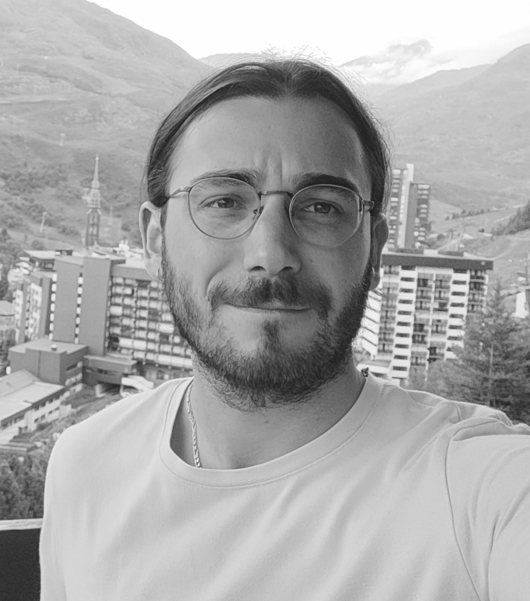
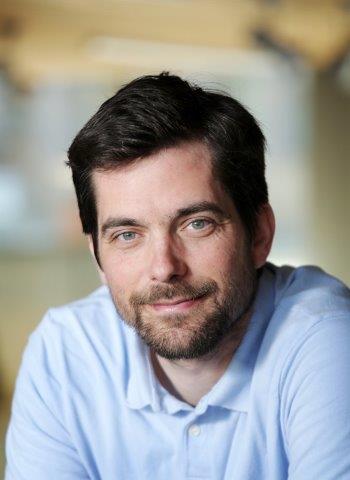
Christian Rupprecht is an Associate Professor at the Department of Computer Science, University of Oxford, specializing in computer vision and machine learning. His research focuses on unsupervised learning, 3D reconstruction, and visual understanding. His work includes contributions to conferences such as GCPR'25, ICCV'25, and CVPR'25, with papers spanning topics like correspondence estimation, animal pose modeling, and synthetic data generation. He leads projects within the prestigious Visual Geometry Group (VGG). Notably, his paper VGGT received the Best Paper Award at CVPR'25. His research integrates deep learning and geometric modeling, emphasizing robustness and generalization in visual systems. Best Paper Award at CVPR'25
Houman BOROUCHAKI is a Professor at the University of Technology of Troyes (UTT), France, with over 20 years of academic leadership. He has served as Head of the Automatic Mesh Generation and Advanced Methods (GAMMA3) project team since 2008 and previously led the Laboratory of Mechanical Systems and Concurrent Engineering (LASMIS) (2005-2007). His work bridges academic research and industrial applications through collaborations with INRIA , French Petroleum Institute (IFPEN) , Dassault Aviation , and others. Research Interests: A pioneer in adaptive meshing , he focuses on finite element methods , geometric modeling , and numerical simulations . His innovations underpin mesh generation algorithms , 3D triangulation software , and industrial applications in metal forming, composite simulation, and subterranean modeling. Scientific Trends: His recent work emphasizes metric-based meshing , high-order geometric validity , and parallel processing for mesh generation , with applications in petroleum reservoirs, aviation surfaces, and nanomaterials. His Google Scholar profile reflects 25+ years of contributions to meshing and simulation. Teaching: With 22 years of experience, he teaches courses on meshing , numerical analysis , geometric modeling , and computer graphics at UTT, covering undergraduate to PhD levels. Labs & Teams: He leads the interdisciplinary GAMMA3 team and has contributed to LASMIS (mechanical engineering), L2n (CNRS-UMR 7076) (nanomaterials), and LIST3N (computer science).
Rémi Giraud is an Associate Professor at ENSEIRB-MATMECA (Bordeaux INP) in the Electronic department, conducting research at the IMS laboratory within the Signal and Image Processing group (MOTIVE team). He is also a member of the In2Brain research group. Dr. Giraud received his M.Sc. in telecommunications from ENSEIRB-MATMECA and a Master's in signal and image processing from the University of Bordeaux in 2014, graduating with honors as top of his class. He completed his Ph.D. in computer science at the University of Bordeaux in 2017, followed by a year as Assistant Professor before becoming Associate Professor in 2018. Current position: Associate Professor at ENSEIRB-MATMECA (Bordeaux INP), Electronic department Research affiliation: IMS laboratory, Signal and Image Processing group, MOTIVE team Additional affiliation: In2Brain research group Education: PhD in Computer Science (2017, University of Bordeaux), M.Sc. in Telecommunications and Signal/Image Processing (2014, ENSEIRB-MATMECA and University of Bordeaux) His research focuses on image processing and analysis, deep learning, and computer vision, with particular expertise in (un)supervised image segmentation, colorization, matching techniques, irregular under-representations (superpixels), spatial relations, and medical imaging (3D MRI applications). His work bridges theoretical computer vision with practical medical applications, developing algorithms that enhance image understanding in both general and specialized contexts. Dr. Giraud has developed several significant methodologies including SCALP (Superpixels with Contour Adherence using Linear Path), TASP (Texture-Aware SuperPixel), DSP (Dual Superpixel Descriptors), and NNSC (Nearest Neighbor-based Superpixel Clustering). His publications demonstrate consistent advancement in superpixel segmentation techniques with increasing focus on medical imaging applications, particularly brain MRI analysis. He currently supervises multiple PhD students including Julien Walther (working on Deep Learning Models from Structural Image Representations), Eloi Navet (An AI Assembly for Neurological Disease Prediction), Edern Le Bot (Holistic Brain MRI Segmentation), and Matthieu Vilain (Semi-supervised Deep Learning for image sequences). His research has resulted in numerous publications in top-tier conferences and journals, with a clear trajectory from theoretical algorithm development to practical implementation in medical contexts.
Pierre Alliez is a Senior Researcher and Team Leader at Inria Sophia Antipolis – Méditerranée, leading the TITANE project-team. He holds roles such as President of the Inria Evaluation Commission and Scientific Coordinator of the Inria-DFKI partnership. His research focuses on Geometry Processing, including mesh compression, surface reconstruction, and optimal transportation. Alliez has authored numerous scientific publications and book chapters, receiving accolades like the Eurographics Young Researcher Award (2005) and ERC grants (IRON, TITANIUM). His academic activities include supervising over 50 PhD students and postdoctoral researchers, and leading projects like GRAPES (Learning and Processing Shapes) and BIM2TWIN (digital twin construction). He has served on editorial boards for Computer Graphics Forum and ACM Transactions on Graphics , and organized major conferences like Pacific Graphics and Eurographics. His work bridges computational geometry, computer graphics, and applied mathematics, with practical applications in 3D printing, cultural heritage, and urban modeling. Education: No specific educational details provided, but has authored a textbook on Polygon Mesh Processing (AK Peters, 2010). Research Interests: Geometry Processing, Mesh Generation, Surface Reconstruction, Optimal Transport, and 3D Data Analysis. Grants & Projects: ANR Pisco, ERC IRON, BIM2TWIN, GRAPES, and collaborations with industries like Dassault Systèmes and Dorea Technology. Labs/Teams: Leads the TITANE team at Inria, contributing to software like CGAL and advancing open-source tools for geometric processing.
Oliver Nash is a researcher at Imperial College London, actively engaged in the formalisation of advanced mathematical concepts. His work bridges geometry and computational logic, with a focus on rigorous proof systems. Research Interests: Oliver's research lies at the intersection of geometry and the formalisation of mathematics. He specialises in using proof assistants to verify deep mathematical results, including topics such as the h-principle, sphere eversion, and Lie algebras. His work contributes to the growing field of certified mathematics, ensuring correctness through machine-checked proofs. Publication Trends: His recent publications at the CPP conference demonstrate a consistent focus on formalising foundational results in differential geometry and algebra. These works reflect a trend toward computational trust in mathematical proofs, particularly in complex geometric transformations and algebraic structures. Professional Activities: Oliver is an active contributor to the Certified Programs and Proofs (CPP) conference, presenting cutting-edge work in formal verification. He maintains a personal website detailing both his academic contributions and early explorations in computer graphics, such as raytracing and radiosity rendering from the early 2000s. Labs and Projects: While specific lab affiliations are not mentioned, his work is closely aligned with research groups in formal methods and interactive theorem proving, likely involving tools like Lean, Coq, or Isabelle.
Laurent Caraffa is a Researcher at Université Gustave Eiffel, working at the LaSTIG laboratory of IGN (National Institute of Geographic and Forest Information). His research focuses on large-scale 3D data processing, including surface reconstruction from point clouds and images, leveraging triangulated structures and implicit methods. His work also covers indexing and searching within point clouds for large-scale place recognition, with applications in urban environments and navigation systems. Caraffa's research interests span 3D Data Processing, Surface Reconstruction, Point Cloud Processing, Large-scale Place Recognition, Indexing and Retrieval, Big Data, Cloud Computing, Mathematical Optimization, 3D Mapping, and Photogrammetry in degraded conditions. His work bridges theoretical computational geometry with practical applications in geographic information systems and autonomous navigation. His publication record demonstrates significant contributions to distributed 3D processing, particularly through advancements in Delaunay triangulation, watertight surface reconstruction, and neural radiance fields. Recent work shows a clear trajectory toward more efficient and scalable methods for processing massive 3D datasets, with growing emphasis on implicit representations and learning-based approaches for 3D reconstruction. Caraffa actively participates in the scientific community through organizing events like the Big Data Day 2023 at IGN and contributing to major research projects. His work has resulted in publications in top-tier conferences including ICLR, CVPR, ISPRS, and IEEE Big Data, establishing him as a significant contributor to the field of large-scale 3D data processing. As a research supervisor, Caraffa currently co-supervises four PhD students working on projects funded by AID, Criteo, and Huawei, focusing on large-scale place recognition, implicit representations for 3D reconstruction, and 3D reconstruction in degraded conditions. He is also the co-founder of ExtraLabs, a company developing distributed computing solutions for cooperative digital twins, demonstrating the practical impact of his research.
Hanan Samet is a Distinguished University Professor in the Computer Science Department at the University of Maryland, College Park. He holds affiliations with the Center for Automation Research and the Institute for Advanced Computer Studies (UMIACS). His academic journey includes a PhD from Stanford University (1975) in Computer Science, following degrees in Engineering (UCLA) and Operations Research/Computer Science (Stanford). Affiliations: University of Maryland, College Park (since 1975) Roles: Professor, Founding Editor-in-Chief of ACM Transactions on Spatial Algorithms and Systems, Founder of ACM SIGSPATIAL Samet's research focuses on spatial data structures, spatial databases, GIS, computer vision, and information retrieval. His seminal work includes the Foundations of Multidimensional and Metric Data Structures , an award-winning book addressing spatial indexing and query optimization. He pioneered frameworks like NewsStand for map-based news exploration and Coronaviz for pandemic visualization. Key contributions span spatial synonyms for approximate search, SAND spatial browser for digital government, and trajectory analysis systems for aviation safety and urban mobility. His work bridges theory and practice, influencing databases, graphics, and geographic systems. Education: B.S. Engineering, UCLA M.S. Operations Research, Stanford M.S./Ph.D. Computer Science, Stanford Samet has advised numerous students and led NSF-funded projects on spatio-textual data, similarity search, and spreadsheet analysis. His honors include the ACM Paris Kanellakis Award (2011), IEEE Wallace McDowell Award (2014), and UCGIS Research Award (2009). His labs and teams focus on spatial algorithms, visualization, and GIS applications. Notable projects include VASCO (spatial index demo), MARCO (image databases), and CHOLERA (disease tracking).
Dominique Bechmann is a **Professor of Computer Science** at the University of Strasbourg, affiliated with the **Department of Computer Science** within the **Sciences Collegium**. He is also a researcher at the **ICube Lab** (UMR 7357 CNRS-University of Strasbourg). His academic career spans over three decades, including roles as Head of the IGG Computer Graphics and Geometry research group (1997–2022) and Head of the National Research Group GdR IG-RV (2014–2021). He holds a Habilitation (1995) and PhD (1989) from the University of Strasbourg, with postdoctoral research at IBM's Thomas Watson Research Center (1989–1990). His research focuses on **Computer Graphics**, **Geometric Modeling**, and **Virtual Reality**, with key contributions in free-form deformation, 3D modeling of anatomical structures, and interaction techniques in immersive environments. He has led projects like the ICT-Asian initiative on Virtual Reality (2004–2007) and organized conferences such as AFRV 2012 and AFIG-EG France 2005. His teaching spans undergraduate and graduate levels in algorithms, computer graphics, and computational geometry. Bechmann has held numerous leadership roles, including Head of the Computer Science Department (1997–2000), Vice-Head of LSIIT Lab (2009–2012), and member of the National Commission of Universities (CNU) section 27 (2007–2011). His work bridges theoretical computer graphics with practical applications in medicine, architecture, and collaborative systems.
Boris Bordeaux is a PhD researcher at the University of Burgundy , affiliated with the Geometric Modeling team within the LIB Laboratory . His research focuses on the design of lightweight structures and computational geometric modeling. Research Work: Boris has contributed to the development of fractal structures with locally controlled lacunarity, presented at the International Conference in Central Europe on Computer Graphics (WSCG 2024). This work intersects geometric modeling and structural optimization. Teachings : He delivers 54 hours of practical work in Year 1 Computer Science courses. Team Affiliation : Geometric Modeling team, LIB Laboratory, University of Burgundy
Mathieu Brédif is a Permanent Researcher at LASTIG, Gustave Eiffel University, affiliated with the National School of Geographic Sciences (ENSG) and IGN. He serves as co-chair of ISPRS Working Group II/3 on Point Cloud Processing (2016-2020) and chaired ISPRS Working Group III/5 on Graphics and Remote Sensing (2012-2016). His academic appointments include Assistant Professor at École Polytechnique teaching Image Analysis and Computer Vision (INF573) and 3D Computer Graphics (INF443) since 2019-2020. Telecom ParisTech PhD (2005-2010) Stanford University Master in Computer Science (2004) École Polytechnique Engineering Degree (2000-2005) Brédif's research focuses on Lidar processing, 3D reconstruction, and geovisualization , with significant contributions to point cloud analysis, urban scene modeling, and historical image integration. His work bridges computer vision, photogrammetry, and geographic information systems, emphasizing practical applications in urban planning and cultural heritage. He has developed novel algorithms for point cloud inpainting, visibility estimation, and distributed 3D reconstruction. His publications reveal consistent focus on urban modeling through point cloud processing (58% of works), image-based rendering techniques (22%), and geovisualization systems (15%). The research trajectory shows increasing emphasis on deep learning applications for LiDAR data since 2016, alongside continued development of geometric algorithms for photogrammetric processing. ANR project leadership in geospatial data valorization (structurAtion et vaLorisation du patrimoinE géoGraphique - 9) iSpace&Time 4D web GIS development (5) European project participation in high-volume point cloud analysis (8) Brédif actively mentors doctoral candidates, currently supervising Melvin Hersent, Alexane Nghien, and Florent Geniet, with 8 completed PhDs including Pierre Biasutti and Murat Yirci. His laboratory work centers on the GEOVIS research team , developing the iTowns open-source framework for 3D geospatial visualization, which powers the Géoportail's 3D data engine and supports multiple ANR projects in cultural heritage visualization.
Tania Landes is a Professor at the University of Strasbourg (Unistra) affiliated with the ICube Laboratory UMR 7357 CNRS/Unistra and the PAGE Group (Architectural Photogrammetry and Geomatics). Her work focuses on integrating advanced 3D modeling and geomatics techniques for urban applications. Academic Rank: Professor Institution: University of Strasbourg Research Affiliation: ICube Laboratory UMR 7357 CNRS/Unistra Research Interests : Indoor and outdoor 3D modeling with RGB-D sensors and LiDAR Semantic segmentation of point clouds for BIM (Building Information Modeling) Thermal imaging integration for urban microclimate studies Historical and cultural heritage documentation via photogrammetry Urban tree modeling and vegetation impact on thermal comfort Scan-to-BIM workflows and automation Key Projects include the TIR4sTREEt thermal infrared studies of street trees in Strasbourg and COOLTREES for quantifying urban cooling benefits from vegetation. Her publications emphasize improving 3D reconstruction workflows and modeling accuracy across domains. Scientific Contributions span 15+ years with over 50 publications, covering: Urban heat island mapping (2022 onwards) Historical building modeling (2014-2017) Mobile laser scanning applications (2020 onwards) Kinect sensor calibration for 3D modeling (2015) Microclimate simulation via LASER/F (2016) Archaeological documentation (2011)
George Drettakis is a Senior Researcher at INRIA Sophia-Antipolis and leads the GRAPHDECO research group. He has held professorial roles at institutions including MIT, University of Reims, University of Toronto, and École Normale Supérieure. His research focuses on rendering for computer graphics and sound, with emphasis on image-based rendering, perceptual rendering, and audio-visual cross-modal effects. He has also explored interactive illumination, shadows, relighting, and generative models. Current Students: G. Kopanas (Neural Rendering), N. Violante (Generative Models), A. Petitjean (co-supervised), Y. Poirier-Ginter (co-supervised), P. Panantonakis (starting fall 2023). Postdoctoral Researchers: A. Gauthier at INRIA. His recent work includes 3D Gaussian Splatting , Diffusion-based Relighting , and Neural Radiance Fields . He has received the Eurographics Outstanding Technical Contributions Award (2007) and was named an Eurographics Fellow . He manages projects like ERC Advanced Grant FUNGRAPH and has participated in H2020 EMOTIVE , ANR SEMAPOLIS , and CROSSMOD . His group collaborates internationally and has hosted researchers from institutions such as UC Berkeley, Imperial College London, and TU Wien.
Jonathan Sarton is a Lecturer in Computer Science at the University of Strasbourg and a Researcher at the ICube laboratory. He holds an affiliation with the Geometric and Graphics Computing (IGG) team within the UFR of Mathematics and Computer Science. His primary research focuses on scientific visualization, volume rendering, and GPU programming. Education includes a PhD (2018) from the University of Reims Champagne-Ardenne titled 'High-performance interactive visualizations of massive volumetric data: an out-of-core multiresolution approach based on GPUs' , and a Master's in Visualization, Imaging, and Performance (2014) from the University of Orléans. He has held roles including Temporary Teaching and Research Associate (ATER) at the University of Reims (2018-2019) and a doctoral researcher at CReSTIC (2015-2018). Current research emphasizes interactive visualization of large unstructured meshes from numerical simulations, supported by the ANR LUM-Vis project. His technical work includes GPU-based out-of-core architectures for handling AMR time series data and distributed visualization systems. Professional activities include teaching computer science courses at undergraduate and graduate levels, focusing on 3D graphics, parallel programming, and algorithms. Professional contact: Office C118 at ICube, sarton@unistra.fr .
Jing-Rebecca Li is a Professor and Research Scientist at ENSTA Paris, affiliated with the Applied Mathematics Unit (UMA) and INRIA Saclay as part of the IDEFIX research team. Her work bridges advanced mathematical techniques with medical imaging applications, particularly in diffusion MRI. She maintains a dual affiliation between ENSTA Paris, a leading engineering school in France, and INRIA, the French national research institute for digital science and technology. HDR (Habilitation à Diriger des Recherches) in Mathematics, Université Paris-Sud, 2013 Ph.D. in Mathematics, Massachusetts Institute of Technology, 2000 B.Sc. in Mathematics, University of Michigan, 1995 Dr. Li's research focuses on developing sophisticated numerical methods to solve partial differential equations with applications in diffusion magnetic resonance imaging. Her work spans brain and cardiac imaging, numerical linear algebra, machine learning algorithms for inverse problems in PDEs, and natural language processing tools. She has pioneered approaches to simulate diffusion MRI signals in complex biological tissues, enabling more accurate interpretation of imaging data for neuroscience and cardiology applications. Her research has significant implications for understanding brain microstructure and cardiac tissue organization through non-invasive imaging techniques. Her recent publications demonstrate a clear trend toward increasingly sophisticated modeling of biological tissues, with growing emphasis on cardiac applications alongside her foundational work in brain imaging. She has developed robust computational frameworks that incorporate permeable interfaces, geometrical deformations, and realistic neuronal geometries to better simulate diffusion MRI signals. Her work increasingly integrates machine learning with traditional numerical methods, creating hybrid approaches that leverage the strengths of both paradigms for microstructure estimation. Householder Prize for the best dissertation in Numerical Algebra (2002) Dr. Li has supervised numerous doctoral students across multiple institutions, with a focus on computational methods for diffusion MRI. Her current research is supported by significant grants including the Engineering for Health (E4H) interdisciplinary center project investigating biomarkers for Multiple Sclerosis through diffusion MRI (2023-2025). Previously, she led the ANR-funded SIMUDMRI project (2010-2014) and participated in the US-French Collaboration project on Computational Imaging of the Aging Cerebral Microvasculature (2013-2016). Her work demonstrates strong interdisciplinary collaboration between mathematics, computer science, and medical imaging communities. As leader of the IDEFIX research team at INRIA Saclay, Dr. Li directs a group focused on inversion methods for differential equations applied to imaging and physics problems. Her team has developed the SpinDoctor software package, a widely used MATLAB toolbox for diffusion MRI simulation that has become a standard tool in the field. The team maintains strong collaborations with Neurospin (CEA) and international research groups working on advancing diffusion MRI methodology and applications.
Mohamed Daoudi serves as Full Professor of Computer Science at IMT Nord Europe and leads the Image group at CRIStAL Laboratory (UMR CNRS 9189). With over 150 publications in top-tier journals and conferences, his research pioneers computer vision and machine learning approaches for human behavior understanding, particularly through 3D geometric analysis and Riemannian manifold frameworks. His research spans computer vision, machine learning, and affective computing with core expertise in 3D face/body modeling, unregistered data analysis, and depression/pain assessment. Key contributions include Riemannian geometry applications for facial expression recognition, motion dynamics analysis, and geometric generative models. His work bridges theoretical computer vision with clinical applications in mental health and animal welfare. Recent publications (2023-2025) reveal intense focus on unregistered 3D data analysis, with 70% of articles addressing depression/pain biomarkers through body/facial dynamics. Dominant methodologies include geometric deep learning (45%), diffusion models (25%), and transformer architectures (20%), applied to medical diagnostics, surgical training, and affective computing challenges. Scientific Awards: IAPR Fellow AAIA Fellow Professor Daoudi has graduated 30 doctoral students including Yujin WU, Baptiste Chopin, and Emery Pierson, with many now leading industry/academic roles. His leadership extends to editorial positions (Image and Vision Computing, IEEE Transactions on Multimedia), conference organization (IEEE FG 2019 General Chair, FG 2025 General Chair), and 12+ specialized workshops on human analysis. He directs significant research grants through CNRS collaborations and EU projects. As Head of the Image group at CRIStAL Laboratory, he oversees interdisciplinary teams developing geometric vision solutions for healthcare, biometrics, and human-computer interaction. Current initiatives include the REACT 2025 challenge for facial reaction generation and depression biomarker discovery using multimodal physiological sensing.