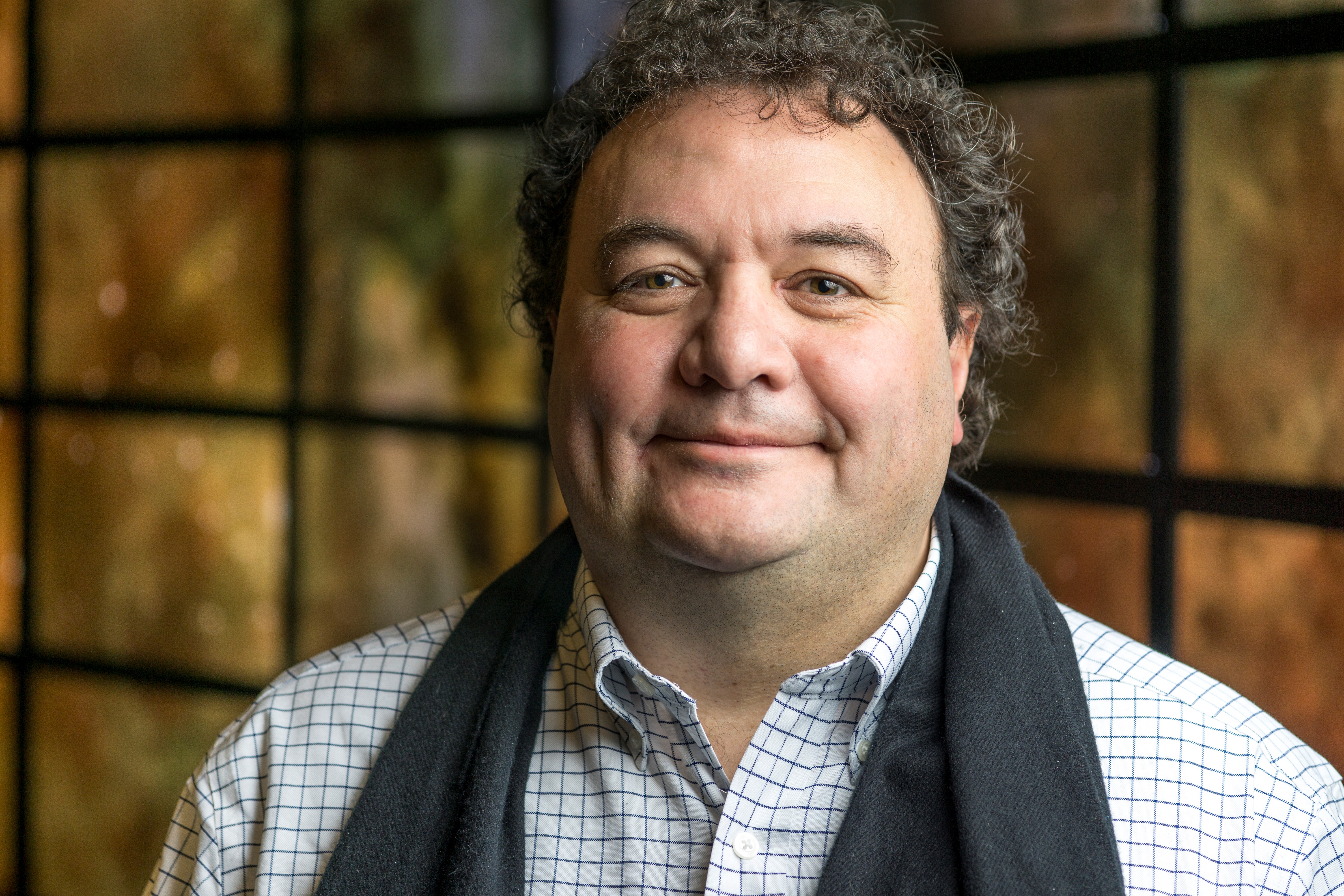
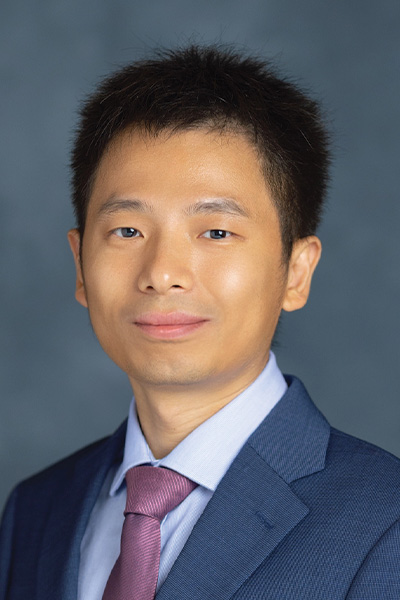
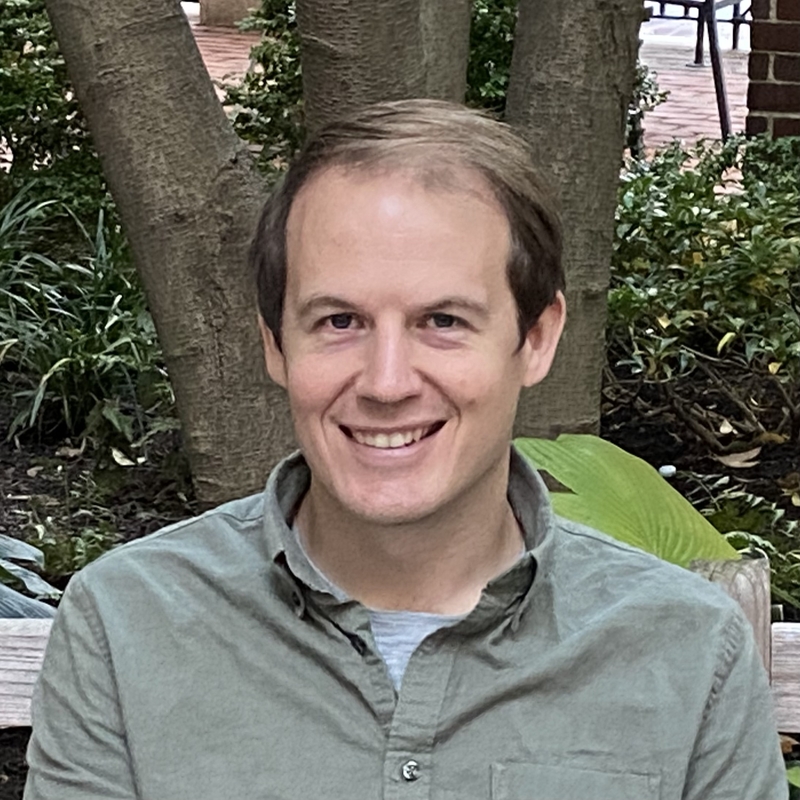
Max Hattler is a media artist and Associate Professor at the School of Creative Media , City University of Hong Kong . He previously held Lecturer positions at Goldsmiths, University of London (2006-2014) and the Royal College of Art (2012-2014). His work explores intersections of abstraction/figuration , sound/image relationships , and creative media through experimental animation and audiovisual performance. Current Research Focus: Abstracted moving images as frameworks for rethinking power relations Recent Curatorial Work: Relentless Melt series (2021-2025) showcasing Hong Kong experimental animation Key Publications Trends : Recent articles examine stereoscopic innovation , graphical sound techniques , and abstract animation semiotics . His curatorial research in Hong Kong digital art and VR animation demonstrates technical and theoretical contributions. Major Awards : Cannes Lions (2013) Visual Music Awards (2010, 2011, 2014) CityU Teaching Excellence Award (2021-22) President's Award (2022) for research contributions Best Experimental Film at Reanima Festival (2017) International Presence : Regularly participates in Ars Electronica , Animafest Zagreb , and Society for Animation Studies conferences. Has conducted workshops at CalArts , Geneva University of Art and Design , and Floating Projects Hong Kong .
Marc Pollefeys is a Full Professor of Computer Science at ETH Zurich and Director of the Microsoft Mixed Reality and AI Zurich Lab. He has held roles such as Visiting Professor at Stanford University (2007) and Assistant/Associate Professor at UNC-Chapel Hill (2002–2009). His research focuses on 3D computer vision, robotics, machine learning, and augmented reality. Education: PhD in Computer Science from KU Leuven (1999), followed by postdoctoral research there until 2002. He transitioned to academic roles at UNC-Chapel Hill before joining ETH Zurich in 2007. Research interests include 3D reconstruction, visual localization, SLAM, and applications in archaeology, urban modeling, and robotics. Notable projects include real-time 3D scanning, city-scale reconstruction, and autonomous vision-based drones. Key awards include ACM Fellow (2022), IEEE Fellow (2012), and ERC Starting Grant (2008). He advises numerous PhD students and collaborates with institutions like Google and Microsoft. Labs and teams: Leads the Computer Vision and Geometry (CVG) lab at ETH Zurich and directs the Microsoft Mixed Reality and AI Lab. His work bridges academia and industry, focusing on perception for mixed reality and autonomous systems.
Kede Ma is an Associate Professor in the Department of Computer Science at City University of Hong Kong (CityUHK). He received his B.E. from the University of Science and Technology of China (USTC) in 2012, and MASc and Ph.D. degrees from the University of Waterloo in 2014 and 2017, respectively. From 2018 to 2019, he was a Research Associate with the Howard Hughes Medical Institute and New York University. Prof. Ma has been named to the Highly Cited Researchers list by Clarivate Analytics in 2024 and currently serves on the editorial boards of IEEE Transactions on Image Processing, IEEE Transactions on Information Forensics and Security, and IEEE Signal Processing Letters. Prof. Ma leads the Multimedia Analytics (MA) Laboratory, an interdisciplinary research group focused on computational vision, computational modeling of human visual perception, perceptual multimedia signal processing, quality assessment, and multimedia forensics. His research spans computational photography, high dynamic range imaging and rendering, omnidirectional video analysis, camera processing pipeline design, and artificial intelligence safety in multimedia systems. His work integrates machine learning techniques including reinforcement learning, generative modeling, self-supervised learning, and continual learning for multimedia signal processing applications. His recent publications demonstrate a strong focus on image quality assessment, deep learning for multimedia processing, and multimedia forensics. His work bridges theoretical computer vision principles with practical applications in multimedia systems. The research trends show increasing integration of foundation models with specialized multimedia processing tasks, particularly in quality assessment and security applications. Highly Cited Researchers list by Clarivate Analytics (2024) Best Paper Award at IEEE International Conference on Virtual Reality and Visualization (2021) Best Paper Runner-Up at International Joint Conference on Artificial Intelligence Workshop (2021) Top 10% Award at IEEE International Conference on Image Processing (2015) Finalist for the Governor General's Gold Medal, University of Waterloo (2017) Spotlight presentation at NeurIPS (2022) Highlight paper at ICCV (2025) Oral presentation at ICLR (2025) Prof. Ma advises numerous PhD students and postdoctoral fellows in the MA Laboratory. His research is supported by various grants enabling work in multimedia analytics, image processing, and computer vision. The laboratory maintains active collaborations with researchers at institutions including SUSTech, ZJU, and HIT. Current projects focus on advancing image quality assessment methodologies, developing more robust deep learning techniques for multimedia forensics, and exploring new approaches to HDR imaging and omnidirectional video processing. The Multimedia Analytics Laboratory maintains a strong focus on both theoretical foundations and practical applications of multimedia processing. Current research directions include integrating large language models with image quality assessment, developing more robust deepfake detection methods, and advancing techniques for continual learning in multimedia applications. The lab emphasizes rigorous evaluation methodologies and maintains multiple datasets for multimedia quality assessment research.
Vincent Sitzmann is an Assistant Professor at the Massachusetts Institute of Technology (MIT), affiliated with the Computer Science and Artificial Intelligence Laboratory (CSAIL). He leads the Scene Representation Group and is part of the Visual Computing research community at CSAIL. His work focuses on advancing artificial intelligence's ability to perceive and interact with the physical world, particularly through neural fields, 3D scene representations, and robotics. His research bridges computer vision, machine learning, and robotics, aiming to create systems that emulate human perception and decision-making. He holds a dual role in the PI Core/Dual program at MIT and contributes to interdisciplinary efforts in AI & ML, Graphics & Vision, and Robotics. His recent projects include developing generative models for 3D avatars, robust camera pose estimation, and learning-based control for soft robots. He collaborates widely within MIT’s engineering ecosystem and has led initiatives such as the Collaborative Research grant on compositional implicit representations for 3D scene understanding (2022). His lab, the Scene Representation Group, emphasizes scalable 3D reconstruction, material estimation, and embodied AI. Notable technologies include Flowmap for camera calibration and Dittogym for soft robotics control. While no awards are explicitly listed, his work has been featured in top conferences like SIGGRAPH and IEEE Robotics.
Dr. João Henriques is a Research Fellow of the Royal Academy of Engineering (RAEng) at the Visual Geometry Group (VGG), University of Oxford. His research focuses on advancing computer vision, deep learning, and robotics, particularly in areas like 3D scene understanding, reinforcement learning, and multi-agent systems. He is renowned for developing the KCF and SiameseFC visual trackers, which won the VOT Challenge and are deployed in consumer hardware. His work spans 3D geometry, self-supervised learning, causal inference, and neuro-symbolic systems. Key contributions include methods for egocentric video analysis, unsupervised reconstruction, and robot navigation. He leads the VGG's research on neural feature fields, hierarchical scene understanding, and real-time 3D perception. Recent publications emphasize 3D-aware segmentation, universal place recognition, and neuro-symbolic world modeling for robotics. His research often bridges theoretical guarantees with practical applications, such as medical imaging and autonomous systems. Dr. Henriques collaborates with industry and academia on AI ethics, friendly AI, and interpretable learning. His lab hosts DPhil students advancing creative AI applications, such as generative models for gameplay design and LLM evaluations in real-world editorial workflows.
Lee M. Miller is a Professor and Vice Chair of Academic Affairs in the Department of Neurobiology, Physiology and Behavior at the University of California, Davis, affiliated with the Center for Mind and Brain. His research focuses on neuroengineering, computational neuroscience, and neural mechanisms underlying attention, speech processing, and multisensory integration. Research interests include the development of neural prosthetics, decoding of neuromuscular signals for prosthetic control, and understanding how auditory and visual systems interact during speech perception and attentional processes. His work bridges clinical applications (e.g., cochlear implants) with fundamental neuroscience, leveraging tools like electrophysiological recordings, EEG/MEG, and advanced signal processing techniques. Recent publications highlight innovations in electromyographic speech neuroprosthetics, the topology of neuromuscular signals, and the neural basis of speech-in-noise processing. Miller’s studies emphasize translational potential, such as improving speech synthesis from brain signals and designing haptic feedback systems for motor coordination. His contributions have advanced understanding of neural mechanisms in sensory integration, auditory attention, and the impact of cognitive factors on perception. Miller maintains a lab dedicated to these interdisciplinary efforts, with a focus on both basic science and clinical applications.
Tricia Skoler is a Professor of Developmental Psychology at the School of Arts and Sciences, Hunter College (CUNY). Her research focuses on developmental trajectories, neuroscience, autism, and infant social cognition. She holds a PhD from Emory University and leads a lab emphasizing interdisciplinary approaches, requiring prospective students to read Doing Developmental Research (Guilford Press). She is currently accepting students for Spring 2025 courses (201 and 395). Her work spans neuroscience, architectural design, biophilia, and health psychology, integrating methodologies like EEG and statistical physics to study gaze processing, joint attention, and social-cognitive development in infants and children with ASD. Key contributions include understanding neural correlates of eye gaze in early infancy and contextual influences on social skills. Publications highlight themes such as gaze-following deficits in autism, the role of social cues in learning, and developmental neuroscience. Her research bridges basic science and applied contexts, including biophilic design and nutrition education. Lab inquiries must follow guidelines in Chapter 1 of her book. No explicit awards are listed, but her extensive publication record reflects recognition in developmental and cognitive neuroscience.
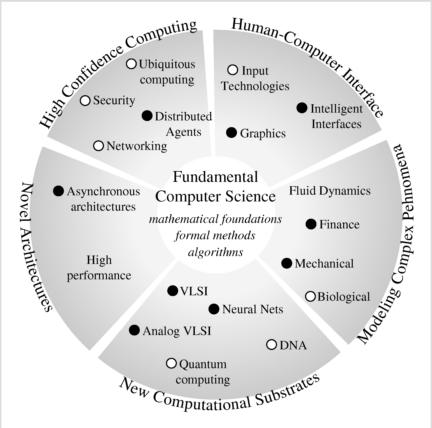
Alan H. Barr is a Professor of Computer Science at the California Institute of Technology (Caltech), affiliated with the Division of Engineering and Applied Science and the Computation & Neural Systems (CNS) department. He is a founding member of the Caltech Computer Graphics Group and a leader in developing mathematically rigorous methods for computer graphics and predictive modeling. His research focuses on enhancing computational modeling accuracy through approaches like interval analysis and constraint-based systems. Notable contributions include deformable models, quaternion interpolation, and cellular simulation frameworks. He has advised over 20 graduate students, many of whom became industry leaders at Pixar, Microsoft Research, and academic institutions like NYU and Brown University. Awards include the ACM SIGGRAPH Achievement Award (1988) and ACM Fellow (1995). Research Interests: Predictive modeling with error bounds Scientific visualization and MRI data analysis Biophysical systems simulation (e.g., cellular organelles) Self-assembling robotic structures for space colonization Mathematically robust computer graphics techniques Key Collaborations: Caltech Biological Imaging Center (Beckman Institute) JPL (Jet Propulsion Laboratory) New computational substrates research (quantum/DNA computing) Recent Work: Expanding into computational biology, medical imaging optimization, and high-confidence systems for managing complex computational interactions. Active in interdisciplinary projects across Caltech divisions.
Valerio Pascucci is a Professor at the University of Utah's School of Computing and a DOE Laboratory Fellow at Pacific Northwest National Laboratory. He directs the Center for Extreme Data Management Analysis and Visualization (CEDMAV) and previously led projects at Lawrence Livermore National Laboratory and University of Texas at Austin. PhD in Computer Science (Purdue University, 2000) MSc in Electrical Engineering (University 'La Sapienza', Rome, 1993) As a pioneer in Big Data Management , Scientific Visualization , and Computational Topology , his work connects topological methods with progressive algorithms to enable interactive exploration of petascale datasets. His research spans climate modeling , neuroscience , materials science , and precision agriculture , focusing on multi-resolution techniques and geometric compression . Recent publications show specialization in web-based visualization and AI-driven analytics for climate data, with emphasis on equity in data access and FAIR data principles . His ViSUS project enables real-time data streaming from supercomputers to desktops, while NAPA explores GPU-based architectures for streaming algorithms. Scientific Awards : Best Paper Award, IEEE Pacific Visualization 2011 Best Application Paper Award, IEEE VIS 2006 DOE Laboratory Fellow He advises numerous graduate students and leads collaborations across national laboratories , universities , and industry . Funded by NSF Grant #2127548 , he develops technologies for exascale computing and geospatial intelligence .
Eirin Olaussen Ryeng is a Professor at the Department of Civil and Environmental Engineering, Norwegian University of Science and Technology (NTNU). Her work focuses on transportation engineering, road safety, and human behavior in urban and rural mobility contexts. Key research themes: winter road conditions, autonomous vehicles, cyclist/pedestrian safety, route familiarity, and sustainable transport infrastructure Active in transnational studies and multidisciplinary collaborations Recent publications analyze pedestrian gait in winter, cargo bike efficiency, driver risk perception, and geometric road design impacts. She employs advanced methodologies like sensor technology, survey analysis, and crash-based modeling. Teaching includes courses on road engineering, traffic safety, and transport infrastructure. She has presented at major European Transport Conferences and Nordic Traffic Safety Academy seminars.
Dr. Chen Wang is an Assistant Professor in the Department of Computer Science and Engineering at the University at Buffalo. He holds a PhD from Nanyang Technological University and a B.Eng from the Beijing Institute of Technology. His research focuses on robotic perception, vision, and learning, emphasizing algorithm development for autonomous systems. He is affiliated with the Spatial AI and Robotics Lab (SAIR Lab) and serves as an Associate Editor for The International Journal of Robotics Research (IJRR) and IEEE Robotics and Automation Letters (RA-L) . His work spans neuro-symbolic AI, SLAM systems, and reinforcement learning for robotics. Dr. Wang's research interests include creating efficient algorithms with theoretical guarantees, open-source distribution, and real-world validation. He has contributed to areas like visual navigation, few-shot detection, and robot autonomy frameworks. His educational background in electrical engineering and robotics underscores his expertise in bridging theory and practical applications. Notable contributions include the iWalker framework for humanoid robots, AirSLAM for visual SLAM, and SuperPC for 3D point cloud processing. His editorial roles and conference service (e.g., CVPR Area Chair) reflect his leadership in the field. The SAIR Lab under his direction advances spatial AI, robotics, and autonomous systems through interdisciplinary collaboration.
Satoshi Funabashi is an Assistant Professor in the Department of Intermedia Art and Science at Waseda University's School of Fundamental Science and Engineering, Japan. He is affiliated with the Graduate Program for Embodiment Informatics under Waseda University's Program for Leading Graduate Schools and contributes to multiple graduate schools including the Graduate School of Creative Science and Engineering. Education: Doctor of Engineering (Waseda University, 2017-2021) Research Focus: Robotics, tactile sensing, deep learning, and embodiment informatics Academic Appointments: Assistant Professor (non-tenure-track) His research centers on symbiotic robotics and tactile-driven manipulation, with recent publications exploring graph convolutional networks, vision-touch fusion, and morphology-specific deep learning for robotic hands. He has secured multiple competitive research grants including JSPS KAKENHI and JST ACT-I programs. Scientific Awards: Grant-in-Aid for Scientific Research (B) (KAKENHI), JSPS (2024-2027) Grant-in-Aid for Early-Career Scientists, JSPS (2022-2024) JST ACT-I Research Fellow (2020-2022, 2018-2020) JSPS Research Fellowship DC1 (2017-2020) He collaborates with the Intelligent Dynamics and Representation Lab (Prof. Tetsuya Ogata) and the Intelligent Machine Lab (Prof. Shigeki Sugano) at Waseda University. He has interned at MIT's CSAIL (2018-2019) and conducted research at UC Davis (2015). His work has been cited over 500 times with an h-index of 14 according to Google Scholar.
Paul Tupper is a Professor in the Department of Mathematics at Simon Fraser University (SFU), part of the Faculty of Science. He holds a Ph.D. in Scientific Computing from Stanford University (2002). His research focuses on applied mathematics with emphasis on mathematical modeling in epidemiology, speech perception, neural networks, and computational linguistics. He teaches advanced courses in probability, numerical linear algebra, and calculus for social sciences. His work bridges theoretical mathematics and real-world applications, particularly in understanding complex systems like disease transmission dynamics and cognitive processes. Recent studies include modeling the transition of pandemics to endemic states, genomic analysis of viral spread, and audio-visual perception mechanisms in speech. He actively contributes to public health policy discussions through epidemic modeling research. Professor Tupper's research has been published in high-impact journals and conferences, with notable contributions to diversity metrics in biology and geometry, stochastic differential equations, and connectionist models of linguistic phenomena. His courses reflect interdisciplinary interests, integrating mathematical rigor with practical computational methods.
Fei Liu is an Assistant Professor in the Min H. Kao Department of Electrical Engineering and Computer Science at the University of Tennessee, Knoxville. His research focuses on surgical robotics, medical robotics, and control systems. He holds a PhD in Robotics from the University of Lyon (INSA de Lyon), France, an MSc in Control Systems and Automation Engineering from INSA de Lyon, and a BSc in Control Systems and Automation Engineering from Northwestern Polytechnical University, China. Fei's research interests include autonomous robotic systems, deformable object manipulation, and perception frameworks for surgical applications. His work emphasizes bridging real-world and simulation environments through advanced modeling and control techniques. Recent projects involve optimizing robotic actions using multi-modal demonstrations, improving tool-tissue interaction tracking, and developing frameworks for boundary parameter estimation in surgical settings. His articles highlight contributions to surgical robotics, including real-to-sim matching of deformable tissues, autonomous suturing, and trajectory optimization for wound care. He has also explored applications in haptic training systems and medical telerobotics. Fei's work often combines machine learning, physics-based simulation, and real-time control to address challenges in robotic surgery. Fei is affiliated with the Tickle College of Engineering and maintains an active research profile with collaborations in robotics and medical engineering domains. His lab focuses on advancing robotic autonomy in healthcare environments through interdisciplinary approaches.
David Fouhey is an Assistant Professor at New York University, jointly appointed between the Courant Institute of Mathematical Sciences (Computer Science) and the Tandon School of Engineering (Electrical and Computer Engineering). He previously held positions at the University of Michigan and was a postdoctoral researcher at UC Berkeley. His research focuses on learning-based computer vision, particularly in 3D reconstruction, AI for science, and human-object interaction. Education: PhD in Robotics from Carnegie Mellon University (2013-2018) Bachelor of Arts in Computer Science from Middlebury College (2007-2011) Research Interests: His work spans 3D reconstruction from images , AI-driven scientific measurement (e.g., solar physics, evolutionary ecology), and human interaction modeling . Notable projects include Stereo4D for 3D motion analysis and SyntheticIA for solar magnetogram fusion. Recent Articles: Recent work emphasizes interdisciplinary applications of vision (e.g., bird morphology analysis) and robust 3D techniques like Perspective Fields for camera calibration. His 2025 Nature Scientific Data paper on bird skeletal traits highlights his AI-for-science focus. Grants & Collaborations: Secured a NASA grant for heliophysics tools and collaborates with institutions like NASA’s SDO mission and the Astrophysical Journal. Labs & Teams: Leads a NYU research group focused on vision and robotics, with active collaborations in astrophysics and ecology.