Paolo Bussotti is an Associate Professor of History of Science and Technology at the University of Udine's DIUM department. His academic career includes roles at Ludwig Maximilian University (Munich), Bayerische Akademie der Wissenschaften, and Berlin-Brandenburg Academy of Sciences through Humboldt Fellowships. He holds a PhD in Historical Sciences from the University of San Marino (1996). Education : Bachelor of History of Science and Technology, University of Pisa (1991) PhD in Historical Sciences, University of San Marino (1996) Research Interests : 17th-Century Physics/Astronomy (Kepler, Galileo, Descartes, Leibniz, Newton) Mathematics History: Number Theory (Fermat-Gauss), Projective Geometry Philosophy of Mathematics: Foundations at the turn of the 20th century Science Education: Integrating history into math teaching Key Projects : Galileo's Sidereus Nuncius translation (2001) Kepler Commission collaboration (2005) Enriques Study Center directorship (2008-2010) Grants/Awards : Three Humboldt Fellowships (2003, 2013-2014, 2019) Research grants from DIUM and DMIF (Udine) Labs/Teams : Collaborations with Munich Center for Mathematical Philosophy, Berlin-Brandenburg Academy, and Bayerische Akademie der Wissenschaften.
Victor Galitski is a Professor of Physics at the University of Maryland and a Fellow of the Joint Quantum Institute (JQI). He holds two PhDs in applied mathematics and condensed matter physics, joined UMD in 2002 as a postdoc, and became a faculty member in 2005. His research focuses on theoretical physics and quantum information science, with notable contributions to quantum chaos, superconductivity, and topological materials. He co-founded Aspen Quantum Consulting and ScienceCast.org, and serves as an Honorary Professor at Monash University and an editor for Annals of Physics . Galitski’s educational efforts include authoring ' Exploring Quantum Mechanics ' (Oxford Press) and teaching a Coursera MOOC on quantum physics (enrolled by 200,000+ students). His research interests span quantum spin glasses, hydrodynamic turbulence, Floquet topological insulators, and cavity quantum electrodynamics. Over 20 former students and postdocs now hold academic or industry leadership roles. Key scientific contributions include studies on Many-Body Quantum Chaos, quantum spin ice in Rydberg atom arrays, and the interplay of symmetry breaking in vertex models. His work frequently explores connections between quantum systems and machine learning, such as neural networks’ analogies to spin glass behavior. Galitski’s affiliations include leadership roles in the Ultra-Quantum Matter Simons Collaboration, the Institute for Robust Quantum Simulation, and the Aspen Center for Physics. He has published extensively on topics like cavity-enhanced superconductivity and quantum ergodicity, with recent work addressing universal speed limits in quantum systems and interacting anomaly effects in thermal transport.
Alicia Kollár is the Chesapeake Assistant Professor of Physics at the University of Maryland, affiliated with the Joint Quantum Institute (JQI) and Quantum Technology Center. She holds a B.A. from Princeton University (2010) and a Ph.D. from Stanford University (2016). Her research focuses on quantum simulation using superconducting circuits, particularly leveraging coplanar waveguide (CPW) lattices to explore hyperbolic geometries, gapped flat bands, and photon-mediated spin models. Her work bridges condensed matter physics, quantum optics, and topological systems, with applications in quantum error correction and novel quantum materials. Key projects include creating artificial photonic materials in circuit QED, studying driven-dissipative systems, and developing experimental platforms for Floquet engineering. She has pioneered hyperbolic lattice designs enabling non-Euclidean quantum simulations and contributed to protocols for verifying quantum advantage. Her lab actively seeks postdocs and graduate students, emphasizing interdisciplinary approaches to quantum science and technology. Notable awards: NSF CAREER Award (2021), Princeton Materials Science Postdoctoral Fellowship (2017) Research groups: AMPED, JQI, Quantum Information and Computer Science (QuICS) Key collaborations: Andrew Houck (Princeton), JQI theorists Recent breakthroughs include demonstrating autonomously stabilized Floquet states and proposing efficient quantum verification protocols. Her work has been featured in PRX Quantum, Physical Review A/X, and Nature Communications.
Prof. Tina Perica is an Assistant Professor (tenure-track) in the Department of Biochemistry at the University of Zurich, joining in July 2021. Her research focuses on understanding how biochemical properties of proteins encode systems-level functions in signal transduction and gene regulation. Her lab integrates protein biochemistry, biophysics, functional genomics, and computational biology to study cellular regulation mechanisms. Education: B.Sc. in Biology, University of Zagreb (2008) Ph.D. in Biochemistry, University of Cambridge (2013) Postdoctoral training at University of California, San Francisco (2013–2021) Research Interests: Systems Biochemistry Allosteric Regulation in GTPases and Kinases Genotype-to-Phenotype Mapping Functional Genomics and Computational Biology Her team explores how molecular mechanisms of proteins interact within cellular networks to regulate complex processes, aiming to predict therapeutic effects and disease mutations. Lab Activities: Develops experimental and computational tools to map functional interactions in signaling pathways Focuses on targeted perturbations of proteins to study systems-level effects Emphasizes interdisciplinary approaches blending biochemistry with systems biology
Ruben Martins is an Assistant Professor at Carnegie Mellon University's School of Computer Science and serves as the program director of the Master of Science in Computer Science (MSCS) . His research focuses on the intersection of constraint programming, program synthesis, analysis, and verification, with recent work aiming to make formal methods tools more accessible through automated reasoning. Ruben earned his Ph.D. with honors from the Technical University of Lisbon, Portugal (2013) , followed by postdoctoral research at the University of Oxford (2014-2015) and UT Austin (2015-2017) . Research Interests : Ruben's work bridges constraint programming and program synthesis , with applications in software verification , optimization , and automated reasoning . He has developed award-winning tools like Open-WBO , a modular MaxSAT solver that has won gold medals in international competitions. His publications span top-tier venues such as POPL , PLDI , FSE , SAT , and CP , often addressing real-world challenges from program analysis to network security. Scientific Awards include: Distinguished Paper Award at PLDI 2018 Distinguished Paper Award at FSE 2021 Distinguished Paper Award at SAT 2022 Gold medals for Open-WBO in MaxSAT competitions Teaching & Advising : Ruben mentors Ph.D., Master’s, and undergraduate students in research projects related to program synthesis, formal methods, and constraint solving. He teaches courses such as Bug Catching: Automated Program Verification and Advanced Topics in Logic: Automated Reasoning and Satisfiability , emphasizing hands-on experience with tools like Why3. His advising spans topics from AI-driven program repair to network protocol verification , fostering collaboration across disciplines.
Kurt Keutzer is a Professor in the Department of Electrical Engineering and Computer Science at the University of California, Berkeley, and a key member of the Berkeley AI Research Lab (BAIR). He holds a Ph.D. in Computer Science from Indiana University (1984) and was previously Chief Technical Officer at Synopsys, Inc. His research focuses on systems issues in deep learning, particularly for computer vision, speech recognition, NLP, and finance. He has published over 250 refereed articles and six books, and is a highly cited author in hardware and design automation. Keutzer has received multiple IEEE Fellowships, DAC awards, and best paper accolades at conferences like Embedded Vision Workshop and ICPP. Educations: 1984, PhD, Computer Science, Indiana University Kurt Keutzer's research interests span Artificial Intelligence , Computer Architecture , and Scientific Computing , with a focus on computational efficiency in AI systems. His work explores hardware-aware neural architecture search, domain adaptation, and quantization techniques to optimize models from edge to cloud. Recent publications highlight advancements in vision transformers , LLM inference efficiency , and autonomous driving . He also contributes to multimodal AI and self-supervised learning frameworks. Scientific Awards: Institute of Electrical & Electronics Engineers (IEEE) Fellow (1996) DAC's Most Influential Paper Award (2023) Top Ten Cited Author and Paper at DAC Best Paper Awards at Embedded Vision Workshop and ICPP Kurt Keutzer has advised numerous Ph.D. and Master’s students, including Forrest Iandola (co-founder of DeepScale), Sheng Shen, and Michael Murphy. His research teams have pioneered hardware-efficient deep learning solutions like SqueezeNet and FireCaffe. Current projects include optimizing large language models (LLMs) for edge deployment and advancing 3D reconstruction for autonomous vehicles. He is also involved in diffusion models , sparse attention mechanisms , and multi-agent coordination for complex tasks.
Jun Yang is a Tenure Track Assistant Professor at the Department of Mathematical Sciences, University of Copenhagen. His research spans computational statistics and machine learning, with a focus on high-dimensional inference, time series analysis, and Monte Carlo methods. Current Position: Tenure Track Assistant Professor, University of Copenhagen (2023–present) Previous Role: Florence Nightingale Bicentennial Fellow, University of Oxford (2020–2023) Education: Ph.D. in Statistics, University of Toronto (2020), advised by Daniel M. Roy and Jeffrey S. Rosenthal Research Interests: Jun’s work addresses the intersection of computational statistics and machine learning, including: - High-dimensional Markov chain Monte Carlo (MCMC) algorithms - Bayesian variable selection in complex models - Spectral inference for nonlinear time series - Quantitative bounds and complexity analysis for MCMC Publications: His publications highlight advancements in high-dimensional sampling, time series analysis, and algorithm design. Key contributions include: - Dimension-free mixing results for Bayesian variable selection - Stereographic projection techniques for MCMC - State-domain change point detection in nonlinear regression Awards: Florence Nightingale Bicentennial Fellow, University of Oxford (2020–2023) Collaborations: Jun collaborates with researchers like K. Łatuszyński, G.O. Roberts, and J.S. Rosenthal, advancing statistical theory and applications in econometrics, machine learning, and stochastic processes.
Eckhard Meinrenken is a Professor in the Department of Mathematics at the University of Toronto , specializing in Symplectic Geometry , Mathematical Physics , Lie Theory , and Differential Geometry . His research spans geometric structures in infinite-dimensional settings, including Hamiltonian loop group spaces, Dirac geometry, and applications of equivariant cohomology. Fellow of the Royal Society of Canada (FRSC) Author of influential monographs such as Clifford Algebras and Lie Theory (Springer, 2013) and Manifolds, Vector Fields and Differential Forms (Springer, 2023) Research Trends: Recent work focuses on moduli spaces, singular weightings, Manin pairs, and Verlinde formulas, bridging symplectic geometry with algebraic and topological invariants. His publications emphasize geometric quantization, Poisson structures, and infinite-dimensional Lie theory. Scientific Awards: Fellow of the Royal Society of Canada (FRSC) Collaborations: Frequent collaborations with researchers like Anton Alekseev, Yiannis Loizides, and David Li-Bland on problems in symplectic topology, loop groups, and Dirac geometry.
Jesus Garcia Falset is a Full Professor in the Department of Mathematical Analysis at the Faculty of Mathematics, University of Valencia, Spain. He has been an active researcher since the early 1990s, with a primary focus on nonlinear functional analysis and fixed point theory in Banach spaces. Doctorate: University of Valencia (1990), thesis on Banach spaces and fixed point properties. Position: Catedrático de Universidad (Full Professor). Department: Mathematical Analysis. Faculty: Faculty of Mathematics. Email: jesus.garcia@uv.es. Homepage: https://www.uv.es/garciaf/ . His research lies at the intersection of functional analysis, operator theory, and differential equations. Key interests include fixed point theory for nonexpansive and generalized nonexpansive mappings, geometric properties of Banach spaces (such as uniform nonsquareness and normal structure), measures of noncompactness, accretive operators, and nonlinear semigroups. He has made significant contributions to the understanding of conditions under which Banach spaces possess the fixed point property. His work often involves the application of topological and geometric methods to prove existence results for differential and integral equations in infinite-dimensional spaces. The 15 most recent articles highlight a consistent research trajectory in nonlinear functional analysis. They explore fixed point theorems for various classes of mappings (pseudocontractive, multivalued, generalized nonexpansive), the role of measures of noncompactness, and applications to differential equations in Banach spaces, including models for cell population growth. There is a strong emphasis on existence, uniqueness, and well-posedness of solutions using abstract functional-analytic frameworks. While specific scientific awards are not mentioned in the provided text, his extensive publication record (66 publications, including a book), high citation count (over 800 citations in zbMATH), and long-standing professorship indicate significant recognition within the mathematical community. Dr. Garcia Falset has supervised or collaborated with several researchers, including notable co-authors like Enrique Llorens-Fuster, David Ariza-Ruiz, Khalid Latrach, and Simeon Reich. His collaborative work spans topics in fixed point theory, differential equations, and operator theory. No specific grants or funding sources are mentioned in the provided information. He is associated with the research group in Mathematical Analysis at the University of Valencia. His work contributes to the theoretical foundations used in mathematical biology and dynamical systems, particularly through the analysis of evolution equations. His homepage and presence in zbMATH, MGP, and Wikidata reflect an active academic profile.
Prof. Joachim Schöberl is a faculty member at TU Wien's Faculty of Mathematics and Geoinformation, leading the Scientific Computing and Modelling research group. His academic career includes roles as a university professor (Univ.Prof.) with engineering and technical doctorates (Dipl.-Ing., Dr.techn.). Research focuses on advanced numerical methods, including finite element methods, computational fluid dynamics, and partial differential equations. He has pioneered high-order schemes for fluid-structure interaction, shell mechanics, and electromagnetic simulations. Notable contributions include the NGSolve finite element library and innovative approaches to curvature approximation in discrete geometry. Recent work emphasizes nonlinear elasticity modeling, fractional diffusion problems, and shape optimization for biomembranes. His team collaborates on projects like metascreen upscaling, micromorphic continuum models, and eddy current simulations in laminated materials. Prof. Schöberl advises PhD students researching mixed finite element methods, fractional operators, and computational mechanics. His lab develops open-source tools for high-performance scientific computing.
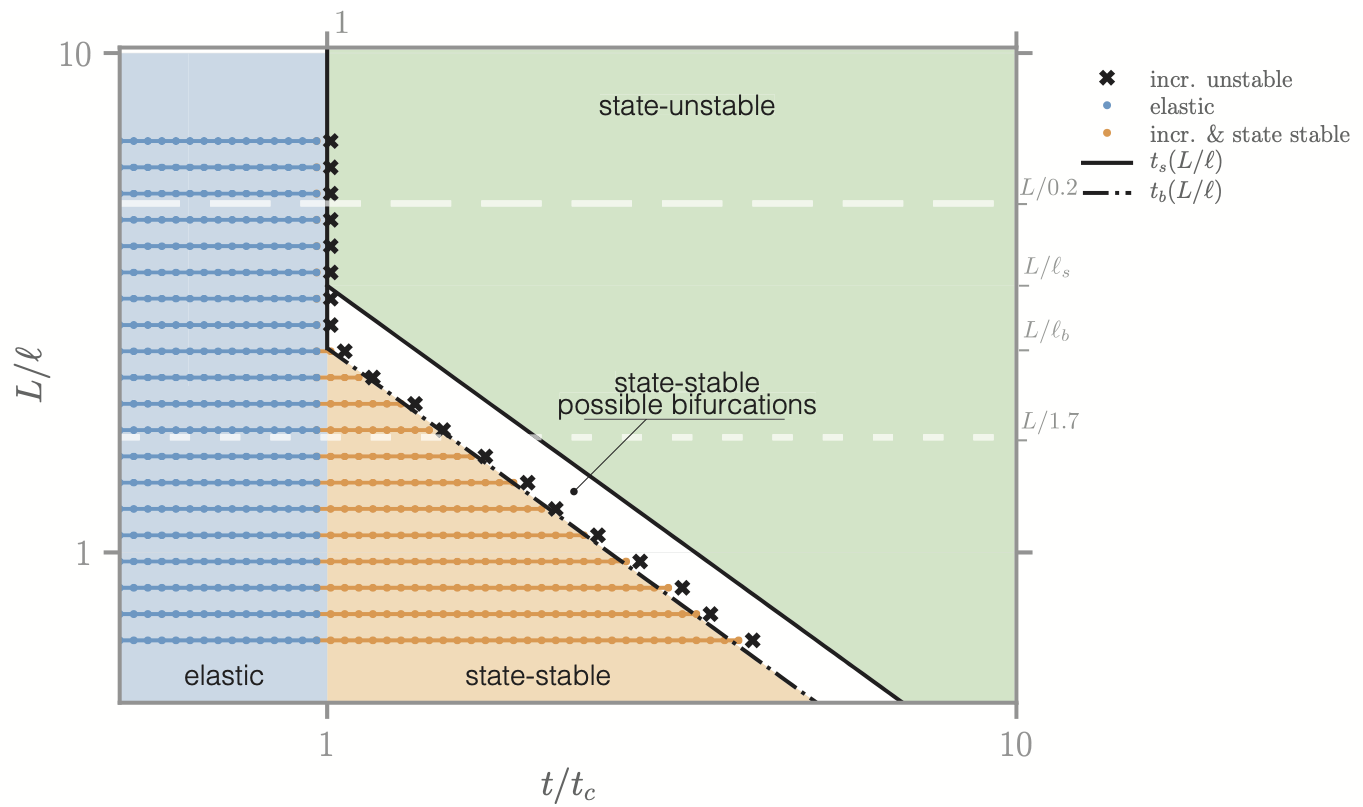
Corrado Maurini is a Professor in Mechanics at Sorbonne University , Paris, France. He leads two international master programs: Mécanique des Solides (Solid Mechanics) and Computational Mechanics .
Sermet DEMİR is an Assistant Professor at the Faculty of Engineering , Department of Mechanical Engineering , Doğuş University. His work focuses on additive manufacturing, orthotic device design, and mechanical property optimization of composite materials. He teaches courses such as Experimental Engineering, Manufacturing Technology, and Computer-Aided Design. Education : BSc and MSc in Mechanical Engineering from Marmara University; PhD in Mechanical Engineering from Marmara University (2018). Research Interests center on biomedical devices, 3D printing, and structural analysis. His publications often employ the Taguchi method, Response Surface Methodology (RSM), and Quality Function Deployment (QFD) for design optimization. Recent works explore triply periodic minimal surface (TPMS) metamaterials, war bow mechanics, and adhesive joint performance. Scientific Awards are not explicitly mentioned in the text. His projects are sponsored by Doğuş University Scientific Research Projects Coordination Unit (grants 2021–22-D1-B02).
Prof. Dr. Eugen Hellmann is a full Professor at the Mathematical Institute of the University of Münster , within the Department of Mathematics and Computer Science . He is a leading researcher in arithmetic geometry and representation theory, actively contributing to the CRC 1442 Geometry: Deformations and Rigidity and Mathematics Münster excellence cluster. His work focuses on the p-adic aspects of the Langlands program, moduli spaces of Galois representations, and p-adic Hodge theory. Research Interests: His primary research areas include Arithmetic Algebraic Geometry , the Langlands Program (especially its p-adic and categorical formulations), p-adic Hodge Theory , p-adic Galois Representations , and p-adic Automorphic Forms . His work often involves the study of (phi,Gamma)-modules, eigenvarieties, and deformation spaces, aiming to understand the deep connections between automorphic forms and Galois representations in the p-adic setting. Publication Trends: His most recent publications (2022–2023) show a strong focus on the derived and categorical aspects of the p-adic Langlands program, including the derived category of Hecke algebras and a categorical framework for the entire program. Earlier works established foundational results on the smoothness of eigenvarieties, the geometry of trianguline varieties, and the structure of moduli spaces for Galois representations. His research consistently bridges abstract algebra, number theory, and algebraic geometry. Scientific Awards: No specific awards or fellowships are mentioned in the provided texts. Advising and Grants: While a list of former research group members (e.g., Dr. Claudius Heyer, Dr. Damien Junger) is provided, their exact status as PhD advisees is not explicitly confirmed. He leads significant research projects funded by the DFG, including CRC 1442 - A01: Automorphic forms and the p-adic Langlands programme and CRC 1442 - A02: Moduli spaces of p-adic Galois representations , as well as a project within the EXC 2044 - A1: Arithmetic, geometry and representations cluster. He is also a co-author on a preprint titled "Patching and multiplicities of p-adic eigenforms," indicating active collaboration on grant-funded research. Labs and Teams: He is a central figure in the arithmetic geometry group at Münster. He organizes and leads the Research Seminar "p-adic arithmetic" and the Mittagsseminar "Arithmetic" , which serve as key forums for his research group and collaborators to present and discuss current work. His research team has included several postdoctoral researchers and doctoral students, contributing to a vibrant research environment focused on cutting-edge problems in number theory.
Yi Yang serves as an Assistant Professor in the Department of Physics at The University of Hong Kong (HKU), Faculty of Science, joining the institution in 2022 as an HKU-100 Scholar. His academic journey includes foundational training at Peking University and advanced research at MIT. Education: Bachelor of Science (B.Sc.), Peking University Master of Science (M.Sc.), Peking University Doctor of Philosophy (Ph.D.), Massachusetts Institute of Technology (MIT) Professor Yang's research centers on optical physics and nanophotonics , specifically exploring light-matter interactions with free electrons and synthetic gauge fields. His pioneering work in non-Abelian physics bridges photonic and acoustic systems, while his investigations into free-electron radiation and topological photonics drive innovations in nanoscale electromagnetism. These efforts yield fundamental insights with applications in quantum simulation, novel light sources, and advanced materials engineering. Recent publications (2023-2024) reveal a pronounced focus on non-Abelian phenomena and synthetic gauge fields , evidenced by high-impact papers in Science and Nature . His work consistently integrates theoretical frameworks with experimental validation, establishing new paradigms in photonic flatband resonances and non-Hermitian systems. Scientific Awards: HKU-100 Scholar Professor Yang actively contributes to HKU's research ecosystem through graduate supervision and collaborative projects. While specific grant details aren't public, his publication trajectory indicates substantial research funding supporting his investigations into quantum photonics and nanoscale light-matter interactions. His laboratory operates within HKU's Department of Physics, leveraging specialized facilities in the Chong Yuet Ming Physics Building for experimental nanophotonics research and theoretical modeling of complex optical systems.
Yannic Maus is a University Professor at the Faculty of Computer Science and Biomedical Engineering at Graz University of Technology (TU Graz), Austria, where he heads the newly founded Institute of Algorithms and Theory (established in 2025). He also serves as co-leader of one of the five fields of expertise at TU Graz (FoE Information, Communication & Computation). His academic journey includes: PhD in Computer Science from University of Freiburg, Germany (2014-2018) MSc in Mathematics from RWTH Aachen, Germany BSc in Mathematics and Computer Science from RWTH Aachen, Germany (with a year at National University of Singapore) Professor Maus specializes in theoretical computer science and algorithm design, with a particular focus on distributed computing. His research spans distributed graph algorithms, efficient algorithms, data structures, complexity theory, and geometric algorithms. He approaches problems with both theoretical rigor and practical applications in mind, seeking clean mathematical solutions to questions motivated by real-world systems. His recent publications show a strong focus on distributed and parallel algorithms, particularly in graph theory. The research trends include distributed graph coloring, symmetry breaking, vertex cover problems, and massively parallel computing models. His work often bridges theoretical computer science with practical distributed systems considerations, with applications to large-scale networks and highly parallel systems. Professor Maus has received numerous accolades for his research: 2020 Principles of Distributed Computing Doctoral Dissertation Award Wolfgang-Gentner-Nachwuchsförderpreis 2019 GI Dissertationspreis 2018 Best Paper Awards at SIROCCO 2016, DISC 2016, and DISC 2017 Professor Maus actively mentors PhD students and has secured significant research funding, including FWF grants P36280-N (2023-2027), DOC 183 (2024-2028), I6915 (2024-2028), and FFG grant No. 59263962. His research group maintains strong international collaborations with institutions across Germany, Finland, Iceland, Israel, and beyond, providing students with opportunities for international research visits. He leads the Algorithms & Complexity research group at TU Graz, which includes PhD students Manuel Jakob, Florian Schager, Malte Baumecker, and Kritika Kashyap, as well as postdoc Tijn de Vos. The group is actively involved in theoretical computer science research with a focus on distributed and parallel algorithms, particularly for large-scale networks and highly parallel systems.