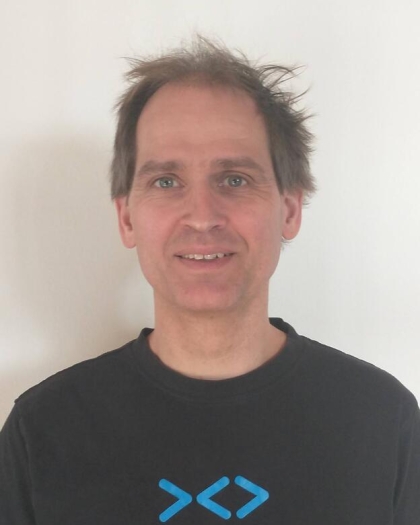
Morten Brun is an Associate Professor at the Department of Mathematics, University of Bergen. His research spans computational topology, persistent homology, and applications in biology and data science. Email: morten.brun@uib.no Research Interests: He specializes in topological data analysis, focusing on sparse nerves, relative persistent homology, and computational geometry. His work applies topological methods to biological problems, including drug resistance modeling in tuberculosis and immune profiling in multiple sclerosis. Recent Publications: His 2025 work includes hypercubic modeling of tuberculosis drug resistance and high-dimensional immune profiling post-stem cell transplantation. Earlier articles explore computational topology techniques (2017-2024) and interdisciplinary applications in toxicology and systems biology.
Nikolas Olson Aksamit is an Associate Professor in the Department of Mathematics and Statistics at UiT The Arctic University of Norway, where he conducts interdisciplinary research at the intersection of applied mathematics and environmental science. His work focuses on understanding coherent structures in fluid flows relevant to the coupling between the cryosphere, atmosphere, and hydrosphere. His research interests include applied mathematics, nonlinear dynamical systems, fluid dynamics, Lagrangian coherent structures, snow science, and climate dynamics. He develops mathematical tools to analyze complex environmental systems, particularly in polar and alpine regions, with applications to sea ice, blowing snow, and ocean turbulence. His work bridges theoretical modeling with field observations and data analysis. The recent articles reflect a strong trend in using Lagrangian methods and nonlinear dynamics to study geophysical flows. Key themes include the detection of coherent structures in turbulent flows, sea ice dynamics, climate modeling, and the application of machine learning to oceanographic data. His publications span high-impact journals in fluid mechanics, geophysics, and environmental science, often in collaboration with leading experts in dynamical systems and climate science. He is a member of the research group Changing Arctic and contributes to the project Development of nonlinear dynamics-based techniques for sea ice diagnosis . While no formal students or awards are listed, his active publication record indicates a vibrant research program. His work has implications for climate prediction, polar monitoring, and environmental engineering.
Drew Kenneth Heard is an Associate Professor at the Department of Mathematical Sciences, Norwegian University of Science and Technology (NTNU), supported by the Trond Mohn Foundation. His research bridges stable homotopy theory, chromatic homotopy theory, and tensor triangulated geometry, with significant contributions to classification theorems and duality principles. Education: PhD (2014) from the University of Melbourne under Craig Westerland. Postdoctoral positions at Universität Regensburg (SFB Higher Invariants), Haifa University, Universität Hamburg (SPP 1786), and Max Planck Institute for Mathematics in Bonn. Heard's work focuses on the interplay between tensor triangulated categories and equivariant homotopy theory. His recent publications explore stratification theorems, vanishing lines in motivic homotopy, and the structure of Picard groups in chromatic settings. Collaborations with Tobias Barthel, Beren Sanders, and others have advanced understanding of localizing subcategories and descent techniques. Research Trends: Analysis of 15 recent articles reveals a core focus on tensor triangulated geometry (Balmer spectra, support theory), chromatic homotopy (K(n)-local spectra, Morava E-theory), and algebraic models for topological phenomena (comodule categories, local duality). Methodologically, he integrates geometric intuition with category-theoretic frameworks. Affiliations: Current: NTNU, Trondheim, Norway. Former: Universität Regensburg, Haifa University, Universität Hamburg, Max Planck Institute. Teaching: TMA4105 - Mathematics 2: Multivariable calculus and vector analysis. MA3408 - Algebraic Topology 2. Projects: Leads the "tt-geometry in Trondheim" project funded by the Trond Mohn Foundation, advancing tensor triangulated geometry classifications.
Elena Celledoni is a Professor of Mathematics at the Department of Mathematical Sciences, Norwegian University of Science and Technology (NTNU), where she has been employed since 2004. She leads the research group on differential equations and numerical analysis. Her academic background includes a Master’s degree (1993) and Ph.D. (1997) in mathematics from the Universities of Trieste and Padua, Italy, respectively. She has held postdoctoral positions at the University of Cambridge (UK), the Mathematical Sciences Research Institute (MSRI, Berkeley, CA), and NTNU. Her research focuses on numerical analysis, particularly structure-preserving algorithms for differential equations and geometric numerical integration. Recent work includes applications of neural networks in computational mechanics and data-driven modeling. She has co-authored over 100 peer-reviewed articles in journals such as Journal of Computational Physics , SIAM Journal on Scientific Computing , and Physica D . Her research interests span computational methods for dynamical systems, machine learning integration with numerical analysis, and geometric algorithms for shape analysis. She actively collaborates with international researchers, including contributions to conferences like NeurIPS and workshops on theoretical aspects of computational dynamics. Elena is a member of the editorial boards of Journal of Computational Dynamics and has organized workshops on structure-preserving integrators. Her work emphasizes preserving geometric properties in numerical methods, with applications in fluid dynamics, mechanical systems, and image processing.
Professor Ioanna Sandvig is a leading academic at the Norwegian University of Science and Technology (NTNU) , where she serves as group leader of the Integrative Neuroscience Group within the Department of Neuromedicine and Movement Science. She is also President of the Norwegian Neuroscience Society (NNS) and actively participates in international societies including the Federation of European Neuroscience Societies (FENS), Society for Neuroscience (SfN), ALBA Network, and Clinical-Academic Group for Alzheimer's Disease. Research Interests : Her group investigates neuroplasticity mechanisms in CNS damage and repair , focusing on structure-function relationships in biological neural networks under healthy and pathological conditions. They integrate in vivo , in vitro , and computational models to identify adaptive/maladaptive plasticity in neurodegenerative diseases like ALS and Alzheimer's. The research combines connectomics , transcriptional analysis , and geometric network modeling to decode network behaviors. Scientific Contributions : Recent publications explore topics including synaptic transcript dysregulation in ALS, functional complexity of 3D-engineered networks, and platinum microelectrode technologies. Her work demonstrates interdisciplinary approaches bridging neuroscience , bioengineering , and computational systems . Scientific Recognition : President, Norwegian Neuroscience Society (2024) Member, Federation of European Neuroscience Societies Member, Society for Neuroscience Member, ALBA Network Member, Clinical-Academic Group for Alzheimer's Disease Laboratory & Collaborations : The Integrative Neuroscience Group collaborates across NTNU's neuroscience departments and clinical institutions, developing tools for neuroplasticity analysis and contributing to preclinical disease modeling.
Trygve Brauns Leergaard is a Professor at the Department of Molecular Medicine, Institute of Basic Medical Sciences, University of Oslo. His academic work focuses on neuroanatomy, brain connectivity mapping, morphological phenotyping, and neuroinformatics, particularly in rodent models. MD, University of Leiden (1996) PhD, University of Oslo (2000) Research Interests: Leergaard specializes in digital brain atlasing, histological validation of neuroimaging, and neuroinformatics. His work bridges computational methods with neuroanatomical studies, emphasizing standardization of brain mapping techniques. Recent Publications: His 2024–2025 research includes developing spatial integration workflows, comparative brain atlas metadata models, and developmental mouse brain atlases. Earlier work (2018–2023) explored neurodegenerative disease models, brain tumor growth patterns, and Parkinson's disease mechanisms. Laboratory & Collaborations: He co-leads the Neural Systems and Graphics Computing Laboratory and collaborates internationally with institutions including UC San Diego, Duke University, and NTNU.
Gunnar Felix Lange is a Postdoctoral Fellow at the University of Oslo in the field of theoretical condensed matter physics , focusing on topological phases in materials and their applications to quantum technology. He also holds a 20% researcher position at the Norwegian Meteorological Institute , addressing air pollution and climate change challenges. Dr. Lange's research specialties include: Topological Materials (band topology, fragile topology, Weyl systems) Quantum Technology (quantum sensing, phase transitions, spintronics) Condensed Matter Physics (acoustic phonons, electronic structure, surface states) His recent publications demonstrate a focus on: Quantum geometric constraints in topologically trivial systems Topological phase transitions in 2D and 3D materials Applications of topology to phononic and electronic properties Interdisciplinary connections between quantum physics and environmental challenges Scientific recognition includes: Aker Scholarship (2018) DSTrain Fellowship (Horizon Europe, Marie Skłodowska-Curie grant agreement No. 101126636) He has taught courses at both the University of Oslo (FYS-MENA4111 - Quantum Mechanical Modelling of Nanomaterials) and the University of Cambridge (Part III: Theories of Quantum Matter, Part II: Computational Physics, Part II: Theoretical Physics II). Dr. Lange actively collaborates with institutions including the University of Cambridge , Max Planck Institute for the Physics of Complex Systems (Dresden) , and Harvard University .
Drew Heard is an Associate Professor at the Norwegian University of Science and Technology (NTNU), Trondheim, supported by the Trond Mohn Foundation. His research bridges stable homotopy theory and tensor triangulated geometry, with a focus on chromatic homotopy theory, Balmer spectra, and descent techniques. He has collaborated extensively with researchers at institutions like Regensburg University, Haifa University, and the Max Planck Institute for Mathematics in Bonn. Key Research Areas: Stable homotopy theory, chromatic homotopy theory, tensor triangulated geometry, and equivariant homotopy theory. Publications: His work includes classifications of thick subcategories in functor calculus, cosupport theory, and stratification theorems in equivariant homotopy theory. Recent papers explore connections between tensor triangulated geometry and algebraic structures like Picard groups, Balmer spectra, and local duality. Grants and Collaborations: Supported by the Trond Mohn Foundation, he has worked with teams at the SFB Higher Invariants, SPP 1786, and in projects like 'tt-geometry in Trondheim.'
Ryan Grady is an Associate Professor in the Department of Mathematical Sciences at Montana State University. His research and teaching focus span advanced mathematical disciplines. Education: Ph.D. and M.S. (2012, 2009) from University of Notre Dame B.S. (2007) from Colorado School of Mines Ryan's research lies at the intersection of geometry, topology , and quantum field theory (QFT) , with a focus on rigorous mathematical frameworks. He explores connections between QFT, derived geometry , and higher Lie theory , aiming to bridge physical intuition with formal mathematical structures. His recent publications highlight trends in topological data analysis , homotopy theory , and quantization . Key areas include factorization algebras , K-theory , and non-linear sigma models , reflecting a synthesis of abstract mathematics and physical applications. Ryan has advised multiple graduate students, including Eric Berry, Adam Howard, Garrett Oren, and Bryce Morrow, whose work spans cohomology of Grassmanians , surface immersions , algebraic structures , and infinite-dimensional linear algebra .
Einar Malvin Rønquist is a Professor and Head of the Department of Mathematical Sciences at NTNU since August 2013. He holds a MSc from NTNU (1980) and a PhD from MIT (1988). His research focuses on numerical solutions of partial differential equations, spectral element methods, reduced basis methods, and computational fluid dynamics. He has been a leader in several research initiatives, including the Computational Science and Visualization program at NTNU (2003–2011). Rønquist is a member of prestigious academies: NTVA (since 2005) and DNKVS (since 2010). He has supervised 8 PhD students and 25 MSc students. His work spans computational science, with notable contributions to parametric modeling, parallel computing, and fluid dynamics simulation. His administrative roles include Vice President of R&D at Nektonics, Inc. (1991–1999) and Deputy Head of NTNU’s Department of Mathematical Sciences (Fall 2012). His publications highlight advancements in numerical methods for PDEs, including spectral element techniques, reduced basis approaches, and high-order approximations for complex geometries.
Yutao Pan is an Associate Professor in Geotechnical Engineering at the Department of Civil and Environmental Engineering, Norwegian University of Science and Technology (NTNU). His academic journey includes a BSc and MSc from Huazhong University of Science and Technology (2010, 2012) and a PhD from the National University of Singapore (NUS) in 2016, followed by a postdoctoral research fellowship. Research Focus: Ground improvement, seepage mechanics, risk assessment, and offshore geotechnical engineering with emphasis on spatial variability and numerical modeling. Key Contributions: Development of algorithms for water-tightness estimation in cut-off walls, stability analysis of tunnels in cement-admixed soils, and transient-state leakage evaluation methods. His publications reflect expertise in cement-treated soils, tunneling mechanics, and probabilistic risk assessment. Collaborations with researchers like Yong Liu, Fook-Hou Lee, and Michael A. Hicks appear frequently. Recent work integrates physical mechanisms with AI for geotechnical problem-solving.
Per-Olof Åstrand is a Professor in the Department of Chemistry at the Norwegian University of Science and Technology (NTNU), specializing in theoretical and computational chemistry. His research focuses on molecular modeling, quantum chemistry, and statistical thermodynamics with applications in dielectric materials and electrical engineering. Based at Realfagbygget, D3-119, Gløshaugen, he maintains active research collaborations with SINTEF Energy and Imperial College London. Åstrand's research interests center on theoretical models for molecular properties, intermolecular interactions, and molecular models of condensed matter. His work spans multiple domains including electrically insulating materials, non-linear optics, electrical conductivity, carbon dioxide chemistry, and lattice models in statistical thermodynamics. He develops both quantum mechanical and classical models to understand molecular behavior under various conditions, particularly focusing on electric field effects and molecular polarization phenomena. His recent publications reveal a strong emphasis on dielectric liquids, streamer propagation in electrical insulation, molecular ionization energy in external electric fields, and computational modeling of catalytic systems. The research combines theoretical development with practical applications in electrical engineering and materials science, showing consistent productivity with publications spanning from fundamental quantum chemistry to applied engineering problems. Åstrand actively contributes to education through teaching courses including TKJ4215 Statistical Thermodynamics in Chemistry and Biology (B.Sc. level), TKJ4205/KJ8902 Molecular Modeling (M.Sc./Ph.D. level), and KJ8205 Advanced Molecular Modeling (Ph.D. level). He has authored the textbook 'Atomistic Modeling: Concepts in Computational Chemistry' (Bookboon.com, 2016), which is available as a free PDF download. His research group offers numerous project opportunities for undergraduate and graduate students across various computational chemistry topics.
Jan G. Bjålie is a Professor and Vice Dean for Research and Innovation at the Faculty of Medicine, University of Oslo. He has led neuroinformatics development since the 1990s and held leadership roles including Head of the Department of Basic Medical Sciences (2009-2016) and Head of Infrastructure Development for EBRAINS. His research bridges neuroanatomy, computational neuroscience, and digital brain atlases. Doctor of Medicine, University of Oslo (1990) Associate Professor (1991), Professor (1997) in Basic Medical Sciences 2016-: First Leader, International Neuroinformatics Coordinating Facility 2017-: Coordinator, Human Brain Project Neuroinformatics 2019-2021: Head, International Brain Initiative Research Interests span neuroinformatics, brain architecture, and digital brain atlases. His work focuses on: Developing standardized frameworks for brain atlas utilization 3D spatial mapping of neural systems Neuroanatomical connectivity in rodent models Integration of multi-modal neuroscience data International collaboration in brain research Computational modeling of brain structure-activity relationships Recent Publications highlight advancements in automated brain imaging registration, developmental brain mapping, cross-cultural neuroscience perspectives, and genetic influences on brain composition. His neuroinformatics tools (e.g., DeepSlice, Waxholm Space, AtOM) enable global standardization of brain data analysis. Leadership Roles include: Vice Dean for Research and Innovation (2023-2026) Infrastructure Development Lead for EBRAINS (2019-) International Brain Initiative Head (2019-2021) Coordinating EU-funded Human Brain Project neuroinformatics Collaborations extend across major brain projects in the USA, Japan, and Europe through initiatives like the International Brain Initiative and ESFRI roadmap projects.
Kjell Gunnar Robbersmyr is a Professor at the University of Agder's Department of Engineering Sciences and director of the Top Research Center in Mechatronics. With a Ph.D. in mechanical engineering from NTNU (1992), his career spans academic leadership, research management at Agder Research, and active contributions to IEEE. His work focuses on mechatronics, machine design, and condition monitoring, with special emphasis on fault diagnosis in electric motors and vehicle crash modeling. Senior Member of IEEE Member of Norwegian Academy of Technical Sciences Member of Agder Academy of Sciences Research interests include: Advanced fault diagnosis in electric drives using AI and signal processing Vehicle crashworthiness modeling with lumped parameter and finite element methods Optical measurement technology for machine monitoring Digital twin applications for infrastructure and wind energy systems Condition monitoring of low-speed bearings and rotating machinery Recent publications demonstrate expertise in: Deep learning for imbalanced motor fault datasets Transformer networks in power electronics diagnostics 3D reconstruction techniques for mechanical systems Multi-classifier decision fusion in power systems Dynamic operations modeling for electric vehicles Scientific contributions include: Over 50 peer-reviewed articles Leadership in the Intelligent Monitoring research group Development of novel inverter topologies Innovations in wind turbine condition monitoring Advancements in laser-based mechanical diagnostics
René Langøen is a PhD Candidate and Researcher at the Department of Mathematics, University of Bergen. His work bridges mathematical physics and differential geometry, with a focus on geometric structures in physical systems. Affiliation: Department of Mathematics, University of Bergen Research Interests: His research explores integrable systems through differential geometry and complex analysis. Key areas include curvature properties of diffeomorphism groups on non-orientable manifolds (e.g., Klein bottle, projective plane), Stokes graphs in the Rabi model, and applications to quantum mechanics and fluid dynamics. Recent Trends: Recent publications analyze geometric properties of non-orientable surfaces and Stokes phenomena in quantum systems, reflecting interdisciplinary work at the intersection of pure mathematics and theoretical physics. Teaching & Outreach: Active in education, he has taught courses like MAT101 and MAT121, and organized conferences such as the Norwegian National PhD Meeting in Mathematics (2023). Outreach includes public lectures and poster sessions on geometric analysis.