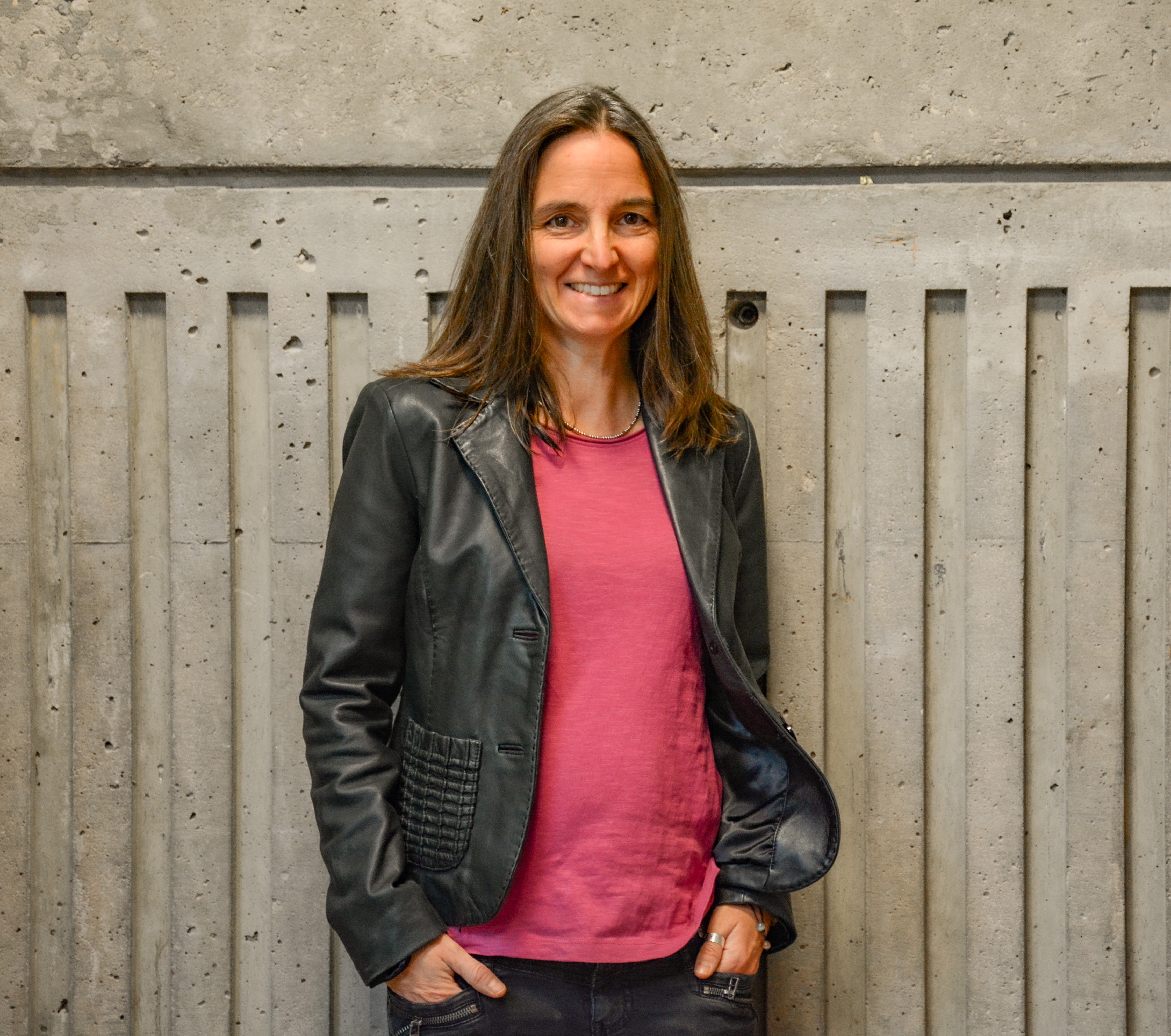
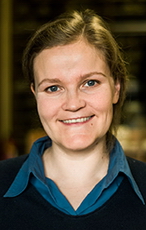
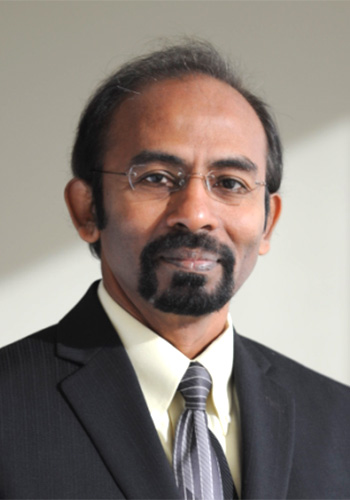
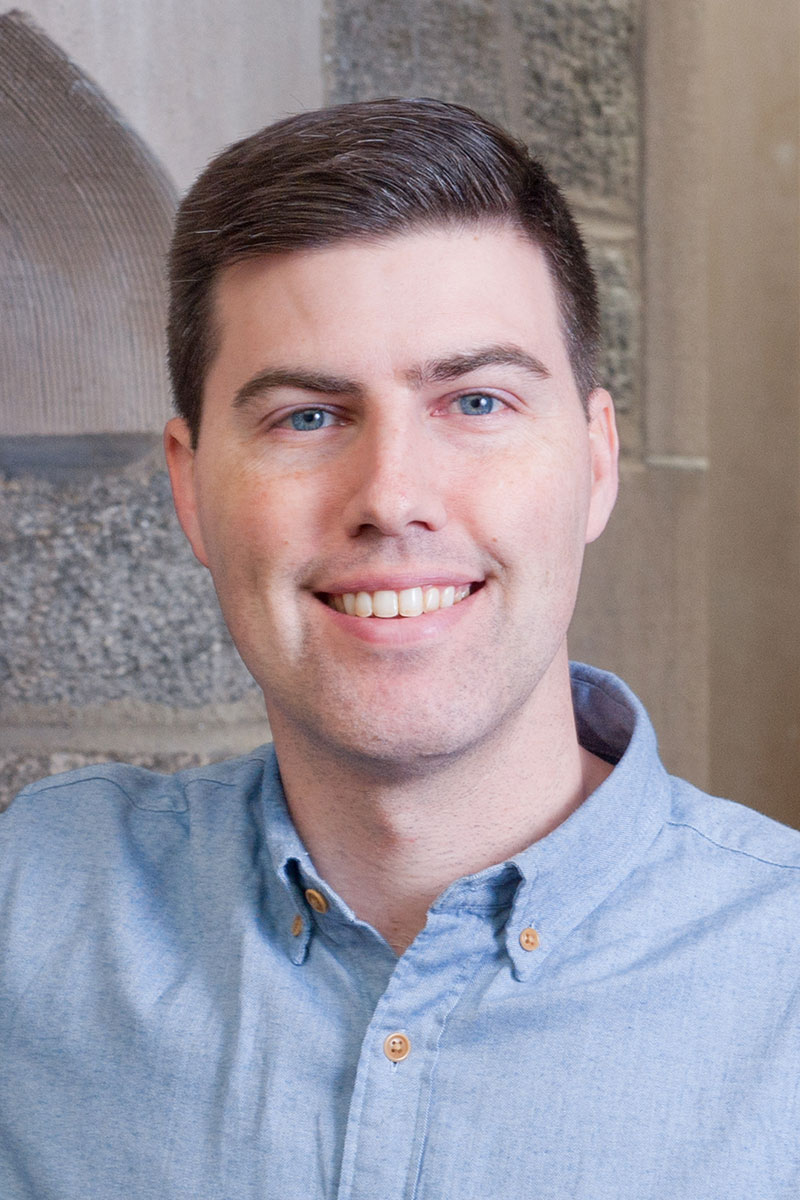
Sandra Zilles is a Professor and Canada Research Chair (Tier 1) in Computational Learning Theory at the University of Regina's Department of Computer Science. She holds adjunct appointments at the University of Waterloo and collaborates with the Alberta Machine Intelligence Institute (Amii). Her research focuses on theoretical computer science and artificial intelligence, particularly interactive learning models, formal language theory, and heuristic search algorithms. Her research integrates computational learning theory, formal language theory, and discrete artificial intelligence structures. Key interests include: Machine teaching with limited data Learnability of pattern languages and automata Graph-theoretic approaches in AI Her work bridges theoretical frameworks with applications in medical imaging, bioinformatics, and game theory. Zilles has received numerous honors including: NSERC Canada Research Chair (Tier 1, 2022-2029) Royal Society of Canada College membership Best Paper Awards (KI 2012, ALT 2003, COLT 2002) She mentors over 50 students and postdocs through her research group. Current projects explore symbolic automata, collaborative learning, and geometric teaching models. Her lab maintains international collaborations with institutions in Germany, Canada, and the US.
Danel Draguljic is an Associate Professor of Mathematics at Franklin & Marshall College in Lancaster, PA, where he has held this position since 2018, following a tenure as Assistant Professor from 2012–2018. Prior to academia, he worked as a Statistician III at Battelle Memorial Institute (2010–2012). He holds a Ph.D. in Statistics from The Ohio State University (2010), alongside dual undergraduate degrees in Philosophy and Mathematics from Millersville University (2003). Teaching focuses on advanced statistical courses like Design and Analysis of Experiments, Neural Networks, and Time Series. Co-authored the textbook Design and Analysis of Experiments (2017, Springer), emphasizing R and SAS applications. His research intersects statistical methodology, experimental design, and interdisciplinary applications in biology, neuroscience, and environmental science. Notable contributions include optimizing thin film coatings, modeling neural networks, and analyzing drought impacts on tropical epiphytes. Key awards include the 2015 Youden Award for the 2014 paper on screening strategies in Technometrics. Ongoing projects involve variable selection in mixed models and constrained noncollapsing design algorithms (CoNcaD).
Univ.-Prof. Katharina Rebay-Salisbury is a prehistoric archaeologist specializing in European Bronze and Iron Ages, particularly focusing on the human body, social identities, and gender archaeology. She leads the Research Group 'Prehistoric Identities' at the Austrian Academy of Sciences (ÖAI) and holds a professorship in Prehistory of Humanity at the University of Vienna. Her work bridges archaeology with bioarchaeology, genetics, and proteomics. After earning her PhD from the University of Vienna (2005), she conducted postdoctoral research at Cambridge and Leicester, exploring cremation practices and Iron Age networks. She received the ERC Starting Grant (2015) for studying societal responses to motherhood and childbirth. Key projects include analyses of cremated remains, mobility patterns, and kinship structures in prehistoric communities. Education: PhD (2005, University of Vienna), Habilitation (2017, University of Vienna). Research interests include bioarchaeology, maternal status, and interdisciplinary methods. She is a member of the Young Academy of the Austrian Academy of Sciences (since 2016) and has published extensively on prehistoric burial practices, gender roles, and archaeological theory. Her research integrates osteological analysis, isotopic studies, and ancient DNA to reconstruct social dynamics. Notable contributions include studies on Bronze Age maternal health, mobility inferred from cremation burials, and leadership roles in Iberian megalithic societies. She chairs the ERC-funded project 'The Value of Mothers to Society' and collaborates internationally on bioarchaeological projects. Grants and awards include the ERC Starting Grant and multiple fellowships. Her team addresses questions of social inequality, kinship, and human-environment interactions in prehistory.
John M. Lee is a mathematician whose research focuses on differential geometry and geometric analysis, with significant contributions to CR manifolds, the Yamabe problem, Einstein metrics, and asymptotically hyperbolic manifolds. His work frequently appears in top-tier mathematics journals and involves collaborations with prominent researchers in the field. Research Interests: Lee's primary areas of investigation include geometric partial differential equations, conformal geometry, mathematical general relativity, and complex manifold theory. His research bridges pure differential geometry with applications in theoretical physics, particularly in the study of Einstein's field equations. Publication Trends: Lee's publications demonstrate a consistent focus on geometric structures with asymptotic behavior, boundary regularity problems, and the interplay between conformal geometry and Einstein metrics. Recent work emphasizes Sobolev-class asymptotics and constraint equations in general relativity. Collaborations: Frequent collaborators include Paul T. Allen, James Isenberg, Iva Stavrov Allen, C. Robin Graham, and David Jerison.
Dr. Robello Samuel is an Adjunct Professor in the Department of Petroleum Engineering at the University of Houston's Cullen College of Engineering, concurrently holding this position for over 12 years while serving as a Technology Fellow at Halliburton. With 43 years of multi-disciplinary experience in oil/gas drilling operations, he specializes in drilling engineering innovations and well design. Education: Ph.D. in Petroleum Engineering, University of Tulsa M.S. in Petroleum Engineering, University of Tulsa M.S. in Mechanical Engineering, College of Engineering Guindy (Madras) B.S. in Mechanical Engineering, University of Madurai Research Focus: Dr. Samuel's work spans drilling optimization, wellbore mechanics, torque-drag modeling, vibration analysis, geothermal well design, and AI applications in drilling engineering. His research integrates field experience with computational methods to solve complex drilling challenges. Publications: His extensive publication record (150+ papers/books) focuses on drilling mechanics, well design innovations, and predictive modeling. Recent works emphasize machine learning applications, real-time drilling optimization, and sustainable energy solutions like geothermal well engineering. Awards & Honors: SPE International Drilling Engineering Award SPE Distinguished Lecturer (2014) SPE Honorary Member Award AIME Honorary Member Award Gulf Coast SPE Drilling Engineering Award (2013) SPE Distinguished Member Professional Leadership: Serves on editorial boards for SPE Research Partnership to Secure Energy for America (RPSEA), Ocean Energy Safety Institute, and SPE Research & Development Advisory Board. Regularly delivers keynote addresses at major energy conferences worldwide.
Adam Lowrance is an Associate Professor of Mathematics and Statistics at Vassar College, where he has served since 2012. He holds a BA in Mathematics and Computer Science from Amherst College and a PhD in Mathematics from Louisiana State University. His research focuses on low-dimensional topology, particularly knot theory and 3-manifold theory. Recent work has explored properties of 2-bridge knots, Turaev genus, Khovanov homology, and geometric invariants. His publications frequently intersect algebraic and geometric approaches to topological problems. Teaching responsibilities include Linear Algebra (MATH 221) and Advanced Linear Algebra (MATH 364). He maintains an active research program with a focus on undergraduate research, as evidenced by grants such as the NSF RUI initiative. Professional activities include service on departmental committees and contributions to topological research communities. Contact details: adlowrance@vassar.edu , Rockefeller Hall Box 302.
Adi Kurniawan is a Research Fellow at the University of Western Australia (UWA) in the School of Earth and Oceans, affiliated with the Marine Energy Research Australia (MERA) and the Great Southern Marine Research Facility (GSMRF). His research focuses on wave energy conversion, wave-structure interactions, and multi-objective optimization. He holds a PhD in Marine Technology from NTNU and has held roles at Aalborg University and the University of Plymouth. Kurniawan co-authored Ocean Waves and Oscillating Systems and contributes to industry standards (Standards Australia Committee EL-066) and journal editing (Journal of Offshore Mechanics and Arctic Engineering). Research Interests: Wave energy converter (WEC) design and optimization Nonlinear wave dynamics and numerical modeling Multi-objective optimization of wave farms Parametric resonance mitigation in WECs Teaching: Previously taught OCEN4007 Renewable Ocean Energy. Active in the Oceans Graduate School, covering oceanography, hydrodynamics, and marine geoscience. Collaborations: Works with industry on sponsored projects, including wave energy device modeling and power prediction. Part of the UN SDGs contributing to sustainable energy solutions (SDG 7, 13, 14). Grants: Lead investigator on projects like 'Advancing ocean renewable energy systems through physics and machine learning' and 'WaveX Albany', totaling over $2M in funding. Projects emphasize scalability, cost reduction, and environmental impact assessments. Labs/Teams: Based at the GSMRF in Albany, collaborating with international partners on WEC testing and deployment strategies.
Diana Marin is a PostDoc Researcher at TU Wien's Institute of Visual Computing & Human-Centered Technology. She holds a BSc, MEng, and Dr.techn. (PhD) in technical fields. Her research focuses on computational geometry, point cloud processing, and distributed computing for large-scale datasets. She has contributed to projects like Distributed Surface Reconstruction and RE:STOCK INDUSTRY. Education: BSc, MEng, Dr.techn. (PhD) Her work emphasizes curve and surface reconstruction from unorganized point clouds, leveraging proximity graphs and distributed computational methods. Key projects include optimizing surface reconstruction for massive datasets and developing parameter-free algorithms for connectivity analysis. Her publications span topics like SING neighborhood graphs, Riemannian manifold curve reconstruction, and distributed processing techniques. She collaborates on projects such as PostDisaster and Mixed Reality Lab.
Yun Fu is a tenured Professor in the Department of Electrical and Computer Engineering at Northeastern University, with a joint appointment in the Khoury College of Computer Science. He has established himself as a leading researcher in Artificial Intelligence, with over 500 publications in top-tier venues including IEEE/ACM transactions and major AI conferences. His work spans both theoretical foundations and practical applications, with significant impact in computer vision and machine learning. Professor Fu earned his Ph.D. in Electrical and Computer Engineering from the University of Illinois at Urbana-Champaign. His academic career progressed from Assistant Professor at SUNY Buffalo to his current position as tenured Professor at Northeastern University, where he has held appointments since 2012. His educational background includes a Beckman Graduate Fellowship at UIUC (2007-2008). His research focuses on advancing Artificial Intelligence with particular emphasis on Computer Vision, Pattern Recognition, and Machine Learning. His seminal work includes the "Residual Dense Network for Image Super-Resolution" presented at CVPR 2018, which was ranked among the Top 10 Most Influential CVPR papers. His research interests span image processing, anomaly detection, multimodal learning, and trajectory prediction, with applications ranging from healthcare to consumer technology. Analysis of his recent publications reveals a strong trend toward developing efficient and robust AI systems that bridge computer vision with language understanding. His work increasingly focuses on multimodal learning, trajectory prediction for multi-agent systems, anomaly detection in complex environments, and model validation techniques for black-box systems, while maintaining practical applications in real-world scenarios. Professor Fu's extensive recognition includes: Fellow of IEEE (2018), OSA (2019), SPIE (2018), IAPR (2016), AAIA (2021), and AAAI (2025) Member of Academia Europaea (2022) and European Academy of Sciences and Arts (2023) Fellow of National Academy of Inventors (2023) Multiple Young Investigator Awards from NAE, ONR, ARO, IEEE, ACM, and INNS 12 Best Paper Awards from major conferences Industrial Research Awards from Google, Amazon, Samsung, JPMorgan, and others Professor Fu has successfully mentored numerous Ph.D. students who now hold prominent positions in academia and industry at institutions including Amazon, Microsoft, Meta, Adobe, and major universities. His entrepreneurial ventures include founding Giaran (acquired by Shiseido in 2017) and co-founding TVision Insights, demonstrating his commitment to translating research into real-world impact. He has secured significant research funding from both government agencies and industry partners. As the PI and Founding Director of the SmiLe Lab at Northeastern University, Professor Fu leads a dynamic research group focused on advancing the state-of-the-art in AI and Computer Vision. The lab fosters interdisciplinary collaboration across computer science, electrical engineering, and applied mathematics, with ongoing projects in efficient deep learning, multimodal understanding, and practical AI applications.
Antti Ritari is a Postdoctoral Researcher at Aalto University's Department of Energy and Mechanical Engineering. His research specializes in optimization techniques for sustainable marine energy systems, with a focus on battery-electric vessels, hybrid power systems, and zero-emission shipping solutions. He actively collaborates on projects such as the DAZE-EVET initiative, which targets data-driven approaches to reduce maritime emissions. Research Focus: Ritari's work integrates convex optimization with naval engineering challenges. Key areas include: Design optimization for marine powertrains and energy storage Thermal management and battery systems for ships Trajectory planning and control of hybrid-electric vessels Lifecycle analysis of retrofits and alternative fuels Recent Publications: His 2022-2024 outputs demonstrate consistent focus on marine energy optimization, with methodologies spanning geometric programming, multiperiod modeling, and supervisory control systems. Thematic analysis shows 80% of works directly address decarbonization of maritime transport. Project Involvement: DAZE-EVET: Data Analytics for Zero Emission Marine (2023-2026): Developing analytics frameworks for emission reduction in marine operations.
Clinton Conley is an Associate Professor and Director of Graduate Studies in the Department of Mathematical Sciences at Carnegie Mellon University, part of the Mellon College of Science. He holds a Ph.D. in Mathematics from UCLA and has held postdoctoral appointments at the Kurt Gödel Research Center (Vienna, Austria) and Cornell University. His research focuses on descriptive set theory, measurable group actions, and Borel graphs, exploring intersections with ergodic theory, combinatorics, and set theory. Key research areas include measurable chromatic numbers, Borel combinatorics, and hyperfinite equivalence relations. His work often bridges abstract set-theoretic principles with concrete problems in dynamics and graph theory. Notable awards include the Julius Ashkin Award. Education: Ph.D. in Mathematics, University of California, Los Angeles Postdoctoral Appointments: KGRC (Vienna), Cornell University Recent publications span topics like measurable regular subgraphs, quasi-invariant measures, and hyperfiniteness in Borel combinatorics. Teaching includes advanced courses on descriptive set theory, set theory, and mathematical paradoxes. Advising and grants sections remain unspecified in available data. No lab or team affiliations are noted.
Mima Stanojkovski is an Assistant Professor at the Department of Mathematics, University of Trento. Her research focuses on group theory, algebra, and their applications in coding theory and cryptography. She teaches courses such as Algebra B, Statistics for Data Science, and Teoria dei Gruppi, emphasizing foundational concepts in abstract algebra and their practical implications. Teaching Responsibilities: Algebra B (Department of Mathematics) Statistics for Data Science (Department of Sociology and Social Research) Teoria dei Gruppi (Department of Mathematics) Research Interests: Mima's work centers on geometric and combinatorial aspects of finite groups, modular group algebras, and cryptographic applications of algebraic structures. She explores topics such as independence complexes, rank-metric codes, and pro-p group constructions. Her recent publications address conjectures in coding theory and security analyses of homomorphic encryption schemes. Grants & Collaborations: No grants or collaborative projects explicitly listed in the provided text. Labs/Teams: No specific lab affiliations or research teams mentioned.
Joan Claramunt Caros is an Assistant Professor in the Department of Mathematics at Carlos III University of Madrid. His research focuses on advanced topics in mathematics and theoretical physics, including dynamical systems, algebraic combinatorics, and spin-orbit coupled gases. He maintains an active publication record with contributions to journals such as Discrete and Continuous Dynamical Systems and Physical Review A . His work bridges pure mathematics and applied physics, addressing complex structures like separated graphs, L2-Betti numbers, and infinite matrix products. Collaborations include co-researcher networks and co-authorships in interdisciplinary projects. No specific grants or awards are listed in the provided information. His academic profile highlights contributions to both algebraic topology and quantum many-body systems, reflecting a dual focus on foundational theory and applied mathematical physics.
Tero Kilpeläinen is a Professor and Head of the Department of Mathematics and Statistics at the University of Jyväskylä, affiliated with the Faculty of Mathematics and Science. His research focuses on nonlinear potential theory and partial differential equations, particularly exploring the interplay between these fields and their applications in modeling nonlinear phenomena. He has contributed extensively to areas such as p-Laplacian equations, Hardy-Orlicz spaces, and boundary behavior of harmonic functions. Key publications include works on lattice properties of p-admissible weights, harmonic Hardy-Orlicz spaces, and maximal regularity for elliptic systems involving measures. His research group, Nonlinear Partial Differential Equations, addresses fundamental questions in nonlinear analysis and geometric measure theory. Kilpeläinen collaborates widely, often with co-authors like Pekka Koskela and Nageswari Shanmugalingam. While no specific grants or awards are listed, his work reflects deep engagement with foundational mathematical theory and its analytical applications. He advises within the Department of Mathematics and Statistics, contributing to both research and academic leadership roles at the University of Jyväskylä.
Prof. Dr. Peter Sanders is a full professor in Theoretical Computer Science at the Karlsruhe Institute of Technology (KIT), leading the Algorithm Engineering group. His academic career includes a doctoral degree from Karlsruhe University and research stints at institutions like the Max Planck Institute for Informatics. He specializes in algorithm theory and engineering, focusing on parallel computing, large-scale data processing, and graph partitioning. His research bridges theoretical foundations with practical implementations, emphasizing real-world applications in optimization, route planning, and distributed systems. Education: Ph.D. in Computer Science, Karlsruhe University (1996) Bachelor/Master studies at Karlsruhe University (1988-1996) Research Interests: Algorithm design and analysis Parallel and distributed algorithms Graph algorithms and partitioning Algorithm engineering for big data High-performance computing Publications: Over 250 papers, emphasizing parallel algorithms, distributed systems, and graph theory. Recent work includes scalable SAT solving, hypergraph partitioning, and distributed string sorting. His contributions have advanced practical applications in route planning, load balancing, and large dataset processing. Awards: Recipient of the prestigious Leibniz Prize (DFG) and Baden-Württemberg State Research Prize. He coordinated the DFG Priority Program on Algorithm Engineering and is an active reviewer for major funding bodies. Consulting: Engages with companies like SAP and Google, focusing on optimization, route planning, and database algorithms. Leads projects on algorithm scalability and real-world problem-solving. Labs/Teams: Heads the Algorithm Engineering group at KIT, fostering collaborations in distributed computing and algorithmic research.