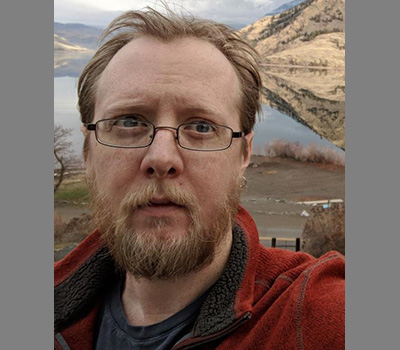
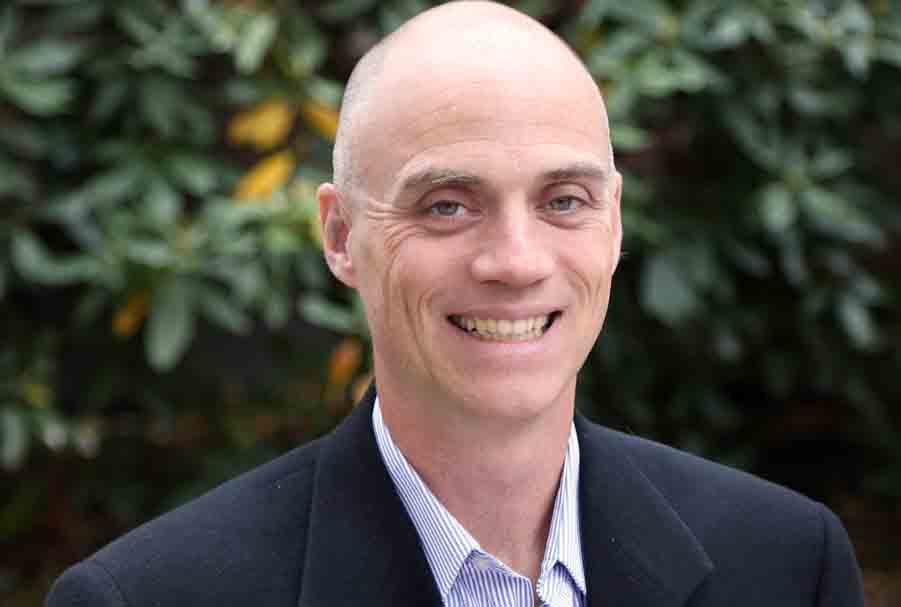
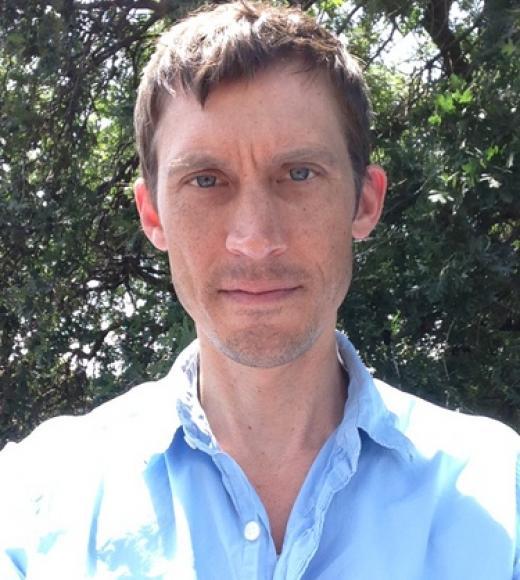
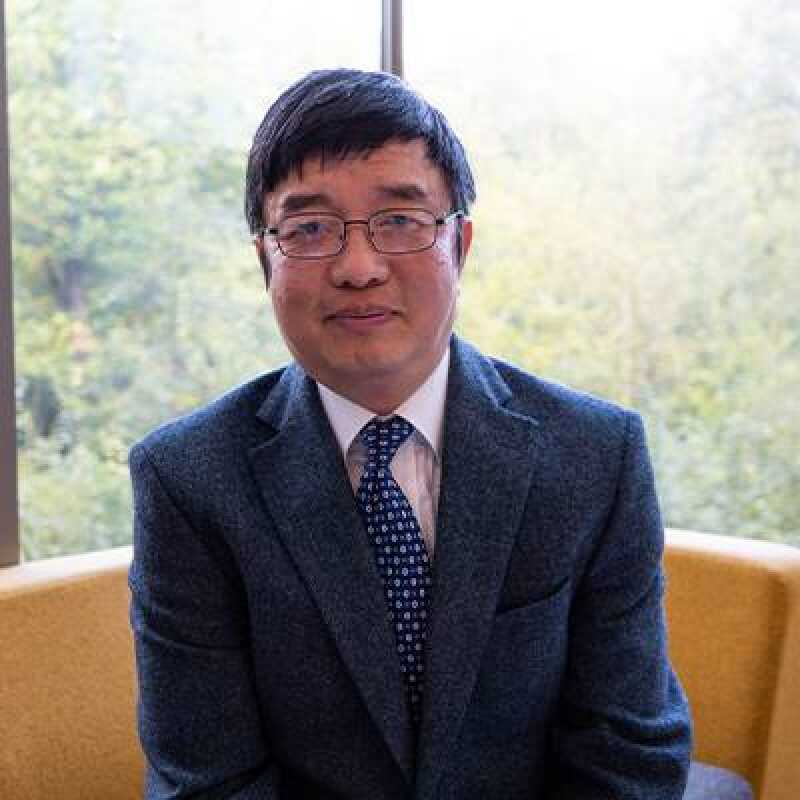
Anna Levina is an Assistant Professor for Computational Neuroscience at the University of Tübingen , affiliated with the Department of Computer Science under the Faculty of Science. Her research focuses on the self-organization of neuronal activity, critical dynamics in neural networks, and the excitation/inhibition balance in cortical circuits. Current positions: Assistant Professor (since 2018), Group Leader (2017-2018), Equality Officer (Computer Science) Previous roles: IST Fellow (2015-2017), Associated Researcher (2011-2015), Postdoc/PI (2011-2015), Postdoc (2008-2011) Her research integrates mathematical modeling , statistical physics , and computational neuroscience to study criticality phenomena, neural avalanches, and adaptive network dynamics. Key interests include: Self-organized criticality in neural systems Excitation/Inhibition balance mechanisms Network topology and dynamics Timescale analysis in neural processing Stochastic modeling of neural activity Recent publications reveal trends in understanding critical dynamics across biological and artificial networks, with applications to memory systems, sensorimotor integration, and disease modeling. She has received recognition as an IST Fellow .
Michael Mühlebach is a Research Group Leader at the Max Planck Institute for Intelligent Systems in Tübingen, Germany, leading the independent Learning and Dynamical Systems group. His academic journey began at ETH Zurich where he earned his B.Sc. (2010) and M.Sc. (2013) in mechanical engineering, specializing in robotics, systems, and control. He completed his Ph.D. at ETH Zurich in 2018 under Prof. R. D'Andrea, followed by postdoctoral research at UC Berkeley with Prof. Michael I. Jordan. Dr. Mühlebach's research spans machine learning, dynamical systems, control theory, and optimization . His work bridges theoretical foundations with practical applications in robotics, developing methods that incorporate physical constraints and system dynamics into learning frameworks. His group focuses on online learning, physics-informed machine learning, and large-scale optimization for cyber-physical systems, with applications in electromagnetic navigation, robotic table tennis, and energy-efficient flight systems like the shape-changing robot Floaty . His publication record shows a strong focus on constrained optimization, with recent work exploring decision-dependent stochastic optimization, nonlinear feedback, and the theoretical foundations of reinforcement learning. His research integrates perspectives from control theory, dynamical systems, and optimization to develop algorithms with strong theoretical guarantees and practical performance. Outstanding D-MAVT Bachelor Award Willi-Studer prize for best Master's degree ETH Medal and HILTI prize for doctoral thesis Branco Weiss Fellow (2018) Emmy Noether Fellowship (2020) Amazon Fellowship (2024) Dr. Mühlebach actively mentors doctoral researchers and is seeking talented students for PhD and Master's projects. His research group has received funding from multiple prestigious fellowships and maintains collaborations across institutions including ETH Zurich, UC Berkeley, and various Max Planck research units. The group's work spans theoretical developments to practical implementations on robotic systems, demonstrating strong connections between mathematical theory and physical realization.
Ian Spielman is an Adjunct Professor at the University of Maryland, affiliated with the National Institute of Standards and Technology (NIST) and the Joint Quantum Institute (JQI). His research focuses on ultracold atomic systems, quantum gases, and many-body physics. Spielman leads experiments exploring artificial gauge fields, spin-dependent forces, and long-range interactions in systems like RbK, RbChip, and RbLi. Collaborating with Dr. Justyna Zwolak, he applies machine learning to quantum experiments for control and analysis. His work bridges theoretical concepts with experimental innovation, addressing phenomena from superfluid turbulence to geometrical frustration in quantum systems. Education details are not explicitly provided in the text. Spielman oversees postdoctoral training programs, including the JQI Experimental Postdoc Program and NIST NRC Postdoc Program. Notable achievements include mentoring students like Dr. Mingshu Zhao (recognized for turbulence research) and Dario D’Amato (winner of the 'Most Outstanding Poster in Physics' in 2025). His experimental group, part of NIST’s Laser Cooling and Trapping team, investigates dynamical structure factors, coherence in lattice fermions, and solitary wave phenomena in spin-orbit-coupled Bose-Einstein condensates. Spielman’s contributions span both foundational quantum science and interdisciplinary applications, emphasizing the interplay between measurement techniques and conceptual breakthroughs.
Hanbyul Joo is an Assistant Professor in the Department of Computer Science and Engineering at Seoul National University (SNU). Prior to joining SNU, he was a Research Scientist at Facebook AI Research (FAIR) in Menlo Park. He completed his Ph.D. in the Robotics Institute at Carnegie Mellon University, working with Yaser Sheikh, and received his M.S. in Electrical Engineering and B.S. in Computer Science from KAIST, Korea. Dr. Joo's educational journey began at KAIST, where he earned both his Bachelor's and Master's degrees. He then pursued his Ph.D. at Carnegie Mellon University's Robotics Institute, completing his dissertation titled "Sensing, Measuring, and Modeling Social Signals in Nonverbal Communication." His doctoral work focused on developing the Panoptic Studio, a unique sensing system with over 500 synchronized cameras for capturing social interactions. Dr. Joo's research primarily focuses on endowing machines and robots with the ability to perceive and understand human behaviors in 3D . His goal is to build "social Artificial Intelligence" that can interact with humans using social signals (body languages). He pursues this direction using data-driven methods where data is collected by measuring the wide spectrum of social signals transmitted during interpersonal social interaction. His research spans computer vision, machine learning, computer graphics, and robotics , with particular emphasis on 3D human pose estimation, human-object interaction, and social signal processing. His recent publications demonstrate a clear trend toward leveraging diffusion models for 3D reconstruction and generation tasks, with a focus on human-centric applications. His work bridges the gap between 2D image understanding and 3D scene reconstruction, often utilizing pre-trained models to overcome data limitations. The research consistently addresses fundamental challenges in understanding human behavior, interaction with objects, and social dynamics in 3D space. Dr. Joo is a recipient of several prestigious awards including the Samsung Scholarship and the CVPR Best Student Paper Award in 2018 . His paper "Total Capture: A 3D Deformation Model for Tracking Faces, Hands, and Bodies" received this honor at CVPR 2018. His research has been widely recognized in top computer vision and AI conferences, with multiple oral presentations at venues like CVPR, ICCV, and ECCV. Dr. Joo actively mentors a large group of students, with approximately 15 current students working toward MS/PhD degrees under his supervision. His lab, the SNU VCLab, focuses on cutting-edge research in computer vision and graphics. He has secured significant research funding through his work, though specific grant details aren't provided on his website. Dr. Joo frequently serves as an area chair for major conferences including CVPR, ICCV, and NeurIPS, demonstrating his standing in the academic community. Dr. Joo leads the SNU VCLab, which has developed several notable datasets and tools including SNU ParaHome, FrankMocap, and the CMU Panoptic Studio Dataset. His lab maintains strong industry connections, with students interning at leading companies like Meta. The lab's research focuses on building the infrastructure and algorithms needed for social AI, with an emphasis on practical applications that can be deployed in real-world settings.
Jim Thatcher is an Assistant Professor at the College of Earth, Ocean, and Atmospheric Sciences (CEOAS) at Oregon State University. He serves as editor of Cartographic Perspectives , a leading journal in cartography. His research focuses on the intersection of technology, society, and environment, particularly examining how data and spatial technologies operate within capitalist systems. Key areas include Critical GIS, Critical Cartography, and Digital Political Ecology. Thatcher's current projects explore equitable coastal flood risk modeling using topological data analysis, mapping infrastructural legacies of slavery in the Pacific Northwest, and creating accessible disaster response maps for non-English speakers in Oregon. He also investigates spectral governance for rural internet access, cartography's societal role, climate education through board games, and geographic influences on electoral districting. His research emphasizes critical approaches to spatial data, questioning representational practices and power dynamics embedded in geospatial technologies. Recent work includes analyzing Bitcoin mining's environmental impacts on hydropower systems and examining the World Bank's renewable energy mapping through Critical Data Studies. Thatcher actively mentors graduate students and encourages interdisciplinary inquiries blending critical social theory with computational methods. Thatcher has authored numerous articles and co-authored Data Power (Pluto Press, 2022), an open-access exploration of data's role in societal control and resistance. His scholarship bridges critical geography with emerging technologies, advocating for ethical and equitable spatial practices in an increasingly data-driven world.
Dr. Michael Kleeberger is a Researcher at the Chair of Materials Handling, Material Flow, Logistics (FML) at the Technical University of Munich, based at Boltzmannstr. 15 in Garching. He collaborates closely with Prof. Johannes Fottner and maintains an active research profile in crane dynamics and mechanical systems simulation. His research specializes in Materials Handling and Logistics with emphasis on Crane Dynamics, Flexible Multibody Systems, and Control Systems. He develops advanced models for hydraulic actuated cranes, focusing on dynamic behavior during hoisting, slewing, and trajectory operations using port-Hamiltonian formulations and geometrically exact beam theory. His work bridges theoretical mechanics with industrial applications in heavy machinery. Analysis of his 15 most recent publications reveals consistent focus on numerical methods for flexible crane structures, with growing emphasis on optimal control strategies (2020-2025). Key trends include port-Hamiltonian system applications, lunar crane feasibility studies, and vibration mitigation techniques for lattice boom and knuckle boom configurations across diverse operational scenarios. As part of FML, Dr. Kleeberger contributes to TUM's leadership in logistics engineering through industry-collaborative projects and fundamental research in material flow systems, maintaining the chair's reputation for excellence in mechanical dynamics and practical engineering solutions.
Thomas R Powers is a Professor of Engineering and Professor of Physics at Brown University. He joined Brown in 2000 as the first holder of the James R. Rice Term Chair in Solid Mechanics and has been an influential figure in soft matter physics, biomechanics, and microorganism locomotion. PhD in Physics, University of Pennsylvania (1995) BS in Physics and Mathematics, MIT (1989) His research focuses on soft matter systems, including colloidal and lipid bilayer membranes, liquid crystals, and active matter, with an emphasis on low-Reynolds-number hydrodynamics and geometric mechanics. His work has been supported by NSF grants, including collaborations with Brandeis University's bioinspired materials center. Recent publications explore microbial flagellar dynamics (e.g., Giardia lamblia ), chiral membrane behavior, and active gel responses to shear. Key keywords include soft matter, active matter, fluid mechanics, and microscale locomotion. Scientific honors include: Fellow, American Physical Society NSF CAREER Award (2001-2006) T. Francis Ogilvie Young Investigator Lectureship, MIT Ocean Engineering He has advised numerous students through courses like ENGN 2912F (Soft Matter) and ENGN 1210 (Biomechanics), while leading funded research on colloidal membranes and viscoelastic fluid interactions.
Lee Miller is a Professor in the Department of Neurobiology, Physiology, and Behavior at the University of California, Davis, College of Biological Sciences. His research integrates neural engineering, physiology, and computational methods to develop communication restoration technologies and investigate sensory processing mechanisms. His primary research interests include neural engineering for speech neuroprosthetics, electrophysiological analysis of speech production, auditory neuroscience, and geometric approaches to neuromuscular signal decoding. He employs surface electromyography (EMG), electroencephalography (EEG), and computational modeling to study brain-machine interfaces for speech restoration and multisensory integration. Recent publications reveal a dominant focus on EMG-based speech neuroprostheses, with geometric and topological analysis of neuromuscular signals emerging as a key methodology. His lab has pioneered non-invasive approaches to speech articulation decoding, created standardized EMG databases, and investigated neural mechanisms of attention in speech-in-noise processing. This work bridges engineering innovation with fundamental neuroscience to address communication disorders. Professor Miller leads the Miller Lab at UC Davis, which specializes in neural engineering for communication restoration. The lab develops real-time speech synthesis systems from neural signals and investigates the physiological basis of speech production and perception using multimodal recording techniques.
Professor Shaomin Wu is a faculty member at the University of Kent's Kent Business School, where he holds the academic rank of Professor of Business/Applied Statistics. He earned an MSc and PhD in applied statistics and has extensive industry experience, including a five-and-a-half-year stint at a global manufacturer in Shanghai before moving to the UK in 2001. He has held roles as a postdoctoral researcher and lecturer before joining Cranfield University and later the University of Kent. His research focuses on recurrent event data analysis, machine learning, and reliability mathematics, with funding from the EPSRC and ESRC. His research projects include managing risk in warranty servicing policies, smart data analytics for local government, and sustainable supply chain demand forecasting. He teaches modules such as risk analysis, reliability engineering, and machine learning. Currently supervising PhD students in time series forecasting, explainable AI, and recurrent event data analysis, he also serves as a co-chair of international conferences, editorial board member, and external examiner for doctoral degrees. Notably, he ranks among the top 2% of global scientists by Stanford University. His work integrates machine learning with business analytics, resilience engineering, and environmental sustainability. Key contributions include IoT-driven resilience methodologies for smart grids and unmanned systems, as well as frameworks for corporate carbon disclosure and maintenance optimization under uncertainty.
K. Rajibul Islam is an Associate Professor at the University of Waterloo, affiliated with the Institute for Quantum Computing (IQC) and the Department of Physics and Astronomy. He holds a joint appointment with the Perimeter Institute for Theoretical Physics and co-founded Open Quantum Design and Lightflow Optics Inc. His research focuses on quantum information processing, quantum simulation, and trapped ion systems, with applications in quantum computing and entanglement studies. Education: Ph.D. in Physics (2012, University of Maryland), M.Sc. in Physics (2007, Tata Institute of Fundamental Research), B.Sc. in Physics (2005, Jadavpur University). Postdoctoral research at Harvard University (2012–2015) and MIT (2015–2016). Research Interests : Quantum simulation of spin models, quantum computing with trapped ions, entanglement measurement, frustrated spin systems, and quantum materials. His lab, QITI (Quantum Information with Trapped Ions), develops scalable quantum simulators and open-access quantum computers like 'QuantumIon.' Awards : Fellow of the American Physical Society (2024), VAIBHAV Fellowship (2024), Excellence in Teaching Award (2024), Early Researcher Award (2019), and Distinguished PhD Dissertation Award (2012–13). Teaching : Courses include PHYS 701 (Graduate Quantum Physics), PHYS 234 (Quantum Physics I), PHYS 393 (Physical Optics), and PHYS 256 (Geometrical and Physical Optics). He emphasizes outreach via initiatives like Bigyan.org.in , a Bengali-language science platform. Lab and Collaborations : Active in developing trapped-ion quantum hardware, including ion trap designs, optical addressing systems, and holographic control methods. Collaborates on quantum algorithms, machine learning for quantum systems, and experimental quantum thermodynamics.
Eric Green is an Adjunct Assistant Professor in the Department of Civil Engineering at the University of Kentucky , affiliated with the Kentucky Transportation Center . He holds a Ph.D., M.S., and B.S. in Civil Engineering from the same institution. Ph.D., Department of Civil Engineering, University of Kentucky M.S., Department of Civil Engineering, University of Kentucky B.S., Department of Civil Engineering, University of Kentucky His research focuses on highway safety , spatial analysis (GIS) , crash modeling , and software development for traffic safety . Recent work includes text mining for secondary crash detection and GPS-based horizontal curve analysis. Publications highlight trends in crash analysis , Highway Safety Manual methodologies , and data integration for asset management . Key subfields include GIS applications, safety modeling, and automated regression techniques.
Hau-Tieng Wu is a Professor in the Department of Mathematics at the Courant Institute of Mathematical Sciences, New York University. Originally from Kaohsiung, Taiwan, he holds an MD from National Yang-Ming University (2003) and a PhD in Mathematics from Princeton University (2011). His research focuses on developing mathematical foundations for biomedical signal analysis, particularly in high-frequency and heterogeneous physiological signals such as ECG, EEG, and PPG. He leads the MISTA Lab, which bridges theoretical advancements with clinical applications in areas like sleep dynamics, surgical monitoring, and wearable device data analysis. Key academic roles include tenured positions at Duke University (2017–2023) and the University of Toronto (2014–2017). Notable awards include the Sloan Research Fellowship (2015) and PIMS Early Career Award (2017). His lab actively collaborates with physicians and engineers to advance interpretable medical AI systems. Research interests span nonlinear time-frequency analysis, manifold learning, and spatiotemporal data processing. Over 100+ journal publications and 10 conference proceedings highlight contributions to signal processing theory and clinical applications. The lab is recruiting PhD students/postdocs with backgrounds in applied math, statistics, or biomedical engineering.
Joachim Rosenthal is a Professor of Applied Mathematics at the University of Zurich's Department of Mathematics, leading the Applied Algebra Group. His research integrates coding theory, cryptography, and algebraic geometry with applications in communications and security systems. His primary research explores algebraic coding theory including convolutional codes, subspace codes, and post-quantum cryptography. He develops algorithms for error correction, code optimization, and cryptographic protocol analysis, with emphasis on mathematical structures in finite fields and rings. Professor Rosenthal serves as President of the Swiss Mathematical Society (2024-2025) and sits on IEEE Information Theory Society's Board of Governors. He has organized multiple international conferences on coding theory and cryptography, including the Zurich COST Meeting and Workshop on Convolutional Codes. His editorial contributions include roles at Archiv der Mathematik and SIAM Journal on Applied Algebra and Geometry. Recent publications focus on code construction methods, complexity analysis in group-based cryptography, and algebraic approaches to error-correcting codes.
Konstantinos Karapiperis is a Tenure Track Assistant Professor at EPFL's Laboratory of Multiscale Modeling of Materials (LMD), within the School of Architecture, Civil and Environmental Engineering (ENAC). His research integrates mechanics , multiscale modeling , and data science to study geomaterials and structural materials. PhD in Applied Mechanics (minor in Applied Mathematics), Caltech Postdoctoral Researcher & Lecturer, ETH Zürich (Marie Skłodowska-Curie Fellowship) Research focuses on granular materials , architected materials , and nonlocal modeling using techniques like Level-Set Discrete Element Method (LS-DEM) and machine learning . Recent work explores fracture control via graph neural networks and thermodynamics-informed models. Selected scientific award: Marie Skłodowska-Curie Fellowship Teaches courses in Soil Mechanics and Multiscale Modeling . PhD students include Thomas Henzel and Hrishikesh Gopakumar Menon. His Data-Driven Mechanics Laboratory (LMD) develops predictive tools for granular and structured material behavior.
Kay Severin is a full professor at the Laboratory of Supramolecular Chemistry (LCS) within École Polytechnique Fédérale de Lausanne (EPFL) , Switzerland. His research focuses on the design and reactivity of metal-ligand assemblies, including coordination cages, metalloligands, and supramolecular receptors. He has pioneered the use of metalloligands for constructing heterometallic architectures and developed systems for anion extraction and stimuli-responsive hydrogels. Key funder: Swiss National Science Foundation (FNS) Collaborative work with Rosario Scopelliti and Farzaneh Fadaei Tirani Research Interests: Severin's work spans supramolecular chemistry, organometallic synthesis, and functional materials. Recent projects include: Dynamic palladium-based hydrogels with anion-responsive crosslinks Gold(I)-driven nano-onion structures via π-stacking Triazene-derived ligands for Sandmeyer-type reactions Metalloligand assembly of Fe/Pd/Au heterotrimetallic cages Publication Trends: Over 300 publications since 1994, with recent emphasis on: Coordination-driven self-assembly (2024: 6 articles) Triazene and diazoolefin reactivity (2025: 4 articles) Metal-ligand interactions in nanogels and vesicles (2024-2025: 3 articles) Environmental applications in anion extraction (2025: 1 article)