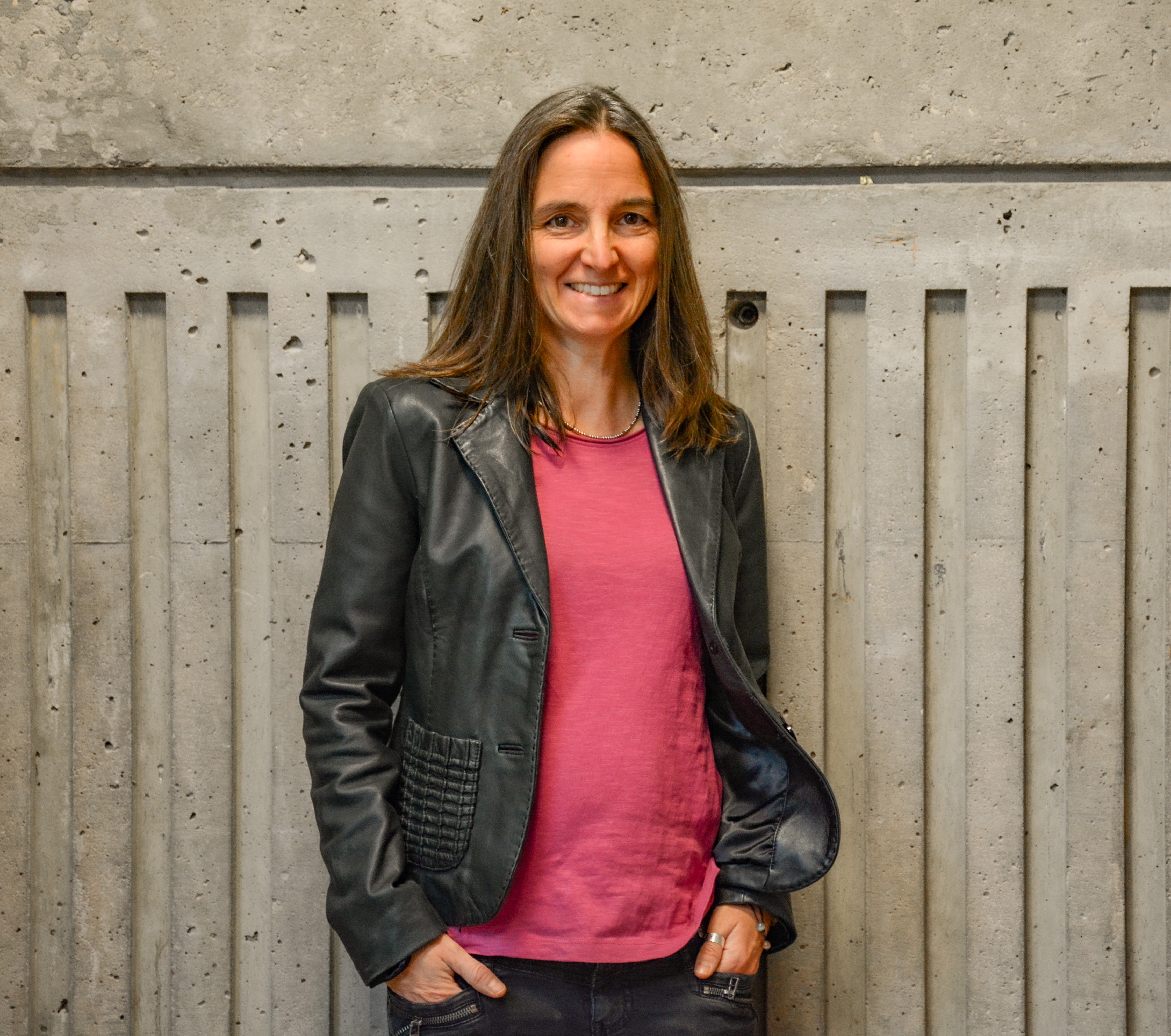
Sandra Zilles is a Professor and Canada Research Chair (Tier 1) in Computational Learning Theory at the University of Regina's Department of Computer Science. She holds adjunct appointments at the University of Waterloo and collaborates with the Alberta Machine Intelligence Institute (Amii). Her research focuses on theoretical computer science and artificial intelligence, particularly interactive learning models, formal language theory, and heuristic search algorithms. Her research integrates computational learning theory, formal language theory, and discrete artificial intelligence structures. Key interests include: Machine teaching with limited data Learnability of pattern languages and automata Graph-theoretic approaches in AI Her work bridges theoretical frameworks with applications in medical imaging, bioinformatics, and game theory. Zilles has received numerous honors including: NSERC Canada Research Chair (Tier 1, 2022-2029) Royal Society of Canada College membership Best Paper Awards (KI 2012, ALT 2003, COLT 2002) She mentors over 50 students and postdocs through her research group. Current projects explore symbolic automata, collaborative learning, and geometric teaching models. Her lab maintains international collaborations with institutions in Germany, Canada, and the US.
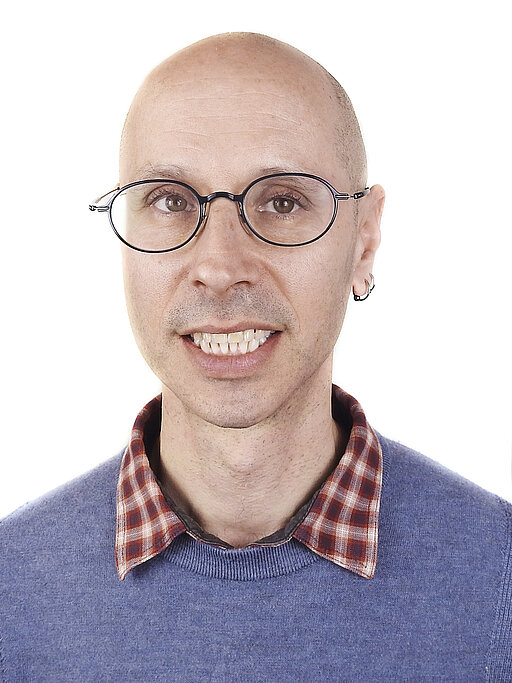
Lluis Vena Cros is a distinguished researcher in the Department of Mathematics at Universitat Politècnica de Catalunya - BarcelonaTech (UPC-BarcelonaTech), affiliated with the Faculty of Mathematics and Statistics. He is a core member of the GAPCOMB research group, which specializes in Geometric, Algebraic and Probabilistic Combinatorics. His research spans multiple domains within combinatorics, with particular emphasis on graph theory, algebraic combinatorics, geometric combinatorics, and probabilistic combinatorics. Vena Cros has made significant theoretical contributions to the understanding of graph homomorphisms, Tutte polynomials, Ramsey theory, and extremal combinatorial structures. His work often explores the deep connections between combinatorial objects and other mathematical disciplines such as topology, algebra, and discrete geometry. An analysis of his recent publications reveals a consistent focus on combinatorial structures with applications across multiple mathematical domains. His work on Tutte polynomials for various graph structures demonstrates a unifying approach to graph invariants, while his research in Ramsey theory explores structural properties of large combinatorial objects. The recurring theme across his publications is the investigation of extremal properties and computational aspects of combinatorial configurations. Vena Cros actively participates in multiple research projects including 'Structure, Randomness and Computational Methods in Extremal Combinatorics,' 'COntemporary COmbinatorics and Applications (COCOA),' and the 'Grup GAPCOMB de la UPC.' These projects involve collaborations with numerous researchers across Spain and internationally, reflecting his significant standing in the combinatorial mathematics community. His work has been supported by various funding bodies including the Spanish State Research Agency and the European Union's Horizon 2020 program. As a member of the GAPCOMB research group, Vena Cros contributes to a vibrant mathematical community focused on advancing combinatorial theory and its applications. The group maintains strong connections with other research centers and regularly participates in international conferences and collaborative projects, fostering the exchange of ideas across the global combinatorial mathematics community.
Jesse Ratzkin is a Lecturer at the University of Würzburg's Chair of Mathematics VI (Mathematics in the Natural Sciences). He holds a PhD from the University of Washington (2001) and a B.A. from UC Berkeley (1995). His research focuses on geometric analysis, including mean curvature, Q-curvature, eigenvalues of the Laplace-Beltrami operator, and isoperimetric inequalities. He has held academic positions globally, including a tenured role at the University of Cape Town (2010–2016). His research has been funded by grants such as the National Research Foundation of South Africa (2013–2016) and NSF fellowships. Notable publications include works on Q-curvature metrics, Sobolev inequalities, and geometric flows. He actively participates in academic service, including editorial roles and organizing international conferences. Teaching spans institutions like the University of Cape Town, where he designed courses in PDEs, linear algebra, and complex analysis. He has supervised PhD students like Murray Christian and mentored over 8 final-year projects. His outreach efforts include high school math programs in South Africa and Ireland.
Alberto Raffero is an Associate Professor at the University of Turin, specializing in Differential Geometry and related fields. His research focuses on geometric structures such as G2-manifolds, SU(3)-structures, and calibrated geometries, with applications to mathematical physics and supersymmetry. He has published on topics including gradient maps on probability measures, conformal calibrated G2-manifolds, and coupled SU(3)-structures. He has actively participated in academic events, organizing workshops like the Informal Geometry Workshop in 'Paradiso' (2018) and speaking at conferences such as Geometry Meets Strings (2024) and the MGT²: Milano-Grenoble-Torino Meeting in Geometry and Topology (2023). His seminars cover advanced topics like closed G₂-structures, Laplacian solitons, and potential theory in calibrated geometry. No scientific awards are listed in the provided materials. His work integrates pure geometric analysis with interdisciplinary connections to theoretical physics, particularly in supersymmetric frameworks.
John M. Lee is a mathematician whose research focuses on differential geometry and geometric analysis, with significant contributions to CR manifolds, the Yamabe problem, Einstein metrics, and asymptotically hyperbolic manifolds. His work frequently appears in top-tier mathematics journals and involves collaborations with prominent researchers in the field. Research Interests: Lee's primary areas of investigation include geometric partial differential equations, conformal geometry, mathematical general relativity, and complex manifold theory. His research bridges pure differential geometry with applications in theoretical physics, particularly in the study of Einstein's field equations. Publication Trends: Lee's publications demonstrate a consistent focus on geometric structures with asymptotic behavior, boundary regularity problems, and the interplay between conformal geometry and Einstein metrics. Recent work emphasizes Sobolev-class asymptotics and constraint equations in general relativity. Collaborations: Frequent collaborators include Paul T. Allen, James Isenberg, Iva Stavrov Allen, C. Robin Graham, and David Jerison.
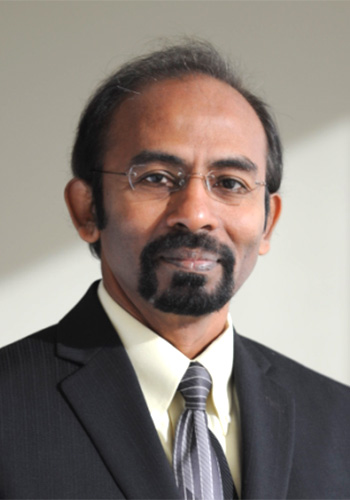
Dr. Robello Samuel is an Adjunct Professor in the Department of Petroleum Engineering at the University of Houston's Cullen College of Engineering, concurrently holding this position for over 12 years while serving as a Technology Fellow at Halliburton. With 43 years of multi-disciplinary experience in oil/gas drilling operations, he specializes in drilling engineering innovations and well design. Education: Ph.D. in Petroleum Engineering, University of Tulsa M.S. in Petroleum Engineering, University of Tulsa M.S. in Mechanical Engineering, College of Engineering Guindy (Madras) B.S. in Mechanical Engineering, University of Madurai Research Focus: Dr. Samuel's work spans drilling optimization, wellbore mechanics, torque-drag modeling, vibration analysis, geothermal well design, and AI applications in drilling engineering. His research integrates field experience with computational methods to solve complex drilling challenges. Publications: His extensive publication record (150+ papers/books) focuses on drilling mechanics, well design innovations, and predictive modeling. Recent works emphasize machine learning applications, real-time drilling optimization, and sustainable energy solutions like geothermal well engineering. Awards & Honors: SPE International Drilling Engineering Award SPE Distinguished Lecturer (2014) SPE Honorary Member Award AIME Honorary Member Award Gulf Coast SPE Drilling Engineering Award (2013) SPE Distinguished Member Professional Leadership: Serves on editorial boards for SPE Research Partnership to Secure Energy for America (RPSEA), Ocean Energy Safety Institute, and SPE Research & Development Advisory Board. Regularly delivers keynote addresses at major energy conferences worldwide.
Prof. dr. Martin van Hecke is a group leader at the FOM Institute AMOLF in Amsterdam and a professor of physics at Leiden University. He obtained his PhD in theoretical physics from Leiden University in 1996 and has since led interdisciplinary research at the intersection of experiments, simulations, and theory in soft matter and mechanical metamaterials. Professor of Physics, Leiden University Part-time Group Leader, AMOLF PI of the 'Designer Matter' and 'Modern Mechanics' initiatives His research focuses on harnessing disorder and frustration in materials to design systems where complex behavior emerges, particularly in mechanical metamaterials capable of storing and processing information. Key areas include pattern formation, origami-inspired design, jamming, and the inverse problem in material science. Notable scientific awards include the Vici grant (2011) and the ERC-Advanced grant (2021). His group at AMOLF actively trains PhD students such as Bernat Dura Faulí, Colin Meulblok, and Margot Teunisse, while pioneering collaborations in programmable materials and soft robotics. Selected publications highlight his work on emergent memory , geometric control , non-Abelian mechanics , and information processing in materials . His research infrastructure leverages the AMOLF NanoLab and Transmission Electron Microscope (TEM) facilities.
Xiaojun Huang is a Distinguished Professor of Mathematics at Rutgers University, affiliated with the Department of Mathematics within the School of Arts and Sciences. His research focuses on Complex Geometry, Several Complex Variables, and Partial Differential Equations, with a specialization in CR Geometry and hyperbolic space mappings. He holds an office in Hill Center 712 on Busch Campus and can be contacted via huangx@rutgers.edu. Dr. Huang's work bridges complex analysis and differential geometry, addressing topics such as holomorphic isometries, rigidity phenomena, and singularities in CR structures. His contributions span theoretical advancements in hyperbolic space mappings, invariant metrics, and geometric analysis of complex manifolds. Though no awards are explicitly listed, his prolific publication record reflects sustained academic excellence. His research portfolio includes over 50 peer-reviewed articles, with recent work exploring flattening CR singularities, volume-preserving mappings in Hermitian symmetric spaces, and boundary characterization of holomorphic isometries. Collaborators include leading mathematicians like Ji, Yin, and Xiao. Huang's expertise is further demonstrated through his role as thesis advisor, though specific advisee names are not documented here. He maintains an active research program supported by grants (details unspecified) and collaborates internationally. His home page and institutional profile highlight academic service, including editorial roles and seminar participation.
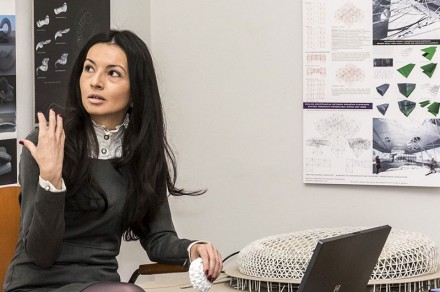
Jelena Milošević is an Assistant Professor at the Department of Architectural Technologies, University of Belgrade - Faculty of Architecture. She serves as Vice-Dean for Teaching and Student Affairs and specializes in structural systems, spatial structures, morphology, and optimization of structures. Her research combines computational design, digital fabrication, and sustainable construction methods. Education: Graduated in Architecture, University of Belgrade (2006) Enrolled in doctoral studies (2009) Her research focuses on generative design approaches for architectural structures, performance-based optimization, and applications of 3D printing in construction. She investigates biomimetic pattern applications in structural design and develops parametric workflows for complex geometries. Recent work explores circular economy potentials in architectural production through recycled materials and additive manufacturing. Publications demonstrate a strong focus on digital fabrication technologies in architectural education and practice. Recent articles examine hybrid pedagogical approaches integrating 3D printing technologies into design studios, material efficiency in additive-manufactured structural systems, and sustainable applications of recycled materials in digital fabrication. She has participated in research projects including 'Development and application of scientific methods in design and construction of highly economical structural systems using new technologies' funded by the Ministry of Education, Science and Technological Development of Serbia.
Craig van Coevering is an Associate Professor in the Department of Mathematics at Boğaziçi University. He holds a Ph.D. from Stony Brook University (2006), an M.S. from Portland State University (1998), and a B.A. from Reed College (1993). His primary research focuses on differential geometry, particularly complex and Riemannian geometries. His work explores deformation theory, stability analysis, and geometric structures including Calabi-Yau metrics, Sasakian manifolds, and extremal Kähler metrics. Research integrates techniques from partial differential equations, geometric analysis, and algebraic geometry to investigate Ricci-flat spaces, toric varieties, and hyperkähler manifolds. Publications demonstrate consistent focus on geometric flows, Einstein metrics, and non-compact manifolds, with recent emphasis on variational methods and CR geometry. No awards or student advising details are provided.
Santiago Badia is a Full Professor of Computational Science and Engineering at Universitat Politècnica de Catalunya (UPC), holding an adjoint researcher position at the International Center for Numerical Methods in Engineering (CIMNE). He leads the Large Scale Scientific Computing (LSSC) group at CIMNE, focusing on finite element methods, numerical analysis, and high-performance computing. His research emphasizes fluid dynamics, multiphysics problems, and scalable solvers for large-scale systems. Previously, he worked at Politecnico di Milano and Sandia National Labs. He developed the FEMPAR software framework, a parallel finite element tool for PDE simulations, achieving landmark scalability (e.g., 60 billion unknowns on 458,672 cores). FEMPAR is recognized in the High-Q Club of European codes. His expertise includes discontinuous Galerkin methods, XFEM, and domain decomposition preconditioners. Research interests span metal additive manufacturing, superconductor devices, and nuclear engineering applications. Awards include FEMPAR's High-Q Club inclusion. He advises PhD and MSc students (e.g., Jesus Bonilla, Eric Neiva, Marc Olm) and has open positions in postdoc/PhD levels. His team includes researchers like Javier Principe and Alberto Martín. Ongoing projects involve advancing parallel algorithms, multiphysics simulations, and software scalability for exascale computing.
Yun Fu is a tenured Professor in the Department of Electrical and Computer Engineering at Northeastern University, with a joint appointment in the Khoury College of Computer Science. He has established himself as a leading researcher in Artificial Intelligence, with over 500 publications in top-tier venues including IEEE/ACM transactions and major AI conferences. His work spans both theoretical foundations and practical applications, with significant impact in computer vision and machine learning. Professor Fu earned his Ph.D. in Electrical and Computer Engineering from the University of Illinois at Urbana-Champaign. His academic career progressed from Assistant Professor at SUNY Buffalo to his current position as tenured Professor at Northeastern University, where he has held appointments since 2012. His educational background includes a Beckman Graduate Fellowship at UIUC (2007-2008). His research focuses on advancing Artificial Intelligence with particular emphasis on Computer Vision, Pattern Recognition, and Machine Learning. His seminal work includes the "Residual Dense Network for Image Super-Resolution" presented at CVPR 2018, which was ranked among the Top 10 Most Influential CVPR papers. His research interests span image processing, anomaly detection, multimodal learning, and trajectory prediction, with applications ranging from healthcare to consumer technology. Analysis of his recent publications reveals a strong trend toward developing efficient and robust AI systems that bridge computer vision with language understanding. His work increasingly focuses on multimodal learning, trajectory prediction for multi-agent systems, anomaly detection in complex environments, and model validation techniques for black-box systems, while maintaining practical applications in real-world scenarios. Professor Fu's extensive recognition includes: Fellow of IEEE (2018), OSA (2019), SPIE (2018), IAPR (2016), AAIA (2021), and AAAI (2025) Member of Academia Europaea (2022) and European Academy of Sciences and Arts (2023) Fellow of National Academy of Inventors (2023) Multiple Young Investigator Awards from NAE, ONR, ARO, IEEE, ACM, and INNS 12 Best Paper Awards from major conferences Industrial Research Awards from Google, Amazon, Samsung, JPMorgan, and others Professor Fu has successfully mentored numerous Ph.D. students who now hold prominent positions in academia and industry at institutions including Amazon, Microsoft, Meta, Adobe, and major universities. His entrepreneurial ventures include founding Giaran (acquired by Shiseido in 2017) and co-founding TVision Insights, demonstrating his commitment to translating research into real-world impact. He has secured significant research funding from both government agencies and industry partners. As the PI and Founding Director of the SmiLe Lab at Northeastern University, Professor Fu leads a dynamic research group focused on advancing the state-of-the-art in AI and Computer Vision. The lab fosters interdisciplinary collaboration across computer science, electrical engineering, and applied mathematics, with ongoing projects in efficient deep learning, multimodal understanding, and practical AI applications.
Prof. Peter Matthew Magyar is an Associate Professor in the Department of Mathematics at Michigan State University (MSU). He holds a B.A. in Mathematics from Princeton University (summa cum laude, 1986) and a Ph.D. in Mathematics from Harvard University (1993, advised by Joseph N. Bernstein). Before joining MSU in 2000, he held postdoctoral and visiting positions at the University of Utrecht (Netherlands), Université de Paris VII, Northeastern University, and Brandeis University. His research focuses on representation theory, algebraic combinatorics, and algebraic geometry, with emphasis on Lie groups, loop groups, Schubert varieties, and combinatorial structures like Young tableaux and Littelmann paths. Education: Princeton University, B.A. Mathematics, 1986 Harvard University, Ph.D. Mathematics, 1993 Research Interests: Representation theory of semi-simple complex Lie groups Algebraic combinatorics (Young tableaux, Littelmann paths) Schubert calculus and affine Schubert polynomials Geometry of flag varieties and affine Grassmannians Honors: NSF Graduate Fellowship (1986-89) NSF Postdoctoral Fellowship (1995-98) NSF Grants DMS-0405948 (2004-07) and DMS-0703524 (2007-10) Teaching: Courses include graduate combinatorics, abstract algebra, discrete mathematics, and honors calculus. Developed a daily-quiz system for upper-level courses. Collaborations: Works with researchers such as V. Lakshmibai, P. Littelmann, A. Zelevinsky, and others on geometric and combinatorial representation theory. Outreach: Participates in the Kinawa-Chippewa Math Circle, offering modular arithmetic and cryptography workshops for students.
Joseph Landsberg is the Owen Professor and Professor in the Department of Mathematics at Texas A&M University , affiliated with the College of Arts & Sciences . His research focuses on Algebraic Geometry, Differential Geometry, and their applications to computational complexity, particularly matrix multiplication and tensor analysis. He has contributed to geometric complexity theory, secant varieties, and the study of symmetric tensors. Education: Ph.D., Mathematics, Duke University, 1990 Habilitation, Université de Toulouse, 1997 B.Sc. and M.Sc., Brown University, 1986 Research Interests: Landsberg explores the geometry of tensors, matrix multiplication algorithms, and complexity theory. His work bridges algebraic geometry, representation theory, and computational problems, with applications in quantum computing and cryptography. Recent studies include secant varieties, border rank analysis, and symmetry exploitation in tensor networks. Grants & Awards: AF: Small grants (2022, 2018) for complexity theory and matrix multiplication research Labs & Affiliations: Affiliated with the Institute for Applied Mathematics and Computational Science (IAMCS) at Texas A&M. His work intersects with interdisciplinary teams in computational mathematics and theoretical physics.
Warwick Tucker is a Professor in the School of Mathematics at Monash University. He holds a PhD in Mathematics from Uppsala University (1998) and a Docent qualification (2004). His research focuses on dynamical systems, chaos theory, and computer-assisted proofs with applications to complex systems and artificial intelligence. Key contributions include rigorous analysis of the Lorenz attractor, validation of numerical methods for differential equations, and studies on Julia sets and celestial mechanics. He leads a major project on non-hyperbolic dynamics funded until 2026. Notable awards include the EMS Prize (2004) and Moore Prize (2002). Collaborations span global institutions including École Normale Supérieure de Lyon. His work bridges pure mathematics with computational tools, emphasizing algorithmic proof techniques and validated numerical analysis.