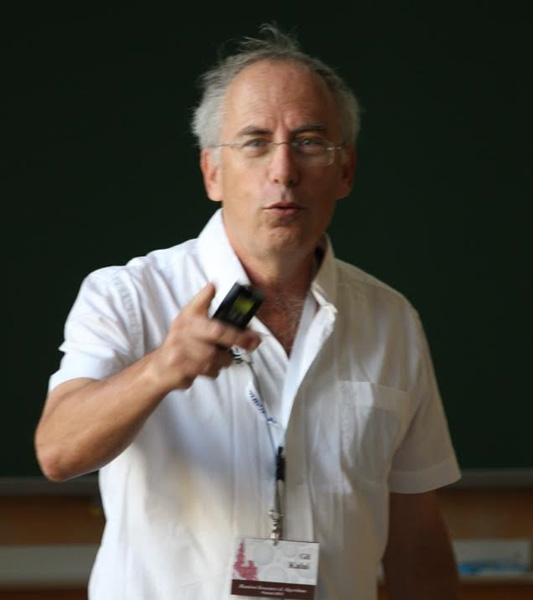
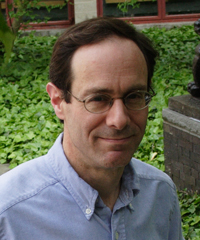
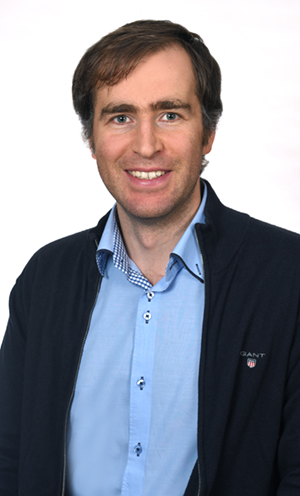
Brett Kolesnik is a Research Fellow in the Department of Statistics at the University of Warwick. His research focuses on probability theory, random structures, bootstrap percolation, and interactions with combinatorics. He has held postdoctoral fellowships at UC Berkeley, San Diego, and the University of Oxford, and was a Senior Demy at Magdalen College. His work includes organizing workshops on bootstrap percolation and collaborating with leading researchers in probability and combinatorics. Education: PhD in Mathematics from the University of British Columbia (advised by Omer Angel). Notable awards include the NSERC Postdoctoral Fellowship and the Florence Nightingale Bicentennial Fellowship in Statistics. Research interests span bootstrap percolation models, random graph dynamics, and stochastic processes. Recent work includes studies on Brownian map geometry, tournament score sequences, and Coxeter group structures. Selected articles explore topics such as critical beta-splitting processes, Catalan percolation, and random walks on algebraic structures. His publications appear in top journals like Electronic Journal of Probability and Annals of Applied Probability . Awards include the Florence Nightingale Fellowship and NSERC Postdoctoral Fellowship. Professional involvement includes organizing the 2024 BIRS workshop on Bootstrap Percolation and contributing to interdisciplinary collaborations in probability and combinatorics.
Megan Kerr serves as the Katharine and Claudine Malone '63 Professor of Mathematics at Wellesley College, where she teaches across the mathematics curriculum from calculus to advanced topics in geometry. Her academic home is within the Mathematics & Statistics Department at this prestigious women's liberal arts college. Her educational journey began as an undergraduate at Wellesley College, where she later returned as faculty, completing a full circle in her academic career. She earned her Ph.D. from the University of Pennsylvania under the supervision of Wolfgang Ziller, with research focused on Homogeneous Einstein Metrics. Professor Kerr's research centers on global differential geometry, particularly exploring the interplay between curvature constraints and large symmetry groups. She specializes in homogeneous and low-cohomogeneity spaces, investigating fundamental questions about the existence of geometric structures, their rarity or commonality, and potential obstructions. Her work bridges the analytic concept of curvature with the algebraic framework of Lie groups, and she has recently expanded into geometric analysis where topology plays a significant role. Analysis of her publication record reveals a consistent focus on homogeneous Einstein metrics across three decades, with particular attention to curvature properties, symmetry constraints, and classification problems in both positive and negative curvature settings. Her research has evolved from foundational work on symmetric spaces to more complex non-symmetric examples and specialized curvature conditions, demonstrating both depth and breadth in differential geometry. Katharine and Claudine Malone '63 Professor of Mathematics Radcliffe Institute Fellowship As an alumna of Wellesley College, Professor Kerr maintains a strong commitment to encouraging women in mathematics. She teaches a diverse range of courses including calculus, linear algebra, combinatorics, real analysis, non-Euclidean geometry, differential geometry, topology, knot theory, and matrix groups as an introduction to Lie groups. Her teaching philosophy emphasizes developing mathematical understanding and confidence that benefits students regardless of their major. Her research has taken her to international destinations including Australia, Germany, and Mexico, reflecting the global nature of her scholarly collaborations.
Shirshendu Ganguly is an Associate Professor in the Department of Statistics at the University of California, Berkeley. His research focuses on probability theory, statistical physics, and their applications, including percolation models, phase transitions, Markov chains, and random graphs. He holds a PhD in Mathematics from the University of Washington and has held postdoctoral positions at UC Berkeley. Ganguly has been recognized with the 2019 Sloan Research Fellowship. Education: PhD in Mathematics, University of Washington, 2011–2016 Miller Postdoctoral Fellow, UC Berkeley, 2016–2018 Research Interests: Probability Theory, Statistical Mechanics, Markov Chains, Random Graphs, Percolation Theory, Sparse Combinatorial Structures His work explores geometric and probabilistic phenomena in disordered systems, including polymer models, self-organized criticality, and random matrix theory. He has advised multiple PhD students and contributes to teaching advanced probability courses at Berkeley. Awards: 2019 Sloan Research Fellowship
Brandon Seward is an Associate Professor of Mathematics at the University of California San Diego (UC San Diego), where they conduct research and teach in the Department of Mathematics. They use the pronouns they/them or he/him . Education Ph.D. in Mathematics, University of Michigan , 2015 Research Interests Their work lies at the intersection of ergodic theory, topological dynamics, descriptive set theory, and group theory . They investigate geometric, combinatorial, and entropic properties of actions of countable groups, with special emphasis on the divide between amenable and non-amenable groups. Publications & Research Impact Across 27 refereed papers (2014-2024), Seward has advanced entropy theory for non-amenable groups, Borel combinatorics of group actions, and structure theorems for measure-preserving actions. Their work has appeared in top journals such as Inventiones Mathematicae , Journal of the American Mathematical Society , and Duke Mathematical Journal . Scientific Awards Michael Brin Dynamical Systems Prize for Young Mathematicians (2018) – awarded for outstanding contributions to dynamical systems. Teaching & Mentorship Seward regularly teaches core undergraduate courses (e.g., Math 142A Introduction to Analysis) and organizes the UC San Diego Group Actions Seminar , a weekly research forum featuring international speakers. They serve as a faculty mentor and are actively involved in graduate student supervision and seminar coordination. Contact & Office Email: bseward@ucsd.edu Office: AP&M 5739, 9500 Gilman Drive, La Jolla, CA 92093-0112
Allan Greenleaf is Professor of Mathematics and Co-director of Graduate Studies at the University of Rochester's Department of Mathematics, School of Arts & Sciences. He received his AB/SM from the University of Chicago (1977) and PhD from Princeton University (1981), followed by an NSF Postdoctoral Fellowship at MIT. His research specializes in harmonic analysis and microlocal analysis applied to integral geometry and inverse problems. Recent work focuses on degenerate Fourier integral operators, X-ray transforms underlying CAT scanning, and transformation optics for invisibility/cloaking. Publications demonstrate consistent exploration of configuration sets, microlocal techniques in tomography/seismology, and quantum integrable systems. Awards: Sloan Research Fellowship (1990-91)
Kay Jin Lim serves as Senior Lecturer and Director of the MSc (Analytics) program at Nanyang Technological University's School of Physical & Mathematical Sciences, where he contributes significantly to both academic leadership and mathematical research within the Division of Mathematical Sciences. His educational foundation includes a B.Sc. (2005), M.Sc. (2007), and Ph.D. (2009) from the National University of Singapore, followed by doctoral research at the University of Aberdeen under David John Benson's supervision. Lim's research centers on representation theory of finite dimensional algebras, with deep connections to algebraic combinatorics and algebraic geometry. His work explores modular representation theory of symmetric groups, Specht modules, and Lie modules, emphasizing combinatorial structures and geometric interpretations in positive characteristic settings. This specialized focus has established him as a contributor to advanced algebraic frameworks. Analysis of his publication trajectory (2013-2025) reveals consistent advancement in understanding module complexities, rank varieties, and symmetric group representations, with increasing emphasis on interdisciplinary connections between algebraic combinatorics and geometric methods. His collaborative approach with international researchers like Karin Erdmann and David Benson demonstrates engagement with cutting-edge developments in the field. Scientific awards: No awards, fellowships, or major prizes are documented in the available information. Lim maintains an active supervisory role with four doctoral students: Yu Jiang (graduated May 5, 2021), Jialin Wang (graduated March 31, 2024), and current candidates Kua Hao Yan Manzu and Chen Siyuan. His teaching portfolio spans foundational to advanced algebra courses including MH2220 Algebra I, MH3220 Algebra II, and specialized topics in Homological Algebra, reflecting his commitment to mathematical education at multiple levels. He operates within NTU's vibrant mathematical research ecosystem, maintaining significant collaborations with leading algebraists globally while directing the MSc (Analytics) program to integrate theoretical mathematics with practical analytical applications.
Laura Anderson is an Associate Professor in the Department of Mathematics at Binghamton University. She holds a Ph.D. from MIT (1994) and has been affiliated with Binghamton since 2001. Her research focuses on Combinatorics and Topology, with a specialization in matroid theory, hyperplane transversals, and topological combinatorics. She teaches advanced courses such as Introduction to Combinatorics (Math 511) and Discrete Mathematics (Math 314). Her academic contributions include groundbreaking work on oriented matroids, combinatorial Grassmannians, and hyperfield applications. Anderson has advised multiple Ph.D. students, including Olakunle Abawonse, Ulysses Alvarez, and Leandro Junes, whose theses explore topics like matroid extensions and tropical phased matroids. She actively participates in academic conferences, co-organizing the Binghamton University Graduate Conference in Algebra and Topology (BUGCAT). Anderson’s research integrates algebraic topology with discrete mathematics, addressing geometric realizations, hyperfield structures, and topological invariants. Her pedagogical innovations include experimenting with flipped classroom methods in calculus education. She maintains an active presence in academic service, contributing to journal reviews and editorial work in combinatorial geometry.
David Perkinson is a Professor of Mathematics at Reed College, where he holds a position in the Department of Mathematics. His research focuses on combinatorics, algebraic geometry, and discrete mathematics, with a particular emphasis on sandpile models, graph theory, and matroid theory. He is the author of the textbook *Divisors and Sandpiles: An Introduction to Chip-Firing*, which explores the combinatorial theory of chip-firing on graphs. Perkinson has also developed software tools like the Sandpile Java App, which visualizes and analyzes the Abelian Sandpile Model. He organizes the Cascade Lectures in Combinatorics (CALICO), a series of conferences funded by the National Science Foundation, aimed at fostering collaboration among researchers in combinatorics. His work bridges discrete mathematics with algebraic geometry, emphasizing connections between graph theory and geometric structures. Perkinson teaches advanced courses in analysis and contributes to the academic community through his research on topics such as divisor theory on graphs, sandpile groups, and combinatorial game theory. His recent publications (2015–2024) address matroid theory, sandpile dynamics, and applications of algebraic methods to discrete systems.
Gil Kalai is a Professor of Mathematics at the Hebrew University of Jerusalem since 1992, where he holds the Henry and Manya Noskwith Chair. He also serves as an Adjunct Professor of Mathematics and Computer Science at Yale University since 2004 in a long-term part-time visiting position. His academic career includes visiting positions at prestigious institutions including MIT, Cornell, IAS Princeton, Berkeley, Bell-labs, IBM, and Microsoft. Professor Kalai's research spans multiple areas within mathematics and theoretical computer science. His work in combinatorics encompasses geometric, probabilistic, and topological approaches. He has made significant contributions to the study of convex sets and polytopes, linear programming, and theoretical computer science. His influential 1988 paper with Kahn and Linial on Boolean functions pioneered applications of Fourier analysis in theoretical computer science. Kalai's research has evolved to include the application of Fourier analysis to thresholds, influences, symmetries, noise, percolation, and social choice. He has developed theories in algebraic shifting and studied face-numbers and other combinatorial invariants of polytopes. His work on the diameter of polytopes and randomized simplex algorithms has been influential in optimization theory. In 1993, his collaboration with Kahn produced a groundbreaking counterexample to Borsuk's Conjecture in 1325 dimensions. Professor Kalai's publications reveal a consistent focus on the intersection of combinatorics, geometry, and theoretical computer science. His work shows a progression from foundational combinatorial geometry to increasingly sophisticated applications of harmonic analysis in discrete mathematics. The recurring themes across his 30+ year career include Boolean functions, polytope theory, and probabilistic methods in combinatorics, demonstrating remarkable coherence in his research trajectory. 2016 European congress of Mathematics, plenary speaker 2013 ERC advanced grant 2012 Rothschild Prize 1994 International Congress of Mathematicians invited section talk, Zurich 1994 Fulkerson Prize 1993 Erdos Prize 1992 Polya Prize Though specific details of his advising are not provided in the source material, Kalai has written over 70 scientific papers and maintains an active research blog entitled "Combinatorics and More." His 2013 ERC advanced grant indicates significant research funding for his work. His extensive collaborations with researchers across multiple institutions suggest a robust research program with numerous PhD students and postdoctoral researchers, though specific names are not mentioned in the provided texts. Professor Kalai maintains active research connections across multiple institutions including Hebrew University, Yale, and various research centers worldwide. His work bridges pure mathematics and theoretical computer science, creating a unique interdisciplinary research environment that influences both fields.
Prof. Dr. Ieke Moerdijk is a distinguished Professor of Mathematics at the Mathematical Institute of Utrecht University, part of the Faculty of Science. Previously, he held positions at Radboud University (2011–2016) and has been affiliated with institutions like the University of Chicago, Cambridge, and the University of Amsterdam, where he earned his PhD in Mathematics (1985, Cum Laude). His research focuses on algebraic and differential topology, homotopy theory, and applications of topological structures to mathematical logic. He is renowned for co-authoring influential books such as Sheaves in Geometry and Logic (with S. Mac Lane) and Introduction to Foliations and Lie Groupoids (with J. Mrcun). Moerdijk has received prestigious awards including the Spinoza Prize (2012) and the Descartes-Huygens Prize (2011), and is a member of the KNAW and Academia Europaea. His current research emphasizes the theory of dendroidal sets and homotopy operads. He has held visiting positions at institutions like Cambridge, McGill, and Sydney. His academic contributions span editorships, teaching, and supervising numerous students. Moerdijk’s work bridges foundational mathematics with advanced categorical and topological frameworks, influencing areas from algebraic geometry to logic. Education: Bachelor’s/Master’s in Mathematics, Philosophy, and Linguistics at University of Amsterdam PhD in Mathematics, University of Amsterdam (1985) Awards: Spinoza Prize (2012), Descartes-Huygens Prize (2011) Member of KNAW (2006), Academia Europaea (2014) Huygens Fellowship (1986), PIONIER Grant (1995) Research Interests: Algebraic topology, homotopy theory, operads, category theory, and mathematical logic. Moerdijk’s publications include foundational works on dendroidal sets and simplicial methods, with recent contributions addressing ∞-operads and univalent completion. His research often explores connections between algebraic structures and topological spaces, with applications to higher category theory.
Olga Kharlampovich is a Professor at the City University of New York (CUNY), affiliated with Hunter College and the Graduate Center. She specializes in group theory and geometric group theory, with a focus on group actions on trees, Bass-Serre theory, and related algebraic structures. She taught a mini course titled 'Groups acting on trees' in May 2021, covering topics such as R-trees, Λ-trees, and structural theorems for groups acting on trees. The course was delivered virtually and included lectures on amalgamated products, HNN extensions, and applications to the elementary theory of free groups. Her research interests encompass geometric and combinatorial group theory, with contributions to Rips' theorem, ordered abelian groups, and the interplay between group actions and tree-like structures. She has collaborated on foundational papers exploring λ-trees and their role in algebraic topology and group theory. Access to her mini course was provided via Webex, with recordings available for the three lectures. The course was open to undergraduates, graduate students, faculty, and researchers interested in algebraic structures and geometric group theory.
David Jerison is a Professor of Mathematics at the Massachusetts Institute of Technology (MIT), where he conducts research in Fourier analysis and partial differential equations. His work focuses primarily on free boundary problems and, more recently, on internal Diffusion Limited Aggregation (internal DLA), a stochastic growth model. He maintains an active research program with numerous publications in leading mathematical journals. Professor Jerison's research spans several interconnected areas of mathematical analysis. His primary interests include Fourier analysis and partial differential equations, with particular emphasis on free boundary problems. In recent years, he has expanded his research to include internal Diffusion Limited Aggregation, a stochastic growth model that has connections to probability theory and mathematical physics. His work often bridges geometric analysis, spectral theory, and probabilistic methods, demonstrating the deep connections between different branches of mathematics. Analysis of Professor Jerison's recent publications reveals a consistent focus on geometric aspects of partial differential equations, particularly free boundary problems. His research shows progression from classical PDE theory toward more stochastic and probabilistic approaches, as evidenced by his work on internal DLA. The publications demonstrate interdisciplinary connections between mathematical analysis, probability theory, and mathematical physics, with applications ranging from geometric measure theory to quantum mechanics. Professor Jerison is actively involved in teaching and mentoring at MIT. He has taught courses including Differential Equations (18.03), Fourier Analysis and Applications (18.103), and Differential Analysis (18.155). He also directs the Summer Program for Undergraduate Research (SPUR), which is exclusively for MIT undergraduates, and organizes the mathematics section of the Research Science Institute (RSI) for high school students. His teaching materials are available through MIT's Open Courseware platform, indicating his commitment to educational outreach and accessibility.
Paata Ivanisvili is an Associate Professor at the University of California, Irvine (UCI), Department of Mathematics, School of Physical Sciences. His research focuses on Analysis, Probability, Harmonic Analysis, and Functional Analysis, with a particular emphasis on isoperimetric inequalities, functional inequalities, and discrete structures such as the Hamming cube. He has held visiting positions at institutions including the Hausdorff Research Institute for Mathematics and Princeton University. Ivanisvili has organized conferences such as the Dual Trimester Program at the Hausdorff Institute on Boolean Analysis in Computer Science (2024) and annual Summer/Fall Schools since 2021. He earned his PhD in Mathematics from Michigan State University (2015) and a BS from Saint Petersburg State University (2011). His research interests include sharp inequalities in analysis (e.g., Poincaré, Beckner, Ehrhard), hypercontractivity, and applications to discrete mathematics and probability. He has collaborated with prominent mathematicians such as Fedor Nazarov, Alexander Volberg, and Roman Vershynin. Notable awards include the NSF CAREER Award (2021–2025) and Simons Fellowship in Mathematics (2025–2026). Ivanisvili’s recent work explores the interface between harmonic analysis and discrete mathematics, including studies on additive energies, convex hulls of space curves, and learning theory. His articles frequently address foundational questions in geometric functional analysis, often using tools like Bellman functions and optimal control theory. He actively advises PhD students and has mentored visiting researchers at UCI.
Thomas Lam is a professor of mathematics at the University of Michigan , specializing in algebraic combinatorics, total positivity, and connections to mathematical physics. His work bridges cluster algebras, positive geometry, and integrable systems, with applications to scattering amplitudes in quantum field theory. Lam has collaborated extensively with physicists such as Nima Arkani-Hamed and mathematicians like Pavlo Pylyavskyy and Mark Shimozono. Key research areas: Cluster algebras, total positivity, electrical networks, positroid varieties, and quantum cohomology. Notable contributions: Defining polypositroids, proving regularity theorems for totally nonnegative flag varieties, and establishing cluster structures in braid varieties. Recent work focuses on positive geometries , including the amplituhedron and moduli spaces of points on projective lines, with implications for particle physics. His articles often explore dual graded graphs, K-theoretic Schubert calculus, and the interplay between combinatorics and algebraic structures. Lam's research has been supported by NSF grants, including DMS-0748636 and DMS-1249708 .
Maria Rita Casali is a Full Professor at the Department of Physical, Computer and Mathematical Sciences, University of Modena and Reggio Emilia. Her research focuses on geometry, topology, and mathematical structures, particularly in relation to PL-manifolds and colored tensor models. Teaching: Courses in Geometry, Discrete Mathematics, and Linear Algebra for Engineering and Strategic Sciences degrees. Research: Investigates combinatorial invariants (regular genus, G-degree, gem-complexity) for compact 4-manifolds, linking them to quantum gravity and tensor models. Publications: Recent works include studies on trisections of 4-manifolds, classifications via colored graphs, and combinatorial properties of the G-degree. Her contributions to crystallization theory and PL-manifold representation have advanced the understanding of geometric topology and its applications in theoretical physics.