Dr. Safet HadžiMuhamedović is a Research Fellow at the Department of Philosophy, University of Stirling. He is a key contributor to the Shared Sacred project, an interdisciplinary initiative based at the Cambridge Inter-Faith Programme, Faculty of Divinity, University of Cambridge, exploring religious plurality through landscape studies across five continents and one sea. His work bridges anthropology, philosophy, and environmental humanities. Research Focus: His research examines spatio-temporal dynamics of post-conflict societies, focusing on Bosnian Dinaric landscapes. He investigates memory practices in karstic geographies, ritual theory, and the persistence of genocide structures in the Balkans. His work connects environmental change with cultural identity through themes like 'Home, Housing & Communities' and 'Human Security, Conflict, Co-operation.' Publications & Presentations: Recent works include studies on fluid human-environment relationships (2024), underworlding methodologies (2024), and time anthropology in Bosnian landscapes (2022). He contributed to the Shared Sacred exhibition (2021) with photo-ethnographic analyses of sacred coexistence. Teaching: Though teaching details are sparse, he participates in summer schools like the Anthropology of Travel, Tourism and Pilgrimage (2019). His academic presence spans the Xenia Series (2020) and CRASSH conferences.
Boris Kaus is a Full Professor and Chair of Geophysics and Geodynamics at the Institute of Geosciences, Johannes Gutenberg University Mainz, Germany. His research focuses on understanding geological processes from grain scale to planetary scale using mathematical and numerical models. Funded by the German Research Foundation, European Research Council, and BMBF, his work spans lithospheric deformation, melt migration, fold-and-thrust belts, and high-performance computing applications in geosciences. His research interests center on geodynamic modeling of lithospheric processes, including subduction zones, mantle convection, and crustal deformation. Kaus develops novel numerical approaches to simulate complex geological phenomena, with emphasis on coupling between erosion, lithosphere dynamics, and mantle flow. His group creates specialized software for high-performance computing systems to tackle multi-scale geophysical problems. His scientific awards include the Paul Niggli Medal, EGU Arne Richter Award, multiple ERC grants (Starting, Proof-of-Concept, Consolidator), and the Carl Friedrich Gauss Lecturer honor. He has received recognition for editorial contributions including G-Cubed's Excellence in Refereeing award. ERC Consolidator Grant MAGMA (2018-2023) ERC Proof of Concept Grant SALTED (2016-2017) ERC Starting Grant MODEL (2010-2015) John von Neumann Excellence Project for HPC ETH Medal for Ph.D. thesis Kaus actively supervises graduate students and leads research projects funded by major European and German agencies. His group develops open-source software like GeophysicalModelGenerator.jl and maintains strong collaborations with international institutions including ETH Zürich and USC. Current projects focus on magma dynamics, lithospheric shear localization, and the development of advanced numerical methods for geodynamic simulations. The research group operates within the Geodynamics & Geophysics team at JGU Mainz, utilizing high-performance computing resources and collaborating with multiple European research initiatives including IMPRS and FORTHEM networks. Their laboratory specializes in numerical modeling of Earth systems with applications to tectonics, volcanology, and crustal evolution.
Dr. James F. O'Brien is a Professor of Computer Science at the University of California, Berkeley, affiliated with research centers including the Berkeley Artificial Intelligence Research Lab (BAIR) and the Visual Computing Lab (VCL). His research focuses on computer graphics, animation, physical simulation, and image forensics, with applications in film, gaming, and virtual reality. O'Brien pioneered destruction modeling techniques used in over 200 films and games, earning an Academy Award in 2015. He holds leadership roles in tech companies like Juice Labs and Get Klothed, and has advised on patent litigation cases. Education: PhD in Computer Science (Georgia Tech, 2000), MS (Georgia Tech, 1997), BS (Florida International University, 1992). Research Interests: Computer Animation & Simulation Image/Video Forensics Human Perception of Motion VR/AR Privacy & Motion Data Machine Learning Applications Awards: Recipient of the 2015 Academy Award for Technical Achievement, ACM Distinguished Scientist (2009), and MIT TR-35 Innovator (2004). His work spans over 50,000+ VR user studies and groundbreaking contributions to cloth simulation and destruction modeling. Current Projects: Exploring ethical implications of extended reality (XR) motion data, developing privacy-preserving VR systems, and advancing AI-driven animation techniques.
Shaun Murray serves as Associate Professor at The Bartlett School of Architecture, University College London, and Senior Lecturer at the University of Greenwich. He directs ENIAtype, a transdisciplinary architecture practice founded in 2011, and has been Editor-in-Chief of the international peer-reviewed journal Design Ecologies since 2010. At UCL, he also serves as Director of Admissions for the Architecture MArch program and oversees admissions processes for this highly competitive course. University College London, The Bartlett School of Architecture (current) University of Greenwich, School of Design (current) Carleton University, Ottawa (Visiting Professor 2017-2019) University of Kent (Senior Lecturer 2012-2016) Plymouth University (Director of Creative Design and Technology 2007-2011) Dr. Murray's research centers on architectural design through ecological thinking, with particular emphasis on drawing methodologies, landscape ecology, and surrealism in architecture. His work explores the agency of architectural communication methods, field theory relations, and non-linear design approaches that challenge conventional architectural practice. He investigates how ecological thinking can transform design processes and outcomes, particularly through mapping and choreographies that connect architecture with geological and material dynamics. His publication record reveals consistent engagement with ecological design frameworks and theoretical explorations of architectural practice. The articles demonstrate evolving focus from foundational theoretical work on telluric architecture (2012) through explorations of colonial impacts on landscape (2020) to recent investigations of power dynamics in architectural systems (2024). A strong thread connects his work to drawing as both methodology and outcome, with increasing attention to ecological systems thinking and transdisciplinary approaches across his career. Senior Fellow in Higher Education teaching qualification (SFHEA) 2024 Fellow in Teaching and Learning Support in Higher Education 2022 Dr. Murray has successfully supervised two PhD candidates to completion (Alan Pottinger and Georgios Loizos) and numerous MArch thesis students. His supervisory approach emphasizes ecological thinking and transdisciplinary methodologies, reflected in thesis topics ranging from surrealism in photography to posthuman architectural theory. He actively promotes diversity and inclusivity in architectural education through his admissions leadership and curriculum development work, with particular focus on enhancing student employability through innovative pedagogical approaches. He co-founded and participates in the Drawing Architecture Group (2019-present), an international research network connecting architects, theorists, and curators from US, Canada, and Europe. This group has produced multiple publications and exhibitions, with upcoming shows scheduled for New York at A83 Gallery in 2025. He also maintains involvement with the Planetary Collegium and AVATAR research group, contributing to transdisciplinary architectural research that bridges technology, ecology, and design practice.
Bedrich Benes is a Professor and Associate Department Head in the Department of Computer Science at Purdue University. He holds a Ph.D. and M.S. in Computer Science from Czech Technical University in Prague (1998 and 1991, respectively). His research focuses on generative methods for geometry synthesis, procedural modeling, simulation of natural phenomena, and additive manufacturing. He has published over 200 research papers and secured grants from organizations like the NSF, NASA, and DOE. Editor-in-Chief of Elsevier's Graphical Models Senior Member of ACM and IEEE Fellow of Eurographics Association Research interests include graphics, visualization, geometric modeling, and computational biology. He leads projects on tree digital twins, urban forestry modeling, and immersive VR/XR education. Advised students include Bosheng Li and Xiaochen Zhou, who recently defended their Ph.D. theses. Notable contributions include neural ranking algorithms for forest reconstruction and tools like Tree-D Fusion for tree dataset generation. His work bridges computer graphics with environmental science and agriculture.
Daniel Beat Müller serves as Professor at the Industrial Ecology Programme within the Department of Energy and Process Engineering at the Norwegian University of Science and Technology (NTNU), Trondheim. His office is located at Realfagbygget Gløshaugen (E4-120) with contact details daniel.mueller@ntnu.no and +4791897755. His research centers on analyzing human needs in relation to material/energy flows and environmental impacts, with two primary focus areas: (i) urban evolution and associated material flows for managing building/infrastructure stocks, and (ii) national/global metal cycles to identify supply constraint reduction strategies. His methodology integrates design, modeling, and decision-making through transdisciplinary stakeholder engagement. Müller teaches Material Flow Analysis and Systems Analysis of the Built Environment for Industrial Ecology and Civil Engineering Master's students. His research outputs demonstrate strong trends in circular cities, critical mineral management, and urban metabolism, with recent publications emphasizing building information modeling, electric vehicle battery systems, and phosphorus cycling. His work consistently addresses resource criticality within energy transition contexts. As (ad interim) chair of the International Society of Industrial Ecology’s MFA-ConAccount section, he contributes to methodological standardization. He previously served on the U.S. National Research Council’s Committee on Defense Stockpiles and remains active in Switzerland's National Research Programme 65 "New Urban Quality". Müller supervises numerous Master's and doctoral students, with thesis topics spanning lithium-ion battery recycling, building stock dynamics, and urban resource flows. His projects frequently involve industry collaboration for practical implementation of material stewardship strategies.
Lisa Grant Ludwig is a Professor in the Department of Population Health and Disease Prevention at the University of California, Irvine (UCI). She is a nationally recognized expert in earthquake science, focusing on translating geophysical research into policy for disaster risk reduction. Her work bridges seismology, public health, and policy implementation. PhD in Geology with Geophysics minor (Caltech) MS in Environmental Engineering Science (Caltech) BS in Applied Environmental Earth Science (Stanford) Dr. Ludwig's research centers on earthquake dynamics, particularly along the San Andreas Fault, advancing disaster resilience through innovative nowcasting techniques using AI and machine learning. Her publications demonstrate expertise in seismic hazard modeling, geodetic imaging, and community preparedness studies. Recent publications highlight AI-enhanced earthquake prediction (QuakeGPT), temporal-spatial nowcasting models, and applications of geodetic data for crustal deformation analysis. These works integrate machine learning with traditional seismological methods to improve hazard forecasting. President of Seismological Society of America NASA 2012 Software of the Year Medal Featured on Science magazine cover Congressional Testimony provider Active Federal Advisory Committee member Her interdisciplinary approach combines geophysics, public health policy, and computational science. Current projects focus on earthquake nowcasting, fault zone analysis, and developing accessible geospatial tools like GeoGateway for disaster response.
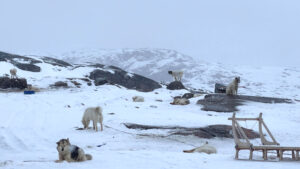
Dr. Sonia Rammer is a Professor at the University of Arts in Poznań, serving as Head of the Art Studio in an Intercultural Perspective at the Faculty of Artistic Education and Curating. She also holds significant administrative positions including Vice-Dean of the Faculty and Member of the Scientific Council. Her work uniquely bridges artistic practice with psychological insights, creating an interdisciplinary approach to art creation and education. Dr. Rammer's educational background demonstrates her dual expertise in both psychology and fine arts. She completed psychology studies at Adam Mickiewicz University (2003-2010), specializing in clinical psychology, alongside concurrent studies in painting and art education at the Academy of Fine Arts in Poznań. She earned her habilitation degree in visual arts and art conservation in 2019. Her research interests focus on the psychological dimensions of creativity, cross-cultural artistic exchange, and posthumanist perspectives. Rammer critically examines anthropocentric views through works that explore interspecies relationships and the fluid boundaries between human and non-human entities. Her art often emerges from international residencies in extreme environments like Greenland, Nepal, and Iceland, where she engages with local cultures and ecological contexts. Her recent artistic output shows a consistent exploration of Arctic themes, cultural translation, and identity transformation. The 'Woman Who Thought She Was a Dog' series (2022-2024) from her Greenland residency exemplifies her approach, using minimalist video installations to provoke reflection on species boundaries and human exceptionalism. Her work spans performance, video, photography, and installation, often incorporating cross-cultural misunderstandings as conceptual frameworks. As an educator since 2011, Rammer teaches psychology and psychology of creativity while mentoring students through her studio practice. Her leadership roles include chairing the Faculty Recruitment Committee and serving on the University Senate, demonstrating her commitment to academic development. Dr. Rammer maintains active international collaborations through prestigious residencies including Arctic Culture Lab (Greenland), Marpha Foundation (Nepal), and Baer Art Center (Iceland). She also collaborates with the Faculty of Geographical and Geological Sciences of Adam Mickiewicz University on artistic research in Spitsbergen, reflecting her commitment to interdisciplinary work.
Eduard Kamburjan is a Researcher at the University of Oslo , affiliated with the Reliable Systems (PSY) and Data and Knowledge Systems (DKM) research groups. His work bridges formal methods , digital twin engineering , and knowledge graph applications . Research interests include: Formal verification of hybrid systems using deductive methods Digital twin architecture with compositional correctness guarantees Semantic lifting and ontology-driven modeling for complex systems Concurrency analysis and non-determinism in program verification Interactive visualization as serious games for formal methods His 2024-2023 publications demonstrate expertise in digital twin reconfiguration , semantic interoperability , and knowledge-based runtime enforcement . Key contributions include Crowbar for active object verification and ABS simulator toolchain for model-driven engineering. Collaborations span institutions like Springer , ACM , and IEEE , with work featured in Lecture Notes in Computer Science (LNCS) , Software and Systems Modeling (SoSyM) , and Science of Computer Programming . His research integrates RDF data management , behavioral contracts , and modular analysis for distributed systems.
Maggie Cao is the David G. Frey Associate Professor of Art History at the University of North Carolina at Chapel Hill. She specializes in 18th-19th century American art within global contexts, focusing on intersections of art with technology, natural science, and economics. Her work includes two monographs: The End of Landscape in Nineteenth-Century America (2018) and Painting US Empire (2025). B.A. and Ph.D. in Art History from Harvard University (2006, 2014) Postdoctoral work at Columbia University’s Society of Fellows Her research examines globalization and artistic responses to modernity, including ecological temporality through Arctic photographs, geological time in etchings, and nonhuman time in art materials. Selected publications and projects span trompe l’oeil still lifes, media theory, and cultural artifacts linked to colonial systems. She has received prestigious fellowships from the National Humanities Center, Terra Foundation, Smithsonian, and Getty Research Institute. Undergraduate courses: Introduction to American Art, Art and Money, Making Material Histories (Makerspace) Graduate courses: Art and Environments, Media and Materiality
Ramon Arrowsmith is a Professor at Arizona State University's School of Earth and Space Exploration (SESE). His research focuses on earthquake geology, tectonic geomorphology, and active faulting, with a particular emphasis on leveraging high-resolution topography through initiatives like OpenTopography. He has over 35 years of experience in paleoseismology, geomorphic mapping, and fault zone analysis. Arrowsmith has held administrative roles such as Deputy Director of SESE and associate directorships in graduate studies and geological sciences departments. His work integrates remote sensing, lidar technology, and robotics to address geological hazards and landscape evolution. Key projects include the QUAKES mission for topographic data collection and the development of low-cost seismic tools like ShakeBot. His research spans global regions, including the San Andreas Fault, Pamir-Tien Shan collision zone, and volcanic fields in Arizona and Mexico. Arrowsmith's recent publications highlight advancements in fault slip modeling, seismic hazard assessment, and open-access geospatial data platforms. His contributions to education include courses on field geology and computational methods in earth sciences. Collaborations with international teams and interdisciplinary projects underscore his commitment to advancing geoscience through innovation and accessibility.
Ryan M. Pollyea is an Associate Professor in the Department of Geosciences at Virginia Tech’s College of Science. His research focuses on geofluids, energy resources, and geologic CO2 sequestration, with expertise in numerical modeling of fluid flow in porous media and geospatial analysis. He leads the VT Hydrogeosciences Lab, investigating processes like CO2 sequestration in basalt reservoirs and fluid-induced seismicity linked to wastewater injection. Education: Ph.D., University of Idaho (2012); B.S., University of Dayton (1999). His team includes PhD student Wu Hao and MS student Gradyon Konzen, studying topics like capillary pressure uncertainty and hydraulic effects of wastewater injection. Research interests span coupled thermal-hydro-chemical-mechanical modeling, fracture network characterization via LiDAR, and reservoir-scale permeability changes. He emphasizes applying computational methods to address energy and environmental challenges, with a focus on carbon storage and induced seismicity mitigation. Teaching includes courses like Groundwater Hydrology, Reactive Transport Modeling, and Engineering Geology. His work integrates high-performance computing and machine learning to analyze large datasets, exemplified by collaborations on exascale simulation frameworks and semantic interaction tools for ensemble analysis. Current projects include the Virginia SWIFT initiative, assessing aquifer recharge risks, and evaluating carbon storage potential in basaltic formations. His lab’s research underscores the interplay between subsurface fluid dynamics and geological processes, with applications to sustainable energy and environmental management.
Robert Stern is a Professor of Geosciences at The University of Texas at Dallas (UTD), affiliated with the School of Natural Sciences and Mathematics. He serves as the Geosciences Graduate Advisor and has held roles such as Department Head (1997–2005). His research focuses on continental crust evolution, convergent margin volcanism, and sedimentary basins, with fieldwork in regions like the Izu-Bonin-Mariana arc, Arabian-Nubian Shield, and Gulf of Mexico. Educated at UC San Diego (Ph.D., 1979) and UC Davis (B.Sc., 1974), Stern has a prolific record of academic service, including roles at the Tectonics Observatory (Caltech) and Stanford University. He has supervised over 30 graduate students and authored numerous peer-reviewed articles. Awards include the 2019 Geological Society of Japan Prize and fellowships from AGU, GSA, and AAAS. Key research areas include plate tectonic evolution, subduction zone dynamics, and geoscience education. His work bridges field studies, geochemical analyses (Sr, Nd, Pb isotopes), and educational outreach via videos (e.g., Geoscience Studios YouTube channel). Current projects involve Mariana Arc volcanology and the biogeodynamic interplay between tectonics and life evolution.
Michał Paweł Michalak is an Assistant Professor at AGH University of Science and Technology in Kraków, affiliated with the Faculty of Geology, Geophysics and Environmental Protection and Department of Geoinformatics and Applied Informatics. His research spans computational geometry in geological modeling, machine learning applications in Earth sciences, statistical epidemiology, and ecclesiological dynamics. Doctoral degree from University of Silesia in Katowice Developed GeoAnomalia software suite combining C++, R, and ParaView Created unbiased risk metrics (WCSIR) for infectious disease surveillance Research focuses on: Subsurface geological modeling using combinatorial algorithms and machine learning; Spatial epidemiology emphasizing testing heterogeneity bias; Ecclesiological dynamics analyzing factional theological interactions. His 2020/37/N/ST10/02504 grant project received 'very good' evaluation for developing angular distance metrics in geological contacts. Scientific contributions include: 2025 Solid Earth paper on fault-related structure detection 2025 Frontiers in Public Health work on global pandemic risk evaluation 2023 AGH Rector award recipient Developer of open-source geological analysis tools Collaboration network includes Harvard University, Technische Universität Freiberg, and University of Texas at Austin. Currently teaching GIS modeling, optimization methods, and geoinformatics systems. Maintains a personal website with open data access.
Ehud Sharlin is a Professor in the Department of Computer Science at the University of Calgary, Faculty of Science. His research focuses on Human-Computer Interaction (HCI) with specializations in human-robot interaction, tangible interfaces, virtual/augmented reality, and autonomous vehicle interactions. He holds a Ph.D. in Computing Science from the University of Alberta (2003), and M.Sc. and B.Sc. degrees in Electrical and Computer Engineering from Ben-Gurion University of the Negev (1997 and 1990). Teaches CPSC 481: Human-Computer Interaction I Recipient of the NSERC Discovery Accelerator Award (2019), ACM Creativity & Cognition Honourable Mention (2018), and multiple academic excellence awards Active in industry collaborations, particularly in medical simulation (e.g., VRSpineSim) and geosciences (e.g., PLANWELL) Research explores: Embodied interaction through robotics and wearables Autonomous vehicle-pedestrian communication systems Immersive tools for creative and professional domains Accessibility in human-technology interfaces Publications span over 100 peer-reviewed works, emphasizing design methodologies, user experience in XR systems, and ethical considerations in sociotechnical systems. His work bridges technical innovation with human-centered design principles.