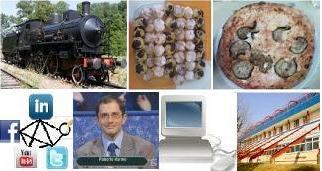
Roberto Marmo is a Professor of Computer Science at the University of Pavia since the 2022/23 academic year. His research spans multiple domains including Artificial Intelligence , Computer Vision , and Social Media Mining . He earned his PhD in Information Engineering at Pavia's Computer Vision and Multimedia Lab after completing a Computer Science degree at the University of Salerno. Core Expertise: Data Science, AI Algorithms, Scientific Visualization Industry Applications: Anti-fraud Systems, Tourism Analytics, Transportation Sign Recognition His academic work demonstrates consistent interdisciplinary innovation: 2020: Encyclopedia contributions on Cybersecurity and Social Engineering 2017: Market analysis through social media mining 2010: Social network architecture research Key collaborations include: IBM's Web 2.0 Security Encyclopedia Italian Tourist Railways Association (application of IT to heritage tourism) Academic-Industry Partnerships in transportation sign recognition His technical contributions include: Neural network applications in geological analysis Operational risk visualization frameworks SOS gesture recognition systems e-learning performance dashboards Available for consulting and training services in AI, data analysis, and scientific visualization.
Dr. Brian Burnham is a Research Fellow at the University of Aberdeen's School of Geosciences, affiliated with the Sand Injection Research Group. His academic background includes a BA in Geology and Arts & Technology (2010) and an MA in Arts & Geospatial Technology (2012) from the University of Texas at Dallas, followed by a PhD in Basin Analysis (2016) from the University of Manchester. His research employs quantitative methods to analyze 3D geometry and architecture in sedimentary systems using digital outcrop models. Burnham's work focuses on integrating satellite, lidar, and photogrammetry data to construct photorealistic geological models, with applications in reservoir characterization and subsurface geology. He maintains interdisciplinary collaborations with digital artists to enhance scientific communication through visual storytelling. His research group specializes in sandstone intrusion dynamics and advanced geospatial visualization techniques. He holds memberships in the British Sedimentological Research Group, Geological Society of America, and International Association of Sedimentologists. No current advising relationships or funded grants are documented in the available materials.
James Ogg serves as an Adjunct Professor in the Department of Earth, Atmospheric, and Planetary Sciences (EAPS) at Purdue University's West Lafayette campus. He maintains active research engagement through the Vertically Integrated Projects (VIP) program, which integrates undergraduate students into long-term, large-scale geoscience research initiatives. His research spans stratigraphy, paleoclimatology, geochronology, and paleontology, with emphasis on reconstructing Earth's history through sedimentary records and orbital climate forcing. Notable contributions include refining the geomagnetic polarity timescale, analyzing mass extinction events, and investigating paleoclimate dynamics across critical intervals like the Late Paleozoic Ice Age and Eocene-Oligocene transition. His work frequently employs cyclostratigraphy and database integration to resolve temporal frameworks. Analysis of his recent publications reveals a dominant focus on deep-time database development, particularly through the Deep-Time Digital Earth (DDE) program. His research demonstrates strong international collaboration, especially in Asian geological contexts, addressing supercontinent dynamics, paleoceanographic changes, and the interplay between tectonics and climate systems. Key recurring themes include carbon cycle perturbations, monsoon evolution, and stratigraphic correlation across paleogeographic reconstructions. Within the VIP program, Dr. Ogg mentors students in projects bridging theoretical geoscience with practical database applications, fostering hands-on experience in Earth system analysis and digital reconstruction of geological history.
Jan-Christoph Otto is an Associate Professor in the Department of Geography and Geology at the Paris Lodron University of Salzburg, where he conducts research and teaches in the fields of geomorphology, natural hazards, and climate change impacts on high mountain landscapes. His work combines field-based quantitative and qualitative methods with shallow geophysics, GIS, and remote sensing to understand landform dynamics, sediment transport, and societal implications of environmental change. Academic Rank: Associate Professor Institution: Paris Lodron University of Salzburg School: Faculty of Natural Sciences Department: Department of Geography and Geology Email: Jan-Christoph.Otto@plus.ac.at ORCID: https://orcid.org/0000-0002-4552-3011 Research Interests: His scientific focus lies in the evolution of high mountain landscapes, particularly those influenced by glaciers, permafrost, and climate change. He investigates natural hazards and risks, sediment dynamics in mountain river basins, and the interplay between geomorphological processes and biodiversity. His research spans both the European Alps and the Andes, integrating geoscientific and archaeological perspectives on human-environment interactions. Recent Research Trends: Analysis of his recent publications reveals a strong emphasis on climate change impacts in alpine regions, including glacier retreat, permafrost degradation, and the formation of hazardous glacial lakes. He also explores wetland and peatland ecosystems using innovative techniques like sedaDNA, and investigates early human occupation in high-altitude environments. His work increasingly adopts transdisciplinary approaches, combining geosciences with ecology and social sciences. Scientific Activities and Recognition: While no formal awards are listed, Otto is highly active in the scientific community with 88 publications, 17 research projects (many ongoing), and 97 recorded activities including peer review, conference presentations, and public outreach. He frequently contributes to media discussions on climate change and natural hazards. Teaching and Advising: Otto teaches field and laboratory courses on geomorphological and geological techniques, GIS applications, and lectures on geomorphology, natural hazards, and risks. He supervises student field trips and contributes to academic service through examination committees and editorial activities. Although specific advisees are not listed, his leadership in multiple research projects suggests he mentors junior researchers. Labs and Research Teams: Otto leads and participates in several collaborative research initiatives such as CLIMB, AlpLake-Change, and AlpsChange. He is involved in maintaining the scientific website www.geomorphology.at, indicating leadership in digital knowledge dissemination. His research integrates interdisciplinary teams across geosciences, biology, and archaeology, particularly in transdisciplinary projects addressing climate change in alpine environments.
Dr. Michael Roach is an Adjunct Researcher in Earth Sciences at the University of Tasmania's School of Natural Sciences. His research focuses on geophysics, structural geology, and electromagnetic methods applied to mineral exploration, mine waste management, and environmental geoscience. He has collaborated on projects involving Tasmania's geological structure, tailings dam stability, and geophysical imaging of subsurface features. Education: Doctoral training in geophysics and exploration methods, with expertise in integrating geophysical data with geological mapping and machine learning. Research Interests: Geophysical exploration methods (electromagnetic and gravity/magnetic), structural analysis of ore deposits, geotechnical assessment of mine tailings, and environmental applications of geophysics. His work bridges academic research with industry needs in mineral exploration and environmental remediation. Key Projects: Geophysical characterization of mine tailings dams for stability assessment 3D modeling of granite intrusions in Tasmania Immersive visualisation tools for field-based geoscience education Environmental monitoring of legacy mine sites using geophysical techniques Supervision & Teaching: Advised over 15 PhD and MSc students on topics ranging from mineral exploration methods to geophysical inversion techniques. Contributed to educational grants advancing geoscience visualization and fieldwork pedagogy. Labs/Teams: Collaborates with the ARC Centre of Excellence in Ore Deposit Research and industry partners like GHD Pty Ltd on tailings management and geophysical innovation.
Dr. Lauren Eaves is an Assistant Professor in the Department of Environmental Sciences and Engineering at the UNC Gillings School of Global Public Health, with a dual appointment as a Research Scientist at the Institute for Environmental Health Solutions (IEHS). Her research focuses on integrating epidemiology, toxicogenomics, and geospatial analysis to study how environmental chemical exposures, social vulnerabilities, and climate stressors impact women’s and children’s health. She co-leads the Training and Mentorship Division at IEHS, overseeing the QUEST program, which supports underrepresented undergraduates in environmental health careers. Her community work includes lactation consulting, emphasizing maternal and child health advocacy. Key research initiatives include evaluating placental responses to extreme heat, linking geospatial environmental data with health records, and collaborating on community-driven projects like Warren County’s lead exposure testing. She also investigates environmental health literacy among medical residents and arsenic contamination in private wells. Her work frequently addresses environmental justice, particularly in North Carolina. Dr. Eaves holds a PhD and BSPH in Environmental Sciences and Engineering from UNC. Her interdisciplinary projects often involve partnerships with institutions like the ECUIPP Lab and Water Institute, combining clinical, epidemiological, and community-based approaches to advance public health outcomes.
Rebecca Brannon is a Professor in the Department of Mechanical Engineering at the University of Utah, specializing in computational solid mechanics and constitutive modeling. She holds a PhD in Engineering Mechanics from the University of Wisconsin, Madison (1992), an MS from the same university (1988), and a BS in Mechanical Engineering from the University of New Mexico (1987). Her research focuses on improving the accuracy, stability, and efficiency of plasticity models, damage mechanics, poroelasticity, and advanced numerical methods like the Material Point Method (MPM). Key contributions include mesoscale validation techniques, constitutive model development (e.g., ARENA and Kayenta), and tensor analysis frameworks for engineering applications. Her work bridges theory and application, addressing challenges in shock physics, rock mechanics, and biomedical engineering (e.g., ceramic hip prosthesis wear). She has pioneered methods for uncertainty quantification in damage models, verification frameworks for computational mechanics, and visualization tools for tensor fields. Notable projects include modeling hypervelocity impact, blast effects on geologic materials, and analyzing deformation-induced anisotropy in porous media. Brannon has led interdisciplinary initiatives, such as the ONR MURI project on soil blast modeling, and contributed to software development (e.g., CTH and Uintah-MPM). Her expertise spans experimental validation (using XCT data), numerical algorithm design, and thermodynamic consistency in constitutive equations. Her research underscores the importance of rigorous validation and the integration of micro-scale heterogeneity into macro-scale models.
Elizabeth Ward serves as Professor in the Department of Art and Art History at Trinity University, San Antonio, with cross-appointments in Environmental Studies. For over 30 years, her professional practice has centered on painting and drawing—particularly works on paper—exploring intersections of natural history and the environmental crisis through exhibitions at major Texas institutions including the San Antonio Museum of Art and McNay Art Museum. Ward’s research manifests in eco-critical artistic production, notably her Mississippi River drawing series and watershed-themed installations. Her Outdoor Studio course exemplifies this integration, transporting students to natural sites across San Antonio for on-location creation. Thematically, her work interrogates hydrological systems, climate change, and ecological memory through abstracted landscapes and site-responsive media. Recent exhibition trends reveal consistent focus on water as both medium and subject—from Floating Life: Mississippi River Drawings (2019) to Watershed (2017)—often employing large-scale paper works that document environmental transformation. These projects frequently engage scientific concepts like deep time and hydrology while maintaining strong ties to Texas regional ecology. Ward actively shapes academic discourse through leadership roles: chairing Trinity’s Neidorff Art Gallery programming committee, co-developing the university’s environmental studies major, and serving on the San Antonio Museum of Art Artist Advisory Board. She supports Texas art ecosystems via donated works and partnerships with institutions like the San Antonio Audubon Society. Her collaborative networks extend to environmental organizations and university-wide initiatives, including faculty governance through the Faculty Senate. Ward also participates in Trinity’s Wellness Program as a dedicated yoga practitioner, reflecting holistic engagement with campus life.
Maryline Moulin is a prominent geophysics researcher specializing in plate tectonics, continental margin evolution, and integrated seismic analysis. She has led major oceanographic campaigns including PAMELA-MOZ05/03 and MAGIC projects, focusing on passive margins in the South Atlantic and East African regions. 2003 PhD from University of Western Brittany 2016 Project Leader for PAMELA campaigns Key collaborator in 15+ international seismic studies Her research spans diverse methodologies: Wide-angle seismic (OBS) profiling Multi-channel seismic (MCS) interpretation Gravity and magnetic anomaly analysis 3D structural modeling (Placa3D) Seismo-stratigraphic analysis Recent publications (2023-2025) reveal patterns in: Proto-oceanic crust formation Passive margin segmentation Quaternary contourite systems Transform margin tectonics Deep crustal architecture
Jerry P. Fairley serves as a Full Professor in the Department of Earth and Spatial Sciences within the College of Science at the University of Idaho. His academic career spans three decades with continuous research contributions in hydrogeological systems and geothermal energy applications. Education: B.S. in Geology (1984) from State University of New York College at Cortland M.S. in Geosciences (1991) from University of Nevada, Las Vegas Ph.D. in Earth Resources Engineering (2000) from University of California, Berkeley Professor Fairley's research centers on fluid dynamics in complex geological media , with emphasis on heterogeneous porous systems, geothermal reservoir characterization, and environmental applications including carbon sequestration and nuclear waste disposal. His work integrates field measurements, geospatial analysis, and numerical modeling to address challenges in hydrothermal systems and arid-region groundwater management. Recent projects demonstrate particular expertise in Yellowstone hydrothermal dynamics and Chilean mining district hydrology. Analysis of his 15 most recent publications (2017-2024) reveals consistent focus on hydrothermal system behavior (particularly Yellowstone), groundwater recharge in arid environments (notably Chilean Andes), and geothermal resource assessment using geostatistical methods. His work bridges fundamental fluid mechanics with practical energy and water resource applications, often employing innovative field measurement techniques like ice box calorimetry and thermal anomaly mapping. Professor Fairley has led significant collaborative research initiatives including the NSF-funded project Constraining Heat Flux from the Shallow Geothermal System, Yellowstone Caldera (2013), demonstrating sustained external funding for his geothermal investigations. His fieldwork spans diverse geological settings from Idaho's Snake River Plain to active volcanic zones in Japan and Chile.
Irena Bagińska is a Researcher at the Department of Mining within the Faculty of Geoengineering, Mining and Geology at Wrocław University of Science and Technology. Her work focuses on geotechnical engineering applications in mining, particularly landslide hazard assessment, soil mechanics, and mine waste management. She utilizes advanced field testing methods like CPTu and SCPTu for soil characterization and foundation design. Primary Affiliation: Wrocław University of Science and Technology Faculty: Faculty of Geoengineering, Mining and Geology Department: Department of Mining Email: irena.baginska@pwr.edu.pl Research trends include: Reliability analysis of structures (sheet pile walls, retaining walls, piles) in spatially variable soils Integration of CPTu and SCPTu data for soil strength and filtration coefficient estimation Comparative studies of static (CPTu) and dynamic (DPH) testing methods Application of probabilistic and kinematic approaches to mining waste dumps and slope stability Case studies on Polish mining infrastructure like the Żelazny Most tailings facility Labs & Teams: Affiliated with the Department of Mining, contributing to geotechnical research and Eurocode 7 compliance studies in Polish mining contexts.
Alexander Alexandrovich Trofimov is an Associate Professor at the Department of Engineering Graphics within the Institute of Mining, Geology and Geotechnology at Siberian Federal University. Born on September 25, 1971, in Zaozerny, Krasnoyarsk Krai, he graduated from the Krasnoyarsk Institute of Non-Ferrous Metals in 1996 with a specialization in "Mining Machinery and Equipment," qualifying as a mining electrical engineer. He received his associate professorship in 2009 and has authored 30 scientific and educational works. Education Krasnoyarsk Institute of Non-Ferrous Metals (1996), Mining Machinery and Equipment, Mining Electrical Engineer Research Interests Professor Trofimov's research focuses on Engineering Graphics , Descriptive Geometry , and specialized applications in Mining and Geological Graphics . His work integrates pedagogical methods for technical education, computer-aided design, and geometric problem-solving in mining contexts. Recent investigations emphasize educational adaptations for engineering students and technological innovations in graphic instruction. Professional Development Integration of project activities of teachers into the educational process (Siberian Federal University, 2013) Management of an educational project (Siberian Federal University, 2017)
Courtney Wagner is an Assistant Professor in the Department of Earth Sciences at Kent State University . Her research focuses on magnetofossils as biomarkers for paleoenvironmental reconstruction, particularly in studying climate change impacts on coastal ecosystems through geological history. Education: Ph.D., University of Utah B.S., University of Rochester Research Interests: Geobiology Paleoceanography Environmental Magnetism Biomagnetism Climate Change Marine Geology Publications (2021-2024) demonstrate technical innovation in in situ magnetofossil imaging , quantitative magnetic unmixing , and proxy development for detecting marine deoxygenation, nutrient fluxes, and particulate matter pollution. Her work spans studies of major warming events like the Paleocene-Eocene Thermal Maximum and Cretaceous Anoxic Events , combining fieldwork with laboratory analysis. Contact: Office Location: Kent Campus Email: cwagne41@kent.edu Phone: 330-672-2746 Office Hours: Tuesday/Thursday 9:00-11:00 am, Wednesday 4:00-5:00 pm
Martin Dove is Professor of Condensed Matter and Materials Physics at the School of Physics and Astronomy, Queen Mary University of London, where he conducts research on structural properties of materials using neutron and X-ray scattering techniques. His work bridges fundamental physics and materials engineering with applications in energy technologies and functional materials. His primary research focuses on negative thermal expansion mechanisms, lattice dynamics of framework materials, and the development of computational methods like reverse Monte Carlo modeling. He investigates phase transitions in perovskites, thermal expansion anomalies in ceramics, and structural properties of disordered systems through total scattering analysis and molecular simulations. Analysis of his 2023-2025 publications reveals sustained leadership in negative thermal expansion research, with significant contributions to understanding scandium trifluoride systems and copper pyrophosphate transitions. His recent work extends to perovskite materials for energy applications, metal-organic frameworks, and advanced scattering data analysis techniques, demonstrating consistent innovation in materials characterization methods.
Dr. Valeria Sergeenkova serves as an Assistant Professor in the Department of Mediterranean and Eastern Studies at New Bulgarian University, where she teaches courses including History of Science (GENB093). Her office hours are held Tuesday 11:30-13:00, Thursday 10:30-13:00, and Friday 14:30-16:00 in Room 116, Building I. She earned her BA in Classics from Princeton University and PhD in Classics from Harvard University, focusing on reconstructing ancient historical imagination through textual and material evidence. Her research bridges ancient historiography, geography, and science in Classical antiquity, with particular emphasis on Herodotus' methodological frameworks. Key projects include her forthcoming book A Science of the Past: Herodotus’ Histories between Nature and Culture and interdisciplinary investigations into numerical systems in historical texts, sensory history (especially olfactory experiences), and ancient interactions with Bronze/Iron Age Anatolian monuments. She employs innovative approaches combining archaeological data with literary analysis to reconstruct how ancient communities conceptualized their natural landscapes and historical narratives. Publication trends reveal consistent interdisciplinary engagement across 15+ years, evolving from numismatic studies (2006) toward sensory archaeology and cultural memory frameworks (2017-2021). Her work demonstrates increasing collaboration with archaeologist F. Rojas on Anatolian monument reception, while maintaining solo scholarship on Herodotean epistemology. Recent contributions to the Wiley Blackwell’s Herodotus Encyclopedia (2021) showcase her expanding influence in reference works. Dr. Sergeenkova maintains active scholarly consultation through regular office hours and curriculum development in classical studies, though specific grant funding details aren't documented in available materials. Her collaborative research with F. Rojas forms a significant thread in Anatolian cultural reception studies. No dedicated laboratory facilities are mentioned, but her methodological approach integrates archaeological field data with textual analysis through ongoing partnerships with Mediterranean archaeological projects.