Michael Wagreich is a full Professor at the Institute of Geology , University of Vienna, Faculty of Geosciences, Geography and Astronomy. His research spans sedimentology, stratigraphy, and anthropogenic impacts on Earth systems, with a focus on the Anthropocene and Cretaceous geology . Editor-in-Chief of Austrian Journal of Earth Sciences Vice-Chair of the IUGS Subcommission on Cretaceous Stratigraphy Co-PI for projects like "From Romans to the Anthropocene" and UNESCO IGCP 732 Key research themes include: Isotope stratigraphy and paleoclimate reconstructions Urban sediment analysis in Vienna Campanian-Maastrichtian boundary studies Anthropocene definition and markers His recent publications address: Paleoenvironmental transitions in Gosau Group Geochemical records in Eocene and Miocene rocks Hydrocarbon potential in Indonesian basins He collaborates globally with institutions in Egypt, Pakistan, Indonesia, and the U.S., and contributes to UN SDGs 11 (Sustainable Cities), 13 (Climate Action), and 15 (Life on Land).
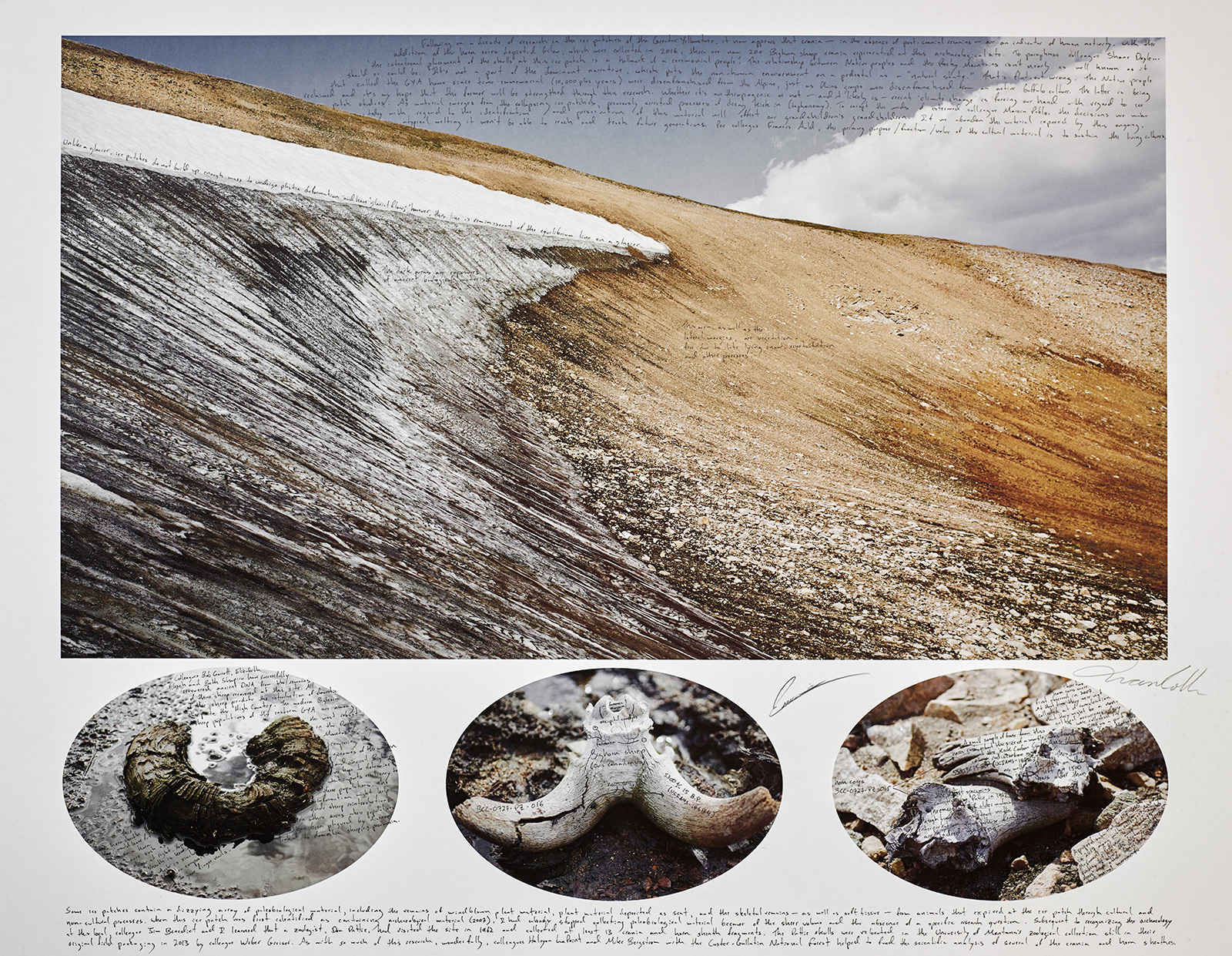
Ian van Coller is a Professor of Photography at Montana State University (2006–Present) and a 2018 Guggenheim Fellow. His affiliations include the Piece of Cake Collective, The Last Glacier Collective (since 2012), and the Antarctic Artists and Writers Collective (since 2020). His research examines climate change and deep time through photography and artist books, collaborating with paleo-climatologists globally. Key research interests include: Visualizing glacial retreat and paleoclimate data Interdisciplinary art-science methodologies Environmental advocacy through large-scale artist books Cultural impacts of ecological change His publications emphasize: Glaciology and cryosphere dynamics Intersections of art, science, and public engagement Decolonial perspectives on environmental narratives Awards: 2018 John Simon Guggenheim Fellowship Collaborations involve fieldwork in extreme environments (Antarctica, Kilimanjaro, Svalbard) and partnerships with institutions like the Long Now Foundation. His work is archived in major museums and libraries worldwide.
Aleksi Nummelin serves as Senior Researcher at NORCE Norwegian Research Centre in Bergen, Norway, within the Division of Climate & Environment and Earth Systems Research Group. He is a principal contributor to the Norwegian Earth System Model (NorESM) development team, applying this framework to investigate climate dynamics across geological timescales. His institutional affiliation includes multiple funded projects examining polar ocean processes, Arctic climate transformation, and deep-time paleoclimate systems. Nummelin's research centers on Earth system modeling with specialization in Arctic climate dynamics, ocean circulation mechanics, and paleoclimate transitions. He investigates critical phenomena including Arctic amplification feedbacks, Southern Ocean convection shutdown mechanisms, and bathymetric influences on climate evolution. His methodological expertise spans high-resolution coupled modeling, mesoscale eddy parameterization development, and model-data integration for paleoclimate validation. Recent publication trends (2023-2025) reveal concentrated focus on Arctic system transformation, with significant contributions to understanding Atlantification divergence across models, winter amplification sensitivity, and sea-level rise impacts on global circulation. His paleoclimate work examines Eocene-Oligocene transitions and Dansgaard-Oeschger events through the lens of ocean gateway evolution and deep-ocean temperature reconstruction, demonstrating consistent integration of geological insights with modern modeling frameworks. Nummelin leads or contributes to multiple funded initiatives including MAPARC (Mechanism and prediction of the new Arctic climate system) and DOTpaleo (Deep Ocean Temperatures in the Paleogene Greenhouse), which support international collaborations and advanced model development. While student supervision details aren't specified, his projects provide substantial research opportunities in climate modeling and polar oceanography. As core member of NORCE's Earth Systems Research Group, Nummelin operates within the NorESM development team that contributes to international modeling efforts including CMIP6. This group maintains leadership in polar climate modeling, with particular expertise in Arctic ocean-sea ice interactions, paleoclimate applications, and high-resolution process studies that inform both contemporary climate understanding and future projections.
Olev Vinn is an Associate Professor in the Department of Geology at the University of Tartu, Estonia. With a career spanning over two decades at the same institution, he began as a Researcher in 2001, was promoted to Senior Researcher in 2007, and currently holds his associate professorship. His research has established him as a leading figure in paleontology, with particular expertise in evolutionary patterns and symbiotic relationships in ancient marine ecosystems. Dr. Vinn's research focuses on five primary areas: biomineralization in invertebrates; biological affinities of problematic fossils from the Phanerozoic; bioerosion and biofouling of hard substrates, paleoecology, and evolution; evolution of symbiosis and predation; and ichnofossils. His work spans multiple geological periods but shows particular emphasis on the Paleozoic era, especially the Ordovician and Silurian periods. He has published extensively on coral symbiosis, bioerosion patterns, trace fossils, and the evolution of symbiotic relationships in ancient marine ecosystems. Analysis of his most recent publications reveals a strong focus on symbiotic relationships across geological time, with particular attention to coral associations, bryozoan interactions, and cryptic faunas in various substrates. His research demonstrates consistent thematic continuity while expanding into new geographical areas and addressing increasingly complex evolutionary questions. Notably, he has also ventured into more theoretical work on civilization sustainability and extraterrestrial intelligence, showing remarkable breadth in his scholarly interests. Scientific Recognition: Estonian State Science Prize in Geo-Bio Sciences (2017) 316 publications with over 110,000 reads and 4,421 citations Subject Area Editor for AMEGHINIANA Editorial Board Member for Discover Life Springer Nature Editorial Board Member for Geology journal Dr. Vinn maintains an active research program with numerous current projects examining symbiotic relationships across geological time. His international collaborations span multiple continents, providing rich opportunities for fieldwork and cross-cultural scientific exchange. His research group likely focuses on detailed fossil analysis, microscopic techniques, and evolutionary pattern recognition, contributing significantly to our understanding of ancient marine ecosystems and their relevance to broader evolutionary questions.
Sandra McEwan is a Sessional Lecturer in the Department of Curriculum, Teaching & Learning at the Ontario Institute for Studies in Education (OISE), University of Toronto, where she teaches Elementary Science and Environmental Education in the Master of Teaching Program. With over four decades of experience spanning K-12 teaching, teacher education, and educational leadership, she brings extensive practical knowledge to preparing future educators in science and environmental pedagogy. Her educational background includes: MEd in Science Education, University of Toronto/OISE (2000) BEd in Science and Environmental Science Education, University of Toronto/FEUT (1984) BSc in Biology, University of Toronto (1983) McEwan's research centers on nature-based learning, outdoor and environmental education, and differentiated instruction. She develops practical strategies for integrating environmental awareness into science curricula through hands-on, experiential learning in natural settings. Her work emphasizes making complex ecological concepts accessible to diverse learners while addressing real-world environmental challenges through classroom applications. Her publication record spans 30+ years with over 30 scholarly works, showing consistent focus on practical educational resources. Recent publications address contemporary issues like food systems education and acid rain impacts, while maintaining strong emphasis on outdoor learning methodologies and curriculum development for K-12 settings. The body of work demonstrates evolution from foundational environmental science resources toward integrated, systems-thinking approaches. As a Sessional Lecturer and former Faculty Advisor in the MT Program (2016-2023), she has mentored numerous pre-service teachers. Her extensive experience as both K-12 educator and teacher trainer provides unique perspective for guiding new educators in implementing effective science and environmental education practices.
Brian Kendall is an Interim Department Chair and Professor in the Department of Earth and Environmental Sciences at the University of Waterloo, where he holds a Canada Research Chair in Redox-Sensitive Metal Isotope Geochemistry (Tier 2). He leads a $1.5 million initiative to establish a cutting-edge mass spectrometry facility and strong research program in solid Earth geochemistry and environmental biogeochemistry at Waterloo. His educational background includes: Ph.D. in Earth and Atmospheric Sciences from the University of Alberta (2008) M.Sc. in Earth and Atmospheric Sciences from the University of Alberta (2003) B.Sc. (Honors) in Geology from the University of Alberta (2000) Professor Kendall's research focuses on using isotopes (both metal stable isotopes and radiogenic isotopes) to study a wide variety of geochemical processes. His work centers on three main areas : developing innovative geochemical methods that serve as process tracers for petroleum systems, ore mineralization, and biogeochemical cycles; understanding how mineral and petroleum deposits form to improve exploration strategies; and reconstructing the history of atmosphere and ocean oxygenation through time and its relationship to biological evolution, seawater chemistry and natural resource deposits. His extensive publication record demonstrates expertise in metal isotope geochemistry, particularly with uranium, molybdenum, and rhenium systems. His research spans from the Archean Eon to more recent geological periods, with particular emphasis on critical transitions in Earth's oxygenation history. Kendall's work often combines multiple isotope systems to provide robust constraints on past environmental conditions, with significant implications for understanding resource formation processes. Among his notable achievements: 2021 Canada Research Chair in Redox-Sensitive Metal Isotope Geochemistry (Tier 2) 2019 GAC W.W. Hutchison Medal 2016 Ontario MRI Early Researcher Award 2016 Jane Lang Excellence in Earth and Environmental Sciences Teaching Award Multiple Outstanding Performance Awards from the University of Waterloo Professor Kendall has supervised numerous graduate students through completion of their degrees, including multiple PhD and MSc theses focusing on metal isotope applications in paleoenvironmental reconstruction and resource exploration. His research group includes postdoctoral fellows, PhD students, MSc students, and undergraduate researchers working collaboratively on various aspects of metal isotope geochemistry. He leads the Metal Isotope Geochemistry Laboratory at Waterloo, which serves as a hub for innovative research in isotope geochemistry applications to Earth history and resource exploration questions. The laboratory supports advanced analytical capabilities that enable cutting-edge research in metal stable isotope systems.
Anaïs Cario is a Research Fellow at the Centre National de la Recherche Scientifique (CNRS), currently employed at the Institute of Condensed Matter Chemistry of Bordeaux (UMR 5026) since 2021. She completed her doctoral thesis in Earth Sciences - Microbiology at the École Normale Supérieure de Lyon in 2013, focusing on adaptations to life under high hydrostatic pressure in piezophilic microorganisms, particularly Thermococcus barophilus. Her research interests span extreme microbiology, high-pressure environments, microfluidics applications, astrobiology, and deep-sea microbial ecosystems. Cario specializes in developing microfluidic tools to study extremophiles under conditions simulating deep-sea vents and subsurface environments. Her work bridges fundamental research on microbial adaptation with practical applications in CO2 geological storage, hydrogen metabolism, and prebiotic chemistry. Analysis of her recent publications (2024-2025) reveals a strong focus on microfluidic approaches for studying deep-sea environments, with particular emphasis on prebiotic chemistry simulations, hydrogen metabolism in subsurface environments, and nanomineral production by microorganisms. Her research increasingly connects fundamental microbiology with energy transition applications, especially regarding geological storage and hydrogen production. Anaïs Cario actively participates in thesis committees, having served on juries for doctoral students working on CO2 valorization through hydrogenotrophic methanogenesis, Thermococcales biomineralization, and hyperbaric techniques for deep-sea microorganism studies. Her collaborative network includes researchers from multiple French institutions, with Samuel Marre appearing as a frequent co-investigator on numerous projects. She is a key contributor to the HOTDOG project and collaborates extensively with teams studying deep-sea microbial ecosystems, employing advanced microfluidic tools to simulate extreme environmental conditions at laboratory scale. Her work with the TWINN2SET project focuses on deep subsurface microbial life in the context of energy transition.
Krzysztof Bąk serves as a Professor within the Faculty of Geology at the University of Warsaw, maintaining active research output through 2023. His scholarly work centers on Mesozoic geological processes in the Tethyan realm, with particular emphasis on Carpathian Basin evolution during Jurassic and Cretaceous periods. Professor Bąk's primary research domains include Paleontology (specializing in radiolarians and microfossil assemblages), Geochemistry (stable isotope analysis and organic geochemistry), Sedimentology, and Stratigraphy. His investigations frequently address Oceanic Anoxic Events, sea-level fluctuations, redox condition variations, and paleoenvironmental reconstructions in deep-water settings. Notable contributions include deciphering the timing of sponge spicule redeposition events and organic matter accumulation patterns linked to global climate shifts. Analysis of his 15 most recent publications reveals methodological integration of micropaleontological, geochemical, and sedimentological approaches to reconstruct Western Tethys paleoenvironments. Key thematic threads include Cretaceous biostratigraphic correlations, Jurassic-Cretaceous transition dynamics, and Carpathian Basin depositional histories. His work demonstrates consistent collaboration with Maria Bąk and Zbigniew Górny across high-impact journals like International Journal of Coal Geology and Geological Society of America Bulletin , alongside contributions to Poland's Detailed Geological Mapping program. Professor Bąk extends his expertise beyond traditional research through geotourism applications, notably examining cognitive and educational aspects of geological heritage sites in the Tatra Mountains. His publication record indicates sustained research leadership within the Faculty of Geology, with no evidence of reduced activity or emeritus status.
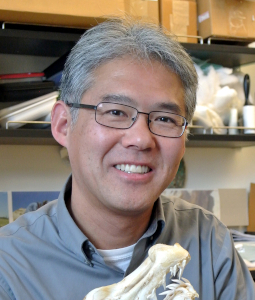
Professor Kenshu Shimada is a full-time faculty member and Director of Biology's Graduate Studies in the Department of Biological Sciences and Environmental Science and Studies at DePaul University's College of Science and Health. His office is located in McGowan South, Suite 203 with contact email kshimada@depaul.edu and phone (773) 325-3697. Shimada specializes in the paleobiology of Mesozoic marine vertebrates, with particular expertise in lamniform sharks including both apex predators (mako, great white) and filter feeders (basking, megamouth). His research examines morphological adaptations in relation to life history strategies, behavior, ecology, and evolutionary trajectories across geologic time scales. He actively investigates the evolution of gigantism and endothermy in extinct shark lineages through detailed analysis of fossil morphology and physiological proxies. His publication trends reveal consistent focus on Cretaceous to Neogene marine ecosystems, with recurring emphasis on Otodus megalodon biology, lamniform phylogeny, and functional morphology. Key research threads include skeletal adaptations in deep-time sharks, paleoecological reconstruction of marine communities, and evolutionary implications of body form diversity across elasmobranch lineages. Professor Shimada advises graduate students as Director of Biology's Graduate Studies and maintains active research collaborations evidenced by institutional partnerships. His work receives substantial external recognition through media coverage of NSF-funded research. Professional Activities: Chair of Government Affairs Committee, Society of Vertebrate Paleontology Research Associate in Paleontology, Sternberg Museum of Natural History, Hays, Kansas Editorial Board Member, Journal of Fossil Research (Fossil Research Society of Japan) Professional Society Memberships: American Elasmobranch Society American Society of Ichthyologists and Herpetologists Fossil Research Society of Japan Kansas Academy of Science Paleontological Society Society of Vertebrate Paleontology
Roland Barthel serves as Professor in the Department of Geosciences at the University of Gothenburg's Faculty of Science and concurrently holds the position of Vice-Dean for the Faculty Office of Natural Sciences and Technology. Previously Head of Department (2018-2022), he specializes in groundwater resources within the context of climate change impacts across Sweden and Europe. His research integrates hydrological science with socioeconomic factors to address critical water challenges including drought, scarcity, and extreme weather events. Barthel emphasizes the societal dimensions of water management, particularly regarding unregulated private wells that constitute a significant portion of Sweden's drinking water supply. His interdisciplinary approach bridges natural and social sciences to develop implementable solutions requiring consideration of economic, political, and social frameworks alongside physical system understanding. Analysis of his publication record reveals a dominant focus on data-driven methodologies for groundwater dynamics assessment, drought propagation analysis, and climate adaptation strategies. His work consistently emphasizes regional-scale studies in temperate and high-latitude environments, with increasing attention to interdisciplinary collaboration frameworks. Scientific recognition includes: Student Union's Pedagogical Award (2014) Student Union's Pedagogical Award (2016) As an educator, Barthel pioneered hydrology instruction at the university by developing the master's course Applied Hydrology (GVG460) and undergraduate Hydrology and Hydrogeology (GV2002). He leads Earth Sciences thesis supervision, chairs the program committee, and contributes to multiple geoscience courses. His teaching excellence earned three consecutive pedagogical award nominations with wins in 2014 and 2016. He currently participates in an EU Erasmus+ project developing digital teaching tools with European partners, addressing high market demand for groundwater specialists in Swedish infrastructure and environmental sectors.
Harald Strauss is a Professor in the Faculty of Geosciences at the University of Münster, Germany, with over 235 publications and an h-index of 59. His research focuses on isotope geochemistry applied to marine sedimentary systems, hydrothermal environments, and early Earth processes. Current affiliations include active collaborations with research teams in Spain (Central Iberian Zone), South China Sea methane seep studies, and Oman Drilling Project investigations. Professor Strauss's research interests center on biogeochemical cycling, particularly sulfur and iron isotope systematics in modern and ancient environments. His work examines methane seep systems, hydrothermal vents, and Archean-Eoarchean geological records to understand Earth's evolution. Key methodologies include SIMS analysis of authigenic minerals, multi-isotope systematics, and experimental approaches to quantify environmental effects like sea spray on isotopic signatures. Analysis of his 15 most recent publications reveals consistent focus on isotope geochemistry applied to paleoenvironmental reconstruction, with strong emphasis on sulfur cycling in diverse settings from modern hydrothermal systems to ancient sedimentary records. His work bridges field observations, laboratory analysis, and experimental approaches to address fundamental questions in Earth system evolution. Scientific contributions include: Pioneering work on sulfur isotope patterns in ancient seep environments Insights into Eoarchean mantle processes through sulfur isotope evidence Quantification of sea spray effects on coastal isotope systems Development of pyrite trace element proxies for magmatic volatile influx Advancements in understanding hydrothermal sulfur cycling in arc/back-arc systems Professor Strauss maintains an active research program with regular fieldwork in diverse geological settings and supervision of collaborative projects. His laboratory group employs advanced geochemical techniques to investigate Earth's biogeochemical cycles across geological time, with particular strength in integrating multiple isotope systems for paleoenvironmental reconstruction. Current projects include studies of Ediacaran-Cambrian transition records and modern analog systems for early Earth processes.
Jonathan D. Aubertin is a Professor in the Department of Construction Engineering at École de technologie supérieure (ÉTS). He holds a B.Eng. from McGill University and a Ph.D. from Queen's University. His office is located at A-1599 on campus, and he can be contacted via jonathan.aubertin@etsmtl.ca. His research spans three primary domains: Sensors, Networks and Connectivity Infrastructure and Built Environment Intelligent and Autonomous Systems with specialized expertise in rock mechanics, geohazards, blasting optimization, and remote sensing applications for geosciences. Recent publications (2013-2025) demonstrate strong focus on: LiDAR-based geotechnical characterization Blast crater mechanics in mining Rock slope stability analysis Time-dependent behavior of salt mines showing consistent innovation in field measurement techniques. Awards and Honors: 2022 Doug Stead PhD Thesis Award (Canadian Rock Mechanics Association) 2023 50 Grads, 50 Years (Champlain College – St-Lambert) He leads substantial research advising with 26+ graduate students working on geotechnical projects. As a core member of the LG4 Laboratory, he contributes to geomechanical testing services and equipment management for rock/soil analysis.
Daniel Lehrmann serves as the Gertrude and Walter Pyron Professor in the Geosciences Department at Trinity University, where he teaches paleontology, sedimentary geology, basin analysis, and field geology courses. Originally from Wisconsin, he earned his B.S. and M.S. from the University of Wisconsin system before completing his Ph.D. at the University of Kansas. His research program focuses on marine sedimentary basin evolution, carbonate platform development, Earth's chemical and biological system changes, diagenetic processes, and mass extinction events. Lehrmann employs a comprehensive methodological approach including field work, satellite image analysis, GIS, petrography, geochemistry, biostratigraphy, and forward stratigraphic modeling. His fieldwork spans the Nanpanjiang Basin in south China, additional Chinese basins, and global sites including Indonesia, Japan, Turkey, Saudi Arabia, Italy, Mexico, the Gulf of Mexico, and central/western Texas. Lehrmann's recent publications reveal strong trends in Triassic carbonate platform evolution, Permian-Triassic boundary events, microbialite formation, and advanced analytical techniques including machine learning applications in carbonate petrography. His work demonstrates interdisciplinary integration of paleontology, sedimentology, geochemistry, and structural geology to address fundamental questions in Earth history. Erasmus Haworth Distinguished Alumni Honors in Geology Award from the University of Kansas SEPM best paper award Honorable mention for best paper in Palaios Lehrmann has co-advised graduate students at Rice University, Stanford University, the University of Alabama, and UTSA, while securing over $2 million in external funding from NSF, ACS Petroleum Research Fund, Fulbright Program, and oil companies over 25+ years. He serves as associate editor for the Journal of Sedimentary Research and AAPG Bulletin, and actively participates in geological organizations including the Geological Society of America, Southwest Research Institute, Edward Aquifer Authority, and Witte Museum. Lehrmann also provides geological support for UNESCO World Heritage sites in China and promotes AAPI diversity initiatives through the EAST executive committee.
Arne Solli is an Associate Professor in History at the Department of Archaeology, History, Cultural Studies and Religion, University of Bergen. His academic work bridges historical scholarship with digital methodologies, with a particular focus on historical demography, urban history, and GIS applications in historical research. Dr. Solli's research spans multiple interconnected domains including historical demography, urban development of Bergen, historical GIS applications, and the evolution of property registration systems. His work often combines microhistorical approaches with macrohistorical perspectives, creating innovative frameworks for understanding historical population patterns. He has made significant contributions to the study of 19th century cholera epidemics in Norway, examining how factors like topography, social status, and water supply affected mortality rates. His research demonstrates a consistent focus on spatial and temporal analysis of historical phenomena, with particular attention to Bergen's urban development over centuries. Dr. Solli has pioneered the integration of GIS technology with historical research through his development of BerGIS, a map portal for historical maps of Bergen that has become an essential resource for urban historians. Historical demography and population structures Urban history and development of Bergen Historical GIS applications Property registration systems through time 19th century Norwegian social and health history Cholera epidemiology and public health Dr. Solli has received recognition for his innovative approaches to historical research, particularly in developing digital tools that transform how historical data can be analyzed and visualized. His work on BerGIS has provided valuable resources for researchers studying urban development patterns over time. As an educator, Dr. Solli has contributed to the development of digital history methodologies and has supervised numerous students in historical research. His publications span from the 1990s to present, demonstrating a sustained commitment to advancing historical scholarship through technological innovation.
Olivier Castelnau is a Research Director at the PIMM laboratory (Laboratoire Procédés et Ingénierie en Mécanique et Matériaux) at Arts et Métiers, where he has been working since 2010. He holds a PhD in Mechanics from Joseph Fourier University (1996) and completed his Habilitation to Supervise Research at the University of Paris 13 in 2006. Throughout his career, he has maintained strong connections with both materials science and geophysics communities, serving as Director of the Île-de-France Federation of Mechanics since 2019 and as a member of the PRC3 Program Committee at the SOLEIL synchrotron since 2016. Castelnau's research focuses on the mechanical behavior of polycrystals, with particular emphasis on the relationship between microstructure and mechanical properties at the micrometric scale. His work bridges experimental and theoretical approaches, utilizing advanced X-ray and neutron diffraction techniques alongside sophisticated micromechanical modeling. He has developed specialized methods for Laue microdiffraction at sub-micrometric scales and has made significant contributions to mean-field homogenization approaches, particularly self-consistent schemes extended to nonlinear behaviors. His publication record shows consistent high-impact output across materials science and geophysics, with recent work spanning from fundamental micromechanics to applications in laser processing and Earth sciences. The 15 most recent publications demonstrate expertise in ceramic materials, fatigue analysis, laser shock processing, and geophysical materials, reflecting the interdisciplinary nature of his research. CNRS Bronze Medal (section 9, 1999) Castelnau currently leads multiple significant research projects including ERC FASTMAT on very high cycle fatigue, ANR-DFG HoTMiX on nanostructured oxides at high temperatures, and ANR ForgeLaser on laser shock mechanics. His work has established important connections between micromechanical modeling and geophysical applications, particularly in understanding Earth's mantle rheology. As leader of the CoMet research team, he oversees a program that integrates advanced experimental characterization with computational modeling to address fundamental questions in materials behavior across multiple scales.