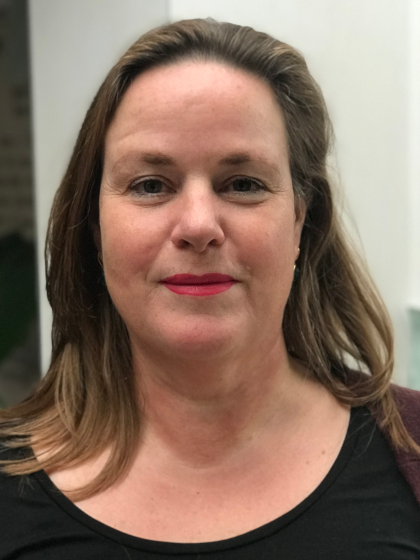
Dr. Margriet Hoogvliet is a Postdoctoral Researcher at the University of Groningen's Faculty of Arts, Research Centre for Historical Studies, specializing in medieval and early modern European history. Her primary affiliation is with the 'Cities of Readers' project (2015-2019) and the HERA-funded 'Public Renaissance' project (2019-2022), where she served as project manager for digital heritage initiatives including the 'Hidden Deventer' app and 'Broeders 3D' VR reconstruction. She maintains fractional appointments across multiple institutions including Utrecht University and the Centre d'Études Supérieures de la Renaissance in Tours. Her research interests span the social history of reading in late medieval and early modern Europe, with particular focus on religious literature in Romance languages, urban history, and spatial humanities. She investigates how religious knowledge circulated through domestic spaces and urban environments, examining manuscript cultures, multilingual communities, and the material contexts of reading practices. Her work bridges traditional textual analysis with digital methodologies, creating innovative approaches to historical spatial analysis. Hoogvliet's publication portfolio reveals strong thematic continuity in religious reading practices across urban contexts, with increasing integration of digital humanities methods since 2019. Her recent work demonstrates expertise in combining manuscript studies with spatial analysis, particularly through VR reconstructions and mobile applications that make historical research accessible to broader audiences. This trajectory reflects a scholarly commitment to both rigorous academic research and public engagement. Award highlights include: NWO funding for PhD research (1992) Cum laude doctoral thesis (1999) Smart Loire Valley Fellowship (Marie Curie, 2019-2020) €10,000 prize for public outreach activities (2021) NWO Free Competition grant for 'Cities of Readers' (2014) Her research has been supported by numerous competitive grants including NWO, COST Actions, and European Science Foundation funding. While she has supervised student projects (notably a palaeographical/codicological project at Leeds University), her primary role has been as researcher rather than primary thesis advisor. Current initiatives focus on digital reconstructions of historical spaces and mobile applications for public history engagement. Hoogvliet actively collaborates with international research teams through projects like 'New Communities of Interpretation' and 'Public Renaissance,' working with scholars across Europe to develop innovative approaches to historical spatial analysis. Her 'Hidden Cities' platform and 'Broeders 3D' VR reconstruction represent significant contributions to digital heritage preservation and public history engagement.