Estanislao Pujades Garnes is a postdoctoral researcher at the Computational Hydrosystems Department of the Helmholtz Centre for Environmental Research - UFZ in Leipzig, Germany. He holds a PhD in Hydrogeology from the Technical University of Catalonia (2013) and has worked at the University of Liège (Belgium) and the Spanish National Research Council (CSIC). Research Focus Groundwater dynamics in underground structures Numerical modeling of coupled hydrological processes Geo-energy systems (Underground Pumped Storage Hydropower) Hydrochemical evolution in aquifers Urban infrastructure-groundwater interactions Scientific Contributions 15+ peer-reviewed publications (2017-2022) on groundwater modeling, UPSH efficiency, and contaminant transport Key presentations at EGU, AGU, IAH, and International Nitrogen Workshop conferences Supervised PhD and Master's students in hydrogeological research Awards Marie Curie BEIPD-COFUND Postdoctoral Fellowship (2014-2016) FI-DGR PhD Fellowship (Catalonia Government, 2010-2013)
Prof. Dr. Thomas Baumann is an Adjunct Professor at the Chair of Hydrogeology at Technische Universität München (TUM). He leads the Geofluids Research Group and focuses on sustainable groundwater management, geothermal energy systems, and hydrogeochemical processes. His work aligns with UN Sustainable Development Goals, emphasizing subsurface process modeling and environmental resource optimization. Education: 1981–1989: Diploma in Geology, TUM 1994: PhD in Hydrogeology, TUM 2006: Habilitation in Hydrogeology, TUM Research Interests: Geofluids and colloid transport Geothermal energy applications and reservoir management Environmental impact of nanoparticles Managed aquifer recharge and floodwater storage Key Projects: Smart-SWS: Combining flood protection and drought prevention Geothermal Alliance Bavaria (GAB) Hydrochemical modeling of aquifer heat storage Awards: TUM Junior Fellow Contributor to multiple EU and national grants (e.g., InterPore, WaX) Grants & Labs: Labs: Hydrogeology Lab, Geothermal Lab, Geofluids Lab Teams: Collaborations with ETH Zurich, University of Bergen Labs/Teams: Geothermal Technologies Group Hydrogeology & Biogeochemistry Team
Prof. Dr. Christoph Hilgers is a Professor and Chair of Structural Geology and Tectonics at the Karlsruhe Institute of Technology (KIT), where he also serves as the Scientific Speaker of the KIT Center Climate & Environment. He leads the TTE Reservoir-Geology KCT GmbH in Karlsruhe and holds leadership positions in several professional organizations including as President of the Berufsverband Deutscher Geowissenschaftler (BDG) since 2024 and Chairman of the Oberrheinischer Geologischer Verein (OGV) e.V. since 2023. His academic career spans multiple institutions including RWTH Aachen University where he served as Professor of Reservoir Petrology from 2010-2016. His educational background includes a Diplom (MSc equivalent) in Geology from RWTH Aachen with Professors Roland Walter and Ulrich Glasmacher, followed by a one-year MSc/ICID in Applied Structural Geology & Rock Mechanics from Imperial College London with Professors John Cosgrove and Karel Schulmann. His academic progression included research stays at Saint Louis University, Australian National University, State University of New York in Albany, and the University of Nijmegen. Prof. Hilgers' research focuses on the deformation and alteration of rocks, energy systems and raw material efficiency, transnational higher education, as well as process and strategic analyses. His work spans applied and fundamental research on exploration, production and storage of GeoEnergy, rocks and minerals, with specific expertise in reservoir geology, structural diagenesis, resource utilization, and energy systems. He investigates the relationship between microstructures and geofluids, geometry and heterogeneities of reservoirs and deposits, and value chains in resource management. His research addresses critical challenges in the energy transition, particularly regarding CO2 sequestration, hydrogen storage, and raw material security. His extensive publication record shows a clear evolution from fundamental structural geology and diagenesis research toward applied energy and resource challenges. Recent publications demonstrate a strong focus on energy transition issues including underground hydrogen storage, CO2 sequestration, and the geological aspects of critical raw material availability. His work bridges traditional geoscience with contemporary energy and resource challenges, emphasizing the importance of geological knowledge in addressing climate change and energy security issues. 2024 KIT Award for Social Engagement 'Ehrenabend' 2024 Elected member of the Leibniz Society of Sciences in Berlin 2022 DGGV Distinguished Lecturer honor 2019 SPE Distinguished Achievement Award for Petroleum Engineering Faculty 2013 Teaching Award from the Faculty of Geo-resources and Materials Engineering at RWTH Aachen 2001 Heitfeld Prize for outstanding doctoral thesis 2000 Borchers Medal for outstanding summa cum laude doctoral thesis Prof. Hilgers has held numerous leadership positions in academic governance, including as Deputy Director of the Institute of Applied Geosciences at KIT (2019-2023), member of the KIT Faculty Council since 2019, and Deputy Senator at KIT since 2023. He has been instrumental in developing international academic programs, including his work establishing and operating the German University of Technology (GUtech) in Oman from 2005-2009. His current research involves multiple interdisciplinary projects addressing energy transition challenges, particularly through the ThinkTank Industrielle Ressourcenstrategien where he serves on the executive committee. He leads research teams investigating the geological aspects of energy transition, with particular focus on subsurface storage solutions for hydrogen and CO2, reservoir characterization, and raw material availability for the energy transition. His work often involves interdisciplinary collaborations across geosciences, engineering, and policy domains, with strong industry engagement through partnerships with major energy and resource companies. He regularly organizes and participates in national and international conferences addressing geoscience aspects of the energy transition.
Elco Luijendijk is a Lecturer in the Department of Structural Geology and Geodynamics at Georg-August University Göttingen (2014-2020). Previously held positions include Postdoctoral scholar at McGill University (2011-2013) and PhD studies at Vrije Universiteit Amsterdam (2006-2011). His research focuses on large-scale groundwater systems, fault zone hydrology, sedimentary basin evolution, and low-temperature thermochronology. Specializes in developing geoscientific model codes (see GitHub repositories) integrating isotope data, thermochronology, and subsurface temperature measurements. Education: PhD in Geology (VU Amsterdam), MSc in Geology Teaches M.Geo.239: Fluids in the Crust course. Active in open-source geoscience software development with repositories on GitHub (e.g., pybasin, beo, GroMPy-couple). Coordinates the Geodynamics and Geofluids Modeling Laboratory. Recent work emphasizes thermal springs analysis in alpine regions and 3D thermal field modeling across orogens. Advises PhD student Sarah Louis on Molasse Basin exhumation studies. Maintains active research blogs and collaborates internationally through Water Underground initiatives.
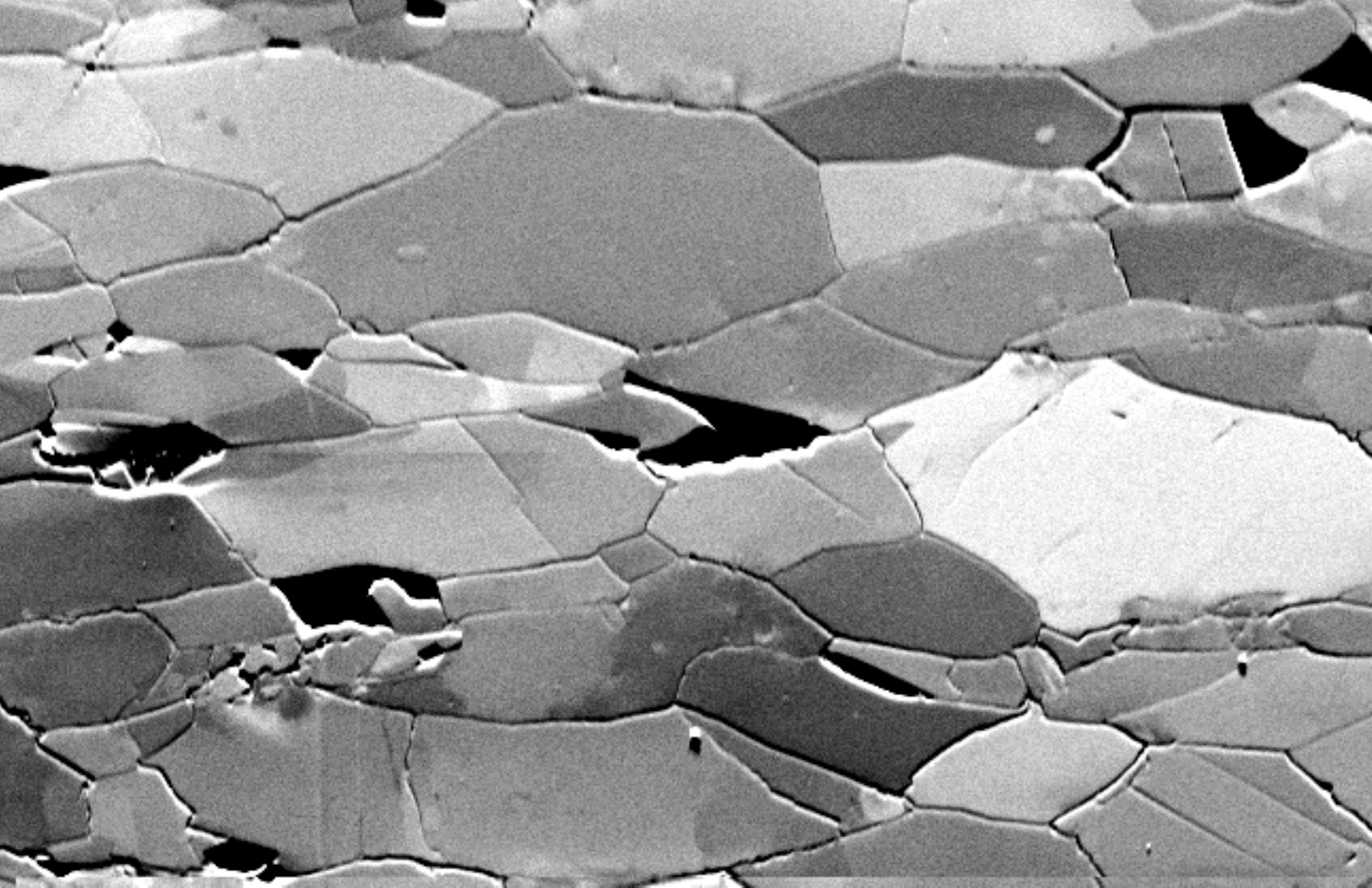
Professor John Wheeler is a faculty member at the University of Liverpool 's School of Environmental Sciences, Department of Earth, Ocean and Ecological Sciences. His work bridges geological processes with materials science through the lens of stress-chemical interactions in crystalline materials. Research interests span three primary themes: Development of Electron Backscatter Diffraction (EBSD) techniques for crystal orientation analysis Fundamental links between stress and chemical processes in geological systems 4D visualization of metamorphic dehydration reactions using synchrotron tomography Key methodologies include diffusion creep modeling, dislocation density analysis, and solid-state phase transformation studies across rocks, metals, and ceramics. His publications reveal a focus on magma emplacement dynamics , mantle convection feedback , and deformation mechanisms in minerals . Research grants from the Natural Environment Research Council (NERC) support projects like 'Feedbacks between mineral reactions and mantle convection' (2022-2028) and '4D micro-scale quantification of coupled mineral dehydration' (2020-2022). Professional activities highlight extensive involvement in academic conferences, including co-convenor roles at international geoscience meetings and editorial contributions to Earth Systems reference works. Teaching responsibilities include coordinating modules on crust-mantle dynamics, metamorphism, and research methods.