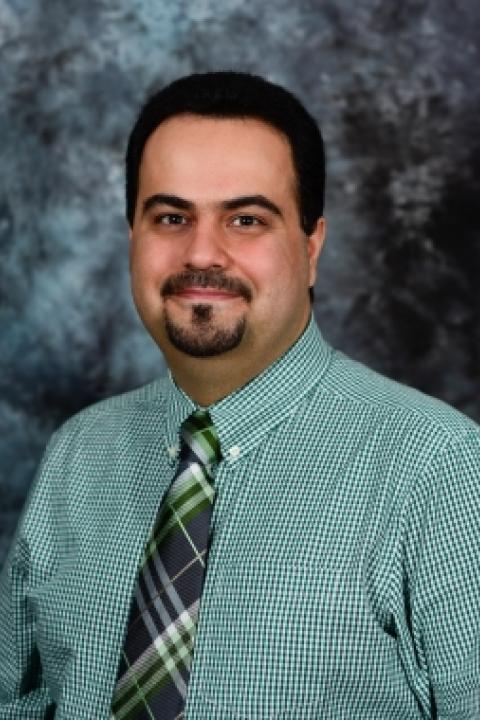
Majid Ghayoomi is a Professor and Civil Engineering Undergraduate Coordinator in the Department of Civil and Environmental Engineering at the University of New Hampshire's College of Engineering and Physical Sciences. His research focuses on geotechnical engineering and geomechanics, particularly unsaturated soil mechanics and geotechnical earthquake engineering. He teaches courses such as Soil Mechanics, Engineering Behavior of Soils, and Geotechnical Modeling. Dr. Ghayoomi holds a Ph.D. from the University of Colorado at Boulder, an M.S. from Sharif University, and a B.S. from the University of Tehran. His research interests include bioremediation, hazards mitigation, soil-structure interaction, and materials testing. He leads the Geotechnical Modeling and Innovation lab, advancing bio-inspired solutions and remote sensing applications in geotechnical systems. His recent work emphasizes climate change impacts on seismic resilience, microbial stabilization of soils, and satellite-based soil moisture monitoring. Key contributions include studies on liquefaction mitigation, seismic site response, and infrastructure vulnerability in dynamic environments. His research spans theoretical, experimental (centrifuge modeling), and computational approaches to address complex geotechnical challenges.
Prof. Catherine O'Sullivan is a Professor of Particulate Soil Mechanics at Imperial College London's Department of Civil and Environmental Engineering, part of the Faculty of Engineering. She leads the Geotechnics Section and serves as Editor-in-Chief of the ASCE Journal of Geotechnical and Geoenvironmental Engineering. Her research focuses on particulate soil mechanics, employing Discrete Element Modelling (DEM) and micro-CT imaging to study sand behavior, reservoir sandstones, and internal erosion. Notable recognitions include the 2016 Shamsher Prakash Research Award and the 2021 President’s Teaching Innovation Award. Education : PhD in Civil Engineering, University of California, Berkeley (2002) MEngSc in Civil Engineering, University College Cork (Ireland) BEng (Civil Engineering), University College Cork (Ireland) Research Interests : Prof. O'Sullivan's work integrates computational and experimental methods to explore granular material behavior. Key areas include DEM validation, μCT analysis, and pore network modeling. Her group collaborates across disciplines, involving physicists and mechanical engineers alongside civil engineers. Awards & Recognition : 2015 Geotechnique Lecture Student Choice Supervision Award (nominated twice) 2023 Alert Geomechanics Special Lecture Advising & Grants : She supports PhD and postdoctoral researchers through Imperial scholarships and fellowships. Her students often explore particulate soil behavior, with many securing prestigious awards. Labs & Teams : Leads the Geotechnics Section at Imperial, fostering interdisciplinary research in geomechanics and computational modeling.
James Tinjum is a Professor in the Department of Civil & Environmental Engineering at the University of Wisconsin-Madison, College of Engineering. His interdisciplinary expertise spans geotechnical, geological, environmental, transportation, and sustainable energy engineering. Education PhD 2006, University of Wisconsin-Madison MS 1995, University of Wisconsin-Madison BS 1993, University of Wisconsin-Madison Research Interests Professor Tinjum’s research integrates energy geotechnics with environmental sustainability. He investigates wind energy site design, district-scale geothermal heating/cooling systems, beneficial reuse of industrial byproducts (e.g., coal-combustion residuals, cement kiln dust), life-cycle environmental analysis, and remediation of contaminated sites. Additional focus areas include thermal conduction in unsaturated soils, landfill liner performance, and PFAS management in Wisconsin. Recent Research Directions His 2020–2024 publications reveal a strong emphasis on geothermal system performance , wind-turbine foundation–soil interaction , and emerging contaminant transport (PFAS, chromium). Fiber-optic distributed temperature sensing (FO-DTS) is a recurring enabling technology, applied to both geothermal borefields and landfill covers. Life-cycle assessment methodologies are consistently employed to quantify environmental benefits of renewable energy and waste-reuse strategies. Scientific Awards 2018 Fellow, American Society of Civil Engineers (ASCE) 2003 ASCE Zone III Practitioner Advisor of the Year 2002 ASCE Wisconsin Section Outstanding Young Engineer Teaching & Mentoring Professor Tinjum teaches core geotechnical courses (Soil Mechanics, Foundation Systems) alongside specialized offerings in wind-energy balance-of-plant design and sustainable systems engineering capstone. He supervises numerous master’s and doctoral students through GLE 790/890 research credits each semester. Labs & Teams He directs field-scale instrumentation campaigns at two wind-turbine sites and multiple campus/district geothermal installations, leveraging fiber-optic sensing networks and thermal response testing to advance energy geotechnics.
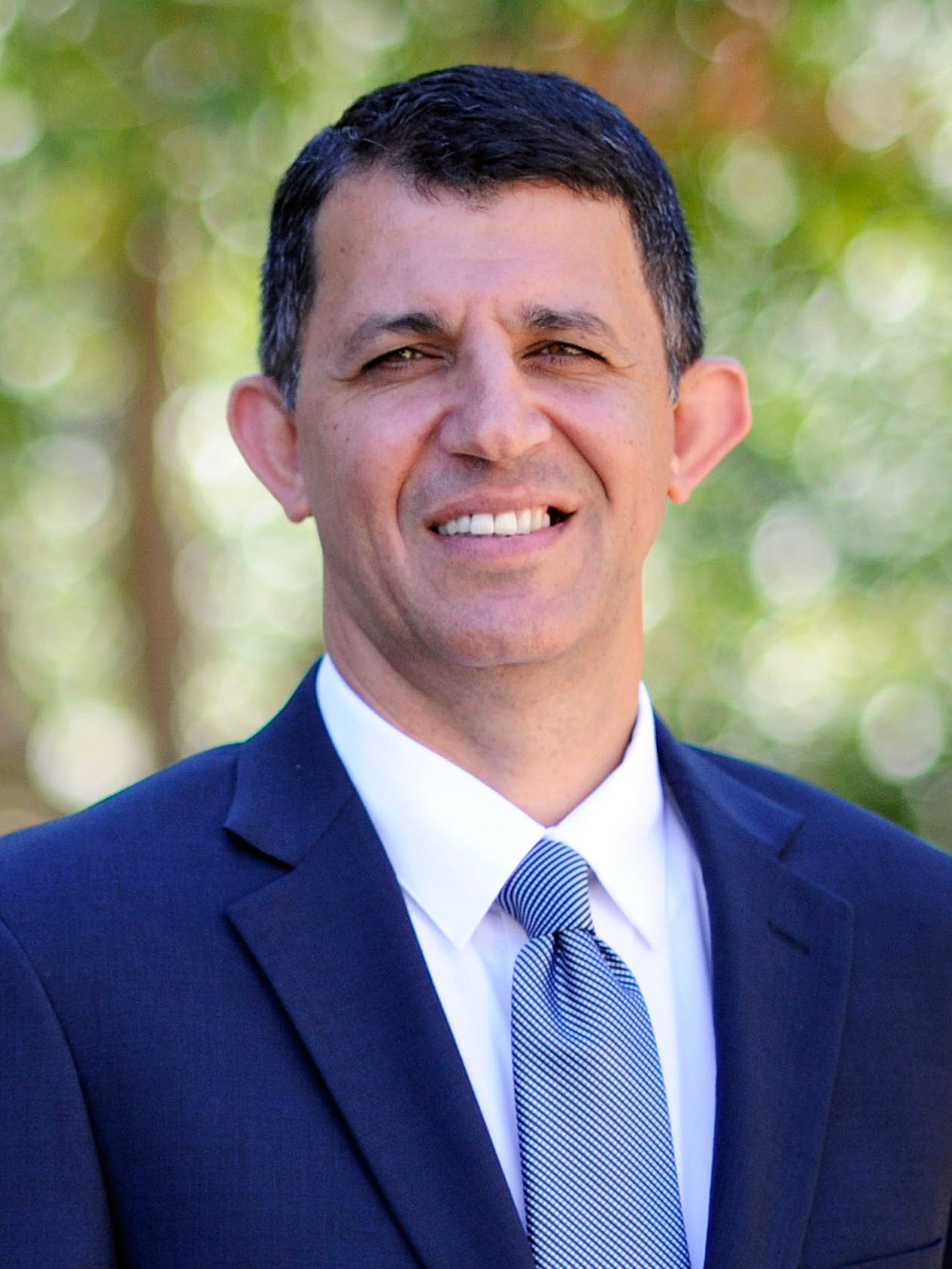
Akram N. Alshawabkeh is the George A. Snell Professor of Engineering and University Distinguished Professor at Northeastern University's College of Engineering, where he also serves as Senior Vice Provost and Director of the PROTECT Superfund Research Center. He holds a PhD in Civil and Environmental Engineering from Louisiana State University (1994), an MS from Jordan University of Science & Technology (1990), and a BE from Yarmouk University (1988). His research focuses on geoenvironmental engineering, soil and groundwater remediation, and electrochemical processes. Alshawabkeh has led major research initiatives, including the PROTECT Superfund Research Center (since 2010) and the CRECE Children's Environmental Health Center (since 2015). He has over 100 peer-reviewed publications and has advised numerous PhD, MS, and undergraduate students. His honors include the ASCE Thomas A. Middlebrooks Award (2014), Fulbright Scholar (2005-2006), and National Science Foundation CAREER Award (2001). His service roles include Chair of the Superfund Research Program Conference (2015), Technical Program Co-Chair for GeoCongress 2008, and editorial board memberships in journals like Journal of Geotechnical and Geoenvironmental Engineering . He has also held leadership positions in professional societies, including Fellow status in the American Society of Civil Engineers (ASCE). Alshawabkeh's work emphasizes interdisciplinary collaboration, addressing environmental health challenges in Puerto Rico and beyond. His research integrates engineering, toxicology, epidemiology, and social science to tackle issues like preterm birth linked to environmental contaminants and karst aquifer remediation.
John S. McCartney is a Professor and Hal Sorenson Endowed Chair in the Department of Structural Engineering at the University of California San Diego (UCSD). He directs the Englekirk Structural Engineering Center and holds editorial roles at journals such as ASCE Journal of Geotechnical and Geoenvironmental Engineering and Computers and Geotechnics. His research focuses on unsaturated soil mechanics, energy geotechnics, and geosynthetics engineering, with applications in thermal energy systems, landfill covers, and seismic response analysis. Education: B.S. and M.S. in Civil Engineering from University of Colorado Boulder (2002), Ph.D. in Civil Engineering from University of Texas at Austin (2007). Research interests include thermo-hydro-mechanical behavior of soils, geothermal energy piles, tire-derived aggregates, and seismic performance of geotechnical systems. His work combines laboratory testing, centrifuge modeling, and numerical simulations to address challenges in sustainable infrastructure and energy systems. Key awards include the Walter L. Huber Research Prize (2016), NSF CAREER Award (2011), and multiple teaching and service recognitions. He actively contributes to ASTM standards and serves as President of the IGS-NA chapter. Lab facilities are located in the Structural and Materials Engineering Building (SME 409). Courses taught include advanced soil mechanics, energy geotechnics, and geotechnical earthquake engineering.
Ning Lu is a Professor in the Department of Civil and Environmental Engineering at the Colorado School of Mines, College of Engineering and Computational Sciences. His work focuses on fundamental soil physical processes in variably saturated porous media, with applications in geotechnical and environmental engineering. Research Interests: Dr. Lu's research spans unsaturated soil mechanics , vadose zone hydrology , slope stability , and soil-water interaction . He investigates fluid flow, chemical transport, heat transfer, stress, and deformation across scales—from atomic potentials to engineering-scale behavior. His work addresses critical problems such as expansive soil damage, nuclear waste containment, and shallow landslides induced by rainfall. His recent publications (2016–2024) reflect a cohesive research program advancing the theoretical foundations of soil physics. Key themes include re-evaluating classical concepts like pore water pressure, developing unified models for soil water retention and hydraulic conductivity, and introducing suction stress as a critical variable for slope instability prediction. These works appear in leading journals such as the Journal of Geotechnical and Geoenvironmental Engineering and Reviews of Geophysics , indicating sustained high-impact contributions to the field. Scientific Awards: Karl Terzaghi Award, American Society of Civil Engineers, 2023 Norman Medal, American Society of Civil Engineers, 2021 Maurice Biot Medal, American Society of Civil Engineers, 2017 Ralph B. Peck Medal, American Society of Civil Engineers, 2017 Practice Paper of the Year Award, GTJ, ASTM, 2016 J.J. Croes Medal, American Society of Civil Engineers, 2010 Advising and Grants: While specific students and grants are not listed, Dr. Lu has authored two influential textbooks— Unsaturated Soil Mechanics (2004) and Hillslope Hydrology and Stability (2012)—indicating significant educational leadership and mentorship. His service on the National Academies committee for Spirit Lake/Toutle River system (2016–2017) reflects engagement in national-level environmental and engineering policy. Labs and Teams: Although no specific lab or team name is provided, his research program involves experimental, theoretical, and computational approaches to soil physics, likely supported by a research group at Colorado School of Mines.
Catherine Mulligan is a Distinguished Research Professor in the Department of Building, Civil, and Environmental Engineering at Concordia University, where she also serves as Director of the Concordia Institute for Water, Energy and Sustainable Systems. She was previously the Concordia Research Chair in Geoenvironmental Sustainability (Tier I) until 2021, having held this prestigious research chair since 2002 (initially as Tier II). Dr. Mulligan earned her B.Eng. and M.Eng. degrees in chemical engineering from McGill University, followed by a Ph.D. specializing in geoenvironmental engineering, also from McGill University. After 16 years working at McGill University and in industry (including positions at the Biotechnology Research Institute of the National Research Council and SNC Research Corp.), she joined Concordia University in 1999 as an Assistant Professor, was promoted to Associate Professor in 2002, and to full Professor in 2008. Her research spans multiple critical areas of environmental engineering with a focus on contamination remediation. She specializes in surfactant-enhanced washing and flushing of contaminated soils and sediments, treatment of metal-contaminated media, bioremediation techniques, and various wastewater treatment methods. Her work includes biosurfactant applications, in-situ sediment remediation, anaerobic treatment processes, membrane technologies for water treatment, and energy generation through pressure-reduced osmosis. She has developed sustainability indicators and focuses on practical applications of environmental engineering solutions. Analysis of her recent publications (2023-2025) reveals a continued leadership in environmental engineering with particular emphasis on nanotechnology applications for oil spill cleanup in sensitive coastal regions, advanced membrane technologies for water treatment and energy generation, microbially induced calcite precipitation for mining waste remediation, sustainable resource recovery approaches from waste batteries, and innovative techniques for eutrophic lake restoration. Her research demonstrates a consistent focus on practical, sustainable solutions to environmental contamination problems across diverse settings. Dr. Mulligan's scientific contributions have been recognized with numerous prestigious awards including Fellowship in the Royal Society of Canada, Canadian Academy of Engineering, Engineering Institute of Canada, and the Canadian Society for Civil Engineering. She has received the RSC Miroslaw Romanowski Medal, the Geoenvironmental Award, the A.G. Stermac Award of the CGS, and the John B. Sterling Medal of the EIC. Her Concordia-specific honors include the Provost Circle of Distinction, Concordia Sustainability Champion, and the Petro Canada Young Innovator Award (awarded twice). With over 40 years of research experience across government, industrial, and academic environments, Dr. Mulligan has supervised to completion more than 75 graduate students in Civil Engineering (MASc and PhD programs). Her research has attracted significant funding, including a $1,643,700 NSERC CREATE grant for the Institute in Water, Energy and Sustainability, which represents the first Concordia project to receive funding through this program. She has authored more than 140 refereed papers, holds three patents, and has made substantial editorial contributions as Section Editor for the Journal of Environmental Engineering, Chief Editor for Waste (MDPI), and serves on multiple other editorial boards. As Director of the Concordia Institute for Water, Energy and Sustainable Systems, Dr. Mulligan leads an interdisciplinary team focused on training students in sustainable development practices and advancing research into innovative solutions for water, energy, and resource conservation challenges. The institute represents a significant hub for environmental research and education at Concordia University.
Matthew J. Cracknell is a Senior Lecturer in Geodata Analytics at the University of Tasmania's School of Natural Sciences, specializing in Earth Sciences. He holds a PhD in Computational Geophysics (2014) and BSc (Hons) in Geophysics (2009), both from the University of Tasmania. His research integrates geoscience with machine learning to address challenges in mineral exploration, environmental remediation, and sustainable resource management. Key focuses include automated detection of geological features in drillcore imagery, decarbonization of energy systems via ore deposit discovery, and legacy mine waste characterization. Cracknell leads the CODES Research Program 6 (Geophysics and Computational Geosciences) and Module 2 of the AMIRA P1249 project. He has secured significant industry and government funding, including projects with Boliden AB, Anglo American, and the Tasmanian Government. His work emphasizes collaboration with mining partners and agencies like Geoscience Australia and Mineral Resources Tasmania. Teaching roles include developing courses on the mining value chain, climate resilience, and geodata analytics. As Graduate Research Coordinator, he promotes HDR student well-being and supervises over 20 doctoral and masters students. Awards include the 2019 Oz Minerals Explorer Challenge Prize. Key affiliations include the International Association for Mathematical Geosciences, Australian Society of Exploration Geophysicists (Tasmanian Branch Secretary), and Geological Society of Australia.
Alireza Yaseri serves as an Adjunct Assistant Professor in the Department of Civil Engineering within Smith Engineering at Queen's University. He maintains a dual affiliation with the GeoEngineering Centre, a leading research institute at Queen's specializing in geotechnical and geoenvironmental challenges, where he contributes to advanced computational modeling initiatives. Education: PhD in Geotechnical Engineering, Université Laval (2021) MSc in Geotechnical Engineering, Shiraz University (2012) Dr. Yaseri's research program centers on computational geomechanics with emphases on seismic soil-structure interaction, railway-induced vibrations, and constitutive modeling of granular materials. His work bridges theoretical mechanics and practical infrastructure challenges through advanced numerical techniques, particularly hybrid FEM-SBFEM implementations for dynamic analysis of earth dams, canyon systems, and transportation corridors. He investigates nonlinear soil behavior under monotonic/cyclic loading and develops predictive models for vibration propagation in complex geological settings. Analysis of his publication trajectory (2014-2024) reveals consistent innovation in computational geotechnics, with recent work focusing on 2.5D/3D modeling of train-induced vibrations and sophisticated sand constitutive frameworks. His 2024 publications demonstrate dual expertise in railway vibration prediction methodologies and critical-state soil mechanics, while his earth dam-canyon system analyses from 2020-2022 established foundational approaches for seismic amplification in flexible geological formations. As an active member of Queen's GeoEngineering Centre, Dr. Yaseri collaborates on interdisciplinary projects addressing infrastructure resilience, with particular relevance to dam safety and transportation geotechnics in seismic zones. His technical leadership in scaled boundary methods contributes to the center's reputation for computational innovation in geomechanics.
Susan E. Burns is a Professor at the School of Civil and Environmental Engineering , Georgia Institute of Technology. She holds multiple administrative roles, including Interim Associate Vice President for Research Operations and Infrastructure and Associate Chair for Administration and Finance. Burns earned all her degrees (B.C.E., M.S., Ph.D.) in civil engineering from Georgia Tech. NSF CAREER Award (2000) Arthur Casagrande Professional Development Award (ASCE) Edmund Friedman Young Engineer Award (ASCE) Class of 1969 Teaching Scholar (Georgia Tech) Fellow, American Society of Civil Engineers (2013) Her research focuses on geoenvironmental engineering , emphasizing waste material reuse (dredged sediments, fly ash), stormwater treatment , soil erosion control , and microbially induced calcite precipitation (MICP) . Recent publications analyze microplastic transport, arsenic speciation in fly ash, and LCA of dredged sediment reuse. Funding sources include NSF, DOE, US Army Corps of Engineers, and state departments of transportation. Professor Burns has led major conference proceedings (e.g., IS Atlanta 2008, ICSE-5) and served on editorial boards like ASCE's Journal of Geotechnical and Geoenvironmental Engineering. Her administrative roles include chairing graduate committees, overseeing curriculum changes, and managing geosystems group operations.
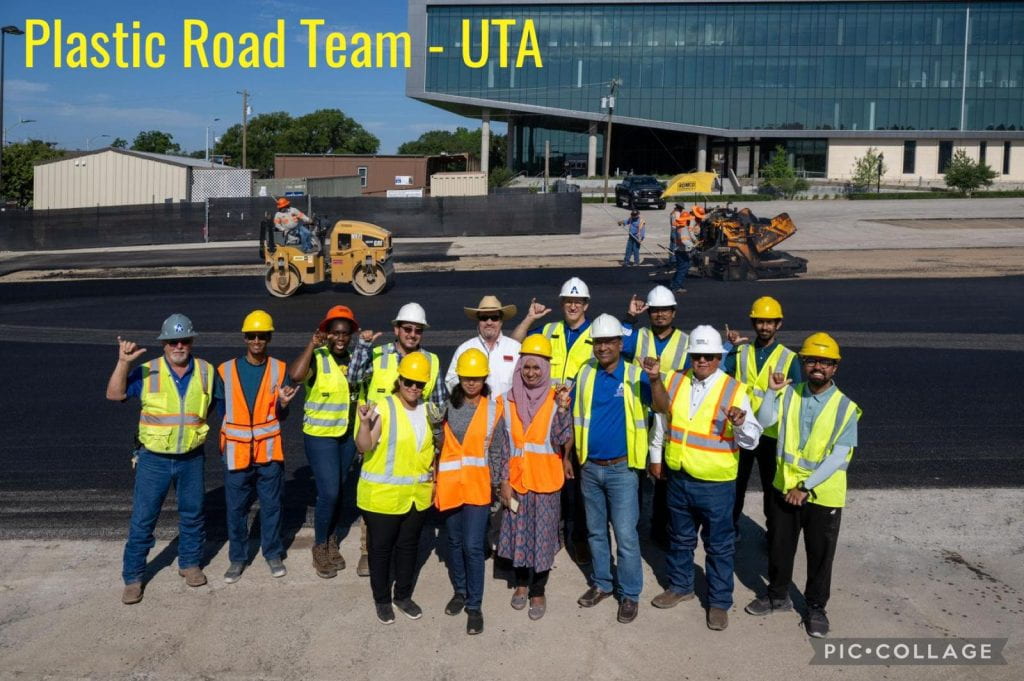
Dr. Md S Hossain is a Professor of Civil Engineering at The University of Texas at Arlington, directing the Solid Waste Institute for Sustainability (SWIS). He holds a B.S. from IIT Bombay, an M.E. from AIT Bangkok, and a Ph.D. from North Carolina State University. His research focuses on sustainable waste management, bioreactor landfills, geotechnical engineering, and slope stabilization, with notable contributions to landfill gas-to-energy and recycled materials utilization. He has over 6 years of professional experience in geotechnical and geoenvironmental projects globally. Research Interests: Sustainable waste management, landfill engineering, slope stabilization, recycled materials, geotechnical site investigations. Key Roles: Director of SWIS, Principal Investigator on numerous grants, and advisor to over 50 graduate students. Dr. Hossain has secured millions in grants from agencies like NSF, EPA, and TxDOT, focusing on waste-to-energy, landfill mining, and slope stabilization using recycled plastics. His awards include the ISWA Leadership Award and Distinguished AIT Alumni recognition. He actively collaborates with international organizations like CCAC and ISWA, advocating for sustainable waste solutions in developing countries. His work spans 50+ projects in Bangladesh, Singapore, Hong Kong, and the U.S., emphasizing practical applications like recycled plastic pins for slope stabilization and ET cover systems for landfills. SWIS, under his leadership, promotes global sustainable waste management through education, research, and policy advocacy.
Shideh Dashti is a Professor and Associate Chair for Administration in Geotechnical Engineering & Geomechanics at the University of Colorado Boulder's Department of Civil, Environmental, and Architectural Engineering within the College of Engineering and Applied Sciences. She holds a PhD (2009) and MS (2005) from UC Berkeley and a BS (2004) from Cornell University where she graduated Magna cum Laude. Dr. Dashti's research focuses on the intersection of geotechnical engineering, infrastructure resilience, and environmental sustainability. Her work spans physical modeling (particularly centrifuge testing), seismic soil-structure interaction, liquefaction mechanisms in urban environments, and the impact of compound hydrologic-seismic hazards on infrastructure. She has pioneered research on the seismic response of underground structures in dense urban settings and performance-based design of liquefaction remediation techniques. Analysis of her recent publications (2021-2025) reveals a strong emphasis on liquefaction mitigation techniques, particularly using dense granular columns and ground densification. Her work increasingly incorporates machine learning approaches and examines the intersection of infrastructure resilience with social equity, as evidenced by her research on environmental vulnerability in incarceration facilities. Her publications predominantly appear in top-tier journals like the ASCE Journal of Geotechnical and GeoEnvironmental Engineering. 2025 Earthquake Engineering Research Institute (EERI) Distinguished Lecture Award 2024 Campus Sustainability Award, CU Boulder 2021 Walter L. Huber Civil Engineering Research Price, ASCE 2015 National Science Foundation Early CAREER Award 2018 Arthur Casagrande Professional Development Award, ASCE Dr. Dashti has received significant research funding including the prestigious NSF CAREER award. She serves as Co-leader and Steering Committee member of GeoEngineering Extreme Event Reconnaissance (GEER), having participated in 8 reconnaissance efforts since 2011 (leading 3). She is also an ISSMGE TC104 committee member and one of two U.S. representatives. Her professional service includes editorial roles, notably as Associate Editor of the Year for the ASCE Journal of Geotechnical Engineering and Geomechanics (2020). As a leader in the field, Dr. Dashti directs research focused on resilient infrastructure with sustainability and equity. She leads the GAANN fellowships in Integrative Reengineering of Infrastructure and is affiliated with the Center for Infrastructure, Energy, and Space Testing. Her work bridges traditional geotechnical engineering with contemporary concerns about social justice and environmental sustainability in infrastructure systems.
Professor Joel Smethurst holds the position of Professor of Geotechnical Infrastructure at the University of Southampton's Faculty of Engineering and Physical Sciences, where he also serves as Director of Programmes for Civil and Environmental Engineering. His research focuses on geotechnical infrastructure longevity under environmental and operational stresses, including climate change impacts on transportation earthworks and flood defenses. He completed his PhD in Geotechnical Engineering at Southampton in 2004, advancing through roles as Research Fellow, Lecturer, and Associate Professor before attaining his current rank. His educational leadership includes re-accreditation of undergraduate programs (2023-24) and integrating Engineering Council AHEP4 standards. Research has been funded by EPSRC and industry partners like Network Rail and National Highways. Notable projects include the EPSRC ACHILLES Programme Grant investigating weather-driven earthwork deterioration. Advancing geotechnical knowledge through field monitoring (e.g., 20-year slope data) and numerical modeling, his work bridges theory and practice. External roles include editorial board memberships and invited expert presentations on slope stabilization and climate effects.
Dr. Partha Narayan Mishra is a Senior Lecturer at the School of Civil Engineering, The University of Queensland, with expertise in geotechnical engineering and electromagnetic soil characterization. He holds a PhD in Geotechnical Engineering (2020) and dual master's/bachelor's degrees (2015) from National Institute of Technology Rourkela, India. PhD Thesis: Soft soil characterization and improvement for reclaimed land application (2020) Dual Degree: B.Tech. Hons. in Civil Engineering and M.Tech. in Geotechnical Engineering His research focuses on soft soil improvement, unsaturated soil mechanics, electromagnetic characterization of geomaterials, biomediated geotechnical engineering, and clay barrier systems for waste disposal. He has published 30+ articles in top-tier journals and conferences, with recent work on mine waste utilization, MSE wall stability, and electromagnetic dewatering techniques. He co-supervises 2 PhD and 5 Master's students at UQ, having previously guided 1 PhD, 1 Master's, 2 Bachelor's, and 3 summer research theses. He initiated the global AGERP lecture series (2020), reaching 125+ countries, and holds teaching certifications from the Higher Education Academy (UK). Professional affiliations include the Australian Geomechanics Society, ISSMGE, IGS, and ASCE. He has reviewed 50+ journal articles and held leadership roles in UQ committees.
Alan Duggan is a Research Fellow in the Department of Building & Civil Engineering at the University of Galway, affiliated with the Engineering Research Group (ERG). His work focuses on sustainable construction practices, environmental engineering, and the environmental impact of infrastructure projects, particularly in peatland regions. He specializes in carbon footprint analysis, geotechnical challenges in peatland construction, and the development of low-carbon materials and techniques. Principal Investigator in ERG Focus areas: Peatland rehabilitation, carbon sequestration in construction materials, and sustainable transportation infrastructure His research integrates geotechnical engineering with environmental science, addressing challenges in ground improvement, drainage systems, and carbonation processes. Key contributions include studies on stabilized peat as a carbon sink and embodied carbon analysis in motorway construction. His publications span environmental sustainability, material science, and infrastructure planning, emphasizing practical solutions for reducing environmental impact in construction projects.