Soheil Sabriمشاهده پروفایل
استادیار
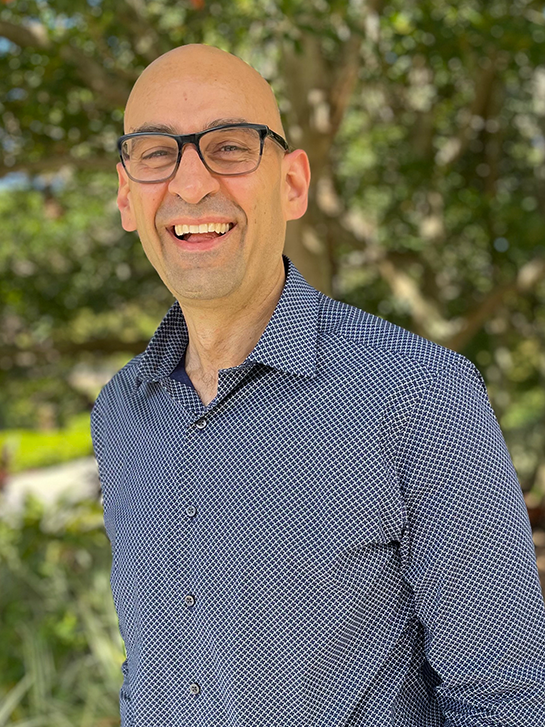
Dr. Soheil Sabri is an Assistant Professor at the School of Modeling, Simulation, and Training (SMST) at the University of Central Florida (UCF), where he directs the Urban Digital Twin Lab. His primary focus involves advancing urban planning through Digital Twins, Geospatial Science, and data-driven decision-making frameworks. Education: Ph.D. in Urban & Regional Planning, Universiti Teknologi Malaysia M.S. in Urban Planning, Science and Research University-Tehran M.S. in IT Management (Executive), The University of Melbourne Postdoctoral Fellowships in Urban Analytics and 3D Geospatial/Landscape Design at The University of Melbourne Research Interests: Dr. Sabri specializes in Digital Twins for urban systems, integrating 2D/3D/4D geospatial data with socio-economic and environmental modeling. His work emphasizes Planning Support Systems , GeoDesign , and Environmentally Sustainable Design (ESD) , leveraging IoT, AI, and Deep Learning to enhance urban quality of life (UQoL). He also explores real-time analytics for critical infrastructure and interoperability in building energy models. Professional Leadership: He co-chairs the Academia and Research Working Group in the Digital Twin Consortium and contributes to national initiatives like the Planning Institute of Australia's PlanTech Working Group, Geoscience Australia's Spatial Digital Twin Working Group, and the Smart Cities Council's Digital Twin Task Force. Prior Appointments: Before joining UCF, Dr. Sabri served as Senior Research Fellow at The University of Melbourne's Centre for Spatial Data Infrastructure and Land Administration (2014–2023), where he led global consultancy projects on digital land planning, urban analytics, and public health impacts of built environments. He was also a Senior Lecturer at Universiti Teknologi Malaysia (2012–2014). Laboratory Leadership: The Urban Digital Twin Lab under his direction focuses on 3D urban analytics, climate adaptation through GeoDesign, and modeling complex human-environment interactions. His lab develops composable system architectures for Digital Twins that unify spatial-temporal data with predictive analytics.