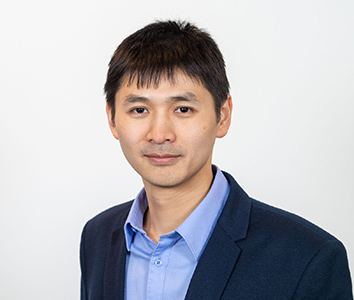
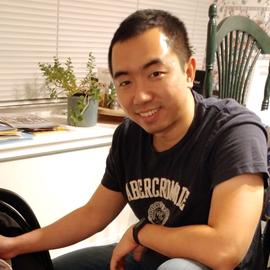
Dr. Chunshun Zhang is a Senior Lecturer in the Department of Civil Engineering at Monash University, specializing in geotechnical engineering and geo-infrastructure. He holds over 4 years of academic experience and 3 years in industry (GHD, Australia), and is a member of Engineers Australia and the Australian Geomechanics Society. His research focuses on geomechanics, including load-induced grain crushing, piled foundation bearing capacity, and failure mechanisms of pressurized water pipelines. He has developed the Monash Tool for water utilities and contributed to Australia’s largest numerical models for underground mining subsidence. His work has attracted over $7M in research grants and earned prestigious awards like the George Stephenson Medal (2014) and IWA’s Project Innovation Award (2016). Research interests include numerical modeling of geotechnical systems, pipeline failure mechanisms, and particle breakage in granular materials. His applied work bridges academia and industry, emphasizing practical solutions for infrastructure resilience and asset management. Key Contributions: Monash Tool for water utilities, large-scale mining subsidence models, and corrosion-patch stress analysis. Grants: Over $7M in external/internal funding as Chief Investigator or project lead. Advising: Accepts PhD students in geotechnical engineering and related fields.
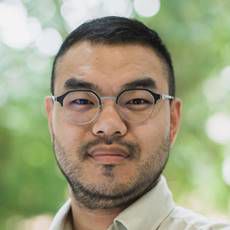
Bowei Chen is a Senior Lecturer (equivalent to Associate Professor) in Marketing Analytics and Data Science at the Adam Smith Business School, University of Glasgow. He holds a PhD in Computer Science from University College London (UCL). Prior roles include Lecturer (Assistant Professor) at the University of Lincoln and research visits at institutions like Copenhagen Business School, Trinity College Dublin, and Microsoft Research Cambridge. His research focuses on applications of probabilistic modeling and machine learning in business, particularly marketing and finance. Key areas include recommendation systems, business continuity management, data valuation frameworks, and automotive market analysis. He co-authored the textbook Business Analytics with Python: Essential Skills for Business Students (2025). Notable contributions include developing frameworks like GEO for automotive design and SRNI-CAR for Chinese automotive market analysis. His work bridges AI-driven solutions with practical business challenges, as seen in projects on traffic flow forecasting and energy service optimization via Innovate UK grants. Grants: Lead PI on £218k Innovate UK KTP project with Troo (2024-2026); Co-I in projects totaling over £4M across China and Europe. Teaching: Data Science for Marketing Analytics (MSc), Business Intelligence (MSc). Awards: INFORMS Meritorious Reviewer (2024), Marshall Institute Research Award (2023), and multiple best paper awards. Bowei is actively involved in editorial roles for journals like Electronic Commerce Research and Applications , and serves on program committees for NeurIPS, ICML, and AAAI.
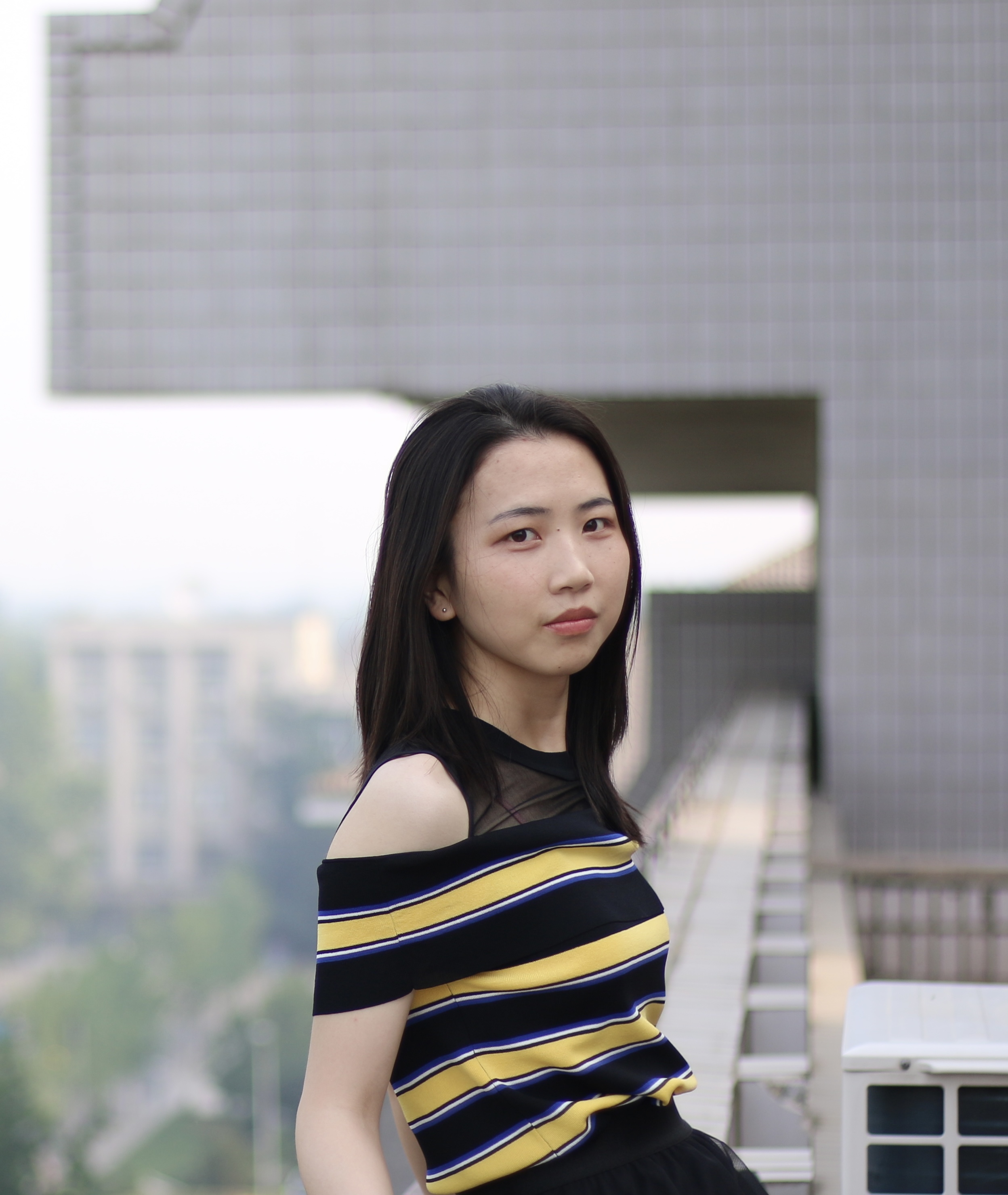
Wonjun Cha is an Assistant Professor in Civil Engineering at the University of Birmingham, UK. He specializes in geotechnical engineering, with a focus on long-term soil behavior, infrastructure monitoring using advanced technologies (DFOS, NMR, EM), and renewable energy-related geophysical tools. His work integrates experimental and computational methods to address challenges in geo-infrastructure resilience under climate change and environmental stresses. Education: PhD in Energy Resource and Petroleum Engineering (King Abdullah University of Science and Technology, 2021) MSc in Geotechnical Engineering (Kookmin University, 2016) BSc in Civil and Environmental Engineering (Kookmin University, 2013) Research Interests: Cha’s research spans long-term soil response to mechanical and environmental stresses (e.g., heating/cooling, freezing/thawing), geophysical monitoring tools for buried infrastructure, and bio-inspired geotechnical materials. He develops data-driven models for predicting soil behavior under repetitive loading and climate change impacts. Advising & Grants: Currently supervising 4 postgraduate students in Geotechnical Engineering and Advanced Engineering Management. Actively recruiting PhD candidates and postdoctoral researchers for projects in geophysical sensing, soil behavior modeling, and renewable energy integration. Labs & Collaborations: Collaborates internationally on foam cement development and bio-inspired damping materials. Engages in fieldwork for onshore/offshore infrastructure monitoring and laboratory tool development for soil characterization.
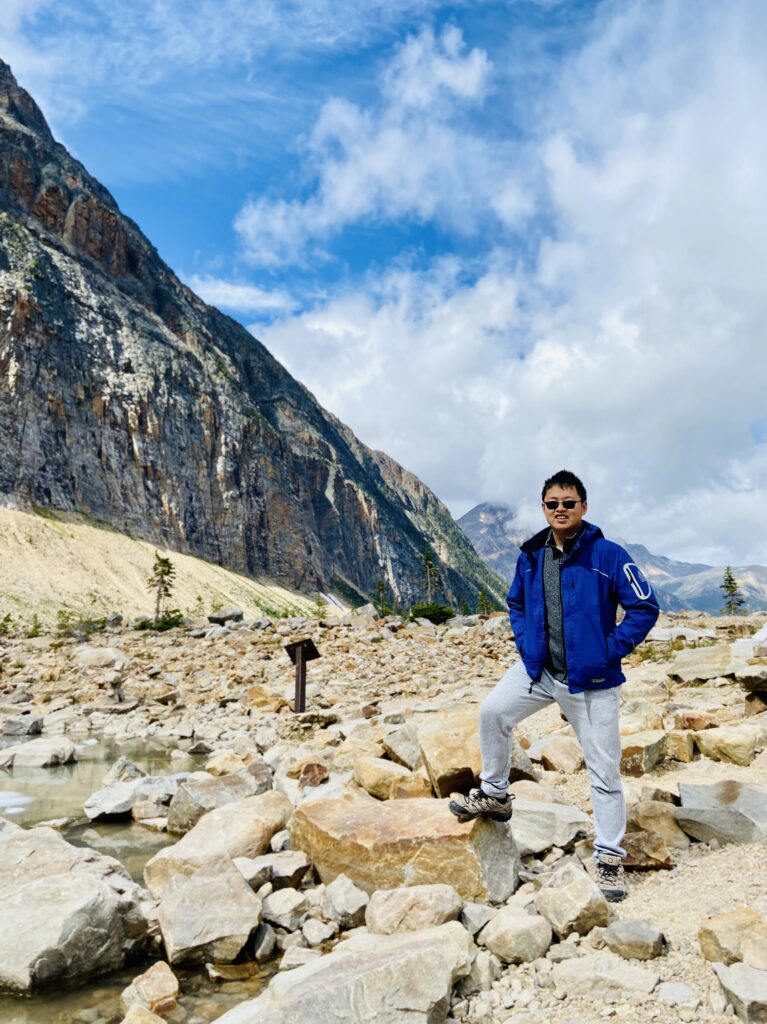
Alex Levering is an Assistant Professor in socio-cultural landscape interactions at the Faculty of Science, Vrije Universiteit Amsterdam. He is affiliated with the Institute for Environmental Studies (IVM) and specializes in remote sensing, geo-information sciences, and computer vision applications. His work focuses on landscape semantics, AI interpretability, and combining visual/non-visual data for predictive models. Education : PhD in Remote Sensing (2024), Wageningen University MSc in Geo-Information Sciences (2019), Wageningen University BSc in Water Management (2016), Hogeschool Zeeland Research Interests : Levering explores how computer vision and GeoAI can quantify landscape quality preferences, model urban liveability from aerial/satellite imagery, and improve AI model interpretability. He also investigates small dataset challenges and integrates social media data for environmental monitoring. Current Projects : Leading roles in projects like 'Guiding Human Settlements Towards Sustainable Development' (2019–2024), focusing on urban densification and environmental impact assessments. Collaborations with institutions like the Hong Kong University of Science and Technology (Guangzhou) as an advisor (2025–2027). His recent publications emphasize multimodal learning, urban liveability prediction, and explainable AI for socioeconomic analyses. No scientific awards are explicitly listed in the provided texts.
David Philip Kreil is an Associate Professor at the Institute of Molecular Biotechnology within the Department of Biotechnology and Food Science at the University of Natural Resources and Life Sciences, Vienna (BOKU) . He holds a joint appointment as Chair of Bioinformatics at the University of Warwick (2012-2014) and has held research positions at the European Bioinformatics Institute (EBI) and the University of Cambridge . His work bridges computational biology, transcriptomics, and plant-nematode interactions. 2012-2014: Chair of Bioinformatics, University of Warwick 2005: WWTF Vienna Science Chair at BOKU 2001-2004: MRC Research Fellow, University of Cambridge 1997-2001: EMBL PhD Programme, EBI Kreil's research focuses on transcriptomic analysis of plant-pathogen interactions (e.g., Fusarium resistance in wheat, nematode-induced syncytia) and computational methods for microarray calibration, data normalization, and statistical modeling. He has applied machine learning to weather forecasting and biomedical data. Scientific Awards : Research Fellow, Darwin College, University of Cambridge (2002-2005) His 15 most recent articles emphasize bioinformatics tools, plant immunity, and interdisciplinary applications of machine learning in biology and climate science. He has supervised theses on wheat transcriptomics and nematode-induced gene expression.
Bastian Beggel is a Professor at Kaiserslautern University of Applied Sciences in the School of Computer Science and Microsystems Technology (Zweibrücken campus) since January 2018. He teaches Databases and Data Analysis while serving as program director for both the regular and dual Bachelor's programs in Applied Computer Science. He also holds membership on the Computer Science Examination Board (FB IMST). Academic Background: Mathematics studies at Technical University of Munich (1998-2004) Ph.D. at Max Planck Institute for Informatics, Saarbrücken (2009-2014) Research Focus: His work centers on practical data-intensive systems including the development of the DBcoach educational platform for database instruction. Research spans Data Science applications for university data utilization, Deep Learning in Computer Vision, and Geo-Analytics with specialization in OpenStreetMap data indexing and map-matching algorithms. His approach emphasizes bridging theoretical concepts with real-world industrial applications. Professional Experience: Prior to academia, he worked as a Database Developer at o2 Germany (2005-2008), Research Assistant at Max Planck Institute (2009-2015), and Data Scientist at BMW Group (2015-2017). He supervises student theses and leads the operational development of the DBcoach platform, integrating educational technology with practical database training. Operational Context: Maintains office hours in Room H243 (Zweibrücken campus) with appointments scheduled via email. His work demonstrates consistent translation of industry experience into academic teaching and research infrastructure.
Besnik Selimi is a Full Professor at the Faculty of Contemporary Sciences and Technologies, South East European University (SEEU). He holds a Ph.D. in Computer Sciences from Joseph Fourier University (Grenoble 1), France, specializing in Software Testing. His academic career spans roles as Associate Professor (2015–present), Assistant Professor (2010–2015), and part-time Lecturer (2009–2010). He also served as a State Advisor on Information Technologies for the Republic of Macedonia (2007–2008) and held research roles in France. Education: Ph.D. in Computer Sciences (2009), Joseph Fourier University, Grenoble Master in Software Engineering (2004), Joseph Fourier University Bachelor of Computer Sciences (2002), Joseph Fourier University Research Interests: Software Testing and Formal Methods Blockchain Technology and Smart Contracts IoT and Smart Agriculture Natural Language Processing for Low-Resource Languages Recommender Systems and Trust Metrics Cybersecurity and Data Privacy Recent work focuses on systematic reviews in testing methodologies, blockchain applications, and AI-driven solutions for education and agriculture. His contributions include the BCERT blockchain-based academic certification system and neural network models for low-resource language processing. Labs/Teams: Active in SEEU's research initiatives, collaborating with institutions like the "Max van der Stoel" Institute and the Institute for Environment and Health .
Professor Willy Zwaenepoel is a distinguished academic and Dean of the Faculty of Engineering at the University of Sydney. He holds Fellowships from ACM, IEEE, and ATSE. His research focuses on distributed systems, operating systems, and experimental computer science. Previously, he spent two decades at Rice University and nine years as Dean of EPFL's School of Computer and Communication Sciences before joining Sydney in 2018. Education: BS/MS, Ghent University (1979) MS/PhD, Stanford University (1980/1984) Research Interests: His work emphasizes distributed systems and operating systems, with contributions to key-value stores, transactional systems, and large-scale graph processing. Recent projects include optimizing geo-replicated systems and improving datacenter scheduling efficiency. Articles Trends: Recent publications address OS scheduling (Nest), distributed graph mining (Tesseract), and transactional systems' performance limits. He explores hardware-software co-design for multicore systems and energy-efficient data centers. Awards: Fellow of ACM (2021) Fellow of IEEE (2020) Fellow of ATSE (2019) Grants & Advising: Active grants include adaptive key-value store research (2021) and large-graph processing systems (2018). He advises PhD students and postdocs on distributed systems and storage challenges. Labs/Teams: Leads the Sydney systems research group focusing on scalable distributed systems and cloud infrastructure.
Drew Pendergrass is a postdoctoral associate at Duke University's Nicholas School of the Environment and a doctoral student in Environmental Engineering at Harvard University. His research focuses on using satellite data to track pollution sources and improve air quality monitoring through tools like the open-source CHEEREIO platform. He also explores intersections of economic democracy and ecological governance, collaborating with social scientists and historians. His work bridges environmental science and policy, emphasizing democratized resource management. Education: Doctoral Candidate in Environmental Engineering, Harvard University Bachelor's Degree (implied from career trajectory, exact field unspecified) Research Interests: Drew's scientific work centers on air pollution tracking (e.g., PM2.5 dynamics), methane emissions monitoring, and geostationary satellite data analysis. His non-scientific writing addresses systemic responses to environmental crises, advocating for economic democracy frameworks. Recent projects include analyzing long-term air quality trends in East Asia and developing tools to attribute pollution sources. Key Publications: Recent work includes studies on global methane emissions trends, PM2.5 monitoring via satellite, and contributions to the Power Shift: Keywords for a New Politics of Energy anthology. His 2023 paper on CHEEREIO established an open-source platform for emissions inversion. Awards: CASE Grand Gold Circle of Excellence Award (2020) 2016 National Courage in Student Journalism Award Grants & Advising: While no specific grants are listed, his CHEEREIO project and satellite analysis work likely involve collaborative funding. No formal advisees are mentioned, but he collaborates widely on interdisciplinary projects. Labs/Teams: Active in Duke's Nicholas School research groups and Harvard's environmental engineering initiatives. Co-developer of CHEEREIO with the GEOS-Chem team.
Dandan Zhang is a Postdoctoral Fellow in Harvard University's School of Engineering and Applied Sciences, collaborating with Professor Daniel Jacob on methane inversion using the GEOS-Chem High Performance (GCHP) model. Her work integrates atmospheric chemistry and computational modeling to address environmental pollution challenges. She holds a PhD in Energy, Environmental, and Chemical Engineering from Washington University in St. Louis (advised by Randall Martin) and dual bachelor's degrees in Environmental Science and Economics from Peking University. Her doctoral research focused on air quality modeling with ground-based and satellite observations. Research interests emphasize atmospheric chemistry, satellite remote sensing, and pollution exposure analysis. Key projects include methane source inversion, model spatial resolution effects on population exposure, source sector contributions to air pollution, and improving fine mineral dust representation in GEOS-Chem. She actively contributes to the GEOS-Chem open-source ecosystem through repositories like geos-chem, HEMCO, and GCHP. Zhang collaborates within Harvard's atmospheric science research group and maintains technical proficiency in Fortran and Python for chemical transport modeling. Her work bridges environmental engineering with climate science to enhance understanding of anthropogenic pollution impacts.
Dr. Laurence Larry D. Merkle is a Research Assistant Professor of Computer Science in the Department of Electrical and Computer Engineering at the Air Force Institute of Technology (AFIT), where he has served since 2022, following his tenure as Assistant Professor from 2015 to 2022. He conducts computer science research aligned with Air Force and Department of Defense needs and mentors graduate students in master’s and doctoral research. Ph.D. in Computer Engineering, Air Force Institute of Technology, 1996 M.S.C.E., Air Force Institute of Technology, 1992 B.S. in Computer and Systems Engineering, Rensselaer Polytechnic Institute, 1987 Dr. Merkle’s research spans evolutionary computation, quantum computing, cybersecurity, and AI-driven education. He applies evolutionary algorithms to optimize complex systems in defense and engineering, and explores quantum circuit optimization, error mitigation, and hardware security. His work in computer science education includes gamification, robotics in teaching, and curriculum design. His recent publications reflect a strong trend toward quantum computing and defense applications, particularly in space situational awareness and secure quantum hardware. He has also contributed significantly to educational technology, including serious games for networking and pedagogical tools for introductory courses. Best Presentation, AMOS Conference (2019) Order of the Engineer (2019) Best Poster, CISS Education Colloquium (2018) Who’s Who in Engineering Education (2005–2006) Best Paper, ASEE Conference (2005) Air Force Achievement Medal (2000) Dr. Merkle has successfully led funded research projects totaling over $1.1 million as PI or Co-PI. He has chaired 2 Ph.D. and 13 master’s thesis committees and served on 19 additional graduate committees, demonstrating extensive mentorship. His grants focus on evolutionary optimization, quantum computing, and cybersecurity education, often in collaboration with AFRL and other DoD entities. He is actively involved in the AFIT Quantum Information Science (QIS) Seminar series and has contributed to DARPA and AFRL research initiatives in polymorphous computing and high-power microwave systems. His work bridges academic research and military application, particularly in secure and reliable computing systems.
Dr. Wenbo Zheng is an Associate Professor in Geotechnical Engineering at the University of Northern British Columbia (UNBC), within the School of Engineering. He leads the Resource Geotechnics Research Group, focusing on the intersection of geo-resource development and geohazard mitigation. His research is supported by prestigious grants from NSERC, Mitacs, CFI, and industry partners like Gibraltar Mines Ltd. PhD: University of British Columbia, Kelowna MEng & BEng: Tongji University, China Professional: PEng (EGBC) Dr. Zheng's primary research interests are in geomechanics , applying advanced experimental, computational, and field monitoring techniques to solve complex problems. His work spans geo-energies (shale gas, geothermal) and geohazards (landslides, tunnelling). He specializes in integrating laboratory characterization (e.g., X-ray CT, instrumented indentation) with numerical modelling (e.g., DEM, CFD-DEM, LBM-DEM) to understand the fundamental behavior of geomaterials. His recent publications reveal a strong trend in using coupled computational methods to simulate complex geomechanical processes. A significant focus is on proppant behavior in hydraulic fracturing, examining crushing, embedment, and conductivity in formations like the Montney. Another major theme is the stability of slopes and underground structures , particularly in karst terrain and under reservoir fluctuations, often using advanced monitoring and simulation techniques. His work on internal erosion and suffusion using DEM-DFM coupling highlights his expertise in granular flow mechanics. NSERC Discovery Grant NSERC Research Tools and Instruments (RTI) Grant NSERC Alliance International Grant (2022, 2023) Outstanding Reviewer Award, Elsevier – International Journal of Mining Science and Technology UNBC Research Project Award Dr. Zheng actively supervises PhD and Master’s students in the NRES and Engineering programs, guiding research on topics like liquefaction flow slide simulations, tailings dam stability, and hydraulic fracturing. He has successfully mentored students who have published in high-impact journals and won presentation awards. His lab is equipped for advanced material characterization, supported by an NSERC RTI grant, and he collaborates extensively with researchers at UBC and internationally. Current and future work includes repurposing hydrocarbon formations for geothermal energy and advancing LBM-DEM coupling for soil erosion studies. Dr. Zheng leads the Resource Geotechnics Research Group, which conducts physical modelling of landslides and laboratory testing on rock mechanics. The group is actively involved in projects funded by NSERC, Mitacs, and industry, focusing on both fundamental science and practical engineering solutions for geo-resources and geohazards.
Yichuan Zhu is an Assistant Professor in the Department of Civil and Environmental Engineering at Temple University's College of Engineering. He leads the Computational Geosystems Group (CGG), focusing on interdisciplinary research at the intersection of civil engineering, geosciences, and computer science. Research Interests: Dr. Zhu’s work centers on applying machine learning, uncertainty quantification, and computational modeling to geotechnical and geological challenges. Key areas include granular mechanics, landslide characterization, remote sensing applications, risk and reliability assessment, and AI-driven geosystem modeling. His research combines physical principles with data-driven techniques to enhance predictive accuracy and decision-making in complex earth systems. Publication Trends: His recent publications (2021–2025) reflect a strong emphasis on integrating machine learning (including transformers and Bayesian deep learning) with traditional geomechanical models. Topics span tunnel safety, jet grouting, seismic site response, and landslide susceptibility, demonstrating a consistent focus on uncertainty-aware, AI-enhanced solutions for geotechnical problems. Professional Recognition and Activities: Chair, Session MS 0706 (Natural Hazards), EMI/PMC 2024 Conference Presented at Geotechnical Frontiers 2025 and Geo-Congress 2024 Actively recruiting fully-funded Ph.D. students Advising and Teaching: Dr. Zhu advises Ph.D. students, including Dr. Khabiri, whose dissertation informed recent conference presentations. He teaches core undergraduate and graduate courses in soil mechanics, foundation engineering, and geotechnical earthquake engineering (CEE 2011, CEE 3331, CEE 4821–4823, CEE 5821–5823). His lab, the Computational Geosystems Group, supports ongoing research in AI and computational geosciences. Research Group: The Computational Geosystems Group (CGG) conducts cutting-edge research in probabilistic modeling, geosystem simulation, and data-driven geotechnics. The team is actively expanding, with funded positions available for graduate researchers.
Judith Ricketts is a Senior Lecturer in Digital Media at the University of Brighton, affiliated with the School of Art and Media and the Centre for Arts and Wellbeing. She serves as Course Leader for Animation BA (Hons), Module Leader for Games Art BA (Hons) and Design for Digital Media BA (Hons), and Visiting Lecturer for Graphic Design MA. Her research focuses on extended reality (XR), immersive environments, and the intersection of spatial memory with built environments. Methodologies include computer vision, human-computer interaction, and experimental media combining photography, augmented reality, and frontend programming. Education includes a BA in Photography (First Class, 2018), MA in Digital Media Arts (2009), and a CYF Coding Bootcamp (2023). She also holds a Master's in Facility and Environment Management from University College London (1989). Research interests span decolonizing archives, data-driven storytelling, and reimagining colonial histories through digital geographies. Collaborations include projects with the Royal Pavilion & Museums, Mosaic Brighton, and the National Citizens Service. She is a Women in Games Ambassador and Board member of the Centre for Digital Media Cultures. Recent outputs include two 2021 works: an exhibition exploring immersive environments and a conference paper on avatar-based narratives. Awards include Fellowship from the Royal Society of Arts. Supervision emphasizes experimental work in XR, archival reanimation, and physical computing. She leads 39 activities including peer reviews for grants like 'Creative practices for resilient cities' and 'Co-Creating Interactive Geo-Visual Stories.'
Gregory Giuliani is a Senior Lecturer at the Institute of Environmental Sciences, Faculty of Sciences, University of Geneva. He also serves as Head of the Digital Earth Unit at GRID-Geneva and is actively involved in numerous international research initiatives including GEO, EARSeL, and the International Society for Digital Earth. PhD in Environmental Sciences, University of Geneva (2009–2011) Master in Natural Sciences of the Environment, University of Geneva (1998–2001) Bachelor in Earth Sciences, University of Geneva (1995–1998) His research is centered on Land Change Science, particularly land degradation, and the application of Earth Observations for environmental monitoring and sustainable development. He is a key figure in advancing Spatial Data Infrastructures, Digital Earth, and Earth Observation Data Cubes. His work emphasizes interdisciplinary approaches, open and reproducible science, and the integration of Essential Variables for environmental sustainability. The most recent publications highlight his leadership in the Swiss Data Cube initiative, digital twins for environmental modeling, and the use of machine learning for land cover mapping. His work bridges satellite data, geospatial analytics, and policy support for the Sustainable Development Goals, particularly SDG 15 (Life on Land) and SDG 11 (Sustainable Cities). Associate Editor, Big Earth Data (since 2020) Associate Editor, Frontiers in Environmental Science (since 2022) Editorial Board Member, International Journal of Digital Earth (since 2022) Editorial Board Member, Remote Sensing (since 2019) Guest Editor, special issues on Sentinel ARD, Earth Observation Data Cubes, and Essential Variables Dr. Giuliani supervises numerous PhD and Master’s students and leads major research projects such as SNF DT4LC, Horizon Europe LandShift, Monalisa, and Nostradamus. He has coordinated national and international efforts in geospatial capacity building and data interoperability. He is also involved in citizen science and open-source GIS initiatives, contributing to education and training at multiple levels. He leads the Digital Earth Unit at GRID-Geneva and is a driving force behind the Swiss Data Cube and Living Switzerland digital twin projects, aiming to create integrated, data-driven systems for environmental monitoring and policy support.