Prof. Dr. rer. nat. Hans-Peter Braun is a faculty member at Leibniz University Hannover, affiliated with the Faculty of Natural Sciences and the Institute of Plant Genetics . His academic role includes serving on the Executive Board and Management of his institute, along with committee memberships such as the Curriculum and Teaching Committee for Molecular and Applied Plant Science and Plant Biotechnology programs. Research Focus: Plant molecular biology, proteomics, mitochondrial biochemistry, stress response mechanisms, and photosynthesis in parasitic plants. Contact: Email: braun@genetik.uni-hannover.de | Office: Building 4104, Room 003, Herrenhäuser Straße 2, 30419 Hannover. Key Trends in Recent Publications: Dr. Braun’s work spans proteomic analysis of seed development, mitochondrial complex reorganization under stress, chloroplast supercomplex structures, and evolutionary adaptations in parasitic plant organelles. His studies often integrate transcriptomics, proteomics, and structural biology to dissect plant energy metabolism and stress tolerance at molecular levels. Committees: Speaker, Senate Deputy, Quality of Teaching and Studying Committee Member, Curriculum and Teaching Committee (Molecular and Applied Plant Science, Plant Biotechnology)
Anna Bernasconi is a Tenure-Track Researcher (Assistant Professor) at the Department of Electronics, Information and Bioengineering at Politecnico di Milano, where she leads the Bioinformatics and Data Science Lab within the Genomic Computing group. She has been a visiting researcher at Universitat Politècnica de València (Jan-June 2022). Her research focuses on applying conceptual modeling, data integration, and knowledge engineering in life sciences and other applied sciences domains, with an emphasis on building open-source tools and services. Dr. Bernasconi earned her Master in Computer Engineering in 2015 from Politecnico di Milano and the University of Illinois, Chicago. She completed her PhD from Politecnico di Milano in 2021 with a thesis on genomic data integration. Her academic journey has positioned her at the intersection of computer science and bioinformatics. Her research interests span multiple areas of bioinformatics and data science. She specializes in bioinformatics data and metadata integration methodologies to support complex biological query answering. In recent years, she has focused on viral genomics , particularly sequence modeling, integration, and search systems for mitigating the effects of pandemics like COVID-19. She applies conceptual modeling and knowledge engineering techniques to develop open-source tools for genomic data analysis. Her work bridges computer science with life sciences, addressing challenges in genomic surveillance, data integration, and knowledge management. Dr. Bernasconi's recent publications demonstrate a clear trend toward developing practical tools for genomic surveillance and text analysis. Her work spans from viral genome analysis (Nature Communication 2024) to database systems (SIGMOD 2024) and topic modeling for large text corpora (EDBT 2025), showing her ability to work across multiple technical domains while maintaining a focus on real-world applications in health and environmental science. National Scientific Habilitation in two categories: 09/H1 – Sistemi di Elaborazione delle Informazioni (II Fascia) and 01/B1 – Informatica (II Fascia) Principal Investigator of the SENSIBLE PRIN PNRR 2022 project (funded with ~240K Euros) Principal Investigator of the NGI Search TETYS project (150K Euros funding) Co-founder of LegisRatio S.r.l., a Politecnico di Milano spin-off innovative startup Academic Editor for Plos One and BMC Bioinformatics Dr. Bernasconi actively mentors students and collaborates across disciplines. She is Principal Investigator of significant research projects including SENSIBLE, which aims to develop an early warning system for viral pathogens based on genomic surveillance, and TETYS, which focuses on topic modeling and visualization for large text corpora. Her research has secured funding from the Italian Ministry of University and Research (MUR) and the European Union's Horizon Europe program. She collaborates with experts across disciplines, including virologists like Prof. Ilaria Capua from Johns Hopkins University. She leads the Bioinformatics and Data Science Lab at Politecnico di Milano, which has developed several notable tools including ViruClust (for comparing SARS-CoV-2 genomic sequences), VariantHunter (for monitoring mutation evolution), and RecombinHunt (for identifying recombination events in viral species). Her team also created CORToViz for exploring the CORD-19 dataset and TETYS for topic modeling in various domains including climate change research.
Joshua Hamey is a Lecturer at the School of Biotechnology and Biomolecular Sciences, University of New South Wales, affiliated with the research group of Professor Marc Wilkins. His work focuses on protein post-translational modifications, particularly methylation and phosphorylation, using mass spectrometry and yeast/human models. 2021 School of BABS Early Career Researcher Grant 2020 UNSW Science ECAN Seed Grant Research interests include: protein methylation networks, ribosomal modifications, biomolecular condensates, and cross-talk between phosphorylation and methylation in chromatin regulation. Publications span high-impact journals like Cell Reports and Trends in Biochemical Sciences , with methodological advancements in mass spectrometry techniques. Scientific awards highlight recognition as a young investigator in proteomics, including the Australasian Proteomics Society Ken Mitchelhill Award (2021) and multiple travel scholarships. His work bridges fundamental yeast biology with implications for human diseases and epigenetic regulation.
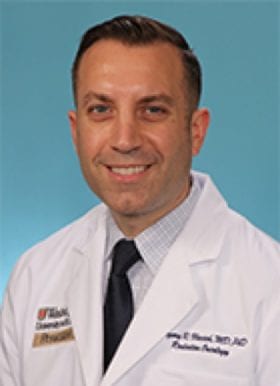
Gregory R. Vlacich, MD, PhD is an Associate Professor of Radiation Oncology at Washington University School of Medicine in St. Louis. He serves as Vice Chair of Clinical Operations, Clinical Director of Satellite Operations, and Medical Director of Radiation Oncology at Alton Memorial Hospital. Board certified by the American Board of Radiology in Radiation Oncology (2016), Dr. Vlacich specializes in treating multiple cancer types using advanced radiation therapy techniques. His educational background includes: BS in Molecular Biophysics and Biochemistry from Yale University (1999) PhD in Molecular Genetics and Cell Biology from University of Chicago, Pritzker School of Medicine (2007) MD from University of Chicago, Pritzker School of Medicine (2009) Internship at St. Vincent's Catholic Medical Center, New York (2010) Residency in Radiation Oncology at Vanderbilt University Medical Center (2014) Dr. Vlacich's research focuses on improving cancer treatment outcomes through innovative radiation therapy approaches. His work spans thoracic, gastrointestinal, genitourinary, and head and neck oncology, with particular emphasis on stereotactic body radiation therapy and adaptive radiation therapy. He investigates treatment-related toxicity patterns and develops strategies to optimize radiation delivery for various malignancies, especially in elderly patients. His laboratory and clinical work bridges molecular biology insights with practical clinical applications to enhance cancer treatment precision. His publication record shows a progression from foundational molecular biology research to clinical radiation oncology applications. Recent work emphasizes MR-guided radiotherapy, adaptive radiation therapy techniques, and biomarker development for risk stratification. This research trajectory demonstrates how basic science insights translate to improved clinical outcomes for cancer patients. Professional recognition includes: RSNA Roentgen Resident/Fellow Research Award (2014) Board Certification by the American Board of Radiology in Radiation Oncology (2016) Dr. Vlacich maintains an active clinical practice treating various cancers while leading research initiatives through the Siteman Cancer Center and Institute of Clinical and Translational Sciences. His work bridges basic science insights with clinical applications to improve cancer treatment outcomes and patient quality of life. He directs radiation oncology services at Alton Memorial Hospital and is involved in multiple collaborative research projects focusing on improving radiation therapy techniques, understanding treatment toxicities, and developing personalized treatment approaches for cancer patients.
Caroline Shamu is an Assistant Professor at Harvard Medical School with dual appointments in the Department of Radiology at Massachusetts General Hospital and the Department of Biological Chemistry and Molecular Pharmacology. She serves as Scientific Director for HMS Research Cores and Technology and directs the ICCB-Longwood Screening Facility, which provides high-throughput small molecule and RNAi screening resources. Dr. Shamu earned her Ph.D. in Cell Biology from the University of California San Francisco and completed postdoctoral training in the Department of Cell Biology at Harvard Medical School. Her research focuses on: Development of high-throughput screening technologies (RNAi, small molecules) Assay design and optimization for complex biological systems Bioinformatics infrastructure for large-scale data integration Standardization of metadata and data exchange protocols Implementation of screening repositories and open-source LIMS Her publications demonstrate extensive work in screening methodology innovation, with consistent focus on data standardization, imaging platforms, and translational applications in cancer research and drug discovery. Recent articles emphasize computational approaches for off-target effect prediction and interoperable data frameworks. Leadership & Infrastructure: Dr. Shamu oversees technology cores supporting academic screening initiatives and develops open-source tools like the Screensaver LIMS. Her work bridges experimental biology with data science to advance collaborative research.
John V. Moran is the Gilbert S. Omenn Collegiate Professor of Human Genetics and a Professor of Internal Medicine at the University of Michigan Medical School. His research focuses on the molecular mechanisms and genomic impacts of LINE-1 and SINE retrotransposition. Education: B.S. in Chemistry (Rochester Institute of Technology), M.S. in Molecular Genetics (The Ohio State University), Ph.D. in Biochemistry (University of Texas Southwestern Medical School) Postdoctoral Training: Damon Runyon Fellow at Johns Hopkins University and University of Pennsylvania Dr. Moran’s laboratory investigates how transposable elements shape genome evolution and disease. His work spans molecular biology, genomics, and computational approaches to analyze retroelement dynamics in somatic and germline cells. His recent research highlights include LINE-1 retrotransposition in neural tissues , interactions with DNA repair pathways , and roles in somatic mosaicism in schizophrenia . Collaborative efforts include the Brain Somatic Mosaicism Network for neuropsychiatric diseases. Scientific Awards: 2013 Curt Stern Award AAAS Fellow Howard Hughes Medical Institute Alumnus Dr. Moran actively mentors students and postdoctoral fellows. He also contributes to genomic resource development and serves on advisory boards for biotech companies.
Sarojani Mohammed is an active Lecturer at the University of Texas at Austin's School of Information, teaching courses including I 320J: Topics in Social Justice Informatics and I 310J: Introduction to Social Justice Informatics through 2025. She serves as Executive Director of Capacity Catalyst and Founder + Principal of Ed Research Works, a consulting firm specializing in education research and evaluation. Her work bridges academic research and practical application in the education sector. PhD in Educational Psychology, University of Texas at Austin SB in Brain & Cognitive Sciences, Massachusetts Institute of Technology Dr. Mohammed's research focuses on eliminating the gap between education research and practice, with expertise in equitable evaluation, social justice data applications, quantitative and mixed-methods education research (K-12), blended and personalized learning approaches, and social sector program evaluation. Her work emphasizes making research accessible and actionable for practitioners to improve educational outcomes for all students, particularly through her concept of fighting 'knowledge-hoarding' as a form of injustice. Her publication history shows a strong trend toward connecting research with practical implementation in educational settings, particularly in blended learning environments and response to intervention frameworks. She has developed measurement frameworks and tools to assess educational innovations, with increasing focus on equity considerations in educational technology and personalized learning approaches over the past decade. Research Council Chair for Jefferson Education Exchange EdTech Genome Project (2019-present) Advisory Group member for Center on Inclusive Software for Learning (2018-present) Research Advisory Committee member for Highlander Institute (2017-present) Validity Committee member for Lea(R)n Platform (2016-present) Blended Learning Measurement Fellowship leadership Through Capacity Catalyst and Ed Research Works, Dr. Mohammed mentors emerging researchers and practitioners in the education sector. She has served on numerous review panels including federal EIR grants, SXSW EDU, and United Way for Greater Austin. Her consulting work focuses on helping nonprofit organizations develop data strategies and measure impact effectively. Dr. Mohammed co-founded the Teaching and Learning Research Community to bridge the gap between research and practice and serves on advisory boards for multiple education research initiatives. Her work with the EdTech Genome Project and other national initiatives demonstrates her leadership in creating infrastructure for connecting educational research with practical implementation.
Heather Miller Coyle, Ph.D., serves as Associate Professor in the Forensic Science Department within the Henry C. Lee College of Criminal Justice and Forensic Sciences at the University of New Haven. Her academic appointments span forensic biology, DNA analysis, and botanical evidence applications in criminal investigations. She maintains an active research profile with publications spanning forensic botany, DNA mixture interpretation, and touch DNA analysis. Ph.D. in Plant Biology, University of New Hampshire (1994) M.S. in Plant Science, University of New Hampshire (1989) B.S. in In Vitro Cell Biology, SUNY Plattsburgh (1986) Dr. Miller Coyle's research centers on forensic applications of biological evidence, with particular expertise in DNA for human identification, touch DNA transfer dynamics, DNA mixture interpretation challenges, and botanical evidence analysis. Her work bridges plant biology with forensic science through forensic botany applications, including pollen analysis, seed identification, and plant DNA profiling for criminal casework. She has developed specialized methodologies for botanical evidence collection and interpretation in crime scene contexts. Her publication record shows consistent focus on improving forensic DNA analysis reliability, with recent work examining STR quality control measures, probabilistic genotyping software validation, and haplotype analysis for ancestry determination. The research demonstrates strong interdisciplinary connections between plant biology, molecular genetics, and criminalistics, with practical applications in courtroom testimony preparation and evidence interpretation standards. Dr. Miller Coyle has contributed significantly to forensic education through curriculum development that links laboratory practices to courtroom testimony requirements. Her work includes developing engaging lesson models for biological evidence collection training and classroom resources that prepare students for forensic science careers.
Carla N Mavian is an Assistant Professor at the Emerging Pathogens Institute, University of Florida, and a Research Associate at the Smithsonian’s National Zoo & Conservation Biology Institute. Her work integrates One Health principles to study infectious diseases , focusing on molecular evolution , phylodynamics , and host-pathogen-environment interactions in disease hotspots. B.Sc. and M.Sc. in Biotechnology, University of Padova, Italy PhD in Molecular Biology, Universidad Autónoma de Madrid, Spain Postdoctoral Research, University of Florida Her research spans zoonotic viruses , arboviruses (e.g., dengue, Zika, Mayaro), and climate-driven disease spread , with significant work on Vibrio cholerae and SARS-CoV-2 dynamics. Recent articles highlight genomic surveillance of cholera in Malawi, phylodynamic modeling of SARS-CoV-2 in Italy, and arboviral risk assessment using human travel and vector data. Scientific awards include the Thomas H. Maren Fellowship , UF College of Medicine Young Investigator Award , and recognition by the American Society of Tropical Medicine and Hygiene . She actively contributes to grant-funded research on cholera recurrence, arboviral risks, and SARS-CoV-2 evolution in immunocompromised populations. Her lab investigates climate-land use-pathogen interactions , zoonotic emergence , and phylodynamic tools for public health. She co-organizes international workshops and is a certified Data Carpentry Instructor .
Kevin J. Hybiske serves as an Adjunct Associate Professor in the Department of Microbiology and Assistant Professor of Medicine at the University of Washington School of Medicine. His research laboratory is situated at the UW Medicine South Lake Union research cluster in Seattle, Washington, where he leads investigations into the pathogenesis of Chlamydia trachomatis, the leading cause of bacterial sexually transmitted infections worldwide. Dr. Hybiske's research program focuses on defining the critical bacterial and host factors responsible for Chlamydia infections and their chronic clinical outcomes. His laboratory employs diverse genetic, cellular, and molecular techniques to unravel the mechanisms of pathogenesis for these highly successful bacteria. Key research areas include Chlamydia functional genomics, Chlamydia-host interactions, and the clinical history of Chlamydia infections, with particular emphasis on understanding how this pathogen manipulates host cell function to cause disease. Analysis of his recent publications reveals a comprehensive research program spanning molecular mechanisms, epidemiology, and clinical applications. His work addresses critical gaps in Chlamydia research including immune evasion strategies, bacterial genetics, diagnostic methodologies, and vaccine development. The publications demonstrate interdisciplinary collaboration across microbiology, immunology, structural biology, and clinical medicine, with a growing emphasis on translational applications for public health. Dr. Hybiske actively mentors students and researchers through his laboratory at the South Lake Union campus, which forms part of an extensive research ecosystem including the Center for Infectious Disease Research, the Allen Institute, and Fred Hutch. His laboratory welcomes prospective graduate students (through the Pathobiology PhD Program), postdocs, fellows, and undergraduate researchers interested in microbial pathogenesis and infectious diseases. The Hybiske Laboratory is located at 750 Republican Street, Seattle, WA 98109, representing a key component of the University of Washington's research infrastructure focused on global infectious disease challenges. His recent work on a live attenuated Chlamydia vaccine strain demonstrates the translational potential of his research program to address significant public health needs.
Mareile Kaufmann is a Professor at the Department of Criminology and Sociology of Law at the University of Oslo, where she has been employed since 2021. Previously, she served as a Postdoctoral Researcher at the same department from 2016-2021. She also held research positions at the Peace Research Institute Oslo from 2011-2021. Her work focuses on digital criminology, surveillance practices, and the societal impacts of emerging technologies, with particular emphasis on data practices and their implications for law enforcement and security. Professor Kaufmann's educational background includes: PhD in Resilience - Governance and in/security in interconnected societies (summa cum laude), Universität Hamburg, Germany (2016) Master in International Criminology, Universität Hamburg, Germany (2008) Bachelor in Cultural Studies, Sociology, European University Frankfurt [Oder], Germany (2006) Her research interests center around digital criminology and the intersection of technology, security, and society. She examines how digital data practices shape contemporary forms of governance, surveillance, and policing. Her work combines theoretical insights with empirical research, drawing on interviews and collaborations with diverse groups including intelligence officers, forensic scientists, software developers, and social media users. She investigates how technologies like DNA analysis, predictive policing algorithms, and surveillance systems transform criminal justice practices and societal understandings of security. Her approach is interdisciplinary, bridging criminology, science and technology studies, and sociology of law to understand the complex relationships between digital technologies and social order. Professor Kaufmann's recent publications reveal a sustained focus on the material and social dimensions of digital data in criminological contexts. Her work examines how data practices shape forensic science, policing, and surveillance, with particular attention to the ways digital information becomes actionable knowledge. She has made significant contributions to understanding the role of DNA in law enforcement, the politics of predictive policing algorithms, and methodological approaches to studying online communities. Her research demonstrates how digital technologies are not merely tools but active participants in reshaping criminological knowledge and practices. The interdisciplinary nature of her work is evident in publications spanning criminology, sociology, information studies, and forensic science journals. Her notable scientific achievements include: University of Oslo Award for Young Researchers (2023) Sir Leon Radzinowicz Prize for the article "Predictive Policing and the Politics of Patterns" Lieselotte Pongratz Stiftung Publication Grant Übersee-Club stipend for gifted young academics Professor Kaufmann actively supervises BA, MA, and PhD students in her areas of expertise and encourages students interested in digital criminology to contact her. She has secured significant research funding including an ERC Starting Grant for her project "Digital DNA" and a Research Council of Norway grant for "Bodies of Evidence." Her research has been consulted by various Norwegian governmental bodies including the Norwegian Biotechnology Advisory Board, the Norwegian Data Protection Commission, and the Norwegian Department of Justice and Preparedness. She serves on the editorial boards of Qualitative Research and the Nordic Journal of Criminology, and regularly peer reviews for research funding agencies and academic journals. She leads several research initiatives including the ERC-funded project on "the changing relationships between digital technologies and DNA" and the Research Council of Norway-funded project "Bodies of Evidence." Her work connects with broader networks such as the Critical Data Network and the Nordic Center for Security Technologies and Societal Values (NordSteva).
Dr. Gloria Pryhuber is a Professor in the Department of Pediatrics, Neonatology at the University of Rochester School of Medicine and Dentistry . She serves as a Principal Investigator for the LungMAP Human Tissue Core (NHLBI U01) and Lead Site Investigator for the Respiratory Pathogens Research Center (NIAID/DMID Contract). Her work spans clinical care as a Neonatologist , laboratory research in Lung Development , and leadership in the Environmental Health Sciences Center . PhD/Postdoctoral Mentorship NIH Study Section Participation Director, Pediatric Histology Facility (2009-) Director, Pediatric Processing Lab (2011-) Research interests include Chronic Lung Disease of Prematurity (BPD) , Lung Development , and Immunological Responses in preterm infants. Her lab employs High-Dimensional Flow Cytometry , Transcriptomics , and Animal Models to investigate Epithelial-Endothelial Interactions and Microbial Colonization Effects . Recent Publications focus on Lung Developmental Pathology , Single-Cell Omics , and Multimodal Imaging . Key journals include Cell , Nature Communications , and American Journal of Respiratory Cell and Molecular Biology . Scientific honors include: Ruth A. Lawrence Academic Faculty Service Award for Excellence in Research (2014) George Washington Goler Professor of Pediatrics (2011-2014) Best Doctors in America Database (2006) Buswell Fellowship Award (1995) Dr. Pryhuber mentors Undergraduate, Graduate, and Postdoctoral Researchers and leads the Prematurity and Respiratory Outcomes Program (PROP) (NHLBI U01). Her lab maintains a Neonatal Lung Tissue Archive and collaborates across Neonatology, Pulmonology, Immunology , and Genomics disciplines.
Rosa Lundbye Allesøe is a Researcher at the Department of Health Technology at the Technical University of Denmark (DTU). Her work spans multiple interdisciplinary fields including bioinformatics, microbiology, and immunogenetics, with a particular focus on genomic analysis of infectious diseases and antimicrobial resistance. She has made significant contributions to computational biology tools and population-based health studies. Her research interests center around Whole Genome Sequencing , Infectious Disease surveillance, Antimicrobial Resistance prediction, and the intersection of immunology with mental health. Her work often involves developing computational methods for pathogen identification and analyzing large-scale genomic datasets to understand disease mechanisms. She has contributed to important bioinformatics tools like ResFinder for antibiotic resistance prediction. Analysis of her publications reveals a strong trend toward interdisciplinary research combining computational methods with biomedical applications. Her work bridges the gap between traditional laboratory science and data-intensive computational approaches, particularly in the areas of pathogen genomics and the application of machine learning to biological problems. The 2023 Nature Biotechnology paper demonstrates her work at the cutting edge of AI applications in drug discovery. Her research contributes to multiple United Nations Sustainable Development Goals, particularly those related to health and well-being. While specific awards are not listed in the available information, her publications have garnered significant attention, with the ResFinder 4.0 paper alone receiving over 2,000 citations and being referenced in 20 policy documents. Rosa Lundbye Allesøe works within collaborative research networks involving multiple Danish and international institutions. Her research group focuses on computational genomics and its applications to public health challenges, particularly in pathogen surveillance and antimicrobial resistance monitoring. The department's work has significant implications for global health security and personalized medicine approaches.
Dr. Armin Mešić is a prominent mycologist serving as Head of the Laboratory for Biological Diversity within the Division for Marine and Environmental Research at Ruđer Bošković Institute in Zagreb, Croatia. With over two decades of research experience, he has established himself as a leading expert in fungal taxonomy, biodiversity, and systematics, particularly focusing on Croatian and Balkan fungal species. Dr. Mešić earned his BSc in Biology (Ecology) from the University of Zagreb in 1999, followed by a PhD in Biology (Mycology) from the same institution in 2006. His doctoral research focused on "Agaricales fungi with white spores in Croatia," establishing the foundation for his extensive career in fungal taxonomy. Dr. Mešić's primary research interests center on mycology, with specific focus on fungal biodiversity, biogeography, and systematics. His work spans various aspects of fungal science, including: Taxonomic studies of Agaricales and other fungal groups DNA barcoding applications for fungal identification Conservation of threatened fungal species Ecosystem services provided by fungi in forest environments Biogeographical patterns of fungal distribution in the Balkan region Analysis of Dr. Mešić's recent publications reveals a strong emphasis on integrative taxonomy approaches combining morphological and molecular techniques. His research increasingly focuses on applying DNA barcoding to assess fungal diversity and its role in forest ecosystem services. There's also a growing interest in understanding how climate change impacts fungal communities and their interactions with plant systems. Dr. Mešić has been actively involved in mentoring the next generation of mycologists, supervising numerous graduate students through their thesis work. He has led significant research projects including the CSF scientific research project "Enhancement of Croatian forest ecosystem services through assessment of fungal diversity based on DNA barcoding" (2018-2022), which demonstrates his commitment to applying mycological research to practical environmental challenges. The Laboratory for Biological Diversity under Dr. Mešić's leadership serves as a hub for mycological research in Croatia, focusing on fungal taxonomy, biodiversity assessment, and conservation. The laboratory maintains strong collaborations with international mycological communities and contributes significantly to global fungal databases and classification efforts.
Dr. Victor Chepinoga serves as a Scientific Researcher in the Department of Geobotany at the Institute of Earth System Sciences, Faculty of Natural Sciences, Leibniz University Hannover. His office is located at Nienburger Straße 17, Building 3201, Room 110A, Hanover. With extensive experience in Siberian flora research, he maintains active collaborations across Russian and German academic institutions. His research focuses on Geobotany, Biogeography, Phytosociology, and Hydrobotany , specializing in vascular plant systematics, vegetation classification, and floristic studies of Siberian and Asian ecosystems. Current work emphasizes the flora of Baikal Siberia, grassland ecosystems across Asia, and genomic biogeography of alpine plants. His methodological expertise includes vegetation mapping, taxonomic revisions, and paleoecological analysis using sediment records. Analysis of his 14 recent publications (2022-2025) reveals dominant themes in floristic inventories (notably the comprehensive Checklist of vascular plants of Asian Russia), species-level systematics (particularly Acorus and Poaceae), and vegetation classification frameworks for conservation applications. His work bridges classical taxonomy with modern genomic approaches and emphasizes open-access data dissemination. Dr. Chepinoga has managed multiple Russian Foundation for Basic Research (RFG) projects including studies of Baikal Siberia's flora (2019-2020), Nemoral Refuge vegetation (2016-2018), and aquatic plant diversity (2014-2015). He serves on editorial boards for Botanica Pacifica (since 2012) and Vegetation Classification and Survey (since 2022), and was Editor-in-Chief for Flora and vegetation of Asian Russia (2021-2022).