John Metcalf is a Professor of Pathology at the Medical University of South Carolina College of Medicine, specializing in Dermatopathology , Anatomic Pathology , and Clinical Pathology . He is based in Charleston, SC, and his work focuses on complex dermatological conditions with a pathological lens. Education: Residency in Pathology-Anatomic and Clinical at Medical University of South Carolina (1974-1977) His research spans rare dermatological syndromes, immunotherapy-related pathologies, and genetic disorders with cutaneous manifestations. Publications highlight interdisciplinary approaches combining dermatology, pathology, and immunology. Recent work includes studies on nivolumab-induced scleroderma-like syndrome and cutaneous T-cell lymphoma in SHOC2 mutation-associated Noonan-like syndrome, reflecting his interest in atypical dermatopathological presentations.
Victor Kokta is an Associate Clinical Professor in the Department of Pathology and Cell Biology at the Faculty of Medicine, University of Montreal. He serves as a pathologist and researcher at CHU Ste-Justine, with particular expertise in pediatric dermatopathology. His clinical and research work focuses on pediatric melanocytic tumors and vascular tumors/malformations. Dr. Kokta completed his medical training at the University of Sherbrooke, specialized in anatomopathology at the University of Montreal, and pursued sub-specialization in adult and pediatric dermatopathology at New York Presbyterian - The University Hospitals of Columbia and Cornell under Dr. N. Scott McNutt and Dr. Klauss Busam, completing this training in 2001. He is affiliated with the Azrieli Research Center at CHU Sainte-Justine. His research interests center on pediatric melanocytic tumors (including Spitz nevi and pediatric melanomas) and pediatric vascular tumors/malformations. Analysis of his recent publications reveals a consistent focus on rare pediatric skin conditions, genetic disorders with cutaneous manifestations, and innovative therapeutic approaches for complex dermatological conditions. His work often involves multidisciplinary collaboration across dermatology, pathology, genetics, and immunology. Fellow of the Royal College of Physicians and Surgeons of Canada (2000) Member of the College of Physicians of Quebec (2001) First prize for research presentation at Dalhousie University diabetes symposium (1991) Dr. Kokta has been actively supervising internships in dermatopathology for pathology and dermatology residents at the University of Montreal since 2001 and collaborates extensively with teams in dermatology, surgery, radiology, and plastic surgery. His laboratory work at CHU Ste-Justine focuses on the pathological analysis of complex pediatric skin conditions, particularly those involving melanocytic and vascular components.
Monica El-Masry, MD, is a Clinical Assistant Professor of Medicine at Norris Comprehensive Cancer Center, part of Keck Medicine of USC. She holds triple board certifications in Internal Medicine, Medical Oncology, and Hematology. Her clinical practice focuses on general hematology and oncology, with particular expertise in benign/malignant hematology, breast cancer, and head and neck cancer. She champions integrative oncology, combining conventional treatments with psychosocial support, nutrition counseling, and lifestyle modifications to provide holistic care. Dr. El-Masry’s research emphasizes cancer prevention and clinical trials for novel therapies. Her teaching excellence has been recognized through awards such as the UCLA Hematology/Oncology Fellowship Teacher of the Year (2020–2021). She volunteers as a physician mentor and advocates for culturally competent care, reflected in her 2007 Kaiser Permanente Honorable Recognition award. Her education includes a medical degree from UCLA’s David Geffen School of Medicine, residency at UCLA-Olive View, and hematology/oncology fellowship at UC Irvine’s Chao Comprehensive Cancer Center and the Long Beach VA Medical Center. Publications span 2007–2024, covering areas like drug-induced interstitial pneumonitis in myeloma, IgG4-related disease vs. lymphoma, and chemoimmunotherapy in chronic lymphocytic leukemia. She has been named a Pasadena Top Doctor (2013–2014) and received Patient’s Choice awards for compassionate care.
Dr. Sara C. Shalin serves as Chairman of the Department of Dermatology and Professor in Pathology and Dermatology at the University of Arkansas for Medical Sciences College of Medicine. She concurrently directs the dermatopathology subspecialty section and dermatopathology fellowship program, with previous leadership roles including medical director of multiple laboratory sections and director of anatomic pathology operations. Her academic foundation includes: M.D./Ph.D. from Baylor College of Medicine (Ph.D. in Neuroscience, 2006; M.D., 2007) Residency in Anatomic and Clinical Pathology at Baylor College of Medicine (Chief Resident, 2010-2011) Dermatopathology Fellowship at Harvard Hospitals Combined Dermatopathology Program Dr. Shalin's research centers on melanoma pathogenesis, inflammatory skin diseases, and vulvar pathology, with emphasis on diagnostic accuracy and molecular mechanisms. Her work bridges clinical dermatology and laboratory medicine, particularly in identifying histopathologic pitfalls and optimizing diagnostic workflows for cutaneous malignancies. Analysis of her 15 most recent publications (2024-2025) reveals concentrated expertise in dermatopathology diagnostics, with significant contributions to melanoma classification, vulvar lesion characterization, and standardization of immunofluorescence testing. Her leadership in developing appropriate use criteria for ancillary tests demonstrates commitment to evidence-based practice. Her professional recognition includes: Certificate of Recognition in Laboratory Medical Direction from the College of American Pathologists As program director of the dermatopathology fellowship and UAMS M.D./Ph.D. program director since 2017, Dr. Shalin mentors trainees while advancing educational standards. Her national society involvement includes CAP inspection leadership and committee work shaping dermatopathology guidelines. She maintains active research collaborations investigating melanoma pathogenesis and inflammatory skin disease mechanisms, working with multidisciplinary teams to translate histopathologic findings into improved diagnostic protocols.
Dr. Sonja Dorfer is a Researcher affiliated with the Department of Dermatology and Allergology, where she leads the Research Program of Molecular Therapy of Genodermatoses. Her primary research explores therapeutic interventions for rare skin disorders through drug repositioning strategies and molecular analysis. She currently serves as Principal Investigator for the project 'Transcriptome-guided drug repurposing for the treatment of aggressive SCCs' (2023-2026). Her research focuses on: Developing miRNA-based diagnostics for squamous cell carcinoma in epidermolysis bullosa patients Repurposing FDA-approved drugs like diacerein for chronic wound management Epigenetic regulation in genodermatoses pathogenesis Biomarker discovery for rare dermatological malignancies She received scientific recognition including the ÖGDV Science Days Poster Price (2024) for contributions to dermatological research. Her publications demonstrate consistent focus on translating molecular findings into clinical applications for epidermolysis bullosa and related carcinomas.
Christine Prodinger is a researcher at the Department of Dermatology and Allergology at the Medical University of Graz, specializing in molecular therapy of genodermatoses. Her work focuses on scabies treatment, epidermolysis bullosa, and antipruritic therapies. Active in clinical research and systematic reviews Co-organizer of dermatology conferences and workshops Published 58 research outputs, including peer-reviewed articles and conference contributions Research interests include: Scabies treatment protocols Epidermolysis bullosa symptom management Comparative efficacy of topical therapies Clinical trials in dermatology Rare skin disorders Evidence-based dermatological practices Recent publications highlight her work on permethrin vs. benzyl benzoate for scabies and antipruritic therapies for epidermolysis bullosa. She frequently participates in academic events and contributes to clinical guidelines.
Elena Netchiporouk, MD, M.Sc., FRCPC is a Scientist at the Research Institute of the McGill University Health Centre (RI-MUHC) on the Montreal General Hospital site. She holds an Assistant Professor position in the Department of Medicine, Faculty of Medicine and Health Sciences at McGill University, with a clinical affiliation in the Division of Dermatology at MUHC. Her research focuses on environmental triggers of autoimmune skin diseases, particularly chronic spontaneous urticaria and systemic sclerosis. Research Interests: Dr. Netchiporouk investigates gene-environment interactions in cutaneous autoimmunity, emphasizing pollutants and microorganisms as initiators of skin and systemic autoimmune responses. Her work bridges epidemiology, immunology, and clinical dermatology to understand disease mechanisms and improve management strategies. Publication Trends: Her recent studies address biologics in dermatology (2020-2025), environmental risk factors for scleroderma (2016-2025), and pediatric urticaria management (2016-2025). Key subfields include Autoimmune Skin Pathogenesis Biologic Therapy Safety Cutaneous-Mucosal Immune Interactions Epidemiology of Rare Dermatoses Collaborative Networks: She collaborates with the Canadian Scleroderma Research Group, contributes to clinical trial design (e.g., Montreal Derm FilEZ educational platform validation), and participates in international multicenter studies on urticaria and fibrotic skin disorders.
Elodie Bal is a Research Professor at Université Paris Cité's Faculty of Medicine, Department of Dermatology, leading a research team focused on pediatric-onset inflammatory skin diseases and scleroderma mechanisms. Her laboratory operates in close collaboration with the clinical services of Hôpital Necker-Enfants Malades in Paris. Position: Team Leader Institutional Affiliation: Université Paris Cité / Hôpital Necker-Enfants Malades Research Funding: ATIP-Avenir program, French Society of Dermatology, French Scleroderma Association Dr. Bal's research focuses on understanding the molecular and cellular mechanisms involved in dysregulated fibrogenesis, using scleroderma as a model to decipher pathological processes and identify new therapeutic targets. Her work spans genetics, epigenetics, and mechanisms of skin fibrosis with particular emphasis on pediatric-onset scleroderma cases. Analysis of her recent publications reveals consistent research themes across dermatology, genetics, and molecular biology, with particular focus on genetic mutations underlying skin disorders, epithelial barrier dysfunction, and novel therapeutic approaches for fibrotic conditions. Her work bridges basic science with clinical applications, particularly for rare and severe pediatric skin diseases. Her research team includes: Christine Bodemer (PU-PH) Smaïl Hadj-Rabia (PU-PH) Cecilia Taccagni (Doctoral student) Delphine Devin (Research engineer) Laura Polivka (Doctoral student) Dr. Bal's laboratory has developed four main research axes: Identification of genetic alterations in severe pediatric scleroderma forms Decoding molecular and cellular mechanisms underlying patient phenotypes Analysis of signaling pathways and cells involved in fibrosis Development of 3D skin fibrosis models for therapeutic evaluation
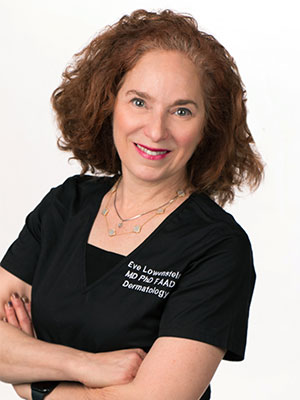
Dr. Eve Lowenstein serves as Associate Clinical Professor and Director of Medical Dermatology at SUNY Downstate Health Sciences University and Kings County Hospital, with clinical practice at South Nassau Dermatology PC in Oceanside and Long Beach, NY. Her expertise spans complex medical dermatology, biologics, hidradenitis, autoimmune diseases, and skin cancer treatment. Educational background: Bachelor of Arts, Magna Cum Laude (Chemistry), Queens College, CUNY Medical Scientist Training Program: MS (1992), PhD (Cellular/Molecular Biology, 1994), MD (1995), NYU School of Medicine Internal Medicine Internship: Long Island Jewish Hospital Dermatology Residency & Chief Resident: Mount Sinai Hospital Her research program uniquely bridges clinical dermatology with historical and anthropological perspectives. Primary interests include acne pathogenesis , paleodermatology (studying ancient skin diseases in archaeological remains), forensic dermatology applications, and Turner Syndrome dermatologic manifestations . She pioneered work connecting historical medical texts with modern diagnoses, notably identifying genetic disorders in Egyptian mummies. Analysis of her 40+ publications (2006-2014) reveals three dominant research trajectories: (1) Endocrine-dermatologic interfaces (PCOS, hyperandrogenism), (2) Historical/forensic dermatology (ancient disease identification, legal applications), and (3) Therapeutic innovations (retinoids, nutrition-acne relationships). Her paleodermatology work demonstrates exceptional interdisciplinary synthesis across medicine, archaeology, and history. Key recognitions include: Nomination for National Leadership Award by Congressman Thomas Delay (2001) Outstanding Physician Award, Kings County Hospital (2002) Dr. Lowenstein actively mentors through editorial board roles (multiple dermatology journals) and has delivered hundreds of lectures globally. Her research program is sustained by competitive grants supporting clinical investigations in medical dermatology. As Director of Medical Dermatology, she leads multidisciplinary teams managing complex cases while advancing translational research in endocrine-dermatologic disorders.
Christine J. Ko, MD is Professor of Dermatology and Pathology at Yale School of Medicine. She is board certified in dermatology with a specialty certificate in dermatopathology. Dr. Ko primarily works in the Division of Dermatopathology, where she renders diagnoses for skin biopsies sent from Yale Dermatology Associates and other Connecticut dermatology practices. She specializes in Transplant Dermatology, providing care for organ transplant patients who are on immunosuppressive medications and at higher risk for skin cancer. Professor of Dermatology (Primary Appointment) Professor of Pathology (Secondary Appointment) Member of Cutaneous Granulomatous Disorders Program Participant in Genomics, Genetics, and Epigenetics research Yale Cancer Center member Dr. Ko received her undergraduate degree from Princeton University (1995) and her medical degree from New York University School of Medicine (1999). She completed her internship at UCLA (2000), dermatology residency at University of California, Irvine (2003), and a postdoctoral fellowship at UCLA (2004). Her primary research focus centers on distinguishing diseases that present similarly both clinically and microscopically. Dr. Ko has published extensively in clinical dermatology and dermatopathology, including authoring books such as "Dermatology: Visual Recognition and Case Reviews," "Dermatology Essentials," and "Dermatopathology: Diagnosis by First Impression." She is particularly interested in skin cancer mechanisms, especially squamous cell carcinoma and keratoacanthoma, and has collaborated with researchers in Genetics and Dermatologic Surgery. More recently, she has explored cognitive bias in medical diagnosis, publishing a two-part series on the topic. Analysis of Dr. Ko's recent publications reveals a strong emphasis on dermatopathology, skin cancer pathology (particularly squamous cell carcinoma), transplant dermatology, and diagnostic methodology. Her work demonstrates extensive collaboration with transplant surgeons like Bohdan Pomahac and Martin Kauke-Navarro, as well as dermatopathologists like Jennifer McNiff and Keith Choate. The breadth of her research spans from molecular genetics of skin disorders to clinical decision-making processes in dermatology. Dr. Ko serves as a Sub Investigator for the clinical trial "Molecular Markers of UV Exposure and Cancer Risk in Skin" and is involved with the Women's Health Research at Yale (WHRY) Pilot Project Program. Her approach emphasizes the importance of correlating clinical and microscopic findings for accurate diagnosis, particularly for complex cases. She is affiliated with multiple research programs including the Cutaneous Granulomatous Disorders Program, Skin & Kidney Cancer Program, Surgical Pathology, and Yale Dermatology Associates. Her work in transplant dermatology has contributed significantly to understanding rejection patterns in facial vascularized composite allografts and long-term outcomes in face transplantation.
Christine Baldeschi is a Lecturer at University of Evry, where she has been working since September 2006. She leads a research team at the Stem Cell Institute for the treatment and study of monogenic diseases (i-Stem - Inserm/University d'Evry), focusing on the development of skin cell therapies for rare genetic diseases. Her educational background includes a Master's degree in cellular and molecular biology from Nice Sophia Antipolis University, followed by doctoral research completed in 2004. She then conducted post-doctoral studies in Glasgow before returning to France to join University of Evry at age 29. Dr. Baldeschi specializes in stem cell applications for treating rare genetic skin disorders. Her work involves developing protocols to differentiate pluripotent stem cells into various skin cell types including keratinocytes, melanocytes, and fibroblasts. She is particularly known for her work on genodermatoses with two primary research directions: Developing cell therapies for sickle cell disease, with upcoming clinical trials aiming to graft lab-grown epidermis onto patients suffering from leg ulcers Pathological modeling of epidermolysis bullosa using reprogrammed blood cells to study disease mechanisms and test potential treatments As an educator, she directs the M2 tissue, cell and gene biotherapy program, mentoring the next generation of researchers in this specialized field. Her team collaborates closely with medical professionals at Necker Hospital to translate laboratory findings into potential clinical applications, with current work described as being 'closer than ever' to treating patients with these rare conditions.
Marcia Driscoll is an Associate Professor in the Department of Dermatology at the University of Maryland School of Medicine, with additional clinical appointments as a Clinical Associate Professor and Residency Program Director. Her clinical expertise spans general dermatology, skin cancer, and women’s health. B.S. and B.A. in Pharmacy and Sociology (Summa cum Laude) from University of Connecticut Pharm.D. from University of Texas College of Pharmacy M.D. from University of Connecticut School of Medicine Dr. Driscoll’s research focuses on pregnancy-related dermatologic conditions , particularly melanoma and mole changes during gestation. She investigates hormonal influences on skin biology, with emphasis on estrogen receptor dynamics and maternal-fetal dermatologic interactions. Her publications (2016-2017) demonstrate expertise in melanoma epidemiology , pregnancy-associated skin changes , and genetic syndromes like Muir-Torre syndrome. Key themes include hormonal modulation of skin tumors and standardized pigmentation assessment during pregnancy. Summa cum Laude recognition for dual bachelor’s degrees As Residency Program Director, Dr. Driscoll leads graduate medical education while maintaining administrative roles in clinical quality and compliance. She practices at the Dermatology clinic located at 419 W. Redwood Street, Baltimore.
Johann Bauer is a Senior Lecturer and Head of the Research Program for Molecular Therapy in Genodermatoses at the University Clinic for Dermatology and Allergology. He leads critical research initiatives in genetic skin diseases, with a focus on epidermolysis bullosa and related disorders. Role: Head of Department and Research Program Expertise: Molecular therapy, clinical trials, RNA editing His research spans genetic skin diseases , clinical trial design , and therapeutic development , with recent work on gene deletion mechanisms in Kindler syndrome and drug repositioning for chronic wounds. He has contributed to 2025 publications in epidermolysis bullosa , soft tissue infections , and oncology . Bauer's projects include "First in EB" Phase II trials of Rigosertib and the PACE study for critical limb ischemia, alongside collaborations with teams like Zimmermann and Laimer. He organizes FIZ Network! Seminars and participates in events like the ÖGDV Science Days .
Johannes Bischof is a Research Fellow at the University Clinic for Dermatology and Allergology , focusing on molecular therapy for genodermatoses. His work encompasses gene editing technologies, antisense oligonucleotides, and RNA trans-splicing to address genetic skin disorders. Research Program: Molecular Therapy in Genodermatoses Key Affiliation: University Clinic for Dermatology and Allergology His research spans Epidermolysis Bullosa , CRISPR-Cas gene editing , and RNA splicing modulation . Recent studies highlight advancements in fluorescence-based gene editing assays and nickase off-target analysis. Notable trends in his publications include: Development of CRISPR-Cas systems for precise gene correction Antisense oligonucleotide applications in recessive dystrophic EB RNA trans-splicing strategies for skin equivalents Collaborations with experts like U. Koller and T. Kocher underscore his contributions to translational research in dermatology.
Ulrich Koller is a Privatdozent (Associate Professor) and Research Group Leader at the University Clinic for Dermatology and Allergology, Paracelsus Medical University in Salzburg, Austria. He leads the Research Program for Molecular Therapy in Genodermatoses and maintains an active research profile with 151 publications and 4 ongoing research projects spanning from 2015 to 2025. Dr. Koller's research focuses on molecular therapies for rare genetic skin disorders, particularly epidermolysis bullosa. His work encompasses gene editing technologies, RNA-based therapies, and molecular interventions targeting skin disorders. He has made significant contributions to understanding the genetic basis of dermatological conditions and developing novel therapeutic approaches. His recent publications demonstrate a strong emphasis on translating molecular discoveries into clinical applications, with particular focus on CRISPR/Cas9-based gene editing, RNA therapeutics, and molecular diagnostics for genodermatoses. These works reflect a strategic progression from basic research to potential clinical translation for patients with severe skin disorders. Non Melanoma Skin Cancer Preis (MEDA Preis), 2013 Österreichischer Dermatologen-Preis (UNILEVER Preis), 2011 Otto-Kraupp Preis (4. Platz), 2020 Sanofi Preis, 2014 Sanofi Preis, 2016 Dr. Koller actively supervises research projects including work on fluorescent JEB cell lines for CRISPR molecule screening and has secured substantial research funding through multiple projects such as 'Effiziente COL17A1 Genreparatur über CRISPR/Cas9n' (2020-2025) and 'Entwicklung einer auf RNA basierenden Therapie' (2021-2024). He serves as a reviewer for journals including American Journal of Physiology Cell Physiology and regularly presents invited lectures on gene editing approaches for epidermolysis bullosa at international conferences throughout 2023-2024. His research group maintains active collaborations with multiple institutions and has developed specialized expertise in molecular diagnostics and therapeutic interventions for rare skin disorders.