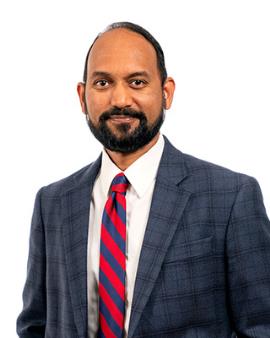
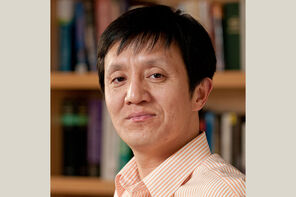
Professor Kamesh Sankaran is a faculty member in the Department of Engineering & Physics at Whitworth University since 2004. His expertise spans spacecraft propulsion, plasma physics, computational physics, and public policy in science & technology. He holds a Ph.D., M.S., and M.A. from Princeton University, along with a B.S. from Illinois Institute of Technology. His research focuses on electric propulsion systems for interplanetary missions, plasma thruster modeling, and Mars cargo mission analysis. Notable contributions include developing the Low-Thrust Interplanetary Trajectory Analysis tool and publishing extensively on magnetic nozzle plasma dynamics and asteroid mission optimization. His articles emphasize computational methods for plasma flow simulation, thruster performance analysis, and trajectory optimization. Awards include the Most Influential Professor (2014, 2015, 2021) and the Junior Faculty Award (2006). Sankaran teaches courses like Engineering Design Project, Computational Physics, and NASA Space Policy. He coordinates internships and advises on ethical dimensions of engineering through the CO 350 curriculum.
Dr. Ulrike Schumann is a Research Fellow at the Australian National University (ANU), affiliated with the John Curtin School of Medical Research (JCSMR) and the Eccles Institute of Neuroscience. She holds key roles in the Shine-Dalgarno Centre for RNA Innovation and the Division of Neuroscience. Her research focuses on non-coding RNAs, particularly miRNAs, in retinal degeneration, cancer biology, and epigenetic mechanisms. She completed a PhD in Microbiology and a Master's in Biotechnology. Her work spans translational medical research, including studies on RNA biomarkers for disease diagnostics and therapeutic interventions. Dr. Schumann collaborates with the Natoli Group (Clear Vision Research Lab) and Wen Group (Computational Biology of RNAs). Her recent publications emphasize miRNA roles in retinal degeneration, DNA damage in tumors, and innovative biosensor technologies for point-of-care diagnostics. Collaborative efforts include epigenetic studies in cancer and RNA methylation analyses. Dr. Schumann is registered to supervise research students but currently lists no advisees. Her research integrates computational biology, molecular genetics, and translational medicine to address unmet clinical needs in vision science and oncology.
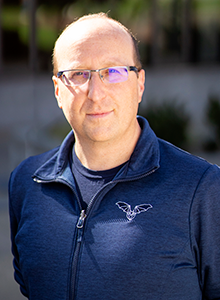
Michael Yartsev is an Associate Professor in Bioengineering, Helen Wills Neuroscience Institute, and Berkeley Nanosciences and Nanoengineering Institute at the University of California, Berkeley. His research focuses on understanding the neural mechanisms underlying complex spatial navigation, acoustic communication, and social behaviors using bats as model organisms. Key areas include developing wireless neural recording technologies for freely flying bats and studying vocal learning mechanisms through optogenetic tools. His lab's FAB (Fully Automated Bat) flight room enables human-free navigation studies. Current projects explore hippocampal coding of social interactions, spatial navigation in 3D environments, and the evolutionary basis of vocal learning. Research Interests: Neural basis of vocal learning and imitation 3D spatial navigation in flying mammals Social coordination and collective behavior Neural ensemble activity during complex behaviors Development of neurotechnology for freely moving animals Recent work highlights hippocampal representation of human experimenters, auditory feedback's role in vocal plasticity, and motor cortex evolution for flight/echolocation. Notable collaborations include the BRAIN Initiative's EAGER grant for wireless neural recording systems. Advising & Grants: Active grant support from NIH BRAIN Initiative (BRAIN EAGER: Going All Wireless, 2015). Mentors graduate students in neuroscience and bioengineering programs. Lab members work on interdisciplinary projects combining engineering, neuroscience, and computational modeling. Lab Infrastructure: The FAB flight room enables long-term studies of navigation without human intervention. Custom neural recording systems developed include wireless electrode arrays and optogenetic control modules for behaving bats.
Carolyn Carr serves as Associate Professor of Biomedical Science in the Department of Physiology, Anatomy and Genetics (DPAG) within the Medical Sciences Division at the University of Oxford. She joined the department in 2003 after returning from a career break through a Daphne Jackson Fellowship. Her primary institutional affiliation is with the Carr Group at Oxford, and she holds membership at Lady Margaret Hall college. Her research focuses on cardiac physiology and metabolism , particularly the use of endogenous cardiac stem cells to prevent heart failure. Current investigations include tissue engineering solutions for cell delivery following myocardial infarction and characterizing metabolic changes in differentiating stem cells to detect drug-induced metabolic side effects. Her work bridges chemistry, cardiology, and regenerative medicine through advanced techniques like MR imaging and spectroscopy. Notable publications demonstrate her expertise in cardiac stem cell metabolism, with recent 2025 studies exploring microRNA-210 in cardiac cell therapy and the FoxO1-zDHHC4-CD36 axis in diabetic metabolic dysfunction. Her research trajectory shows increasing focus on metabolic aspects of cardiovascular disease since her 2015 work on high-fat feeding effects. Daphne Jackson Fellowship for return to science after career break Primary funding from British Heart Foundation and The Rosetrees Trust Membership in Oxford Stem Cell Institute and British Society for Cardiovascular Research Professor Carr actively engages in outreach through the Oxford International Biomedical Centre, delivering talks to schools and BHF fundraising groups. She currently does not accept new students as she approaches retirement, having previously mentored PhD students through the Fund for Women Graduates which supports final-year PhD candidates.
Dr. Oliver Griesbeck is a Research Group Leader heading the 'Tools for Bio-Imaging' department at the Max Planck Institute for Biological Intelligence (formerly Max Planck Institute of Neurobiology) since 2005. As a regular member of the MCN and full member of GSN, his work focuses on developing innovative protein-based tools for neuroscience research, particularly fluorescent protein biosensors for monitoring neuronal activity and biochemistry. His research group combines biophysical and structural studies with molecular biology techniques to create advanced imaging probes used in physiological settings. PhD in Neurobiology, Max Planck Institute for Psychiatry (1997) Research Associate, Howard Hughes Medical Institute, UC San Diego (1997-2001) Assistant, Max Planck Institute of Neurobiology (2001-2005) W2 Research Group Leader, Max Planck Institute (2005-present) Dr. Griesbeck's research centers on protein engineering for neuroscience applications, with particular expertise in calcium imaging, GFP variants, and biosensor development. His work bridges biophysics, molecular engineering, and neurobiology to create tools that enable precise monitoring of neuronal activity across space and time. The group's research has significantly contributed to the development of genetically encoded calcium indicators (GECIs) and other fluorescent protein-based sensors that have become standard tools in neuroscience laboratories worldwide. Analysis of Dr. Griesbeck's publication record reveals a consistent focus on developing and refining protein-based imaging tools, with recent work expanding into optoacoustic imaging platforms, interstitial calcium sensors, and applications in diverse biological systems from Drosophila vision to human microglia. His research demonstrates a progression from fundamental protein engineering to increasingly sophisticated applications in complex physiological systems, reflecting the growing capabilities of bio-imaging technologies in neuroscience. Dr. Griesbeck mentors graduate students and postdoctoral researchers in protein engineering, CRISPR technology, molecular biology, and neuroscience tool development. His lab actively collaborates with other neuroscience researchers who utilize the biosensors developed in his group, which are available through Addgene for broader scientific use. The Tools for Bio-Imaging group maintains a state-of-the-art research environment focused on protein engineering and biosensor development, with expertise spanning molecular biology, protein design, high-throughput screening, and physiological validation of imaging tools. The group's work supports the broader neuroscience community by providing critical tools for understanding brain function at cellular and circuit levels.
Rong Qu is a Professor of Computer Science at the University of Nottingham's School of Computer Science, Faculty of Science. With over 290 publications and more than 12,000 citations, Professor Qu has established herself as a leading researcher in combinatorial optimization and meta-heuristics. Her work bridges theoretical computer science with practical applications across multiple industries including logistics, healthcare, and finance. Professor Qu's research focuses on developing advanced optimization techniques, particularly hyper-heuristics and evolutionary algorithms, for solving complex real-world problems. Her expertise spans automated algorithm design, timetabling systems, vehicle routing, personnel scheduling, portfolio optimization, and network routing. She has made significant contributions to the field of combinatorial optimization, particularly in applying these methods to practical scenarios like maritime port operations, cyber security for connected and autonomous vehicles, and nurse rostering systems. Analysis of her recent publications reveals a strong trend toward integrating machine learning with traditional optimization techniques. Her work increasingly focuses on automated algorithm design, where systems can adapt and improve their own problem-solving capabilities. The research spans applications from educational timetabling to portfolio optimization, demonstrating the versatility of her methodological contributions. World's Top 2% Scientist, Stanford University (2020-2024) EJOR 2007-2011 Five Year Top Cited article Award (top 0.1% cited by Web of Science) Outstanding KTP project Award: 'Routing and Rostering in Healthcare Workforce Management' Professor Qu has supervised numerous PhD students and secured significant research funding for projects in optimization and scheduling. Her work with industry partners has led to practical implementations in healthcare workforce management, transportation logistics, and network routing. She has established herself as a key figure in bridging the gap between theoretical optimization research and real-world applications. Professor Qu leads the Combinatorial Optimization Lab (COL) at the University of Nottingham, which maintains benchmark datasets for various optimization problems including exam timetabling, nurse rostering, vehicle routing, and network coding. The lab fosters collaboration between academia and industry, focusing on developing practical solutions to complex scheduling and routing challenges.
Veronica Julia Peschansky is an Assistant Professor at UMass Chan Medical School's T.H. Chan School of Medicine in the Department of Neurology. Her research spans molecular neuroscience, epigenetic regulation, and neurocritical care. Biology BS from Brandeis University MD and PhD in Neuroscience from University of Miami School of Medicine Her work focuses on non-coding RNAs in neural precursor cells, glioblastoma pathogenesis, and neurological complications of viral infections. Recent studies examine long noncoding RNAs like FMR4 and HOTAIR in neurodegenerative disorders and RNA interference mechanisms. Publications show interdisciplinary engagement with molecular biology, cell biology, and nanotechnology applications in neurology. Key subtopics include epigenetic gene regulation, neurodevelopmental disorders, and magnetic field-guided therapies.
Dr. Sebastian Greiss serves as a Chancellor's Fellow at the Centre for Integrative Physiology within the College of Medicine and Veterinary Medicine at the University of Edinburgh. His research focuses on developing and applying unnatural amino acid technology to study neuronal circuits in C. elegans , addressing fundamental questions about nervous system function. PhD, University of Dundee (2003-2008) Diploma in Biochemistry, University of Bayreuth (2002) Greiss pioneers genetic code expansion in multicellular organisms, creating light-activatable proteins through photo-caged amino acids to precisely control neuronal activity in freely moving C. elegans . His work bridges molecular engineering and systems neuroscience , using the worm's compact 302-neuron nervous system to decode how sensory inputs transform into behavioral outputs. Key innovations include tissue-specific proteomics and optogenetic control at single-protein resolution. His publication record shows consistent advancement in genetic code expansion from 2008-2014, transitioning from foundational work on sirtuins and apoptosis to breakthroughs in C. elegans and Drosophila genetic engineering. The research demonstrates increasing technical sophistication, moving from in vitro studies to in vivo applications in complex organisms with featured publications in Nature Biotechnology and Nature Chemical Biology . Greiss leads an active research group funded by the European Research Council, mentoring PhD students and postdoctoral fellows. His collaborative network spans the MRC Laboratory of Molecular Biology in Cambridge, Technical University Munich, and multiple Edinburgh research centers. Current work focuses on applying unnatural amino acid technology to dissect neuronal circuit function with unprecedented precision. Zhiyan Xi (PhD Student) Lloyd Davis (Postdoctoral Fellow) Andromachi Xypnitou (Research Associate)
Prof. Dr. Abdül Halim Zaim is a faculty member in the Department of Computer Engineering at Istanbul Technical University, Faculty of Computer and Informatics. He holds a Ph.D. from North Carolina State University and has been actively contributing to academia and research in computer engineering and cybersecurity. Education: Ph.D., North Carolina State University M.Sc., Boğaziçi University, Computer Engineering B.Sc., Yıldız Technical University, Computer Engineering Research Interests: His research spans Cybersecurity, Artificial Intelligence, Computer and Communication Networks, with a strong focus on IoT security, blockchain applications, energy-efficient routing in wireless networks, and edge/fog computing. He has published extensively on topics such as intrusion detection, malware analysis, and zero-trust architectures. Publication Trends: Recent publications (2021–2024) emphasize blockchain in financial systems, IoT malware detection, energy optimization in manufacturing and sensor networks, and AI-driven cybersecurity solutions. His work frequently appears in IEEE Access and other high-impact venues, reflecting a trend toward applied, interdisciplinary research in digital transformation and secure systems. Scientific Awards: University First, Yıldız Technical University, 1993 Department First, Yıldız Technical University, 1993 Faculty First, Yıldız Technical University, 1993 Advising and Grants: He has supervised numerous master’s and doctoral students, with recent theses focusing on ransomware detection, blockchain platforms, and IoT security. He leads active research projects funded by the EU and TÜBİTAK, including initiatives on digital transformation for engineering students and malicious software detection in edge/fog environments. Labs and Teams: While specific lab names are not mentioned, his leadership in projects and editorial roles (e.g., Turkish Journal of Electrical Engineering and Computer Sciences) indicates active involvement in research teams and academic communities focused on cybersecurity and network technologies.
Liqun Luo is the Ann and Bill Swindells Professor at Stanford University's School of Humanities and Sciences, holding primary appointments in the Department of Biology and courtesy in Neurobiology. As a Howard Hughes Medical Institute Investigator and member of multiple Stanford institutes, he has pioneered research on neural circuit assembly and function. B.S., University of Science and Technology of China (1986) Ph.D., Brandeis University (1992) His research spans neural circuit development using Drosophila and mouse models, synaptic specificity mechanisms through cell-surface proteins, and motivated behavior neurobiology including thirst/hunger drives. Recent work focuses on circuit rewiring and single-cell manipulation tools . His 15 most recent publications demonstrate expertise in dimensionality reduction in circuit assembly , repulsive synaptic interactions , and computational approaches to neuroendocrinology . Articles highlight cross-species comparisons and innovative methodologies. Scientific honors include: 2025 National Academy of Sciences Award in Neurosciences 2020 Society for Neuroscience Education Award 2019 National Academy of Sciences Pradel Award 2012 National Academy of Sciences membership Dr. Luo teaches BIO 102: Introduction to Neuroscience and has advised numerous doctoral students including Zhuoran Li and Alina Xiao. His lab develops cutting-edge tools like the TRAP and TRIO methods for circuit mapping, while maintaining active collaborations across multiple disciplines.
Lizheng is a Professor in the Department of Computer Science at Beijing University of Chemical Technology (BUCT) within the College of Information Science and Technology. He earned his PhD in Computer Science from King's College London under the supervision of Mark Harman and Nicolas Gold. Education: PhD in Computer Science, King's College London His research focuses on Search-based Software Engineering , Program Slicing , and State-based Model Slicing and Testing . Key areas include regression testing, test case prioritization, genetic algorithm applications, and empirical studies in software engineering. He has pioneered the Chinese Search-based Software Engineering workshops since 2011. Recent publications demonstrate expertise in Fault Localization , Code Comment Generation , and Higher-order Mutation Testing , with applications of Transformer/CNN models and reinforcement learning to software testing. Research emphasizes both theoretical foundations and practical implementations. He has secured four significant grants from the National Natural Science Foundation of China (2010-2022) for projects including: EFSM Slicing and Testing (61472025) GPGPU-Based Test Case Prioritization (61170082) Test Generation Based on EFSM Slicing (60903002) Test Case Optimization in Continuous Integration (61872026) Lizheng serves as a Steering Committee member for the IEEE SCAM working conference since 2017.
Ali Shokri is a tenure-track Assistant Professor in the Department of Computer Science at the University of Houston. His research focuses on program synthesis, software security, and formal methods, with applications in code translation, bug detection, and interprocedural analysis. Education: Ph.D. in Computing and Information Sciences, Rochester Institute of Technology (2023) M.Sc. in Information Technology, Tarbiat Modares University (2014) B.Sc. in Software Engineering, University of Tehran (2007) Research interests include automated software productivity tools, code reliability frameworks, and formally verified binary analysis. He has published in top venues like OOPSLA'24, ICSE'25, and ASE'21, where his program synthesis paper won first place. His work bridges academia and industry through collaborations with Google and PARC. Scientific contributions include patents on mathematical model extraction from binaries using SMT solvers and genetic algorithms. He serves on program committees for ICSE, LangSec, USENIX, and ASE conferences, emphasizing software engineering and security research.
Jonatha M. Gott is a Professor in the Department of Biochemistry at the School of Medicine, Case Western Reserve University, and a member of the Center for RNA Science and Therapeutics. Her research is centered on RNA editing, particularly in the mitochondrial system of the slime mold Physarum polycephalum , where she investigates the molecular mechanisms of nucleotide insertion, deletion, and base conversion in RNA transcripts. Research Interests: Dr. Gott's work explores how RNA sequences are altered post-transcriptionally without changes to the genomic DNA. Her lab focuses on co-transcriptional RNA editing, identifying the proteins involved in editing complexes, and developing in vitro systems to dissect the biochemical steps. Her research has broad implications for understanding gene expression, mitochondrial function, and RNA-based diseases. The most recent articles reflect a strong focus on RNA editing mechanisms across diverse organisms, mitochondrial transcriptomics, tRNA processing, and the evolutionary aspects of RNA modification. Key trends include the discovery of novel editing factors, the role of Thg1-like enzymes, and the use of deep sequencing to characterize edited transcriptomes. Scientific Awards: No awards explicitly mentioned in the text. Advising and Grants: While specific students and grants are not listed, Dr. Gott has supervised research leading to numerous publications and has contributed to major scientific resources such as the Methods in Enzymology series. She likely mentors graduate students and postdoctoral researchers in molecular biology and RNA biochemistry. Labs and Teams: Dr. Gott leads a research team focused on RNA editing mechanisms and is affiliated with the Center for RNA Science and Therapeutics at Case Western Reserve University, fostering interdisciplinary collaboration in RNA biology and therapeutic development.
Jose Manuel Cuevas Torrijos is an Associate Professor in the Department of Genetics at the Faculty of Biological Sciences, Universitat de València, Spain. He is a leading member of the VIREVO (Virus Evolution Group) within the Institute for Biological Systems Integration (I2SYSBIO), and has previously contributed to the EVOSALUD research group. His academic career is deeply rooted in virology and evolutionary genetics. He earned his PhD from the Universitat de València in 2003 with a thesis on the experimental evolution of the Vesicular Stomatitis Virus (VSV), supervised by Dr. Santiago F. Elena and Dr. Andrés Moya Simarro. His research focuses on the evolutionary dynamics of RNA and DNA viruses, including mutation rates, fitness effects, host adaptation, and cross-species transmission. His research interests span viral evolution, experimental virology, viral metagenomics, and phylogenetics. He employs high-throughput sequencing, deep mutational scanning, and experimental evolution to study viruses such as HIV, hepatitis C virus, SARS-CoV-2, and various animal viruses. His work bridges molecular virology with population genetics to understand how viruses adapt and evolve. The analysis of his recent publications (2022–2025) reveals a strong focus on viral discovery in wildlife (particularly bats and rodents), the human blood virome, and the evolutionary mechanisms of RNA viruses. There is a clear trend toward metagenomic approaches and methodological improvements in viral nucleic acid recovery, alongside continued interest in mutation rate estimation and evolutionary constraints. A smaller subset of his work also touches on geothermal engineering, indicating interdisciplinary collaboration. While no formal scientific awards are listed, his extensive publication record and leadership in the VIREVO group underscore his scientific impact. He has supervised PhD students and mentored early-career researchers as part of his role in the VIREVO group, though specific names are not provided. His research is supported by institutional and national grants, particularly through his affiliation with I2SYSBIO and participation in collaborative projects. The VIREVO group, which he leads, focuses on experimental evolution of viruses, viral population genetics, and the origins of viral diversity. The team integrates computational biology, molecular virology, and evolutionary theory to study how viruses emerge, adapt, and spread.
Natalia Sánchez Groot is a Professor in the Department of Biochemistry and Molecular Biology at Universitat Autònoma de Barcelona, leading the Biomolecular Microbiology Group. Her research bridges microbiology, protein biochemistry, and neurodegenerative diseases, with significant contributions to understanding protein aggregation mechanisms. Education: Màster en Biotecnologia, Universitat Autònoma de Barcelona (2006) Biotecnologia Degree, Universitat Autònoma de Barcelona (2003) Batxillerat Científic, IES Jaume Mimó (1999) Dr. Sánchez Groot's research focuses on protein aggregation phenomena across biological systems, particularly the connections between bacterial protein behavior and human neurodegenerative disorders. Her work explores how bacterial prion-like proteins, RNA-mediated regulation, and gut microbiome components influence neurodegenerative processes like Alzheimer's disease. She has pioneered approaches to predict liquid-liquid phase separation in proteins and investigate the gut-brain axis in protein aggregation disorders. Her publication record shows consistent high-impact contributions, with recent work appearing in Genome Biology , Molecular Systems Biology , and Chemical Reviews . Current research trends emphasize the intersection of microbiome science with neurodegeneration, RNA's role in macromolecular organization, and computational prediction of protein behavior. Dr. Sánchez Groot actively secures competitive research funding, currently leading multiple projects including PrevGut: Preventing Toxic Protein Aggregates in the Gut (2024-2025) and Consolidació i Projecte: Proteinas de Tipo Prion Bacterianas y Neurodegeneración (2024-2026). Her collaborative network spans international institutions focused on neurodegenerative diseases. She supervises doctoral students and maintains active collaborations with researchers across Europe, particularly through projects like NEUROMED which addressed Parkinson's, phenylketonuria, and TTR amyloidosis. Her laboratory, the Biomolecular Microbiology Group, specializes in connecting microbial protein behavior with human disease mechanisms.