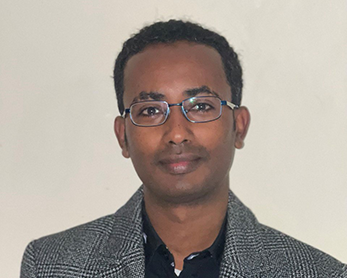
Dr. Abadi Gebre is a Postdoctoral Research Fellow at Edith Cowan University’s Nutrition & Health Innovation Research Institute, affiliated with the School of Medical and Health Sciences. His research focuses on reducing the burden of cardiovascular disease-related falls, fractures, and dementia through innovative methods. He holds a PhD from ECU (2023), a Master of Science in Pharmacology (2017), and a Bachelor of Pharmacy (2014), both from institutions in Ethiopia. Research Interests: Vascular calcification mechanisms and clinical implications Carotid atherosclerosis and fall risk prediction Cardiac troponin as a biomarker for elderly health outcomes Medication safety and pharmacotherapy optimization Healthy aging strategies targeting cardiovascular-musculoskeletal interfaces Key Achievements: Recipient of multiple travel awards from ANZBMS, IBRO, and WACRA Lead author on 20+ peer-reviewed articles in journals like Lancet , Journal of Gerontology , and Bone Principal investigator for studies linking abdominal aortic calcification to fall/fracture risks Professional Memberships: American Society for Bone Mineral Research Western Australian Cardiovascular Research Alliance Australian and New Zealand Bone Mineral Society Current Supervision: Associate supervisor for three PhD candidates focusing on vascular calcification, dietary nitrate, and osteoporosis medications
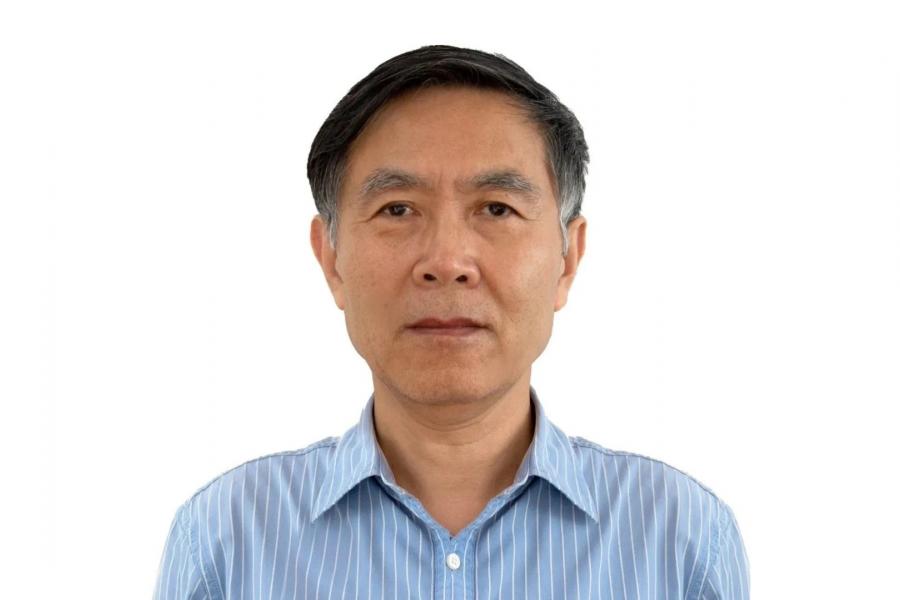
Qingjin Peng is a Professor in the Department of Mechanical Engineering at the University of Manitoba’s Price Faculty of Engineering. His work focuses on Product Design and Manufacturing, with expertise in Digital Manufacturing, Design Methodology, and Virtual Reality applications. He holds a PhD from the University of Birmingham (1998) and master’s and bachelor’s degrees from Xi’an Jiaotong University (1988, 1982). Education: PhD in Mechanical and Manufacturing Engineering, University of Birmingham (1998) M.Sc. Mechanical and Manufacturing Engineering, Xi’an Jiaotong University (1988) B.Sc. Mechanical and Manufacturing Engineering, Xi’an Jiaotong University (1982) Research Interests: His research spans Digital Manufacturing, Product Assembly/Disassembly Planning, CAD/CAM systems, and System Modeling. He pioneered methods integrating AI (e.g., Reinforcement Learning, Machine Learning) into product design and manufacturing processes. Notable contributions include optimizing Additive Manufacturing parameters using Taguchi methods and developing VR-based training systems for Coordinate Measuring Machines. Publications: Recent work emphasizes AI-driven innovation in manufacturing, with focus areas including sustainability in Additive Manufacturing, fault diagnosis of rotating machinery, and multi-agent systems for concept evaluation. His 2024 studies highlight advancements in product design through radical problem-solving frameworks, causal chain analysis, and genetic algorithm optimization. Advising & Grants: Currently no graduate student opportunities are listed, but his past collaborations include projects funded by national grants. Research teams often involve interdisciplinary partnerships, leveraging AI and data-driven approaches. Labs/Teams: His lab focuses on Digital Manufacturing and AI applications, though specific team names are not explicitly mentioned in the provided text.
Professor John Economou is Professor of Defence Robotics and Autonomous Systems and Deputy Director of Consultancy at Cranfield University's Centre for Defence Engineering and Physical Science. He holds a BEng from University of Wales, MSc from University of Sheffield, and PhD from Cranfield University. His research focuses on uncrewed vehicle systems, control methods, and autonomous technologies for defence applications. Research areas include autonomous systems control, fuzzy logic systems, inertial sensing, and energy-based path planning. He leads the Robotics and Autonomous Systems and Human Machine Teaming (RAS-HMT) campaign and directs the Aerosystems MSc program. Recent publications focus on vehicle control systems, sensor fusion algorithms, and autonomous navigation. His research receives funding from UK Ministry of Defence, US Department of Defense, and defence industry partners including BAE Systems and QinetiQ.
Dr. Gergely Vakulya is an Associate Professor and Research Fellow at Óbuda University. He specializes in interdisciplinary research spanning cybersecurity, agricultural technology, sensor networks, and image processing. His work integrates hardware design, algorithm development, and real-world applications. Dr. Vakulya’s recent focus includes developing rumen bolus sensors for dairy cattle health monitoring, gamification of cybersecurity training, and innovative methods in camera exposure time measurement. He is affiliated with Óbuda University’s Budai Road and Pirosalma Street campuses, with an office at building F room 316. His research frequently addresses challenges in data collection, sensor fusion, and embedded systems. Research Interests: Dr. Vakulya’s expertise includes cybersecurity frameworks (e.g., CTF challenges), agricultural IoT systems (e.g., rumen bolus sensors for livestock monitoring), and image processing techniques (e.g., genetic algorithms for shape approximation). His work on visible light communication (VLC) and wireless sensor networks highlights his contributions to communication protocols and energy-efficient systems. Recent trends in his publications emphasize cross-disciplinary approaches, such as applying AI methods to agricultural sensor data and optimizing sensor networks for real-time applications. Advising & Grants: No specific advising relationships or grants are listed in available materials. His research infrastructure is likely supported through institutional and collaborative projects. Labs/Teams: While not explicitly stated, his research likely involves collaborations within Óbuda University’s engineering and computer science departments. His work on rumen sensors and VLC systems suggests potential affiliations with robotics, biomedical engineering, or smart agriculture research groups.
Konstantin Mischaikow is a Professor of Mathematics at Rutgers, The State University of New Jersey, affiliated with the Department of Mathematics. His research focuses on dynamical systems, computational topology, mathematical biology, and machine learning applications in complex systems analysis. He specializes in rigorously analyzing nonlinear dynamics using topological methods, with emphasis on robotics control, ecological modeling, and parameterized ordinary differential equations. His work combines theoretical rigor with computational techniques, addressing challenges in global dynamics characterization, data-driven modeling, and topological data analysis. Notable contributions include the development of the DSGRN (Dynamic Signatures Generated by Regulatory Networks) database for systematically analyzing regulatory networks. His research often bridges pure mathematics with applied fields like robotics, systems biology, and granular materials physics. Recent studies focus on applying persistent homology to chaotic systems (e.g., Rayleigh-Bénard convection), identifying attractors via machine learning, and quantifying dynamics in high-dimensional spaces. He has collaborated extensively on projects involving granular media, synthetic biology circuits, and spatiotemporal chaos analysis. His academic contributions span over three decades, with a focus on merging topological tools with computational methods to solve real-world problems. While no specific awards are listed, his work has significantly impacted computational dynamics and topological data science.
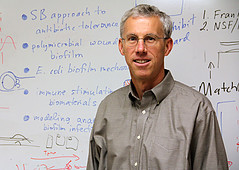
Phil Stewart is a Regents Professor in the Department of Chemical and Biological Engineering at Montana State University (MSU), affiliated with the Center for Biofilm Engineering and the Montana Nanotechnology Facility. He holds a Ph.D. in Chemical Engineering from Stanford University (1988) and has extensive experience in biofilm research, including postdoctoral work at the Institut Jacques Monod (Paris) and industry roles at Bechtel Environmental and Lonza AG. Research Focus: Stewart specializes in biofilm control strategies, transport phenomena, and antimicrobial agent development. His work addresses biofilm-related challenges in medical devices, chronic wounds, and industrial systems. Key areas include biofilm modeling, detachment mechanisms, and the interplay between biofilms and host immunity. Grants & Awards: Notable grants include leadership of the Montana Nanotechnology Facility (NSF-funded) and NASA projects on biofilm mitigation in space. Awards include MSU's highest faculty honor, Regents Professor (2019), and recognition as a NACOE Distinguished Professor (2018). Education: Ph.D. (1988), M.S. (1985) in Chemical Engineering from Stanford University; B.S. (1982) in Chemical Engineering from Rice University. Courses Taught: EBIO 216 (Elementary Principles of Biological Engineering) and EBIO 566 (Fundamentals of Biofilm Engineering). Key Contributions: Over 200 peer-reviewed publications, including seminal works on biofilm lifecycle models, antimicrobial tolerance, and neutrophil-biofilm interactions. His research impacts chronic wound treatment, infection control, and biofilm-resistant materials. Outreach: Active in global biofilm conferences, industry collaborations, and public education via the CBE's Bioglyphs Initiative.
Minjeong Kim is an Associate Professor and Interim Department Head in the Department of Computer Science at The University of North Carolina at Greensboro (UNCG), serving as a CAS Dean's Fellow. She holds a Ph.D. from Ewha Womans University, Korea, with postdoctoral research at the Biomedical Research Imaging Center (BRIC) at UNC Chapel Hill and the University of Pennsylvania. Her research focuses on biomedical image analysis, deep learning applications in neurodegenerative diseases, and computational neuroscience. Education includes a Ph.D., M.S., and B.S. in Computer Science and Engineering from Ewha Womans University. Professional experience includes roles as a Research Fellow at Ewha Womans University and visiting researcher at the University of Pennsylvania's Department of Radiology. Research interests emphasize graph neural networks for brain connectivity analysis, Alzheimer’s disease diagnosis via machine learning, and multimodal medical imaging techniques. Her work bridges computational methods with clinical applications, particularly in uncovering disease mechanisms through advanced imaging analysis. Her recent articles highlight innovations in graph representation learning, tau protein propagation modeling, and functional MRI analysis. She maintains a lab at Moore Building 301A and teaches graduate courses in software engineering and computer vision.
Dr. Ulaş BELDEK is an Assistant Professor at the Department of Mechatronics Engineering, Faculty of Engineering, Çankaya Üniversitesi. He holds a Ph.D. in Electrical and Electronics Engineering from Middle East Technical University (2009) and has been a full-time faculty member since 2002. His research focuses on control theory, mechatronics, artificial intelligence, and renewable energy systems. He has advised 14 master’s theses and contributed to numerous projects, including the development of a central control unit for renewable energy systems. Education: Ph.D., Electrical and Electronics Engineering, Middle East Technical University (2004–2009) M.Sc., Electrical and Electronics Engineering, Middle East Technical University (1999–2001) B.Sc., Electrical and Electronics Engineering, Middle East Technical University (1995–1999) Research Interests: Control systems design and optimization Robotics and autonomous navigation Machine learning applications in energy systems Evolutionary algorithms and optimization techniques Renewable energy systems integration Projects: Development of a Central Control Unit for Renewable Energy Systems Trios Car Electric Vehicle Production
Sara Brown is a clinical academic dermatologist and Professor at the University of Edinburgh's Institute of Genetics and Cancer. She leads the Brown Lab, focused on molecular and genetic mechanisms of atopic eczema and related conditions. Her work integrates genomic studies, organoid models, and clinical research to explore gene-environment interactions. As a Wellcome Trust Senior Research Fellow, she collaborates with institutions like the MRC Human Genetics Unit and the University of Dundee. Current research emphasizes skin organoid modeling, transcriptomics, and translational studies to identify therapeutic targets for eczema and ichthyoses. Her lab includes postdoctoral fellows (Martina Elias, Luke Johnston) and PhD students (Ellie Earp, Silvia Shen). Funding partners include Wellcome Trust, Biomap Consortium, and Rosetrees Trust. Collaborations span dermatology, bioinformatics, and art (Edinburgh College of Art). Research highlights include investigating filaggrin mutations' role in skin barrier dysfunction, environmental triggers, and systemic inflammation links. Notable projects include the BEEP trial (emollient prevention of eczema) and TREAT trial (comparing ciclosporin/methotrexate efficacy). Awards include Wellcome Senior Research Fellowship and ScotPEN Engagement Award. The lab's future aims address rising eczema prevalence and personalized treatment strategies.
Prof. Hakan Altınçay is a Full Professor in the Department of Computer Engineering at Eastern Mediterranean University (EMU). He holds a PhD from Middle East Technical University (METU), Turkey (2000), and has been at EMU since 2000, progressing from Assistant Professor (2000–2005) to Full Professor (2012–present). His research focuses on machine learning, including imbalance learning, feature selection, ensemble methods, and biomedical data analysis. He has supervised 10+ PhD and Master’s theses and authored over 50 journal and conference papers. Education: BEng in Electrical and Electronics Engineering (METU, 1993), MSc and PhD in Electrical Engineering (METU, 2000). Awards include the IEEE Third Best Paper Award (2003) and TÜBİTAK PhD Scholarship. He serves on editorial boards (e.g., Applied Intelligence Journal) and chairs academic committees at EMU. Key contributions include algorithms for imbalanced data classification (MaMiPot), feature selection techniques, and biomedical applications like diabetes prediction. His work addresses challenges in text categorization, speaker verification, and ensemble classifier design.
Amos H.C. Ng is a Professor of Automation Engineering at the School of Engineering Science, University West (Högskolan i Skövde). His academic qualifications include BEng, MPhil, and PhD degrees, complemented by professional certifications such as Chartered Engineer (UK) and membership in the Institution of Engineering and Technology (UK). His research focuses on production simulation, multi-objective optimization, simulation-based innovization, and digital human modeling, with applications in manufacturing systems, Industry 4.0, and smart manufacturing. Ng has contributed to over 150 publications since 2000, spanning topics like decision support systems, maintenance optimization, and reconfigurable manufacturing. His work integrates simulation, data mining, and evolutionary algorithms to address challenges in production systems, including bottleneck analysis, energy efficiency, and human-robot collaboration. Notable projects include developing the Mimer knowledge discovery tool and frameworks for digital twin applications in production lines. His research emphasizes practical industry applications, collaborating with organizations to improve production processes through advanced methods like trend mining and cloud-based optimization. Ng also serves as a course coordinator and contributes to educational initiatives in automation engineering.
Nan Bernstein Ratner is a Distinguished University Professor in the Department of Hearing and Speech Sciences at the University of Maryland, College Park. She is actively involved in multiple campus units including the Neuroscience and Cognitive Neuroscience (NACS) program where she serves as Director of Graduate Studies, the Language Sciences Center (LSC), the University of Maryland Developmental Sciences Field Committee, and the Bahá'í Chair for World Peace International Advisory Board. Dr. Bernstein Ratner holds the following educational credentials: BA in Child Study, Linguistics from Tufts University (1974) MA in Speech-Language Pathology from Temple University (1976) Ed.D in Applied Psycholinguistics from Boston University (1982) Her primary research focuses on fluency development and disorders (particularly stuttering), psycholinguistics, and the role of adult input and interaction in child language development. Bernstein Ratner's work spans both typical speech and language development in infants and children as well as childhood communication disorders including autism, seizure disorders, and late talkers. She is deeply committed to evidence-based practice in communication disorders and the role of information literacy in clinical decision-making. Her research also examines the impact of sports-related concussion on children's language skills and the development of speech and nonspeech predictors of later language development. Analysis of her recent publications reveals a strong emphasis on stuttering research, language sample analysis methodology, child language development, and the application of computational approaches to speech and language disorders. Her work increasingly incorporates considerations of linguistic diversity and bias-free assessment, particularly for children who speak non-mainstream dialects of American English. There's also a clear trend toward leveraging technology and computational linguistics to enhance clinical practice and research in communication sciences. Dr. Bernstein Ratner has received numerous prestigious awards for her contributions to the field: Fellow of the American Speech, Language and Hearing Association (ASHA) Fellow of the American Association for the Advancement of Science (AAAS) (2014) Distinguished Researcher award from the International Fluency Association (2006) Professional of the Year by the National Stuttering Association (2016) Board-recognized Specialist in Child Language Disorders As an advisor, Dr. Bernstein Ratner has mentored numerous doctoral students who have gone on to successful careers in academia and clinical practice. She has secured significant grant funding from organizations including the National Institute on Deafness and Other Communication Disorders (NIDCD) and the National Science Foundation (NSF) to support FluencyBank, a project of TalkBank that tracks fluency development across various populations. More recently, she has received NIH TALK initiative funding to examine predictors of recovery from late-talking in early childhood and to study growth in writing skills across diverse student populations. She is currently accepting doctoral students and emphasizes the importance of prior discussions with potential mentees. Dr. Bernstein Ratner co-manages FluencyBank with Brian MacWhinney of Carnegie-Mellon University. This initiative, jointly funded by the NIDCD and NSF, tracks fluency development in typical children, those who stutter, late-talking children, and children raised bilingually. Her lab website at http://languagefluency.umd.edu/ provides additional information about her research activities and current projects, including the Atypical Disfluency Project and investigations into how autism affects understanding in multitalker environments.
Prof. Sandosh Padmanabhan is the Pontecorvo Chair of Pharmacogenomics at the University of Glasgow's College of Medical, Veterinary and Life Sciences, leading the Institute of Cardiovascular & Medical Sciences. He holds a MD and PhD in Medicine from JIPMER, India, and has been recognized with awards like the Bellahouston Medal and Austin Doyle Award. His research focuses on hypertension genomics, integrating epidemiology and omics technologies to dissect cardiovascular drug responses. He leads the AIM HY consortium, discovering ancestry/metabolomic markers for antihypertensive efficacy, and co-leads functional studies on the hypertension gene UMOD. He chairs the British Hypertension Society's education committee and serves on editorial boards of Hypertension and Journal of Hypertension . Education: MBBS and MD (General Medicine, JIPMER, 1995), PhD (University of Glasgow, 2003) Research Themes: Cardiovascular Data Science, Pharmacogenomics, GWAS, Omics Integration Recent work includes the LOCHINVAR study on post-COVID vascular effects, genotype-blinded drug trials (e.g., torasemide), and machine learning for blood pressure classification. His lab collaborates with institutions like the Broad Institute and Generation Scotland. He has published over 280 articles, with pivotal contributions to hypertension genetics and precision medicine.
Dr. George Yu is an Associate Professor of Computer Science and Information Systems at Youngstown State University (YSU), Ohio. He holds a Ph.D. in Computer Science from Southern Illinois University (2013), an M.S. in Pure Mathematics from Shandong University (2008), and a B.S. in Information and Computation Science from Northeastern University (2005). As the Campus Champion of NSF XSEDE at YSU, he facilitates access to national supercomputing resources and organizes workshops on High-Performance Computing (HPC). His research focuses on Database Systems , Approximate Query Processing (AQP) , Big Data Analytics , Cloud Computing , and Bioinformatics . Notable contributions include the AQPrius framework for error-aware AQP and collaborative work on genomic data analysis in plants like Aspergillus niger and tomato. Dr. Yu has received multiple recognitions, including the 2020 Distinguished Professor in Scholarship at YSU and the 2019 Best Paper Award at the International Conference on Software Engineering and Data Engineering. He serves as an associate editor for journals like Transactions on Large-Scale Data and Knowledge-Centered Systems and actively contributes to conference program committees. His educational initiatives include developing YSU's Data Analytics (DATX) Certificate Program and teaching courses on databases, cloud computing, and blockchain. He leads the YSU Data Lab, which operates high-performance research clouds like Sarah Cloud and YSU STEM Cloud, and mentors students in NSF-funded research projects.
Rachel Ambagtsheer is a Research Fellow and Senior Lecturer in Health at Torrens University Australia, based in the Centre for Public Health, Equity and Human Flourishing (PHEHF). With over 20 years of experience in health research, policy, and consulting, she specializes in frailty, aging, and healthcare system interactions. Her work focuses on improving older adults' participation in policy discussions and optimizing healthcare interventions for aging populations. Education: PhD in Public Health (2020) Master of Information Studies (Librarianship) Bachelor of Arts (Honours) Her research interests include: Frailty screening and diagnostic accuracy in primary care Health policy engagement for older adults Cross-cultural adaptation of healthcare tools Rachel leads the MRFF-funded IMPAACT Project, enhancing older Australians' involvement in policy decisions about aging-related conditions. She previously contributed to the NHMRC CRE for Frailty and Healthy Ageing, co-authoring a landmark study on frailty screening in general practice. Her scientific achievements include Distinguished Membership of the Australian Association of Gerontology. Key projects involve frailty interventions in residential care and technology-based solutions for social isolation reduction. Research collaborations focus on: Frailty screening instruments in Sub-Saharan Africa Heart failure management in primary care Human-centered design of health resources Rachel has produced over 29 peer-reviewed outputs, emphasizing evidence-based practices and participatory research methodologies.