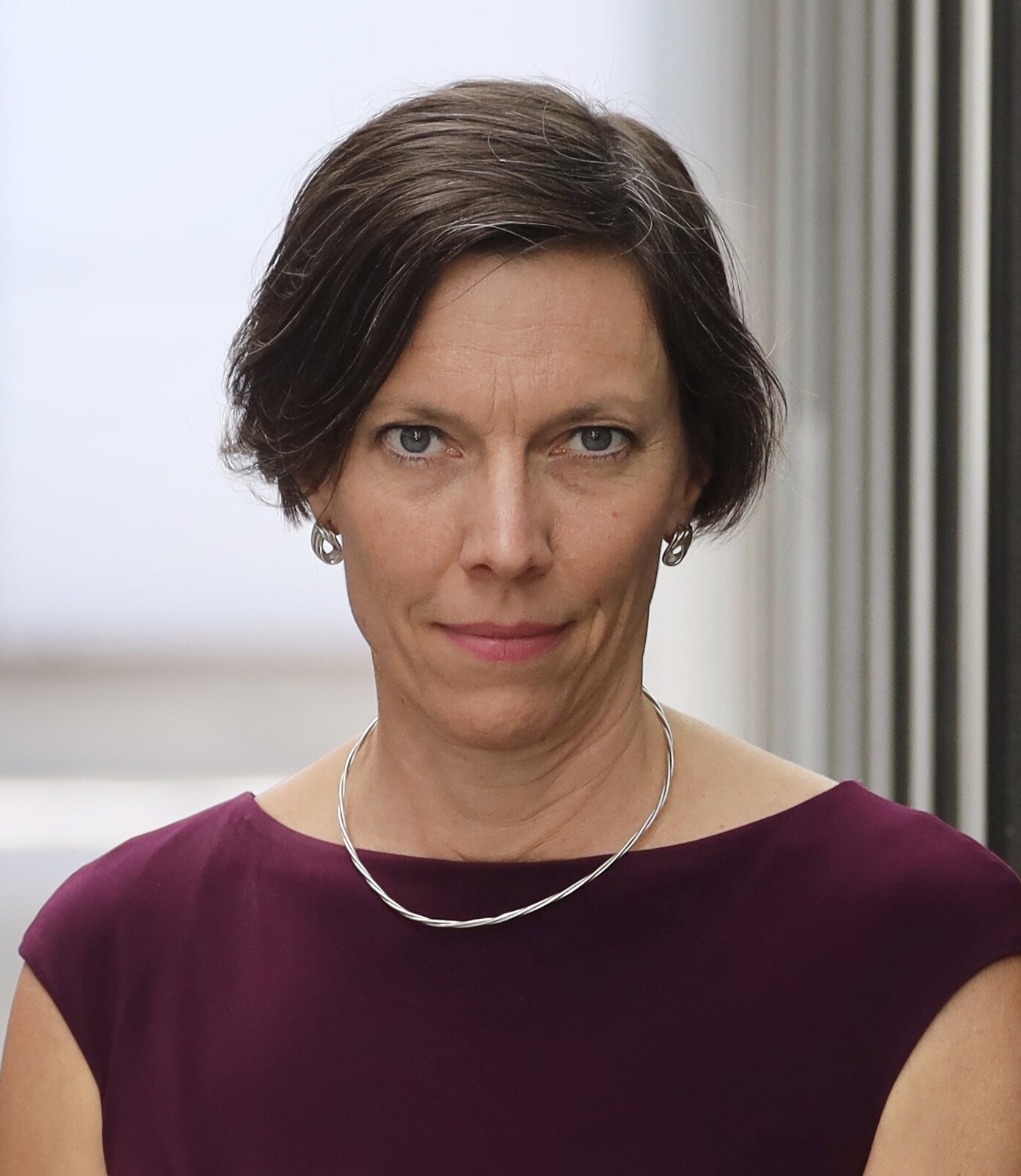
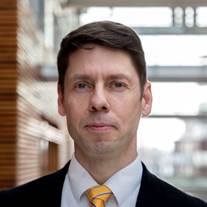
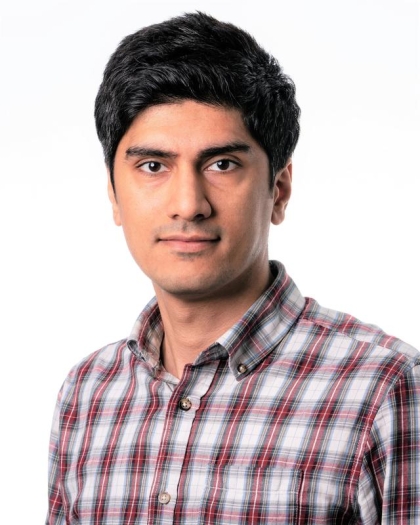
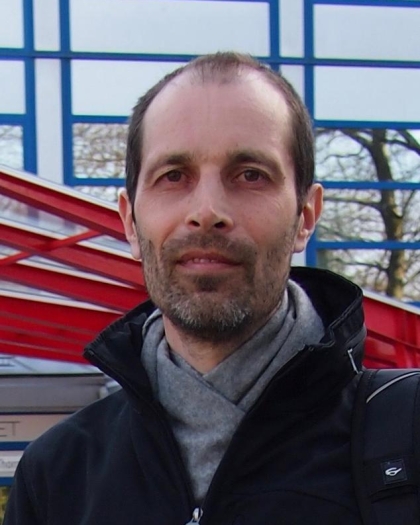
Rune Andersen is a Senior Lecturer at the University of Agder , affiliated with the Department of Information and Communication Technology . He has pioneered Europe's first holistic Bachelor's program in Academic Esports and serves as its Program Head, while also leading external communication and innovation initiatives within the department. Education: General Teacher (1999) Master's in Educational Use of ICT (2008) Guidance Pedagogy (2012) Welfare Technology (2018) His research interests focus on ICT integration in education , gamification , and leveraging transferable skills from esports for workforce development. He emphasizes interdisciplinary collaboration and industry partnerships to bridge academic and professional transitions. Recent publications highlight esports as a pedagogical tool, gamification in higher education, and skill transfer from digital environments to real-world applications. His work spans game-based learning, universal design, and curriculum innovation.
Amanda D. Lotz is a Professor in the Digital Media Research Centre at Queensland University of Technology (QUT), leading the Transforming Media Industries and Cultures research program. Her work focuses on media industries, internet distribution, and the evolving role of television in society. She holds fellowships from the International Communication Association and the Queensland Academy of Arts and Sciences. Her research examines global streaming services, media policy, and the business strategies shaping contemporary media landscapes. Dr. Lotz earned a Ph.D. in Radio-Television-Film from the University of Texas at Austin, with prior academic roles at Washington University in St. Louis, Denison University, and the University of Michigan (2004–2018). Her expertise spans books like The Television Will Be Revolutionized and Media Disrupted , exploring streaming’s impact on traditional media. She advises on policy, consults for media organizations, and hosts the Media Business Matters podcast. Her research highlights the fragmentation of television audiences, the rise of subscriber-funded platforms, and challenges to cultural policy. Key projects include analyzing Australian TV drama production and the global implications of internet distribution. Her recent work addresses generative AI and metaverse media, emphasizing the transformative role of funding models (advertiser, consumer, government) in media priorities. Awardees include the Mellon Post-Doctoral Fellowship and recognition for her teaching. She actively contributes to global media discourse via interviews with major outlets (BBC, NPR, CNN) and serves as a resource for industry workshops on adapting to digital disruption.
Elisabet Apelmo serves as Senior Lecturer in the Department of Social Work at Malmö University, Sweden. A visual artist with a PhD in Sociology, she bridges creative practice and academic inquiry to explore the complex intersections of bodily experience, sport, disability, and gender within contemporary society. Her research program centers on sociological analyses of bodily difference, particularly examining how physical education environments construct inclusion and exclusion through gendered and ableist frameworks. Apelmo employs phenomenological approaches and visual methodology to investigate how disabled bodies navigate sporting spaces, challenging normative assumptions about athletic participation and bodily capability. Her work consistently reveals how sporting cultures simultaneously enable and constrain identities, particularly for women and people with disabilities. Analysis of Apelmo's publication history shows sustained engagement with critical disability theory, gender studies, and sport sociology spanning nearly two decades. Her scholarship demonstrates methodological innovation through visual approaches and phenomenological frameworks, with recurring themes including the social construction of disability in sport contexts, gendered bodily experiences in physical education, and the material-semiotic relationships between bodies and technologies like wheelchairs. Among her current research initiatives are investigations into participation and exclusion dynamics in mainstream physical education from disability and gender perspectives, and ethnographic studies examining how dancers strategically use their bodies and gazes to disrupt stereotypical perceptions of physical impairment. These projects reflect her commitment to generating knowledge that directly challenges ableist assumptions within sporting cultures and educational settings.
Kristin Y. Pettersen is a Professor at the Department of Technical Cybernetics, Norwegian University of Science and Technology (NTNU), and a Professor II at the Norwegian Defence Research Institute (FFI). She is a co-founder of Eelume AS, a company specializing in underwater robotics solutions. Education: Civil Engineering and PhD in Technical Cybernetics from NTNU Her research focuses on advanced control systems for marine and underwater vehicles, particularly snake robots and autonomous underwater vehicles (AUVs). Key areas include formation control, path following, adaptive guidance algorithms, and safety-critical control in dynamic environments. Recent work explores machine learning integration and energy-shaping techniques for robust locomotion. Publications highlight trends in Model Predictive Control (MPC) , Collision Avoidance , and Task-Priority Operational Space Control for redundant and underactuated systems. Her work bridges theoretical control theory with practical applications in marine robotics, including autonomous inspections and cooperative transport. Labs/Teams: Collaborates with NTNU's Faculty of Information Technology and Electrical Engineering and co-founded Eelume AS, advancing subsea robotic manipulation technologies.
Hilde Moseby Berge is an Associate Professor in the Department of General Practice at the University of Oslo. Her research focuses on cardiovascular health in athletes, injury and illness prevention in elite sports, and the psychological and social impacts of cardiac arrest survival among young exercisers. She has collaborated extensively with institutions like the Norwegian Olympic and Paralympic committees, contributing to longitudinal health monitoring programs for athletes. Her work includes evaluating automated external defibrillator (AED) availability in sports clubs and analyzing post-surgical outcomes for musculoskeletal injuries. Berge is also affiliated with the Clinical General Practice Research (Allmix) and General Practice Health Services Research (ALHF) groups, emphasizing her commitment to practical healthcare solutions. Key research themes include: 1) Cardiac events in sports contexts, 2) Health disparities affecting Paralympic athletes, and 3) Long-term health surveillance for Olympic/Paralympic participants. Her studies often use systematic reviews and multi-year cohort analyses, with findings published in journals like British Journal of Sports Medicine and Resuscitation . Berge’s contributions to healthcare systems include designing prevention protocols for sudden cardiac arrest and investigating bone density issues in elite Para athletes. She has co-authored over 15 peer-reviewed articles since 2014, addressing topics such as ECG interpretation in athletes, post-cardiac arrest quality of life, and the epidemiology of sports-related injuries. Her work bridges clinical research and real-world healthcare applications, particularly in sports medicine and emergency preparedness.
Janis Berzins is an Associate Professor in the Department of Finance at BI Norwegian Business School since 2006. He holds a PhD from Indiana University's Finance Department. His research focuses on corporate governance, corporate finance, and portfolio management with emphasis on family firms, agency conflicts, and tax policy impacts. Education: PhD (Indiana University, 2006), MBA (SUNY Buffalo, 1999) Research explores dividend policies in private firms, wealth tax effects on family businesses, and succession dynamics. He has published in journals like Journal of Corporate Finance and Review of Finance . Active in grants including NFR (2020), EEA (2020), and CCGR programs. Teaching: CFA Research Challenge, International Finance, Managerial Accounting Grants include studies on household-firm finance links and micro-level socio-economic responses. Serves as Associate Editor for Baltic Journal of Economics and reviewer for top finance journals.
Amirhosein Taherkordi is a Professor in the Networks and Distributed Systems group at the Department of Informatics, University of Oslo, Norway. His research focuses on resource-efficiency, scalability, adaptability, dependability, mobility and data-intensiveness of distributed systems for emerging computing technologies including Internet of Things (IoT), Fog/Edge/Cloud Computing, and Cyber-Physical Systems (CPS). Dr. Taherkordi received his Ph.D. from the Informatics Department at the University of Oslo under the supervision of Prof. Frank Eliassen, with his thesis titled "Programming Wireless Sensor Networks: From Static to Adaptive Models." He holds an M.Sc. in Information Technology Engineering (Software Engineering) from University of Science and Technology and a B.Sc. in Computer Engineering from Sharif University of Technology. His research spans multiple domains of distributed systems with emphasis on practical applications. He investigates energy efficiency in wireless sensor networks, communication optimization in IoT systems, and adaptive resource allocation in edge computing environments. His work addresses critical challenges in network traffic classification, federated learning for vehicular networks, and data processing across heterogeneous platforms. Analysis of his recent publications reveals a strong trajectory toward communication-efficient federated learning techniques for vehicular networks, energy-aware protocols for IoT data collection, and advanced machine learning approaches for network traffic analysis. His research consistently focuses on optimizing resource usage while maintaining system performance and privacy in distributed architectures. Dr. Taherkordi actively contributes to several research initiatives including the CPS Lab at UiO for Cyber Physical Systems, DILUTE: Fluid Service Abstraction for Large-Scale Cloud IoT Systems, and the Gemini Centre on IoT at UiO. His work bridges theoretical advances with practical implementations in transportation systems, environmental monitoring, and industrial automation.
Dr. Ahmad Hemmati is an Associate Professor at the Department of Informatics, University of Bergen. His research focuses on optimization models and algorithms for logistics, transportation, and maritime systems. He holds a PhD from the Norwegian University of Science and Technology (NTNU) in 2015. His work addresses challenges in inventory routing, drone delivery systems, and combinatorial optimization using methods like reinforcement learning and metaheuristics. Key contributions include models for maritime cargo optimization, synchronized truck-drone delivery, and feeder network design. He has collaborated internationally with institutions like MIT and the University of Antwerp. His findings are published in journals such as European Journal of Operational Research and Computers & Operations Research , with a focus on practical solutions for industrial logistics problems. Education: PhD in Operations Research (NTNU, 2015). Research Interests: Maritime Logistics, Inventory Routing Problems, Combinatorial Optimization, Drone Delivery Systems, and Algorithm Design. His work bridges theoretical models with real-world applications in transportation networks and sustainability. Publications Trends: Recent articles emphasize deep reinforcement learning applications and maritime environmental monitoring. Earlier work includes foundational contributions to tramp shipping and VMI service routing. His methodologies often blend heuristic algorithms with mathematical programming. Grants/Awards: No specific awards mentioned, but his work has been funded by the Research Council of Norway and industry collaborations.
Simon McCallum is an Associate Professor at NTNU’s Faculty of Information Technology and Electrical Engineering. Born in New Zealand, he transitioned from commercial game development in Norway to academia in 2009. His research focuses on Serious Games, particularly in healthcare contexts, gamification, and virtual reality applications. He holds a PhD from the University of Otago (2007), where he studied Computer Science, Mathematics, Psychology, and Philosophy. McCallum has contributed to over 30 publications, including works on cognitive health gaming, software engineering education, and AR applications. He teaches courses such as IMT4307 (Serious Games Research) and IMT3603 (Game Programming). His key projects include the Smartkuber AR game for cognitive screening and the Traction Trebuchet historical engineering study. McCallum has collaborated with institutions like the University of Otago and has engaged in outreach through conferences and media appearances, promoting game technology in healthcare and education.
Jaakko Timo Henrik Järvi is a Professor in the Department of Informatics at the University of Bergen, Norway, with additional affiliations at the University of Turku, Finland. His research focuses on programming language design, generic programming, and human-computer interaction, particularly in GUI frameworks and software reuse. His research interests include generic programming, programming language design (especially the Magnolia language), high-performance computing, array programming, and GUI engineering. He emphasizes formal methods and algebraic specifications to build reusable and efficient software systems. His work bridges theoretical foundations with practical applications in software development and education. The recent publications highlight a strong trend in declarative GUI frameworks, multi-selection models, and generic programming. His work explores domain-specific languages for GUI structure manipulation, reusable selection semantics across platforms, and optimizing array computations using the Mathematics of Arrays. These efforts reflect a consistent focus on software abstraction, correctness, and reusability. Jaakko Järvi has supervised doctoral students, including Tetiana Yarygina, whose dissertation explored microservice security. While no specific grants are detailed, his work on VisAST was supported by the Research Council of Norway (Project 250683), indicating active external funding. He frequently collaborates with researchers like Magne Haveraaen, Knut Anders Stokke, and Sean Parent. He contributes to tools and frameworks such as the MultiselectJS library and the VisAST educational tool. These are outcomes of collaborative research teams focused on improving software development practices and computer science education.
Marion Elisenberg is an Assistant Professor in the Department of Language, Literature and Culture at Østfold University College's Faculty of Education. She teaches Norwegian subjects across multiple teacher education programs including primary school teacher training, kindergarten teacher training, master's in special education, and continuing education for teachers within competence for quality development. Her educational background includes: University Pedagogy (2011) - Østfold University College Master in Nordic Didactics (2009) - University of Oslo Norwegian 3 (2005) - Østfold University College Norwegian 2 (2004) - Østfold University College Special Education 2 (2002) - Østfold University College Counseling and Social Education (1997) - Oslo University College General teacher education (1981) - Hamar Teacher Training College Ex. Phil. (1973) - University of Bergen Dr. Elisenberg's research focuses on language and literature didactics, with particular emphasis on sustainable development in literature education, transitions between educational levels, multilingual classroom practices, and digitalization in elementary education. Her work explores how literary texts, especially children's literature and graphic novels, can serve as tools for identity development, environmental awareness, and social understanding. She investigates pedagogical approaches that bridge the gap between primary and secondary education, examining how literature instruction can be made more continuous across these transitions. Her recent publications demonstrate a strong focus on sustainability in literature education, with multiple articles examining how teachers incorporate sustainable development goals into their literature work. She also has significant work on class analysis in contemporary literature, particularly through Maria Navarro Skaranger's novel "Emily Forever." Another key thread in her research involves the use of graphic novels, especially Nora Dåsnes' "Ti kniver i hjertet," to explore identity formation and the relationship between form and content in visual storytelling. Her scholarship consistently addresses practical classroom applications while engaging with theoretical frameworks in literary studies and education. Dr. Elisenberg is actively involved in research groups focusing on Literature and Narrativity, Multilingual upbringing and education, and Young children and early childhood education. Her collaborative work, particularly with Camilla Häbler, has produced numerous publications addressing key challenges in contemporary literature education.
Mira Aaboen Sletten is a Researcher II at the Youth Research section of NOVA, the Welfare Research Institute affiliated with Oslo Metropolitan University. Based in Oslo at Stensberggata 26, she conducts research on youth-related topics with a focus on educational outcomes, mental health, and living conditions of young people. Her work bridges academic research with practical applications in youth services and educational policy. Dr. Sletten holds a PhD in Sociology. Her doctoral thesis examined the importance of participation and inclusion among peers during adolescence, establishing the foundation for her ongoing research on youth development and social dynamics. Her research primarily centers on dropout and completion in upper secondary education, trends in youth mental health, and living conditions from a youth perspective. She examines how social inclusion, peer relationships, and educational interventions affect young people's trajectories. A significant portion of her work addresses gender differences in educational outcomes and mental health, with particular attention to vulnerable youth populations and the social determinants that influence their development. Her methodology spans both quantitative and qualitative approaches to understand complex youth issues. Analysis of Dr. Sletten's recent publications reveals a consistent focus on youth development, educational outcomes, and social inequality. Her work examines school dropout prevention, mental health trends, leisure activities, and social inclusion across multiple contexts. A notable pattern is her examination of gender differences in educational and psychological outcomes, with recurring themes of vulnerability, resilience, and the impact of social policies on youth development. While no specific scientific awards are documented in the available information, her extensive publication record in reputable journals and her leadership in numerous research projects indicate significant recognition within her academic field. Her work appears in journals such as Nordic Studies in Education, Scandinavian Journal of Educational Research, and Tidsskrift for Den norske legeforening. Dr. Sletten is actively engaged in multiple research projects including 'GameChanger' which examines school-supplementary measures for at-risk youth, 'A boost for leisure clubs' initiative starting in 2025, and follow-up research on living conditions in Bergen Municipality. She has contributed to evaluations of 'Guttas Campus' and 'Idrett for alle i Oslo' (Sports for all in Oslo). Her research is supported by various grants that fund these projects, though specific grant amounts are not detailed in the available information. Dr. Sletten works within the Youth Research section at NOVA, collaborating with researchers such as Anders Bakken, Anne Grete Tøge, and Ira Malmberg-Heimonen. She is part of research teams focused on educational outcomes, youth mental health, and social inclusion. Her collaborative work extends to partnerships with institutions including the Norwegian School of Sport Sciences and various municipal entities involved in youth services across Norway.
Jan Frich is a Professor at the Department of Health Management and Health Economics, University of Oslo, with concurrent appointments as Professor II (2019-present) and previous Professor I (2011-2018) positions. He served as Visiting Professor at Yale University (2013-2014) and currently serves as Editor of Michael (since 2023) and Associate Editor of BMJ Leader (since 2018). His academic interests span healthcare management, medical leadership, neurology, and global health. Specialist in Neurology (2008), University of Oslo dr.med. and Cand.med. (2008 and 1996), University of Oslo Master in Health Administration (2008) and Master of Science (2001) from Brunel University London Executive education at Harvard University (2019), SEI/INSEAD (2019), NHH Executive Board Program (2022), and NHH Board Program (2024) His research focuses on healthcare leadership development, prioritization criteria in clinical settings, and neurological disorders like Huntington's disease and myotonic dystrophy type 1. Recent publications examine rehabilitation technologies, healthcare cost forecasting, and leadership competency models. He contributes to healthcare policy discussions through editorships and has led projects on primary healthcare team evaluations, sepsis management improvements, and leadership development during the COVID-19 pandemic. His work appears in leading journals like BMC Medicine, BMJ Leader, and Journal of Neuromuscular Diseases, with a strong emphasis on interdisciplinary applications.
Pinar Heggernes is a Professor at the Department of Informatics at the University of Bergen , specializing in algorithms and graph theory . Her research focuses on solving NP-hard graph problems through polynomial-time and fixed parameter tractable algorithms , particularly on chordal , split , and outerplanar graphs . She served as the elected deputy rector of the University of Bergen (2021–2025) with responsibility for education and digital knowledge, and previously as head of the Department of Informatics until 2021. Her career spans leadership in externally funded projects, editorial roles in international journals, and active participation in national research policy, including co-founding the Norwegian Artificial Intelligence Research Consortium (NORA). Education: PhD in Informatics from the University of Bergen. Research Interests: Algorithms for graph classes, computational complexity, parameterized algorithms, and combinatorial optimization. Collaborations: Extensive partnerships with academia, businesses, and public administration, including advisory roles in the Bergen Chamber of Commerce and the Norwegian Cognitive Center . Grants: Project leader for four Research Council of Norway FRIPRO grants (CLASSIS, SCOPE, MIST, and earlier projects) and participant in EU, Trond Mohn Foundation, and National Security Authority grants. Students: Supervised Paloma T. Lima (PhD, 2019) and co-supervised numerous advisees through collaborative projects. Labs/Teams: Coordinated interdisciplinary ICT research and education initiatives at UiB, with international collaborations in the USA, France, and Turkey.
Chris Horbel is an Associate Professor of Sport Management at the Department of Sport and Social Sciences, Norwegian School of Sport Sciences, where she has been employed since September 2019. She teaches Event Management and Sport Marketing at both undergraduate and graduate levels, contributing to the development of future sport management professionals. Her educational background includes: PhD in Business Administration from the University of Bayreuth, Germany Postdoctoral Degree (Habilitation) from the University of Bayreuth, Germany Dr. Horbel's research program centers on sport marketing with particular emphasis on sport events, sponsorship, fan behavior, and digital transformation. She has established herself as a leading scholar in value co-creation theory within sport contexts and sustainable tourism development in the Arctic region. Her work bridges theoretical frameworks with practical applications for sport organizations navigating sustainability transitions. Analysis of her recent publications reveals a clear trajectory toward integrating sustainability imperatives with sport management practices. Her research increasingly examines ethical dimensions of environmental sustainability communication, strategic implementation of Sustainable Development Goals in sport organizations, and innovative approaches to sustainable Arctic tourism development. This work often employs multi-level analytical frameworks that consider organizational, community, and global perspectives simultaneously. Dr. Horbel holds significant editorial responsibilities: Editorial Board Member and Social Media Editor for European Sport Management Quarterly Coordinator of the PhD Seminar for the European Association for Sport Management Regular ad-hoc reviewer for leading international journals in sport management and service research She actively contributes to major research initiatives including 'Ethical Environmental Sustainability Signaling in the Sport Industry' and 'The Doctoral Training Network in Sport Ethics and Integrity (DAiSI).' Her collaborative work spans multiple continents, reflecting her international research profile. Dr. Horbel co-leads an International Research Network focused on Sustainable Tourism Development in the Arctic, bringing together scholars to address critical challenges in this vulnerable region.