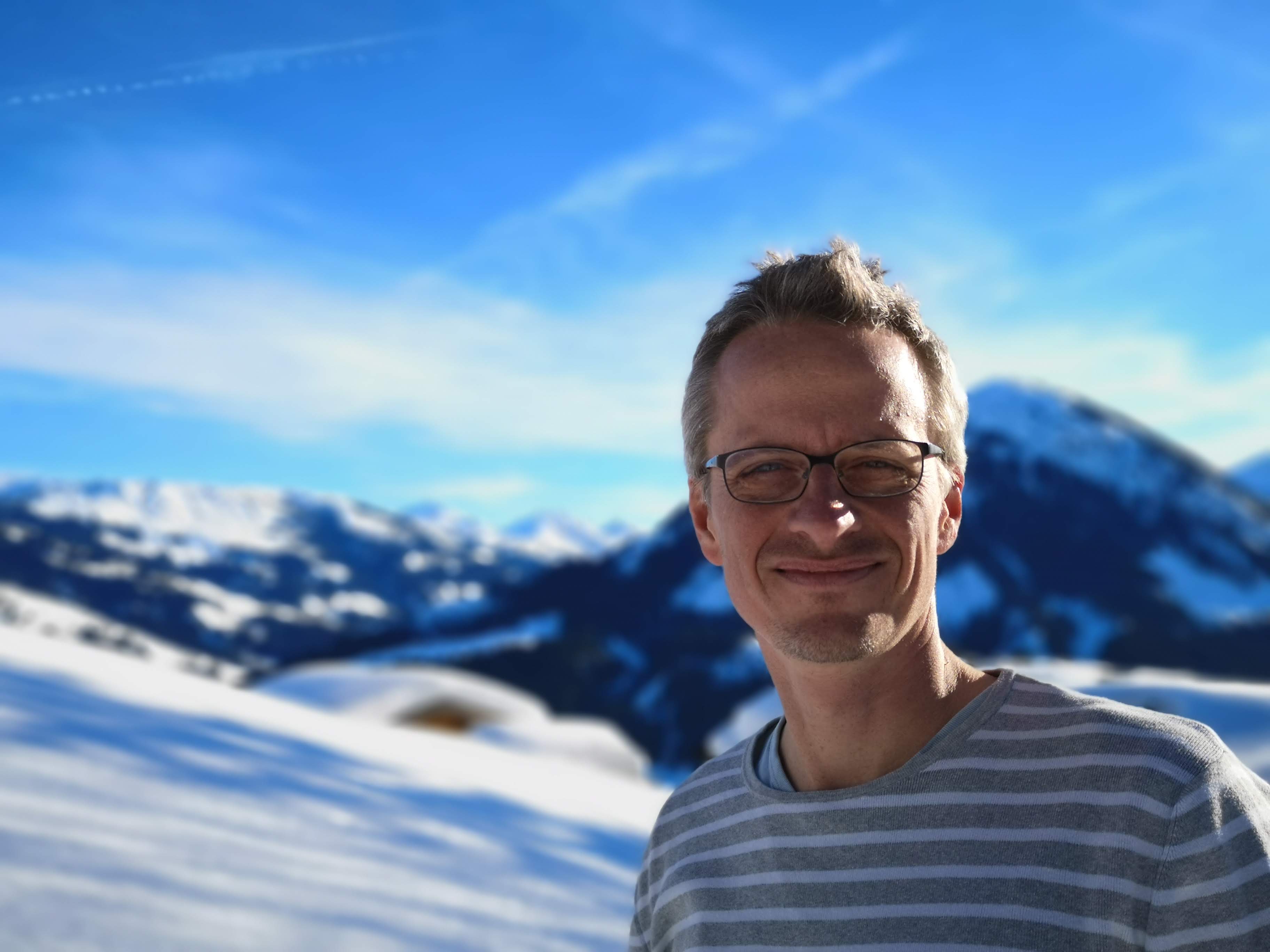
Dmitry Shchetinin is a Lecturer at ETH Zürich's Department of Information Technology and Electrical Engineering. His research focuses on power systems optimization, grid stability, and renewable energy integration. Research domains include: Optimal power flow formulations for active distribution grids Virtual inertia allocation in low-inertia systems Protection algorithms for flexible power lines Grid modeling under high renewable penetration His work addresses challenges in modern energy infrastructure through computational optimization approaches.
Soheyl Massoudi is a Research Fellow at ETH Zürich's IDEAL Lab, developing AI-driven methodologies for engineering design. His research integrates surrogate modeling, neural networks, and optimization algorithms for complex mechanical systems. Holds Ph.D. (2024) and M.Sc. (2020) in Mechanical Engineering from EPFL, with doctoral work focusing on surrogate-assisted optimization of turbocompressors for renewable energy applications. Current work explores autonomous artificial agents using large language models for iterative design tasks. Created computational frameworks like DARTS-NETGAB for real-time simulation and ParaturboCAD for parametric geometry generation.
Dr. Valery Vishnevskiy is a Lecturer at the Department of Information Technology and Electrical Engineering at ETH Zürich , affiliated with the Biomedical Imaging Group . His research focuses on advanced medical imaging techniques, particularly in cardiac MRI , ultrasound , and machine learning applications . He contributes to projects involving 4D flow MRI reconstruction , speed-of-sound imaging , and motion-corrected diffusion tensor analysis . Primary Affiliation : ETH Zürich, Department of Information Technology and Electrical Engineering Research Interests : Biomedical Imaging, MRI Reconstruction, Ultrasound Physics, Cardiac Imaging, Deep Learning His recent work emphasizes self-supervised learning for medical imaging, including the development of FlowMRI-Net for accelerated 4D flow MRI and Speed-of-Sound Imaging using diverging waves. Publications span hyperpolarized 13C metabolic imaging , viscoelasticity reconstruction , and probabilistic sampling optimization . Dr. Vishnevskiy's contributions to deformable image registration include methods for handling sliding interfaces in abdominal and cardiac imaging, with applications in respiratory motion compensation and tissue ablation monitoring . He also explores mathematical models for enzyme activity analysis and behavioral pattern detection.
Dr. Daniel Johnson Ruth is a Postdoctoral Researcher in the Coletti Group at the Institute of Fluid Dynamics, ETH Zürich. His research focuses on multiphase turbulent flows, bubble dynamics, and free surface effects in fluid dynamics. He holds a PhD from Princeton University, where he worked in the Deike Lab studying gas bubble dynamics in turbulent oceanic environments. Research Interests: Multiphase flows, experimental fluid mechanics, free surface turbulence, bubble fragmentation, and numerical modeling of turbulent systems. Techniques: Particle image velocimetry (PIV), laser-induced fluorescence, 3D flow reconstruction, and computational fluid dynamics (CFD). Labs/Teams: Coletti Group (ETH Zürich), Deike Lab (Princeton University).
Dr. Anja Zai is a Researcher affiliated with the Department of Neuroinformatics at ETH Zürich. Her work focuses on interdisciplinary investigations of vocal motor control, neuroethology, and computational methods in animal behavior. She specializes in studying songbirds as model systems to explore sensory-motor integration, reinforcement learning, and acoustic communication. Her research integrates advanced imaging techniques (e.g., synchrotron X-ray CT), machine learning, and experimental setups like the RecOOrder modular recording environment. Key research themes include vocal learning mechanisms in zebra finches, environmental influences on vocal behavior, and neuroprosthetic applications through sensory substitution. Her studies address fundamental questions about how organisms adapt vocalizations under sensory deprivation, optimize motor exploration, and encode complex vocal repertoires. Recent work emphasizes multimodal sound source separation (Vib2Sound) and algorithmic modeling of vocal planning processes. Dr. Zai’s methodological contributions include benchmarking datasets for vocalization analysis and tools for non-invasive welfare monitoring in isolated animals. While no scientific awards are explicitly listed, her frequent publication in high-impact journals since 2015 indicates sustained research excellence. Her work bridges computational neuroscience, behavioral ecology, and engineering through cross-disciplinary approaches.
Dr. Jonas Savelsberg is a Lecturer at the Department of Mechanical and Process Engineering at ETH Zurich, where he leads the power system modeling platform Nexus-e. His research focuses on electricity market design for renewable energy futures and assessing climate change impacts on power systems. Research Interests: His work spans energy systems modeling, climate change adaptation, and policy development for sustainable electricity markets. Key areas include hydropower-climate interactions, integration of renewable energy sources, and behavioral economics applications in energy consumption. Scientific Contributions: He has published extensively on climate-robust energy planning, Swiss hydropower resilience, and vehicle-to-grid systems. Recent work addresses political risk in power investments and economic frameworks for net-zero energy security. Contact: Email: jonas.savelsberg@esc.ethz.ch | ORCID: 0000-0003-2425-6214
Filippo Spinelli is a researcher at ETH Zürich, affiliated with the Professorship for Robotic Systems . His work focuses on advanced robotics and control systems, particularly in areas such as reinforcement learning, robotic material handling, and soft continuum manipulators. He contributes to interdisciplinary projects that bridge theoretical research and practical applications in autonomous systems. Research Interests : Reinforcement Learning for autonomous systems Dynamic robotic manipulation and control Multi-agent coordination in robotics competitions (e.g., RoboCup) Modular control frameworks for soft robotics Recent publications highlight his exploration of hydraulic systems, underactuated tools, and model predictive control methodologies. His research emphasizes practical implementations in industrial and autonomous machinery contexts. No scientific awards or grants are explicitly mentioned in the provided sources. He is part of the Robotics Systems research team at ETH Zürich, contributing to lab activities focused on next-generation robotic systems.
Prof. Dr. Manuel Oechslin is a Full Professor of Economics at the University of Lucerne's Faculty of Economics and Management since 2014. Previously, he held an Associate Professorship at Tilburg University. His research focuses on international economics, macroeconomics, and the role of uncertainty in economic decision-making. He leads an SNSF-funded project exploring how fundamental uncertainty drives economic fluctuations and crises. Manuel Oechslin earned his PhD in Economics from the University of Zurich. His work has been published in top journals such as the Economic Journal , Journal of International Economics , and Journal of Economic Growth . His recent articles analyze geopolitical risks' impact on foreign investment (2025), behavioral macroeconomic models (2024), and transformative innovation under uncertainty (2023). These studies emphasize linkages between cognitive biases, institutional quality, and economic outcomes. While no specific awards are listed, his research has consistently addressed pressing issues like fiscal reforms, informal economies, and environmental scarcity. His work often intersects with policy design and institutional capacity-building in weakly institutionalized states. Grants and research projects include SNSF funding for his uncertainty-focused project. He advises doctoral candidates through the University of Lucerne's Graduate Academy and collaborates with interdisciplinary teams exploring topics like statistical governance and corruption dynamics.
Fischer Andreas is a Professor at HES-SO (University of Applied Sciences and Arts Western Switzerland) , specifically affiliated with the School of Engineering and Architecture of Fribourg (HEIA-FR) . His research spans Pattern Recognition , Applied Machine Learning , Handwriting Recognition , and Graph-based Methods . He has secured significant grants from TAINA Technology , Swisscom , and the Hasler Foundation for projects including automatic handwriting recognition for tax forms , Swiss German translation , and graph-based keyword spotting in Vietnamese steles . Education : BSc in Computer Science from HEIA-FR. Research Highlights : Graph Neural Networks for Büchi automata classification Annotation-free alignment in historical documents Graph edit distance optimization for keyword spotting Hybrid deep learning for Vietnamese stele analysis Graph-based tumor budding analysis in digital pathology Collaborative Impact : Fischer's work bridges historical document analysis and medical imaging , demonstrated through frameworks like DIVA-DAF and tools like GammaFocus for histopathology. His 2024 conferences suggest ongoing exploration of LLM integration in document processing and OCR-free models for information extraction.
Michael Keller is an Adjunct Professor at the Fribourg School of Engineering and Architecture within HES-SO (University of Applied Sciences Western Switzerland). His work focuses on transnational innovation strategies and sustainable economic development in the Alpine Space. As co-applicant and collaborator on multiple Interreg projects, he drives cross-regional cooperation in areas like bio-based materials , smart specialization strategies (S3), and cluster development . Institution: Fribourg School of Engineering and Architecture, HES-SO Contact: michael.keller@hefr.ch | +41 26 429 67 39 Keller’s research bridges policy design with practical implementation, emphasizing mission-oriented RDI and transformative activities . He develops tools like the Value Chain Generator (VCG) to map bio-based innovation networks and has contributed to EU Alpine Space projects addressing circular bioeconomy and cross-border value chain integration. His recent publications highlight trends in forest bioeconomy (2020), bio-based value chains (2021), and smart specialization governance (2020). Notable projects include AlpLinkBioEco (2018–2021) and ARDIA-Net (2019–2022), both fostering cross-regional bioeconomy strategies. Collaborations span academia ( University of Tuscia , EPFL ), industry ( BIO-PRO Stuttgart , BayFOR Munich ), and policy bodies like EUSALP . His work aligns with EU macro-regional strategies, aiming to create sustainable, data-driven policy frameworks for innovation.
Johannes Jud is a Project Assistant at the Department of Upper Secondary Education with Special Focus on Research on Teaching and Learning, Institute of Education (IfE), University of Zurich. His work centers on self-regulated learning, teacher professional competencies, and motivation in educational contexts. PhD in Educational Sciences (2020), University of Basel Teaching Diploma (2018), School of Education Bern MSc in Geography (2018), University of Bern BSc in Geography with minor in Economics (2013), University of Fribourg Research focuses on self-regulated learning mechanisms, teacher competency assessment , and motivational frameworks like expectancy-value theory . He explores how teachers' professional development programs influence classroom practices and student outcomes, with a strong emphasis on metacognition , mindset studies , and diagnostic methodologies for lifelong learning in digitalized environments. Recent publications analyze video-based classroom insights, digital tools for measuring self-regulated learning strategies, and the interplay between teacher motivation and student achievement. Collaborative projects with Prof. Yves Karlen examine how teachers' success expectancies and costs affect their promotion of self-regulated learning.
Andreas Maeder is a Researcher affiliated with the Professorship for Photonics at ETH Zürich's Institute for Quantum Electronics. His work focuses on advanced photonic technologies, particularly leveraging lithium niobate-on-insulator platforms for quantum communication, quantum computing, and integrated photonics. He specializes in developing reconfigurable photonic circuits, optical parametric oscillators, and high-performance sensors. His research bridges classical and quantum optical systems, emphasizing applications in quantum information processing and high-resolution spectroscopy. Key contributions include innovations in lithium niobate-based devices such as tunable quantum interference circuits, broadband spectrometers, and time-bin entangled photon pair sources. His studies on multiple scattering in photonic networks and fabrication techniques for thin-film lithium niobate highlight his interdisciplinary approach to overcoming material and integration challenges in modern photonics. Publications span topics like thermo-optic modulation, electro-optic sensing, and chip-scale quantum technologies, reflecting a strong emphasis on practical implementations of quantum optics. While no formal awards are listed, his extensive publication record underscores his impactful technical contributions to the field.
Dr. David Stark is a Professor in the Institute for Quantum Electronics at ETH Zürich. His work focuses on quantum cascade lasers (QCLs), terahertz (THz) technology, and integrated photonics. He leads research into surface-emitting quantum cascade lasers (QCSELs), THz frequency combs, and low-dissipation optoelectronic devices. His team develops novel semiconductor heterostructures for THz emission and explores applications in coherent photonics. Professorship for Experimental Physics ETH Zürich, Auguste-Piccard-Hof 1 Research interests include quantum well engineering, nanoscale device fabrication, and commercialization pathways for QCL-based technologies. Key innovations involve inverse-designed waveguide facets for broadband THz emission and wafer-level QCSEL testing methodologies. Stark collaborates on low-power dissipation strategies and RF control of frequency combs. His publications emphasize advancements in QCSEL architectures, THz intersubband electroluminescence, and silicon-based THz emitters. He holds expertise in non-equilibrium Green's function simulations for device modeling and FEL-pumped experiments.
Florian Dörfler is a Full Professor at ETH Zurich's Department of Information Technology and Electrical Engineering and Deputy Head of the Automatic Control Laboratory. He holds a Ph.D. in Mechanical Engineering from the University of California, Santa Barbara (2013), and a Diplom in Engineering Cybernetics from the University of Stuttgart (2008). Prior to ETH, he was an Assistant Professor at UCLA (2013–2014). His research focuses on distributed control and optimization in complex systems, including smart grids, robotic coordination, and social networks. Key areas include power grid stability, online feedback optimization, and data-driven control. He has advised students who received or were finalists for prestigious awards at major conferences such as the European Control Conference and American Control Conference. Notable awards include the IFAC Manfred Thoma Medal (2020), European Control Award (2020), and IEEE Circuits and Systems Best Paper Award (2016). His work spans theoretical advancements and practical applications, with contributions to stability analysis, decentralized control, and energy systems. Led the Automatic Control Laboratory and contributes to ETH Zurich’s broader efforts in cyber-physical systems. Active in academic service, including editorial roles and conference organization. His lab develops cutting-edge solutions for grid resilience, distributed optimization, and networked systems.
Prof. Dr. Nicolai Meinshausen is a Full Professor at ETH Zurich's Department of Mathematics and serves as Deputy Head of the Seminar for Statistics (SfS). His research integrates advanced statistical methodologies with machine learning, focusing on causal inference and high-dimensional data analysis. Notable contributions include climate science studies addressing temperature bias correction and carbon sink accounting, alongside biomedical applications like sepsis prediction through deep learning. His research interests emphasize causality, high-dimensional data, and machine learning, with practical applications in environmental and health domains. He has developed influential frameworks such as Anchor Regression and Engression, advancing robust statistical techniques for heterogeneous data. Collaborations span interdisciplinary projects, including the Swiss-wide SPHN/PHRT initiative for sepsis research and climate modeling efforts like the Shared Socio-economic Pathways (SSP) greenhouse gas database. Recent articles highlight trends in climate data accuracy, distributional regression innovation, and causal modeling under interventions. He also authored a popular mathematics book for puzzles and games, bridging theoretical concepts with accessible problem-solving. No explicit scientific awards are mentioned, but his work has been featured in prestigious journals like Nature and Science Advances . His advising and grants involve collaborations with institutions and teams, such as the Seminar for Statistics and SPHN/PHRT, without specific student or grant funding details provided. Labs and teams include the Seminar for Statistics (SfS) at ETH Zurich and the SPHN/PHRT collaborative network. These groups focus on statistical theory, climate modeling, and healthcare data infrastructure.