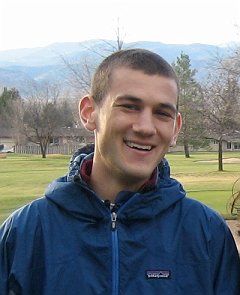
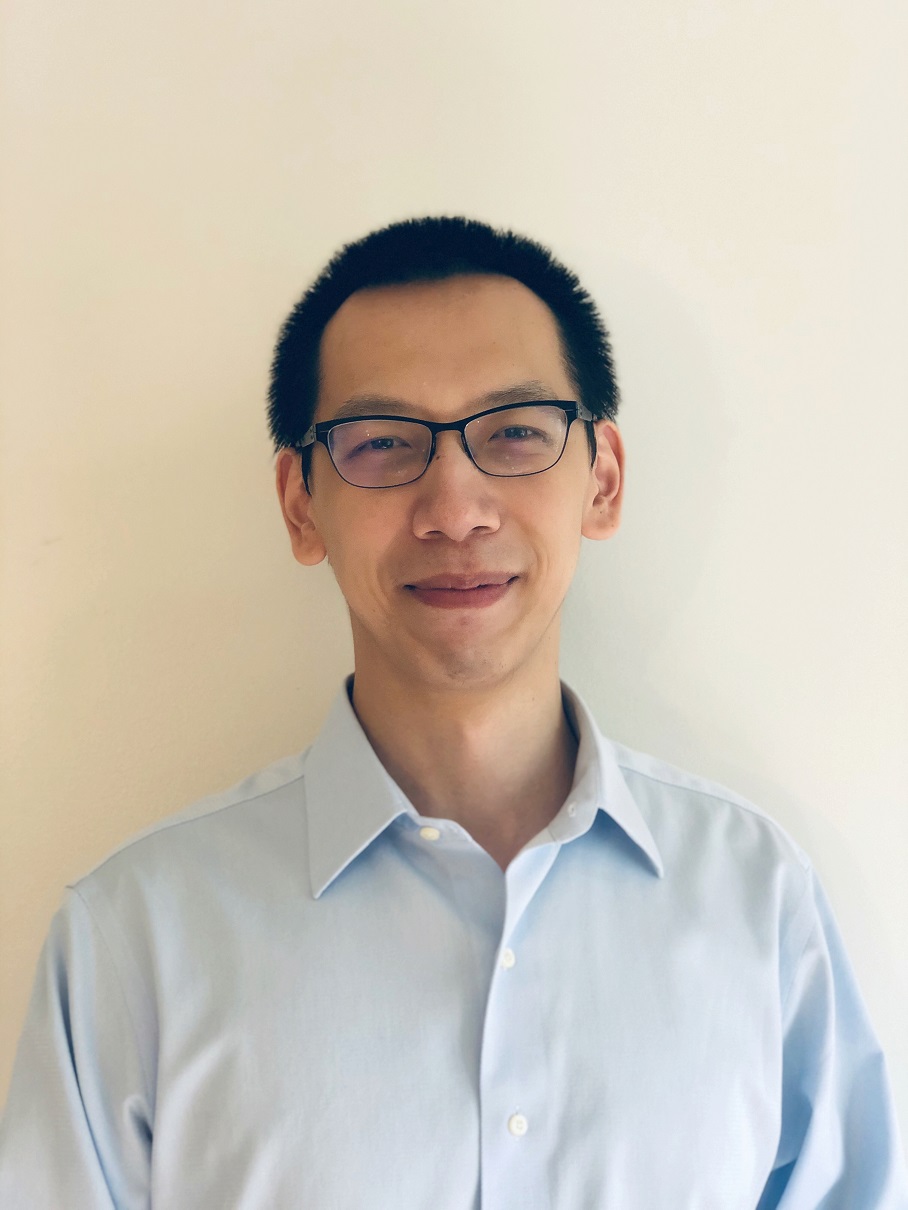
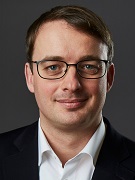
Matthias Hein is a Professor at the Department of Computer Science, Faculty of Mathematics and Natural Sciences, University of Tübingen. His research focuses on Machine Learning , Adversarial Robustness , and Out-of-Distribution Detection , with applications in computer vision and medical imaging. He has received notable recognition including the Best Paper Honorable Mention Prize at ICLR 2021 and Outstanding Paper Award at CVPR 2021. His work includes developing benchmarks like RobustBench and Spurious ImageNet , and frameworks such as Sparse-RS and DIG-IN . His recent publications emphasize adversarial robustness across multiple domains (vision, text), counterfactual explanations for classifiers, and improved OOD detection methods . Collaborators include prominent researchers like Francesco Croce, Julian Bitterwolf, and Alexander Meinke. Scientific Awards : Best Paper Honorable Mention (ICLR 2021) CVPR 2021 Outstanding Paper Award Key Research Areas : Adversarial Robustness Vision-Language Models Medical Imaging AI Neural Network Calibration
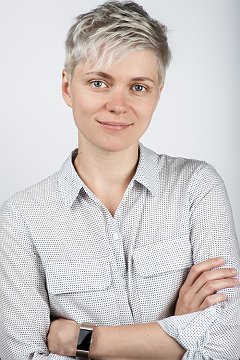
Belkis Ezgi Arikan is a researcher at Justus Liebig University Giessen , affiliated with the Department of Psychology and Sports Science . Her work focuses on sensorimotor integration, tactile suppression, and neural mechanisms underlying action-outcome monitoring. She collaborates with Prof. Dr. Fiehler and Dr. Voudouris on project A4 (Predictive somatosensory processing during voluntary movements). Department: Psychology and Sports Science Collaborators: Dr. Dimitris Voudouris, Prof. Dr. Katja Fiehler Her research investigates: How the brain processes self-generated vs. externally generated sensory feedback Neural correlates of tactile suppression networks Role of cerebellum and angular gyrus in temporal recalibration Modulation of BOLD responses during action monitoring Recent publications reveal trends in predictive coding , sensorimotor recalibration , and neural suppression mechanisms across tactile, visual, and multisensory domains. Her work employs neuroimaging techniques like fMRI and behavioral paradigms to study self-motion perception and feedback processing. She contributes to understanding how the brain distinguishes self-initiated from external sensory events, with implications for motor learning and perceptual timing mechanisms.
Nate Foster is a Professor of Computer Science at Cornell University and currently serves as the Associate Dean for Research in the Ann S. Bowers College of Computing and Information Science. He is also a Visiting Researcher at Jane Street and served as a Visiting Professor at École Polytechnique Fédérale de Lausanne during the 2023-24 academic year. His research uses ideas from programming languages to solve problems in networking, databases, and security. BA in Computer Science, Williams College (2001) MPhil in History and Philosophy of Science, University of Cambridge (2008, all work completed in 2003) PhD in Computer and Information Science, University of Pennsylvania (2009) Foster's research focuses on developing languages and tools that make it easy for programmers to build secure and reliable systems. His current work centers on the design and implementation of languages and tools for programmable networks, particularly using the P4 language. His past work includes bidirectional languages (also known as 'lenses'), database query languages, data provenance, type systems, mechanized proof, and formal semantics. His research group at Cornell has made significant contributions to network verification, software-defined networking, and formal foundations for programmable data planes. Analysis of Foster's recent publications reveals a strong focus on network verification and programming language foundations for networking. His work consistently applies formal methods to practical networking problems, with a particular emphasis on the NetKAT and P4 languages. Over the past five years, his research has evolved toward more complex network verification techniques, including infinite state verification, active learning of network models, and dependently-typed approaches to network programming. His work bridges theoretical computer science with practical networking systems, making formal methods accessible to network engineers. ACM Fellow (2025) ACM SIGPLAN Robin Milner Award (2023) ACM SIGCOMM Rising Star Award (2018) NSF CAREER Award (2013) Alfred P. Sloan Fellowship (2012) Multiple distinguished paper awards across top conferences including POPL, PLDI, and SIGCOMM Foster has advised numerous PhD and Master's students who have gone on to prominent positions in both industry and academia, with many continuing work in programming languages and networking. He has led multiple significant research grants including an NSF CAREER Award and has been involved in the P4 Language Consortium, serving as Chair of the P4 Language Governing Board. His work has been supported by various organizations including NSF, DARPA, and industry partners like Intel and Jane Street. Foster is also active in the programming languages research community, serving on numerous program committees and as Vice Chair of DARPA's Information Science and Technology (ISAT) study group. Foster leads a vibrant research group at Cornell focused on programming languages for networks, with collaborators from academia and industry. His group has developed several influential tools and frameworks including NetKAT, Petr4, and KATch. They maintain strong connections with the P4 community and work closely with industry partners to ensure their research has practical impact on real-world networking systems.
Prof. Matthias Nießner is a Professor at the Technical University of Munich , where he leads the Visual Computing Lab . Prior to this, he held a Visiting Assistant Professor position at Stanford University . His work bridges computer vision , graphics , and machine learning , focusing on 3D reconstruction , semantic scene understanding , and AI-driven video synthesis . Prof. Nießner has published over 150 works in top venues like SIGGRAPH , CVPR , and ECCV , with several receiving best paper awards (SIGCHI’14, HPG’15, SPG’18, SIGGRAPH’16 Emerging Tech). His research has garnered international media attention, including features in the New York Times , Wall Street Journal , and MIT Technological Review , as well as TV demonstrations (e.g., Jimmy Kimmel Live for Face2Face technology). Awards : TUM-IAS Rudolph Moessbauer Fellowship (2017–ongoing) Google Faculty Award (2017) Nvidia Professor Partnership Award (2018) ERC Starting Grant (2018, €1.5M) Eurographics Young Researcher Award (2019) Research Trends : 3D Gaussian Splatting for real-time rendering Neural Radiance Fields (NeRF) with mesh supervision Audio-driven facial animation via diffusion models Latent space diffusion for 3D scenes Self-supervised and zero-shot methods for 3D and image analysis As a co-founder and director of Synthesia Inc. , he drives democratization of synthetic media. His YouTube channel has over 5 million views, reflecting his impact beyond academia.
Xiaowei Jia is an Assistant Professor in the Department of Computer Science at the University of Pittsburgh. He holds a Ph.D. from the University of Minnesota (supervised by Prof. Vipin Kumar) and B.S./M.S. degrees from the University of Science and Technology of China (USTC) and SUNY Buffalo. His research focuses on integrating scientific theory with machine learning to address societal and environmental challenges, such as climate modeling, hydrology, and fairness in AI. Education: Ph.D., University of Minnesota (2020) M.S., State University of New York at Buffalo B.S., University of Science and Technology of China (USTC) Research Interests: Knowledge-Guided Machine Learning Spatiotemporal Data Mining Fairness in AI for Social Good Applications in Environmental Science and Healthcare Publications showcase his work on physics-integrated neural networks, spatiotemporal modeling (e.g., water temperature prediction), and fairness-aware algorithms. His work has been recognized with Best Paper awards at SIAM SDM (2022, 2023). Awards include the Best Applied Data Science Paper Award at SIAM SDM in 2022 and 2023. He teaches advanced machine learning courses, emphasizing theory integration with real-world applications.
Cyrill Stachniss is a Full Professor at the University of Bonn , where he heads the Lab for Photogrammetry and Robotics and is affiliated with the Lamarr Institute for Machine Learning and Artificial Intelligence . He was previously a Visiting Professor in Engineering at the University of Oxford until 2025. His academic journey includes positions at the University of Freiburg, University of Zaragoza, and the Swiss Federal Institute of Technology. University: University of Bonn School: Faculty of Engineering Department: Department of Photogrammetry Academic Rank: Professor His research spans robotics, photogrammetry, SLAM, autonomous navigation, perception systems, agricultural robotics, and unmanned aerial vehicles . He emphasizes probabilistic techniques for mobile robots and has made significant contributions to visual and LiDAR-based localization, scene understanding, and 3D reconstruction. The recent publications highlight a strong trend toward neural implicit representations, agricultural phenotyping, radar-based perception, and active learning . His team develops robust systems for real-world deployment in dynamic and unstructured environments, particularly in precision farming and autonomous vehicles. Scientific Awards: IEEE RAS Early Career Award (2013) Microsoft Research Faculty Fellow (2010) 7th EURON Georges Giralt Award (2008) Multiple Best Paper Awards at ICRA, IROS, RSS, and RAL Faculty Teaching Award, University of Freiburg He has advised numerous students and leads the DFG Cluster of Excellence PhenoRob and Research Unit FOR 1505 Mapping on Demand . His lab has co-founded three startups, reflecting strong industry and societal impact. He also runs the educational video series 5 Minutes with Cyrill , explaining key robotics concepts.
Jonathan T. Barron is a Researcher at Google DeepMind in San Francisco, specializing in Computer Vision , Neural Rendering , and 3D Scene Reconstruction . He earned his PhD at UC Berkeley under Jitendra Malik and has pioneered advancements in NeRF (Neural Radiance Fields) and diffusion-based 3D generation. Research Interests : Computer Vision, Deep Learning, Generative AI, Image Processing, and 3D Reconstruction via Radiance Fields. His work includes Bolt3D for rapid 3D scene generation, CAT3D/CAT4D for text-to-3D/4D, and Zip-NeRF for anti-aliased radiance fields. He has also developed real-time rendering frameworks like SMERF and NeRF-Casting for reflections. Scientific awards: PAMI Young Researcher Award He has served as Area Chair for CVPR, ICCV, and NeurIPS, and his research is widely adopted in applications like Google's Lens Blur , Portrait Mode , and Jump VR .
Andreas Geiger is a Professor and Head of the Department of Computer Science at the University of Tübingen, Germany. He leads the Autonomous Vision Group (AVG) within CyberValley and is a core faculty member of the Tübingen AI Center. His roles also include PI in the ML in Science Excellence Cluster and the CRC Robust Vision, as well as ELLIS Fellow and coordinator of the ELLIS PhD program. He specializes in machine learning models for computer vision, robotics, and autonomous systems, with applications in self-driving cars, VR/AR, and scientific document analysis. Educational background: While not explicitly detailed, his positions imply a Ph.D. in Computer Science or related field. His work spans interdisciplinary collaborations with institutions like ETH Zürich, Microsoft, and the University of Bonn. Research focuses on 3D scene understanding, Gaussian splatting, generative models, and reliable autonomous systems. Notable contributions include the KITTI dataset and foundational work in neural radiance fields. Awards include the Sage 10-Year Impact Award (2024), ERC Starting Grant (2019), and IEEE PAMI Young Researcher Award (2018). Key projects include the Scholar Inbox paper recommender platform, ReSim (reliable world simulation), and advancements in 3D scene generation (e.g., UrbanCAD, PrITTI). His lab maintains a strong focus on open-source tools and datasets, such as the CARLA Route Generator. Grants and funding include support from Vector Stiftung (MINT innovation program) and EU initiatives like the ML in Science Cluster. His team collaborates internationally, with recent work presented at CVPR, SIGGRAPH, and NeurIPS.
Prof. Peter Scholze is a leading mathematician at the Max Planck Institute for Mathematics in Bonn, specializing in algebraic geometry and arithmetic geometry. He holds the academic rank of Professor and is part of the Arbeitsgruppe Algebraische Geometrie und Darstellungstheorie. His research focuses on foundational questions in algebraic geometry, number theory, and representation theory, particularly through the lens of the Langlands program, p-adic Hodge theory, and perfectoid spaces. Scholze has pioneered geometric approaches to the local Langlands correspondence and introduced revolutionary concepts like prismatic cohomology and condensed mathematics. He actively contributes to academia through advanced courses on topics such as geometrization of the Langlands program, étale cohomology, and condensed mathematics. His work bridges algebraic geometry with representation theory, addressing fundamental problems in arithmetic geometry and p-adic analysis. Scholze’s research outputs include seminal papers on perfectoid spaces, prismatic cohomology, and the geometrization of local Langlands correspondence. He collaborates extensively with leading mathematicians globally, contributing to collaborative research initiatives like the ARGOS seminar and the Habiro ring project. His teaching engagements include advanced lectures on algebraic geometry, representation theory, and p-adic geometry, reflecting his commitment to training the next generation of researchers. Despite no explicitly listed awards in the provided text, Scholze is widely recognized as a Fields Medalist (2018) and a leading figure in modern mathematics.
Ekaterina Shutova is an Associate Professor at the Institute for Logic, Language and Computation (ILLC) within the Faculty of Science at the University of Amsterdam. She concurrently holds a Visiting Associate Professor position in the Computer Science Department at Stanford University. She leads the Amsterdam Natural Language Understanding Lab and heads the NLP & Digital Humanities research unit at ILLC. An ELLIS Scholar, she earned her PhD from the University of Cambridge Computer Laboratory and Pembroke College. Her research has been funded by ERC, Innovate UK, British Academy, Leverhulme Trust, Google, Meta, and Deloitte. Her research spans natural language processing and machine learning, with core interests in: Few-shot learning for NLP Multilingual and cross-lingual systems Joint modeling of language and vision Cognitive processing and semantic representation Figurative language interpretation Computational social science applications Her recent publications (2024-2025) predominantly focus on multimodal learning, cultural alignment in AI, metaphor processing, and evaluation methodologies for language models. These works reflect a trend toward integrating cognitive science with multilingual systems and ethical considerations. Awards & Fellowships: ERC Consolidator Grant (2025) ELLIS Scholar Outstanding Paper Award at ACL 2023 Finalist for Outstanding Certification by TMLR Runner-up Best Paper Award at NAACL-HLT 2016 Research Leadership: She directs the Amsterdam Natural Language Understanding Lab, supervising 8 PhD students, 1 MSc student, and 34 alumni. Her projects include an ERC-funded initiative on globally accessible language technology and an AI Democratization grant for hate speech detection.
Prof. Alessandro Golkar is a Professor at the Technical University of Munich (TUM), leading the Chair of Picosatellites, Nanosatellites, and Satellite Constellations. He joined TUM in September 2022 and previously served as one of the founding faculty members at Skoltech, a Moscow-based graduate research university. His research focuses on advanced space mission concepts, systems engineering for picosatellites, and federated satellite systems. Prior to academia, he held roles at Airbus CTO, contributing to technology roadmapping and planning. His academic background includes expertise in aerospace engineering, systems design, and agile development methodologies for space hardware. Key research areas include CubeSat constellations, distributed satellite systems, and the integration of AI tools like Large Language Models (LLMs) into spacecraft design processes. He has pioneered projects such as the FSSCat mission, winner of the ESA Sentinel Small Satellite Challenge, and has explored applications of additive manufacturing for lunar missions. Prof. Golkar’s awards include the 2021 Karman Fellowship and IEEE Senior Membership (2018). His recent work emphasizes optimizing satellite networks, digital twin implementation, and orbital maneuvering for collision avoidance. He actively contributes to technology roadmapping, focusing on future human landing systems and lunar infrastructure development. Education: Ph.D. in Aerospace Engineering (details not explicitly stated). Grants & Funding: Extensive grants for CubeSat projects, federated systems research, and space technology innovation. Labs/Teams: Leads the Chair’s research group at TUM and collaborates with industry partners like Airbus on advanced mission concepts. His publications span over two decades, addressing topics like constellation design, machine learning in space, and agile processes for hardware development. He advocates for hybrid agile methodologies to bridge traditional systems engineering and modern product development.
Stefanie Mueller is the TIBCO Career Development Associate Professor at MIT's Electrical Engineering and Computer Science Department, with joint affiliation in Mechanical Engineering. She leads the HCI Engineering Group at the Computer Science and Artificial Intelligence Laboratory (CSAIL), focusing on advancing fabrication techniques through hardware/software innovations that enable novel object interactions. Develops computational fabrication methods combining photochromic dyes, lenticular lenses, birefringent materials, and optical illusions Co-chaired ACM CHI 2023 and ACM UIST 2020 program committees Recipients of 9 MIT EECS Best Undergraduate Researcher Awards among mentees Her research spans four key directions: Appearance-changing Objects: Photo-Chromeleon (ACM UIST 2019), Lenticular Objects (ACM UIST 2021), and Polagons (ACM CHI 2023) demonstrate reprogrammable surfaces through advanced materials and optical engineering. Tracking Systems: InfraredTags (ACM CHI 2022) and G-ID (ACM CHI 2020) enable passive object tracking via infrared markers and slicing artifacts. Embedded Sensing: MechSense (ACM CHI 2023) and Sprayable User Interfaces (ACM CHI 2020) integrate sensing capabilities into complex geometries. Curved Surface Prototyping: FlexBoard (ACM CHI 2023) and CurveBoard (ACM CHI 2020) develop specialized tools for non-planar electronics. Her recent publications focus on functionality segmentation (UIST 2023), fluorescent markers (UIST 2023), and machine-knitted haptics (UIST 2023). These works combine machine learning, material science, and interactive design principles to push fabrication boundaries. Scientific recognition includes: 2022 MIT Technology Review Innovators Under 35 2020 Microsoft Research Faculty Fellowship 2020 Alfred P. Sloan Research Fellowship 2019 ACM UIST Best Paper Award 2019 NSF CAREER Award 2018 MIT EECS Outstanding Educator Award 2017 Forbes 30 Under 30 in Science Mentoring 9 PhD students and over 20 master's students, her lab has produced 20+ publications at top HCI conferences. She redesigned MIT's 6.810 Engineering Interactive Technologies course during the pandemic, maintaining hands-on learning through home electronics kits and Slack-based collaboration.
Prof. Bernt Schiele is a Max Planck Director at the Max Planck Institute for Informatics and holds a Professorship at Saarland University. His research focuses on understanding multimodal sensor data, with key areas in computer vision, 3D object recognition, and machine learning. He leads the Computer Vision and Machine Learning group, addressing challenges in sensor fusion, scene understanding, and human activity recognition. Schiele has held academic roles at TU Darmstadt, ETH Zurich, and MIT, and contributes to top journals like IEEE Transactions on PAMI and conferences like ECCV. His work emphasizes robust models, interpretability, and domain adaptation for real-world applications. Education: PhD (1997, Grenoble), MSc (1994 Karlsruhe/1993 Grenoble) Key Positions: MIT (1997-2000), ETH Zurich (1999-2004), TU Darmstadt (2004-2010) Research interests span 3D scene understanding, multimodal sensor processing, and machine learning techniques for large-scale data. His recent work advances robust object detection, explainable AI, and domain-invariant training methods. He also chairs major conferences like ECCV 2018 and co-chairs ICCV 2011. Publications highlight innovations in interpretable vision transformers, certified explanations, and test-time adaptation. Despite no listed awards, his contributions shape foundational areas of computer vision and multimodal AI.
Prof. Mark Heitmann is a Professor of Marketing & Customer Insight at the University of Hamburg Business School. He holds a visiting appointment at Nova School of Business and Economics. His research focuses on AI-driven marketing strategies, social media analytics, brand equity, and consumer decision-making. He has held academic roles at institutions including the University of St. Gallen and Christian-Albrechts-University in Kiel before joining Hamburg in 2011. Academic Career: Holds a PhD (2004) and post-doctoral Habilitation (2007) from the University of St. Gallen. Visiting researcher at Columbia University and the Max Planck Institute for Human Development. Research Interests: Applications of artificial intelligence in marketing Social media and digital transformation Ethical consumer behavior Brand self-expression and visual design Marketing technology (MarTech) innovations Key Achievements: Over 20 peer-reviewed publications in top journals like Journal of Marketing Research and Harvard Business Review . Award-winning research includes the MSI/H. Paul Root Award and IJRM-EMAC Best Article Award. Active in translating research into scalable commercial solutions through software-as-a-service ventures. Team & Collaborations: Leads a research team including M.Sc. candidates Sammar Rath, Julia Rosada, Maximilian Witte, Tijmen Jansen, Claus Hegmann-Napp, and Magdalena Heynicke. Engages in interdisciplinary projects with industry partners.
Nadia Polikarpova is an Associate Professor in the Department of Computer Science and Engineering at the University of California, San Diego . She earned her PhD from ETH Zurich in 2014 under Bertrand Meyer , followed by postdoctoral research at MIT CSAIL with Armando Solar-Lezama . Her academic contributions have been recognized with prestigious awards including the 2020 Sloan Fellowship , 2020 Intel Rising Stars Award , and 2020 NSF CAREER Award . Polikarpova's research focuses on program synthesis , program verification , and type systems . She leads the Programming Systems group at UCSD and contributes to the IFIP Working Group 2.8 on Functional Programming since 2022. Her work spans foundational research and practical tools, including projects like Synquid , SuSLik , and Laurel that combine formal methods with machine learning for code generation. Her recent publications in venues like OOPSLA , NeurIPS , and ICFP reveal trends in AI-assisted programming , live programming environments , and formal verification . She has advised numerous PhD and Master’s students including Shraddha Barke , Zheng Guo , and Tristan Knoth , many of whom have moved to prominent academic and industry positions. Notable artifacts from her lab include tools like ColDeco for spreadsheet inspection and Superfusion for eliminating intermediate data structures. 2020 : Sloan Fellow 2020 : Intel Rising Stars Award 2020 : NSF CAREER Award 2021 : Distinguished Paper at POPL 2023 : Distinguished Artifact at PLDI 2023 : Distinguished Paper at OOPSLA Polikarpova actively contributes to academic service, serving on program committees for PLDI , POPL , and OOPSLA , and co-chairing the OOPSLA Review Committee in 2023. She has delivered keynotes at APLAS'20 and PLDI'24 , emphasizing the integration of large language models with formal methods.