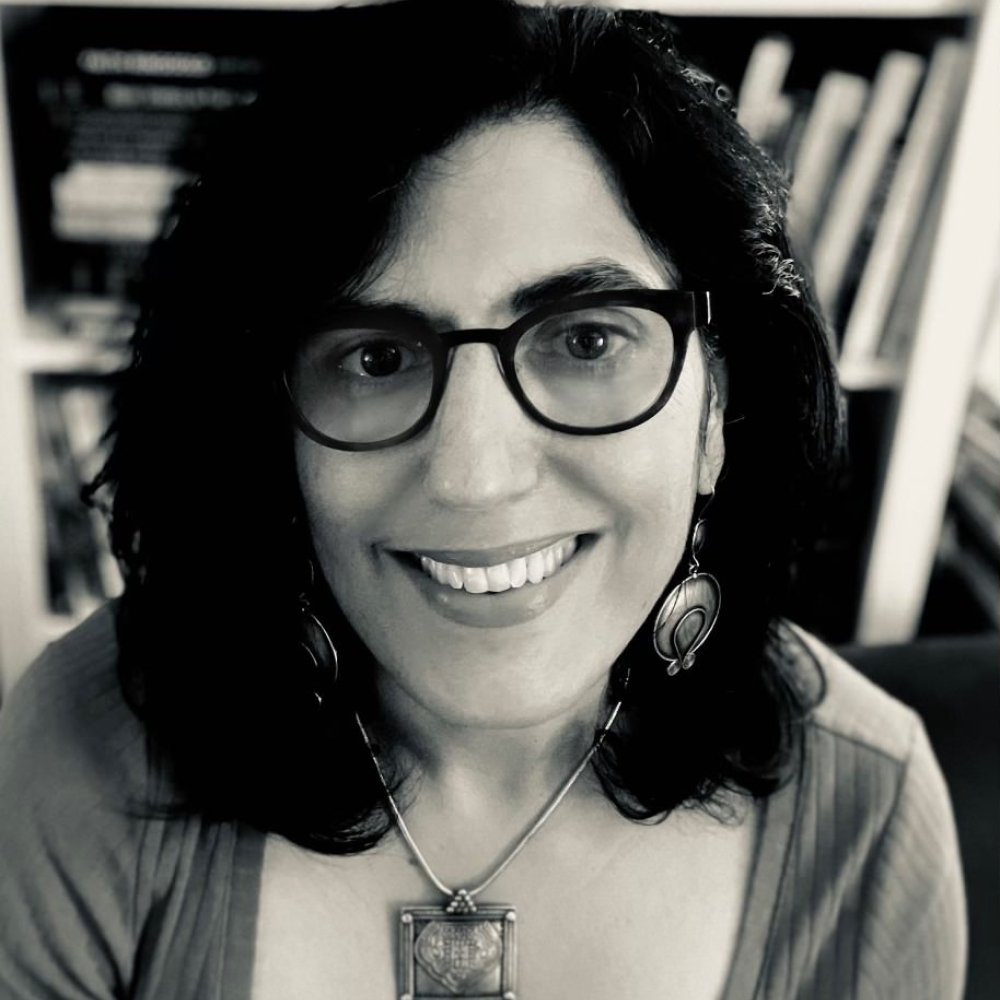
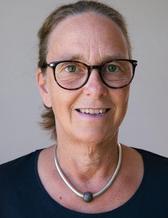
Shana Sippy is an Associate Professor of Religion and Chair of Asian Studies at Centre College , where she has taught since 2017. Her work bridges Hindu studies, feminist theory, and critical race studies , with a focus on diasporic identity and interfaith solidarity. She is a co-founder of the Feminist Critical Hindu Studies Collective (Auntylectuals) and previously taught at Carleton College for eight years. Research Interests include: Caste oppression in religious education Intersectional gender/sexuality critique Transnational Hindutva politics Vernacular Hinduism practices Diasporic self-fashioning Co-optation of decolonial language Her recent work analyzes the political dimensions of Hindu educational programs, the affective labor in diasporic communities, and the entanglement of Hinduism with white supremacy. Public Scholarship features collaborations with Twin Cities Public Television on the Sacred Minnesota documentary series (2021) and the curation of Beyond Borders: The Art of Siona Benjamin (2022). She also co-developed the Intersectional Hindu Studies Seminar at the American Academy of Religion.
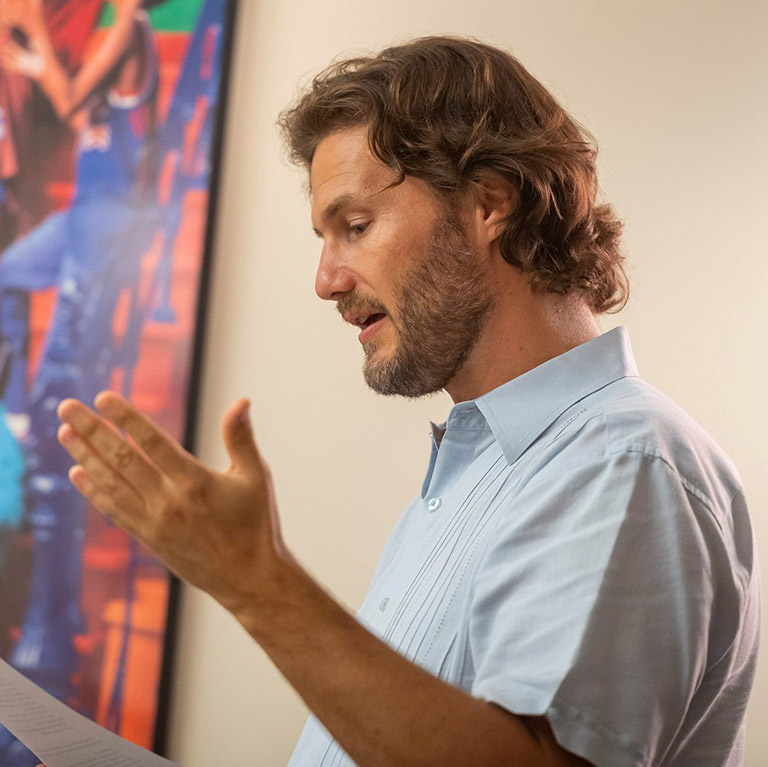
Tomasz Samosionek is a Polish cinematographer and professor of film arts born on August 19, 1958 in Łódź. He graduated from the Faculty of Chemistry at Lodz University of Technology in 1981 and later from the Cinematography Department of the National Film, Television and Theatre School in Łódź in 1985. In 2018, he was awarded the academic title of professor of film arts. He has maintained a prolific career spanning over four decades, primarily working in documentary filmmaking while also venturing into film direction, screenwriting, and editing. Professor Samosionek's research and creative interests focus on documentary filmmaking, cinematography, visual storytelling, and Polish cinema history. His work demonstrates a particular dedication to capturing historical moments, social issues, and personal narratives through the lens of documentary cinema. His expertise spans both traditional documentary techniques and dramatized documentary formats, showing versatility in visual storytelling approaches. His recent filmography demonstrates continued active engagement in the field, with notable projects including 'TWO FLAGS' (2023), 'MIECZYSŁAW JAHODA. THE CONJURIST FROM KRAKOW' (2022), and 'STAN WOJENNY. NIE BYLIŚMY SAMI' (2021). These works reflect his ongoing interest in Polish history, cultural figures, and social documentation. Among his professional accomplishments, Samosionek has received several prestigious awards including the 'Brązowa Szabla' at the International Historical and Military Films Festival in Warsaw for 'MARCOWA GRA' (2017), the Łódź University of the Third Age Award for 'PA, KOCHANIE' (2016), and the Judaica Foundation Award for 'SARID' (2007). Throughout his career, Professor Samosionek has served as cinematographer, director, consultant, and co-producer on numerous documentary and feature films. His work at the National Film, Television and Theatre School in Łódź has undoubtedly influenced generations of Polish filmmakers, though specific details about his students are not documented in the available information.
Jakub Kijowski is a distinguished Polish cinematographer and academic faculty member at the Leon Schiller National Higher School of Film, Television and Theatre in Łódź, where he serves as Senior Lecturer in the Faculty of Cinematography. A graduate of the same institution (2003), he has evolved from an active cinematographer to an educator shaping the next generation of filmmakers through pedagogical supervision of student etudes since 2022. His research interests span contemporary cinematography techniques, documentary filmmaking methodologies, and the visual language of narrative storytelling. Specializing in psychological drama and historical recreation, Kijowski's work demonstrates mastery in lighting design, composition in confined spaces, and emotional color grading. His pedagogical focus emphasizes practical application of camera techniques within both fictional and documentary contexts, with particular attention to Polish cinematic traditions. Kijowski's filmography represents a significant contribution to Polish cinema, with 15+ years of professional cinematography work culminating in award-winning projects like The Silent Twins (2022) and Fugue (2018). His recent transition to academic supervision reflects a strategic shift toward knowledge transfer while maintaining industry relevance through continued professional practice. PSC (Society of Cinematographers) Award for Cinematography (2023) Eagle (Polish Film Award) Nomination for Best Cinematography (2023) Camerimage Golden Frog for Best Fictionalized Documentary (2019) Gdynia Polish Film Festival Award for Cinematography (2018) Andrzej Munk Award for Best Cinematography (2012) As an educator, Kijowski oversees student film production while maintaining connections to Poland's vibrant film industry through ongoing professional projects. His dual role bridges academic theory and practical filmmaking, with particular emphasis on developing students' technical skills in camera operation, lighting design, and visual storytelling. Current research focuses on evolving cinematography techniques in digital filmmaking and the adaptation of documentary methods to fictional narratives.
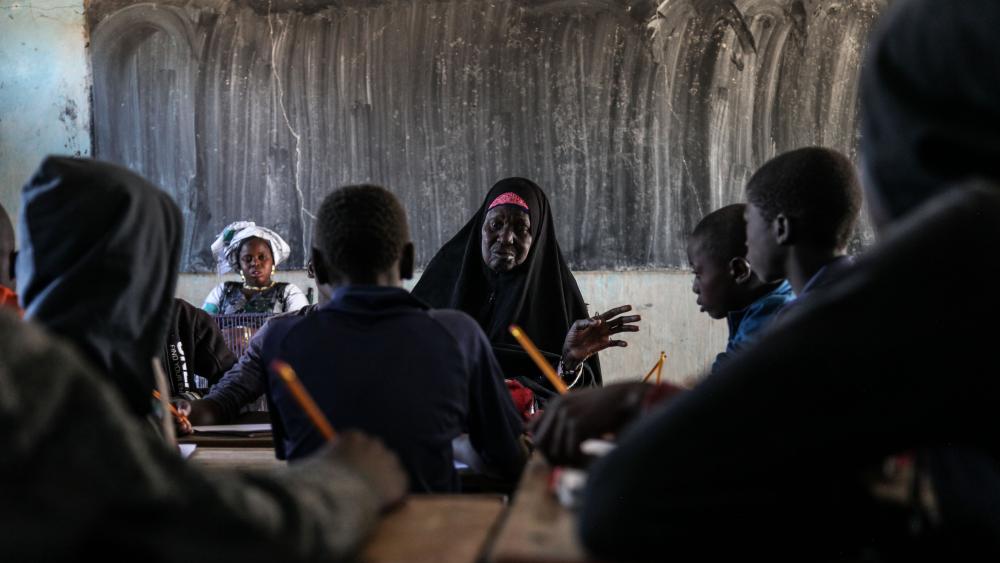
Vincent Bouchard is Professor in the Department of French and Italian at Indiana University Bloomington's College of Arts & Sciences, where he teaches courses on Francophone cinema, media studies, and cultural reception. His academic profile demonstrates deep engagement with Francophone film cultures across Africa and North America. Education: Ph.D. in Comparative Literature, Université de Montréal (2006) Ph.D. in Film and Audiovisual Studies, Université Paris III, Sorbonne nouvelle (2006) M.A. and DEA in Film and Audiovisual Studies, Université Lyon 2 (1999) Bouchard's research centers on the audiovisual mediation of orality from both technical and cultural perspectives, with primary focus on Francophone cultures in West Africa (Senegal, Mali, Burkina Faso) and North America (Quebec, Acadia, Louisiana). His work examines cinematographic practices developed in West Africa since the 1960s, including early filmmakers' conditions, popular film reception, and colonial educational screenings' impact on African cinema. His interdisciplinary approach bridges film studies, cultural anthropology, and postcolonial theory to analyze how oral traditions interact with cinematic forms. His 2023 monograph Cinema Van, propagande et résistance en Afrique coloniale represents a significant contribution to understanding colonial media apparatuses, while his earlier work Pour un cinéma léger et synchrone! (2012) explores technical aspects of synchronous sound recording. His publications reveal consistent thematic threads examining commentary practices, audience reception, and the intersection of traditional oral cultures with cinematic media across Francophone contexts. Scientific Recognition: CAHI Fellow in Residence at Indiana University (2018) Mellon Short Term Faculty Fellowship for research in Paris (2016) Multiple research grants from Délégation du Québec and UL Lafayette Postdoctoral Fellow at Laboratoire NT2, UQAM (2007-2009) Bouchard has secured significant research funding including Short-Term Faculty Exchanges with Bayreuth University's Institute of African Studies and New Frontiers/New Currents workshop funding for Media and Tertiary Memory research. His scholarly activities extend to the Early African Cinemas Lab, where he contributes expertise on historical African film practices. His extensive teaching portfolio includes both undergraduate and graduate courses on Francophone cinema across multiple institutions, demonstrating his commitment to training new generations of film scholars in transnational cinematic traditions.
Jinyan Zeng is a Senior Lecturer and Affiliated Researcher at the Centre for East and South-East Asian Studies, Lund University, with additional affiliation to the Department of History. She joined the Centre as a Post-Doctoral Fellow in July 2021 and has established herself as a prominent scholar in gender studies, film studies, and Chinese society research. Her educational background includes: PhD from the University of Hong Kong (2017) 2017 Oak Human Rights Fellow (film and photography) at Colby College (USA) 2020 Post-doctoral Fellow at the University of Haifa (Israel) BA in Economics from the People's University of China, Beijing Dr. Zeng's research focuses on gender and sexuality, culture and politics, intellectual identity and social activism, and ethnicity with particular emphasis on China. Her work critically examines the intersection of gender, ethnicity, and political expression in contemporary Chinese society, with special attention to marginalized voices and communities. She has made significant contributions to understanding feminist activism in the post-2010s Sinosphere, as evidenced by her co-edited volume 'Feminist Activism in the Post-2010s Sinosphere' (Bloomsbury Academic, December 2024). Her recent scholarly output demonstrates a strong focus on documentary filmmaking, feminist aesthetics, and the experiences of minority groups in China. Her work often centers on female authors, filmmakers, and activists, particularly exploring the identities of the post-2000s Inland Tibet Class generation and their expression through Sinophone-Tibetan films. Her research bridges film studies, gender studies, and China studies, creating innovative interdisciplinary approaches to understanding contemporary Chinese society. Her notable recognition includes: Special Jury Award (with monetary award of KRW 10,000,000 and a trophy) from Film Festivals (2021) Dr. Zeng has been actively involved in academic supervision and has contributed to various research projects examining gender, ethnicity, and cultural expression in China. She has organized conferences on feminist activism in post-2010 China and events exploring the Uyghur crisis from perspectives of ethnicity, gender, and ethics. Her research involves transnational collaboration across multiple institutions and countries, reflecting her commitment to understanding Chinese society through diverse disciplinary lenses. Her work contributes to United Nations Sustainable Development Goals related to gender equality and reduced inequalities, advancing understanding of complex social dynamics in contemporary China with implications for policy and social justice initiatives.
Marian Bredin is a Professor in the Department of Communication, Popular Culture, and Film at Brock University. She holds a PhD from McGill University, an M.A. from the University of Leicester, and a B.A. from Trent University. As Interim Director of the MA in Popular Culture and former Director of the Centre for Canadian Studies, she specializes in Indigenous media, Canadian communication policy, and cultural heritage in Niagara. She edits the Journal of Canadian Studies and supervises research on Indigenous television/film, popular memory, and media policy. Her research explores Indigenous media as alternative platforms for cultural expression and empowerment, with a focus on Canadian policy contexts. Notable works include analyses of Inuit memory in Igloolik Isuma films and studies on Aboriginal television production. She has authored/co-edited volumes on Canadian media policy, television studies, and Indigenous screen cultures. Teaching focuses on interdisciplinary Canadian Studies, Indigenous media representation, and communication policy. Recent contributions include examining Millennials' media consumption patterns and the commercialization of children's television. Awards and recognitions are not explicitly listed in the provided texts.
Dr Marie Rodet is a Reader in the History of Africa at the SOAS University of London , affiliated with the Department of History and School of History, Religions and Philosophies . Holding a PhD from the University of Vienna and a DIPPOL from Rennes, her work focuses on the social history of West Africa, particularly Mali, Senegal, and Guinea, emphasizing marginalized historical actors. Principal Research Areas: Modern African History, Gender History, History of Slavery Methodological Innovations: Public History, Gamification, Digital Humanities Through over 25 peer-reviewed publications and multimedia projects like documentaries ( The Diambourou , 2014) and web documentaries ( Bouillagui: A Free Village , 2020), she repositions non-elite and gendered perspectives in African historiography. Her recent projects train Malian communities to collect oral histories via mobile phones, culminating in a graphic novel about Bouillagui’s resistance to internal slavery. This work directly supports anti-slavery activism and educational tools for younger generations. Dr Rodet’s 15 most recent publications (2011–2024) span post-slavery migration, colonial legal systems, forced labor, and digital archiving. These works engage with African historiography’s gender bias, postcolonial memory, and decolonial methodologies, often published in Journal of Global Slavery , Africa , and History in Africa . Key sub-fields include female displacement, diasporic practices, and resilience strategies against socioecological stress. Collaborating with the Malian NGO Donkosira, her research has influenced anti-slavery campaigns and a US asylum case. She operates from the Russell Square: College Buildings (Room 309) and remains actively engaged in community-based knowledge production.
Elizabeth Kritzer is an Associate Professor and Graduate Program Coordinator for the Film program at the Nicholson School of Communication and Media, University of Central Florida. She specializes in experimental and documentary filmmaking, using Super 8mm, 16mm, and digital formats. Her work has been exhibited globally and earned a 2023 Fulbright U.S. Scholar Award to Bogotá, Colombia, where she directed film workshops and explored hand-processed film techniques. She teaches cinema production, theory, and history, emphasizing inclusive pedagogies and 'ungrading' methods. Education: M.F.A. in Film, University of Wisconsin–Milwaukee (2011) M.A. in Film Studies, University of Iowa (2008) B.A. in English, University of Florida (2005) Research Focus: Her work intersects documentary theory, avant-garde filmmaking, found-footage practices, and metacognition in creative processes. She explores Latinx cultural assimilation through her lens as a second-generation Cuban-American. Awards: Fulbright U.S. Scholar Award (2023) Lightpress Grants (2019, 2024) Florida Experimental Film Festival Jury Award (2019) Professional Activities: She leads the Film B.F.A. Portfolio Committee and is active in the University Film and Video Association.
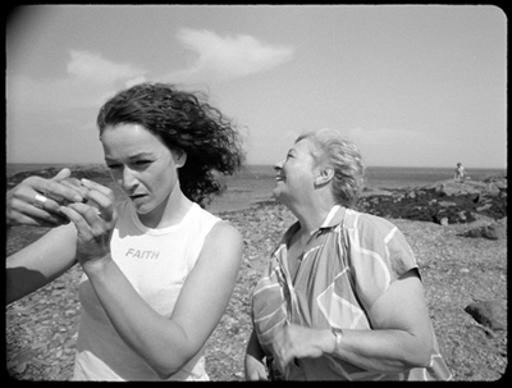
Guylaine Dionne is an Associate Professor and Graduate Program Director in Cinematic Arts at the Mel Hoppenheim School of Cinema, Concordia University, Montreal. She is a full-time faculty member with a distinguished career as a filmmaker, having directed both fiction and documentary films that have been showcased at major international film festivals including Cannes. Her research and creative practice focus on documentary and fiction filmmaking, with a particular emphasis on women in cinema, historical narratives, and cultural studies. She explores themes of gender, labor, and cultural identity through her films, often highlighting underrepresented voices and histories. Her work bridges academic inquiry with artistic expression, contributing to critical discourse in film studies. Dionne's filmography demonstrates a consistent engagement with social and historical themes, evolving from early fiction works to in-depth documentaries. Her recent projects, such as "Contemporary Women Filmmakers: The State of Things" and "Jazz Club Owner", reflect a commitment to documenting cultural phenomena and marginalized narratives. These works have been recognized in international festivals, underscoring her contribution to global cinema. Guylaine Dionne has received numerous accolades for her filmmaking, including: Don Quijote Award International Critics' Prize Lanterna Magica Award for Best Documentary (2004) Don Haig Award (2006) Best Biography or Someone Related to Music at Logcinema Music Film Festival (2021) As Graduate Program Director in Cinematic Arts, Professor Dionne plays a key role in guiding graduate students through their academic and creative projects. While specific grant details are not publicly listed, her leadership in the program supports the next generation of filmmakers.
Leigh H. Edwards is a Professor of English at Florida State University (FSU), part of the College of Arts and Sciences. She holds a Ph.D. and M.A. in English from the University of Pennsylvania, and a B.A. from Duke University. Her research focuses on 20th- and 21st-century U.S. literature, media studies (including television, film, and new media), and digital humanities, with particular emphasis on multi-platform storytelling and authenticity discourses in popular culture. Edwards has authored influential books such as Dolly Parton (IU Press, 2018, Foreword Book of the Year Gold Medal) and The Triumph of Reality TV (Praeger, 2013). Her work examines media representations of authenticity, celebrity image-making, and cross-media narratives. She serves on the editorial board of Journal of Popular Television and the Advisory Board of The University of Tulsa Institute for Bob Dylan Studies. Her teaching spans media studies, U.S. literature, and digital humanities. Awards include multiple University Teaching Awards at FSU and a National Mellon Fellowship. Her recent articles analyze TV comedy dynamics, streaming platform strategies, and country music’s intersections with religion and digital media. Edwards’ research trends highlight the symbiosis between traditional media forms (e.g., country music, TV) and digital innovation, emphasizing how authenticity is constructed across platforms. She critically examines how nostalgia, regional identity, and corporate synergy shape contemporary media. Key contributions include redefining multi-platform storytelling frameworks and analyzing cultural icons like Dolly Parton and Johnny Cash through lenses of digital folk culture and corporate branding. Her work bridges academic rigor with popular culture relevance, offering fresh insights into media’s evolving role in societal narratives.
Dr. Susan Flynn is Head of the Department of Arts and Senior Lecturer at South East Technological University (SETU), Waterford. She holds a PhD in Equality Studies and is a Fellow of the Higher Education Academy UK. Her research focuses on Equality, Diversity, and Inclusion (EDI), social justice, urban planning, and smart cities. She chairs the Analysing Social Change Research Group and represents SETU in EU initiatives like Conexus Social, Cultural & Human Sciences Institute (SCHSI). Dr. Flynn has led projects such as 'Omos Aite: Visualising a Sense of Belonging in Gaeltacht na nDeise' (2024–2028) and 'Factors influencing the uptake of the Early Childhood Care and Education Scheme among Traveller families' (2023–2027). Her work intersects academia with community engagement, including roles as Director of the Gallery of Modern Art and Board Member of the Irish Humanities Alliance. Her research explores topics like smart city discourses, transnational family dynamics, and emergency remote teaching during the pandemic. Key publications include Equality in the city: Imaginaries of the smart future (2022) and articles on urban social justice and digital pedagogy. Dr. Flynn has received awards including the Higher Education Academy Fellowship and serves as a Research Associate at UCD’s Equality Studies Centre. Her teaching includes PhD modules on transformative research methodologies.
Prof. Owen Evans is a Professor of Film in the Department of English & Creative Arts at Edge Hill University. He holds a PhD and BA in German Studies from Swansea University. Previously, he served as a Lektor at Johannes Gutenberg University Mainz (1994-1995), lecturer at Bangor University (1995-2005), and returned to Swansea University (2005-2011) before joining Edge Hill in 2011. His research focuses on European Cinema, cultural memory, German film, and the intersection of arts with health/wellbeing. He co-edits Studies in European Cinema and Journal of European Popular Culture . Education: German Studies PhD (Swansea, 1995), German Studies BA (Swansea, 1990). Research interests include: European Cinema, cultural memory, multiculturalism, German film/TV, East German history, and representations of totalitarianism. He currently co-leads the AHRC-funded Everyday Creativity Research Network (2022-24). Recent publications (2023–2025) explore themes like migration in German cinema, post-pandemic cultural shifts, and Berlin's cinematic legacy. His work bridges film studies with broader cultural and historical contexts. Awards and roles: AHRC Peer Review College member, Fellow of RSA/HEA, editorial board member of Modern Languages Open , consultant on Culture Cures (2017-2018). Professional activities include PhD examinations, conference organization, and consultancy for creative projects. He collaborates internationally on cultural memory and creativity initiatives.
Valerie K. Orlando is a Professor of French & Francophone Literatures in the Department of French & Italian at the University of Maryland. She specializes in African, Caribbean, and Francophone studies with a focus on literature, film, and cultural transitions in Morocco, Tunisia, and France. A three-time Fulbright Scholar, her research emphasizes sociopolitical change through cultural production, notably producing six acclaimed books including Screening Morocco: Contemporary Film in a Changing Society (2011) and The Algerian New Novel (2017). Her work bridges postcolonial theory, globalization, and feminist critiques. Orlando’s fieldwork spans decades, funded by Fulbright grants, leading to studies on Moroccan filmmakers, Francophone women’s writing, and transnational cultural narratives. She advocates for immersive cultural study, stressing language proficiency and lived experience to understand global challenges. Her recent publications (2024–2025) analyze decolonial heritage, Fatema Mernissi’s feminist legacy, and the evolving Moroccan cultural landscape. She collaborates internationally, supervising Ph.D. dissertations across multiple countries and co-editing volumes on world literature and marginalized voices. Teaching contributions include courses on African and Maghreb cultures in French, designed for both undergraduates and graduates. Orlando’s interdisciplinary approach integrates film analysis, literary theory, and sociopolitical context. She plans to apply for another Fulbright before retiring in 2026, continuing her mission to document underrepresented narratives in global Francophone culture.
Karin Wagner is a Professor in Art History and Visual Studies at the University of Gothenburg . Her research focuses on the intersections of visual culture, digital media, and material aesthetics, with particular expertise in packaging design, photographic history, and digital museum practices. Professor at University of Gothenburg since 2003 Specializes in digital visual culture and material studies Recipient of multiple research grants including Bank of Sweden Tercentenary Foundation Research Focus Wagner's scholarship examines visual communication across digital and physical domains. Current projects include Packaging Design: Sustainability, Aesthetics and Social issues (2025-2026) and ongoing work on herbarium digitization. Her research bridges art history with contemporary design practices. Key Publications Her most recent book From ASCII Art to Comic Sans (MIT Press, 2023) explores typography's cultural impact. Earlier work includes studies on digital museum curation and the visual rhetoric of organic food packaging. Academic Collaborations Wagner has collaborated with institutions including: Riksantikvarieämbetet (National Heritage Board) Bank of Sweden Tercentenary Foundation (RJ Sabbatical) Chalmers University of Technology Valand Academy Teaching & Mentorship She teaches across all academic levels, with developed courses in image analysis, digital filmmaking, and interaction design. Wagner supervises doctoral students in art and visual culture while mentoring cross-disciplinary researchers in digital representation.
Amir Pouyan Bashti Monfared serves as a lecturer in documentary filmmaking, storytelling, and location sound recording at the Faculty of Media and Journalism (AMF) of Volda University College. Concurrently, he is a Ph.D. candidate at the Norwegian University of Science and Technology (NTNU) and a visiting researcher at the London School of Economics and Political Science (LSE). He also co-chairs the Television and Film Studies Division for NordMedia Conference 2025. His academic foundation includes a BA and MA in Dramatic Literature from the Faculty of Cinema & Theater at Tehran's University of Art, complemented by a second MA in Media Practices from Volda University College. Prior industry experience spans a decade in Iran's film sector and a junior producer role at Norway's UpNorth Film AS. Bashti Monfared's research investigates social-issue documentaries within transnational ecosystems, emphasizing production trends, migrant identity representation, and non-fiction virtual reality. His practice-led methodology bridges filmmaking praxis with scholarly inquiry to analyze how documentaries generate social impact and cultural dialogue across Iranian, Norwegian, and global contexts. His publications reveal a trajectory from historical analyses of Norwegian social-issue documentaries (2021-2023) toward contemporary studies of transnational production models, financing schemes, and VR narrative agency (2023-2025). Recurring themes include documentary hybridization, diasporic identity construction, and strategic impact frameworks in Nordic and global documentary cultures. He has received unspecified awards for documentary and corporate films in Iran and at Tokyo Docs in Japan, reflecting his dual expertise in creative practice and academic research. Professional engagement includes a curated showreel of 2013-2019 projects and leadership in NordMedia 2025. While his Ph.D. at NTNU focuses on transnational documentary ecologies, no student advisement or grant details are documented in the source material.