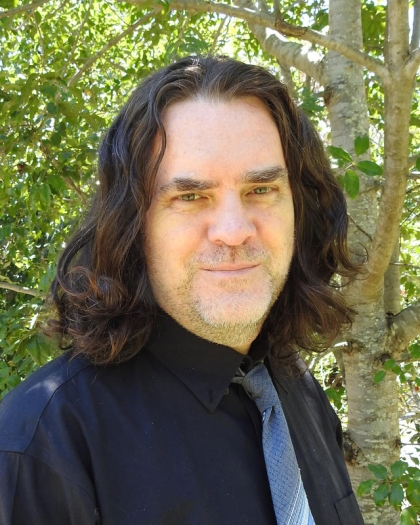
Hans Bihs is a Professor in the Department of Civil and Environmental Engineering, Faculty of Engineering. His research focuses on computational fluid dynamics (CFD), wave hydrodynamics, and wave-structure interaction using the open-source framework REEF3D. Key Research Areas: CFD simulations, wave modeling, floating body dynamics, ocean wave energy, aquaculture hydrodynamics, sediment transport, and high-performance computing. Projects: ERC Consolidator Grant PARTRES (2023-2028), EEA Grants Portugal SurfWave (2023), NFR KPN IPIRIS (2021-2025), EEA Baltic SolidShore (2021-2024), NTNU's MAPLE (2022-2025), and DigiCoast (2021-2024). Email: hans.bihs@ntnu.no His recent publications (2025-2020) analyze fluid-structure interaction, ship-induced waves, floating offshore wind turbines, submerged vegetation, and coastal structures using advanced CFD techniques. Topics include wave hydrodynamics, turbulence, and numerical modeling for marine and aquaculture systems.
Foteini Oikonomou is an Associate Professor at the Department of Physics, Faculty of Natural Sciences, Norwegian University of Science and Technology (NTNU). She specializes in theoretical astroparticle physics, focusing on extreme astrophysical environments that accelerate particles to energies exceeding 10 20 eV. Current research includes multimessenger emission modeling of active galactic nuclei Expertise in cosmic ray acceleration and high-energy neutrino origin Active in teaching advanced astrophysics and particle physics Her work bridges astrophysics, particle physics, and cosmology, with particular attention to blazars, tidal disruption events, and ultra-high-energy cosmic rays. She contributes to major collaborations like GRAND and GCOS, developing future instrumentation for astroparticle detection. Recent publications explore cosmic ray propagation in diverse source populations, neutrino emission from transient astrophysical phenomena, and magnetic field line effects on particle acceleration. Her research has been featured in journals such as Nature Reviews Physics , Physical Review D , and The Astrophysical Journal . She teaches AST-3451 Astrophysics II and has previously taught particle physics (FY3403/FY8913) and general astrophysics (FY2450). Her outreach includes public explanations of ultra-high-energy cosmic ray research through popular science articles.
Andrei Kutuzov is an Associate Professor in the Language Technology Group (LTG) within the Department of Informatics at the University of Oslo. He serves as the Norwegian on-site manager of the High-Performance Language Technology (HPLT) project and has made significant contributions to computational linguistics and natural language processing. His research primarily focuses on computational linguistics and natural language processing, with specialized expertise in semantic change detection, diachronically aware language models, distributional semantics, and large language models. Kutuzov has been instrumental in developing Norwegian language resources including NorBERT, NorELMo models, and the very large-scale NORA.LLM generative models. He created WebVectors, a web service for exploring neural distribution models for Norwegian and English texts. Analysis of his recent publications reveals a strong focus on semantic change modeling, multilingual dataset development, and Norwegian language technology. His work spans from theoretical linguistic analysis to practical applications in language modeling, with significant emphasis on low-resource and Nordic languages. Kutuzov's research demonstrates a consistent trajectory toward improving language models' understanding of semantic evolution and developing robust evaluation frameworks for Norwegian language processing. Norwegian Artificial Intelligence Research Consortium (NORA) award as Distinguished Early Career Researcher (2022) Kutuzov teaches several advanced courses including IN5550 - Neural Methods in Natural Language Processing (2019-2025) and IN3050 - Introduction to Artificial Intelligence and Machine Learning (2024-2025). He has received research funding through the HPLT project which focuses on developing high-performance language technologies. His laboratory work centers around the Language Technology Group at UiO, where he collaborates on developing Norwegian language resources and models, with particular emphasis on diachronic semantic analysis and multilingual capabilities.
Jan Emblemsvåg is a Professor at NTNU’s Department of Ocean Space Operations and Civil Engineering in Ålesund, Norway. He has held senior industry roles including Shipyard Director at Vard, SVP Ship Design & Systems at Rolls-Royce Marine, and Managing Director at Midsund Bruk. His academic positions span BI Norwegian Business School, Ålesund University College, and NTNU since 2006. Emblemsvåg’s expertise bridges engineering and management, focusing on sustainable development through rigorous analytical frameworks. Education: PhD from Georgia Institute of Technology (1999), MSc (1995), and Civil Engineering degree from Norwegian Institute of Technology (1994). R&D focuses on six core areas: 1) Product/process development with Lean methodologies, 2) Life-Cycle Costing/Analyses (integrating cost, environmental, and social dimensions), 3) Risk management and uncertainty analysis using Monte Carlo methods, 4) Operations/General management under Lean principles, 5) Project management with Lean integration, and 6) Renewable energy (especially nuclear power’s role in maritime and industrial sectors). Publications emphasize energy policy critiques, nuclear propulsion feasibility, and sustainable shipping. Recent work highlights nuclear energy’s potential as a cost-effective, low-emission solution for maritime transport and industrial needs. Active in policy debates advocating evidence-based energy strategies. Labs/Teams: Leads NTNU’s research initiatives on nuclear propulsion for merchant ships (NuProShip project) and collaborates internationally on maritime safety and evacuation modeling.
Prof. Irina T. Sorokina is a Professor of Physics at the Norwegian University of Science and Technology (NTNU), leading the Laser Physics Group. Her research focuses on ultrafast lasers, mid-IR photonics, and their applications in materials processing, quantum computing, and spectroscopy. She holds a prestigious Fellowship from the Optical Society of America (2006) and the IEEE Snell Premium Award (2004). Research Interests: Her work spans laser physics, nonlinear optics, and solid-state laser technologies. Key areas include femtosecond laser development, mid-IR frequency combs, and advanced material processing techniques using ultrafast pulses. Recent projects include subsurface silicon modification, all-fiber mid-IR laser systems, and applications in quantum networks. Publications: Her 15 most recent articles (2023–2025) emphasize mid-IR scaling, dissipative solitons, and novel laser architectures. These contributions highlight advancements in energy-efficient laser systems and their industrial applications. Awards: Fellow of the Optical Society of America (2006) IEEE Snell Premium Award (2004) Co-founder of NTNU spin-off ATLA Lasers AS Advising & Innovation: Supervises graduate students in laser physics and materials science. Her lab collaborates on spin-off ventures and advanced projects like subsurface silicon processing for photovoltaics and quantum sensors. Research also extends to energy-dense battery materials and supercontinuum generation in chalcogenide fibers. Labs/Teams: Heads the Laser Physics Group at NTNU, focusing on mid-IR ultrafast lasers and their interdisciplinary applications. Collaborates internationally on projects like double-frequency comb spectroscopy and femtosecond laser writing in ZnS crystals.
Torgeir Dingsøyr is an Adjunct Chief Research Scientist and Research Professor in the Department of IT Management at Simula Metropolitan, a leading Norwegian research institute specializing in software engineering and digital technologies. His role encompasses both strategic research leadership and active empirical investigation into large-scale agile software development and software process improvement. Research Interests Large-scale agile software development methods and governance. Coordination and communication challenges in very large development programmes. Software process improvement (SPI) with emphasis on practical, evidence-based approaches. Teamwork effectiveness and autonomous teams in continuous deployment environments. Digital transformation project organization, particularly within Scandinavian contexts. Across more than two decades, Dingsøyr has produced influential handbooks and empirical studies that bridge the gap between SPI theory and industrial practice. His work increasingly addresses second-generation agile methods, emphasizing safety nets for high-risk development and autonomy at scale. Scientific Awards No specific awards listed in the provided text. Advising & Grants Dingsøyr collaborates extensively with industry and academic partners to secure funding for longitudinal case studies and improvement initiatives. While individual student names are not provided, his publications demonstrate active supervision and mentoring within multi-partner projects. Laboratory & Teams He operates within Simula Metropolitan’s research environment, contributing to interdisciplinary teams that unite software engineering researchers, data scientists, and industrial practitioners to advance empirical software engineering and agile transformation.
Professor Daniel Rettenwander is a Full Professor at the Department of Materials Science and Engineering, Norwegian University of Science and Technology (NTNU), leading the Battery Materials Team within FACET. He also directs the Christian Doppler Laboratory for Solid-state Batteries and serves as Principle Scientist at the Center for Transport Technologies (Battery Technologies) at AIT Austrian Institute of Technology. His research focuses on advanced solid-state battery materials, particularly solid-state electrolytes and cathode materials for next-generation electric vehicle batteries. Key research interests include the development of high-performance solid electrolytes, interface engineering in batteries, and overcoming challenges in solid-state battery design such as dendrite formation and interfacial degradation. His work bridges fundamental materials science with applied electrochemical engineering, addressing critical barriers to commercializing solid-state batteries. Notable achievements include over 75 peer-reviewed publications, numerous awards including the Emerging Investigator awards (Chem. Comm., Journal of Physics: Energy), and leadership in major EU and national grants. His team’s work has been highlighted in media outlets like Gemini and Krone.at, emphasizing breakthroughs in battery materials science. Funding includes projects like OPERA (HORIZON-CL5-2022), SOLIMEC (M-ERA.NET), and CDG-supported initiatives. He supervises a dynamic team of PhD candidates and postdocs, advancing interdisciplinary research at the intersection of materials chemistry and energy storage technologies.
Anis Yazidi is a Professor at Oslo Metropolitan University, affiliated with the Faculty of Technology, Art and Design and the Department of Information Technology. His research focuses on Artificial Intelligence, Machine Learning, Medical Technology, and IoT Security, with a particular emphasis on Applications of AI in Healthcare, EEG Signal Processing, and Digital Transformation. Active research projects include AI Mind (dementia diagnostics), Glycopathology in dry eyes, and Pain and mental distress analysis Completed projects: Digital hate speech analysis, AI in reproductive technology, Nano-antibiotics development His recent publications (2023-2025) demonstrate expertise in: Tsetlin Automaton algorithms for concept learning EEG classification using visibility graphs and vision transformers AI ethics frameworks for medical practice Deepfake detection methodologies Collaborative work spans institutions in Norway, Czech Republic, and international AI research communities.
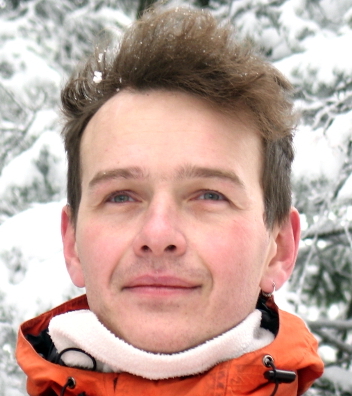
Hans Jonas Fossum Moen is an Associate Professor with a 20% appointment at the Department of Technology Systems, University of Oslo (UiO), and holds a 100% position as a researcher at the Norwegian Defence Research Establishment (FFI). His primary affiliation is with the Section for Autonomous Systems and Sensor Technologies. He is based at the Kjeller campus, with a visiting address at Gunnar Randers Road 19 and a postal address at Postboks 70. His research focuses on advancing autonomous systems and sensor technologies, particularly in the domains of swarm robotics, multi-agent coordination, and optimization algorithms. Key areas include UAV navigation, distributed localization in IoT networks, radar detection enhancement, and adaptive control systems for multi-functional swarms. He emphasizes the integration of biological principles into robotic systems, as evidenced by his participation in the ICRA 2018 Workshop on Swarms. His publications consistently highlight contributions to swarm intelligence, with a focus on improving data quality and efficiency in robotics applications. He has collaborated extensively with colleagues such as Kyrre Glette, Oleg Yakimenko, and Jan Dyre Bjerknes, exploring topics ranging from task allocation in multi-agent systems to evolutionary algorithms for filter optimization. His work bridges theoretical computer science with practical engineering challenges in autonomous systems. No scientific awards have been explicitly mentioned in the provided texts. Moen’s advising and grants narrative indicates no listed advisees or active grant projects, though his 20% UiO position suggests potential involvement in academic supervision. His primary research activities are embedded within FFI and the Autonomous Systems section at UiO, contributing to interdisciplinary efforts in sensor technologies and robotic systems.
Sivert Skålvoll Urstad is an Associate Professor at the Department of Sociology and Social Work , University of Agder , Norway. His academic interests include Sociology of Religion , Secularization , Sociological Theory , and Quantitative Research Methods . He is affiliated with research groups on Religious Minorities and Diversity , Social Studies Didactics , and Sociological Theory Development . Email: sivert.s.urstad@uia.no Phone: +47 38141868 Research Themes - Urstad's work focuses on the sociology of religion, secularization trends, and non-religious identity in the Nordic context. His studies often employ quantitative methods to analyze gender disparities in religiosity, vaccine skepticism, and organizational behavior in educational settings. Recent Article Trends - His publications include analyses of afterlife beliefs , vaccine distrust , gender equality skepticism , and non-religious identity in Norway. Collaborative works explore organizational HRM strategies and internal branding in schools. Advising and Collaborations - While no advisees are listed, Urstad frequently collaborates with scholars like Inger Furseth and Dag Yngve Dahle on interdisciplinary projects spanning sociology, education, and organizational behavior. Labs/Teams - He contributes to the Religious Minorities and Religious Diversity group and Sociological Theory Development at University of Agder.
Jason Nelson is a Professor of Digital Culture in the Department of Linguistic, Literary and Aesthetic Studies at the University of Bergen, Norway. He is a creator of digital poems and fictions, builder of surrealist and politically focused art games and digital creatures. His work is exhibited widely in galleries and journals around the globe at FILE, ACM, LEA, ISEA, SIGGRAPH, ELO and numerous other venues. Nelson serves on organizational boards including the Australia Council Literature Board and the Electronic Literature Organization. Nelson's research focuses on the intersection of digital technology, creative writing, and artistic expression. He explores how AI and machine learning can be harnessed for creative purposes, developing new forms of digital literature and interactive art. His work often involves building expansive visual worlds through collaborative AI processes, creating interactive digital poetry, and developing novel approaches to digital narrative. Nelson's research spans digital humanities, electronic literature, AI-generated art, and interactive media, with particular emphasis on how these technologies transform creative processes and experiences. Over the past decade, Nelson's work has increasingly focused on the creative potential of AI technologies, especially in the areas of text-to-image generation and multimodal authorship. His projects often blend game engines with poetic expression, creating immersive experiences that challenge traditional boundaries between human and machine creativity. Recent works explore themes of multispecies futures, time perception, and the transformation of physical spaces through augmented reality. Nelson has received numerous scientific awards and fellowships including: Fulbright Fellowship at the University of Bergen Moore Fellowship at the National University of Ireland Winner of the Digital Writing Prize, Queensland Literary Awards (15,000 AUD) Winner of the Woollahra Library Digital Poetry Prize (5,000 AUD) Runner-Up Prize at the Videomedeja digital art exhibition Finalist for the Turn-on Literature Prize Finalist for the Queensland Literary Awards, Digital Writing Category Multiple finalist nominations for the New Media Writing Prize Nelson actively participates in academic advising and has secured significant research funding, including a 125,000 AUD grant from the Australia Council of the Arts, Literature Board for his project "Cube Cryptext and Nomencluster," which was recognized as the world's largest interactive art-game. His work "Nine Billion Branches" received multiple awards including the Digital Writing Prize from the Queensland Literary Awards. He has also received a 75,000 NOK grant for the "Flood Mosaic Artwork" project featured in the Floodlines Exhibition at the State Library of Queensland. Nelson is affiliated with the Center for Digital Narrative at the University of Bergen, where he collaborates with researchers like Scott Robert Rettberg and Alinta Krauth. Together they form EphemerLab, exploring new creative processes that move beyond simple "ask and generate" AI methods. Their work involves stitching together hundreds of individual image fragments and components into cohesive visual and narrative concepts, pushing the boundaries of what's possible with current AI technologies.
Olav Bolland is the Dean of the Faculty of Engineering at the Norwegian University of Science and Technology (NTNU) and holds the academic rank of Professor of Thermal Power Engineering. His research focuses on carbon capture and storage (CCS), thermal power systems, and CO2 emission management in power generation. He leads the ECCSEL initiative, an international laboratory infrastructure for CCS research and innovation. Bolland teaches courses such as TEP4185 (Gas Process Technology) and FLYT2202 (Aerodynamics). His research emphasizes techno-economic assessments of CO2 capture technologies, including chemical looping reforming, gas switching reforming (GSR), and pressure swing adsorption (PSA). He has published extensively on topics like pre- and post-combustion CO2 capture, power plant optimization, and hydrogen production integration. His work bridges academic research with practical applications in energy systems, aiming to advance sustainable energy solutions. Notable contributions include a textbook on CO2 emission management and collaborative efforts in international CCS infrastructure development. His projects often involve large-scale plant analysis and validation using real-world data from facilities like the CO2 Technology Center Mongstad.
Alexander Refsum Jensenius is a Professor of Music Technology and Director of the RITMO Centre for Interdisciplinary Studies in Rhythm, Time and Motion at the University of Oslo. He also leads the fourMs Lab and co-founded the MishMash Centre for AI and Creativity. His work bridges musicology, psychology, and technology, focusing on embodied music cognition, human motion analysis, and creative applications of AI. Notably, he pioneered research on air guitar motion and human micromotion through projects like the Oslo Standstill Database . Educated at the University of Oslo (BA in Music and Mathematics, MA in Musicology) and Chalmers University of Technology (MSc in Applied IT), Jensenius holds a PhD in Music Technology from UiO. He has held visiting researcher roles at UC Berkeley, McGill University, and KTH. Leadership roles include Department of Musicology Head (2013–2016) and Steering Committee Chair for the International Conference on New Interfaces for Musical Expression (NIME, 2011–2022). Research interests span music-related body motion, AI in creative contexts, and open research practices. Key contributions include the Music Moves and Motion Capture MOOCs, the Musical Gestures Toolbox software, and monographs like Sound Actions and Sonic Design . His work emphasizes interdisciplinary collaboration, with projects addressing ventilation systems' acoustic properties and cell culture vibrational effects. Awards include the European Open Data Champion recognition. He advocates for open science and maintains extensive digital archives of research materials, emphasizing institutional web pages as critical research infrastructure.
Per-Arne Andersen is an Associate Professor at the Department of Information and Communication Technology within the University of Agder . His research focuses on artificial intelligence , reinforcement learning , Tsetlin machines , and deep learning , with applications in real-time strategy games , industrial environments , and IoT systems . Projects: RESTORE Research Groups: CAIR - Center for Artificial Intelligence Research, CIEM - Center for Integrated Crisis Management, Intelligent Mechatronics (iTron) His work explores safe and sustainable reinforcement learning , interpretable AI , and generative environment modeling . He has developed frameworks like CaiRL and CostNet for high-performance RL environments and goal-directed learning. Recent publications include advancements in Tsetlin automaton analysis , GNSS jamming classification , and road quality detection . Articles from 2025-2016 span machine learning , computer vision , and environmental modeling . He contributes to IEEE , Springer , and LNCS publications, with a focus on interdisciplinary AI applications in crisis management , cybersecurity , and industrial optimization .
Tom Roar Eikebrokk is a Professor at the Department of Information Systems , University of Agder , Norway. He contributes to the Center for Digital Transformation (CeDiT) research group and has over two decades of academic and practical experience in digitalization, business process management, and collaborative innovation. Research Focus : Digital transformation, co-creation frameworks, e-health innovation, IT service management (ITIL), and remote work dynamics. Methodologies : Empirical studies, mixed-method research, case analysis, and Delphi studies. Recent Publications (2024–2025) explore reciprocal relationships between BPM and digitalization, generative AI for sustainable co-creation, and open innovation workspaces in specialized industries. His 2018–2021 work on co-creation in SME networks, worklife ergonomics in digital environments, and robotic process automation impacts remains influential. Collaborative Networks : Frequently co-authors with Dag Håkon Olsen , Niels Frederik Garmann-Johnsen , and Jon Iden , focusing on cross-municipal healthcare systems, digital governance, and IT competence frameworks.

/hjmoen/j.png)