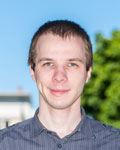
Dr. George Meikle is a Senior Lecturer in Music Production at the University of Salford, specializing in electronic/computer music and human-computer interaction (HCI) in music. His work spans generative music systems, interactive digital media, and sound design. He holds a PhD from the University of Salford, focusing on interactive computer music systems, alongside an MA and BA in music-related disciplines. Education: PhD in Music (2013–2017): "Towards the Realisation of a fully integrated Interactive Computer Music System (ICMS)" MA in Music (2011–2012) BA in Popular Music and Recording (2008–2011) Research interests include algorithmic composition, interactive systems for music, and the application of Markov chains in generative tools. His work often bridges music technology with environmental and community-focused art, as seen in projects like An UnSound Environment and Together Un/Tethered . Major projects include the development of gtm.markov software for generative audio systems and collaborations with interdisciplinary teams on immersive performances. His research has been showcased in software releases, live performances, and academic journals. Notable contributions include: Generative music software tools (e.g., gtm.humaniser , gtm.4Live ) Interactive systems for live music performance Eco-acoustic sound installations
Ernst Seidel serves as a Researcher in the Department of Signal Processing and Machine Learning at the Institute of Communications Engineering, Technical University of Braunschweig. Since January 2021, he has contributed to cutting-edge research in speech and audio signal processing within the Faculty of Electrical Engineering, Information Technology, and Physics. His academic foundation includes: Master's in Electrical Engineering (Communications Technology specialization), TU Braunschweig (2018-2020) Bachelor's in Electrical Engineering (Communications Technology specialization), TU Braunschweig (2014-2018) General higher education entrance qualification, GutsMuths-Gymnasium Quedlinburg (2014) Seidel's research focuses on machine learning-driven signal processing for real-time speech applications. His work pioneers low-latency deep adaptive filters for hearing aid systems and DNN-based acoustic echo cancellation using Kalman filter postprocessing. He investigates user-controllable echo suppression systems that balance near-end speech quality with echo reduction, addressing critical challenges in stereo channel processing and real-world deployment constraints. As a thesis supervisor, Seidel guides master's students in developing neural network architectures for acoustic echo cancellation, emphasizing practical implementation requirements including Python/MATLAB proficiency and foundational knowledge in digital signal processing. His supervision reflects the department's industry-aligned research priorities in real-time audio systems. Seidel operates within the Department of Signal Processing and Machine Learning's research ecosystem, collaborating on projects requiring stringent latency constraints and computational efficiency. His work bridges theoretical machine learning advances with commercial audio applications through partnerships with industry leaders like Cerence and Far Field Sound Corporation.
Andrew Matranga is a Teaching Professor in the Department of Media, Film and Journalism Studies at the University of Denver's College of Arts, Humanities and Social Sciences. He also teaches branding courses in the Entrepreneurship@DU program at the Daniels College of Business. His work bridges journalism, education, and strategic storytelling, with a focus on digital media innovation and experiential learning. His areas of specialization include: Editorial and web design Digital publishing and news production Audio and video production, including podcasting Brand journalism and storytelling Curriculum and learning experience design Generative AI applications in media His research and teaching emphasize adaptive teaching presence, flipped classrooms, and digital-first journalism models. He currently advises The Clarion , DU's student news outlet, guiding its transition to a digital-first platform. Though no peer-reviewed publications are listed, his professional and pedagogical work reflects deep engagement with emerging media technologies and educational innovation. Notable recognition includes a Cannes Lion award for the Nature Valley Trail View project. He is also active in community service, serving on advisory boards and mentoring students. Andrew advises student media and contributes to curriculum development across programs. He has led initiatives in branded content, digital strategy, and media entrepreneurship. His work with organizations integrates narrative clarity with scalable systems thinking, drawing from frameworks like EOS and OKRs. He is involved with: The DU Clarion (student news outlet) Entrepreneurship@DU (branding education) Rocky Mountain Public Media (Community Advisory Board) TEDx Boulder (former organizing team)
Christos Michalakos is a Senior Lecturer in Game Audio at the School of Design and Informatics, University of Abertay, where he teaches and researches in interactive audio, game sound, and digital performance. His work bridges music, technology, and games, with a focus on real-time systems and improvisation. BSc in Mathematics, University of Crete (2006) MSc in Acoustics and Music Technology, University of Edinburgh (2008) PhD in Creative Music Practice, University of Edinburgh (2013) His research centers on expressive music technologies, live electronics, and XR audio, exploring how sound interacts with games and performance. He develops custom systems for interactive music and has performed internationally with artists like Evan Parker and Stelarc. His work often involves hybrid instruments, such as his sensor-augmented drum-kit, and investigates affordances in digital sound environments. The recent publications show a strong trend in using game engines and virtual reality for musical composition and improvisation, blending software development with artistic practice. Topics include procedural audio, real-time interaction, and immersive sound design, reflecting a deep integration of computer science and digital arts. Notable scientific awards include: Royal Society of Edinburgh Enterprise Fellowship (2018) Carnegie Trust Research Incentive Grant (2017) EPSRC Scholarship (2007) Multiple PRE Grants and performance bursaries Christos supervises honours projects and has led knowledge exchange initiatives like school workshops and festival presentations. He is affiliated with research groups such as Sound Lab Edinburgh and co-directed Inventor Composer Coaction. His research is supported by grants from the Royal Society of Edinburgh and the Carnegie Trust, indicating active funding and scholarly impact. He is involved in collaborative performance projects, software development for artistic purposes, and outreach through festivals and workshops, demonstrating a strong commitment to both academic and public engagement in digital music and game audio.
Hongyu You is a Research Fellow and KTP Associate in the Department of Electronic and Electrical Engineering at the University of Strathclyde's Faculty of Engineering, leading the "Next Generation Inspection PIG" project with Cokebusters Limited since May 2024. Previously, they completed doctoral research at Coventry University. Education: Doctor of Philosophy in Acoustic Source Localization, Coventry University (2017-2023) Their research centers on acoustic signal processing for non-destructive testing (NDT), manufacturing applications, and natural human-computer interaction, with core expertise in sonic detection systems for industrial inspection and augmented reality interfaces. They pioneer physics-informed machine learning techniques to enhance ultrasonic pipeline inspection and develop template-based acoustic positioning models for 3D object interaction. Recent publications reveal a strategic shift toward AI-integrated NDT solutions, particularly applying physics-informed neural networks to small-diameter pipeline diagnostics while advancing real-time acoustic source tracking in elastic solids and augmented spaces. As Principal Investigator for the KTP project "the Next Generation Inspection PIG", they direct knowledge transfer between academia and industry to develop next-generation pipeline inspection technologies, securing research funding through this partnership.
Jianbo Jiao is an Associate Professor in Computer Vision and Machine Learning at the School of Computer Science, University of Birmingham, where he leads the MIx (Machine Intelligence + x) research group. Previously, he was a Postdoctoral Researcher in the Biomedical Image Analysis (BioMedIA) group and Visual Geometry Group (VGG) at the University of Oxford, working on the SeeBiByte and VisualAI projects. MSc from Peking University (2015) PhD in Computer Science from City University of Hong Kong (2018), supported by Hong Kong PhD Fellowship Scheme Visiting scholar at Beckman Institute, University of Illinois at Urbana-Champaign (2017-2018) Dr. Jiao's research focuses on Computer Vision, Machine Learning, Healthcare AI, and AI for Science. His work primarily investigates learning representations in open-world scenarios by exploring auxiliary information from multiple modalities (image/video, speech/audio, text/NLP, depth/stereo, gaze/saliency, motion) and reducing dependency on supervision through self-supervised, weakly-supervised, and semi-supervised learning approaches. His group has made significant contributions to multimodal learning, medical image analysis, and 3D vision. His recent publications demonstrate strong trends in multimodal learning, medical AI applications, and 3D computer vision. The research spans fundamental computer vision tasks like segmentation and scene understanding while addressing practical challenges in healthcare and scientific domains. Notably, there's significant focus on making vision systems more robust to distribution shifts and requiring less labeled data. Amazon Research Award recipient (2024) Royal Society Short Industry Fellow Best Paper Award at MICAD 2024 Best Paper Award at MICCAI 2024 ASMUS Workshop Best Presentation (Runner-Up) Award at MICCAI 2024 ASMUS Workshop Best Paper Award at ECCV 2022 Medical Computer Vision Workshop Multiple Outstanding Reviewer Awards from top conferences Dr. Jiao serves as Associate Editor for The Transactions on Machine Learning Research (TMLR) and IEEE Transactions on Circuits and Systems for Video Technology (T-CSVT), and has been actively contributing to the community as Area Chair for NeurIPS, ICML, ICLR, and ACM MM. His MIx group has secured multiple research grants including the Amazon Research Award for the PCo3D project on Physically Plausible Controllable 3D Generative Models. Current PhD students include Isaac Akintaro, Hao Ai, and Kangning Zhang. The MIx group maintains active collaborations with industry partners including Amazon and Meta, and has developed notable datasets such as 360+x for panoptic multi-modal scene understanding and DyMVHumans for dynamic human modeling. Their research bridges fundamental computer vision with practical applications in healthcare, physics, chemistry, and other scientific domains.
Dr. Yapeng Tian is an Assistant Professor in the Computer Science Department within the Erik Jonsson School of Engineering and Computer Science at The University of Texas at Dallas. He leads the Computer Vision and Multimodal Computing (CVMC) Lab, where his research focuses on solving core problems in computer vision, computer audition, and machine learning with applications to multisensory perception, computational photography, AR/VR, accessibility, and healthcare. Dr. Tian received his PhD in Computer Science from the University of Rochester in 2022, Master's in Electronic Engineering from Tsinghua University in 2017, and Bachelor's in Electronic Engineering from Xidian University in 2013. Prior to joining UT Dallas, he completed research internships at Facebook and Adobe Research, and served as a Research Assistant at both University of Rochester and Tsinghua University. His research interests span audio-visual scene understanding, audio-visual scene generation, AI for accessibility and healthcare, and image/video processing. He has made significant contributions to multimodal learning, particularly in audio-visual integration, where his work has been recognized with numerous awards including the Amazon Research Award, Cisco Faculty Research Award, and AAAI New Faculty Highlights. Analysis of his recent publications reveals a strong focus on diffusion models for multimodal generation, audio-visual learning, accessibility applications, and efficient multimodal processing. His work increasingly integrates healthcare applications, particularly in autism assessment and assistive technologies for people with disabilities. Key awards and recognitions: Amazon Research Award [2024] UIST Belonging & Inclusion Best Paper Award [2024] ACCV Best Paper Honorable Mention Award [2024] IEEE ISMAR IDEATExR workshop Best Paper Award [2024] Cisco Faculty Research Award [2023] AAAI New Faculty Highlights [2023] Dr. Tian actively mentors students at multiple levels, including PhD candidates, undergraduate researchers, and even K-12 students through outreach programs. His lab has secured significant grant funding including an NIH R01 grant and an Amazon Research Award. Current research directions include developing AI/AR-assisted vision for people with low vision and creating tools for kitchen accessibility through wearable AR.
Rebecca Colclasure is a PhD Researcher at the Cambridge Institute for Music Therapy Research , affiliated with the Faculty of Arts, Humanities, Education and Social Sciences at Anglia Ruskin University . Her work bridges music technology , music therapy , and user experience (UX) design , focusing on adaptive technologies for disabled musicians and stroke rehabilitation. Educational Background: PhD (submitted), Anglia Ruskin University MA Music Education, University College London (UCL) PGCE Secondary Education, Middlesex University Associated Professional in Neurological Music Therapy, NMT Academy Her research explores the intersection of disability access and digital music production , including projects like Fused Music and adaptive DDR rhythm games for post-stroke rehabilitation. She has presented at international conferences such as the European Research and Innovation Conference and Music Tech Fest . Rebecca's technical expertise spans eyegaze interfaces , soundbeam systems , and custom game controllers , with applications in special education needs (SEN) and neurological rehabilitation . She combines music production , human-computer interaction , and clinical research to create inclusive musical experiences.
Serge Lacasse is a Full Professor of Musicology at the Faculty of Music, Laval University, where he serves as Director of the 1st, 2nd, and 3rd cycle musicology programs and Director of the Digital Audio Research and Creation Laboratory (LARC). With a PhD from the University of Liverpool's Institute of Popular Music, his academic career at Laval has progressed from Assistant Professor (2002-2006) to Associate Professor (2006-2010) and Full Professor (2010-present). His educational background includes: PhD in Musicology, Institute of Popular Music, University of Liverpool (2000) MA in Musicology, Faculty of Music, Laval University (1995) BA in Music History and Literature, Faculty of Music, Laval University (1994) BA in Music, Faculty of Music, McGill University (1991) Dr. Lacasse's research emphasizes an interdisciplinary approach to recorded popular music, with particular focus on phonographic staging, transphonography, and research-creation in music. He has pioneered work on narrative structures in recorded music, examining how vocal performance, technology, and intertextuality shape listener experiences. His recent work increasingly explores artificial intelligence applications in music creation, as evidenced by his project "Generative AI in Music: Creation and Production." He has co-authored influential works including "Research-Creation in Music and the Arts" (Routledge, 2018) and "The Pop Palimpsest" (University of Michigan Press, 2018). His scholarly output demonstrates a consistent focus on the aesthetics and narrative dimensions of recorded popular music, with particular attention to vocal performance and phonographic staging. Recent publications increasingly address the impact of digital technologies and AI on music creation, reflecting his leadership in evolving research-creation methodologies that bridge academic research with practical music production. His contributions have been recognized with numerous awards: Book of the Year Prize, IASPM-Canada (2018) Multiple Opus Prize Finalist awards for Books and Articles (2015, 2008, 2007, 2001, 1999) Named "Grand maître/Top Teacher" by La Scena musicale (2006) Recipient of multiple research grants and scholarships throughout his career As Director of LARC, Dr. Lacasse has secured significant research funding and led numerous projects exploring music technologies and research-creation. He has served on international scientific committees including the International Institute for Popular Culture at Turku University. His creative projects include "Hits for HIIT" with Sophie Stévance and his piano compositions "Piano Evocations" (2019) and "Winter Preludes" (2020). Under his leadership, LARC has become a hub for innovative research at the intersection of musicology, technology, and creative practice. The laboratory supports numerous research-creation projects that bridge academic research with practical music production, fostering collaborations between scholars, musicians, and technologists. Recent initiatives focus on generative AI applications in music creation and the evolving landscape of digital music distribution platforms.
Dr. Ya Zhang is a Researcher at the Centre for Gravitational Astrophysics within the Research School of Physics at the Australian National University. With a strong focus on precision measurement and gravitational wave detection technologies, Zhang contributes significantly to the development of advanced optical interferometry systems for gravitational wave observatories. Zhang's research primarily centers on optical interferometry, laser physics, and precision measurement techniques. Their work addresses critical challenges in gravitational wave detection, particularly in noise reduction and signal enhancement. Key research areas include Rayleigh scattering phenomena in fiber optics, digital signal processing for interferometric systems, and development of high-precision optical frequency references. Zhang's expertise spans both theoretical modeling and experimental implementation of advanced optical systems, with particular emphasis on improving sensitivity for gravitational wave detectors. The publication record demonstrates a consistent focus on enhancing interferometric sensitivity through innovative optical and signal processing techniques. Zhang's work frequently addresses noise sources that limit gravitational wave detection capabilities, developing solutions such as algebraic cancellation methods for cross-talk, digital enhancement techniques, and novel approaches to frequency stability. The research has significant implications for next-generation gravitational wave observatories and precision measurement applications beyond astrophysics. As an active member of the gravitational wave research community, Zhang collaborates extensively with leading researchers including David McClelland, Daniel Shaddock, and other members of the international gravitational wave collaboration. This collaboration network extends across multiple institutions and contributes to major gravitational wave detection projects worldwide.
Professor Thomas Scharf is a leading academic at Newcastle University with a focus on gerontology, social exclusion, and civic engagement in later life. His work bridges interdisciplinary research, policy analysis, and participatory methodologies, particularly in rural and urban aging contexts. Research Themes : Aging equity, digital inclusion, intergenerational solidarity, and age-friendly communities. Collaborations : Works with international teams on multimorbidity, loneliness, and pandemic responses for older populations. Methodologies : Scoping reviews, participatory action research, and qualitative frameworks. Recent publications (2025–2021) address hospital care quality, genetic correlation analysis, and loneliness mitigation through befriending interventions. His studies often analyze lifecourse determinants and structural inequities affecting aging populations.
Vincenzo Galata is a researcher at the Institute of Cognitive Sciences and Technologies - ISTC (Padua Branch) and has contributed extensively to phonetics, bilingualism, and speech corpus development. His work spans sociophonetics, articulatory phonology, and emotion recognition through speech analysis. Research Focus : /r/ phonetic variation in bilingual contexts, heritage language maintenance, and speech emotion recognition Key Projects : Creation of the IRIAS multilingual speech corpus, forensic speaker recognition studies Methodologies : Acoustic analysis, ultrasound articulatory imaging, sociolinguistic surveys His publications since 2008 demonstrate consistent contributions to: Phonetic documentation of endangered dialects Inter-language phonetic influence in immigrant populations Technological applications of phonetic analysis to emotion tracking Standardization of forensic speaker recognition methods Galata collaborates with researchers across Italy (University of Calabria) and internationally, focusing on Tyrolean-Italian bilinguals and Italo-Australian speech communities.
Visara Urovi is an Associate Professor at Maastricht University's Data Science Institute within the Faculty of Science and Engineering. Her research focuses on blockchain applications, AI-driven healthcare solutions, and privacy-preserving data sharing frameworks. Education: PhD in Computer Science Key research areas include: Blockchain technology for secure health data exchange AI models in respiratory disease monitoring Regulatory compliance for digital health systems Speech analytics as diagnostic tools Recent publications highlight trends in: Blockchain-based accountability mechanisms Speech recognition for COPD and asthma tracking Responsible data science frameworks Scientific awards include the Grant for the Web (2020). She has supervised PhD candidate Yan Y. (2025 thesis) and organized academic events like the Women in Data Science Maastricht Datathon (2022).
Jeffrey Stolet is Professor of Music Technology and Director of Future Music Oregon at the University of Oregon's School of Music and Dance. With a PhD in Music from the University of Texas at Austin (1984), he is among the very first individuals appointed to a Philip H. Knight professorship at the University of Oregon. His research focuses on Music Technology, Data-driven Instruments, and Electroacoustic Music. Stolet has pioneered interactive performance environments using wands, sensing devices, game controllers, and other specialized interfaces to control sonic and videographic domains. His work spans computer music programming, real-time performance systems, and multimedia composition. Stolet's compositions have been presented globally at major electroacoustic and new media festivals including the International Computer Music Conference, Society for Electro-Acoustic Music in the United States Conference, and MusicAcoustica Festival in Beijing. His work has also been featured at prestigious venues such as the Museum of Modern Art in New York and the Pompidou Center in Paris. Inducted into China's prestigious DeTao Masters Academy Honorary professorships at two Chinese music conservatories Lifetime achievement award from Musicacoustica for contributions to interactive music Author of the first book about Kyma programming language Developer of Electronic Music Interactive , an award-winning multimedia educational resource Stolet's recent work explores themes of balance, social justice, cultural identity, and the intersection of physical limitations with technological expression, as evidenced in compositions like In Desperate Times (2020) which responded to the George Floyd murder and disproportionate Latinx deaths during the pandemic.
Szilvia Ruszev serves as Senior Lecturer in Post Production at Bournemouth University's Faculty of Media and Communication, where she leads the Arts and Humanities Research Council-funded 'Shared Post-Human Imagination' project through the Centre for Intellectual Property Policy & Management (CIPPM). Appointed affiliate member of CIPPM in November 2024, she directs the MA Post Production Editing programme while bridging academic research with professional media practice. Her research spans cinema studies, new materialism, and digital media theory with particular focus on responsible AI development , representation politics (race/class/gender), and post-cinematic aesthetics . Methodologically, she employs creative-critical praxis through film editing, VR essays, and site-specific installations exhibited internationally at SIGGRAPH and Geneva International Film Festival. Key projects investigate networked capitalism's entanglement with media technologies and develop frameworks for ethical human-AI collaboration in media creation. Analysis of her publications reveals consistent engagement with embodied knowledge production , temporal perception , and materialist media criticism across digital platforms. Her work connects cinematic theory with contemporary issues of algorithmic governance, pandemic media ecology, and posthuman subjectivity through both scholarly outputs and artistic practice. Ruszev contributes to UN Sustainable Development Goals for Gender Equality, Reduced Inequalities, and Quality Education through research on representation and inclusive media practices. Her teaching spans 10+ years across Film University Babelsberg, Cologne Film School, and Art Center College of Design, with PhD supervision focusing on editing theory, synthetic media, and practice-based research. As Principal Investigator for the BRAID initiative, she develops cross-sectoral relationships among AI developers, policymakers, and media practitioners. Her professional background includes 20+ years as film editor for Arte/ZDF documentaries and feature films awarded at Karlovy Vary IFF and shortlisted for the Academy Awards.