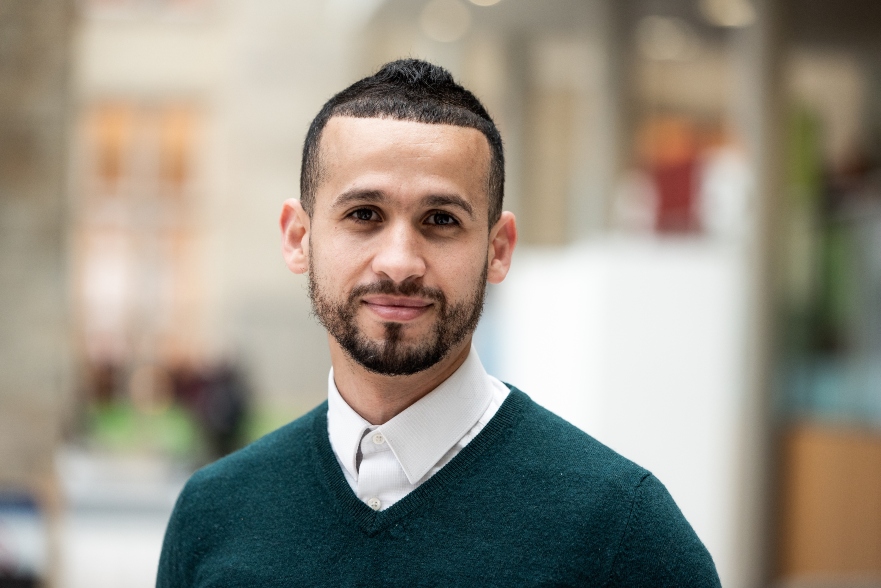
Balint Laczko is a Doctoral Research Fellow at the RITMO Centre for Interdisciplinary Studies in Rhythm, Time and Motion, affiliated with the Faculty of Humanities at the University of Oslo. His research focuses on image sonification and interdisciplinary studies in autophagy, combining expertise in music technology, machine learning, and computer vision. Education: Master's degrees in Classical Composition (Liszt Academy of Music, Budapest, 2017) and Performance Technology & Electroacoustic Composition (Norwegian Academy of Music, Oslo, 2021). Research interests include 3D audio, audiovisual analysis, and the development of tools for musical gesture analysis. His work bridges artistic and technical domains, with publications in conferences like ICAD and ACM. Key projects: AUTORHYTHM (biological-music tech collaboration), Sonification Pilot (bioRITMO).
Dr. Priya Vashishta is a Professor with joint appointments in Computer Science, Materials Science, and Physics at the University of Southern California. His research integrates computational methods across multiple scales to address fundamental challenges in materials science and nanotechnology. Research focuses on multiscale simulation frameworks combining quantum molecular dynamics, machine learning interatomic potentials, and high-performance computing. Key areas include: energy storage materials, 2D materials characterization, catalytic processes, and AI-driven materials discovery. Publication trends reveal consistent development of computational methodologies: machine learning potentials for materials simulation, neural network quantum dynamics, GPU-accelerated computing, and multiscale modeling techniques. Recent work emphasizes practical applications in energy storage, nanoscale electronics, and advanced manufacturing. Research group activities include development of open-source simulation packages (PND, Allegro) and leadership in the MAGICS computational materials center. Contributions span fundamental theoretical frameworks to applied materials engineering.
Catherine Burns is a Professor in the Department of Systems Design Engineering at the University of Waterloo, Canada, and holds the Tier 1 Canada Research Chair in Human Factors in Healthcare Systems. She also serves as the Associate Vice President, Health Initiatives, overseeing research in health and health technology alignment with the university's strategic goals. Her roles include leadership in institutional initiatives such as the Health Initiatives Task Force and the Centre for Bioengineering and Biotechnology. Education: She earned a Bachelor's in Systems Design Engineering (1992, University of Waterloo), a Master's in Industrial Engineering (1994, University of Toronto), and a Doctorate in Mechanical and Industrial Engineering (1998, University of Toronto). Research: Her work focuses on human factors engineering, systems engineering, safety, ergonomics, and cognitive engineering, with applications in healthcare systems and technology. Key interests include interface design, usability testing, and decision-making processes in complex environments. Awards: Notable recognitions include multiple Outstanding Performance Awards from the University of Waterloo, the Research Excellence Award (2009), and Fellow status in the Human Factors and Ergonomics Society (2015). Advising & Grants: As the Principal Investigator of an NSERC CREATE Training program, she has trained over 40 graduate students. Her grants include the NSERC Discovery Accelerator Supplement (2008). Labs & Teams: Founded and led the Centre for Bioengineering and Biotechnology (2012–2019), advancing interdisciplinary research in biomedical and health technologies.
Claes Lundström is an Adjunct Professor at Linköping University's Department of Science and Technology (ITN), affiliated with the Media and Information Technology (MIT) school. His primary research focuses on medical imaging, integrating machine learning, visualization, and human-computer interaction in clinical settings. He leads the technical side of digital pathology research at the Center for Medical Image Science and Visualization (CMIV), directing national-scale grants and serving as Arena Director for the Analytic Imaging Diagnostics Arena (AIDA). Since 2010, he has held dual roles as Research Director at Sectra AB and academic researcher, driving innovations that translate into commercial healthcare solutions. Lundström's work spans AI-driven diagnostics, uncertainty visualization, and precision orthopedics, with contributions recognized through leadership in major projects like the €70M BIGPICTURE initiative. His academic credentials include a PhD (2007) and Docent degree (2014), alongside extensive industry collaboration. Education: PhD in 2007 and Docent degree in 2014 from Linköping University. PhD: 2007 Docent: 2014 Research interests emphasize AI integration in diagnostics, particularly digital pathology and medical imaging workflows. His work addresses challenges like domain adaptation in AI models, uncertainty quantification in segmentation tasks, and interactive visualization tools for clinicians. Recent projects include the VAI-B platform for AI validation in breast imaging and the BigPICTURE collaboration for global pathology data sharing. Key grants include leadership roles in national-scale projects, such as the AIDA arena and SCAPIS study-based AI lab. His contributions to AI ethics and clinical adoption include studies on human-AI collaboration and quality assurance frameworks. Lundström also oversees labs like CMIV and AIDA, fostering cross-disciplinary research in medical imaging and AI.
Hosam Al-Samarraie is an Associate Professor in Digital Innovation Design at the School of Design, University of Leeds. He holds a PhD in Philosophy and specializes in Human-Computer Interaction (HCI), Digital Education, and Machine Learning. His research focuses on enhancing user-centered design in education and healthcare through adaptive interfaces, emotional intelligence analysis, and EEG/eye-tracking methodologies. Key areas of expertise include: User modeling and social computation Machine learning applications in UI design and health analytics Cultural and social aspects of immersive technologies His work has produced over 100 peer-reviewed publications and earned recognition such as the 2020 Silver Medal Award from the Market Research Society. He serves as a Program Chair/Editorial Board member for international conferences and supervises PhD/Master’s students in topics like generative AI and digital health. Current projects explore: Emotional responses to UI design Cultural impacts on mHealth adoption XR applications in occupational safety As XLAB Manager, he leads interdisciplinary research integrating HCI, psychology, and technology to address real-world challenges in education and healthcare.
Scott Klemmer is a Professor of Cognitive Science and Computer Science & Engineering at UC San Diego, where he also co-founded and co-directs the Design Lab. Previously, he held roles at Stanford University, including Associate Professor and Bredt Faculty Scholar. His research focuses on Human-Computer Interaction (HCI), design education, online learning, and collaborative systems. He earned his PhD and MS in Computer Science from UC Berkeley and a dual BA in Art-Semiotics and Computer Science from Brown University. Key contributions include innovations in peer assessment systems (PeerStudio), citizen science platforms (Galileo), and design tools leveraging examples (Bricolage). He chairs major conferences like ACM Learning at Scale and serves on editorial boards for journals like Human-Computer Interaction . His honors include ACM CHI Best Papers, Sloan Fellowship, and NSF CAREER Award. Klemmer advises over 20 PhD/postdoc students and has led projects in crisis response interfaces, MOOC design, and design thinking pedagogy. He co-teaches Interaction Design Specialization on Coursera and has pioneered online courses with over 200k enrollments. Current research explores scalable learning systems, creative livestreaming, and AI-driven design tools. His work bridges technical innovation with educational impact, emphasizing design as a core human practice.
Michail Giannakos is a Professor of Interaction Design and Learning Technologies at the Department of Computer Science, Faculty of Information Technology and Electrical Engineering, Norwegian University of Science and Technology (NTNU). He serves as Head of the Learner-Computer Interaction Lab and has held visiting positions including EAISI Visiting Professor at Eindhoven University of Technology (2023-2024) and Honorary Professor at UCL Knowledge Lab (2022-2023). Previously, he was Associate Professor (2017-2020) and Senior Lecturer (2014-2017) at NTNU, and Assistant Professor at Old Dominion University (2013-2014). Dr. Giannakos's research focuses on the design and study of emerging technologies in online and hybrid education settings, with particular emphasis on student and instructor experiences. His work spans Human-Computer Interaction , Learning Analytics , Learning Technologies , and User Experience Research . He has co-authored over 150 peer-reviewed publications in leading journals including Computers & Education, Computers in Human Behavior, IEEE TLT, and ACM TOCE. His recent publications reveal a strong trend toward multimodal learning analytics, embodied interaction in educational contexts, and the application of generative AI in education. The research increasingly integrates physiological and cognitive measurements with traditional learning data to create more comprehensive educational insights. There's also a noticeable focus on STEM education, particularly in mathematics learning through embodied and multimodal approaches. EAISI Visiting Professor, Eindhoven University of Technology (2023) Honorary Professor, UCL Knowledge Lab, University College London (2022) IDC Best Paper Award (2022) ITiCSE Top 5 papers in 25 Years Award (2020) RCN Young Research Talent grant (2016) ERCIM "Alain Bensoussan" Fellow (2013) Outstanding Academic Award, NTNU (2017-2020) Dr. Giannakos actively supervises multiple PhD students and postdocs, including Giulia Cosentino and Andrew Pulsipher as main supervisees. He has successfully mentored numerous PhD candidates to completion, many of whom have gone on to academic positions. His research is supported by substantial grants from diverse sources including the European Commission (Horizon Europe, Horizon 2020), Research Council of Norway, US-NSF, Microsoft Research, and DAAD. Current major projects include STEAM Learning Ecologies (Horizon Europe, 2022-2025) and SURROUNDEDbySCIENCE (Horizon 2020, 2021-2025). As Head of the Learner-Computer Interaction Lab, Dr. Giannakos leads a multidisciplinary team exploring how emerging technologies can enhance learning experiences. The lab focuses on multimodal data collection, embodied interaction design, and the development of intelligent learning environments that adapt to user needs. Current work emphasizes the integration of generative AI with multimodal analytics to create more responsive educational systems.
Professor Anil Bharath holds the role of Professor of Biologically-Inspired Computation & Inference in the Department of Bioengineering at Imperial College London. He serves as Academic Director of Imperial Global: Singapore and co-leads the IN-CYPHER research program on AI-driven healthcare security. His research focuses on machine learning, deep networks, and biomedical applications. He earned his BEng from UCL and PhD from Imperial College, followed by roles including President of the City and Guilds College Association (2022-2024). Research Interests: Machine learning, neural networks, medical imaging, and biologically-inspired computation. Notable contributions include 2D steerable filters for shape detection (1998), Bayesian marginalisation in early computer vision, and deep learning for cardiac MRI analysis. He co-founded Cortexica Vision Systems (acquired by Zebra Technologies in 2019), applying biological neuron models to visual search technology. Labs & Affiliations: Director of the BICI Lab, affiliated with the Data Science Institute, Centre for Neurotechnology, and multiple healthcare networks. His work spans interdisciplinary projects in AI for healthcare, cardiovascular engineering, and medical device innovation. Publications: Recent work emphasizes AI in cardiology (e.g., MRI analysis for mitral regurgitation, aortic stenosis detection) and synthetic data privacy. His research bridges computational models with clinical interpretability, addressing challenges in medical imaging efficiency and diagnostic accuracy.
Courtney Chrimes is a Lecturer in Digital Fashion Marketing at The University of Manchester, Department of Fashion Business Technology. She holds an External Examiner role for the BA (Hons) Fashion Promotion and Communication Programme at Buckinghamshire New University (2021-2026). Her academic background includes a Bachelor of Science in Fashion Buying and Merchandising from The University of Manchester (2017) and a PhD focused on product page design impacts on clothing fit appraisal (2021). Her research interests span digital fashion marketing innovations, metaverse retail experiences, sustainable supply chain practices, and consumer behavior analysis. Notable areas include blockchain applications in circular economies, body shape impacts on garment fit satisfaction, and AI-driven marketing strategies. She actively contributes to the UN Sustainable Development Goals related to responsible consumption and production. Dr. Chrimes has published 12 peer-reviewed articles and chapters, with recent focus on metaverse retailing (2025), AI-generated advertising (2024), and blockchain transparency (2023). She received four awards, including the 2024 Teaching Excellence Award for inclusive pedagogy and 2019 recognition for research excellence. Her advisory work includes supervising PhD research on digital fashion marketing and collaborating with industry partners on omnichannel strategies. Current projects explore immersive technologies in fashion retail and digital tools for sustainable product development.
AJung Moon is an Assistant Professor in the Department of Electrical & Computer Engineering at McGill University, Canada. She directs the McGill Responsible Autonomy & Intelligent System Ethics (RAISE) Lab, an interdisciplinary group exploring ethical and societal implications of AI/robotics. Her affiliations include the McGill Centre for Intelligent Machines, Mila, and the Bensadoun School of Retail Management (Faculty of Management). She holds roles in global tech-policy initiatives like the IEEE Global Initiative and the International Panel on Autonomous Weapons Regulation (IPRAW). Her research focuses on human-robot interaction, AI ethics, and governance of autonomous systems. Key interests include ethical design practices, nonverbal communication in HRI, and translating ethics principles into technical workflows. She advocates for inclusive policy design through initiatives like the Open Roboethics Institute. Her recent work emphasizes systemic risk analysis for AI systems, comparative evaluations of ethics frameworks, and sociotechnical harm reduction strategies. Publications address topics ranging from ADAS liability to hesitation gestures in robot collaboration. Moon's lab actively bridges engineering and social science perspectives to advance responsible AI development. Her advisory roles include the UN Digital Cooperation Panel and Canada’s AI Advisory Council (2019-2021). She has pioneered participatory policy frameworks and demonstrated how safety engineering principles can improve AI system accountability.
Professor Nick Collins is a Professor in the Department of Music at Durham University. His research focuses on live computer music, musical artificial intelligence, and computational musicology. He is also an active performer as a composer-programmer-pianist, engaging in algorave and electronic chamber music performances. His academic contributions include co-editing The Cambridge Companion to Electronic Music (2007/2017) and The SuperCollider Book (2011/2024), as well as authoring Introduction to Computer Music (2009). His work bridges theoretical research and practical innovation, emphasizing interdisciplinary approaches to music technology. Key research areas include AI-driven composition, algorithmic music analysis, and live coding practices. Notable projects involve creating AI voice model choirs, analyzing music corpora (e.g., Radiohead), and developing open-source tools for MIR (Music Information Retrieval). His recent work explores the ethical and creative implications of AI in contemporary music production. Supervised student: Andrew Brown Key publications span journals like Royal Society Open Science , Computer Music Journal , and conferences like International Computer Music Conference. Cross-cutting themes include historical electronic music analysis, algorithmic creativity, and the intersection of mathematics and sound art.
Timothy Drysdale is Professor and Chair in Technology Enhanced Science Education at the University of Edinburgh, where he directs the Remote Laboratories group and serves as Director of Strategic Digital Education. His practable.io platform revolutionizes laboratory education through aesthetically-designed remote experiments installed in campus foyers, saving physical space while enhancing accessibility. Research develops novel remote labs based on experiments likened to "science museum exhibits," integrating real-time equipment access via web interfaces. Additional work explores orbital angular momentum in radio communications. His £3M openEngineering Laboratory project received multiple honors including the Queen's Anniversary Prize and THE Digital Innovation Award. Global Online Laboratories Consortium Award (2024, 2018) Queen's Anniversary Prize (2024) Jisc Digital Transformation Award (2023) Guardian Teaching Excellence Award (2018) Teaches across undergraduate engineering programs and supervises doctoral projects in digital education innovation. Advocates for assessment transformation and generative AI integration in education.
Paul Liang is Assistant Professor at the Massachusetts Institute of Technology with joint appointments in the Media Lab and the Department of Electrical Engineering and Computer Science, where he directs the Multisensory Intelligence research group. His work spans foundational research in multisensory AI technologies and their applications in enhancing human experiences and real-world human-AI interaction. Liang's research focuses on three interconnected thrusts: developing theoretical foundations for multisensory machine learning systems; designing interactive AI technologies to augment human capabilities; and addressing societal concerns in real-world human-AI interaction. His work integrates principles from machine learning, natural language processing, and human-computer interaction to create novel multimodal architectures. Professor Liang's research group actively publishes on multimodal representation learning, evaluation frameworks for foundation models, and methods for quantifying multimodal interactions. Recent work includes developing the Holistic Evaluation of Multimodal Models (HEMM) framework and the MultiBench benchmarking suite.
Dr Young No is a Senior Lecturer and Associate Head of School (Education) at the School of Biomedical Engineering, University of Sydney. With a PhD in Biomedical Engineering and a Graduate Certificate in Higher Education, he specializes in developing synthetic biomaterials for musculoskeletal tissue regeneration. His research focuses on creating customizable, biocompatible materials to replace traditional tissue grafting methods. B Engineering (Mechanical) (Biomedical) Hons I B Medical Science (Physiology) PhD (University of Sydney) GradCert (Higher Ed) (Sydney) MIEAust (Member of Institution of Engineers Australia) FHEA (Fellow of Higher Education Academy) His work on bioactive ceramics and polymer-ceramic composites explores cellular interactions, mechanical performance, and biodegradation of synthetic implants. Recent projects include 3D-printed bone scaffolds, injectable hydrogels, and fiber-reinforced composites for tendon/ligament repair. His research has produced over 15 publications in journals like Advanced Materials and ACS Biomaterials Science and Engineering. Selected articles reveal expertise in bioceramics, ion-doped composites, and load-bearing tissue engineering. Current projects focus on doped calcium silicate ceramics, bioactive polymer-ceramic composites, and synthetic tendons/ligaments. Faculty of Engineering Education Innovation Award Commendation (2024) 40 under 40 Most Influential Asian-Australian (2022) Faculty of Engineering Dean’s Award for Outstanding Teaching (2020) As a Harvard Mobility Scheme awardee (2018), he developed biosensor technologies for tendon regeneration. His teaching includes BMET3961 Biomaterials and Biomechanics, ENGG3112 Interdisciplinary Engineering, and other core biomedical courses. Research teams at Sydney collaborate internationally with Columbia University and Erlangen-Nuremberg.
Dr. Moulay Larbi Chalal is a Senior Lecturer in Architectural Technology at Nottingham Trent University’s School of Architecture Design and the Built Environment. He holds a PhD in Architecture from NTU (2018) and a Master’s with Distinction in Digital Architectural Design from Salford University. His academic responsibilities include curriculum design, studio instruction, and research supervision in architectural technology modules. Chalal’s research integrates computational design with sustainability, focusing on: Urban energy planning using GIS and BIM Generative algorithms for architectural optimization Eco-feedback systems for behavioral change Smart city infrastructure and autonomous vehicles His publications demonstrate a consistent focus on energy pattern analysis, sustainable urban development, and digital innovation in construction. Recent work explores AI applications in education and energy visualization frameworks. Awards & Recognition: Emerald Award for Best Master’s Dissertation (Salford University, 2013) NTU Vice Chancellor’s Scholarship for PhD research (2014) He advises doctoral candidates (e.g., F. Mekheimar’s work on digital archaeology) and collaborates with industry partners including Nottingham Energy Partnership and SETART Group. Chalal leads projects in NTU’s Creative and Virtual Technologies Research Lab, developing tools for sustainable urban planning.