Cristiano Porciani is Professor of Astrophysics at the University of Bonn's Argelander Institute for Astronomy, specializing in cosmological structure formation and galaxy evolution. He leads a research group working on numerical simulations of large-scale structure and theoretical cosmology. His research focuses on dark matter distribution, galaxy bias, and cosmological parameter estimation using perturbation theory and high-performance computing. Recent work examines relativistic effects in large-scale structure and intensity mapping techniques. Publications show strong emphasis on Euclid mission science, including instrument characterization, survey simulations, and cosmological tests. Article trends reveal consistent development of statistical methods for analyzing next-generation sky surveys. Supervises 9 graduate students working on cosmological simulations, galaxy clustering statistics, and radiative transfer modeling. Leads research projects within the Euclid Consortium and Transregional Collaborative Research Centre.
PD Dr. habil. Thomas Wöhling serves as a Senior Research Scientist and Team Leader for Stochastic Modelling of Hydrosystems at the Chair of Hydrology, Dresden University of Technology's Faculty of Environmental Sciences. His research spans integrated environmental systems modeling with particular expertise in surface water-groundwater interactions, braided river systems, and vadose zone processes. Previously, he held research positions at Water and Earth System Sciences Competence Cluster in Tübingen (2010-2015) and Lincoln Environmental Research in New Zealand (2006-2010). Dr. Wöhling completed his Dipl.-Hydrol. (1999) and PhD in Hydrology (2005) at Dresden University of Technology, followed by habilitation in Stochastic Hydrology (2021). His educational background includes extensive research at the Institute of Hydrology and Meteorology at TU Dresden (1999-2005) where he developed foundational expertise in hydrological modeling. Wöhling's research focuses on integrated modeling of coupled environmental systems , particularly flow and contaminant transport in surface water-groundwater systems, nutrient and energy fluxes in soil-plant-atmosphere systems, and distributed hydrological modeling. His work emphasizes stochastic modeling and uncertainty analysis , with significant contributions to inverse modeling, model calibration, multiobjective optimization, and Bayesian model averaging techniques. He has pioneered methods for evaluating monitoring network worth and data utility for environmental models. His publication record demonstrates consistent contributions to hydrological science, with recent work (2023-2025) focusing on machine learning applications in hydrology, advanced statistical inversion techniques, and complex karst system modeling. Key trends include integration of physics-based and data-driven approaches, improved uncertainty quantification methods, and applications to climate change impacts on water resources. His work bridges theoretical advances with practical applications in New Zealand's braided rivers and European hydrological systems. STAHY Best Paper Award (2018) ASCE Journal of Irrigation and Drainage Engineering Best Reviewer Awards (2008, 2010, 2011, 2015, 2018) ASCE Journal of Irrigation and Drainage Engineering Best Paper Awards (2008, 2009) Dr. Wöhling leads the Stochastic Modelling of Hydrosystems team and has secured funding for numerous projects including Klimakonform, ISOSIM, VAMOS II, and the International Research Training Group 'Integrated Hydrosystem Modelling.' His work combines novel monitoring techniques with modeling and optimal sensor placement to improve prediction reliability for river-groundwater exchange fluxes. He collaborates extensively with international partners, particularly in New Zealand through the Lincoln Agritech's Braided Rivers program. His laboratory work focuses on combining traditional hydrological measurements with advanced computational techniques, including deep learning applications for soil surface hydrology and time-windowed Bayesian analysis for predictive modeling. The team maintains strong connections with field sites in Germany's Saxon region and New Zealand's Canterbury Plains, facilitating integrated theoretical and empirical research approaches.
Raziye Tekin is an Associate Professor from Turkey and currently serves as a Technical Lead at ROKETSAN Inc. in the defense industry. She holds a doctoral degree from the Technical University of Munich (TUM) with a thesis titled 'A New Design Framework for Impact Time Control' and has conducted research at the German Aerospace Center. Her academic roles include co-chair of the European Guidance, Navigation and Control Technical Committee (TC), membership in the AIAA GNC TC, and an associate editor position for IEEE Transactions on Aerospace and Electronics Systems. Education: Bachelor's in Control Engineering from Istanbul Technical University (2006) Master's in Electrical and Electronics Engineering from Middle East Technical University (2010) PhD from TUM (2018) Research interests focus on missile guidance and control systems, including trajectory shaping, impact-angle control, thrust vector control, and vertical launch systems. She has contributed to both academic and industrial applications of aerospace sciences, integrating theoretical frameworks with practical defense technologies. Scientific Awards: Best Thesis Award (Master’s, Middle East Technical University) Research and Development Awards from ROKETSAN and ASELSAN Top Ten Most Read Article in AIAA Journal of Guidance, Control, and Dynamics Her work emphasizes robust autopilot design and trajectory optimization, with grants including the Rudolf Diesel Industry Fellowship at TUM-IAS. She collaborates across disciplines to address challenges in advanced air mobility, particularly through her Focus Group on 'Smart GNC for Advanced Air Mobility.'
Martin Schmidt is a Full Professor (W3) for Nonlinear Optimization at the Department of Mathematics, Trier University, since 2019. He has held leadership roles in research training groups and international committees, focusing on mathematical modeling and optimization of energy systems, gas networks, and market equilibria. His work bridges mixed-integer nonlinear optimization , bilevel optimization , and robust methods with applications to real-world energy challenges. Education: PhD in Mathematics (2013), Diplom in Mathematics (2008), both from Leibniz University Hannover. Editorial Roles: Editorial Board member of Journal of Optimization Theory and Applications and Optimization Letters , Associate Editor for OR Spectrum and EURO Journal on Computational Optimization . His research integrates complex physical systems (e.g., gas transmission networks) with game-theoretic models to analyze energy markets. Recent publications emphasize robust optimization , decomposition techniques , and machine learning integration in bilevel frameworks. Awards highlight his contributions to gas market feasibility , linear bilevel optimization , and practical applications in energy systems. Collaborations span institutions like Universidad Zaragoza, Sapienza University, and Forschungszentrum Jülich.
Dominic Edelmann is a researcher at Heidelberg University, Germany, specializing in mathematical statistics and its applications in biostatistics and high-dimensional molecular data. His work bridges theoretical statistics and biomedical research, particularly in developing and applying distance-based dependence measures. Research Interests: His research centers on distance correlation , survival analysis for high-dimensional data , epigenetic data analysis , and machine learning . He investigates nonlinear relationships in complex datasets, with applications in oncology and molecular biology. The recent publications show a strong trend in extending distance correlation methods to survival and competing risks data, as well as time series and high-dimensional settings. His work combines rigorous mathematical foundations with practical applications in biomedicine. Scientific Funding: DFG Grant "dCortools: Distanzkorrelationsverfahren zur Erkennung Nichtlinearer Zusammenhänge in Hochdimensionalen Molekularen Daten" (2019–present) Academic Supervision: He has co-supervised Master’s theses on bias correction in distance correlation and regression models for bounded responses in DNA methylation studies, indicating active involvement in training the next generation of statisticians. He holds a Dr. rer. nat. in Mathematics from Heidelberg University (2015) and was a research assistant there during his doctoral studies. His work continues to be centered at Heidelberg University, contributing to both theoretical and applied statistical science.
Gregor Schaumann is a researcher at the Chair of Mathematics X (Mathematical Physics) within the Institute of Mathematics at the University of Würzburg , Germany. He specializes in the interplay between algebra and topology, particularly focusing on quantum algebra, low-dimensional topology, and higher category theory. Research Interests : Topological field theories (TFTs) and associated manifold invariants Tensor categories and their representations Module categories and bimodule structures Higher categorical frameworks for mathematical physics Fusion categories and categorical quantum groups Orbifold constructions in TQFTs Scientific Contributions : His recent work includes foundational studies on Grothendieck-Verdier categories, fusion quivers, and generalized orbifolds in Reshetikhin-Turaev TQFTs. He has also advanced the understanding of Eilenberg-Watts calculus and pivotal tricategories. Teaching & Advising : Gregor supervises bachelor's and master's theses and teaches courses such as Linear Algebra for GMR teaching candidates , Introduction to Knot Theory , and seminars in algebraic topology and geometric mechanics. Collaborations : He collaborates with international researchers including Jürgen Fuchs, Ingo Runkel, Christoph Schweigert, and Nils Carqueville, with whom he co-organizes the Higher Structures & Field Theory Seminar .
Matthias Becker is a Professor at the Institute for Practical Computer Science within the Faculty of Electrical Engineering and Computer Science at Leibniz University Hannover, where he has been a core member of the Human-Computer Interaction group since 2019. He serves as Internship Coordinator for Computer Science and Computer Engineering and holds key roles in the Computer Science Examination Board and Selection Committee, actively shaping academic governance and student development. His academic journey began with PhD studies at the University of Bremen (1996-2000) supported by a DFG grant, followed by a postdoctoral permanent position at Leibniz University Hannover (2000-2019), an Associated Assistant Professor role at École des Mines de Nantes (2000), and a Habilitation in Computer Science in 2013. This foundation enabled his transition to a full professorship in 2019. Becker's research spans Human-Computer Interaction, Simulation and Modeling, and Bio-inspired Computing, with applications in agriculture, renewable energy, and manufacturing. His work integrates distributed systems, optimization algorithms, and wireless sensor networks to solve complex real-world problems, such as greenhouse monitoring, wind farm logistics, and tire noise reduction. Recent publications reveal a strategic focus on practical validation of simulation models and cross-domain applications of nature-inspired algorithms. His 15 most recent publications (2018-2024) demonstrate consistent innovation in applying simulation techniques to offshore wind farm installation, agricultural pest management, and sports science. These works emphasize real-world validation, collaborative problem-solving, and the development of domain-specific optimization frameworks that bridge theoretical algorithms and industrial implementation. As Internship Coordinator, Becker facilitates critical industry-academia connections for students, while his examination board responsibilities ensure rigorous academic standards. His leadership in the Human-Computer Interaction group drives research on interactive systems for agriculture, energy, and health, with particular emphasis on user-centered design in complex operational environments like wind farm logistics and greenhouse automation.
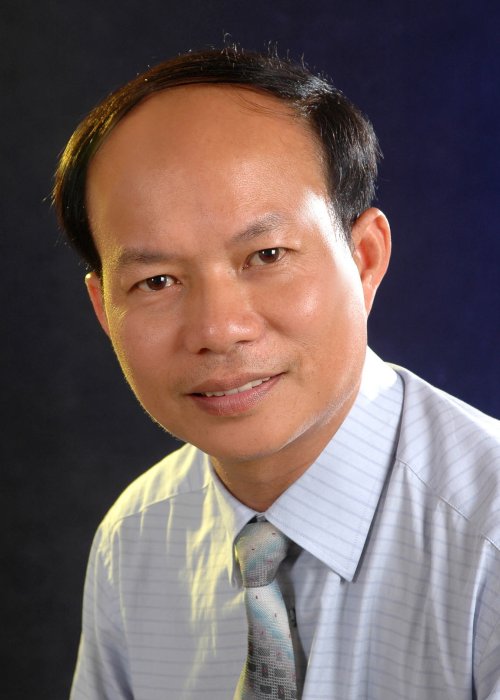
Professor Hoang Xuan Phu is a renowned mathematician affiliated with the Institute of Mathematics , Vietnam Academy of Science and Technology , where he has served since 1984 (Researcher), 1992 (Associate Professor), and 1996 (Professor). He is an elected member of multiple prestigious academies: the Heidelberg Academy of Sciences and Humanities (2004), Bavarian Academy of Sciences and Humanities (2010), TWAS - The World Academy of Sciences (2013), and acatech - National Academy of Science and Engineering, Germany (2019). His email contact is hxphu@math.ac.vn and phu@iwr.uni-heidelberg.de . Education : University of Leipzig (Diploma 1979, PhD 1983, Habilitation 1987) Research Areas : Optimization, Optimal Control, Functional Analysis, Numerical Analysis, Rough Analysis Applications : Inventory Problems, Hydroelectric Power Plant Control, Robotics, Open Channel Hydraulics Editorial Roles : Editor-in-Chief of Vietnam Journal of Mathematics (2011-2022), Honorary Editor-in-Chief (2023-present), Associate Editor for multiple journals His recent publications focus on convex hull algorithms, optimal path planning, and function perturbation analysis, reflecting his expertise in mathematical optimization and computational methods. He has organized numerous international conferences on High Performance Scientific Computing in Hanoi (2000-2024) and Optimization & Scientific Computing (2003-2024).
Oliver G. Ernst is a Professor of Numerical Analysis at Technische Universität Chemnitz . His research focuses on Numerical Analysis , Uncertainty Quantification , and Inverse Problems , with applications in Thermo-Hydro-Mechanical (THM) processes , Electromagnetics , and Stochastic Partial Differential Equations . He is associated with the Numerical Analysis group at TU Chemnitz. Key Research Areas : Efficient numerical methods for PDEs Krylov subspace techniques Stochastic finite element methods Multi-physics modeling Geoscientific applications Recent Publications (2025-2010): THM simulations under uncertainty Neural network PDE solvers Bayesian inversion frameworks Rational Krylov algorithms Deflated restarting strategies Collaborations : TU Bergakademie Freiberg University of Manchester Technical University of Munich University of Maryland University of Geneva Software Development : Contributor to OpenGeoSys platform Developer of FEMALY MATLAB library Academic Recognition : h-index 32, i10-index 66, with over 4423 citations since 2020.
Dr.-Ing. Bashir Kazimi is a group leader at the Materials Data Science and Informatics (IAS-9) department within the Institute for Advanced Simulation at Forschungszentrum Jülich. His work focuses on advancing deep learning and computer vision techniques for electron microscopy data analysis, enabling efficient material characterization. Expertise: Deep Learning, Computer Vision, Image Analysis Collaboration: Works closely with the Ernst-Ruska-Center (ER-C) for electron microscopy expertise Research Interests: Bashir develops and applies deep learning methods for tasks such as denoising, super-resolution, semantic segmentation, and tracking in electron microscopy. His applications span nanomaterial characterization, crystallographic defect identification, and orientation mapping. Scientific Trends: His recent publications highlight advancements in self-supervised learning, semantic segmentation of TEM images, and applications of deep learning to both materials science and archaeological monument detection in geospatial data. Scientific Achievement: Admitted to the Young Excellent Scientist Program (YESP) in 2024, supporting leadership development and scientific visibility Advising: Supervises Shrindhi Bhat , a PhD student in his group. He is involved in projects like FAST-EMI (Deep-learning assisted fast in situ 4D electron microscope imaging), with a focus on enhancing materials analysis through AI.
Shahid Hussain is an Associate Professor at King Abdullah University of Science and Technology (KAUST) in the Computer, Electrical and Mathematical Sciences and Engineering Division. His research spans multiple domains including electric vehicle infrastructure, blockchain technology, and intelligent systems for IoT applications, with a focus on practical implementations of computational intelligence techniques. Dr. Hussain's research interests include: Electric Vehicles and Smart Grid Integration Fuzzy Logic and Intelligent Decision Systems Blockchain Applications for Security and Privacy Machine Learning for IoT and Healthcare Applications Energy Management Systems Smart City Infrastructure Development His recent publications demonstrate a strong focus on applying hybrid computational approaches to solve complex engineering problems, particularly in transportation systems and healthcare applications. Dr. Hussain has published extensively in IEEE journals, with particular emphasis on innovative approaches to electric vehicle charging infrastructure, secure IoT systems, and blockchain-enabled solutions for real-world challenges. Dr. Hussain maintains active collaborations with researchers globally, particularly with Reyazur Rashid Irshad, Young-Chon Kim, and Subhasis Thakur. His work bridges theoretical advancements with practical implementations, as evidenced by his research on fuzzy integer linear programming for EV charging stations and blockchain-enabled security frameworks for medical IoT systems.
Prof. Henning Bruhn-Fujimoto is a faculty member at the Institute for Optimization and Operations Research at Ulm University. His research focuses on graph theory, combinatorial optimization, and discrete mathematics , with notable contributions to Erdős-Pósa properties, cycle packing, and algorithmic graph theory. He teaches courses in mathematical foundations of machine learning and combinatorics. Academic Background: - Habilitationsschrift : Graphs and their Circuits (2009) - PhD Thesis: Infinite circuits in locally finite graphs (2005) - Diploma Thesis: Generating the cycle space by induced non-separating cycles (2001) Research Interests: - Structural graph theory and algorithm design - Optimization in discrete systems - Applications of combinatorial mathematics Thesis Supervision: He regularly oversees bachelor's and master's theses in optimization, graph theory, and related fields. Notable past thesis topics include elevator system optimization, Erdős-Posa properties in graphs, and container ship unloading algorithms. Labs/Teams: His work is centered within the Institute's optimization group, collaborating with researchers on projects involving graph algorithms and combinatorial optimization.
Noortje Venhuizen is an Assistant Professor in the Department of Cognitive Science and Artificial Intelligence at the Tilburg School of Humanities and Digital Sciences, Tilburg University. She serves as Academic Director for the BSc Cognitive Science and Artificial Intelligence program since 2024, and has held academic positions at Saarland University (2015-2022) including roles as Scientific Staff member and Principal Investigator in SFB 1102 projects. PhD in Computational Semantics (University of Groningen, 2015) MSc in Logic (ILLC, University of Amsterdam, 2011) BSc in Artificial Intelligence (Utrecht University, 2009) Her research focuses on expectation-based language comprehension, neurocomputational modeling of semantic processing, distributional formal semantics, and pragmatic reasoning in discourse. Key contributions include PDRT-SANDBOX (Haskell NLP library) and DFS Tools (Prolog implementation of distributional formal semantics). Recent publications (2023-2025) explore multimodal word meaning, informativity in reference production, and neurocognitive models of surprisal processing. Her work combines formal semantics with cognitive neuroscience and computational modeling. LOT Grotevragenprijs essay contest - Second Prize She has presented research at major conferences including CogSci, AMLaP, and Sinn und Bedeutung. Current teaching includes courses on artificial intelligence, statistics, and semantic theory.
Fengjunjie Pan is a PhD student and research assistant at the Chair of Robotics, Artificial Intelligence and Embedded Systems at the Technical University of Munich since 2021. He holds an M.Sc. in Electrical Engineering from TU Berlin (2019) and a B.Eng. in Electrical Engineering from Hamburg University of Applied Sciences. His research focuses on automotive systems engineering and generative AI applications in model-based engineering. His publications (2022-2025) demonstrate expertise in: LLM integration for automotive software development Containerized architectures for autonomous driving Virtualization technologies in vehicular systems Constraint generation and model transformation He supervises multiple Master's and Bachelor's theses on generative AI applications and privacy-enhancing technologies in automotive contexts, working alongside Prof. Alois Knoll's team.
Frank Hannig is a Professor at the University of Erlangen-Nuremberg, Germany, specializing in computer architecture and high-performance computing. His research focuses on FPGA acceleration, hardware-software co-design, neural network optimization, and embedded systems. He has collaborated extensively with co-authors such as Jürgen Teich and Oliver Reiche, producing over 200 publications since 2001. His work emphasizes domain-specific languages (DSLs) for image processing (e.g., Hipacc) and compiler optimizations for FPGAs. Key contributions include techniques for quantized neural networks on microcontrollers, CGRA toolchain evaluation, and efficient mapping of CNNs onto processor arrays. Hannig also explores energy-efficient architectures and reconfigurable computing for emerging applications like edge AI and automotive systems. Publications span conferences like ASAP, FPL, and ARC, reflecting his interdisciplinary approach to bridging algorithm design and hardware implementation. His research often addresses practical challenges in deploying machine learning models on resource-constrained devices while maintaining performance and energy efficiency.