Prof. Tanya Bondarouk is a distinguished academic affiliated with the Digital Society Institute and Faculty of Behavioural, Management and Social Sciences at the University of Twente. Her research focuses on Human Resource Management (HRM), electronic HRM systems, and the impact of disruptive technologies on work environments. She holds leadership roles including Board Member of the National Network of Female Professors (Landelijk Netwerk Vrouwelijke Hoogleraren). Her academic contributions span over 250 publications, including influential works on AI in HRM, open innovation, and gig economy challenges. Notable awards include the Best HRM Scientist in The Netherlands (2018) and the Inspiration Award (2019). Research interests: Technology-human interaction in workplaces, HRM strategies for innovation, and digital transformation in organizations. Recent articles analyze AI-driven recruitment, generational differences in tech engagement, and algorithmic management dilemmas. Prof. Bondarouk actively engages in academic networks, organizing conferences like the 38th EGOS Colloquium (2022), and provides expert commentary on digital labor platforms and employer branding strategies. Her work bridges theoretical HRM frameworks with real-world organizational challenges.
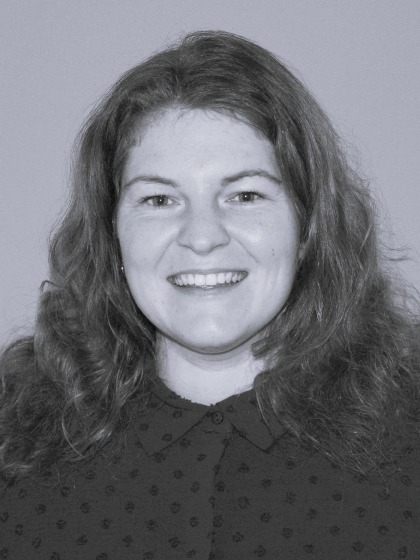
Floor Middel serves as an Assistant Professor in the Department of Pedagogical and Educational Sciences at the Faculty of Behavioural and Social Sciences, University of Groningen. Her academic work bridges research, teaching, and practical application in child protection systems with a focus on decision-making processes and addressing systemic biases. Dr. Middel's research interests center on understanding and improving decision-making in child protection systems through rigorous examination of how ethnicity, migration background, and gender influence child welfare investigations and outcomes. Her work employs intersectional analysis to uncover disparities in decision-making processes and examines how stereotypes might mediate these disparities. She also explores the role of digital technologies in modern social work practice and develops assessment tools to measure meaningful participation of children in protection systems. Analysis of Dr. Middel's scholarly output reveals a cohesive research trajectory focused on equity and evidence-based practice in child protection. Her publications demonstrate growing international recognition, with work spanning comparative analyses of child protection systems across Europe, investigations into decision-making ecology, and development of practical assessment tools. The research consistently addresses the UN Sustainable Development Goals related to reducing inequalities and promoting just, peaceful, and inclusive societies. Fulbright scholarship (2019) Jo Kolk travel grant (2019) NWO idea generator (2019) Travel grant for U4 Summer school 'Methods and Methodologies: Complexities and Responsibilities in Gender Research' (2018) Travel grant Swiss National Science Foundation (2018) As an educator, Dr. Middel mentors undergraduate students and teaches across multiple courses including Interview Practical, Report Practical, Statistical Models 2, and Qualitative Research Methods. She delivers guest lectures on Decision-making in Child Protection for master's students, supervises traineeships and theses in Orthopedagogy, and coordinates the international summer school 'The Future of Child and Family Welfare Policy: Looking Through Different Lenses.' Her teaching directly connects with her research expertise, providing students with evidence-based perspectives on contemporary child protection challenges.
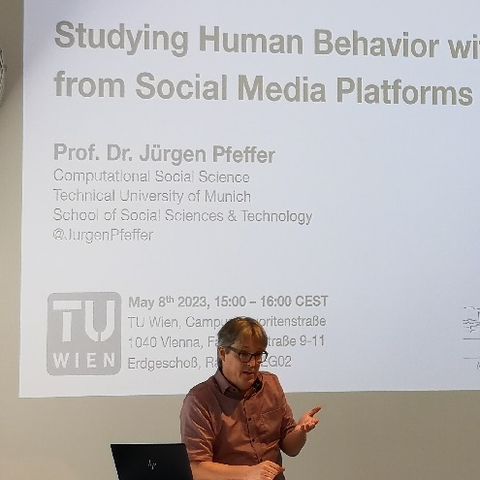
Jürgen Pfeffer is a Professor of Computational Social Science & Big Data at the Technical University of Munich's School of Social Sciences and Technology, with an additional appointment as Adjunct Professor at Carnegie Mellon University's Institute for Software Research. His interdisciplinary work bridges computer science and social science with a focus on analyzing large-scale socio-technical systems. His research expertise spans computational social science, network analysis, and big data methodologies. Pfeffer's work examines methodological, algorithmic, and theoretical challenges in analyzing dynamic social systems, with current projects focusing on modeling and detecting negative dynamics from social media, particularly online firestorms and hate speech against politically active women. His research combines network science approaches with computational methods to understand complex social phenomena. Pfeffer's publication record demonstrates significant contributions to the field since his 2010 doctorate, with high-impact papers in journals like Science and EPJ Data Science. His work on social media analysis, particularly the influential 2014 Science paper 'Social Media for Large Studies of Behavior' co-authored with Derek Ruths, has shaped methodological approaches in the field. His research shows consistent evolution from foundational network analysis to contemporary applications in political discourse, hate speech detection, and multi-layer network analysis. Hennig, M., Brandes, U., Pfeffer, J., & Mergel, I. (2012). Studying Social Networks. A Guide to Empirical Research Ruths, D., & Pfeffer, J. (2014). Social Media for Large Studies of Behavior Pfeffer, J., Morstatter, F., & Mayer, K. (2018). Tampering with Twitter's Sample API As an advisor and collaborator, Pfeffer has worked extensively with researchers including Raji Ghawi, Mirco Schönfeld, Momin Malik, and Kathleen Carley. His work demonstrates strong connections between theoretical network science and practical applications in social media analysis. His current research continues to address pressing issues in online discourse, with recent work focusing on hate speech classification, lexical change in negative word-of-mouth, and polarization dynamics in social media environments. Pfeffer leads the Pfeffer Lab, which focuses on developing methodological approaches for analyzing complex social systems through computational methods. His work has implications for understanding political legitimacy, social influence, and community dynamics in both online and offline contexts.
Prof. Mehdi Dastani is a Professor and chair of the Intelligent Systems group within the Department of Information and Computing Sciences at Utrecht University's Faculty of Science. He leads the Master's program in Artificial Intelligence and focuses on formal and computational models in AI, particularly multi-agent systems. His research integrates insights from philosophy, psychology, and law to develop autonomous agents that reason about social and cognitive concepts like norms, emotions, and responsibility. Dastani has held academic roles at Utrecht University since 2001, including postdoctoral research and faculty positions. Education: M.Sc. Computer Science (University of Amsterdam, 1991), M.Sc. Philosophy (University of Amsterdam, 1992), Ph.D. in Humanities (University of Amsterdam, 1998). His work spans theoretical and applied projects, including grants for initiatives like Golden Agents (simulating Golden Age creative industries) and traffic control systems using virtual organizations. He is actively involved in academic committees, editorial boards, and organizing international conferences like AAMAS and PRIMA. Research Interests: Multi-Agent Programming, Normative Systems, Autonomous Agents, Cognitive Robotics, and Human-Centered AI. His projects address challenges like norm enforcement, decision-making in complex systems, and ethical AI integration with societal needs. Advising & Grants: Supervised numerous PhD students (e.g., Birna van Riemsdijk, Bas Testerink) and secured grants for projects such as 'Controllable AI: Human-Centered Approach'. His work includes collaborations on urban governance, autonomous driving, and AI tools for literacy support in children. Labs & Teams: Leads the Intelligent Systems group, contributing to agent-based simulations, ethical AI frameworks, and interdisciplinary collaborations with social scientists and urban planners.
Guus Rijnders is a Full Professor at the University of Twente in the Department of Inorganic Materials Science. His research focuses on advanced materials synthesis and characterization, particularly thin films, oxide materials, and ferroelectric systems. With expertise in pulsed laser deposition techniques, he investigates novel materials for electronic, energy storage, and sensor applications. Research interests encompass nanomaterials science, with emphasis on designing and optimizing functional materials through controlled growth processes. Key areas include perovskite oxides for energy applications, nanoscale ferroelectric phenomena, and developing oxide superlattices with tailored electronic properties. His work bridges fundamental materials science with device engineering for next-generation technologies. Recent publications demonstrate extensive work on ferroelectric capacitors, perovskite thin films, and oxide interfaces. Research trends show consistent focus on energy storage materials, nanoscale characterization techniques, and novel synthesis methods for complex oxides. Articles frequently explore structure-property relationships in functional materials with applications in electronics and energy conversion. He maintains active collaborations across Europe and internationally, contributing to multidisciplinary projects in materials research. His group utilizes advanced fabrication and characterization facilities at the MESA+ Institute.
Prof. Matthijs Kalmijn holds a dual role as Professor at the University of Groningen's Faculty of Spatial Sciences (Department of Demography) and Senior Researcher/Theme Leader at the Netherlands Interdisciplinary Demographic Institute (NIDI-KNAW). His expertise spans demography, sociology, quantitative research methods, and family/life course studies. He coordinates major surveys like the Netherlands Kinship Panel Study and Parents and Children in the Netherlands (OKiN), focusing on topics such as migration, social inequality, and intergenerational relations. Education: PhD in Demography from UCLA (1991). Key Research Areas: Family dynamics, migration, divorce economics, parental support inequalities, and cultural demographics. His work addresses how social structures and policies shape individual and familial trajectories. Grants & Projects: Secured €30 million for social cohesion research (2024) and leads multi-country projects on aging and migration. His research informs policy through analyses on retirement migration, immigrant return intentions, and cultural audience trends. Awards: Member of the Royal Netherlands Academy of Arts and Sciences (KNAW), recognizing his contributions to demographic science. Active in public discourse on topics like classical music attendance demographics and retirement migration impacts. Labs/Teams: Core member of NIDI and collaborator with international networks like Population Europe. Supervises interdisciplinary teams analyzing complex family structures and late-life employment trends.
Dr. Nicola Cortinovis is an Assistant Professor in the Department of Economic Geography at Utrecht University's Faculty of Geosciences. His research focuses on regional economic performance, industrial dynamics, and the role of knowledge spillovers in shaping regional development. He explores topics such as smart specialization, green innovation, and the impact of multinational enterprises on local economies. Education: PhD in Economic Geography (2016, Utrecht University) Teaching: Courses include Geographies of Multinationals, Location in a Globalized World, and Methods for Economic Geography. Research interests span institutional drivers of regional diversification, the relationship between spatial structure and productivity, and the application of AI in research data processing. He contributes to initiatives like the LSE GILD Blog and collaborates on projects such as PILLARS (Pathways to Inclusive Labour Markets). Recent work examines green innovation in EU regions, export dynamics in China, and wage inequality in the Netherlands. He is affiliated with the Foundations of Complex Systems and Institutions for Open Societies (IOS) research groups.
Clemens V. Verhoosel is an Associate Professor in Computational Methods for Model- and Data-Driven Engineering at Eindhoven University of Technology (TU/e). He holds positions in the Department of Mechanical Engineering under the Energy Technology and Fluid Dynamics section, and is affiliated with the EAISI Foundational initiative. His research focuses on scan-based immersed isogeometric analysis, uncertainty quantification, and Bayesian inference for complex engineering problems. He leads the Group Verhoosel and manages the Engineering Mechanics Graduate School since 2018. Education: MSc (Aerospace Engineering, TU Delft, 2005, cum laude PhD, TU Delft, 2009). Postdoctoral research at University of Texas at Austin (2009-2010). Awarded NWO VENI Grant (2011). Research interests include numerical methods for solid mechanics, fluid dynamics, coupled problems, and applications in biomedical engineering (e.g., cardiac mechanics). He develops open-source tools like the Nutils toolkit and collaborates with industry partners such as Evalf Computing. Key contributions include isogeometric analysis for fracture mechanics, phase-field models, and mesh-free simulation workflows. Honors: NWO Veni Award (2011). Teaching includes Advanced Discretization Techniques and Scientific Computing courses. Active in professional activities, including invited talks on cardiac mechanics and computational methods.
H. Cheng is a researcher at the University of Twente, affiliated with the Faculty of Engineering Technology and the Department of Mechanics of Solids, Surfaces and Systems. He plays a central role in several interdisciplinary research projects focused on computational modeling of granular materials, geohazards, and machine learning integration in physics-based simulations. His research centers on advancing numerical methods such as the Discrete Element Method (DEM) and developing machine learning surrogates for efficient uncertainty quantification in complex systems. Key project areas include offshore infrastructure resilience under climate change (POSEIDON), dynamic fault slip in induced seismicity (FastSlip), upscaling particulate systems for industrial applications (TUSAIL), and automated segmentation of soil-root systems using micro-CT imaging (UNSAT). H. Cheng leads and supervises multiple early-career researchers across EU-funded initiatives, including MSCA Doctoral Networks and COST Actions. He is the main applicant and supervisor in the GrainLearning project, which integrates Bayesian inference with physics-based models to improve simulation accuracy and efficiency. His scientific contributions span collaborative research across academia and industry, with a strong emphasis on open science, reproducibility, and cross-sectoral training. He contributes to community-building through initiatives like ON-DEM, promoting best practices in particle-based simulations. Supervisor of multiple PhD students and postdoctoral researchers Daily supervisor in POSEIDON, FastSlip, TUSAIL, UNSAT Vice-lead of Working Group 1 in ON-DEM COST Action Main applicant and project lead for GrainLearning H. Cheng is actively involved in training the next generation of computational scientists and engineers, with a focus on interdisciplinary methodologies that bridge mechanics, data science, and industrial applications.
Artem Kaznatcheev is an Assistant Professor at Utrecht University in the Department of Mathematics and Department of Information and Computing Sciences within the Science faculty. His research bridges theoretical computer science and evolutionary biology to analyze biological and social systems through an algorithmic lens. Current role since January 2023 Recruiting PhD students and postdocs Previously: James S. McDonnell postdoctoral fellow at University of Pennsylvania His work focuses on: Computational complexity of evolution Evolutionary game theory Algorithmic biology Mathematical modeling of cancer dynamics Cultural evolution of science Selected article trends show: Interdisciplinary integration of computer science and cancer biology Key themes: fitness landscapes, evolutionary games, treatment optimization 2021-2020 publications dominate Mathematical formalisms applied to biological and social phenomena Scientific contributions include: James S. McDonnell Foundation Independent Postdoctoral Fellowship 2019 Genetics paper on computational complexity as evolutionary constraint 2017 Nature Ecology & Evolution study on fibroblast-drug interactions in cancer Collaborative environments: Worked with Theory, Evolution and Games Group Previous affiliations: Oxford University, University of Pennsylvania, Moffitt Cancer Center, McGill University Developed teaching roles at Oriel College (Oxford)
Xianjia Ye is a researcher at the Faculty of Economics and Business , University of Groningen , Netherlands. Their work focuses on global value chains, economic complexity, and international trade dynamics. Key affiliations: Faculty of Economics and Business, Global Economics & Management Collaborations: EU regions, international institutions Research interests center on global value chains , with emphasis on functional upgrading/downgrading, export quality metrics, and occupational composition of trade. Recent work explores regional economic partnerships and policy implications for SDGs. Scientific contributions include studies on EU regional economic complexity, occupation-trade interlinkages, and RCEP frameworks. Publications appear in journals like Papers in Regional Science and World Bank Economic Review . Collaborations span datasets analyzing export diversification (DOI: 10.34894/9jqii1) and interdisciplinary projects addressing UN Sustainable Development Goals.
Alessandro Corbetta is an Assistant Professor in the Department of Applied Physics and Science Education at Eindhoven University of Technology (TU/e). He leads the 'AI for Traffic and Complex Flows' group, focusing on pedestrian dynamics, machine learning in fluid mechanics, and active flowing matter. His work integrates empirical data, statistical physics, and computational methods to model crowd behavior and optimize pedestrian environments. Education & Academic Background: MSc (cum laude) in Mathematical Engineering, Polytechnic University of Turin (2011) PhD in Applied Mathematics, TU/e (2016) PhD in Structural Engineering, Polytechnic University of Turin (2016) Research Interests: His research spans pedestrian dynamics, machine learning for fluid mechanics, turbulence modeling, and high-performance computing. Key areas include real-world crowd tracking, AI-driven crowd management, and statistical mechanics applied to big data analytics. Awards & Grants: 2021 Ig Nobel Prize in Physics for studying pedestrian collision avoidance 2018 VENI Grant (NWO) for 'Understanding and Controlling Human Crowd Flows' Teaching & Academic Contributions: Responsible for courses like 'Machine Learning in Science' and 'Machine Learning for Fluid Mechanics' Editor-in-Chief of Collective Dynamics Labs & Collaborations: Collaborates with municipalities, museums, and festivals to deploy real-time crowd management systems. Active in TU/e's Intelligent Lighting Institute and Fluids and Flows research groups.
Dr. Timo J.J.M. van Overveld is a University Researcher at the Applied Physics and Science Education department of Eindhoven University of Technology. His work focuses on fluid dynamics, computational modeling, and self-organization phenomena in environmental and turbulent flows. PhD in Applied Physics (2023, Eindhoven University of Technology) Master's thesis on nonlinear simulations of plasma density limits (2019, TU/e) Key research areas include: Hydrodynamic modeling of particle interactions Pattern formation in oscillating flows Stokes boundary layer dynamics Viscous fluid simulations Dipolar colloids and generalized particles His publications and datasets reveal expertise in numerical methods for fluid-particle systems, vortex dynamics, and turbulent flow analysis. Recent work explores self-organization from hydrodynamics to colloidal systems. Scientific Awards: Burgers Gallery 2023 Best Movie for fluid self-organization research He collaborates extensively with Prof. H.J.H. Clercx and Dr. M. Duran-Matute on oscillating flow studies and has contributed datasets to 4TU.Centre for Research Data.
Prof. D. (David) Lentink is a Full Professor of Biomimetics at the University of Groningen, Faculty of Science and Engineering. His research focuses on understanding biological flight mechanics, particularly in birds, to inspire advanced robotics and aerospace innovations. He holds a PhD in Experimental Zoology (cum laude, Wageningen University, 2008) and dual MS/BS degrees in Aerospace Engineering (Delft University of Technology, 2003). Lentink leads the Biomimetics Group, pioneering projects like rudderless flight and morphing-wing drones. His work bridges biomechanics, robotics, and aerodynamics, with notable contributions to aerial grasping systems and biomimetic materials. Education: PhD cum laude, Experimental Zoology, Wageningen University (2008) MS/BS, Aerospace Engineering, Delft University of Technology (2003) Research Interests: Biomimetics, bio-inspired design, animal flight biomechanics, aerodynamics of flight, and aerial robotics. His lab develops cutting-edge tools like the Aerodynamic Force Platform to measure in vivo forces and advanced wind tunnels for precise flight studies. Awards: 2018 Steven Vogel Young Investigator Award 2017 National Academy of Engineering Gilbreth Lecturer 2013 World Economic Forum Top 40 Scientists Under 40 Grants & Labs: Lentink oversees grants from NSF, Human Frontiers Science Program, and Dutch Academic Year Prize. His lab collaborates globally and maintains ties with Stanford University’s former projects. Current focus includes biomimetic drones for complex environments and understanding turbulence adaptation in birds.
Vincent E. Debets is a Researcher at the Applied Physics and Science Education department of Eindhoven University of Technology, specializing in Non-Equilibrium Soft Matter . His work bridges physics and computational methods to study complex material behaviors. Education : Master's thesis on Collective Cell Dynamics in Cancer Metastasis (2019), supervised by Dr. C. Storm and Dr. L. M. C. Janssen. Research Interests : Debets focuses on soft matter systems near non-equilibrium states, utilizing machine learning and deep learning to analyze glassy dynamics , active matter , and memory effects in materials. His recent studies examine structural properties of amorphous systems and correlation functions in dense active fluids. Article Trends : His publications emphasize computational approaches (machine learning, deep learning) to model non-equilibrium phenomena in soft matter, particularly glassy and active systems. Topics include structural aging, particle classification, and chiral fluid dynamics, with applications in materials science and biophysics. Collaborations : Works with international researchers like Dr. L. M. C. Janssen (Eindhoven), Prof. H. Löwen (Bochum), and Dr. T. Voigtmann (Aachen). Frequent media engagement on topics like 'glassy materials' and 'cancer cell modeling'. Labs/Teams : Affiliated with the Non-Equilibrium Soft Matter group at Eindhoven University of Technology, contributing to cross-disciplinary research in physics and biomedical applications.