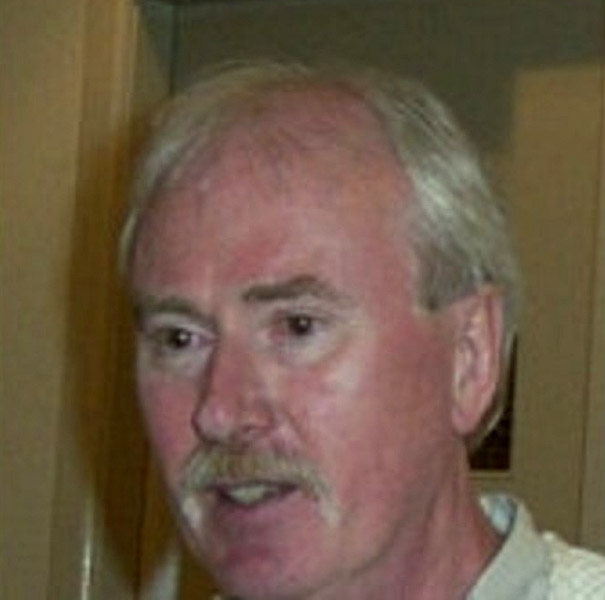
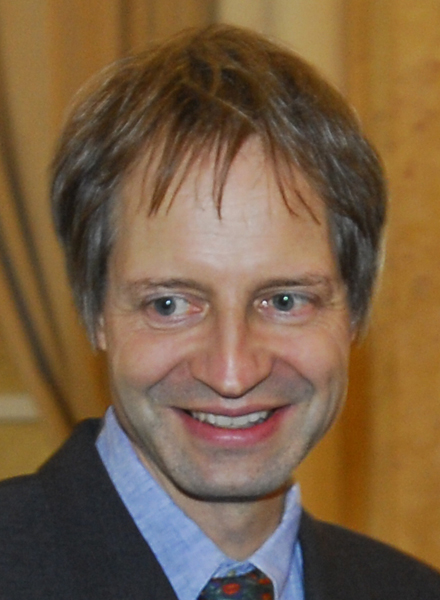
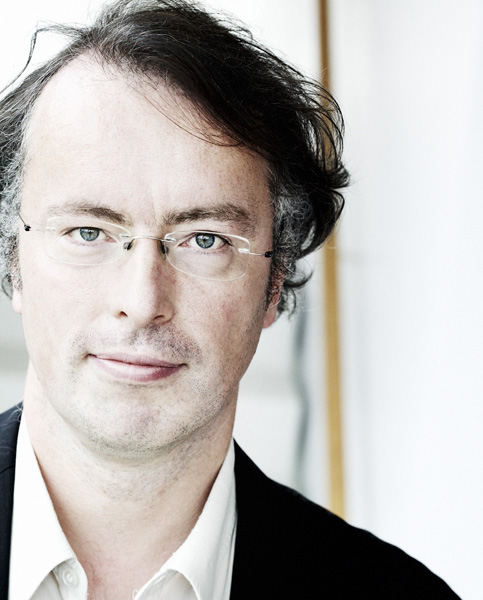
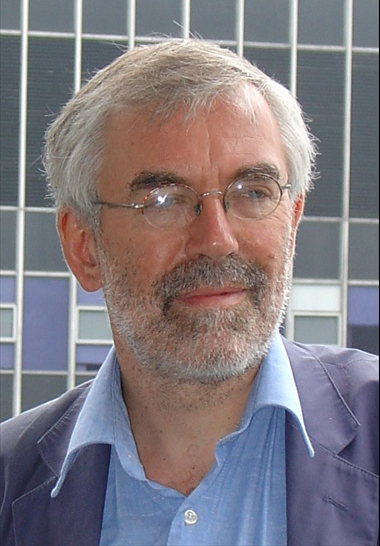
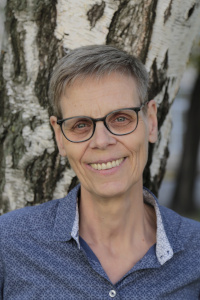
Michael Fortescue is a Professor of General Linguistics (emeritus) at the University of Copenhagen's Department of General and Applied Linguistics. He holds an associate position at St Hugh’s College, Oxford University since 2011. His career spans over four decades with academic roles including Docent in Eskimology and Head of the Department of Eskimology (1985–1987). He has conducted extensive fieldwork in Greenland, Alaska, Chukotka, and British Columbia, focusing on endangered languages like West Greenlandic, Koyukon, and Kwakwala. Education: B.A. (Slavic Languages, UC Berkeley, 1966), M.A. (Slavic Languages, UC Berkeley, 1970), PhD (Linguistics, University of Edinburgh, 1978). Research interests include linguistic typology, polysynthesis, cognitive linguistics, and the documentation of Eskimo-Aleut and Chukotko-Kamchatkan languages. He has authored major reference works such as The Oxford Handbook of Polysynthesis (2017) and edited the Comparative Eskimo Dictionary (2010). His work bridges theoretical linguistics with empirical fieldwork. Key awards include a Danish government exchange scholarship (1978) and leadership roles in the Linguistic Circle of Copenhagen. His publications emphasize language universals, historical reconstruction, and the intersection of language and cognition. Fieldwork and collaborative efforts have involved indigenous communities across the Arctic and Pacific Northwest. He has held visiting positions at institutions including UC Berkeley, La Trobe University, and the Max Planck Institute for Psycholinguistics.
Andreas Dorschel is a Professor of Music Aesthetics and Head of the Institute for Music Aesthetics at the University for Music and Performing Arts Graz (Austria) since 2002. His academic career includes visiting professorships at Stanford University (USA), Emory University (USA), and teaching roles at institutions in Germany and Switzerland. He holds a habilitation from the University of Bern (2002). His research focuses on music aesthetics, general aesthetics, theories of subjectivity, and the history of ideas. Notable awards include the Caroline Schlegel Award (2014) and Styria Research Award (2011). He has served on the Board of the Austrian Research Fund (FWF) multiple times and held a 2020–2021 Fellowship at the Berlin Institute for Advanced Study. His publications explore interdisciplinary topics such as philosophical dialogues, music's role in cultural history, and the aesthetics of functional design.
Wilhelm Frank is a Professor in the Department of Psychology at the University of Salzburg, affiliated with the Faculty of Digital and Analytical Sciences. He leads the Division of Clinical Psychology and Psychopathology and chairs the Ethics Committee. His research focuses on clinical stress, emotion regulation, and the neurobiological underpinnings of psychological disorders. Notable projects include the 'Clinical Stress and Emotion Lab' and the 'PhD Programme Imaging the Mind.' His work spans sleep's role in therapeutic processes, anxiety disorders, and hormonal influences on psychotherapy. He has secured multiple grants and published extensively in high-impact journals. Key contributions include studies on glucocorticoid-enhanced extinction therapy and sex differences in emotional expression. Frank collaborates internationally, with a focus on translational research bridging neuroscience and clinical practice. His labs emphasize interdisciplinary approaches to understanding stress, trauma, and emotional disorders.
Kathrin Probst is Professor at University of Applied Sciences Upper Austria, Hagenberg Campus, focusing on human-computer interaction and tangible interfaces. Her research develops smart textiles, sustainable fashion technologies, and novel interaction paradigms through projects like BAMBI and Active Office. Work explores the materiality of interaction, with recent investigations into textile signifiers, traceability systems for fashion, and biodesign approaches. Research demonstrates strong experimental design focus and attention to material properties. Publications advance understanding of textile-based interfaces, ergonomic workplace design, and unconventional interaction methods. Work contributes to both technical implementation and design theory. Awards include: ACM Europe Council Best Paper Award (2018) UIST Best Paper Award (2018) Organizes the Expanded conference on interactive surfaces. Research collaborations include University of Calgary and National University of Singapore.
Gabriele Traugott is Senior Lecturer at University of Applied Sciences Upper Austria, Hagenberg Campus, specializing in human-computer interaction and digital media. She researches tangible interfaces, smart textiles, and workplace technology through projects like BAMBI (Biodiversity Monitoring) and Active Office. Research explores the intersection of physical materials and digital interaction, with focus on textile interfaces, ergonomic workplace design, and sustainable technology. Recent work develops traceability systems for fashion and participatory data physicalization techniques. Publications advance understanding of haptic interfaces, sensor technologies, and unconventional interaction paradigms. Work demonstrates strong design focus and experimental prototyping approach. Awards include: ACM Europe Council Best Paper Award (2018) UIST Best Paper Award (2018) Leads technology education initiatives and organizes academic workshops. Research collaborations include National University of Singapore and University of Calgary.
Fredrik Ullén is a Professor of Cognitive Neuroscience at the Karolinska Institutet's Department of Neuroscience since 2012. He currently serves as Director of the Department of Cognitive Neuropsychology at the Max Planck Institute for Empirical Aesthetics. His previous roles at Karolinska include Professor of Cognitive Neuroscience (2010-2011), University Lecturer (2009-2010), Senior Researcher (2006-2009), and Assistant Professor (2001-2005) in the Department of Women's and Children's Health. Karolinska Institutet: Professor, Senior Researcher, Assistant Professor Max Planck Institute: Director Research Interests : Ullén's work spans cognitive neuroscience, neuropsychology, and creativity, with a focus on skill learning, genetic influences on expert performance, and brain mechanisms underlying creative cognition. He investigates how genetic factors interact with environmental variables to shape cognitive abilities and explores neural networks associated with flow states, improvisation, and individual differences in creative potential. Scientific Awards : Lifetime Fellow of the Swedish Royal Academy of Music (2007) Scientific Member of the Max Planck Society (2021) Member of Academia Europaea (1999) Award of Excellence (2001) Article Trends : Ullén’s recent publications examine creativity through genetic and neuroimaging lenses, linking polygenic risk scores for psychiatric disorders to creative traits. Earlier work investigates neural plasticity in musicians, functional connectivity in improvisation, and dopamine's role in implicit learning and flow experiences. His studies frequently employ interdisciplinary approaches combining cognitive psychology, genetics, and neuroimaging.
Francesco Lacquaniti is a Full Professor of Physiology at the University of Rome Tor Vergata and Director of the Center for Space Bio-Medicine there. He also leads the Department of Neuromotor Physiology at the Scientific Institute Santa Lucia Foundation in Rome. His academic journey includes positions at Cagliari University, University of Minnesota, and roles with the Italian National Research Council. Lacquaniti holds an M.D. and Neurology specialization from Turin University, followed by post-doctoral research in Minnesota. His research focuses on Neuroscience, Gait/Posture, and Space Physiology, particularly motor control systems, neural programming of movement, and gravitational effects on human physiology. Notable contributions include studies on locomotor primitives in infants and the neural basis of interception timing. Lacquaniti has authored over 130 peer-reviewed articles and serves on editorial boards of major journals like Experimental Brain Research and Frontiers in Exercise Physiology . Key honors include membership in Academia Europaea (2012), lifetime achievement awards in Space Biomedicine, and multiple keynote lectureships. He advises European and North American research agencies and has held leadership roles in neurosciences societies.
Carlo Arrigo Umiltà is a Full Professor of Neuropsychology at the Department of General Psychology, University of Padua, serving since 1989. He has been Dean of the Galilean School of Advanced Studies at the University of Padua from 2004 to the present. Degree in Medicine (1963), University of Bologna Degree in Psychology (1967), University of Padova His research focuses on spatial attention , executive functions and visuo-motor integration , neural bases of cognitive processes , and mathematical cognition . He has contributed to understanding the neural mechanisms underlying selective attention and cognitive control. Scientific leadership highlights include presidencies of the Italian Neuropsychological Society, European Society for Cognitive Psychology, and the International Society for the Study of Attention and Performance. He received the prestigious ‘Mind and Brain’ award in 2004. Editorial roles: Brain and Cognition , Cortex , European Journal of Cognitive Psychology , and others International research grants: NATO Study Visit Grants, European Science Foundation Twinning Grants, McDonnell-Pew Cognitive Neuroscience Program, and Royal Society Grant
Johan van der Auwera is a Professor of General and English Linguistics at the University of Antwerp since October 1997. He has held visiting professorships at Princeton University (2007), University of Leuven (2006), and institutions in Paris, Gothenburg, Hong Kong, Kyoto, and Bangkok. His career spans three phases: early focus on sentence semantics and pragmatics (1970s), postdoctoral work in European typology (1980s), and synthesis of semantic and typological research (1990s onward). Doctorate in Linguistics (1980) and Habilitation (1990) Training in Philosophy (Candidate 1975) His research centers on grammatical semantics, typology, and comparative linguistics, with a focus on mood, modality, negation, indefinites, and impersonals. He has contributed to areal typology and dialectology, publishing over 220 peer-reviewed works and editing 13 books. His publications span English, Dutch, French, German, and Serbo-Croatian. Scientific awards include: 2004 Presidency of Societas Linguistica Europaea Fall 2006 Francqui Chair at the University of Leuven October 2015 International Chair at Laboratoire d'Excellence, Paris
Manuel Schabus is a University Professor of Psychology at the University of Salzburg, specializing in sleep research, consciousness studies, and cognitive neuroscience. With over 403 publications and numerous ongoing research projects through 2027, he leads significant work in understanding sleep mechanisms and developing innovative sleep interventions. His research spans from fundamental neuroscience to practical applications for sleep disorders. Professor Schabus's work focuses on the intersection of sleep, brain activity, and cognitive functions, with particular expertise in EEG analysis and sleep architecture. His research explores how sleep affects memory consolidation, emotional regulation, and overall mental health. He has pioneered digital approaches to sleep assessment and intervention, including mobile applications and online therapy platforms that make evidence-based sleep treatments accessible to broader populations. His recent publications reveal a strong trend toward digital sleep medicine, with multiple studies on AI-enhanced wearables, mobile CBT-I applications, and personalized sleep optimization strategies. The research spans from fundamental neuroscience (examining prediction-related signals during sleep) to applied interventions (including specialized programs for Ukrainian refugees and shift workers). Franz Gerstenbrand Wachkoma Award 2020 Kurt-Zopf-Förderpreis 2018 START-Preis 2014 Professor Schabus manages numerous research grants totaling millions in funding, with current projects including the Virtual Sleep Laboratory (2024-2027), Sleep2Optimize, and specialized interventions for shift workers and Ukrainian refugees. He actively mentors junior researchers and collaborates internationally across multiple institutions. His work bridges laboratory research with real-world applications, as evidenced by his frequent media appearances discussing practical sleep optimization strategies for the general public. He leads the Center for Cognitive Neuroscience at the University of Salzburg, where his team operates both traditional sleep laboratories and develops digital sleep assessment tools. The research group combines expertise in neuroscience, psychology, computer science, and clinical medicine to tackle sleep-related challenges from multiple angles, with a strong emphasis on translating research findings into practical interventions that improve sleep health in diverse populations.
Landerl Karin is a full Professor at the Institute of Psychology , Faculty of Natural Sciences, University of Graz. Her research focuses on reading development , dyslexia , numerical cognition , and cross-linguistic educational psychology , particularly in Germanic languages. She has served as associate editor and editorial board member for prominent journals like Scientific Studies of Reading and Reading and Writing (2008–2021). Her recent work investigates the interplay between reading, arithmetic, and cognitive skills , with genome-wide studies on reading/language-related genetic variation. Email: karin.landerl@uni-graz.at Research Networks: Brain and behavior, BioHealth, Complexity of Life
Mathilde Eveline Keizer is a Professor of English Linguistics: Variation and Cognition at the Department of English and American Studies, Faculty of Philological and Cultural Studies, University of Vienna. She serves as both Vice-Director of Studies for English and American Studies and Deputy Head of the Department of English and American Studies, demonstrating significant leadership within the institution. Professor Keizer's educational background includes: MA in English language and literature, Vrije Universiteit Amsterdam (1987) PhD in English Linguistics, Vrije Universiteit Amsterdam (1992) Her primary research focuses on the theoretical framework of Functional Discourse Grammar, with particular emphasis on the Noun Phrase in English and Dutch, possessive constructions, reference and predication, definiteness, English pronouns, apposition, information structure, linguistic categorization, and semi-fixed constructions. Professor Keizer leads the FunCog research group, which investigates the intersection of functional and cognitive approaches to language structure. Her work demonstrates how linguistic structures emerge from the interaction of cognitive processes and communicative needs, providing insights into the dynamic nature of language organization. Analysis of Professor Keizer's recent publications reveals a consistent focus on English syntax within the framework of Functional Discourse Grammar. Her work spans noun phrase structure, partitive constructions, prepositional phrases, and adverbial modification, demonstrating the versatility of FDG in addressing diverse syntactic phenomena. A notable trend is her increasing attention to cross-linguistic comparisons, particularly between English and Dutch, which enriches our understanding of language universals and specifics. Professor Keizer has made significant contributions to the field through her extensive publication record, including authored and edited books that have shaped contemporary understanding of functional-cognitive approaches to grammar. Her work has appeared in leading linguistics journals and handbooks, establishing her as a prominent voice in theoretical linguistics. As an educator, Professor Keizer teaches courses on Functional Discourse Grammar, Cognitive Grammar, Linguistic Categorization, Fuzzy grammar, Linguistic models and approaches, The English Noun Phrase, English adjectives, English idioms, and English syntax. She has supervised numerous graduate students through thesis seminars and advanced courses in linguistics, contributing significantly to the development of the next generation of linguists. Professor Keizer leads the FunCog research group, which brings together scholars interested in the intersection of functional and cognitive approaches to language. The group focuses on empirical investigations of linguistic structures through the lens of Functional Discourse Grammar, fostering interdisciplinary collaboration and innovative research methodologies that bridge theoretical linguistics with practical applications in language teaching and computational linguistics.