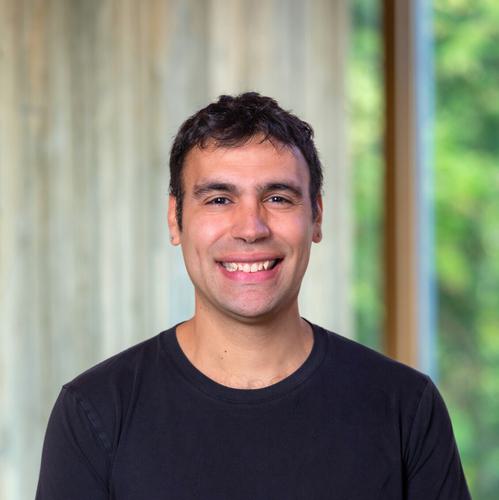
Dr. Kevin G. Jamieson is a faculty member at the University of Washington , School of Computer Science , with prior affiliations at the University of California, Berkeley (Department of Electrical Engineering and Computer Sciences) and the University of Wisconsin-Madison (Department of Electrical and Computer Engineering). His work spans machine learning, reinforcement learning, bandit algorithms, and robotics. Current university: University of Washington Academic rank: Professor His research focuses on: Bandit algorithms and sequential decision-making Optimization in non-stationary environments Reinforcement learning with real-world applications Multi-agent systems and game theory Efficient data selection for multimodal learning Human-in-the-loop AI systems Recent publications highlight his expertise in pure exploration strategies, robotic manipulation, and bridging simulation-to-reality gaps in RL. He has mentored numerous collaborators, though formal student advising details are not explicitly listed here. No scientific awards are mentioned in the provided data.
Zachariah Addison is an Assistant Professor of Physics at Wellesley College, specializing in quantum condensed matter theory. His research focuses on topological and geometric aspects of electronic dynamics, particularly in quantum materials like topological insulators, skyrmion phases, and chiral magnets. He explores phenomena such as anomalous Hall effects, nonlinear optical responses, and quantum transport using quantum field theory methods. Education: B.S. in Physics from MIT, M.S. and Ph.D. in Physics from the University of Pennsylvania. Addison teaches a range of physics courses emphasizing hands-on learning through computational tools (Mathematica, GUI) and experimental demonstrations. He actively involves students in research projects, fostering thesis work and publication opportunities. Professional contributions include peer review for journals like Physical Review B and editorship of an open-access journal special edition. He is developing a textbook series for introductory physics curricula. Outside academia, Addison is an avid classical violinist and chamber music performer. His recent research trends emphasize topological transport mechanisms in magnetic systems, with publications analyzing Hall effects in chiral magnets and quantum valley hall edge states in graphene. Key themes include the interplay of topology, spin-orbit coupling, and nonlinear responses in functional materials.
Daniel M Liberzon is the Richard T. Cheng Professor in the Department of Electrical and Computer Engineering and a Professor at the Coordinated Science Laboratory (director of the Decision and Control group) at the University of Illinois Urbana-Champaign. He also holds an affiliate appointment in the Department of Mathematics. Ph.D. in Mathematics from Brandeis University (1998), advised by Roger W. Brockett (Harvard) Undergraduate studies in Mathematics at Moscow State University (1989-1993) His research interests focus on theoretical and applied aspects of nonlinear, switched, and hybrid systems with limited information. Key areas include: Stability analysis via Lyapunov functions and Lie algebras Finite-data-rate control and topological entropy Robust synchronization and observers Stochastic switched systems Supervisory control for uncertain systems Recent scientific awards include: IFAC Fellow (2016) IEEE Fellow (2013) AACC Donald P. Eckman Award (2007) IFAC Young Author Prize (2002) NSF CAREER Award (2002) He has taught graduate courses such as ECE 517 (Nonlinear and Adaptive Control), ECE 553 (Optimum Control Systems), and ECE 586 DL (Hybrid Systems and Control). Current sponsored projects include NSF grants on switching control and AFOSR MURI on hybrid dynamics.
Kevin Leyton-Brown is a Professor of Computer Science at the University of British Columbia (UBC), holding a Canada CIFAR AI Chair at the Alberta Machine Intelligence Institute (Amii). He is also an Associate Member of the Vancouver School of Economics and a Fellow of the Royal Society of Canada, ACM, and AAAI. His research focuses on AI, machine learning, computational economics, and game theory, with notable contributions to algorithmic market design, heuristic algorithms, and large language models. He co-authored influential textbooks on multiagent systems and game theory, and his work has been recognized with prestigious awards including the INFORMS Franz Edelman Award and the Killam Teaching Prize. Education: PhD (Computer Science), Stanford University; MSc (Computer Science), Stanford University; BSc (Computer Science), McMaster University. Research Interests: Artificial Intelligence, Machine Learning, Game Theory, Computational Economics, Algorithmic Game Theory, Market Design, and Large Language Models. He has developed impactful tools like SATzilla, AutoWEKA, and Mechanical TA, and contributed to high-stakes projects such as spectrum auction design and Ugandan agricultural market platforms. Awards & Recognition: Royal Society of Canada Fellow (2023), ACM SIG-KDD Research Track Test of Time Award (2023), INFORMS Franz Edelman Award (2018), ACM Fellow (2020), AAAI Fellow (2018), Killam Teaching Prize (UBC), and numerous paper awards from top conferences like AAAI, ICML, and ACM-EC. Leadership & Affiliations: Director of UBC’s CAIDA and AIM-SI research clusters, former Chair of ACM SIG-Ecom, and advisor to companies like AI21 Labs and Auctionomics. He has held visiting roles at institutions including MIT, Harvard, and the Simons Institute.
Shahram Rahimi is a Professor and Department Head in the Department of Computer Science at the University of Alabama, College of Engineering. He concurrently holds an Adjunct Professor position at Mississippi State University. His research spans computational intelligence, machine learning, healthcare AI, cybersecurity, and quantum computing. He leads the PATENT Lab, focusing on predictive analytics, decision support systems, and AI-driven healthcare solutions. His educational background includes a Ph.D. in Computer Science. Key research areas include multi-agent systems, generative models, and predictive maintenance. He has served as an editor for journals like Scalable Computing: Practice and Experience and Informatica . Rahimi’s recent work emphasizes secure MLOps, quantum algorithms, and patient-centric medical systems. His publications address challenges in explainable AI, anomaly detection, and healthcare informatics. He actively contributes to conferences and journals in AI, cybersecurity, and computational intelligence. Editorial Roles: Scalable Computing, Engineering Letters, Informatica Labs: Predictive Analytics & Technology Integration (PATENT) Lab Key Focus Areas: Healthcare AI, Quantum Computing, Cybersecurity, Explainable Machine Learning
Thomas Ouldridge is a Royal Society University Research Fellow and Reader in Biomolecular Systems at the Department of Bioengineering, Faculty of Engineering, Imperial College London. He leads the 'Principles of Biomolecular Systems' group, which focuses on theoretical and computational modeling of complex biochemical systems, particularly exploring the interplay between molecular details and emergent behaviors like sensing, replication, and self-assembly. His work integrates natural systems analysis with synthetic biology applications, aiming to engineer artificial analogs of biological processes. His research spans interdisciplinary areas including stochastic thermodynamics, DNA-based computation, and molecular reaction networks. Key affiliations include the Physics of Life, Synthetic Biology Hub, and the Leverhulme Centre for Cellular Bionics. He has contributed to over 60 peer-reviewed articles since 2009, with recent work emphasizing energy-efficient molecular information processing and thermodynamic limits of biochemical systems. Awards: Royal Society University Research Fellowship (current). Labs/Teams: Principles of Biomolecular Systems Group, collaborating with multiple centers including the Centre for Synthetic Biology and Institute of Chemical Biology. Grants/Positions: Maintains research funding through the Royal Society and UKRI grants, focusing on non-equilibrium biomolecular systems and synthetic biology tools. Recent publications highlight advances in DNA templating networks, stochastic thermodynamic modeling of computation, and optimal protocols for molecular copying systems. His work bridges foundational physics with applied biotechnology, aiming to push the boundaries of synthetic biological engineering.
Robert Dodds Jr. is a Research Professor in the Department of Civil and Environmental Engineering at the University of Tennessee, Knoxville, within the Tickle College of Engineering. His work is centered on fracture mechanics, computational modeling of crack growth, and material failure in advanced alloys and functionally graded materials. His research interests include: Fracture and failure analysis in ductile and brittle materials Cohesive zone modeling and delamination in aluminum-lithium alloys 3D finite element modeling of crack propagation under small-scale yielding Thermomechanical and cyclic plasticity modeling Fracture in functionally graded materials with mixed-mode loading The analysis of his publications from 2002 to 2018 reveals a strong focus on computational fracture mechanics, particularly on cohesive models, T-stress effects, and delamination in aerospace-grade materials. His work bridges experimental validation with high-fidelity simulations, emphasizing engineering applications in structural integrity. His scientific awards include: National Academy of Engineering George R. Irwin Medal (ASTM) Fracture Mechanics Medal (ASTM) Nathan M. Newmark Medal (ASCE) Walter L. Huber Award (ASCE) Fellow, Engineering Mechanics Institute (ASCE) Dr. Dodds has collaborated extensively with researchers such as C. Ruggieri, M. Messner, A. Beaudoin, J. Sobotka, and G. Paulino. While no formal list of advisees is provided, his mentorship is evident through co-authored student-level research. He has not mentioned specific grants or funding sources in the provided text. His research likely involves a computational mechanics lab or research group focusing on fracture simulation and material modeling, though no lab name is specified.
Professor Matthew Simpson is a leading figure in applied mathematics at the School of Mathematical Sciences, Faculty of Science, Queensland University of Technology (QUT). He holds the position of Professor of Applied Mathematics and is an Australian Research Council (ARC) Future Fellow, reflecting his sustained research excellence. His work bridges mathematical theory and biological applications, particularly in cell migration, tissue invasion, and multiscale modeling. BE (Environmental) Honours 1, University of Newcastle (1995–1998) PhD (with Distinction), Environmental Engineering, University of Western Australia (2000–2003) Research Fellow, Department of Mathematics and Statistics, University of Melbourne (2003–2006) ARC Postdoctoral Fellow, University of Melbourne (2006–2009) Lecturer (2010–2011) and Senior Lecturer (2011–2013), QUT Associate Professor (2013–2014), QUT Professor and ARC Future Fellow (2014–present), QUT Matthew Simpson’s research focuses on mathematical and computational modeling of biological systems , particularly collective cell motion, diffusion processes, and reaction-diffusion dynamics. His interests span multiscale modeling , random walk processes , cell biology , and numerical and computational mathematics . He develops and analyzes models to understand phenomena such as wound healing, cancer progression, and tissue engineering. His recent publications (2023–2025) demonstrate a strong trend toward integrating data-driven modeling , likelihood-based inference , and equation learning with traditional mechanistic models. These works emphasize parameter identifiability , uncertainty quantification , and prediction robustness in biological contexts. Themes include sharp-fronted wave propagation, mechanical cell interactions, tumor spheroid formation, and generalized diffusivity in food drying, showcasing the breadth and depth of his modeling expertise. Among his key accolades are: J.H. Michell Medal (2012) – Awarded by ANZIAM for distinguished research by an early-career applied mathematician in Australia and New Zealand. ARC Future Fellowship (2013–2017) – For the project 'New data-driven mathematical models of collective cell motion' (FT130100148). Professor Simpson has also played significant editorial and leadership roles, including: Executive Associate Editor, Journal of Engineering Mathematics Academic Editor, PLoS ONE Editorial Board Member, ANZIAM Journal Co-chair of the 2015 ANZIAM meeting He has supervised PhD students on topics such as moving boundary problems, first-passage times, stochastic simulations, and curvature-dependent growth in biological systems. His research projects have been funded by competitive Australian grants (ARC DP and FT schemes), including studies on 3D cell migration, ghrelin’s role in cell invasion, and epithelial-to-mesenchymal transition in cancer and wound healing. He is actively involved in developing computational tools for biological modeling and promoting best practices in scientific publishing.
Paul O'Gorman is a Professor at the Department of Earth, Atmospheric and Planetary Sciences (EAPS) at the Massachusetts Institute of Technology. He currently serves as the Faculty Chair of the EAPS Committee on Education and as the EAPS Graduate Officer. His research focuses on understanding how climate change affects atmospheric circulation and precipitation patterns, particularly extreme events. Education: BA in Theoretical Physics, Trinity College Dublin MSc in High-Performance Computing, Trinity College Dublin PhD in Aeronautics with Minor in Applied Mathematics, California Institute of Technology Research Interests include atmospheric dynamics, hydrological cycle responses to climate change, moist convection, and the application of machine learning to climate modeling. His work addresses regional variability in extreme precipitation, vertical warming profiles in the tropics, and the fluid dynamics of land-ocean warming contrasts. Scientific Awards : Bernhard Haurwitz Memorial Lectureship (2023), American Meteorological Society MIT School of Science Graduate Teaching Prize (2018) Recent Contributions include co-leading the MIT Climate Grand Challenges flagship project "Preparing for a new world of weather and climate extremes" , which develops tools for predicting climate extremes and transitioning to low-carbon resources. He has also explored the asymmetrical generalization capabilities of machine learning algorithms in climate models under warming versus cooling scenarios.
Ruth Urner is an Associate Professor in the Department of Electrical Engineering and Computer Science at York University's Lassonde School of Engineering. She holds a PhD in Computer Science from the University of Waterloo (2013) and completed postdoctoral research at Max Planck Institute for Intelligent Systems (Germany), Carnegie Mellon University, and Georgia Tech. She was a Simons-Berkeley Fellow at the Simons Institute in 2017. Research Focus: Dr. Urner develops mathematical foundations for machine learning paradigms including semi-supervised/active learning, transfer learning, and adversarial robustness. Her current work addresses societal impacts of ML through interpretability and fairness frameworks. She leads projects on strategic classification, robust PAC learning, and calibrated model evaluation. Awards & Leadership: Simons-Berkeley Fellowship (2017) Best Paper Award at NIPS 2015 Workshop on Transfer Learning Organizer: Women in Machine Learning Theory workshops (COLT/ALT) Program Committee: NeurIPS, ICML, COLT, ICLR, AISTATS Teaching & Advising: She teaches Machine Learning Theory, Computational Logic, and Introduction to ML at York University. Current student advisees include Master's candidate Alireza Torabian. She has lectured at international summer schools including Hausdorff School on Algorithmic Data Analysis (Germany) and SMILES Summer School (Russia). Affiliations: Faculty affiliate at Vector Institute (Toronto) and collaborator with Max Planck Institute systems. Her lab investigates theoretical guarantees for learning algorithms under distribution shifts and adversarial conditions.
Alan Sutherland is a Professor of Economics at the University of St Andrews' Business School. He specializes in international macroeconomics, monetary economics, and financial market integration. His research focuses on the macroeconomic implications of exchange rate policies, monetary policy regimes, and cross-country financial linkages. He leads projects funded by the Economic & Social Research Council, including 'The Macroeconomics of Financial Globalisation' (2011-2015) and 'Monetary Policy Welfare and International Financial Markets' (2006-2007). Research Interests: International macroeconomic policy design Exchange rate determination Financial market integration effects Numerical methods for macroeconomic modeling His recent work emphasizes the role of international financial flows in transmitting economic shocks between countries. He has developed influential solution methods for analyzing multi-country general equilibrium models. Key contributions include frameworks for understanding optimal monetary policy under incomplete financial markets and asymmetric information conditions. Scientific Recognition: 2013 Fellow of the Royal Society of Edinburgh Recipient of 2 ESRC-funded research grants
Frédéric Robert-Nicoud is Full Professor of Political Economy at the Geneva School of Economics and Management (GSEM) , University of Geneva. He has held academic positions at HEC Lausanne and the London School of Economics (LSE), with visiting roles at CEMFI, CERAS, CORE, Princeton, and other institutions. His research focuses on Economic Geography, Urban Economics, and International Trade , with significant contributions to agglomeration theory, trade liberalization, and spatial sorting. Education: PhD in Economics, London School of Economics (2002) Master's in Econometrics and Mathematical Economics (Summa Cum Laude, 1999) Master's in International Relations (HEID, 1996) Bachelor's in Economics (University of Geneva, 1994) His research interests explore the interplay between trade liberalization, urban inequality, tech clusters, and labor market dynamics. Recent work analyzes climate change's geographic implications and structural transformation in cities. He has developed frameworks for understanding highway impacts on spatial sorting, agglomeration effects, and trade's role in unemployment. Key scientific awards include: CEPR Fellow Affiliated with Spatial Economic Research Centre (SERC) Former Editor of Journal of Economic Geography (6 years) Former Associate Editor of Review of International Economics (4 years) Member of Conseil scientifique des économistes His grants and fellowships span NBER, CEPR, and SERC affiliations. He has presented at major conferences including the Urban Economics Association Annual Meetings, European Economic Association Congress, and World Trade Institute seminars.
Huy T Tran is an Assistant Professor in the Department of Aerospace Engineering at the University of Illinois at Urbana-Champaign's College of Engineering, with additional appointments at the Applied Research Institute. His research focuses on the intersection of robotics, artificial intelligence, and multi-agent systems, with applications spanning autonomous navigation, critical infrastructure resilience, and intelligent transportation. Dr. Tran earned his Ph.D. in Aerospace Engineering from Georgia Institute of Technology in 2015, following advanced degrees from Georgia Tech and University of Wisconsin-Madison. His academic journey includes research assistant professor positions before achieving his current assistant professor role in 2021. He previously worked as a Senior Multi-Disciplinary Systems Engineer at The MITRE Corporation and served as a Visiting Scholar at the Air Force Institute of Technology. His research interests encompass Autonomy, Reinforcement Learning, Artificial Intelligence, Machine Learning, Robotics, Multiagent Systems, Intelligent Transportation Systems, and Critical Infrastructure Resilience. As director of the Lab for Intelligent Robots and Agents (LIRA), he leads cutting-edge research in autonomous systems that interact with humans and other robots. His work has evolved from foundational resilience modeling in aerospace systems toward increasingly sophisticated AI applications in multi-robot coordination and explainable decision-making. Dr. Tran's publication record demonstrates a clear trajectory toward explainable AI and human-AI collaboration, with recent work focusing on generating explanations for reinforcement learning policies, coordination in ad hoc teams, and neuro-symbolic approaches to robot policy interpretation. His research bridges theoretical advances with practical applications in air traffic control, field robotics, and critical infrastructure management. Best Paper Award: Theoretical (2016 Complex Adaptive Systems Conference) Selected for oral presentation at IROS 2023 Workshop 27% full paper acceptance rate at AAMAS 2022 44% acceptance rate at ICRA 2020 As an educator, Dr. Tran teaches core aerospace courses including Computational Systems Engineering, Aerospace Numerical Methods, and Reinforcement Learning. He has secured significant research funding from NASA's Transformational Tools and Technologies program, ARL A2I2 program, ONR Science of AI program, and DARPA. His current projects span ad hoc teaming in multi-robot systems, collective autonomous air mobility, hierarchical reinforcement learning, and interpretable AI agents.
Elena Asparouhova is a Professor of Finance at the David Eccles School of Business , University of Utah. She holds a doctorate in Social Sciences from the California Institute of Technology and a Masters in Statistics from Sofia University , Bulgaria. Her research focuses on theoretical and experimental financial economics , including asset pricing theory , experimental finance , general equilibrium theory , and econometrics . Recent work examines financial market competition under delegation , information percolation in dark markets , and human-robot interaction in trading . Best Paper Award, Journal of Financial Markets (2025) Best Paper Award, Review of Finance (2024) Best Paper, Behavioral Finance and Capital Markets Conference, Australia (2025) Continuous National Science Foundation funding for 10+ years Contact: e.asparouhova@utah.edu , University of Utah, Salt Lake City, Utah 84112.
Luís F. Costa is a Senior Associate Professor at the Lisbon School of Economics & Management (ISEG) of the University of Lisbon. Since 2015, he has served as Editor-in-Chief of the Portuguese Economic Journal . His research focuses on macroeconomics, dynamic general equilibrium, fiscal policy, business cycles, and market power. He is a co-founder of the Lisbon Macro Club and holds a DPhil from the University of York. University: University of Lisbon School: Lisbon School of Economics & Management Academic Rank: Senior Associate Professor Research Interests: Luís Costa's work spans macroeconomic theory, with emphasis on dynamic models, imperfect competition, and fiscal policy effectiveness. His publications analyze topics such as markup fluctuations, market power in business cycles, and the role of sunspot equilibria in macroeconomic dynamics. He has contributed to policy discussions in Portugal through special journal issues and collaborative projects. Recent Publications (Trends): His 15 most recent works include analyses of pandemic-induced recessions, business cycle accounting, and the impact of market power on fiscal multipliers. Key themes are macroeconomic modeling, policy evaluation, and empirical studies on OECD and Portuguese economies. Supervisions: Advised Master's students on topics like market power in Portugal, fiscal multipliers, and business cycle accounting in Angola. Visiting Positions: Held visiting professorships at Universidade Eduardo Mondlane (2016), Cardiff Business School (2016), Universidade Lusiada de Angola (2013), and University of York (2005).