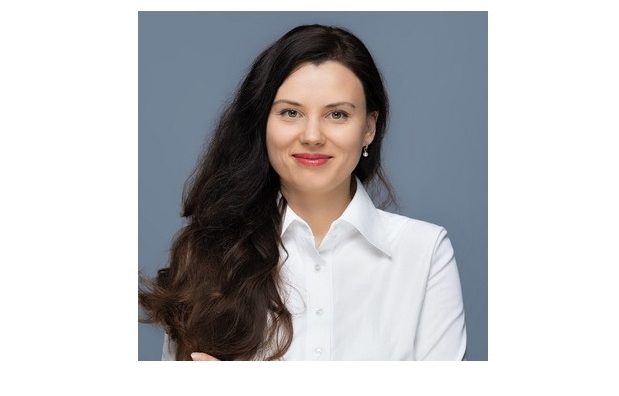
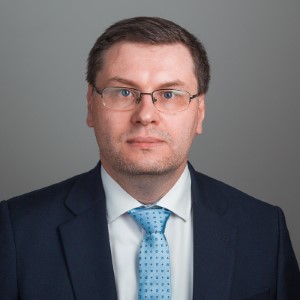
Sakari Melander is a Professor at the Faculty of Law , University of Helsinki, specializing in Criminal Law , with a focus on constitutionalization, Europeanization, and sentencing policies. His work bridges theoretical criminal law with practical legislative and policy challenges. Key research areas include EU criminal law, constitutional constraints on criminal legislation, and general doctrines of criminal law. He has extensive experience in parliamentary legal consultation, providing expert opinions to Finland’s Legislative Committees (e.g., on immigration control, anti-corruption directives, and digital evidence handling). Recent publications address topics like EU corporate sanction policies, constitutionalization of criminal law, and reforms in Finnish sentencing systems. His 2025 article in the New Journal of European Criminal Law explores balancing administrative and criminal sanctions in the EU. Scientific awards include: Hilkka ja Otto Brusiin Foundation Thesis Prize (2001) Magister Bonus – Good Teacher Award (2014) Primustohtori Award (2010) Year’s Teacher (2010) Year’s Opponent (2008) He leads research projects such as Criminal Law Under Pressure: Differentiation and Harmonization (2012-2015) and Assessment of Human Trafficking Sanction Practices (2021-2022), and supervises doctoral theses on criminal law topics.
Professor Brent Mittelstadt is a leading academic in data ethics and AI governance at the University of Oxford's Oxford Internet Institute (OII), serving as Professor of Data Ethics and Policy and Director of Research. He coordinates the Governance of Emerging Technologies (GET) programme, focusing on ethics, law, and technology interplay. His work bridges academic research with policy impact, contributing frameworks like 'counterfactual explanations' and fairness metrics ('Conditional Demographic Disparity') used globally. He leads high-profile projects such as Trustworthiness Auditing for AI and A Right to Reasonable Inferences in Advertising and Financial Services. Research interests span AI ethics, medical ethics, technology governance, and non-discrimination law. He has pioneered ethical frameworks addressing algorithmic bias, GDPR compliance, and AI accountability. His work has influenced policy bodies like the UK Information Commissioner’s Office and the European Commission, and is implemented by tech giants such as Google and Microsoft. Awarded O2RB Excellence in Impact Awards (2018, 2021) and PLSC Best Paper (2019) Funded by Wellcome Trust, Sloan Foundation, and others Advisory roles for NHSx, GSK Consumer Healthcare, and regulatory bodies Recent work focuses on AI regulation (EU AI Act), generative AI ethics, and healthcare AI governance. He co-leads the OxonFair toolkit for algorithmic fairness and investigates societal impacts of deepfake proliferation and large language models.
Bram Duivenvoorde is an Associate Professor at the Molengraaff Institute for Private Law , Utrecht University , specializing in advertising law , consumer law , and e-commerce . He holds a PhD from the University of Amsterdam (2014) and combines academic research with practical legal experience, including roles as an attorney-at-law at Hoogenraad & Haak (2014-2020) and interim legal counsel at Heineken International (2018). His work focuses on digital society , personalized marketing , and AI regulation in consumer contexts. Education : PhD (UvA, 2014), LLM (Utrecht, 2009), LLB (Utrecht, 2007) Key Research Areas : Advertising Law, Consumer Law, Digital Regulation, EU Law, Personalized Marketing Recent publications analyze generative AI , deepfakes , and DSA compliance , emphasizing consumer protection in evolving digital landscapes. He supervises PhD candidates Thijs Kelder and Jorn Torenbosch and leads the LLM Honours Programme . Duivenvoorde contributes to European consumer law through RENFORCE initiatives and serves as Editor for journals like Intellectuele Eigendom en Reclamerecht .
Stephen Meisenbacher is a Research Associate at the Technical University of Munich (TUM) , affiliated with the School of Computation, Information and Technology and the Department of Computer Science, I19 . He has been part of the Software Engineering for Business Information Systems (SEBIS) chair since March 2022. His research focuses on Privacy-Preserving Natural Language Processing (NLP) , Differential Privacy , and Privacy-Enhancing Technologies (PETs) , with a particular interest in their integration into software development and business applications. His work also explores Hybrid, Expert-Driven Classification Systems and Usable Privacy solutions. Stephen’s recent publications address trends in AI Privacy Risks , Text Rewriting with DP , Legal AI Use Cases , and Data Protection Compliance . He has contributed to GDPR-related research and PETs adoption in small enterprises. His teaching includes Natural Language Processing seminars and Software Engineering lecture courses for Master’s and Bachelor’s students at TUM. He also organizes Entrepreneurship for Small Software-Oriented Enterprises seminars. Stephen holds a Master’s in Informatics from TUM (DAAD Graduate Scholarship) and a Bachelor’s in Computer Science from the University of Notre Dame, with additional studies in German Language and Literature. Contact: stephen.meisenbacher@tum.de | LinkedIn
Timo Minssen is Professor of Law at the University of Copenhagen (UCPH) and the Founding Director of UCPH's Center for Advanced Studies in Bioscience Innovation Law (CeBIL). He also holds affiliations as an LML Research Affiliate at the University of Cambridge and an Inter-CeBIL Research Affiliate at Harvard Law School's Petrie-Flom Centre. With extensive expertise in Intellectual Property, Competition, and Regulatory Law, Minssen focuses on the legal aspects of emerging health and life science technologies, including genome editing, big data, artificial intelligence, and quantum technology. His educational background includes a German law degree (Staatsexamen) from Georg-August-University in Göttingen, and Swedish biotech & IPR related LL.M., LL.Lic., and LL.D. degrees from Lund University and Uppsala University. His PhD thesis on the patentability of biopharmaceutical technology in the US & Europe received the prestigious Swedish King Oscar award. 2024: TUM Global Visiting Professor, Technical University of Munich (Germany) 2016: Visiting Research Fellow, University of Cambridge (UK) 2014: Visiting Research Fellow, University of Oxford (UK) 2013-14: Visiting Scholar, Harvard Law School (US) 2012: LL.D. - Doctor of Laws (Swedish "juris doktor"), EU/US patent law, Lund University, Sweden Minssen's research spans AI & Big Data in Health & Life Sciences, Sustainable and responsible innovation & tech transfer, Pharmaceutical-, Life Science- & Biotech Law, Comparative European & US Patent Law, Intellectual Property Law & Open Innovation, and EU Competition- & US Antitrust Law. His work addresses legal issues throughout the lifecycle of health and life science products and processes, from R&D regulation to technology transfer and commercialization. His extensive publication record includes 7 books and over 200 articles and book chapters published in leading journals such as Science, Nature Biotechnology, JAMA, and Harvard Business Review. His research has been featured in The Economist, Financial Times, and other major media outlets. Minssen's recent work shows a strong focus on AI regulation, quantum technology law, and data governance in health contexts, reflecting the evolving landscape of technology and law. Scientific Awards and Recognition King Oscar award for best Jur. Dr. thesis (2014) Jorcks Fonds Forsknings Pris (Jorck's Foundation Research Prize) (2017) Awapatent Research Prize (2009) Max Planck Research Scholarship (2005) Visiting Scholar appointments at Harvard Law School, University of Oxford, and University of Cambridge Recipient of a Novo Nordisk Foundation Grant for a "Collaborative Research Program in Biomedical Innovation Law" (2018) As an advisor, Minssen serves international organizations including the WHO, WIPO, and EU Commission. He has supervised numerous PhD students in areas including pharmaceutical law, biotechnology patents, and antimicrobial resistance. His current research projects include the Novo Nordisk Foundation's International Collaborative Bioscience Innovation & Law (Inter-CeBIL) Programme (50 million DKK), CLASSICA: EU Horizon Project on AI-assisted surgery, and AI@Care: Law and Ethics and Algorithmic Bias in Healthcare. Minssen leads the Center for Advanced Studies in Bioscience Innovation Law (CeBIL), which serves as a hub for interdisciplinary research on the intersection of law, technology, and innovation in the health and life sciences. The center collaborates with institutions worldwide to address pressing legal challenges in emerging technologies.
Norman Sadeh is a Professor in the School of Computer Science at Carnegie Mellon University (CMU), where he has made significant contributions to cybersecurity, privacy, and AI research. He has co-founded and co-directed several groundbreaking graduate programs at CMU, including the Privacy Engineering Program (2012-present), the Ph.D. Program in Societal Computing (2003-2013), and the MBA track in Technology Strategy and Product Management (2005-2017). Carnegie Mellon University, School of Computer Science Software and Societal Systems Department CyLab Security and Privacy Institute Manufacturing Futures Institute Dr. Sadeh received his Ph.D. in Computer Science at CMU with a major in Artificial Intelligence and a minor in Operations Research. He holds an M.Sc. in computer science from the University of Southern California and a BS/MS degree in electrical engineering and applied physics from the Free University of Brussels (Belgium) as 'Ingénieur Civil Physicien.' Professor Sadeh's research spans cybersecurity, online privacy, Human-AI Interaction, AI governance, mobile computing, the Internet of Things, user-oriented machine learning, and language technologies. He is particularly known for his pioneering work on AI-based privacy enhancing technologies, including privacy assistants, automated privacy compliance tools, and NLP-based privacy solutions. His work has influenced the design of privacy features at major technology companies including Apple, Google, and Facebook/Meta, as well as privacy policies at regulatory agencies like the Federal Trade Commission and the California Office of the Attorney General. Analysis of his recent publications shows a strong focus on practical privacy solutions, particularly in mobile and IoT contexts, with an emphasis on making privacy more usable and understandable for end users. His work bridges technical innovation with policy implications, addressing both the technological and human aspects of privacy protection. 2018 Outstanding Entrepreneur of the Year award from the Pittsburgh Venture Capital Association Test of time award by the AAAI Conference on Web and Social Media (ICWSM) Gartner Group's Magic Quadrant leader in Security Awareness Computer-Based Training for 4 consecutive years Deloitte's Technology Fast 500 recognition for 3 consecutive years Professor Sadeh has advised numerous students, including PhD candidates like Aerin (Shikhun) Zhang, whose dissertation focused on understanding diverse privacy attitudes. His research has been funded through various grants, including NSF SaTC projects, and has resulted in technologies that protect tens of millions of users worldwide. He also founded Wombat Security Technologies, which was acquired by Proofpoint in 2018 and whose technologies are used by over 75% of Fortune 100 companies. Professor Sadeh leads several research initiatives including the Privacy Engineering Program, the Usable Privacy Policy Project, the Personalized Privacy Assistant Project, and CMU's Privacy Infrastructure for the Internet of Things. His Mobile Commerce Lab and E-Supply Chain Management Lab have produced influential research that has been commercialized by major organizations including IBM, Raytheon, Boeing, and the U.S. Army.
Konrad Kollnig is an Assistant Professor at Maastricht University’s Faculty of Law, specializing in the intersection of law and technology. He leads the RegTech4AI project, which combines legal and technical methods to address challenges in the AI and digital platforms sector. His academic background includes a PhD and MSc from the University of Oxford and a BSc from RWTH Aachen, with his PhD thesis winning the prestigious Stefano Rodotà Award 2024. Research focuses on market power analysis in digital platforms, ethical AI governance, and privacy-preserving technologies. He developed the TrackerControl app (200,000+ downloads) to expose app tracking practices. His work has influenced EU, OECD, US FTC, and other regulatory bodies, and been featured in Forbes, Wired, and New Scientist. Key achievements include winning the United Nations Privacy Competition 2022 and the Best Student Privacy Paper Award 2022. He holds a five-year RegTech4AI project grant (€2.1M) funding six researchers. Talks and collaborations span institutions like Georgetown University, CNIL, and the Council of Europe. His interdisciplinary approach bridges computer science, law, and policy to address systemic risks in digital ecosystems.
Dr. Edoardo Celeste is an Associate Professor of Law, Technology and Innovation at Dublin City University's School of Law and Government. He leads the Erasmus Mundus Master in Law, Data and Artificial Intelligence (EMILDAI) and serves as Deputy Director of the Dublin European Law Institute. PhD, University College Dublin Law degrees: University of Rome 'La Sapienza', University of Paris II 'Panthéon-Assas', King’s College London His research focuses on digital rights, constitutionalism in digital contexts, and the intersection of law, technology, and sustainability. He coordinates the DCU Law and Tech Research Cluster and co-founded the Digital Constitutionalism Network. Recent publications examine digital sovereignty, AI sustainability, and constitutional responses to social media exclusion. His 2022 book Digital Constitutionalism: The Role of Internet Bills of Rights (Routledge) established him as a leading voice in the field. Irish Research Council Early Career Researcher of Year Award (2022) Principal Investigator for Cross-Border Data Protection Network (IRC/ESRC funded) Facebook Research grant for Digital Constitutionalism: Content Governance Standard project He supervises PhD students in digital rights, data protection, platform regulation, and digital sustainability while holding affiliations with the ADAPT Centre and UCD Centre for Human Rights.
Amelie Sophie Berz is a DPhil in Law candidate at Worcester College, University of Oxford, researching AI's impact on tort law standards of care. She concurrently serves as a Research Associate for Professor Philipp Hacker (Viadrina), Stipendiary Lecturer in Contract Law at St John's College, and Tutor in Tort Law at Exeter College. Previously, she held lecturing roles at New College and Keble College. Her research is funded by Oxford’s Faculty of Law and focuses on private law theory, behavioral science integration, and AI regulation. Amelie holds a Magister Iuris from Heidelberg University (2022) and a MPhil in Law from Brasenose College, Oxford. She has edited multiple journals, including the Heidelberg Student Law Review, and contributes to the Oxford Business Law Blog. Her work spans EU AI regulation critiques, climate policy challenges, and transparency standards in AI systems. She co-convenes the Private Law Postgraduate Research Students Discussion Group and engages in comparative private law studies. Her publications address topics like the EU AI Act’s flaws, LGAIM transparency, and AI’s obligations in tort law. She has reviewed foundational legal texts and produced pedagogical material for corporate and criminal law education.
Lokke Moerel is a Full Professor of Global ICT Law at Tilburg University and Senior Counsel at Morrison & Foerster, specializing in data protection and cybersecurity. She leads the EU-wide binding data protection rules initiative since 2004 and chairs the Dutch Cyber Security Council. Her work integrates legal frameworks with technological advancements, focusing on GDPR compliance, corporate governance, and ethical challenges in digital transformation. Education & Career: Started career at De Brauw Blackstone Westbroek (IP specialist for IBM/Philips/Intel, 1990s) Partner at Linklaters London (2000–2002), managing global licensing and IT contracts Joined Morrison & Foerster as Senior Counsel in 2015, focusing on privacy and cybersecurity Research Interests: Data protection law, blockchain privacy, AI ethics, metaverse regulations, and corporate governance in digital environments. Her work critically evaluates existing frameworks for emerging technologies, advocating for adaptive legal solutions. Recent Contributions: Active in projects like THESEUS (cybersecurity patching) and "Regulating Socio-Technical Change" (EU law & digital innovation). Publicly engaged through media commentaries on data dilemmas and GDPR challenges. Awards & Recognition: Market-leading data protection lawyer per Chambers Global and Legal 500 Author of the seminal textbook Binding Corporate Rules (Oxford UP, 2012) Advisory Roles: Member of the Dutch Cyber Security Council, Board of Advisors for the Netherlands Atlantic Association, and supervisory board member of Mauritshuis Museum.
Katažyna Bogdzevič is a Professor at Mykolas Romeris University (MRU) Law School, specializing in Private International Law , European Law , Human Rights , and Environmental Law . She leads the MRU Human Rights LAB and contributes to the Environmental Management Research LAB, focusing on legal frameworks for ecosystem services, climate change mitigation, and stakeholder engagement. Key Research Themes: Integration of Private International Law with Environmental Law , analysis of legal conflicts in nature-based solutions, and name rights under international human rights conventions. Policy Engagement: Serves as advisor to Lithuania's Minister of Justice Ewelina Dobrowolska , emphasizing knowledge transfer to legislative and judicial practices. Email: roffice@mruni.eu
Vadims Mantrovs is an Associate Professor at the University of Latvia Faculty of Law, where he serves as Director of the Institute of Legal Science, Director of the Professional Master's Study Program 'Law', and Chairman of the Humanities and Social Sciences Research Ethics Committee. With a Doctor of Juridical Science degree (Dr. iur.), he teaches courses including General Part of Civil Law, Obligations Law, Insurance Law, Consumer Protection Law, and Intellectual Property Law. His research focuses on private law with particular expertise in civil law, law of obligations, intellectual property, consumer protection, insurance law, commercial law, risk regulation, and food product regulation. Mantrovs has made significant contributions to understanding the implementation of EU directives in Latvian legal systems, especially regarding consumer protection in digital environments and insurance law. His publication record shows a strong trend toward contemporary legal challenges in digital commerce, consumer protection, and harmonization of Baltic States law with EU directives. Recent works particularly address the implementation of the 2019 Consumer Sales Directives, digital content regulation, and intellectual property challenges in the modern economy. Expert in law of the Latvian Council of Sciences (since 2012) Member of the Council of Humanities and Social Sciences of the University of Latvia Member of the Law Promotion Council of the University of Latvia Member of the State Unified Lawyer Professional Qualification Examination Commission Editorial board member of Journal of the University of Latvia Law GRUR International national correspondent Professor Mantrovs has led several significant research projects including 'Strengthening of High Level of Consumer Protection in the Digital and Data Age' (2020-2021) as project manager, served as national coordinator for the European Commission's 'TRAIL' program on multilingual transnational training in EU civil and commercial law, and is a lead participant in the state research program 'Cutting-edge knowledge and solutions to study demographic and migration processes for the development of Latvian and European society' (DemoMigPro, 2022-2024). As Director of the Institute of Legal Science at the University of Latvia Faculty of Law, he oversees a major research center that coordinates legal scholarship across various specializations and contributes to national legal development through expert opinions and policy recommendations.
Kamrul Faisal serves as a Doctoral Researcher and Grant-funded researcher within the Faculty of Law at the University of Helsinki. His scholarly work focuses on the dynamic interplay between technology, law, and policy, with expertise in digital rights, cybersecurity, telecommunications legislation, and data privacy. Faisal is committed to advancing equitable legal frameworks for the digital era through rigorous research and ethical analysis. Research Interests Faisal's research centers on data protection law, particularly the General Data Protection Regulation (GDPR), and its application to vulnerable groups including children. He investigates the tensions between privacy rights and freedom of expression in criminal data contexts, and critically assesses national data protection measures such as Finland's biometric data proposals. His work also explores vulnerability theory within data protection frameworks and the intersection of human rights with digital technologies. Publication Trends His recent scholarly output (2024-2025) reveals a concentrated effort on GDPR-related challenges, with publications addressing children's data rights, biometric surveillance risks, and the reconciliation of privacy with other fundamental rights. Faisal's work demonstrates a methodical approach to identifying gaps in current regulations and proposing nuanced solutions for complex digital society issues. Scientific Awards Eino Jutikkala Grant awarded by the Finnish Academy of Science and Letters (2022) Research Projects and Activities Faisal contributes to major research initiatives including GenAI: Generation AI (funded by the Research Council of Finland) and Korpisaari 2785/31/2019 Neutral Host Pil (funded by Business Finland). He is an active participant in academic discourse, having engaged in 39 activities such as conference organization, peer review for journals like Digital Policy, Regulation and Governance, and invited talks on data protection. His role as a Certified Peer Reviewer by Elsevier underscores his commitment to scholarly rigor.
Dr. Bakht Munir is a Postdoctoral Fellow at the University of Kansas School of Law and a faculty member at the University of the Punjab. His research focuses on the intersection of AI and constitutional governance, law-technology interfaces, and public policy. He holds a Ph.D. from the International Islamic University, Islamabad, and has authored over 45 peer-reviewed articles and the book *Artificial Intelligence (AI) for Lawyers*. Education: Ph.D., International Islamic University, Islamabad (2019) LL.M., University of the Punjab, Lahore (2010) Master's in Pashto Language & Literature, University of Malakand (2011) Master's in International Relations, University of Peshawar (2005) LL.B., University of Peshawar (2007) B.A., University of Peshawar (2003) Research Interests: Dr. Munir bridges AI ethics, constitutional governance, and Islamic jurisprudence. He critiques AI bias, judicial activism in Pakistan, and comparative regulatory frameworks. His work addresses AI integration in legal systems, data protection laws (GDPR/CCPA), and institutional reform. Recent Scholarship Trends: His 2023–2025 articles analyze AI hallucinations in legal tools, Islamophobia in AI datasets, and judicial independence in Pakistan. He emphasizes cross-jurisdictional comparisons between U.S. and Pakistani legal systems. Teaching & Supervision: He teaches AI, constitutional law, legal history, and Islamic jurisprudence. He has supervised LL.M. theses on critical legal issues, contributing to the next generation of legal scholars.
Dr. Tom Boot is an Associate Professor at the Department of Economics, Econometrics & Finance at the University of Groningen. He holds a PhD in Econometrics from Erasmus University Rotterdam (2017) and an MSc in Econometrics from the same institution (2012), along with an MSc in Physics from the University of Groningen (2010). His research focuses on econometric theory applied to macroeconomic forecasting, high-dimensional data analysis, and causal inference. He has been recognized with the Veni grant (2021–2024) for his work on forecasting methodologies. Boot’s research interests include improving forecast accuracy through methods like subspace projections, structural break modeling, and privacy-aware marketing analytics. His recent work explores privacy-utility trade-offs in data-driven marketing and unbiased estimation techniques for clustered errors. He has supervised PhD students including Jhordano Aguilar Loyo and Gilian Ponte, whose theses addressed panel data heterogeneity and differential privacy applications. Boot is also a program director for the MSc Econometrics, Operations Research, and Actuarial Studies (since 2024). His contributions to econometrics span over a dozen peer-reviewed publications, with a focus on advanced statistical techniques for economic forecasting and policy analysis. Collaborations include work with institutions like Harvard/MIT and the organization of workshops on causal inference and machine learning.