Antonella Sangalli-Dep is an Assistant Professor at the University of Verona, affiliated with the Department of Biology and Genetics. Her research focuses on cellular and experimental biology, genetics, and molecular mechanisms underlying gene regulation and epigenetics. She holds academic sector classification BIOS-10/A and is active in ERC research areas LS1_3 (DNA/RNA biology), LS2_1 (Genetics), LS2_4 (Gene regulation), LS2_8 (Epigenetics), and LS2_6 (Molecular genetics). Her office is located at Istituti Biologici Blocco B Ala VECCHIA, Room 2.24, and she can be contacted via email at antonella.sangalli@univr.it or phone +39 045 8027207. Professional activities include teaching, research, and contributions to the third mission of the institution.
Michael Lee Moody is an Associate Professor in the Department of Biological Sciences at the University of Texas at El Paso , where he directs the UTEP Herbarium. His research focuses on plant evolution across multiple scales, integrating Molecular Ecology , Comparative Transcriptomics , and Population Genomics to study Biological Invasions , Systematics , and Conservation Genetics . Research Themes : Local adaptation in Arctic plants, hybrid speciation in invasive taxa, phylogenetic analysis using herbarium specimens, and climate change impacts on phenology. Key Species : Eriophorum vaginatum (tussock cottongrass), Myriophyllum (watermilfoil), and desert plants from the Chihuahuan and Australian ecosystems. Techniques : Next-Generation Sequencing (NGS), RADseq, bioinformatics, phylogenetic analysis, and field-based population genomics. Recent publications highlight his work on genomic responses to climate change in Arctic sedges, phylogenetic conflicts in aquatic plants, and herbarium-based systematics . His lab also emphasizes landscape-level genetic barriers and candidate gene identification for ecological adaptation. Advising : Elizabeth Stunz : PhD candidate studying population genomics of Arctic plants. Christopher Munoz : Focused on Chihuahuan Desert plant phylogenomics. Luis Pallares-Solano : Investigating ecotypic adaptations in Arctic sedges. Carmen Webster : Completed MS in transcriptomics of Eriophorum vaginatum and now pursuing PhD at Arizona State University.
Biswa Ramani, MD, PhD is an Assistant Professor of Pathology in the School of Medicine at the University of California San Francisco (UCSF), where he maintains dual expertise in clinical neuropathology and molecular neuroscience research. His academic journey includes a B.S. in Biochemistry from the University of Illinois at Urbana-Champaign (2009), followed by an MD/PhD from the University of Michigan's Medical Scientist Training Program and Neuroscience Graduate Program (2017), and Anatomic Pathology and Neuropathology training at UCSF (2021). Dr. Ramani's research bridges protein homeostasis mechanisms with neurodegenerative disease pathology, with particular focus on protein aggregation, nuclear protein quality control, and nucleotide repeat expansion diseases. His work spans from basic molecular investigations of chaperone systems to clinical applications in brain tumor classification and diagnostic neuropathology. Recent publications demonstrate his leadership in developing innovative CRISPR screening technologies for neuronal systems while maintaining active clinical research in rare neuroendocrine tumors and neurodegenerative disorders. Analysis of his 15 most recent publications reveals a sophisticated integration of molecular techniques with clinical pathology, showing increasing emphasis on CRISPR-based screening platforms and molecular diagnostics since 2020. His work spans multiple disciplines including neuroscience, molecular biology, and clinical pathology, with particular strength in connecting basic mechanisms of protein aggregation to human disease phenotypes. Dr. Ramani maintains extensive collaborative networks within UCSF's Department of Pathology, particularly with faculty including Martin Kampmann, Arie Perry, and Melike Pekmezci. His research has attracted significant attention, with publications referenced across multiple platforms including news outlets, patents, and social media.
Jimmy Saw is an Assistant Professor at The George Washington University specializing in microbial diversity in extreme environments. His work bridges microbiology, genomics, and evolutionary biology with a focus on archaea and their role in eukaryotic evolution. Education: Ph.D. in Microbiology, University of Hawaii at Manoa, 2012 M.S. in Microbiology, University of Hawaii at Manoa, 2004 B.S. in Microbiology, University of Hawaii at Manoa, 2002 Dr. Saw's research centers on archaeal genomics, microbial dark matter, and the evolutionary origins of eukaryotic cellular complexity. He investigates extremophiles in habitats ranging from deep-sea hydrothermal vents to acidic hot springs, utilizing metagenomic and single-cell genomic approaches to uncover novel microbial lineages. His work on Asgard archaea has been pivotal in understanding prokaryote-eukaryote evolutionary relationships. Analysis of Dr. Saw's publication record reveals consistent focus on archaeal phylogenomics and environmental adaptation. His research spans microbial systematics, metabolic reconstruction, and evolutionary mechanisms across diverse extreme environments. The interdisciplinary nature of his work integrates genomics, ecology, and evolutionary theory to address fundamental questions about life's origins. Scientific Awards: No awards mentioned in source material Advising and Grants: Specific details regarding student mentorship and research funding were not provided in the source material, though his publication record indicates active collaboration with international research teams. Labs and Teams: Dr. Saw leads the Saw Lab, which employs cutting-edge genomic techniques to investigate microbial diversity in extreme environments, with particular emphasis on previously uncultivated archaeal lineages and their evolutionary significance.
Suprakash Datta is an Associate Professor and Associate Dean Academic and Students at the Lassonde School of Engineering , York University , specializing in Electrical Engineering & Computer Science . His research spans Bioinformatics , Computer Networks , and Parallel & Distributed Computation . Contact: datta@eecs.yorku.ca Location: CSEB 3043, 4700 Keele Street, Toronto, ON M3J 1P3 Education B.Tech (E&ECE), IIT Kharagpur, India M.Tech (CSE), IIT Kharagpur, India Ph.D. (CS), University of Massachusetts at Amherst, USA Research Interests Dr. Datta's work focuses on communication networks and bioinformatics . He investigates mathematical models for packet-dropping networks, sensor network routing algorithms for realistic battery models, and genomic signal processing techniques for DNA sequence analysis. His recent projects include: Wireless Sensor Networks : Energy-efficient routing, MAC protocols, and hardware implementation challenges. Genomic Signal Processing : Deterministic algorithms for gene prediction, clustering microarray data, and modeling email virus spread. Network Algorithms : Competitive analysis of TCP, active queue management, and multicast tree inference. Recent Publication Trends Over the last decade, his publications have emphasized vehicular networks , evolved features for DNA classification , and connectivity-based positioning algorithms . Key themes include energy efficiency , localization in mobile networks , and theoretical bounds for network protocols . Students & Teaching Dr. Datta has supervised numerous M.Sc. and Ph.D. students in topics like wireless sensor routing and genomic algorithms. He teaches courses including CSE 2001 and has served as ACM programming contest coach.
Scott Vandenberg is a Professor of Computer Science at Siena College, where he has taught since 1993. He holds a PhD from the University of Wisconsin-Madison and a BA from Cornell University. His research focuses on database systems, computer science education, and scientific data management. He has authored multiple editions of textbooks such as Database Concepts and contributed to bioinformatics research, including studies on Mycobacterium tuberculosis complex and stem cell differentiation. Education: PhD and MS in Computer Science from University of Wisconsin-Madison; BA in Math and Computer Science from Cornell University. Professional Experience includes visiting roles at University of Washington and UMass Amherst. Research interests emphasize database applications, educational pedagogy, and interdisciplinary data science. Notable publications include works on tuberculosis lineage classification and osteogenic gene focusing in stem cells. Awards include the Jerome Walton Award for Excellence in Teaching (2012) and IBM Graduate Fellowships. Teaching includes introductory computer science and database systems courses. Collaborations involve institutions like Rensselaer Polytechnic Institute. Active in ACM SIGCSE and SIGMOD.
Dr. Lotti Tajouri serves as an Associate Professor in the Department of Biomedical Sciences within Bond University's Faculty of Health Sciences & Medicine. She holds dual affiliations as a member of the Dubai Police Scientific Council, demonstrating her cross-disciplinary impact in public health and security. Her academic journey began with undergraduate and master's studies in France, culminating in a PhD in Molecular Genetics from Griffith University, supported by the prestigious Lindsay Yeo Research Scholarship. Her research spans two primary domains: molecular genetics of complex diseases and infection control biosecurity . In molecular genetics, she has pioneered gene profiling studies across breast cancer, multiple sclerosis, rheumatoid arthritis, leukemia, and migraines. More recently, her work has gained international recognition for investigating microbial transmission via mobile devices, with findings showing SARS-CoV-2 on 45% of phones and establishing mobile phones as significant vectors for healthcare-associated infections. This research has directly influenced public health protocols, advocating for a "6th moment" of hand hygiene. Key Publications Trend: 78% of recent work (2020-2025) focuses on infection control biosecurity, particularly mobile device contamination, while 22% continues molecular genetics research Media Impact: Research covered by 31+ news outlets, referenced in policy documents, and shared by 158+ X users Collaboration Network: Strong international partnerships across UAE, Australia, and global research institutions Scientific Recognition: Lindsay Yeo Research Scholarship for doctoral studies 25 h-index with 2,223 Scopus citations 102 research outputs including high-impact publications in Microorganisms and Journal of Infection and Public Health As an educator, she convenes Immunology, Microbiology, and Exploring Human Disease courses while mentoring students in biomedical research. Her work contributes significantly to UN Sustainable Development Goals related to health and well-being, with research actively shaping global biosecurity standards and clinical infection control practices.
Ameet Soni is an Associate Professor in the Computer Science Department at Swarthmore College, currently on leave (2021–2024) serving as Associate Dean of the Faculty for Diversity, Recruitment, and Retention. He holds a Ph.D. in Computer Science from the University of Wisconsin (2011), where he was advised by Professor Jude Shavlik. His research integrates machine learning with computational biology and medicine, focusing on probabilistic graphical models, deep learning, and applications in genomics, medical diagnosis, and biomedical data analysis. His core research interests span: Machine Learning : Probabilistic inference, statistical relational learning, and deep neural networks. Biomedical Applications : Protein-structure prediction, gene modeling, Alzheimer's/Parkinson's diagnosis, and biomedical text/image analysis. His publications emphasize machine learning applications in bioinformatics and medicine, with trends including deep learning for neurodegenerative disease diagnosis (e.g., Alzheimer’s, Parkinson’s), ethical AI education, protein-structure determination, and biomedical data mining. Recent work (2020) also explores AI ethics pedagogy. Awards : Best Paper Award, ACM International Conference on Bioinformatics and Computational Biology (2010) Advising & Labs : He has supervised 25+ students (22 alumni, 3 current) in machine learning and computational biology projects. Alumni pursue careers in academia (e.g., Michigan State University), industry (Google, Amazon), and medicine. His lab investigates transcription factor binding, brain MRI analysis for Alzheimer’s, and statistical relational learning.
Jeremiah Alt is a Professor and faculty member in the Department of Otolaryngology: Head & Neck Surgery at the University of Utah , where he serves as the Associate Director of the Rhinology-Sinus and Skull Base Surgery Program. His clinical practice focuses on sinus and nasal diseases, including chronic rhinosinusitis, nasal polyps, allergies, skull base tumors, and cerebrospinal fluid (CSF) leaks. He collaborates with neurosurgeons, neuroradiologists, and head and neck pathologists to optimize treatment outcomes. Education: M.D., Medical College of Wisconsin School of Medicine Ph.D., Neuroscience, Washington State University B.S., Washington State University Research Interests: Dr. Alt investigates the relationship between immune system inflammatory markers and chronic rhinosinusitis severity, aiming to link microscopic disease aspects to clinical measures. His work includes NIH-funded multi-institutional studies on treatment outcomes, patient-reported metrics (e.g., SNOT-22), and healthcare disparities in sinonasal disease. He also explores the impact of socioeconomic factors, modulator therapies, and surgical interventions on olfaction and quality of life. Publications: His recent articles (2025–2024) focus on cystic fibrosis-related rhinosinusitis, olfaction dysfunction, and outcome validation. Earlier works (2023–2016) examine surgical techniques, inflammatory biomarkers, and multidisciplinary approaches to sinonasal disease. Awards & Grants: Dr. Alt co-investigates a National Institutes of Health (NIH) grant to study sinus disease outcomes. His work emphasizes clinical productivity, patient-centered care, and evidence-based management of rhinosinusitis and skull base pathologies. Teaching & Leadership: As a professor, he contributes to medical education and resident training, particularly in rhinology. His leadership in the Rhinology-Sinus and Skull Base Surgery Program underscores his role in advancing surgical protocols and mentoring clinical teams. Clinical Impact: Patient reviews highlight his expertise in sinonasal surgery, compassionate care, and ability to tailor treatment plans for complex cases. He is a key figure in integrating olfactory research with clinical practice and addressing disparities in access to care.
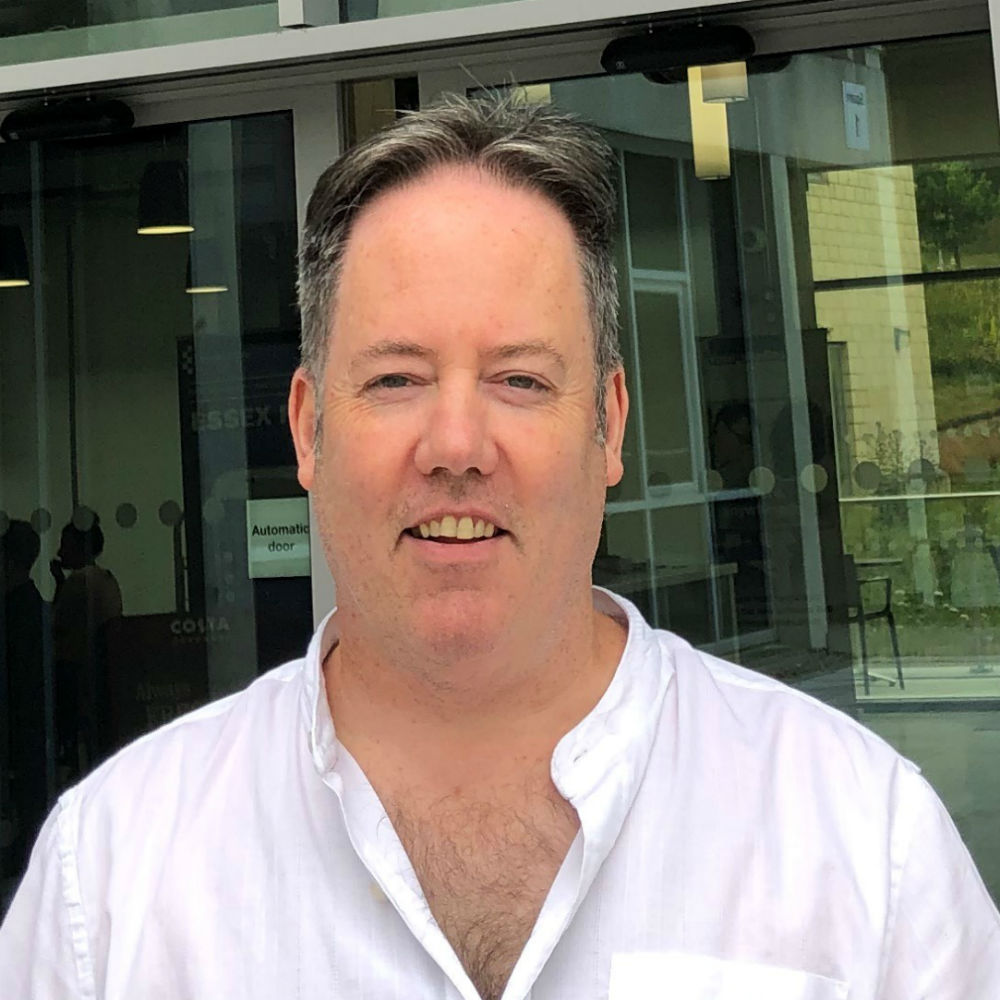
Dr. Andrew Harrison is a Senior Lecturer in the School of Mathematics, Statistics and Actuarial Science at the University of Essex. Originally an astrophysicist specializing in star formation, he transitioned to bioinformatics to explore life detection on exoplanets and apply mathematical-statistical methods to functional genomics. His work involves collaborating with biologists and medics to analyze data-rich experiments like microarrays. Qualifications include a PhD in Astrophysics and BSc in Physics with Astrophysics from the University of Manchester (1991). He has held his current position since 2004. Research interests span bioinformatics applications, computational genomics, and interdisciplinary collaborations in life sciences. Publications reflect expertise in gene selection methods, evolutionary cooperation models, and bioinformatics tools for genomic data analysis. He has contributed to rice stress-resistance databases and protein interaction studies. His work bridges astrophysics-derived analytical techniques with modern biological problems, emphasizing data-driven solutions. Grants and funding details are listed in institutional records, though specific projects are not detailed here. Teaching and supervision activities are integral to his role, though student names are not provided in available texts.
Mario Lauria is an Associate Professor at the Department of Mathematics of the University of Trento, also affiliated with the Interdepartmental Center for Mind/Brain Sciences (CIMEC). He holds a PhD in Electrical and Computer Engineering from the University of Naples Federico II and conducted postdoctoral research at the University of Illinois and UC San Diego. He has held academic positions at The Ohio State University, TIGEM in Naples, and the Microsoft Research-COSBI Centre. His research focuses on computational methods for biomarker discovery, systems biology, and gene regulatory network analysis. Lauria has coordinated multiple EU and industry-funded projects, including work on metabolic markers of pre-diabetes and systems biology approaches to neurodegenerative diseases. Education: PhD in Electrical and Computer Engineering, University of Naples Federico II (1997) M.S. in Computer Science, University of Illinois at Urbana-Champaign (1996) Laurea in Electrical Engineering, University of Naples Federico II (1992) Research interests emphasize bioinformatics , systems biology , and high-performance computing , with applications to gene regulatory networks, diagnostic biomarkers, and multi-omics data integration. His work bridges computational methods with biological systems, particularly in aging, neurodegenerative diseases, and metabolic disorders. Publications reflect a focus on Alzheimer’s biomarkers , diabetes , and gene network analysis . Key contributions include rank-based biomarker algorithms and consensus clustering methods for metabolic profiles. His interdisciplinary approach spans computational tools (e.g., SCUDO, rScudo) and collaborative projects with pharmaceutical and academic partners. Awards include the 2012 SBV IMPROVER Challenge win and IEEE Senior Membership. He serves on editorial boards for journals like IEEE Transactions on Parallel and Distributed Systems and BMC Bioinformatics . Grants and collaborations include leadership in the EarlyBird pre-diabetes project and contributions to EU-funded initiatives like AnEUploidy . His academic service roles include coordinating the Data Science and Quantitative Biology master’s programs at Trento University. Labs/Teams: Active in the Microsoft Research-COSBI Centre for systems biology and the CIMEC interdisciplinary neuroscience hub.
Dar-Jen Chang is an Associate Professor in the Department of Computer Science and Engineering at the University of Louisville. He holds a B.S. in Mathematics from National Tsing Hua University (1970), an M.S. in Computer Information/Control Engineering from the University of Michigan (1982), and a Ph.D. in Mathematics from the same institution (1982). His research focuses on parallel computing, GPU programming, bioinformatics, 3D modeling, and algorithm optimization. His work spans disciplines including computer science, data mining, and biomedical applications. Chang’s research interests emphasize leveraging GPU acceleration for computational tasks such as RNA folding algorithms, hierarchical clustering, and Euclidean distance calculations. He has explored applications in 3D anatomical modeling, robotics simulation using Unity, and gaming frameworks with CUDA integration. His contributions include developing frameworks for algorithm visualization and database systems for automated process planning. His publications highlight trends in GPU-optimized algorithms, graph database analysis (e.g., Yelp and IMDb datasets), and interdisciplinary applications like medical imaging and genetic sequence prediction. He has also contributed to neural networks for fuzzy logic systems and biological sequence mining.
Jonathan Mwaura serves as an Associate Teaching Professor in the Khoury College of Computer Sciences at Northeastern University, where he teaches introductory mathematics, algorithms, artificial intelligence, and machine learning. He joined Northeastern in 2021 after previously holding an Assistant Teaching Professor position at the University of Massachusetts Lowell. His academic credentials include: Ph.D. in Computer Science, University of Exeter, UK Bachelor's in Computer Science, Kenyatta University, Kenya Mwaura's research centers on evolutionary computation and multimodal optimization, with significant applications in robotics, agricultural technology, and genomics. He develops machine learning frameworks for crop disease detection, soil analysis, and genomic data processing, emphasizing practical implementations for real-world agricultural and biological challenges. His publication record demonstrates a clear trajectory toward hyperparameter optimization in high-dimensional spaces, particularly applied to agricultural and genomic datasets. Recent work increasingly focuses on AI-driven educational tools and energy systems optimization, reflecting interdisciplinary problem-solving approaches. Mwaura has received the Carnegie African Diaspora Fellowship. His research is supported by NRF (Kenya) funding for AI-enhanced e-learning initiatives. He actively participates in the Carnegie African Diaspora Fellowship Program, facilitating academic collaborations between North American and African institutions to advance educational technology and agricultural innovation in developing regions.
Enver Akalin, M.D., is a Professor of Clinical Medicine in the Department of Medicine (Nephrology) at Albert Einstein College of Medicine, affiliated with Montefiore Medical Center. He serves as the Medical Director of the Kidney Transplantation Program at Montefiore and holds leadership roles in transplantation societies. His research focuses on mechanisms of allograft injury, immune monitoring, and biomarkers in kidney transplantation, with over 135 publications. He has led NIH-funded studies and clinical trials, and contributed to the Banff classification for transplant pathology. Education: Medical degree from Ege University School of Medicine (Turkey), followed by fellowships at Brigham and Women’s Hospital (Harvard), Boston University, and Emory University. Board certified in Internal Medicine and Nephrology. Awards: Young Investigator Travel Awards (ASTP), Faculty Grant (ASTP), Fellow of the American Societies of Nephrology and Transplantation. Editor roles include Clinical Journal of the American Society of Nephrology and Frontiers in Transplantation. Key contributions: Pioneered microarray technology in kidney transplant research, developed desensitization protocols, and advanced clinical trial standards. Active in transplant education, training directors of transplant nephrology fellowships, and accreditation committees.
Alessia Vignoli is a Research Fellow (RTD-A) at the Department of Chemistry, University of Florence. She is affiliated with the Magnetic Resonance Center (CERM) and CIRMMP. Her research focuses on NMR-based metabolomics for diagnostic and prognostic applications in medicine, particularly in cardiovascular diseases, neurodegenerative disorders, and oncology. Education: M.Sc. in Chemical Sciences (cum laude, 2014) Ph.D. in Structural Biology (cum laude, 2017) Research Interests: Metabolomics of biofluids using NMR spectroscopy Development of predictive biomarkers for disease outcomes Multivariate statistical analysis of metabolic networks Applications in clinical settings including cardiology, oncology, and neurology Awards & Grants: GIDRM Under 35 award (2022) Airalzh Grant for Young Researchers (2022) AIRC fellowship (2019-2020) Professional Experience: Post-doctoral researcher under Prof. Luchinat (2018) AIRC fellow at CERM/CIRMMP (2019-2020) Post-doctoral fellow under Dr. Leonardo Tenori (2021-2022) Her work integrates advanced NMR techniques with computational methods to uncover metabolic signatures predictive of disease progression and treatment response.