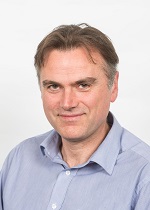
Thierry Badard is an Associate Professor at the Department of Geomatics Sciences , Université Laval, where he also serves as Director of the Center for Research in Geospatial Data and Intelligence (CRDIG) . With over 28 years of experience in geospatial science, he leads research initiatives at the intersection of GeoAI , LiDAR processing , and smart city technologies . Director, CRDIG (2016-2022) Steering Committee Member, Big Data Research Centre (CRDM) Researcher, Institute for Intelligence and Data (IID) Research Expertise spans geospatial big data, GeoNLP, and IoT applications for digital twins. His work addresses flood risk modeling , 3D urban analytics , and environmental monitoring through AI-driven solutions. Recent publications focus on contrastive learning for LiDAR segmentation and geospatial ontologies for early warning systems. Grant Leadership includes collaborative projects on smart insurance analytics (2018-2025), Arctic bioaerosol research (2019-2025), and Quebec-Morocco digital twin partnerships (2022-2023). He has advised 15+ graduate students in geomatics and related fields.
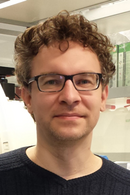
Miler T. Lee is an Associate Professor at the University of Pittsburgh , focusing on gene regulation during early embryonic development through high-throughput experimental and computational genomics. He earned his Ph.D. in Genomics and Computational Biology in 2009 from the University of Pennsylvania under Dr. Junhyong Kim, followed by postdoctoral work with Dr. Antonio Giraldez at Yale University. Joining the university in 2016, his research spans maternal-to-zygotic transition (MZT), RNA stability, pluripotency networks, and evolutionary developmental biology, utilizing model organisms like zebrafish, Xenopus, and Hydractinia symbiolongicarpus. Key Research Themes: Maternally inherited RNA dynamics during embryogenesis Mechanisms of RNA degradation and transcriptome remodeling Evolution of pluripotency networks in hybrid species Role of zinc signaling in fertilization barriers Computational tools for RNA regulation and sensing Scientific Awards: Pan-American Society for Evolutionary Developmental Biology Junior Faculty Award (2024) Outstanding New Investigator – International Xenopus Board (2023) Basil O'Connor Scholar – March of Dimes (2017-2019) Recent publications highlight his work on enhancer classification, RNA degradation mechanisms, and cross-species MZT comparisons. His lab develops innovative methods like RESA for regulatory sequence analysis and studies evolutionary divergence in RNA localization patterns. While the articles span computational and experimental approaches, they consistently address RNA's role in cellular identity, developmental timing, and evolutionary adaptation. Applications include understanding pluripotency, designing RNA biosensors, and elucidating fertilization barriers. Prospective Ph.D. students are encouraged to contact him for opportunities in gene regulation, development, evo-devo, and computational genomics.
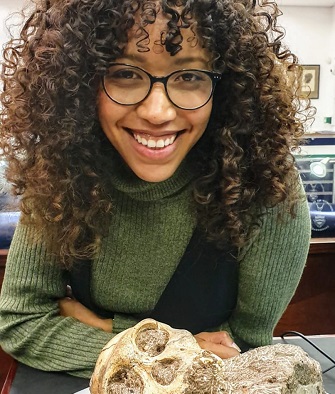
Lauren Schroeder serves as Associate Professor and Associate Chair of Graduate Anthropology in the Department of Anthropology at the University of Toronto Mississauga (UTM). A South African palaeoanthropologist specializing in hominin cranial and mandibular diversity, she employs quantitative methods including 3D morphological modeling and quantitative genetics. Dr. Schroeder maintains research affiliations with the Royal Ontario Museum, Human Evolutionary Research Institute, and Evolutionary Studies Institute at the University of the Witwatersrand. Her academic credentials include: PhD, University of Cape Town, 2015 BSc (Hons), University of Cape Town Dr. Schroeder's research spans Biological Anthropology, Palaeoanthropology, and Evolutionary Anthropology with emphasis on hominin variability, evolutionary theory, and quantitative genetics. Her work integrates statistical analyses of 3D morphological data with quantitative genetic approaches to investigate evolutionary processes underlying morphological variation. Current projects examine primate skeletal evolution, skeletal signatures of hybridization for detecting gene flow in fossil records, and the relative contributions of genetic drift versus natural selection in hominin evolution. Analysis of her 2016-2020 publications reveals consistent focus on paleoanthropological research centered on Homo naledi and other hominin fossils. Her scholarly output demonstrates integration of evolutionary theory, quantitative genetics, and morphological integration to explore hominin diversity and evolutionary mechanisms. Recurring themes include Bayesian phylogenetic methods, hybridization studies in human evolution, and critical reflections on ethics and decolonization within anthropological practice. No scientific awards were documented in the provided materials. Information regarding graduate student advising and research grant funding was not specified in available sources. The Schroeder Lab, situated in UTM's Terrence Donnelly Health Sciences Complex, advances morphological evolution research in humans and primates through innovative quantitative methodologies. Dr. Schroeder has contributed significantly to major paleoanthropological projects including the Malapa excavation (Australopithecus sediba) and Rising Star Cave (Homo naledi) as core research team member analyzing fossil hominins.
Dongwook Kim is affiliated with the Korea Advanced Institute of Science & Technology (KAIST) as a faculty member in the Department of Business and Technology Management under the College of Business. His research spans multiple domains including machine learning, robotics, signal processing, and biomedical engineering. Key contributions in Computer Vision (CNN-based semantic segmentation, 3D point cloud analysis) Significant work in Hardware Design (energy-efficient processors, neuromorphic computing) Interdisciplinary expertise in Medical Imaging (bone age assessment, retinal biomarkers) and Cybersecurity (attack detection, network analytics) Publications since 2015 demonstrate sustained innovation in AI applications , Signal Processing , and Smart City Governance . His work often integrates theoretical advances with practical implementations in real-world systems. No scientific awards or student mentorship details are explicitly documented in the provided records.
Dr. Frank Oechslin is an Assistant Professor at the Department of Biochemistry, Microbiology and Immunology within the Faculty of Medicine at the University of Ottawa. He leads a research group focused on bacteriophages (phages) and their lytic enzymes (endolysins), investigating their potential to combat antibiotic-resistant bacteria. His lab is located in Roger Guindon Hall, Ottawa, Canada. PhD in Bacteriology, University of Lausanne, Switzerland Postdoctoral training at Université Laval, Québec (2018), supported by Swiss National Science Foundation Research interests span phage therapy, antimicrobial resistance, synthetic biology, and experimental evolution. His work employs CRISPR-Cas genome editing and advanced synthetic biology to explore phage-endolysin interactions, bacterial cell wall dynamics, and evolutionary adaptation mechanisms. Publications highlight thermostable endolysins, host specificity, and phage-antibiotic synergy. Scientific awards include a Swiss National Science Foundation Fellowship. His lab collaborates with Prof. Sylvain Moineau's team and focuses on engineering phages for clinical applications, particularly in treating infections caused by multi-drug-resistant pathogens like Pseudomonas aeruginosa and Streptococcus agalactiae .
Dr. Fengzhu Sun is a Professor of Quantitative and Computational Biology and Mathematics at the University of Southern California. His research spans computational biology, bioinformatics, statistical genetics, and mathematical modeling, with a focus on metagenomics, protein interaction networks, and genome sequence analysis. Dr. Sun earned his Bachelors in Mathematics from Shandong University, Masters in Probability and Statistics from Peking University, and PhD in Applied Mathematics from USC. He returned to USC in 2000 as an associate professor after serving at Emory University (1995-2000), becoming a full professor in 2006. His research interests encompass protein interaction networks, gene expression, SNPs, linkage disequilibrium, and their applications in predicting protein functions, gene regulation networks, and disease gene identification. He pioneered alignment-free methods for genome and metagenome sequence comparison, with recent work focusing on virus-host interactions in metagenomic data. His publication record shows consistent innovation, with recent work (2023-2025) emphasizing deep learning approaches (DeepMicroClass, DeepDecon, DeepLINK) and novel statistical methods. His research demonstrates strong interdisciplinary integration of computational methods with biological applications. Fellow of American Association for the Advancement of Sciences (AAAS, 2012) Fellow of American Statistical Association (ASA, 2015) Fellow of Institute of Mathematical Statistics (IMS, 2023) Fellow of International Society for Computational Biology (ISCB, 2024) Fellow of Asia-Pacific Artificial Intelligence Association (AAIA, 2025) Member of International Statistical Institute (ISI, 2012) USC Mellon Mentoring award for faculty mentoring (2012) USC Dornsife College senior Raubenheimer Outstanding Faculty Award (2017) Dr. Sun has mentored numerous successful students and postdocs, many now in academic positions or at leading tech and biotech companies. His research group develops computational methods for complex biological data analysis, with current focus on advanced deep learning for metagenomic classification, cancer cell fraction estimation, and virus-host interaction analysis. He has created influential software tools including DeepMicroClass, ImputeCC, DeepDecon, and ViralCC that have become standard resources in computational biology.
Katherine E. Varley, PhD is a Huntsman Cancer Institute Investigator and Associate Professor in the Department of Oncological Sciences at the University of Utah. She leads the Varley Lab and is a member of the Nuclear Control of Cell Growth and Differentiation Program, focusing on breast cancer genomics, epigenetics, and biomarker discovery. Her work bridges computational biology with clinical applications to improve breast cancer diagnosis and treatment. Dr. Varley earned her BS in Biology with a concentration in Computational Biology from Cornell University in 2003, followed by a PhD in Computational Biology from Washington University School of Medicine in 2009 under Dr. Robi Mitra. Her postdoctoral training was conducted in Dr. Richard M. Myers' laboratory at the HudsonAlpha Institute for Biotechnology, where she participated in the ENCODE Project Consortium. Her research focuses on using next-generation sequencing and computational analysis to study gene expression, transcription factor binding, and DNA methylation patterns in breast cancer. The Varley Lab investigates epigenetic gene regulation, develops novel molecular methods and bioinformatics approaches, and translates discoveries into clinical tools. Key research areas include Clinical Trial Genomics, Epigenome Engineering, Detecting Circulating Tumor DNA, and identifying Transcription Factors Driving Metastasis, with particular emphasis on triple-negative breast cancer. Analysis of Dr. Varley's publications reveals a consistent trajectory from fundamental genomic mechanisms to clinical translation, with recent work emphasizing biomarker discovery, tumor heterogeneity, and the development of genomic tools for precision oncology. Her research spans cancer biology, genomics, and computational analysis to address critical challenges in breast cancer treatment. Dr. Varley holds multiple patents related to cancer diagnostics and genomic technologies, including targeted sequencing methods, multigene assays for recurrence risk, and biomarkers for triple-negative breast cancer. These inventions reflect her commitment to translating basic research into clinical applications. She actively collaborates with clinical investigators in breast cancer trials and works closely with the Breast and Gynecologic Cancers Disease Center at Huntsman Cancer Institute. Her lab maintains four main research thrusts that collectively address breast cancer from molecular mechanisms to clinical applications, demonstrating a comprehensive approach to improving patient outcomes through genomic technologies.
Gerald Quon is an Associate Professor in the Department of Molecular and Cellular Biology at the University of California, Davis. He is affiliated with the Genome Center and participates in multiple graduate programs, including Integrative Genetics and Genomics, Neuroscience, Computer Science, Biostatistics, and Biomedical Engineering. Education: PhD in Computer Science from the University of Toronto (2012) MSc in Biochemistry from the University of Toronto (2006) Research Interests: Dr. Quon applies computational approaches to genetics and genomics problems, focusing on the genetics of human disease , models of cell population dynamics , and neurogenomics . His lab builds neural network models to understand how genetic variation affects disease risk through molecular and cellular phenotypes, with applications to obesity, Alzheimer’s disease, psychiatric disorders, and Rett syndrome. Recent Research Trends: Recent publications highlight work in neuroplasticity , single-cell multimodal analysis , brain evolution , morphological variation modeling , and microbiome-based classification . His team combines sequencing and imaging technologies to model cellular interactions and gene expression dynamics. Scientific Awards: NIH New Innovator Award (2021) Grants & Collaborations: He received NSF funding (2019) for computational tools in single-cell analysis and collaborates across disciplines, including neuroscience, biomedical engineering, and computational biology. His lab develops software like scProjection , siVAE , and scAlign .
Steven Sinkins is Professor in Microbiology and Tropical Medicine at the University of Glasgow, affiliated with the MRC-University of Glasgow Centre for Virus Research. His research focuses on controlling mosquito-borne diseases through innovative biological approaches. He directs the ANTI-VeC international research network and leads a team investigating microbial solutions to vector-borne pathogens. Research interests center on: Wolbachia symbionts for arbovirus control Microsporidian malaria-blocking symbionts in Anopheles mosquitoes Field implementation of biocontrol strategies against dengue and Zika viruses Molecular mechanisms of pathogen blocking in mosquito vectors Publication analysis reveals consistent focus on: Wolbachia-mediated viral inhibition mechanisms Field trials of novel vector control methods Genetic and symbiotic approaches to disease prevention Mosquito-symbiont-pathogen tripartite interactions Scientific recognition includes: Wellcome Trust Senior Research Fellowship (2006-2021) Leads multiple research grants: Wellcome Trust: Optimal implementation of Wolbachia programmes (2022-2027) Open Philanthropy: Microsporidia symbionts for malaria control (2020-2023) BBSRC: Genetic and symbiotic disease control strategies (2017-2020) Directs the Sinkins Group at the MRC-University of Glasgow Centre for Virus Research, collaborating internationally with partners in Malaysia, Kenya, Burkina Faso, and Australia to develop and implement novel vector control solutions.
Fabio Zanini is an Associate Professor at the University of New South Wales (UNSW) , leading a research group focused on computational biology , single-cell approaches , and transcriptomic analysis across diseases like severe dengue , neonatal lung disease , cancer , and marine biology . He previously conducted postdoctoral research at Stanford University (2016-2019) and earned a PhD in Bioinformatics from the Max Planck Institute for Developmental Biology and the University of Tuebingen (2015). Current Affiliation: Group leader, UNSW Previous Training: Postdoc (Stanford), PhD (Max Planck/University of Tuebingen) His research spans single-cell RNA sequencing , computational virology , developmental cell biology , and bioinformatics tool development , with recent work on: Severe dengue progression (viral-host interactions, immune signatures) Lung development (endothelial cell diversity, hyperoxia-induced injury) Cancer genomics (mutant HSC clones, AZA therapy response) Marine biology (plankton transcriptomics, evolutionary analysis) Bioinformatics (HTSeq 2.0, northstar algorithm) Recent scientific awards include grants from the Chan Zuckerberg Initiative ($270,000), NIH R01 (multiple), ARC Discovery Grant , and NHMRC Ideas Grant . Notable contributions include: Northstar - Cell classification algorithm SpectralSeq - Hyperspectral-transcriptomic integration Tabula Muris - Mouse aging atlas He has supervised research into hematopoietic stem cell regulation , lung vascular development , and autophagy in viral infections , with collaborations across Stanford , University of Sydney , and Harvard .
Aonghus Lawlor is an Assistant Professor/Lecturer in Computer Science at the School of Computer Science, University College Dublin. His roles include coordinating modules such as Software Engineering, Data Structures, Machine Learning, and Final Year Project Foundations. He holds an Orcid identifier: 0000-0002-6160-4639. His research focuses on machine learning applications in medical imaging (e.g., MRI, CT), sports science, and healthcare systems. Notable areas include AI-driven diagnostics, cybersecurity in radiology, and genomics for agricultural optimization. Recent work explores ChatGPT4-vision in MS progression, knee osteoarthritis grading via anomaly detection, and reinforcement learning in exercise prescriptions. Professional activities include committee roles in ACM Recommender Systems and Intelligent User Interfaces, grant assessments, and peer reviewing. He has published 137+ outputs, emphasizing interdisciplinary AI solutions with clinical and agricultural impact. Teaching responsibilities span foundational CS courses to advanced ML and project modules. No formal awards are listed, but his work demonstrates contributions to AI ethics, health informatics, and agricultural genomics.
Professor Martin Peifer is a computational cancer genomics researcher at the University of Cologne, where he leads the Department of Translational Genomics. He serves as Principal Investigator of the Peifer Lab, which focuses on developing computational methods to analyze cancer genome sequencing data. His work is deeply integrated with the Center for Data and Simulation Science and he is an active member of the International Cancer Genome Consortium and the Pan-Cancer Analysis of Whole Genomes project. Peifer's research interests center on computational approaches to understanding cancer biology, with particular emphasis on tumor evolution and genome instability mechanisms. His lab develops methods to analyze somatic genome alterations including point mutations, copy number changes, and rearrangements. They also create computational tools for integrative genome analyses, tumor evolution reconstruction, and single-cell sequencing data analysis (both RNA and DNA). His interdisciplinary team applies high-performance computing and machine learning to interpret complex cancer sequencing data, aiming to better understand tumorigenesis, clonal evolution, and therapy resistance. Analysis of Peifer's extensive publication record reveals a strong focus on neuroblastoma and lung cancer genomics, with particular attention to tumor evolution patterns and genomic instability mechanisms. His work spans multiple cancer types but maintains consistent themes of computational methodology development and application to understand cancer progression and treatment resistance. The publications demonstrate increasing sophistication in analyzing intra-tumor heterogeneity and clonal dynamics over time. Peifer leads an active research group including postdoctoral fellows (Joel Kaufmann, Dr. Stephanie Pabel, Agnieszka Rumińska) and PhD students (Magdalena Seiffert, Justinas Valiulis). His lab is involved in the Collaborative Research Center 1399 focused on Mechanisms of Drug Sensitivity and Resistance in Small Cell Lung Cancer, indicating significant grant funding and collaborative research efforts. The Peifer Lab operates at the intersection of computational biology and cancer research, maintaining an interdisciplinary approach that combines bioinformatics, machine learning, and high-performance computing to address complex questions in cancer genomics. Their work has significant implications for understanding cancer evolution and developing more effective treatment strategies.
Dr. George C Tseng serves as Professor and Vice Chair for Research in the Department of Biostatistics at the University of Pittsburgh School of Public Health, with secondary appointments in Human Genetics and Computational and Systems Biology. His educational background includes a BS (1997) and MS (1999) in Mathematics from National Taiwan University and an ScD (2003) in Biostatistics from Harvard School of Public Health. Dr. Tseng's research focuses on developing statistical methodologies for genomic and bioinformatic applications to advance precision medicine. His work spans multiple high-impact areas including multi-omics data integration, machine learning for high-dimensional data, cluster analysis for disease subtyping, and statistical methods for experimental design in omics studies. His approach emphasizes close collaboration with biological and clinical researchers to ensure methodological relevance to real-world problems. His publication record demonstrates consistent contributions to top statistical and bioinformatics journals, with recent work focusing on congruence analysis between animal models and humans, outcome-guided clustering methods, and high-dimensional causal mediation analysis. Elected Fellow, American Statistical Association (2017) Statistician of the Year, ASA Pittsburgh Chapter (2017) Provost's Award for Excellence in PhD Mentoring, University of Pittsburgh (2019) Clinical Research Scholar (K12) Award, NIH (2007-2009) Elected Member, International Statistical Institute (2012) Dr. Tseng has successfully mentored over 25 PhD students who have secured positions in academia, industry, and government agencies. His laboratory has maintained continuous NIH funding as principal investigator since 2012, including current grants R01CA285337 (2025-2030) and R01LM014142 (2023-2026). The Tseng Lab operates as a collaborative research environment focused on translating statistical innovations into practical solutions for biological and medical challenges, with strong connections to multiple research centers and clinical departments at the University of Pittsburgh.
Katsuhito Yasuno is a Research Scientist in the Department of Neurosurgery at Yale School of Medicine. He works within the Gunel Lab, focusing on neurogenetic research related to brain disorders, vascular conditions, and tumors. His work involves genomic analyses and molecular studies to understand the genetic basis of various neurological conditions. Education: Postdoctoral Fellow, Japan Science and Technology Corporation (2008) Postdoctoral Fellow, Japan Biological Informatics Consortium (2006) Postdoctoral Fellow, Tokai University School of Medicine (2004) PhD in Theoretical Physics, Tokyo Institute of Technology (2002) MS in Theoretical Physics, Tokyo Institute of Technology (1999) BS in Physics, Tokyo Metropolitan University (1997) Dr. Yasuno's research spans multiple areas of neurogenetics and molecular neuroscience. His primary interests include epidemiologic factors and methods related to brain tumors (particularly glioblastoma and meningioma), intracranial aneurysms, nervous system diseases and malformations, and vascular diseases. His physics background contributes to sophisticated analytical approaches in genetic research. His publication record shows consistent contributions to understanding the genetic mechanisms underlying neurological disorders, with recent work focusing on meningioma genetics, brain malformations, and vascular disorders. The research demonstrates a progression from basic genetic discovery to translational applications, with particular emphasis on molecular pathways that could serve as therapeutic targets. Dr. Yasuno collaborates extensively with leading researchers in the field, most notably with Dr. Murat Günel (28 common publications) and Dr. Kaya Bilguvar (34 common publications). His work involves both computational analysis and laboratory validation of genetic findings. As part of the Gunel Lab, Dr. Yasuno contributes to the lab's three major research interests: developmental neurogenetic disorders, neurovascular disorders, and brain tumor biology. The lab utilizes advanced genomics techniques and bioinformatic analysis for gene discovery followed by functional studies.
Rex Hung is an Associate Professor of Pathology at Harvard Medical School and serves as an Associate Pathologist at Massachusetts General Hospital . His academic career focuses on Bone and Soft Tissue Pathology , Cardiovascular Pathology , and Pulmonary Pathology , with significant contributions to cancer research.